An Homage to the Ball Kids at Roland Garros

The Roland Garros 2022 official poster designed by Louise Sartor © Christophe Guibbaud/FTT


The French have made art part of the majesty of the French Open (May 22-June 5 this year). The official posters have become a fascinating part of the tournament. Starting with 1980, the grand slam tournament has entrusted its official poster to an artist every year, transforming it into a cultural symbol. I love it how the French still make things that can preoccupy people who are not enslaved by smartphones, broadening our interest in and the conversation around tennis and sport. This year’s official poster is designed by French artist Louise Sartor. In 2021, Sartor was invited to the tournament to live the experience and she was immediately drawn to the precision, agility, skill and choreography of the ball kids, who have never been the subject of the official poster before.

The ball kids are a discreet yet essential part of a tennis tournament and, at Roland Garros, their expertise sets a standard for others to follow. “Every year, following a rigorous selection process and training, 250 youngsters aged 12 to 16 – all of them registered with the FFT and hailing from every region in France – have the privilege of treading the clay courts at the Porte d’Auteuil for the three weeks of the tournament. Their one and only objective is to achieve excellence,” say the tournament officials.

Louise Sartor is a graduate of the École des Arts Décoratifs in Paris and the École Nationale Supérieure des Beaux-Arts in Paris. In her formative years, she drew largely in black and white, before starting to concentrate on painting and colours, using mainly watercolour techniques. Today, she “daringly mixes opaque watercolours on recycled paper”. Influenced by Paul Cézanne, Claude Monet and Piet Mondrian, Sartor is “a resolutely figurative painter who works in small formats and preferably on recyclable materials such as cardboard and recycled paper”, which she also used for the Roland Garros poster, “allowing it to dry slightly and then rubbing it to lend density and texture to the colours.”

“I observed the gestures, the decor and the context a lot. I saw it as a show. It’s very beautiful,” Louise Sartor revealed as her approach to the subject matter. “They are impressive with their level of concentration despite their young age. It reminded me of my own preteen years when I was drawing and being as focused as them.” The poster depicts a ball kid by the net, head out of frame, focus on the static posture of the body, ready to spring into action. Shadows are cast by the tennis net on the skin, light is beautifully used transporting the viewer to the tennis court and clay surface under the intense May and June sunlight heralding the arrival of summer in Paris. This year’s poster has a timeless quality to it, embodying not only the beauty of the sport I love so much – its vibrancy, elegance, concentration – but also the special atmosphere of Roland Garros.


MORE STORIES

Roland Garros is more than the game and the players:
Interview with photographer Amélie Laurin

Editorial: Set point

On tennis: Three books worth reading

Posted by classiq in A sporting life, Art | | Comments Off on An Homage to the Ball Kids at Roland Garros

Editorial: Making One’s Mark

photo: from the book Cannes Cinema: A Visual History of the World’s Greatest Film Festival
Geraldine Chaplin photographed by The Traversos, Cannes, 1967


The Editorial: thoughts, short stories
or essays about the world of cinema


Someone I have collaborated with recently paid me one of the best compliments, telling me how grateful she was to meet people with similar values and who are not afraid to be different and stand with that in the current world. It’s pretty darn refreshing when you connect with people who share your way of thinking and envision a different value of time and culture than the one projected through the modern, mass means of communication, especially when the majority does the opposite. It’s actually downright cool to be different and have a thing to say, to make choices fueled by curiosity rather than social approval, driven by wondrous paths and your own inquisitive mind, guided by what you love. By tearing down convention you preserve what is meaningful.

The 75th Cannes Film Festival starts tomorrow, May 17th, and there are a few words I would like to quote (of Serge Toubiana, accompanying the book Cannes Cinema: A Visual History of the World’s Greatest Film Festival, with photographs by The Traversos) that capture an attitude that I wish still described the world we live in but in fact can hardly describe our present times: “Towards the middle of the decade (ed. note: the 1960s), imagination began to seize power, anticipating the passions of students who would soon take to the streets, in Paris and Berkeley, to challenge society. Other styles were invented, fashion was in fashion, living on the fringes became possible, desirable even. In and out of competition, the Cannes Film Festival reflected these different trends, without necessarily incorporating them. One had a choice: join in or do one’s own thing, it was up to each person to invent a style, to be him or herself while at the same time giving the impression of belonging to the times. Times in which one learned to make one’s mark, to stand out from the established order. Actors were better placed than anyone else to harness this zeitgeist. It was up to them to express it, to establish its modes of expression and gestures. Here, Geraldine Chaplin does so with some grace. Not just her father’s daughter, in 1967 she also presented Robert Hossein’s out-of-competition film, J’ai tué Raspoutin (I Killed Rasputin), in which she had performed.”

More than half a century on, do actors still have the ability and courage to stand out from the established order? I would love actors to be makers who maintain culture.


MORE STORIES

Editorial: Night Train and a Rear Window-like Microcosm of Human Experiences

Creating a new visual identity: Interview with illustrator Katherine Lam

Editorial: A raincoat in sunny L.A.

Posted by classiq in Editorial, Film | | Comments Off on Editorial: Making One’s Mark

The Crush Series: Interview with Ian Worboys

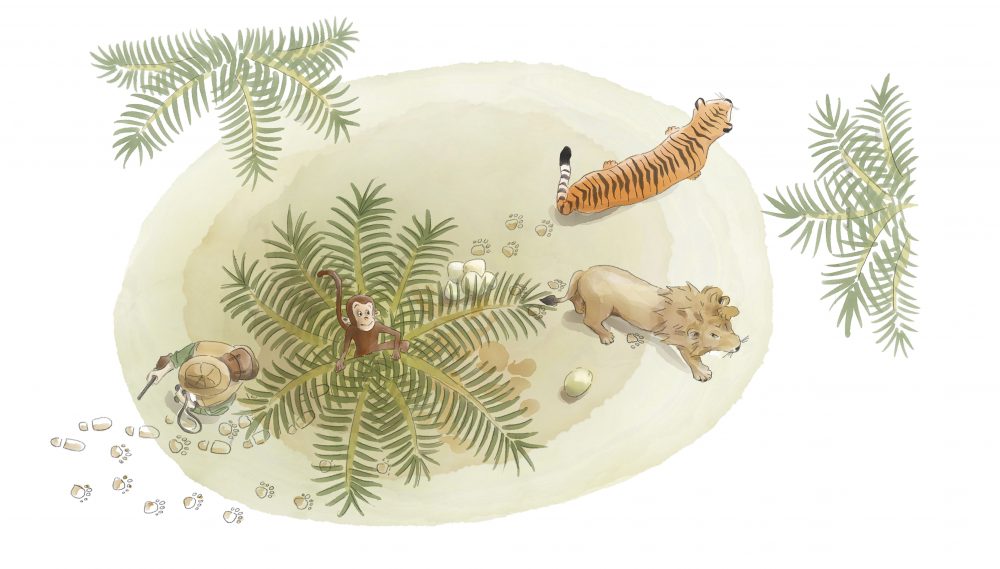
Monkey Crush, by Ian Worboys, with illustrations by Silke Diehl

 
Ian Worboys didn’t grow up with the idea of becoming a writer of children’s books. But he discovered early on that rhyming poetry helped him overcome dislexya. And as a young father of four, he found himself looking for books in rhymes that were fun, to help him engage more with his children and fully and directly capture their attention and inspire their imagination. Unable to find such books in bookshops, Ian started his hobby of writing poetry, which found great success with his children – we should always trust our children’s judgement. And this is where The Crush Series started to take shape. The first book would be published decades later, followed by others that will find success worldwide.

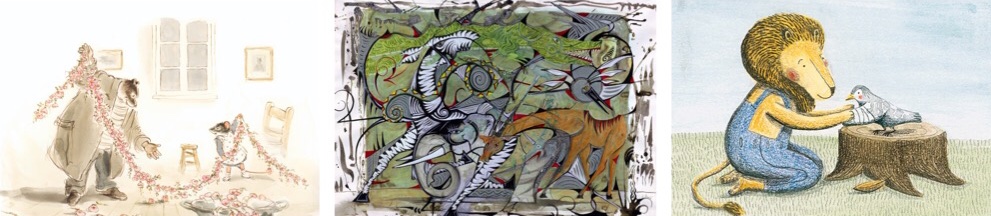
The Crush stories have a particular sensitivity. They are brought to life through Silke Diehl’s wonderful, soft yet expressive illustrations that give shape to Ian’s humorous words. It’s this beautiful synergy that makes the stories special. But beyond the fun and entertainment, there is a hidden depth in these books. The characters eventually find balance through reconnection with their natural state, but they teach children to relate to the world and to realise something about life. Children need to know about life and not shy away from it, and so many times, especially with young children, books say best what needs to be said. They help children look at things with their own eyes, reflect and have their own ideas. The Crush books simply show us that play and education go hand in hand.

In my recent interview with Ian Worboys, he shares why we all need to grow our minds as we and our children grow older, the one space where he can enter his creative world and why children’s books need some realism in them.
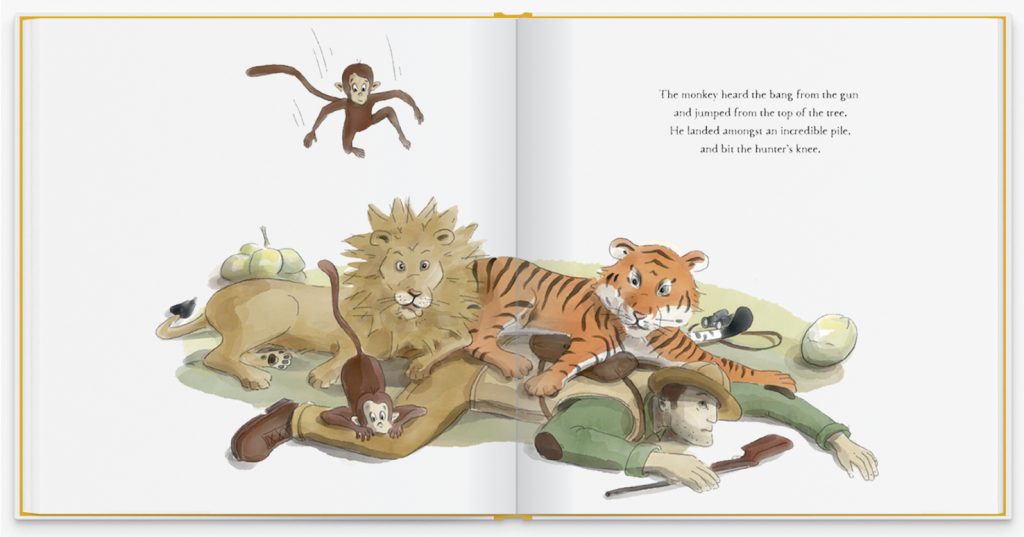


Monkey Crush book spread


What does reading do better than anything else?

Reading helps to open up the reader’s imagination. When you read, you literally open up a world of possibilities where words turn into colour, actions, emotions and characters jump out from the pages. When you watch videos or TV channels, you are are seeing someone else’s imagination.

If my words work as I intend to work, then when children read my books and see the illustrations from Silke, so they can see the animals moving around in their heads, they can feel the tension as one animal stalks another in order to eat, and then they experience the relief and humour when the characters live to see another day.
 
 
How did you start writing children’s books? Did you know early on you wanted to be a writer?

I never envisaged becoming a writer, least of all in having five books published with two more still to come. The reason I say that is that I am dyslexic and so I found school very difficult and of all the subjects English was the most difficult. But dyslexia also makes you a problem solver and you have to use your imagination to get around words that you cannot spell.

I started writing rhyming poetry for my four children when I was on holiday in Spain one year. I had been to the bookshop to try and find humorous poetry for them and I only found bland books or whole stories. So, I joked with them and during that holiday my passion grew, and I found that I was able to rhyme and make them laugh. The kids used to come up with a subject and then ask me to write a poem. Those early poems were as diverse as eating ice-cream on a donkey to peeling open prawns at a restaurant.

The catalyst to me publishing the books came after the death of one of my children at the age of 27 from Sudden Arrythmia Death Syndrome. He had always told me that I should publish the poems from the Crush series and so, having put together a bucket list of things that I should have done when he was alive, but never did, so I started looking for an illustrator. The rest, as they say, is history!
 
 
I am very sorry about your loss. We have a lot to learn from our children, including how to be more creative, and keep our imagination alive. I often wonder if parents do the same with their children. Have you encouraged your children to be creative?

I have always encouraged creativity in my children by getting them to open up their minds. I encouraged them not only to ask questions, but to ask them what they would do in a certain situation. Reading books allows the base for many questions. Sometimes I would be outrageous and create unusual situations, mixing things up, to show that in your mind almost anything is possible. We designed our Crush quiz cards with this in mind. You can both teach kids to learn and grow their creativeness at the same time.


Frog Crush, by Ian Worboys, with illustrations by Silke Diehl


Are you a full-time writer now? Do you have a writing routine or do you let the stories come naturally to you?

If I look back at my life, I would love to have been a full time writer, but brining up 4 kids required a full time job.

Over the past 20 years I have been lucky enough to have a job where I fly several times a week. I find that I can enter my own creative world while on a plane and my ideas flow onto my laptop.

I always carry my “ideas” book with me and I write down all sorts of ideas. I have ideas for books, board games, TV shows, plays and many other things. Maybe I will do at least one of them when I retire one day.


“We all need to grow our minds as we and our children grow older.”


Do you remember which was the book or children’s illustration book that sparked your imagination as a child more than anything else?

I loved the humour and illustrations of Dr Seuss The Cat in The Hat, as the books made me laugh. I also enjoyed Wind in the Willows, again for the imagination of animals being alive in my mind and then, when my children were young, I fell in love with Beatrix Potter. Her illustrations, her love of animals and the use of pastel colours seemed to me to be a perfect mix. In Silke’s illustrations, there is a similar use of softer colours.

In today’s world, most books are screaming at children with primary colours bursting from their pages, but we wanted Crush to show the world in a softer way through quality illustrations even though our subject matter is all about the Circle of Life. Successful books need some realism in them and it is how that realism is handled, when writing for children, that makes a book a success like the Crush Series.
 
 
I agree. The Crush Series books have humour, but they also talk gently, through the rhyming poetry as your storytelling voice and the use of pastel colours in the illustrations, about the circle of life. Are books the best way to teach children, especially young children, about the realities of life?

The start of 2020 was a year like no other for all of us. I believe that children need to know about good and bad so that they are prepared for the world. To me, this is what teaching a child is all about.

I respect those who seek to protect children from the real world, but in the longer term, teaching them early on through a light touch, like my books, allows questions that can be answered sensitively.

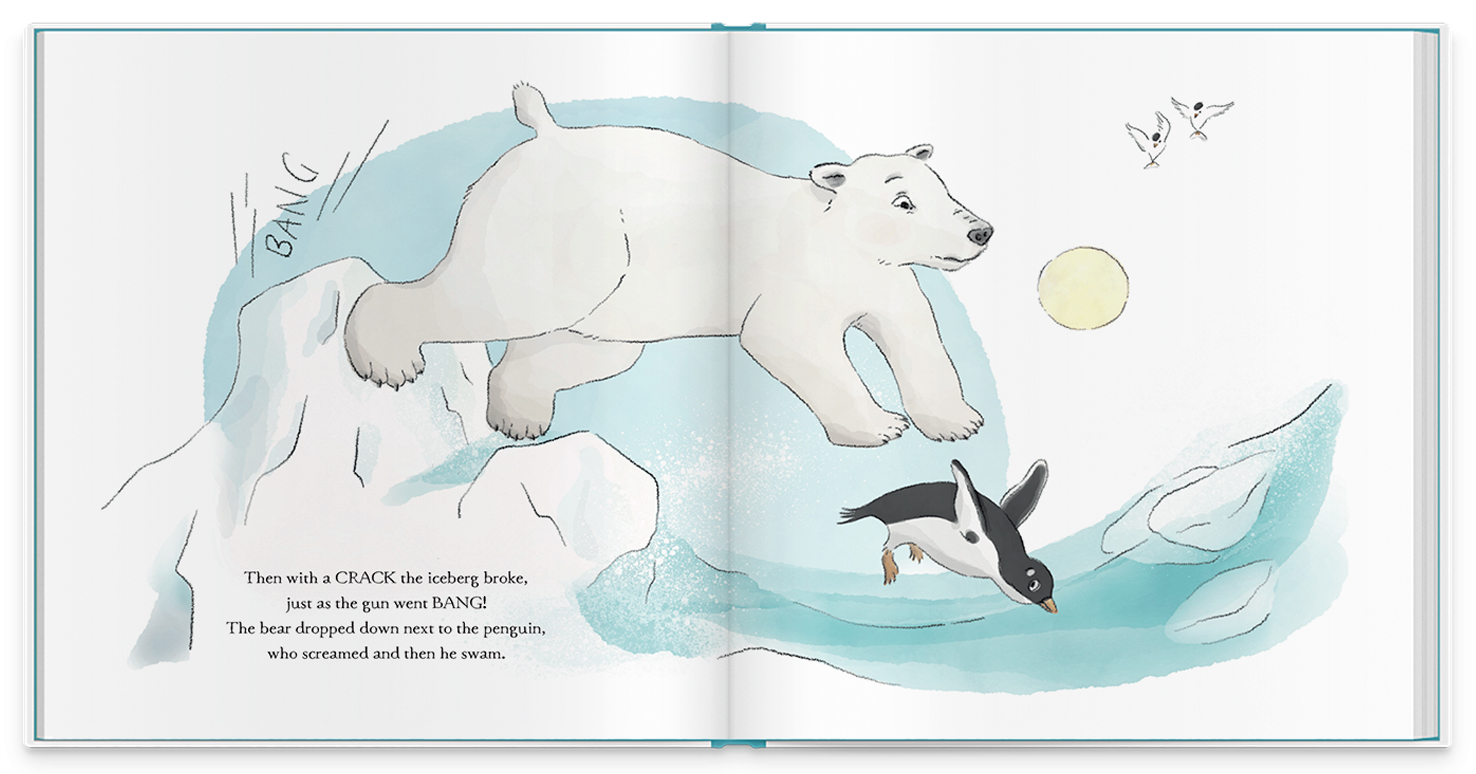
An example of this is that some schools will not read my books because two of them have guns in them! I prefer to think that I have gently introduced the concept that some hunting is bad and some is a necessity in order to survive. But readers will make their own minds up.
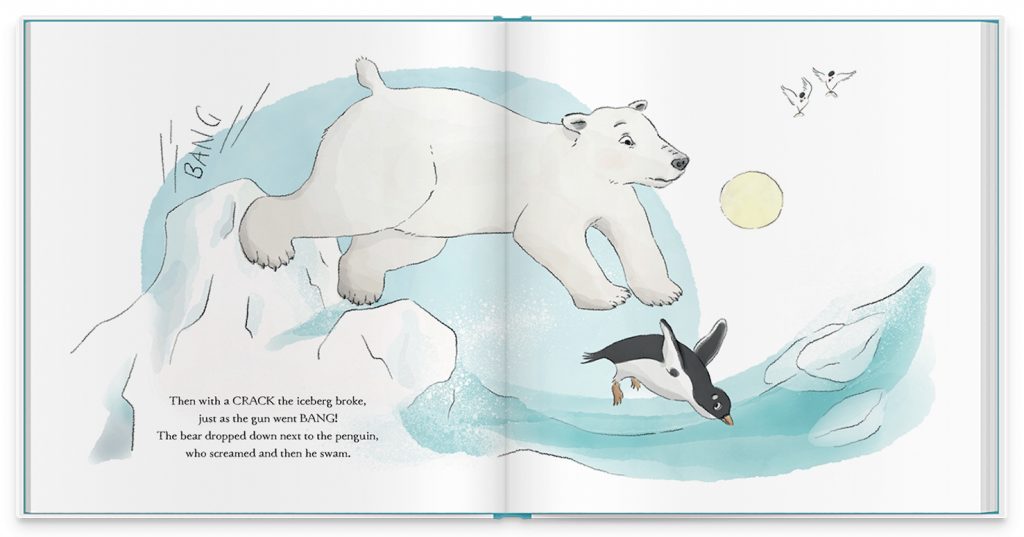


Penguin Crush book spread


I do believe that more children’s books should embrace contradiction. And I think you chose the right word when you said that so many books today are “screaming” with primary colours. Unknowingly, I have always had a problem with that, and you’ve just so clearly pointed it out. Why do you think they use those colours?

I think that too much of education has been dumbed down to a basic level. That includes many of the illustrations that are used. Children love to copy drawings and even though their efforts may not look correct to us adults, to them and their eyes, they are obvious copies. This should be encouraged and so we designed the Crush colouring books. We show fun, simple illustrations that they can copy. We try to open up that creativity streak that children have.

Bright colours seems to be a very modern trend and so when Silke proposed softer pastel colours, our whole team agreed that they were more realistic and gentler on the eyes. We feel that we achieved a great balance in our illustrations.
 
 
Part of the beauty of The Crush series is that the drawings tell the story, too, step by step. How does your collaboration with Silke Diehl works? Was it difficult to find an illustrator whose drawings are such a perfect companion for the text?

Having made the decision to get the books published, I then turned my attention to finding an illustrator. I had conversations and some early illustrations done, but they weren’t what I wanted. A chance conversation with one of my German work colleagues led me to his wife Silke Diehl. She was working as an interior architect and had a successful business, but her dream was always to become a children’s book illustrator. She read the first book, Monkey Crush, and fell in love with the animals in the story. To her, the rhyming poetry jumped form the pages into her mind and quite quickly she drew some sketches which, to me, were just what I was looking for.

We chatted and Silke agreed to illustrate the first five books. Her mind is incredible, and she sees situations from many different angles before coming up with beautiful imaginative illustrations. As an example, in Frog Crush there is a frog sitting on a large lily pad. Now most people would draw just that but Silke drew it as if you were a fish looking up through the water to see the frog sitting there waiting to catch a fly. Genius!!

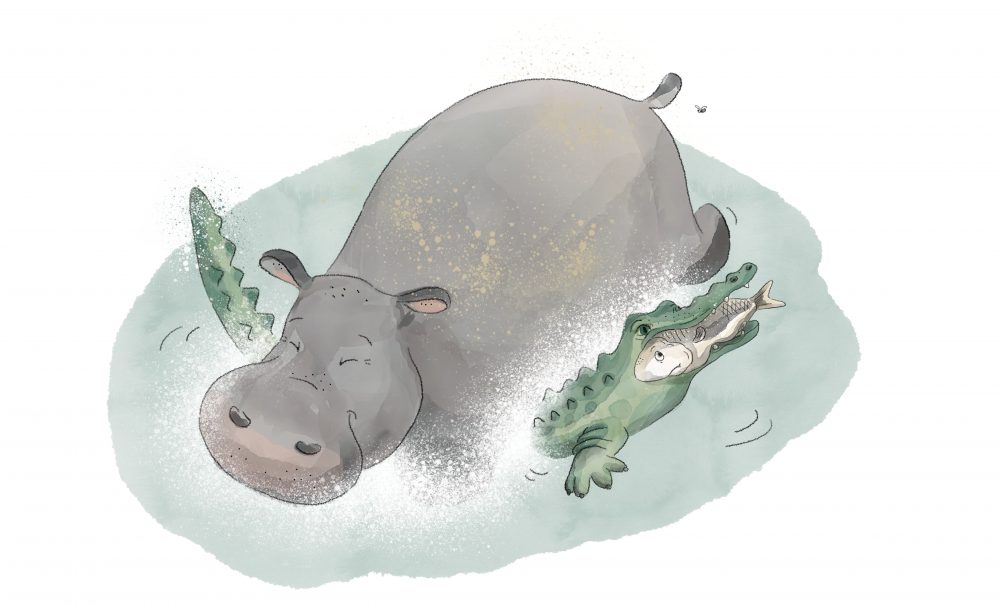
She can draw a hippo and just a small change to his face in his eyes or mouth and the reader can see what he is thinking. The end of each book is where each animal escapes to live another day through a situation that we call the Crush, this page is the climax of the story and in each book this illustration stands out as the best in the book. The illustrations have surprise, movement and humour.

When working with Silke, she creates a story board of small sketches to show how the story will unfold. She then shares those with our marketing team, led by Nora Hategan and me. We then have a discussion about what has been proposed and make suggestions that Silke thinks about and then shows in a new story board. To be honest, there are rarely any major changes as Silke is ahead of us in what she wants, which she knows, that we will love.
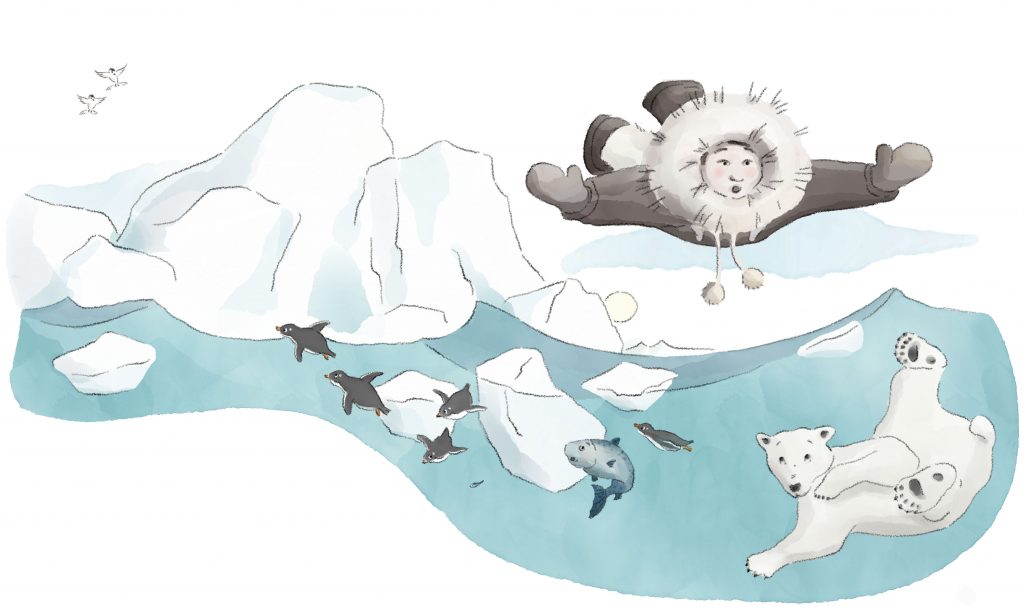


Penguin Crush, by Ian Worboys, with illustrations by Silke Diehl


I love that your stories deal with the natural world. And I also find that children usually respond better to animal characters than human characters. Do you agree? And if so, why do you think is that?

From when children start speaking, adults use animals to get them to make noises, to learn to speak and to recognise them. We take them to farms and zoos and so children relate to them. Animals have faces and so we can explain much with just small changes to their faces. Silke is incredibly skilled at this particular part of her drawings. One look at the hippo as he jumps on the evil crocodile and you can feel the satisfaction. Children can see and feel that excitement too.
 
 
In this time and age, what do you wish people appreciated more?

I think that with our ever growing faster access to technology, that often does the thinking for us, that people should appreciate that books are a great way to escape from the pressure of modern day life. Within a book you can be who you want to be, where you want to be! You can take yourself back to the Knights Templar in the 1100s or onto Mars in the year 2050. You can be a super hero or a super spy, a mariner or a pilot, the choice is almost limitless.

I personally feel that people are losing their creative identity, that Twitter, Tik Tok, Facebook and other social platforms have replaced reading books. The problem with these media, which I also use, is that they are far too often shallow in their content. We all need to grow our minds as we and our children grow older.


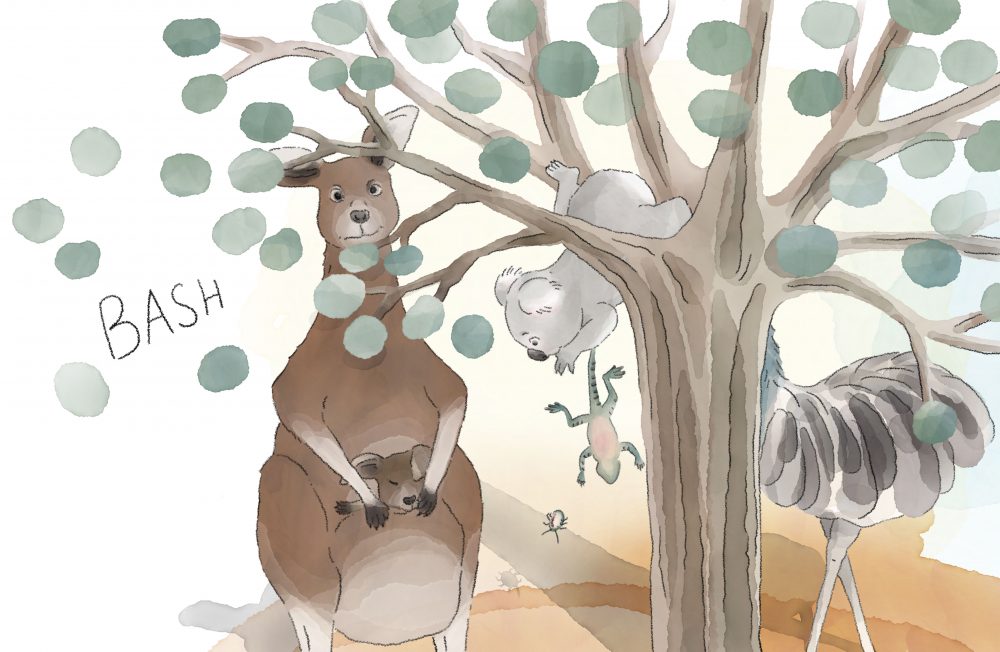
Kangaroo Crush, by Ian Worboys, with illustrations by Silke Diehl


That should be a guideline for every grown-up and parent. On an end note, what’s next in The Crush Series?

Crab Crush is about to be released early June along with a puzzle and painting book, and then we start work on Elephant Crush. Further into the future we also have Bird Crush. I am also working on some new poems where I take some of the characters in the Crush Series and create stories just for them. Mr Hippo or Mrs Kangaroo spring to mind.

We also look at partnering with other brands that share our values with which we can identify together new creative ways to reach the customers and parents who want to bring up their children in different but fun ways.

We at Crush are always trying to build in the educational facts in the stories alongside the fun part of each book, so that children can learn as they read and have fun.
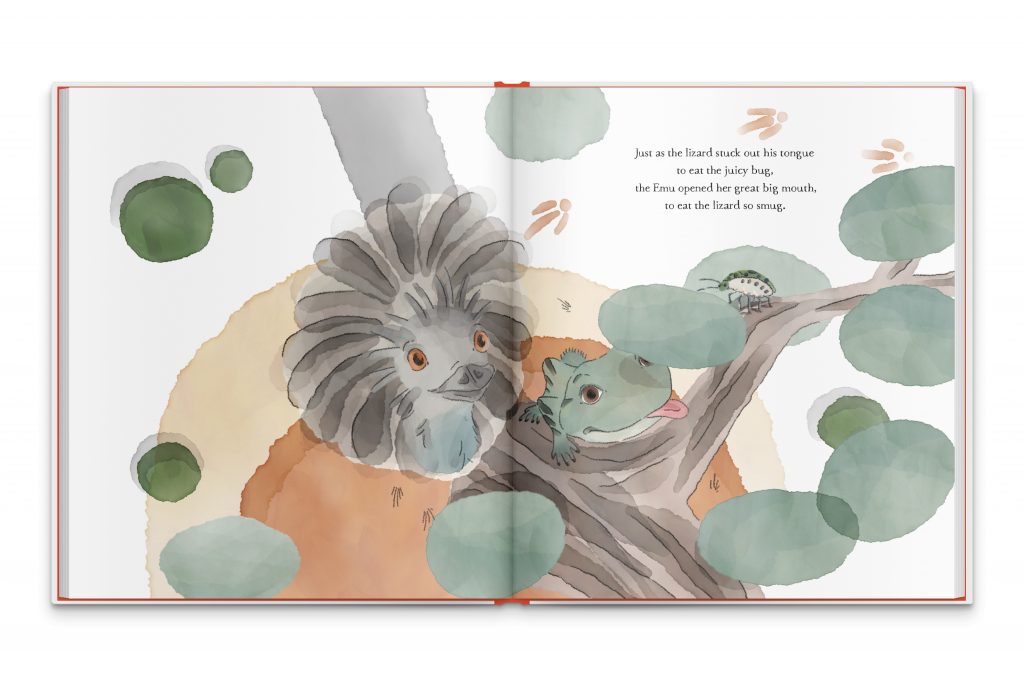
 

Kangaroo Crush book spread


You can find The Crush Series books on thecrushseries.com or you can check with your favourite independent local bookshop.


MORE STORIES

Beyond Ernest et Celéstine: The art of Gabrielle Vincent:
In conversation with Fondation Monique Martin

Making art and creating awareness: Interview with artist Alex Beard

Leaving space for the reader’s imagination:Interview with Marianne Dubuc
Posted by classiq in Art, Books, Children’s illustration, Interviews | | Comments Off on The Crush Series: Interview with Ian Worboys

Read Instead…in Print


A photo of a good book about cinema. No discursive, pretentious analyses, no verbose scrutiny. Because the idea is to invite you to read the book, not read about it here. But instead of using social media, I use my journal. Back to basics. Take it as a wish to break free of over-reliance on social media (even if it’s just for posting a photo of a good book) for presenting my work, cultural finds and interests. These are things to be enjoyed as stand-alone pieces in a more substantial and meaningful way than showing them in the black hole of Instagram thronged with an audience with a short attention span. This is also a look through my voluminous collection of books about film that I use as research in my adamant decision to rely less and less on the online and more on more on print materials.

Read instead…in print #12

“I was an alien there (in Hollywood). I loved solitude.” One of the most distinctive actors of the silent era, Louise Brooks, could write, too. Her book Lulu in Hollywood gathers her essays on Gish and Garbo, Bogart, Chaplin, W.C. Fields, G.W. Pabst, the one who cast her in Pandora’s Box and Diary of a Lost Girl, “essays striking in their evenhandedness and insight,” as Lotte H. Eisner writes in her afterward to the book.

I have read countless books and essays on classic Hollywood, but Louise Brooks’ writing about Hollywood and its stars is such a unique point of view that it’s made me realise how very few writers search for truth, observe and see with their own eyes. Although her writings draw from her own encounters and personal observations on cinema from her life in the movies, this is not a memoir book, because she didn’t care to write her memoirs. “In writing the history of a life I believe absolutely that the reader cannot understand the character and deeds of the subject unless he is given a basic understanding of that person’s sexual lives and hates and conflicts. It is the only way the reader can make sense out of innumerable apparently senseless actions.” And she didn’t want to get that personal. Here is someone who valued personal space. And she would stop writing altogether, too, because, as she wrote to Lotte once, “I shall write no more. Writing the truth for readers nourished on publicity rubbish is a useless exercise.” More prescient than ever.


MORE STORIES

Read instead…in print #11: Picture, by Lillian Ross

Travel is above all an inner journey: Interview with photographer Sophie Denux

Read instead…in print #1: Peter Weir Interviews

Posted by classiq in Books, Film, Read instead...in print | | Comments Off on Read Instead…in Print

May Newsletter: On Watching


Photos: Classiq Journal


I used to say that classic films should be made more available to audiences. Now I am inclined to take my words back. So many films are now available and so many people are so lost in streaming services that they get confused by choice. How can you choose? Just by watching one after another and hit stop if it bores you? Is that the way to build up film knowledge? I think not. Does it even matter? I don’t know. But it does for me. I still believe in culture. Maybe film history should be taught in schools. And the fact that film projects for children like CineKids exist gives me a little hope. Actually, it gives me sheer joy. It’s up to the ones who love cinema to keep passing on to future generations what the thrill and the love of a great film can be. We simply have to watch films together, to introduce children to films, bit by bit, exposing them to diverse films and to the world cinema. And once we do that, we may have faith that once they start taking the risk of going further and start choosing for themselves, they will remain curious.

But how about the younger generations who are no longer children though? I admit I am at a loss there. How to explain to them a movie like Fellini’s 8 1/2? What are they able to take from it? Regular moviegoers today are easily bored. They need entertainment. They don’t want to be challenged. They don’t want to be different. And that’s where their illiteracy really takes new heights. They want a film to be easy to understand, they are not interested in learning how to read a film, let alone read it in a wider context. And where can they learn from when the cinema has been taken over by blockbusters and the biggest streaming platform is Netflix, who, let’s be honest, works mainly of the principles of the more the merrier not the better?

Why isn’t The Criterion Channel available worldwide? Why will Martin Scorsese’s Film Foundation be reserved to a few privileged countries when it’s opening up a virtual movie theater beginning with this month? These organisations are created by people who know and love film, whose selection of movies makes sense and can be trusted. Why aren’t they offering wider access to culture and to the history of film? Mubi, on the other hand, does that, with a subscription, of course, and it does a marvelous job at it. But there should be more. And, most importantly, there should be more independent cinemas where good recent films should be shown and where retrospectives of older films should also take place. I still believe that cinemas are the best places to watch movies. People should be movie goers. That’s where the experience is the most impactful. And the ones who will take the effort to learn and understand a film will be more than just a few. I hope the word of mouth can once again ring out to fill the box office with the sound of impressions about the latest good film, or with the buzz of a classic gem that some of us dream of having watched on the big screen when it first came out, before or when we were only children, waiting for our curiosity to grow, not to fade as we continued to grow up and to discover movies.


Viewing

Just 6.5, 2019
Saeed Roustayi

A harsh, sobering depiction of the terrifying drug war in Iran and of the inability of a law system to deal with it. The reaches of its machination are so broad that it’s impossible not to resonate with you on some personal level, even remotely. It’s alert and bitter (the extraordinary performance of Payman Maadi – he made another great role in Asghar Farhadi’s A Separarion – contributes a great deal to that) and to say it’s full of action would be a misinterpretation, because the right word to use here is that it’s alive. That’s how it feels, in all its complexity and hopelessness and hellish reality.
 
 
Shakedown, 1950
Joseph Pevney

The main character in this genuine noir, Jack Early (Howard Duff), is a guy who will literally do anything to get what he wants. He is a young newspaper photographer, unscrupulous, who won’t stop at anything that will get him a selling photograph or that will get him all the way up the success ladder. He is a little cold around his heart. This is one of those neglected B noir films, with no big stars in them, with no constraint to fit into a genre, with no money to dictate a happy ending. From a time when they were just making movies.
 
 
Mona Lisa, 1986
Neil Jordan

A hard-edged neo-noir, one of the best of its kind. Bob Hoskins makes a great role, one of those you wish to see more often, complex and subtle at the same time. He is a chauffeur hired by the man he did seven years of prison for (Michael Caine) to drive around a high-class prostitute (Cathy Tyson). He is further thrown into a life of crime, a gritty, horrible London underworld that he has a hard time accepting it even exists, on the recurring title song of Nat King Cole, but he is by no means a one-sided character, no great character ever is. He could be any guy who has hit rough times, made a few mistakes, but still trying to do something good when he sees all the bad around him.


Reading

Walden, the Penguin Classics edition – they are timeless. Because Henry David Thoreau’s classic is the original book about abandoning our “lives of quiet desperation” and getting back to nature.
 
Archive interviews from the pages of Sight and Sound. Why the archive interviews? Because I really don’t care if a great film from the 1970s or 1940s doesn’t fit into the present day schools of thought. Reinterpreting a film for modern audiences is simply a nonsense, it misses what cinema is all about.
 
 
Listening

The Sarah Schill podcast. The episode with Elettra Wiedemann is the first one Sarah has done in English so far and one of my favourites. How did the model become a farmer? I find great inspiration in Elettra’s life journey, in her down-to-earthiness, authenticity, positive energy and her constant drive to remain curious and to evolve, as a person, as a mother, as part of a community and of this world we call our home. Sarah Schill asks the right questions and their conversation flows effortlessly through different aspects of life, motherhood, professional choices, family roots and fame.

Mott The Hoople, All the Young Dudes. Billy Idol is talking about them in his autobiography and I have been catching up.

Flogging Molly, Swagger. That sound!

The Editors. Every single album! Because three years after I first saw them in concert, they are touring again this summer and I hope I will see them on stage again. Here are the tour dates.
 
 
Making

Slow fashion is unfortunately a term that is starting to be used too generously. Few brands that claim to be part of this way of making fashion stand out for me. She’s Linen is at the forefront. They make clothes, exclusively of linen, beautiful clothes meant to ease into the wearer’s way of life. But She’s Linen is about more than clothes. It’s about life choices, simplicity, moderation, connection to nature, mindfulness. The future, not just the future of fashion, looks inspiring when I think of She’s Linen.
 
 
Exploring

The red clay court of Rome. I love the understated quality of the Rome tennis tournament (to be held between 8 and 17 May) and its superb location might even surpass Roland Garros.
 
 
The regulars: The interviews, newsletters and podcasts I turn to every week and/or every month because they are that good. Craig Mod’s all three newsletters: Roden, Ridgeline, and Huh. Wes Del Val’s book-ish interviews. Soundtracking, with Edith Bowman. Team Deakins, with Roger and James Deakins. Alicia Kennedy’s newsletter. The Racquet magazine newsletter. The Adventure Podcast: Terra Incognita. The print magazines Monocle and Sirene.


Posted by classiq in Books, Culture, Film, Newsletter | | Comments Off on May Newsletter: On Watching