Read Instead…in Print


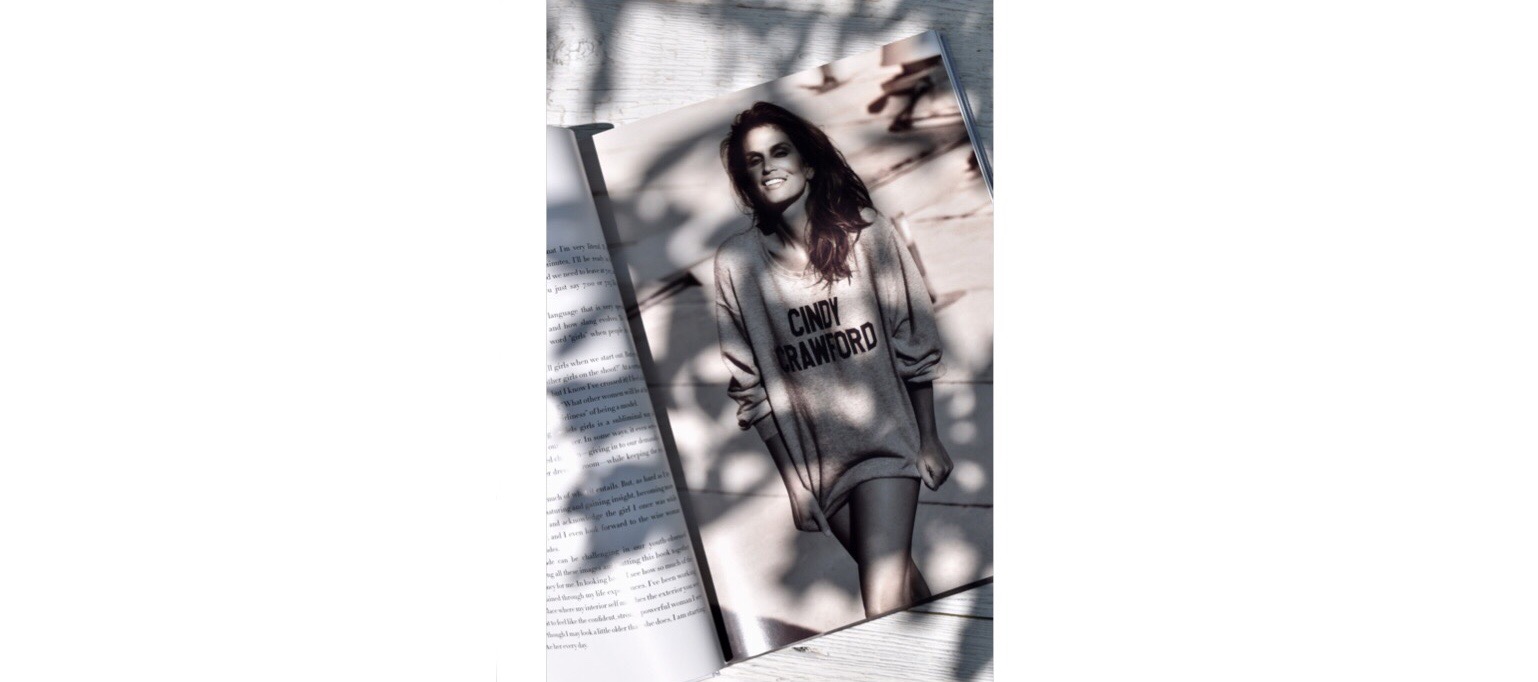
A photo of a good book about cinema. No discursive, pretentious analyses, no verbose scrutiny. Because the idea is to invite you to read the book, not read about it here. But instead of using social media, I use my journal. Back to basics. Take it as a wish to break free of over-reliance on social media (even if it’s just for posting a photo of a good book) for presenting my work, cultural finds and interests. These are things to be enjoyed as stand-alone pieces in a more substantial and meaningful way than showing them in the black hole of Instagram thronged with an audience with a short attention span. This is also a look through my voluminous collection of books about film that I use as research in my adamant decision to rely less and less on the online and more on more on print materials.

Read instead…in print #14

He had a reputation of being temperamental, self-promoting, impossible to work with. But he also did not compromise, could not fake anything, was completely dedicated to his work – a fiercely independent and authentic filmmaker. He didn’t like to be liked, but he wanted and fought for the freedom of doing what he liked unhindered. He begged, borrowed, stole, got bank loans without collateral to make his movies. But his movies don’t judge, don’t tell you what to think; he doesn’t judge his characters, doesn’t separate from them, he accepts their moral and emotional untidiness. The viewer gets involved with his films because they are raw, unfiltered, unpredictable, complex, overwhelming, just like real life is. And John Cassavetes loved life just as it was – and he made films about it.

He pioneered a new form of art – an art liberated from the conventional, simplistic canons of beauty, romance, heroism, right and wrong. And John Cassavetes lived for his art.

And this great book, Cassavetes on Cassavetes, by Ray Carney, tells it all. One of the best, most emotionally charged and most revealing film books I have read so far.


“I think you can do more through positive action than in pointing out
the foibles and stupidities of man. Pictures are supposed to clarify people’s
emotions, to explain the feelings of people on an emotional plane. An art film
should not preclude laughter, enjoyment and hope. Is life about horror?
Or is it about those few moments we have? I would like to say that my life
has some meaning. We must take a more positive stand in making motion
pictures, and have a few more laughs, and treat life with a little more hope
than we have in the past. I believe in people.”


MORE STORIES

Bring back a sample of dirt: Costuming “Once Upon a Time in the West”

Behind the scenes of “Ford v Ferrari”: Interview with production designer François Audouy

Editorial: Every night is Opening Night

Posted by classiq in Books, Film, Read instead...in print | | Comments Off on Read Instead…in Print

June Newsletter: Desperately Seeking Cindy…


Photos: Classiq Journal


… or Charlotte…

Sepia soaked long summer days and Cindy Crawford in frayed faded cutoff denim and simple white t-shirts, white shirts or bodysuits, most probably Alaïa, on sandy beaches. I don’t think I am alone in saying this, that we find life to be the most covetable when exposed to the summer elements – a blast of wind laden with sand in the golden hour, a sun fade, and the taste of saltwater. Or that Cindy Crawford’s athletic, healthy, curvy body still is the epitome of natural beauty. Maybe it’s the very nature of summer – wistful, adventurous, brazen, free – that brings to mind a time pre-Instagram when models and actors had more mystery and grace, and everyone, the public, had their own lives to live. You could only imagine your favourite actor’s or supermodel’s glamorous life and getting to see, for example, Cindy’s famous workout routine, which she filmed in different locales, from the beach to a rooftop, was enough of a sneak peek into her private life. It was enough. You respected their privacy. Because they wanted to keep their privacy.

There is this line towards the end of Tonne Goodman’s book, Point of View, which explores for the first time her life and work, charting Goodman’s career from her modeling days, to her freelance fashion reportage, to her editorial and advertising work, through to her reign at Vogue. She says: “I took part in the evolution from models to celebrity covers.” And that is it. That’s what makes all the difference. Celebrity culture has replaced culture, has replaced fashion, has replaced everything.

Will we ever be able to reclaim our sense of freedom?

Desperately seeking Cindy… or Charlotte… Charlotte Rampling. In her book, Who I Am, (more about it further down in the newsletter), Charlotte Rampling writes “I don’t open up.” I respect that. Charlotte Rampling’s fame is different from that of her peers. People have not learned to read Charlotte Rampling, because she never plays their game. Therefore her presence, in real life and in her movies, is as fresh as her first film. “Ever since I was a small child, I’ve had this feeling – it’s in my nature, and so it’s not even pretentious – that if everyone’s going one way, I will go the other, just by some kind of spirit of defiance.”

Her choice of films was not the result of lucky breaks and good timing. Never easily impressed, she has always sought out the more difficult path, and challenging, even controversial and troubled parts, driven by emotional and intellectual curiosity, such as Luchino Visconti’s The Damned (1969) and Liliana Cavanti’s The Night Porter (1974). “European films were what it was about for me – the sensations I needed, the depth, the storytelling, the characters, the directors, and the freedom that you can’t really find in American films… I could have been a superstar in America – I was certainly taken out there. But I said, ‘No way, José, I’m not staying here in this madhouse.” Her intense gaze is the first thing you notice. Yet you receive no answer. It keeps you guessing. She once said that doing cinema is not about watching yourself. Just like watching cinema is not just about watching.

Will movies ever be able to reclaim their freedom?


Viewing

The films of Christian Petzold. It’s been a long time since I dove into the work of a filmmaker the way I recently have with Christian Petzold’s films. I think Nina Hoss, the protagonist of many of his films, has a point when she says that he is one of the very few author-filmmakers, true auteurs, left – he both writes and directs his movies. Petzold is very good at creating microcosms with his films. Barbara (2012) is set in East Germany, 1980. Barbara (Nina Hoss) is a doctor who works in a hospital in a small provincial town. This is her punishment for attempting to emigrate to the West. She used to work in the biggest hospital in Berlin. Now she is kept under constant surveillance, secluded in the country, with nobody to trust. She does her job systematically, patiently, and she waits. We are waiting, too, patiently, as the tension builds. I loved this film on so many levels and I have recently written about the many visual aspects of the film.

In Phoenix (2014), Nelly (Nina Hoss) is a German-Jewish cabaret singer who survives the concentration camp but her face gets disfigured and has to undergo reconstructive surgery, then tries to return to her old life in Berlin. Her husband doesn’t recognise her and “hires” her as his wife so that he can claim her inheritance. Christian Petzold skillfully merges suspense, revenge, trauma, desperation, destruction, and under his direction a subject that has been (much too) often approached in cinema upends convention, and that has much to do with the way it is told. The ending scene is sublime, the perfect ending, and a perfect ending is not that easy to come by in cinema.

With the same Nina Hoss in the leading role and another beautiful performance, Jerichow (2008) employs noir elements and is the kind of neo-noir that I have been longing to see post-2000s. But beyond the classic film noir theme, a very contemporary issue subtly and when least expected permeates the film: immigration and the Turkish community in Germany. Christian Petzold’s films are films to think about, not to pin down.

There is this recurring visual element in Yella (2007) that is more on the subconscious level until the very end and I like how the film tantalises the mind and does not quite answer all the questions. It is the story of a young and reserved young woman, Yella (Nina Hoss), who leaves her hometown in former East Germany for a promising job at a big company in the West, while trying to escape her unstable ex-husband. The past has a way of making its way to the present in each film, but it appears in a whole different light every time it’s encountered.

Scarecrow (1985)
Jerry Schatzberg

I don’t have one favourite actor. I have many. Film noir is still my favourite genre and I would almost always choose a classic film over a more contemporary one. But my love for movies has stemmed from Al Pacino’s generation of actors. And one night last week I felt like rewatching Scarecrow. And I believe that watching Pacino in any of his 1970s films would be enough for anyone to love film. His presence and magnetism are visible to the naked eye.
 
 
Reading

Who I Am, by Charlotte Rampling, written with Christophe Bataille, is not a biography (and it most certainly is not a celebrity biography), nor a life story, nor a narration. Going back and forth, glimpses into the past, snippets from the present, scattered memories, a search for words and understanding of the unknowable, a look into a rebellious spirit, a poem to her sister who died young.

Hilton Als is an author, a Pulitzer-prize winning critic, a New Yorker writer. But the subject of this interview with him is mainly his approach to Instagram. I get it. I like it.

Légende magazine No 8. Because it is entirely dedicated to Rafa Nadal.
 
 
Listening

Patti Smith, Wave.

New Order, Movement.

In the latest episode of his podcast, Frame & Sequence, Todd Ritondaro talks to photographer Jamie Beck about her life in Provence, photography and her love for everything hand-made.


Making

A selection of artisans’ and artists’ works, limited editions, independent publishings, textile collections and sunny cuisine, one of a kind pieces. A place of meeting, of art and culture and craftsmanship. Sessùn Alma, a project created by the beautiful French brand of the same name, Sessùn. It is a select store located in the Old Port of Marseille, small cafe, shop and space for daydreaming and reading – “This is Marseille. A port is where stories are told,” goes a line from Christian Petzold’s film Transit. Some books and crafts are also available in the online shop. The brand’s encounters and talks with beautiful people in the heart of their studios or workshops are no less fascinating.
 
 
Exploring

The great outdoors! School is almost out for the summer!


”A new approach is needed to re-enchant the world and establish the commonality of all life on Earth.
This is not just the task of politics and philosophy. It requires the effort of all those who tear down
convention in order to preserve what is meaningful. That is, the preservation not just of environments,
but myth, irrationality, autonomy, and joy — whether by direct or poetic means. New islands — of thought,
literature, art — are already emerging. We find these points of orientation, mapping a scattered community
that spans continents and disciplines. To represent a world of many worlds, not a globe.”

Isolarii books


The regulars: The interviews, newsletters and podcasts I turn to every week and/or every month because they are that good. Craig Mod’s newsletters: Roden and Ridgeline. Wes Del Val’s book-ish interviews. Soundtracking, with Edith Bowman. Alicia Kennedy’s newsletter. The Racquet magazine newsletter. The Adventure Podcast: Terra Incognita. The print magazines Monocle and Sirene.
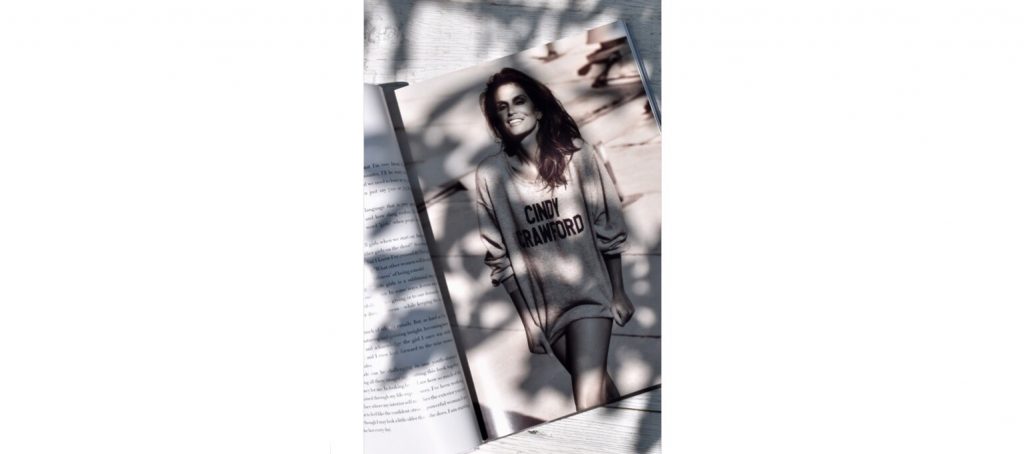


Becoming, by Cindy Crawford with Katherine O’Leary

Posted by classiq in Books, Culture, Film, Newsletter | | Comments Off on June Newsletter: Desperately Seeking Cindy…

Orphée’s Death is Wearing Elsa Schiaparelli: María Casares in “Orpheus”

María Casares in “Orphée”, 1950. Andre Paulve Film; Films du Palais Royal


“The Point is not to understand, but to believe.”

In the Greek mythology, the musician Orpheus descends into the underworld to retrieve his lover, Eurydice, from the dead. Jean Cocteau used this legend as a starting point for his film, a visionary dream-like medium, a glimpse of the phantoms that haunted the poet throughout his life. “His story is so enchanting that it would be crazy to look for another,” Cocteau wrote in Cinémonde, in September 1950, about his source of inspiration, “a mythical bard, the bard of all bards, the Bard of Thrace”. The opening of the film takes us to the Café des Poètes, in St Germain. Cocteau’s Orphée, played by Jean Marais – “Marais illuminates the film for me with his soul” – is a handsome, successful and envied poet, but a vulnerable, fragile and isolated figure nonetheless. His wife, Eurydice (Marie Déa), is a simple, middle-class girl. His Death (María Casares) is an elegant Princess who travels in a Rolls Royce with her chauffeur, Heurtebise (François Périer), “a young Death serving in one of the many sub-orders of Death”, who falls in love with Eurydice.

Orpheé is a film that stands alone. Jean Cocteau had manifold astonishing achievements in all areas of art, from poet, novelist and painter, to playwright, ballet inventor and filmmaker – he was “a gifted, versatile and fecund creator,” as Cecil Beaton described him. He used the medium he thought most appropriate to express a certain idea. And through his films, he wanted to express ideas which could not adequately by expresssed by any other means. And he wanted his films to reach the public, even if the public misunderstood them. The important thing was that the film stirred up thoughts and feelings in the viewer. “Orphée’s Death and Heurtebise reproach Orphée for asking questions. Wanting to understand is a peculiar obsession of mankind,” Jean Cocteau wrote about his film. He didn’t seek out technical perfection, but invention. Orphée has had a powerful influence on cinema due to its inventive filming and visual language and because it literally opened up other worlds. It connected with the imagination on a deep level. The conflict between the real world and the unknowable becomes more likely a bridge between the real and the supernatural because the fantastique brilliantly finds a way in the contemporary setting, in the everyday, in the ordinary. “Do we understand anything about the workings of fate? This is the mysterious mechanism that I have tried to make tangible,” Cocteau said. “The film is a thriller which draws on myth from one side and the supernatural from the other. […] The closer you get to a mystery, the more important it is to be realistic. Radios in the cars, coded messages, shortwave signals and power cuts are all familiar to everybody and allow me to keep my foot on the ground.”

Cocteau set his story in contemporary Paris, a ravaged post-war Paris. He used real life extras wearing the fashions of the day and dancing to contemporary jazz at Café des Poètes. “The costumes in fashion at the time of the performance should be adopted”, he believed. He carefully supervised every aspect of the movie making, as he firmly believed that a film worth making should be scripted, directed, edited, and even produced by the same person. The costumes were no less important and although he entrusted the costumes to designers, the best there were, his control over this particular visual aspect is very clear. Coco Chanel had designed the costumes for his play Orphée, in 1926, and for the film he chose Elsa Schiaparelli.

Jean Cocteau, who told Cecil Beaton that he had led his life “in an unreality made up of fun”, though warned him to be wary of artificial beauty, praised Schiaparelli’s eccentricity as a dressmaker and wrote that her influence spread beyond “a few mysterious and privileged women who destroyed the ‘moderne’ style. In 1937 a woman like Schiaparelli can invent for all women – for each woman in particular – that violence which was once the privilege of very few, of those who might be called the actresses in this drama-outside-theatre which is the World.”
 

María Casares in “Orphée”, 1950. Andre Paulve Film; Films du Palais Royal


Schiaparelli was the enfant terrible of French couture. She started out knowing nothing about dressmaking, therefore her courage had no limits, her designs becoming more and more daring over time. Between 1927 and 1940, “Schiap” continuously revolutionised fashion with practical innovations that we now take for granted, from wraparound dresses, overalls and shirtwaist jackets, to swimsuits with built-in bra (for which she received a patent), wedge heels and folding eyeglasses. She was the first designer to open a ready-to-wear boutique and to stage a runaway presentation as a show, with a set, music, and the skinny models. She brought irony and comedy into fashion, she made it fun for women everywhere whereas insisting on its practicality: “Women’s looks should correspond to their way of life, to their occupation, to their loves, and also to their pockets.”

The fashion designer frequently worked with artists Bebe Bérard, Jean Cocteau, Salvador Dalí, Vertès, Van Dongen, and with photographers Hoyningen-Huni, Horst, Cecil Beaton and May Ray, which “gave one a sense of exhilaration,” she confessed. “One felt supported and understood beyond the crude and boring reality of merely making a dress to sell.” Toward the end of the 1930s, Salvador Dalí hailed Schiaparelli’s workshops as the “beating heart” of Surrealist Paris, and the two of them produced the first true hybrids of clothing and art – they collaborated on a “skeleton” dress with a padded ribcage, and a suit with “bureau drawer” pockets, he decorated the now famous skirt of a white evening gown with a bright red lobster. But working with Jean Cocteau on designing his film and theater costumes – her art as a dressmaker had already merged with Cocteau’s own art, as he had sketched some of her embroideries, like the heads she reproduced on the back of an evening coat – was also a way for her to use her métier as genuine creation, as creator of characters, not just dresses. “A dress can not just hang like a painting on the wall, it has no life unless it is worn.” Dress designing was an art, not a profession for her. “I feel that the clothes have to be architectural: that the body must never be forgotten and it must be used as a frame is used in a building. The Greeks, more than anybody else except the Chinese, understood this rule.”
 

María Casares in “Orphée”, 1950. Andre Paulve Film; Films du Palais Royal


María Casares’ Princess is dark and almighty powerful yet humanly tragic, because love does not escape her. With her long black architectural dresses and her glossy black hair swept back, she is inescapable, enticing and dominant. The ultimate femme fatale. “Death in my film is not Death represented symbolically by an elegant woman, but the Death of Orphée. Each of us has our own which takes charge of us from the moment of birth. So Orphée’s Death, exceeding her authority, becomes Cégeste’s, and Cégeste says to her – when she asks: ‘Do you know who I am? – ‘You are my Death’, and not ‘You are Death’.”

When speaking about Elsa Schiaparelli‘s creations and muses in the book Schiaparelli & Prada: Impossible Conversations, Andrew Bolton and Harold Koda use the expression jolie laide, which describes an erotic alchemist whose potent allure – an elixir of nerve, will, and ardor – transcends her homeliness. María Casares, one of Schiaparelli’s muses, was one of the most memorable women in France to fit the description. “The charisma of these performers gave a radiance to their witchy features that makes the prettiness of a perfect face seem insipid by comparison,” the authors conclude.

Never a conventional beauty herself, Elsa Schiaparelli was never afraid of being different, using her imaginative creations to flourish and raise above the others – “I would be the only woman of my kind in the whole world.” Despite being who she is, the Death of Orphée, and despite her essential coldness and somber look, the Princess has this invincible female vitality fueled by fantasy, and Eurydice’s warm, domesticated femininity indeed seems insipid and dreary by comparison. Eurydice is firmly rooted in the pastoral environment, static, undemanding, dull, while the Princess is exciting, mysterious, appealing, dangerous, ….from another world. Orphée’s choice is inevitable.
 

Editorial sources: The Art of Cinema, by Jean Cocteau, compiled and edited by André Bernard and Claude Gauteur / Schiaparelli & Prada: Impossible Conversations, by Andrew Bolton and Harold Koda / Vogue on Elsa Schiaparelli, by Judith Watt / Cecil Beaton Portraits & Profiles, edited by Hugo Vickers


MORE STORIES

A study in black Yves Saint Laurent: Romy Schneider in “Innocents with Dirty Hands”

The class, the witt, the style: Revisiting The Thin Man and its style

Emotionally caged and extravagantly clad: The Bitter Tears of Petra von Kant

Posted by classiq in Film, Film costume | | Comments Off on Orphée’s Death is Wearing Elsa Schiaparelli: María Casares in “Orpheus”

Read Instead…in Print

 
A photo of a good book about cinema. No discursive, pretentious analyses, no verbose scrutiny. Because the idea is to invite you to read the book, not read about it here. But instead of using social media, I use my journal. Back to basics. Take it as a wish to break free of over-reliance on social media (even if it’s just for posting a photo of a good book) for presenting my work, cultural finds and interests. These are things to be enjoyed as stand-alone pieces in a more substantial and meaningful way than showing them in the black hole of Instagram thronged with an audience with a short attention span. This is also a look through my voluminous collection of books about film that I use as research in my adamant decision to rely less and less on the online and more on more on print materials.

Read instead…in print #13

In Pictures at a Revolution: Five Movies and the Birth of the New Hollywood, Mark Harris tells five stories at a time, about the making of five movies (Bonnie and Clyde, The Graduate, Guess Who’s Coming to Dinner, In the Heat of the Night, Doctor Doolittle) at a pivotal moment for the future of the American cinema, in the 1960s, and the birth of the New Hollywood. It is a great account of making movies. It is also a great account of the social and cultural scene of the period. It is the story of a moment in time, of the ideas, politics and art surrounding the world of cinema, while the writer’s main preoccupation remains how the movies were made.

“All movies are gambles; each one begins with a prayer that what seems like a brilliant idea to its writers and directors and producers and actors at the moment it is kindled will still have meaning after years of fights and compromises and reconceptions and struggles, when it comes alive on a screen.”


MORE STORIES

Read instead…in print #12: Lulu in Hollywood

A Southern girl who was dying to get out of the South: Faye Dunaway in Bonnie and Clyde

Bob Willoughby, the photographer who was as great as the stars he shot:
Interview with Christopher Willoughby

Posted by classiq in Books, Film, Read instead...in print | | Comments Off on Read Instead…in Print

Talking Film Costume: Nina Hoss in “Barbara”

Nina Hoss in “Barbara”, 2012. Schramm Film Koerner & Weber


East Germany, 1980. Barbara is a doctor who works in a hospital in a small provincial town. This is her punishment for attempting to emigrate to the West. She used to work in the biggest hospital in Berlin. Now she is kept under constant surveillance, secluded in the country, with nobody to trust. She does her job systematically, patiently, and she waits. We are waiting, too, patiently, as the tension builds.

Played superbly by Nina Hoss (a great actor with wonderful roles in films such as Phoenix, 2014, also directed by Christian Petzold, and Homeland series), Barbara, the title character, lives an entrapped life controlled by others, but she never shows fear, her inner turmoil hidden under her inscrutable face. “It was a role where I knew there would be no possibility of talking much, to explain her,” Nina Hoss revealed in an interview for Film Comment after the film’s release, in 2012. “I would have to do a different kind of work, to make it interesting, her being silent, but always being present. I had to create a backstory. It was very crucial for this part, that I knew why she tries to hide her true self. I thought she was [originally] a very lively, positive person.”

Barbara indeed doesn’t talk much, doesn’t smile much. She just does her job, remains impassive every time she has her apartment searched, is reluctant in making conversation with the hospital’s charismatic director and colleague doctor André (Ronald Zehrfeld). Is he a friend or an enemy? She lives every day on the watch-out, always looking over her shoulder or out the window. The threat can come from anywhere. “I talked with people a lot,” Nina further disclosed in the interview. “What was it like, this feeling that you can’t talk freely? You had to go into the forest to talk, because sometimes it was your husband who spied on you. The subtleness of that threat was even more horrible than the obvious one, where you’re already in the grip of the state, interrogations and prisons. That is another horror. But what infected the society was everywhere, and you didn’t see it. And that’s what they all described. As well as all the beauty, and that’s what we wanted to portray, the area in all its vibrant colors. Not gray. It must be hard to leave that country. It’s hard for Barbara to make this decision.”

The vibrant, rich, saturated colours are the first thing you notice, revealing a pronounced natural beauty. The lush, green forests and surroundings are quivering, filled with life and movement, and in striking contrast to the cold human relationships and the silence and quiet fear that envelop the characters. The film has a mood, an atmosphere that takes you to a world led by paranoia and constant uncertainty. It does it subtly, it’s an underlying feeling, very unsettling and very real.
 

Nina Hoss in “Barbara”, 2012. Schramm Film Koerner & Weber

 
Another thing you notice right away is the character herself and her costumes. There is nothing obvious about them, just the contrary. It’s the feeling she projects. It’s not just because of her statuesque figure, but she somehow looks different, despite her wearing navy blue and other subdued colours, her look resembling a uniform. Maybe because she was forced to leave Berlin and she doesn’t plan to stay here long. She took what she felt most comfortable in, what was most inconspicuous. But she also represents a modern woman, coming from the big city, with a lover from the West, planning to flee the country, and that’s also something costume designer Anette Guther had in mind when she created the wardrobe, as she recalled in her interview with Céleste Durante for her podcast Profession: Costumière.

Barbara was the first period film for Anette Guther, who has made eight films with Christian Petzold, a director who understands how film costume works, aesthetically and psychologically, and who trusted her with the costumes. Anette Guther’s work on the film involved a lot of research in libraries, photos from the personal archive of one of her assistants, who had grown up in East Germany and whose mother had been a nurse, and watching a lot of documentaries. Another source of inspiration was a lady in Berlin who had a boutique where she sold high-end fashion clothes, such as Yves Saint Laurent, which were not otherwise available in Communist East Germany. Some of the costumes were made, like the shoes, and the costume designer was careful not to create something too fashionable, because she believes that “if you see a film ten years after it’s made, it should still look classy and good.”

I have just watched this film, ten years after its release, and it looks classy and realistic. Barbara’s uniform look very much sums up the context in which the character lives, her restraint and isolation. Which is why when Barbara goes to the woods to meet her lover from the West, her look, a halter-neck, silky beige flowing dress that falls just below the knees, is so striking, even surreal – the shot from behind when she steps into the forest looks depicted from a fairy tale. It’s like a glimpse into her past, a moment of respite that she allows herself amidst the strain of her day-to-day life governed by angst and repressed feelings. That’s such a beautiful and timeless look, especially that it’s kept understated by the way she wears the oversised cardigan on top. A modern woman who is ahead of her times, but not of her surroundings. Nature and character compliment each other. It becomes her ally, because it can’t betray her.
 

Nina Hoss in “Barbara”, 2012. Schramm Film Koerner & Weber


MORE STORIES

From the period authenticity of Meek’s Cutoff to the contemporary realism of Boys Don’t Cry: In conversation with costume designer Vicki Farrell

The Lost Daughter: In conversation with costume designer Edward K. Gibbon

La enfermedad del domingo: In conversation with costume designer Clara Bilbao

Posted by classiq in Film, Film costume | | Comments Off on Talking Film Costume: Nina Hoss in “Barbara”