“Badlands” at 50: Timeless and Still Timely

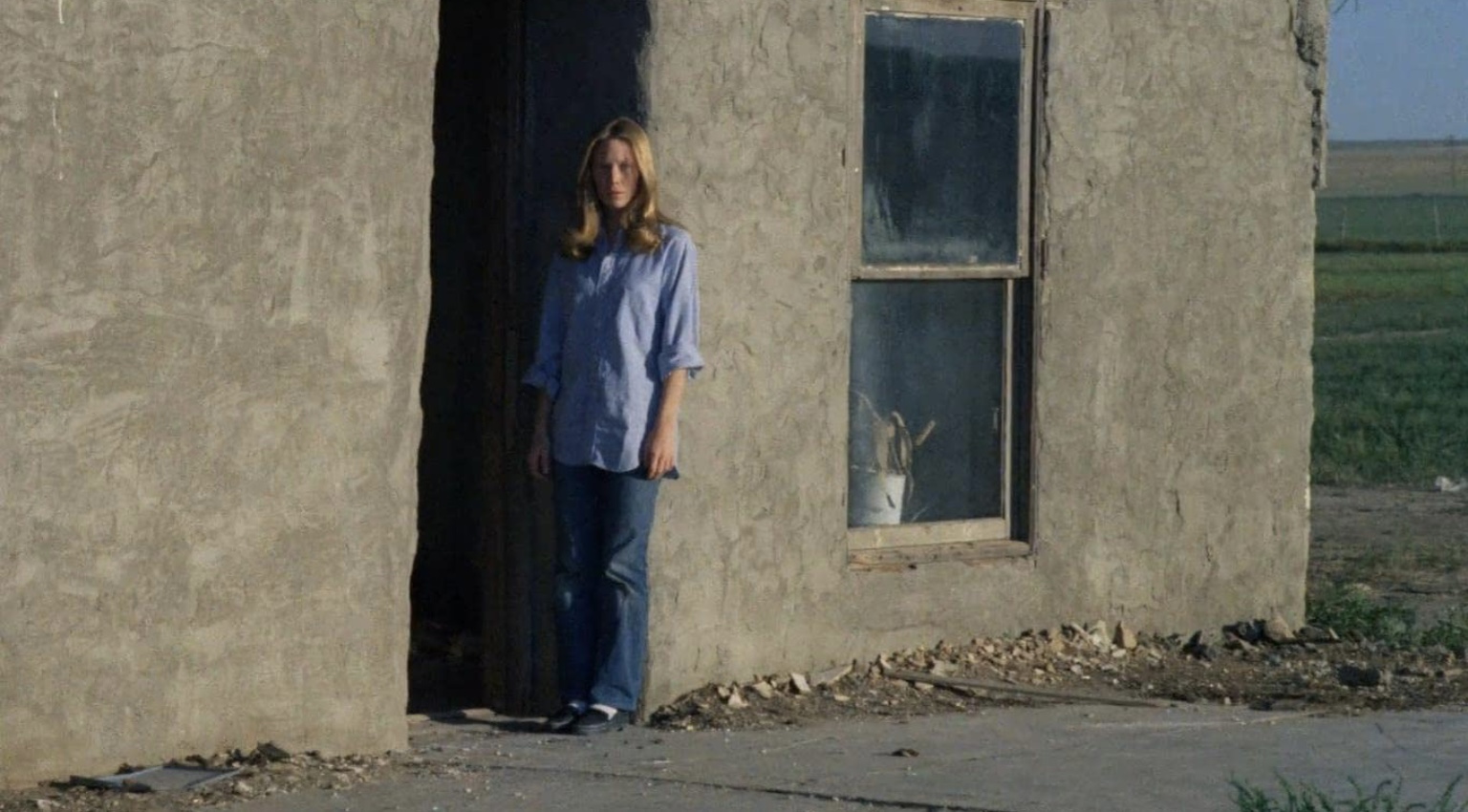
Sissy Spacek in “Badlands”, 1973. Warner Brother, Pressman-Williams, Jill Jakes Productions


Holly is a fifteen-year old girl living in a South Dakota town with her father. “Little did I realise,” she narrates in voice-over twirling her baton on the street, “that what began in the alleys and back ways of this quiet town would end in the badlands of Montana.” What begins in the alleys and back ways of her quiet little Texas town is a love story with Kit, a subdued, wild and edgy young man ten years older than her.

Badlands (1973) was Terrence Malick’s astounding first feature film, a cinematic free verse, a visually lyrical ballad loosely based on the actual case of Charles Starkweather and Caril Ann Fugate, teenage lovers, who went on a killing spree in Nebraska in the late 1950s. Badlands introduced us to the unique talent of Terrence Malick and to many of the distinctive elements in his movies: the poetic approach to narrative and character, the shooting in natural light, the innovative editing, the use of voice-over, the collision of human suffering or violence with natural beauty – it is the director’s particular film-making style that makes a story that has been told many times, of two lovers who are criminals and are pursued across America, an original.

In the film, Caril Ann is Holly Sargis (Sissy Spacek), and Starkweather is Kit Carruthers (Martin Sheen). Much of the story is told in voice-over by Holly, setting the tone of a fairy tale humming of a world out of our reach. “It is some of the most beautiful language ever written for film, and I still get chills hearing it,” Sissy Spacek recounts in her autobiography, My Extraordinary Ordinary Life. “But it also contains the funniest, most deadpan lines I’ve ever read. While looking out at the bleak, featureless landscape, Holly says: “Kit told me to enjoy the scenery, and I did.” The genius of Badlands is that Terry somehow made it possible for the audience to forgive a Holly for her complicity in the murders because of her innocence and pliability. Or, as she puts it, “When Kit says ‘frog’, I jump.””


Martin Sheen and Sissy Spacek in “Badlands”, 1973. Warner Brother, Pressman-Williams, Jill Jakes Productions


An unknown and untrained actress at the time, Sissy Spacek met twenty-eight years old Terrence Malick not long after she arrived in Los Angeles and they immediately bonded over their mutual Southern roots: “He was an old soul, with an easy laugh and a gentle way about him. He spoke in a quiet drawl that I immediately recognized as coming from my corner of the world. We shared a love of the Southwest and small-town Texas. We’d both grown up there in the 1950s and were deeply connected to that time and place. From the moment we met, we felt like family. We knew the same things, and could communicate them without speaking. I was thankful that I’d ignored all those New York agents who told me to lose my accent and hide my Southern roots. Terry hired me for the film because of all those things. I hadn’t changed, I was still a small-town girl from Texas, that was what he wanted for the role of Holly Sargis, a naive, impressionable high school girl who falls for Kit Carruthers, a charming, sociopathic young garbage man who happens to shoot people.”

In one of his very rare interviews, for Sight & Sound, 1975, Terrence Malick described his female protagonist as “a typical Southern girl in her desire to help, to give hard fact, not to dwell upon herself, which to her would be unseemly, but always to keep in mind the needs of others. When they’re crossing the badlands, instead of telling us what’s going on between Kit and herself, she describes what they ate and what it tasted like, as though we might be planning a similar trip and appreciate her experience.”

Sissy was included in the film’s creative process from the very beginning. Terrence Malick even worked her twirling routine into the script after he found out she had been a majorette. Sissy was also included in the casting. “The moment Martin walked into the room, everything changed. The chemistry was immediate. Martin wore his hair slicked back and had a swagger like James Dean, and he looked plenty young. I had done that scene with dozens of actors – wonderful actors – but with Martin, it was completely different. He was Kit. And with him, I was Holly. Terry and I could hardly contain ourselves. After Martin left, we were like giddy school kids.”


Martin Sheen in “Badlands”, 1973. Warner Brother, Pressman-Williams, Jill Jakes Productions


Initially deemed too old for the part, first by Terrence Malick (in the script, Kit was 19 years old) and then by himself when he read the script, Martin Sheen (31 at the time) eventually turned out to be perfect for the role as a 25-year old misfit – Malick changed the character’s age to better serve the story and his actor. It’s incredibly moving how Martin Sheen recounts his casting in what he considered the role of his life: “Finally, someone had seen something in me that I knew was there but couldn’t get anyone else to see.” Malick gave both Martin Sheen and Sissy Spacek the freedom to inhabit their characters, coaxing the most nuanced performances from them. Just like Jack Fisk, Malick’s frequent art director and future husband of Sissy Spacek, who “would leave behind an abundance of riches, and a complete environment for us to work in.”

Kit is intriguing, projecting this mixed image of confidence, narcissism and indifference. A character who seems to appear from nowhere and which you don’t know what to do with, not unlike James Dean in the 1950s when the story of the rebel smoker in a red windbreaker became the story of an entire generation that grew up overnight. “Starkweather projected this very disarming image, everybody could relate to him,” Martin Sheen described his character in the documentary Making Badlands. “Murder spree aside, he was very, very interesting, and he gave us this insight glimpse into the very worst part of ourselves. His character, his image of himself, it made the country step back a little and say we’re more into image than reality. And this guy is a reflection of that.”


Martin Sheen and Sissy Spacek in “Badlands”, 1973. Warner Brother, Pressman-Williams, Jill Jakes Productions


Reflecting on the character, Malick said in the Sight & Sound interview: “Kit [sees himself] as a subject of incredible interest to himself and to future generations. The movies have kept up a myth that suffering makes you deep. It’s not that way in real life, though, not always. Suffering can make you shallow and just the opposite of vulnerable, dense. It’s had this kind of effect on Kit.”


“So baby let’s sell your diamond ring.
Buy some boots and faded jeans and go away.
This coat and tie is choking me…”

Waylon Jennings, Luckenbach, Texas


During the car chase, when the policemen are almost on top of him, Kit keeps checking his hair in the mirror. Kit fashions himself an outlaw eager for notoriety, an aimless garbage man who has the Dean look – “I guess I’ve always wanted to be a criminal, but just not this big a one,” he tells one of the policemen when asked why he did what he did. Immediately after, the policeman resembles him to James Dean, and by the smile on Kit’s face, that’s exactly what he had been after.

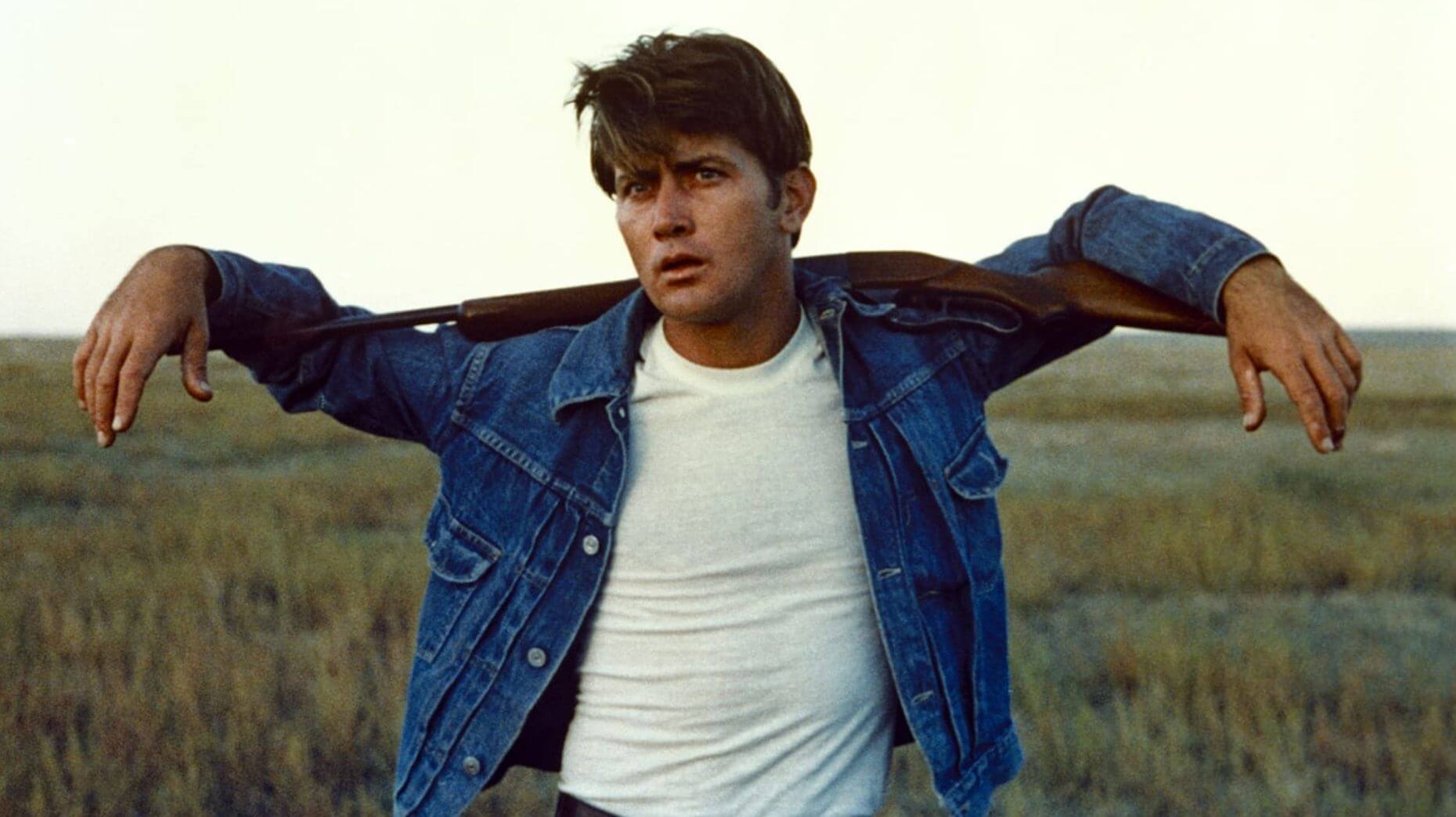
Kit wears his convictions, or lack thereof, on the outside. He is fit, wears a white T-shirt, blue jeans and a trucker denim jacket and smokes Lucky Strikes. He somehow knows that just by wearing that white t-shirt and blue jeans, he screams with defiance. He is also particularly fond of his two-toned cowboy boots with ornate leatherwork, which he wears all the time (whether deemed inappropriate by others or not), once again reminiscing James Dean, both on screen (Giant) and off (it was James Dean who made the cowboy boot the footwear of choice for the first rebel generation). Just like denims, the cowboy boot was secured its place as a symbol of American history and individualism.

The 50s are kept to a bare minimum, which, reportedly, was Malick’s intention, and what better way to do that than using the look that had given the rebellious teenager without a cause an identity in the 1950s? Holly immediately resembles Kit with James Dean in her voice-over narration. Kit draws a connection to James Dean throughout the entire film, from his clothes and the way he combs his hair, to the way he carries himself and the way he poses with a rifle slung over his shoulders deliberately evoking Dean in Giant. Jeans even become symbolic of what is to come, when Holly sits on her porch, talking to Kit, him wearing his jeans and white tee… it’s that quiet moment before everything erupts, of waiting for someone, thinking of someone, becoming someone.
 

Sissy Spacek in “Badlands”, 1973. Warner Brother, Pressman-Williams, Jill Jakes Productions


Terrence Malick didn’t want to make his film about the real story behind it. Neither does he seek to explain their crimes. Indifferent to the conventions of the American film industry, his story seems to exist outside conventions and outside time. “Terry always separated the reality and the brutality of the Starkweather incident from what we were doing,” Sissy Spacek recalled. “He never said this is that story, he didn’t want us to do research, he didn’t want me to look like Caril Ann, but I think that as a very young person, like the rest of the country, he was affected on a very deep level.” In the Sight & Sound interview, Terrence Malick named various other influences, such as the books The Hardy Boys, Swiss Family Robinson, Tom Sawyer, Huck Finn, “all involving an innocent in a drama over his or her head. I wanted the picture to be set up like a fairy tale, outside time, like Treasure Island.”

When Holly leaves with Kit, he makes her take her schoolbooks so that she doesn’t fall behind. But they soon get caught up in their own world, far from reality. They filmed on location in La Junta, Colorado. “Sometimes the sky seemed so blue and limitless that it had a weight of its own, pressing down on us and wiping out all memories of the other world beyond the one we inhabited at that very moment,” Sissy Spacek narrates in her book. “Out on the edge of nowhere, working with a virtuoso first-time director on a shoe-string budget and always perched on the edge of disaster, nothing else mattered, or even existed. It felt like we were the center of the universe.”


Martin Sheen and Sissy Spacek in “Badlands”, 1973. Warner Brother, Pressman-Williams, Jill Jakes Productions


Sissy Spacek is totally believable as a fifteen year old (she was ten years older), and all the more unnerving as this blank, emotionally immature, compliant little girl. We meet her playing in the backyard wearing white shorts and a navy t-shirt. She has a childlike inability to grasp the enormity of their actions, and everything that has to do with real life. Both Kit and Holly are incapable to react with any kind of emotion to the crimes, to death. In their relationship as well, although they are romantically involved, they seem to be like children role-playing.

For star-struck Holly, Kit could have come out right out of her film magazines. Kit and Holly know nothing about responsibility, like two aimless children on the road to nowhere. She compliantly follows Kit because she has a crush on him and because she doesn’t have any other ideas. This, unfortunately, is too much and too painfully a reflection of iGen, or the Internet Generation. Children who refuse to grow up, completely unprepared for maturity, ready to annihilate everyone who thinks differently because society is anyhow incapable of teaching them to think by themselves, so they remain passive and follow others, governed by the image culture, being perfectly ok with being told what to think. Luckily for Kit and Holly, their life remains a story, one of the greatest stories ever told, one in Terrence Malick’s unique style.
 

Martin Sheen in “Badlands”, 1973. Warner Brother, Pressman-Williams, Jill Jakes Productions


“I’d been a part of making a nearly perfect movie,” nostalgically concludes Sissy Spacek, “and if I never did another film again, it would be okay, because it was enough to have done Badlands. Terry Malick went on to direct a succession of brilliant, complex films, from Days of Heaven to The Tree of Life, always with Jack by his side as production designer. But nothing has ever really matched the magic of discovery we all felt that summer in the Colorado desert, when we learned how a film could be a living, breathing, collaborative work of art.”


Martin Sheen and Sissy Spacek in “Badlands”, 1973. Warner Brother, Pressman-Williams, Jill Jakes Productions


MORE STORIES

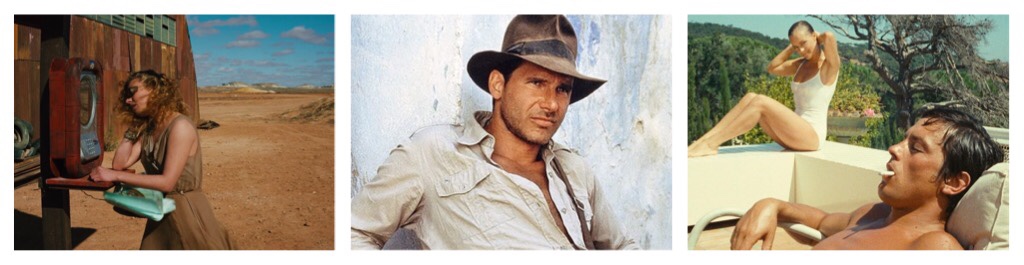
Solveig Dommartin is wearing Yohji Yamamoto in “Until the End of the World”

This summer we’re channelling: Indiana Jones and the Raiders of the Lost Ark at 40

The searing style of Jacques Deray’s “La Piscine”
Posted by classiq in Film, Film costume | | Comments Off on “Badlands” at 50: Timeless and Still Timely

Read Instead…in Print


“Show the action, for Chrissakes, don’t describe it!
It’s a motion picture you’re making,
not a god-damned radio show.”


Read instead…in print #24
 

Samuel Fuller’s movies touched on much more diverse subjects, such as race, discrimination, social injustice, psychological thriller, western, with stories drawn from real lives, with characters human, many times deeply disturbed, flawed, ordinary people in extraordinary circumstances. He didn’t judge nor favour his characters, that’s not a writer’s job, he observed, recounted, described. He hardly cast stars in his movies, he didn’t want simplistic, make-believe tales and mystifying false heroes and idols, he wanted reality depicted in his stories, gripping, hard-hitting, truthful stories with believable characters without sugar coating.


“I’d like to inspire others to be hopeful and daring,
to follow their dreams, no matter the odds!”


He made his first film, I Shot Jesse James (1949), a western without it being a western, not in the John Wayne-western kind of way anyhow. It is a portrait of guilt and psychological torment, with the real violence happening in the criminal’s mind. Every time you see Bob Ford (John Ireland) walk after he shots his friend in the back and is acquitted, you see a man descending into his own hell, you see the psychological load he is carrying on his shoulders. Park Row (1952), named after the street in Manhattan where all the important newspapers in New York City were located, was a film Fuller produced himself with his own money because no studio would back him up, it was his tribute to his newspaper years, to the lives of those early reporters and editors who were the backbone of New York newspapers and to the birth of free journalism. White Dog (1982) was an uncompromising film that conveys a racial tolerance message through events that unfold in the eyes of a dog that was destroyed by a crippeled, twisted society when he was a puppy, having been trained to attack black people. This may as well be the most original, shocking, truth-grabbing movie on American racism ever made. It was misunderstood and withheld from release in America when it was made.


“In those days, memory was in a person’s mind,
not in his computer’s electronic chip.”


Sam Fuller was an original. Facts were the bedrock of his stories. He was after the truth, nice or ugly, just as in journalism, and gave it to you straight. But he put just as much imagination into his characters and action. His extraordinary autobiography, A Third Face: My Tale of Writing, Fighting and Filmmaking, offers a great insight into original filmmaking.


Read instead… in print is about a good book about cinema or filmmakers. No discursive, pretentious analyses, no verbose scrutiny. Because the idea is to invite you to read the book, not read about it here. But instead of using social media, I use my journal. Back to basics. Take it as a wish to break free of over-reliance on social media (even if it’s just for posting a photo of a good book) for presenting my work, cultural finds and interests. These are things to be enjoyed as stand-alone pieces in a more substantial and meaningful way than showing them in the black hole of Instagram thronged with an audience with a short attention span. This is also a look through my voluminous collection of books about film that I use as research in my adamant decision to rely less and less on the online and more on more on print materials.


MORE STORIES

Read instead…in print #14: Cassavetes on Cassavetes

Real emotion and visual power: Interview with film poster designer Matt Needle

Read instead…in print #11: Picture, by Lillian Ross

Posted by classiq in Books, Film, Read instead...in print | | Comments Off on Read Instead…in Print

The Look of Reservoir Dogs: Rooted in Jean-Pierre Melville’s Films, Fashioned by Agnès b.

”The black suits of armour”. Reservoir Dogs, 1992. Live Entertainment, Dog Eat Dog Productions Inc.


A fashion designer who loves movies is not interested in the fleeting fashion. They are interested in making clothes that go beyond trends and the ephemerality. They are interested in people, people for whom clothes are part of their personality. Agnès Troublé is an artist, someone who has always been knowledgeable of and has always drawn inspiration from cinema, music, photography, the fine arts to make clothes. Such vast inspiration, so simple the clothes. Because sophistication is in simplicity. The more you know, the less you want to reveal through your appearance. She has never followed the norm, went against the stream, never radical but always seeing forward, relaxing the men’s rigidness and breathing androgyny into the women’s line. She went for practicality, for fluidity and lightness, for sensual over sexy, for discrete over ostentatious, for subtlety over revealing everything. She loves clothes, not fashion.

Agnès Troublé (the “b” of Agnès b. comes from Agnès’ first husband, Christian Bourgois) was named fashion editor at Elle Paris after another editor, Anne Rivemale, had noticed her mix and match style at a dinner, she designed the T-shirts for the movie Who Are You, Polly Maggoo?, William Klein’s satire about the fashion industry, and pink ski combinations for Jean-Claude Killy’s brand, worked at Cacharel, then opened her first store in 1975 and the brand agnès b. took flight in the 1980s. Snap cardigans, rider jackets, long t-shirt dresses, leather pants, stripes, polka dots, black and white, Rock ‘N’ Roll Is Not Dead! prints season after season in white ink on white agnès b. t-shirts. Timeless style. Agnès b. is one of the most revered fashion brands worldwide, but Agnès’ creativity greatly expands beyond the world of fashion, forming life-long relationships with so many creatives from so many artistic fields – life itself and people and street style are her greatest inspiration.


Quentin Tarantino as Mr. Brown in Reservoir Dogs, 1992. Live Entertainment, Dog Eat Dog Productions Inc.


But cinema remains one of her greatest passions. She grew up watching the animated series Princess Sissy, Walt Disney’s Dumbo and Si Versailles m’était conté, as revealed in the book Agnès b.: Styliste. It was Christian Bourgois, who would become her first husband, who introduced her to the black and white American films of the 1930s, 1940s and 1950s, and she “quickly brought herself up to speed by attending two showings each night of movies ranging from the great American Westerns to the movies of the French New Wave filmmakers.” In 2013, she forayed into film, directing her first feature, Je m’appelle Hmmm…. Agnès is also a keen photographer, often imprinting her clothes with her own photos, owns exhibition places in Paris, New York and Hong Kong, has helped increase the patronage of film festivals such as the Directors’ Fortnight in Cannes and The Sarajevo Film Festival after witnessing the atrocities of the war, and of film libraries in Paris and Tangier. Her pioneer spirit is relentless.

Her clothes have been worn by David Bowie, Patti Smith, Brian Molko, David Lynch, Jim Jarmusch, Harvey Keitel. Her suits were worn by the cast in Reservoir Dogs, she made John Travolta’s black jacket in Pulp Fiction, styled Jean-Pierre Léaud in many of his films, spotted Fanny Ardant wear an Agnès b. watch in François Truffaut’s last film Vivement dimanche, and printed the works of Dennis Hopper on her t-shirts. She named her first movie production company Love Streams after she met Gena Rowlands and the actress gave her permission to use the name (the title of the last film John Cassavetes and Gena Rowlands made together). From the very beginning, in the Agnès b. shops, movie posters hung alongside clothes and music was playing on the turntable. She is a rock star, a poet, a storyteller, a free spirit, a dreamer, a maker. She has created her own universe and like-minded artists and people from around the world have found their place in it as well, her work blossoming into popular culture.

When David Bowie was wearing her clothes, including her signature Breton top, but no one knew it was Agnès b., she didn’t tell anyone. She doesn’t like to advertise, she has never held a marketing meeting. She has done her own thing, always. That’s the definition of cool. She is above fashion.


Mr. White (Harvey Keitel) and Mr. Pink (Steve Buscemi) in Reservoir Dogs, 1992.
Live Entertainment, Dog Eat Dog Productions Inc.


Titled Reservoir Dogs because “it just sounded good,” and filmed in less than five weeks, in the summer of 1991, Quentin Tarantino’s first feature film is a gangster story about a robbery gone awry and “just people talking to each other.” That’s how Tarantino referred to it when attending the Sundance Film Festival for the premiere of his film, where he got to talk to Gale Anne Hurd, a big film producer and Brian de Palma’s wife. The remark was directed at Brian de Palma, as Tarantino knew that de Palma didn’t like movies where people talk to each other.

The film is firmly rooted in place, the cafés and diners of L.A.’s Highland Park, while the language belongs to the 1990s. But the costumes could belong to any decade, from the 60s to the present day. In their black suits and skinny ties, Tarantino’s gang members look like gangsters from Jean-Pierre Melville’s films. Melville has had a great influence on Tarantino (and other American filmmakers such as Michael Mann and Jim Jarmusch). “They didn’t make genre films the way Jean-Pierre Melville did. The way I do. The way Walter Hill does, the way John Woo does, the way Eli Roth does. As students of genre cinema, we make genre films because we love genre films. They made genre films because they were good at it and that’s what the studios would hire them to do,” Tarantino writes in Cinema Speculation about how Sam Peckinpah and Don Siegel approached genre filmmaking differently.

In a true homage to Melville, Tarantino refers to the iconic costumes in his film as “the black suits of armour”. Melville’s characters, too, were dressed in suits of armour. Throughout his career, Jean-Pierre Melville retained a passion for all things American and especially for the classic Hollywood gangster and noir movies. He eagerly borrowed the iconography of the genre – the snap-brim hats, the belted trench coats, the crooned music, the cars and nightclubs, but made its conventions entirely his own, tailored on his highly stylised world. He also drew inspiration from the Japanese culture and cinema. But whatever the influence, Melville’s films are his own, an individualistic genre, made by a filmmaker who, just like Tarantino, made genre movies because he loved them, infused by understatement and a sense of cool, an idealised world of mobsters and thugs, living and dying by a certain code of honour. Melville’s characters are their own. And they dress the part. In a career-defining performance, in the role of a Parisian contract killer who has realised he is being double crossed by his employees and seeks revenge, Alain Delon conjured Melville’s perfect anti-hero in Le Samouraï. Delon’s exceptional good looks and impeccable look meet Melville’s idea of the gangster as an image. Clothes make the man in Le Samouraï. The trim grey suit, the black slim tie and white button-down shirt, the black suit, the inky wool coat, the hat, the trench. Alain Delon recedes in his solitude and in the safety of his trench coat. It’s his armour.


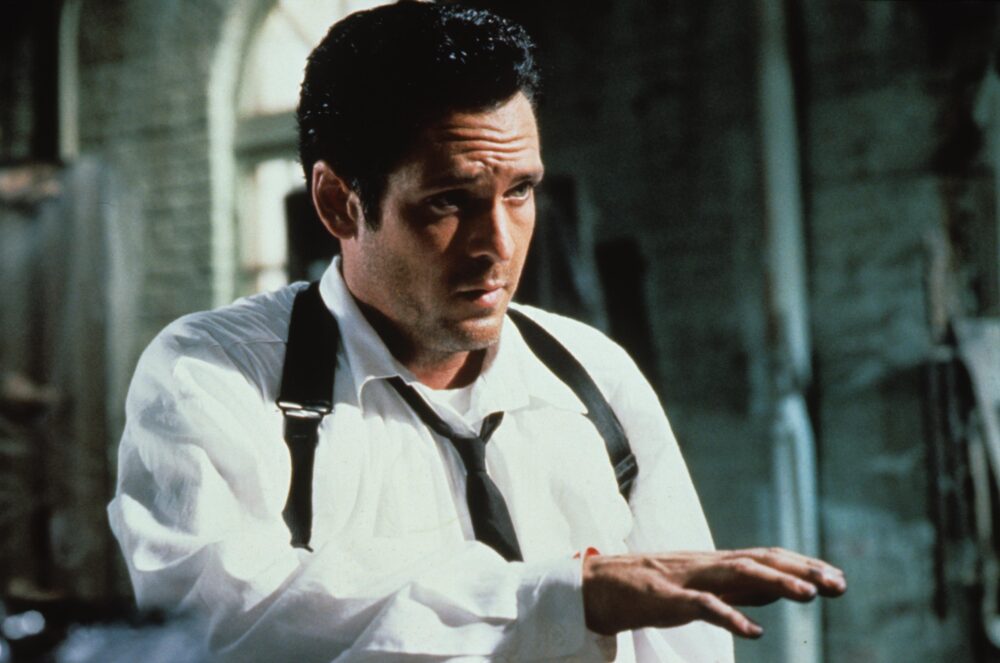
Mr. White (Michael Madsen) in Reservoir Dogs, 1992. Live Entertainment, Dog Eat Dog Productions Inc.


Quentin Tarantino’s influences may be very specific and very vast, but his universe and characters are entirely his own. He is that rare breed of filmmaker who doesn’t give up until he delivers the exact vision that is in his head. In an interview for Esquire magazine, costume designer Betsy Heimann recollected how she met with Quentin Tarantino to discuss the Reservoir Dogs script and talk about the movie visually, then went to his house and Tarantino showed her a lot of French noir films starring Alain Delon. She drew on that to further develop the characters: “Well, all these guys are in suits. And we’re talking about guys who have just got out of jail and want to be anonymous. What can they do? They could go to a thrift store, buy a black suit, a white shirt and a tie, and they could afford it.” So Tarantino went to the Agnès b. store in Los Angeles to shop for the film. Actually, only two of the actors came to actually wear suits, as Tarantino’s budget was very tight. One of the actors dressed in an Agnès b. suit was Harvey Keitel, as Mr. White, who is also the boss, so that makes perfect sense. Harvey Keitel also knew the designer personally. For the rest of the cast, Betsy Heimann had to improvise. For Tim Roth and Steve Buscemi, for example, she used black jeans and narrow, black, ‘60s-cut jackets to recreate the look. Nobody could tell it wasn’t a suit. For others, she used navy instead of black, after discussing it with cinematographer Andrzej Sekula and he confirmed that navy would photograph black. “If you went to a thrift store, you’re not going to find a complete suit, so it’s a case of here’s the jacket, here’s the pants. I wanted different silhouettes for different characters – the collar stands, the length of the collar, the width of the tie, the type of shirt fabric, the style of the jacket – and that’s what creates the unique look of Reservoir Dogs.”


MORE STORIES


Solveig Dommartin is wearing Yohji Yamamoto in “Until the End of the World”

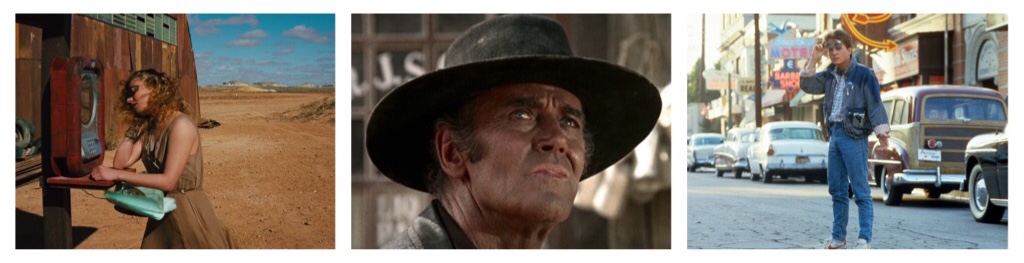
Bring back a sample of dirt: Costuming “Once Upon a Time in the West”

The process is the same: You build the character!:
Interview with costume designer Deborah L. Scott

Posted by classiq in Film, Film costume | | Comments Off on The Look of Reservoir Dogs: Rooted in Jean-Pierre Melville’s Films, Fashioned by Agnès b.

May Newsletter: Bad Guys We Like, High Fidelity and Drops of Summer

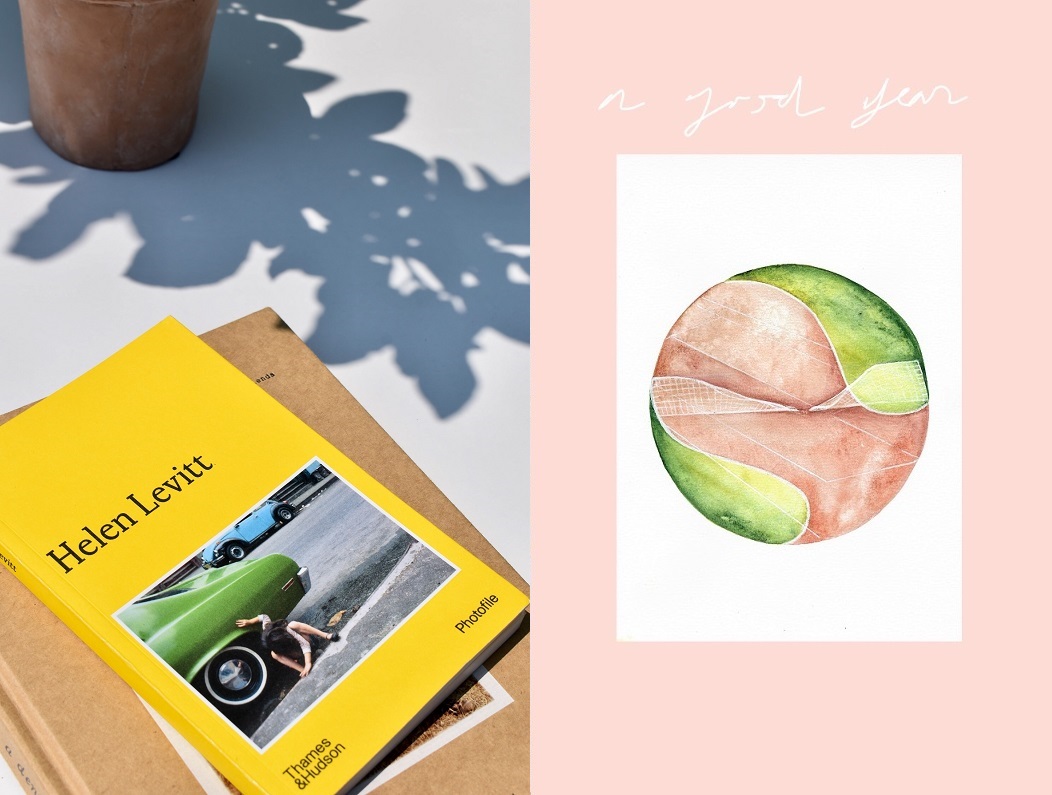
Right: “A Good Year” fine art tennis print after a watercolour illustration,
available in the shop and part of a larger “Classiq Journal x Realign” collaboration, set to launch soon


“What really matters is what you like,
not what you are like…
Books, records, films – these things matter.
Call me shallow but it’s the fuckin’ truth.”

Rob, High Fidelity


Viewing

High Fidelity, 2000
Stephen Frears

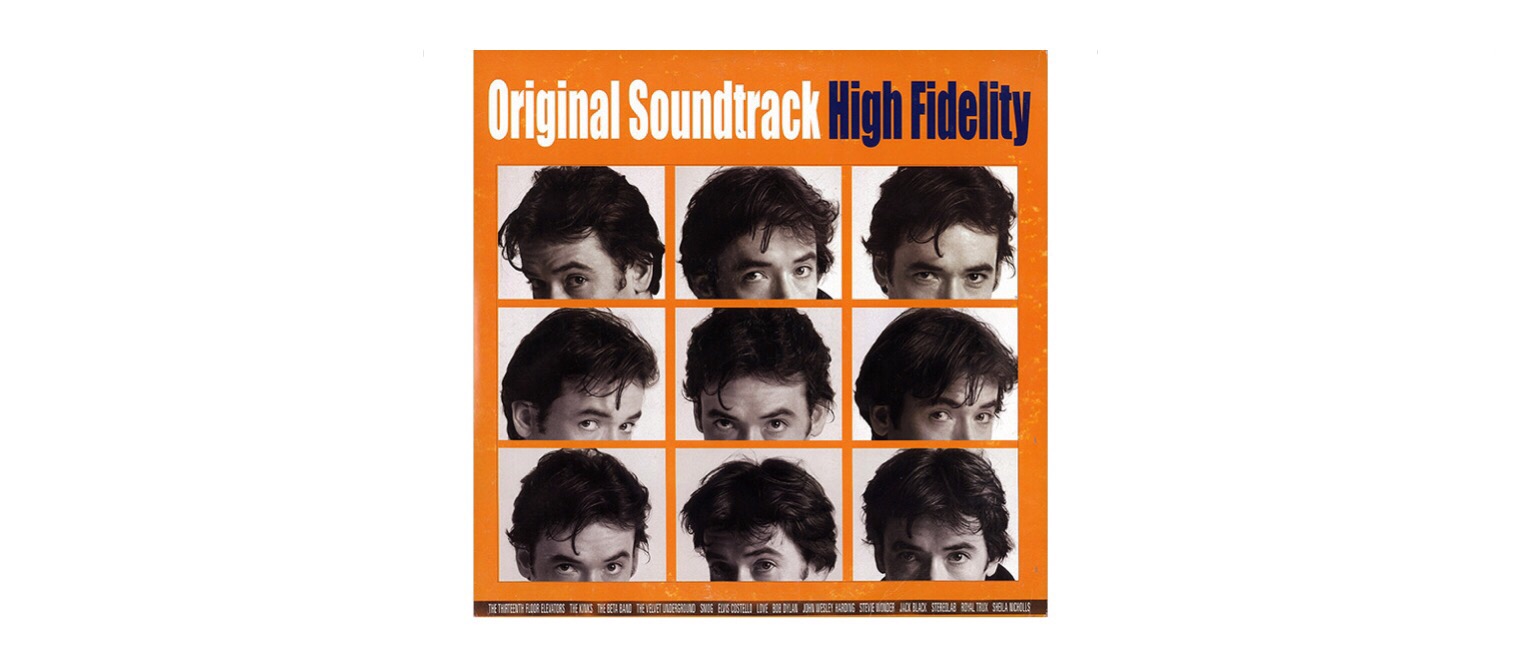
The best film about music, without really being about music and without being a documentary. The amazing soundtrack, the musical remarks sprinkled throughout the film, the conversations around music that seem depicted from your own conversations about music with your friends, the fictional record store everyone fell for in the glorious days of analogue music and the kind of record store we still lust for having in real life somewhere in the town we live in, characters that feel real, John Cusack’s apartment decorated with vinyls and not much else (any home having books, vinyls and DVD’s as key design elements is a home I want to visit), the sense of community formed around music, Jack Black in a role written with him in mind, and Bruce Springsteen in a cameo part. This film is a love letter to good music. High Fidelity is about a record store owner, Rob (John Cusack, who also co-wrote the film) who is trying to find out why he is unlucky in relationships, recording his romantic past on the soundtrack of music. And the wonderful thing about music is that it can be highly personal, but music can be very universal, too. There are so many great scenes here, but one that stood out for me is the one in the shop when Rob claims he can sell five EP copies of the Beta Band just by playing “Dry the Rain” to the customers in the shop. And he drops the needle to record and the people start reacting to it. I’m that kind of customer. I would buy an album on the spot when I hear something I like.

“Hey, I’m not the smartest guy in the world, but I’m certainly not the dumbest. I mean, I’ve read books like The Unbearable Lightness of Being and Love in the Time of Cholera, and I think I’ve understood them. They’re about girls, right? Just kidding. But I have to say my all-time favorite book is Johnny Cash’s autobiography Cash by Johnny Cash.” – Rob


Good Morning, Vietnam, 1987
Barry Levinson

Is there any actor who can go from comedy to drama in mere seconds like Robin Williams? From rapid-fire wisecracking jokes to sinking into a harrow sadness. He is Adrian Cronauer, a U.S. Armed Forces Radio Service DJ, who broadcasts his manic humour and Motown music from his base in Saigon to the troops fighting the Vietnam war. There have been a few good films about Vietnam, but Good Morning, Vietnam is one of the even fewer American movies set during the Vietnam war that portrays the Vietnamese as real people. One of them is Cronauer’s friend, a young boy, Tuan, and some of the most dramatic moments in the film arise from their friendship. Robin Williams’s energetic outbursts are a show stealer, without a doubt, but there is a balance between drama and comedy that Levinson also reached here that is the real accomplishment here and which gets to you in a more profound way than the usual war movie.
 

Platoon, 1986
Oliver Stone

One of those few good films about Vietnam. “Seeing Platoon get through the system makes the soul feel good.” – Brian De Palma

 
The Big Combo, 1955
Joseph H. Lewis

“Silhouetted figures standing in a rigid position become abstracted Modern Man and Woman. The backlighting of heavy smoke and an ominously circling light visible in the background further abstracts the environment into a modern netherworld.” Janey Place and Lowell Peterson, writing for Film Noir Reader, found the perfect words for the image above from The Big Combo. It’s one of those famous film noir atmospheric images, burned into collective memory. Even before watching the film, I knew that image, without feeling the need to place it in one film noir. It could be from any film noir, representing the archetypes of noir man and noir woman. But in The Big Combo that moment arrives at the end of the film. “By now, the viewer knows who these people are and what they feel but not how their relationship will be resolved,” writes Film Noir: 100 All-Time Favourites. “In classical usage, fog enshrouds the passageways between worlds. Clearly Lowell and Diamond are poised on the brink of something new. The fog separates them from the physical reality of the world outside the hangar. Highlights kick off the edge of the doorway and reinforce this sense of movement towards open space. […] But, as the figures disappear into the fog, as they begin transition, nothing is certain.” I like this uncertain ending, that stays closer to the film noir spirit that many other that succumb to melodrama. But more than the atmospheric cinematography, by John Alton, the film gives us interesting characters that fortunately compensate the frail performance of lead man Cornel Wilde), such as Richard Conte in what is probably my favourite role of his as not just a hard boiled gangster but criminal mastermind Brown. But it is a young Lee Van Cleef, before his spaghetti western stardom, who is truly the stand-out as a steely, ruthless hitman. He had such a unique presence on screen, the memory of his presence still there even when the film cuts to another frame – Sergio Leone made a whole film come down to the faces of his protagonists, Van Cleef among them, in the ending scene of The Good, the Bad and the Ugly, with its quickening cuts from face to face intensified by Ennio Morricone’s musical score. He became one of those endearing bad guys impossible to forget and who give movies life, from noir to western, from The Big Combo and Kansas City Confidential to For a Few Dollars More and The Good, the Bad and the Ugly.
 

Sergio Leone: The Italian Who Invented America, 2022
Francesco Zippel

And speaking of Sergio Leone’s westerns and characters, here is a filmmaker who brought authenticity back into the western. Leone brought cynicism and irony, craziness, boldness and machismo to the clichés of Western cinema, letting a picaresque spirit intrude on dramatic events, where no true hero is represented by a single character. In Leone’s unique vision, historical reality and the realistic settings give us the conviction of fantasy. He made movies that belonged to cinema. It’s a joy to see and hear Leone talk about his movies in Francesco Zippel’s documentary Sergio Leone: The Italian Who Invented America. And it’s incredible to see so many great directors, from Clint Eastwood, Martin Scorsese and Steven Spielberg, to Quentin Tarantino, Damien Chazelle, Giuseppe Tornatore and Darren Aronofsky talk about his films and the way he has influenced each and every one of them, all such different filmmakers.
 

Reading
 

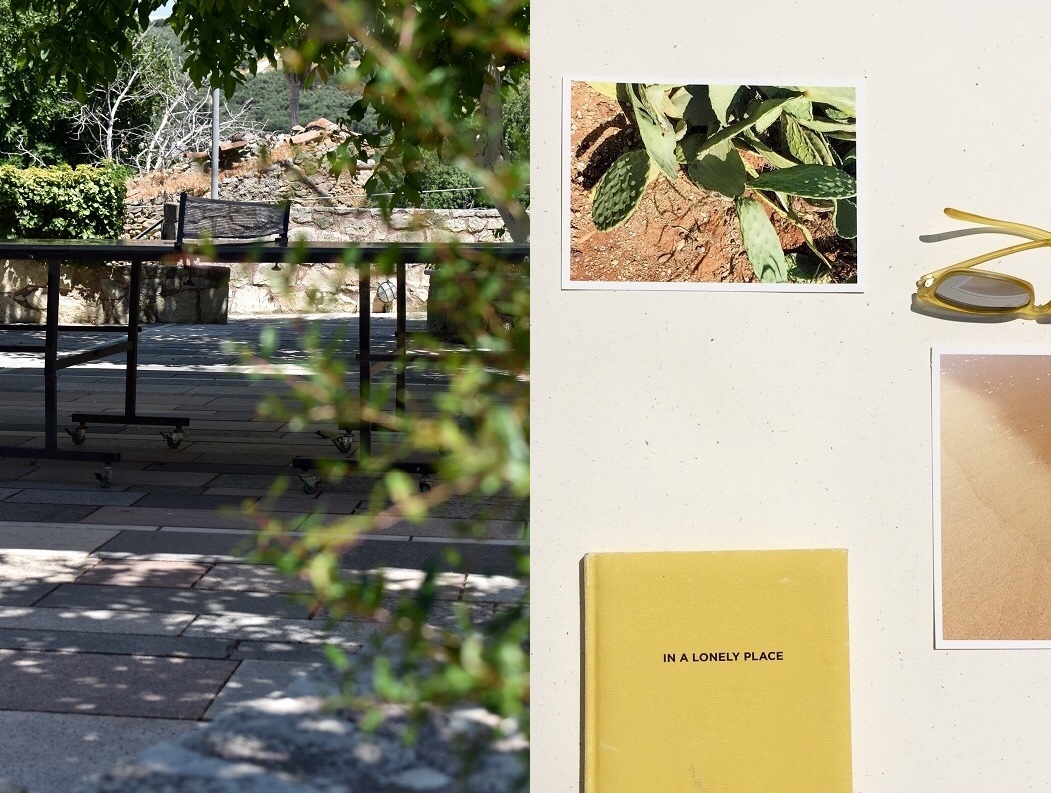
Cash, by Johnny Cash, because it’s been sitting around waiting for me to read it for far too long, and because Rob said so.
 

Recently I picked up French Film Directors: Mathieu Kassovitz, by Will Higbee, in a bookshop. And so I got reacquainted with La Haine. No other French film has had such a significant impact since La Haine was released 27 years ago at the Cannes Film Festival, when it took the film world by storm with its explosive look at the racial and cultural volatility in modern-day France. The book, that covers the first decade of Mathieu Kassovitz’s filmography, contextualises the director as a ‘popular’ filmmaker and analyses his films in relation to key shifts that have taken place in French popular culture over the 1990s and 2000s. Kassovitz’s early years as a movie fan, and apprenticeship in the French film industry, controversial socio-political issues (such as racism, exclusion and violence) affecting contemporary France, the current state of the French cinema and its ambivalent relationship with Hollywood are among many other things brought into discussion. Film books are simply not just about films. The book also catapulted me into this rabbit hole that lead, among others, to an interview with Mathieu Kassovitz for Sight & Sound, where Kassovitz talks about the powerful legacy of the film, what he stole from the great directors and why Spielberg should turn down the music in his films. Here is what Kassovitz’s interviewer, Kareem Aftab says about the film: “It’s a movie that sets fire to the comfortable middle-class outings of much French cinema, turning the gaze beyond the Périphérique ring road to the Parisian banlieues, where the bright colours of white socialite Paris are scorched to a black-and-white concrete jungle that is home to a mix of black, Arab and Jewish communities.”
 

My latest interviews: with Øyvind Torseter, artist, illustrator and recipient of the Bologna Ragazzi Award and with painter and designer Flora Roberts.
 

Listening

The soundtrack: High Fidelity
 

The podcast: Alicia Kennedy’s From the Kitchen Podcast. In this first edition, she talks to Abi Balingit, author of Mayumu: Filipino American Desserts Remixed. As photographer Sophie Denux further down in my newsletter states, cookbooks (and films) inspire her more than travel writing, and this conversation proves it.
 

The album: Achtung Baby, U2


Making

A new collection of prints, part of an exclusive “Classiq Journal x Realign” collaboration, set to launch soon, just in time for summer. The first one, titled A Good Year, is already available in the shop. The inspiration? Three things I am passionate about converging: tennis and its clay season, summertime and cinema – here is the story behind it.
 

Exploring

Tunis, through the lens of Sophie Denux – her Agfa film shots are magnificent. I would love to see these photographs take the shape of a book. Last summer, Sophie released the book La Famille Marseille cookbook, co-authored by Stéphanie Giribone, jewellery maker and restaurateur, following their first collaboration together, La Famille Marrakech. The photographer named it an atypical little work led by her and Stéphanie’s own choices. For a deeper look into Sophie’s visual talents and creativity, you can read my interview with the photographer, where we talk about the places she keeps returning to, about preferring films and cookbooks as travel inspiration instead of travel writing and the “stolen” moments she seeks to captures on camera.

 
The regulars: The interviews, newsletters and podcasts I turn to every week and/or every month because they are that good. Craig Mod’s newsletters: Roden and Ridgeline. Soundtracking, with Edith Bowman. Alicia Kennedy’s newsletter. Gone to Timbuktu, Sophy Robert’s podcast on the art of travel. Wachstumsversuche, with Sarah Schill. Sirene and Racquet magazines, in print.
 

Dick: I guess it looks as if you’re reorganizing your records. What is this though? Chronological?
Rob: No…
Dick: Not alphabetical…
Rob: Nope…
Dick: What?
Rob: Autobiographical.
Dick: No fucking way.

(High Fidelity)


Posted by classiq in Books, Culture, Film, Newsletter | | Comments Off on May Newsletter: Bad Guys We Like, High Fidelity and Drops of Summer

“I Am Essentially Painting Light Using Colour”: Interview with Painter and Designer Flora Roberts

© Flora Roberts


Nature is everywhere. We are inspired by nature. Nature is in every one of us. The same can be said about art. Flora Roberts’ distinctive work uniquely combines these two. She is a painter, mural artist and the designer behind many wonderful wallpaper designs. Flora paints with colour and light and feeling. Her paintings bring you close to nature, their realistic quality storing emotion and excitement to look at and to be enwrapped by. But they also seem to be filled with an imaginative space where the viewer can play in and dream.

In her floral paintings, Flora Roberts not only captures nature’s coveting and calming beauty and unique colour palette, but the very essence of flowers: their ephemeral nature conveys a kind of immediacy and emotion that make you realise the importance of each moment, and the importance of allowing each thing to have its moment. There is always an atmosphere in Flora’s paintings and designs, they surround you in a way that folds you in. There is life in her images.

Growing up in rural Southern Scotland, with keen gardeners as parents, Flora Roberts was always interested and surrounded by flowers. Art and nature were intertwined from an early age and forged a creative path. She studied printed textiles at Glasgow School of Art and went on to do an MA in mixed media textiles at London’s Royal College of Art. She began her career working on textile designs for the fashion industry and then went on to do murals, wallpaper and fabric designs for various brands such as Lewis & Wood and Mulberry Home & GP & J Baker. In 2020, Flora launched her first collection of wallpapers exclusively available at Hamilton Weston Ltd.

In our interview, Flora and I talk about painting from life, her early beginnings in art, using Dorset as inspiration, and the importance of slowing down and really looking.


© Flora Roberts


The natural world, especially the flora, permeates your entire work. Has nature always been a big part of your life?

I grew up in a very rural part of Southwest Scotland. My mum and dad were keen gardeners and introduced me to lots of flowers as I was growing up. Nature continues to be a really important part of my life. I’ve just started a small garden of my own and I can’t wait to paint some of the flowers when they come into bloom.
 

What is your earliest drawing memory? Were you attracted to drawing and painting from an early age? Did becoming an artist come naturally to you?

My mum is a painter and my two older sisters and I were really intrigued by what she was creating. I remember sitting with my sister Amy, who is now a garden designer, painting a picture of some snowdrops in a miniature glass vase. I remember copying her, then finding it really satisfying and starting to lose a sense of time. At school, I was never happier than when I was in the art class. I found my friends there and still continue to do so today.
 

How would you describe yourself as a painter?

I would describe myself as a painter and designer. My medium is paint, but I transfer the information from my paintings to wallpaper designs separated into a limited palette of colours for printing. I design repeats for my wallpapers, but I also feel like I ‘design’ my paintings; the compositions are really important. If they are not right, it feels like an itch that hasn’t been scratched!
 
You paint from life. How does that inform your style of painting?

I believe anyone painting from life and really observing something about it can capture the essence whatever they do. That’s what I’m after. I try to continue this through into my design as much as I can.
 

© Flora Roberts


You mentioned earlier how intrigued you were as a child by your mother’s paintings. What else has inspired you along the way?

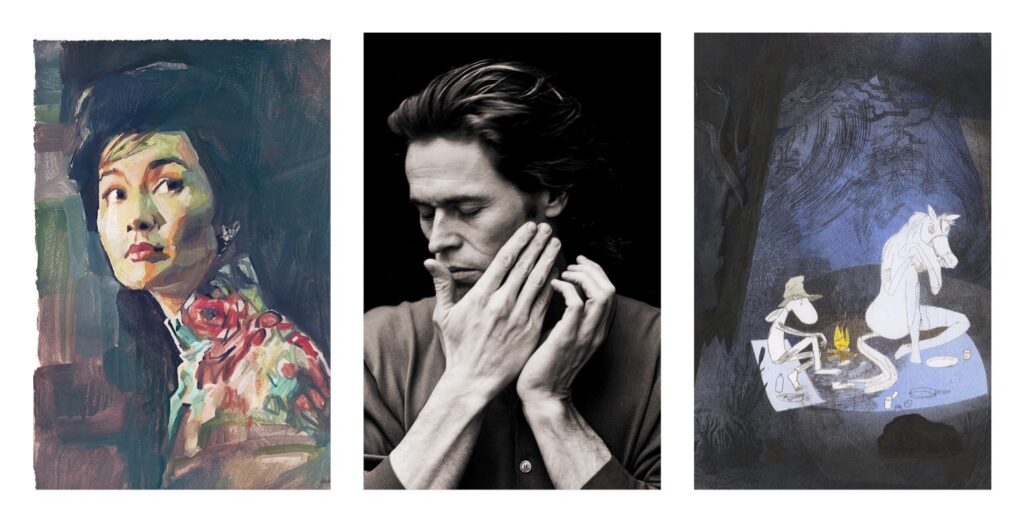
I have usually been inspired by art and design history. I love to visit old houses open to the public. National trust properties have given me lots of ideas. More contemporary inspiration comes from photography and films. Mostly moods explored through colour. In the Mood for Love comes to mind and the photography of Sarah Moon.


“I am essentially painting light using colour to do this.
I love painting flowers against backgrounds. Often against
the dark the flowers look like light sources themselves.”


Your magnolia mural is one of your works that stand out for me. It literally seems to bring to life the room, an enchanting, calm and most beautiful world to walk into. How different is the mural design process from project to project? What pulls you into a certain creative direction?

I love it best when I can be spontaneous. Much depends on my client and how much trust they have in me. I respond to atmospheres in houses and how people use the space. This all very much informs the kind of work that results.
 

© Flora Roberts


You cited your mother’s garden in Dorset as a big inspiration for your wallpaper collection for Hamilton Weston. Can you tell us a little more about the place, the entire area of Dorset and your connection to it?

We came to live in Dorset from Scotland when I was a teenager. The first thing we all noticed was how much more flowers we could grow in a warmer climate. Dorset is a wonderful place full of rambling tall hedgerows, friendly hills and beautiful hidden valleys. My mum and dad’s garden is like a mini version of this.
 

What about the light? Do you chase the light? Do you think you would paint differently if you lived in another part of the world, or even of the UK?

I guess I am essentially painting light using colour to do this, so, yes, light is really important. I love painting flowers against backgrounds. Often against the dark the flowers look like light sources themselves. I’m sure I’d paint differently in other parts of the world. I’d love to spend some time painting in India. The light seemed rose-tinted when I visited Jaipur.
 

How challenging is for an artist to do commissioned work? How does it relate to your personal, freelance work?

It is challenging working on commissions, but the benefit is that it often forces one in new directions that it would be hard to come up with on one’s own. It is easy to get too comfortable and the inevitable complacency that comes with that sometimes makes work a little dull. Outside challenges bring it back to life!
 

What is the best piece of advice you received when you started out as an artist and would like to pass on?

Keep at it. Do not be afraid of making mistakes. In fact, quite the opposite, making mistakes drives you forwards. Just give it time and you’ll see!
 

In this time and age, what do you wish people appreciated more?

Time. In the context of art and design anyway, slowing down, not panicking about time and really looking.
 

Thank you, Flora, for taking the time to share with us insights into your creative process and let us know the artist behind the easel a little better.
 

© Flora Roberts


Website: floraroberts.co.uk | Instagram: @flora.roberts


MORE STORIES


The art of the film poster: Interview with illustrator Tony Stella

“The creativity and curiosity are already there in most of us”:
Interview with artist Øyvind Torseter

Art will set you free: In conversation with photographer Bill Phelps

Posted by classiq in Art, Interviews | | Comments Off on “I Am Essentially Painting Light Using Colour”: Interview with Painter and Designer Flora Roberts