Read Instead…in Print


Read instead…in print #23
 
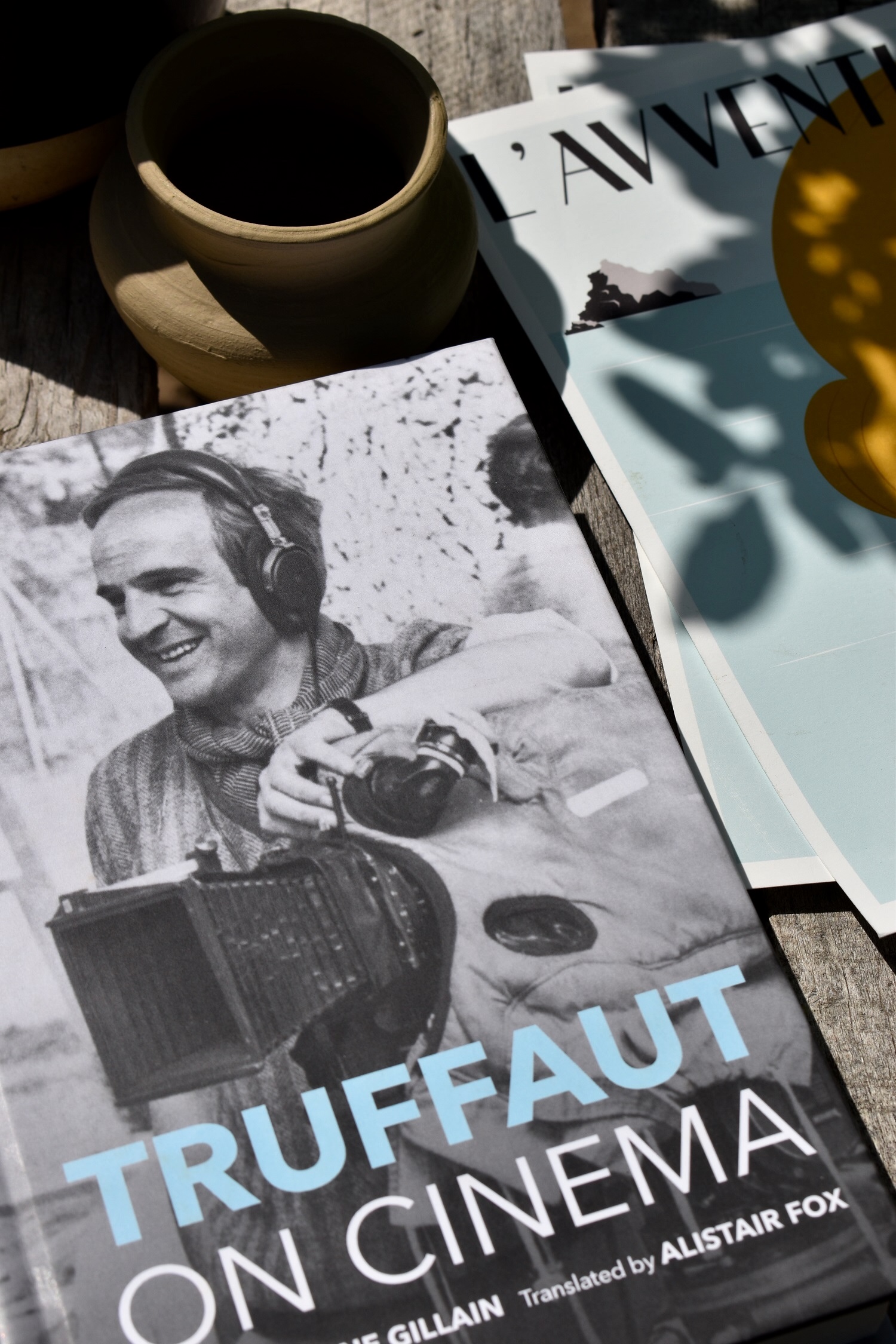
Filmmakers write better about their films than any critic, and no filmmaker wrote better about his films than François Truffaut. When he talks about them, he makes you present to their making. In light of this, his films become even more special. Because Truffaut lived through films and for making films. Films were his life. He wanted to make normal films, anchored in life, about how people lived, loved and suffered. He made films that resembled the ones he had loved, he said. But the films he made could only be invented. That bursting with life, that naturalism, that free movement of the camera – elements that indeed came to define La Nouvelle Vague – were further enhanced by all the personal emotions, all the love of cinema as art and as a craft he had accumulated over the years and which he poured into his films. Truffaut saw not with the eyes of the filmmaker, but with the eyes of the viewer. You may not be able to articulate what is going on on screen, but something happens and the magic of cinema takes over.

Truffaut on Cinema is a book of interviews. Originally assembled by Anne Gillain and published in French in 1988, the interviews are presented chronologically by film in what can be considered an artistic autobiography. Each interview offers an insightful look into the genesis of Truffaut’s films as he shares the sources of his inspiration, the choice of his themes, the development of his screenplays, as well as his relationships with collaborators, actors, and the circumstances surrounding the shooting of each film. Truffaut’s passion for cinema and skill for the craft reverberate through every single one of them.


Read instead… in print is about a good book about cinema or filmmakers. No discursive, pretentious analyses, no verbose scrutiny. Because the idea is to invite you to read the book, not read about it here. But instead of using social media, I use my journal. Back to basics. Take it as a wish to break free of over-reliance on social media (even if it’s just for posting a photo of a good book) for presenting my work, cultural finds and interests. These are things to be enjoyed as stand-alone pieces in a more substantial and meaningful way than showing them in the black hole of Instagram thronged with an audience with a short attention span. This is also a look through my voluminous collection of books about film that I use as research in my adamant decision to rely less and less on the online and more on more on print materials.


MORE STORIES

Read instead…in print #14: Cassavetes on Cassavetes

Impossible not to think of her: Catherine Deneuve in Mississippi Mermaid

Read instead…in print #9: Bertrand Tavernier:
Amis Américains: Entretiens avec les grands auteurs d’Hollywood

Posted by classiq in Books, Film, Read instead...in print | | Comments Off on Read Instead…in Print

“Impossible Not to Think of Her”: Catherine Deneuve in Mississippi Mermaid

Catherine Deneuve and Jean-Paul Belmondo in “La Sirène du Mississippi”, 1969.
Les Films du Carrosse, Les Productions Artistes Associés


Catherine Deneuve graces this year’s poster for the Cannes Film Festival and in its honour, we are revisiting François Truffaut’s La Sirène du Mississippi. It was the first time when François Truffaut depicted a genuine couple. “In Jules and Jim and in The Soft Skin, scenes involving two people are always presented with reference to a third figure, to someone who is not there. In this film, when the man and the woman are in harmony, or when they hurt each other, it arises solely from within themselves. There is no second man, no second woman, and I was thus able to focus exclusively on the intimacy between a couple. It is the story of the deterioration of a passion, brought about by love.”

The film was based on William Irish’s novel Waltz into Darkness, but Truffaut changed the location (from New Orleans to the island of Réunion), because he wanted to shoot in French and because he felt he had to bring it to contemporary times, when gender roles had begun to interplay, and the contrasts between the good and the bad were considerably reduced. The villain was not entirely bad and the victim wasn’t entirely good anymore, they were much more understandable, regardless of their flaws and mistakes, things were not black and white anymore. “What appealed to me about Waltz into Darkness was the fact that, in it, William Irish dealt with a subject that had been traditional in cinema before the War. It is found in The Woman and the Puppet, The Blue Angel, La Chienne… The theme of the vamp, the femme fatale who subjugates an honest man to the point where he becomes a puppet – all of the filmmakers I admire have tackled it. I said to myself: it has to be done… And then, I realised that I could not do it. […] Perhaps that is another reason I transposed The Mermaid to our own time – because, in our days, things are no longer like that. A girl, today, is no longer a vamp, a slut. She is a character who is much more understandable. And the victim is not entirely a victim. What used to be black and white has now become gray. Therefore, in spite of myself, I reduced the contrasts between the characters, at the risk of downplaying the dramatic quality of the subject.”

Mississippi Mermaid is ultimately a love story. The story of a man and a woman who weren’t supposed to end up together, but they do nonetheless. Louis Mahé (Jean-Paul Belmondo) is a tobacco plant owner on Réunion Island. He is looking for a wife and has placed an add in the newspaper, but the woman who shows up, Julie Roussel / Marion Vergano (Catherine Deneuve), is not the one who accepted his proposal. But he becomes enraptured with her and marries her anyway. It’s the subject most dear to Truffaut, a study of love in the form of a thriller, a study of a couple, of real characters in intense situations, which makes them react in a genuine way. What Truffaut did keep from Irish’s novel was the construction of the story, a linear narration punctuated by the appearances, disappearances and reappearances of the main characters, which allowed him to build the relationship between Belmondo and Deneuve with precision.


Catherine Deneuve in an Yves Saint Laurent safari look.
Catherine Deneuve and Jean-Paul Belmondo in “La Sirène du Mississippi”. Les Films du Carrosse, Les Productions Artistes Associés


At the time of its release, La Sirène du Mississippi was poorly received, and Truffaut attributed it to the difficulty he had in persuading the public to accept an actor like Jean-Paul Belmondo in the role of a defeated, desperate man: “It’s not hard to understand what shocked the Western world. La Sirène shows a man who is weak (despite his looks) captivated by a woman who is strong (despite her appearance).” What did Truffaut do? He switched the male and female roles, imagining Belmondo as “a young girl who was expecting everything from marriage”, a rich but naïve man, trusting and indifferent to his wealth, still a boy who, when he marries, becomes a man, finally learning about life. And in Catherine, Truffaut saw “a boy, a hoodlum who’d been through hard times”. Deneuve’s Marion is an orphan, a prostitute, accomplice to murder and attempts murder. She is streetwise, cynical, an usurper. And yet, “I’m not really bad,” Marion tells Louis when he finds her working in a club after running away with his money. “I still love you.” He believes her.

Truffaut wanted Belmondo and Deneuve for a reason, not because of their star status and public image. “Jean-Paul Belmondo, along with Jean-Pierre Léaud, is my favourite actor. […] Finally, and because he is the most complete actor in Europe, Belmondo has alternated between three characters during his career: one who descends from Sganarelle; one who is inspired by the heroes of American gangster films; and one who could be the son of Gabin in La Bête Humaine. It is this third possibility that I asked him to explore by drawing on his seriousness, which allowed him to say the lines in which he expresses love as well. As far as Catherine Deneuve was concerned, it was impossible not to think of her. Indeed, her role in The Mermaid brings together various aspects of her that we have been able to see recently. I think that many girls who have had a difficult adolescence will recognise themselves in the antisocial character she plays in Mississippi Mermaid.” Marion is tough and resilient, having had to learn the hardships of life from early on, from her rough landing in reality as an orphan child.


Catherine Deneuve in black, as femme fatale Marion Vergano in “La Sirène du Mississippi”.
Les Films du Carrosse, Les Productions Artistes Associés


Beautiful and mysterious, hidden behind her opaqueness and inaccessibility, with her crisp, realistic acting, Catherine Deneuve’s femme fatale taps into that “paradox between the inner fire and the cool surface”, as Truffaut himself put it, categorization that defined Hitchcock’s blondes. “You put on a cold face, but inside you’re smiling,” Louis tells her. In fact, throughout her entire career, Deneuve has not been afraid of taking complex roles that ruffled and darkened the surface of her beauty. Deneuve’s mysterious cool blonde look would have been indeed perfect for an Alfred Hitchcock noir or thriller – Catherine reportedly admitted that she would have loved to make Marnie with Hitchcock. I like that Mississippi Mermaid is an unusual noir, capturing the dark spirit of classic noir and putting it into a setting that is rotting and tropical, the decaying colonial backdrop of Réunion Island.

“I only know your wife from the picture you gave me in Réunion. Surprisingly, whenever I describe her, the symmetry of her features, the transparency of her skin and her hair… people who’ve met her always remember her. Gentlemen really prefer blondes,” Michel Bouquet’s Comolli, the detective that Louis Mahé hired to find his wife, dryly concludes.


”You put on a cold face, but inside you’re smiling,” says Belmondo’s Louis Mahé.
Catherine Deneuve in “Mississippi Mermaid”. Les Films du Carrosse, Les Productions Artistes Associés


Catherine is dressed in Yves Saint Laurent and some of her outfits were part of the Yves Saint Laurent Rive Gauche Spring-Summer 1968 collection. Catherine Deneuve “was the woman he was waiting for, the one who is his style”, the modern woman who saw beyond haute couture and embraced the times, life, the street wise, a new kind of luxury that had nothing to do with made-to-measure and everything to do with ready-to-wear. The first act of the film takes place on the island and the clothes perfectly fit the exotic scene. The designer made great use of his safari styles, like a mini-dress version of the safari jacket, reminiscent of the iconic deep lace-up neckline design Saint Laurent had created in 1968, which was immortalised by Veruschka in a series of photographs by Franco Rubartelli, or a safari skirt suit with a jacket that respects the sketch of the designer’s first safari jacket, from his Spring/Summer 1967 haute couture collection.


A street-wise yet classic elegance, Yves Saint Laurent par excellence. The plot moves to Aix- en-Provence and Lyon.
Catherine Deneuve and Jean-Paul Belmondo in “La Sirène du Mississippi”. Les Films du Carrosse, Les Productions Artistes Associés


In the second act of the film, set in a few locations in France, like Aix-en-Provence and Lyon, Catherine’s wardrobe is just as simple, with clothes that denote the practicality that the designer’s creations came to embody, but which nonetheless serve the plot beautifully. I am particularly speaking about the little black dress towards the end of the film, first worn with a trench coat and then with the black feathered Rive Gauche beau manteau, the most ornate wardrobe item in the entire film, a counterpoint between realism and the imagination, between the classical and the baroque.

 
Marion (showing Louis the coat in a shop window): “It’s quite a coat. But actually it’s really more for Paris.”
Louis: “It may be too far out.”
Marion: “Nothing is too far out for Paris.”
 

The eccentric ostrich feather collar could easily cause Marion to be spotted by the police. When the cops arrive at the apartment in Lyon and Marion and Louis have to try to recover the money they have left upstairs, Louis stops Marion because her coat could give her away. And she answers: “Are you crazy? What’s wrong with this coat?” They are as much lovers on the run as they are an ordinary married couple going about the little everyday life things. There’s Truffaut’s counterpoint between the ordinary and the extraordinary, between reality and fiction.


The ending also alludes to “Snow White and the Seven Dwarfs”. Again in black, Marion is carrying out in cold blood the poisoning of her husband. Truffaut builds up tension and character in a true noir style.
Catherine Deneuve and Jean-Paul Belmondo in “La Sirène du Mississippi”. Les Films du Carrosse, Les Productions Artistes Associés


Of Yves Saint Laurent, François Truffaut said he was the greatest cinephile among the fashion designers. He “really understood what cinema costumes had to be like, and he designed them both for their movement and style. The little feather coat at the end, which caused me a lot of worry as far as its execution was concerned, thanks to him, turned out to be a character in the film,” Truffaut confessed. The ending, shot in the snow, near Grenoble, was a final indirect homage to Renoir. Mississippi Mermaid was dedicated to him. “You remember the snow into which Deneuve and Belmondo sink – it evokes this recollection of a frontier to cross, of freedom nearby: one could almost say that, as at the end of La Grande Illusion, they are arriving in Switzerland at this point. But there were also allusions to Pierrot le Fou, The Blue Angel, Snow White and the Seven Dwarfs, The Naked Jungle, Balzac…”

Truffaut’s pure love for cinema encounters the dark atmosphere of the thriller and the complexity of human relationships. In a Snow White allusion, Marion is carrying out in cold blood the poisoning of Louis. She is again wearing black, just like in any other sequence in the film when her dark and conflicted inner side resurfaces. But Louis loves her despite her wrong doings. And she finally yields to that and to her own love for him. “It is the story of the deterioration of a passion, brought about by love.” Truffaut said of Renoir that he never made a mistake as a filmmaker because he always found solutions based on simplicity – human solutions. Truffaut, as if in an act of faithfulness to his idol, found the most human solution of all to his film.


The little feather coat that turned out to be a character in the film.
Catherine Deneuve and Jean-Paul Belmondo in “La Sirène du Mississippi”. Les Films du Carrosse, Les Productions Artistes Associés


Editorial sources: Truffaut on Cinema, compiled by Anne Gillain / François Truffaut at Work, by Carole Le Berre / The Films in My Life, by François Truffaut / Yves Saint Laurent, published by Foundation Pierre Bergé Yves Saint Laurent


MORE STORIES

Colour and costume: From The Umbrellas of Cherbourg to La La Land

The process is the same: You build the character!:
Interview with costume designer Deborah L. Scott

The birth of the androgynous look: Greta Garbo in The Single Standard

Posted by classiq in Film, Film costume | | Comments Off on “Impossible Not to Think of Her”: Catherine Deneuve in Mississippi Mermaid

“The Creativity and Curiosity Are Already There in Most of Us”: Interview with Artist and Illustrator Øyvind Torseter

Illustration from the book “Mulegutten” (The Heartless Troll), Øyvind Torseter. Ink drawing, colouring in acrylic paint.


Mulegutten wakes up one day and discovers a mysterious hole in his apartment. It moves and seems to have a mind and life of its own. Curious and intrigued, he tries to find the explanation. He keeps searching, but maybe some things can’t be explained and must be accepted for what they are. The creation of the book The Hullet (The Hole) came from more than a narrative motivation, but rather an innovative approach to the structural form of a book (there is a hole punched right through the book, so it exists in real life), and with it, Øyvind Torseter taps right into the heart of childhood and the mystery of life itself. What else, if not fearless imagination, impossible curiosity, a lightness of discovery and joy of play, speaks better of childhood? What else, if not the freedom that comes from accepting that we may not have the answer to everything, speaks of the beauty of life? I like to believe we are all children at heart. And Øyvind Torseter invites children and adults alike to wander around a little bit, take a wondrous look at the world and consider the hidden depths of their own creativity.

The Norwegian children’s book illustrator, author and picture book artist has made eleven books of his own and created several more with other writers, is the recipient of the prestigious Bologna Ragazzi Award for 2008 for his book Avstikkere and was the 2014 finalist of the Hans Christian Andersen Award. Øyvind Torseter’s illustrations are like a second native language. Minimalistic and spontaneous yet abounding in subtle details, reassuringly distinctive and incredibly expressive visually, they are suffused with humour, intelligence and a moral code of their own, and allow us to enter a sort of a new world discovered by an artist who knew how to look into a new direction and find these curious and strange creatures who seem to throw a new light on a more or less unusual situation or even on the magic of a classic fairy tale.

In our interview, Øyvind and I talk about playing with form on his book Hullet, about Norwegian folk tale inspirations, the challenges of fostering creativity in children and what triggers his imagination now, as an adult.


Interior spread from the book “Mulegutten” (The Heartless Troll), written and illustrated by Øyvind Torseter.


Øyvind, what is your earliest drawing memory?

I have a vague memory of being around 5 year old, sitting in my father’s office drawing tractors with a blue ballpoint pen on paper. Making things up as the pen moves over the paper. I still have some of the drawings, my parents kept them, which, of course, makes it a bit easier to remember. 


The motives came from living in the countryside. I grew up on a farm. Some time later, at school, I was always drawing on the margins of the school books. 
One time, a teacher handed me a sketchbook to draw in instead.


“I believe the creativity and the curiosity
are already there in most of us, but they have
to be given time and space to develop.”


Did you find school to be a proper environment for fostering your creativity?

We did have some art and craft at school. Maybe more then they have now, but this was way back in the early 80s. Schools that focus very much on grades and goals could really need time for arts, craft and creativity. A place where you can try out things and make mistakes. The problem is that the creative subjects also can become goal-oriented in an environment like this, and it dies a bit.
 

So who or what was it that encouraged you the most to be creative when you grew up?

I’m not sure. Maybe growing up in surroundings without many distractions made me want to make things. But, then again, my own children are creative, and we live a hectic city life with lots of things going on around us.

I believe the creativity and the curiosity are already there in most of us, but they have to be given time and space to develop. If creativity is encouraged (expected may be the better word) too much, it also can become just another task to do for somebody else instead of a way to discover the world.
 

Cover of the book “Hullet” (The Hole), made from heavy chipboard, written and illustrated by Øyvind Torseter


Your book Hullet, where the character, Mulegutten, discovers a hole and tries to find an explanation, is an ingenious children’s book – the hole is punched right through the book, so it exists in real life. It plays with the traditional format, it’s a very physical book and that’s very exciting. How challenging is it to make an “out-of-the-box” book? Are publishing houses more and more open to new formats and ideas?

The book Hullet was a challenge to make, but also great fun. I have often played around with 3D elements in my sketchbooks: Folded pages, cutting and pasting. Hullet was a more conscious idea, wanting to make something that used the book format as a major part of the story. 


The main concept is simple: It is a book with a hole in the middle. To develop ideas, I took a pile of empty sketchbooks and drilled a hole through them for then to start to draw. First, obvious ideas: Things with holes in them. After a while, the ideas got weirder. What if the hole in the page, the thing that is not there, becomes a thing? Can it both be an object and negative space? Or, what happens if it moves around? I chose some of the ideas and started to collage it together as a story.

My Norwegian publisher was very excited about the project when I first showed it to them. They have been very supportive all the way. Hullet has also been translated into 15 languages, so my experience is that there are publishers out there that are open to this kind of projects. If they like the idea and belive in it. My Norwegian publishing agency told me that it was an easy book to show to foreign publishers as it did not depend on translation. The idea is in the visual.
 

Interior spread from the book “Hullet” (The Hole), written and illustrated by Øyvind Torseter.
Pen and ink drawing, digital colouring.

Interior spread from the book “Hullet” (The Hole), written and illustrated by Øyvind Torseter.


“For me, everything starts with the image.
Some things can be told with words,
some things with colour, etc.”


Hullet is also almost without words, as most of your books are. I believe that wordless picture books have this unique ability to allow children space and their own method to read them. Do you prefer to tell stories in images rather than with words?

Yes, wordless books and books with few words can be read in several ways. The reader has to be co-creative (not sure if that is the word?). This also happens in text-books, of course, but images read differently. Some images are often more like a sign language. Some images have a direction and a rhythm to the reading. Others again are more like a labyrinth or a mind map, where the reader can choose time and direction. And there are a lot of other ways and combinations.


For me, it always starts with images. Most of the story is drawn before I add any text. When showing images for a new project to the editor, I talk about the story. That is usually the first time I put the story into words.

I sometimes think of the text in my books as just another tool besides colour, shapes, formats: 
Some things can be told with words, some things with colour, etc.
 

What was your favourite book as a child, the book that sparked your imagination or spoke to you more than any other?

I read several of the Norwegian fairy tales as a child. They can be both fascinating and grotesque. There is so much happening in them that is not in the text, only in your head. 

I also very much liked Emil in Lønneberga, by Astrid Lindgren, about Emil, a young boy with a very wild imagination. I could relate.
 

Interior spread from the book “Hullet” (The Hole), written and illustrated by Øyvind Torseter.

Interior spread from the book “Hullet” (The Hole), written and illustrated by Øyvind Torseter.


“I draw in a very direct way with pen and ink.
No sketching first, so there is no way back.”


What triggers your imagination now, as an adult?

Everyday life. Coming to my studio every morning to start drawing. There is more room to be imaginative if there is not so much going on around.
 

Do you mostly draw from imagination or do you also like to observe and be inspired by the world?

I do sometimes make observational drawings. It is such a good way to see and understand one’s surroundings. Not hard to understand why this was something you had to do in many professions in the past. It is almost a way to record the outside world into your head (if this makes sense?).

When I draw my books, it is all from my imagination, but based on things around me. Like a collage.

I draw in a very direct way with pen and ink. No sketching first, so there is no way back. This means a very focused drawing process. Making it up as I go along, like telling stories to oneself. Starting in the middle of the paper and letting the drawing grow out of the details.
 Not all the drawings turn out successful: I prefer to make a lot of drawings and then choose afterwards which to use.
 

Do you keep all your sketches?

I keep all drawings and sketches. It is nice to have an archive. Sometimes an unused drawing from one project can be used in an other project, and interesting, chance-like things can happen.
 

Cover of the book “Mulegutten” (The Heartless Troll), written and illustrated by Øyvind Torseter


Mister Random was your first published book, with illustrations made in a wide range of techniques, such as pen and ink, pencil, dry pastels, oil pastels, monotype, stamps and digital work. But I would like to ask if you prefer line drawing, because I have always considered this art to land very well on illustration, especially children’s illustration.

Line drawing is my handwriting or the way I think on paper. With simple line drawing, the reader has to use the imagination and add elements. I do like to work with colours, it is a different way of thinking. Colour is often secondary for me, I see lines first. A painter probably sees colour first.

Also I like to play around and combine different techniques: This also can give an element of abstraction and the reader has to be creative as well. But linedrawing is where it starts.


“There is more room to be imaginative
if there is not so much going on around.”


Mulegutten is based on a Norwegian folks tale. What was it that drew you to this traditional tale? And by reinterpreting a classic tale, did you want to consciously relate better to readers today, or was it the themes from a fairy tale that you simply wanted to reimagine in your own artistic way?

After making the book The Hole I was curious about the main character from that book. I wanted to use him in a different story. The Norwegian folk tales have been illustrated so well by so many artists and illustrators in the past I had not really considered doing that before. But then I thought maybe it could be interesting placing this character (from The Hole) in one of the folk tales. I found this tale, The Troll with No Heart in His Body, that I could not remember having heard before, and it fascinated me. It seemed interesting to visualize. I found there was a lot of freedom doing the drawings. Maybe because the main structure in the story is familiar it gives freedom to play and experiment and then come back to the structure. It is there as an anchor.
 

Illustration from the book “Mulegutten”, Øyvind Torseter. Ink drawing, colouring in acrylic paint.


How important remain books in shaping up young children’s minds and imagination? How do you make them still love books?

Books are, of course, very important for this. But sometimes I have a feeling we forget that other forms of art also shape the imagination: Visual art, music, cartoons, movies. This is all important. For some children other forms of art may be closer. I was always more drawn to the visual that to words. I liked playing out in the woods and make things with my hands. Reading, art, music, creativity, craft playing: All of these things are connected and seem to be missing a bit in childhood today. Now I sound very old.

When making the books, I try to discover and understanding things through playfulness. I have to believe that if the process of making the book is interesting, it hopefully is so for the reader.
 

Some of your books have been adapted into theater plays. How active a role have you played in this process?

I am very happy about the theater plays. They are something else than the books, and it has to be different. I was not much involved in any of the plays. I think you eighter have to be fully involved or not at all. I know the director of two of the plays and I trust what they do. They know the possibilities and craft of the theatre and much better than me.
 

In this time and age, what do you wish people appreciated more?

Time alone without distractions.
 

Thank you, Øyvind, for this wonderful talk and incursion into your fascinating universe.


Illustration from the book “Mulysses, Øyvind Torseter. Ink drawing, colouring in acrylic paint.

Illustration from the book “Mulysses, Øyvind Torseter.

Illustration from the book “Mulysses, Øyvind Torseter.


Website: oyvindtorseter.com | Instagram: @oyvindtorseter


MORE STORIES


Art directing film posters: In conversation with illustrator Akiko Stehrenberger

The poetic power of illustration: Interview with William Grill

In conversation with costume designer Vicki Farrell

Posted by classiq in Art, Books, Children’s illustration, Interviews | Comments Off on “The Creativity and Curiosity Are Already There in Most of Us”: Interview with Artist and Illustrator Øyvind Torseter

Read Instead…in Print


”One of the first basic lessons in filmmaking
is chasing the light. Without it, you have nothing –
no exposure that can be seen; even what you see with your
naked eye needs to be shaped and enhanced by the light.”


Read instead…in print #22
 

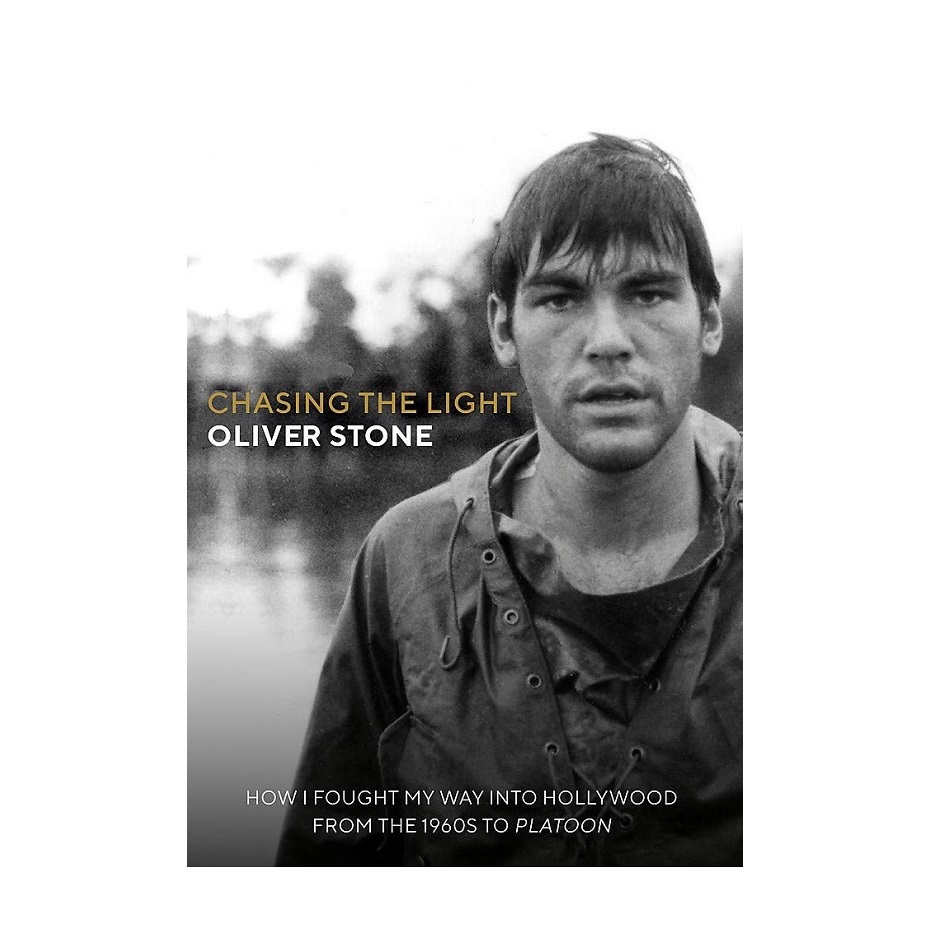
Chasing the Light: How I Fought My Way into Hollywood from the 1960s to Platoon is the book about that time in a filmmaker’s life who is working outside of Hollywood, in complete freedom. Before making it big. It is Oliver Stone’s story up until that brief year of 1986, the year when Salvador hit theaters and Platoon soon followed, when he was the unknown, the elusive, the unexpected. There is just one such moment in an artist’s life and Oliver Stone builds that moment up with all the personal fervor, rawness and freedom he has shown in his movies.

“Her review,” Oliver Stone writes referring to Pauline Kael’s dismantling of his screenwriting work for Scarface when the film came out, “typified a new kind of self-conscious film criticism, and it darkened a lifetime of going to the movies for me. A sort of super-fandom wherein the critic, putting himself or herself between the movies and the audience, reveled in his or her subjective, specialized knowledge of the filmmaker, as opposed to just watching a movie without knowing who made it – as when we were young. The audience, for the most part, might not know who directed it, and it shouldn’t matter. A film exists on its own merits – no cheating allowed (reviews, money thrown at it, promotions, etc.)”. He puts his faith in the audience and in the film itself. That’s all that should matter.
 
 
Read instead… in print is about a good book about cinema or filmmakers. No discursive, pretentious analyses, no verbose scrutiny. Because the idea is to invite you to read the book, not read about it here. But instead of using social media, I use my journal. Back to basics. Take it as a wish to break free of over-reliance on social media (even if it’s just for posting a photo of a good book) for presenting my work, cultural finds and interests. These are things to be enjoyed as stand-alone pieces in a more substantial and meaningful way than showing them in the black hole of Instagram thronged with an audience with a short attention span. This is also a look through my voluminous collection of books about film that I use as research in my adamant decision to rely less and less on the online and more on more on print materials.


MORE STORIES

Read instead…in print #4: The Birds, by Camille Paglia

Solveig Dommartin is wearing Yohji Yamamoto in “Until the End of the World”

Read instead…in print #20: Satyajit Ray: On Cinema, Life, People and Much More

Posted by classiq in Books, Film, Read instead...in print | | Comments Off on Read Instead…in Print

April Newsletter: Helen Levitt’s Streets, Film Endings, and Rhona Mitra


Photos: Classiq Journal


“Will anyone capture childhood as Helen Levitt did?
Or has that phase and possibility of social and photographic
history passed as surely as our own childhoods?”

Geoff Dyer, See/Saw: Looking at Photographs


Viewing

Deux hommes dans la ville, 1973
José Giovanni

José Giovanni was a novelist and scriptwriter before becoming a film-maker too. He contributed to the screenplays for some extraordinary films, such as Le Trou, Jacques Becker’s critical benchmark for the French policier, Jean-Pierre Meville’s Le deuxième souffle and Claude Sautet’s debut film Classe tous risque, each film having had much to bring to the genre, all adapted after his books. Giovanni knew the world he was portraying well. A former convict himself, who had been sent to the death penalty in 1948 before having his sentences commuted to life imprisonment and then further shorted to 20 years, Giovanni was finally pardoned after 11 years in prison, by ordin of the French president, René Coty. He owed the saving of his life to his father, who never ceased in his efforts to obtain the grace for his son. But Giovanni never forgot his past and he put it in writing and on film. Deux hommes dans la ville is one of his best films. It is haunted by defeat and betrayal. Giovanni doesn’t offer his characters redemption.

The film depicts a corrupt world where the supposedly good guys are much worse than the bad guys. The evil that remains unseen is much more harmful. Gino Stabliggi (Alain Delon) is a reformed criminal, recently released from prison, who is committed to going straight. A malicious police inspector however, Goitreau (Michel Bouquet), who got him jailed ten years earlier, keeps harassing him. Stabliggi has one man on his side, compassionate prison social worker Germain Cazeneuve (Jean Gabin), who believes Stabliggi is a reformed man and deserves another chance. The film is a harsh criticism at the French police and judicial systems and a moving and powerful appeal against capital punishment. Delon and Gabin on screen are a sight to behold. They have incredible chemistry. Delon, impetuous yet sympathetic in the face of a sealed fate. Gabin, with his incredible presence, is the personification of calm and reason in one of his finest late performances, but his faith in justice is eventually, late in his life, crushed. The final shot of Gabin walking along the tall, long, impenetrable wall of the prison couldn’t have been better used than to express the hopelessness of his efforts.

 
Comme un boomerang, 1976
José Giovanni

With Alain Delon again is the leading role, Giovanni has this time a father, Jacques Batkin (Delon), fight for his imprisoned son, Eddy (Louis Julien), who, under the influence of drugs, accidentally killed a cop. Jacques Batkin is a respectable industrialist, but when the past catches up with him – it turns out he is a reformed gangster – the prosecutor becomes much harsher and the death penalty starts to loom over Eddy, despite the extenuating circumstances that come up. It becomes clear that Eddy is about to be trialed not only for his own crime, but for those of his father, too, and that the public opinion often hovers over the judicial system and dictates the sentence. Jacques Batkin has no choice but to turn to his old associates to try to save his son. The ending is one of those endings that trigger all sorts of emotions.
 

La horse, 1970
Pierre Granier-Deferre

Somewhere near the Port of Le Havre, an elderly farmer Auguste Maroilleur (Jean Gabin) has a vast farm that he works on with his extended family. When he finds out his grandson is involved in drug trafficking, things get awry, especially that the boy has hidden the white powder – “la horse” is how heroine is called – on the farm. Such presence has Jean Gabin on screen that you have this undeniable feeling that nobody can escape him. When he enters the room, when he roams his land with the rifle always on his shoulder, even when he is interrogated by the police inspector, Auguste Maroilleur inspires authority and demands attention. He is a man who abides by his own law and there is not much that the others can do. The film puts his faith in this one character and it works.
 

Thief, 1981
Michael Mann

Frank (James Caan) has been in prison from teenage-hood until his early thirties. He doesn’t know what real life is about. Now he is out. And he is trying to have the life he has missed out on and which he has given shape to in a collage made out of photos from magazines – a collage that happens to be one of the best props in film history. “That is my life. And nothing can stop me from making me have it.” Michael Mann recalled in an interview that he tried to imagine what it would be like to be in prison from the age of 18 to when you are 30, after having spent your formative years removed from society and culture. How does Frank design what his life ought to be? He approached it mechanically and modeled it somehow. And then he goes for it. But in doing so, in going all the way to achieve the kind of life he modeled for himself, he loses the one thing that used to make him indestructible: he starts to care. His family – wife and child and the home and life they have started to build together – becomes his weak point.

Thief was Michael Mann’s debut film, one of those truly great debuts in the history of cinema. From atmosphere to character, from the neon-lit Chicago at night and the electrical musical score to some beautiful heist scenes, Michael Mann commands the screen and our attention. Before Thief, Mann had done The Jericho Mile, in 1979, for television, filmed on location at Folsom Prison, which tells the story of Rain Murphy, a man convicted to prison for life and who has just one thing that keeps him going: he runs. The experience from Folsom, where prisoners would turn to books, becoming auto-didactics, in order to get some sort of perspective on life when they had none, helped the director gain insight into the character of James Caan.

James Caan is Frank. He is a thief, a safe robber. He knows how to work with those tools. Caan learned to do that for the film. Frank’s belief in himself is huge. He is so good at what he does that he is the only one he has to answer to, and what he does and who he is is defined by his own personal code of conduct. The character has this energy and authenticity which never leave him, right towards that great, unconventional ending. I always seem to talk about film endings, because I have a tremendous appreciation for an uncompromising ending. “Films didn’t end this way,” said Michael Mann, who had written a different ending in the script, which had Frank reunited with his wife, Jessie (Tuesday Weld). The director felt however that the ending had to remain authentic to the starting point and to the character. “He is back to that state of nothingness, he cares about nothing, it’s free liberation.” Thief is one of those great films that have achieved the ability to live on their own.


Reading

But Beautiful: A Book about Jazz remains my favourite book by Dyer (I love all his writing). It was the first of his books that I read and so different than all the other music books I have read so far. He writes beautifully in such a way that you can not tell where the reality ends and where the fiction begins. Because he takes real facts, and quotes, and photos (how uniquely he reads jazz photos), and, most importantly, the way he hears the music, and he composes his own images and dialogue of scenes from the lives of the jazz musicians he writes about. They appear not as they were, but as he saw them, as the author himself reveals. That’s the beauty of it. It takes imagination and ardor and improvisation and spontaneity to write like this. “Jazz was about making your own sound, finding a way to be different from everybody else.” Dyer applies the same principle to his creative non-fiction.

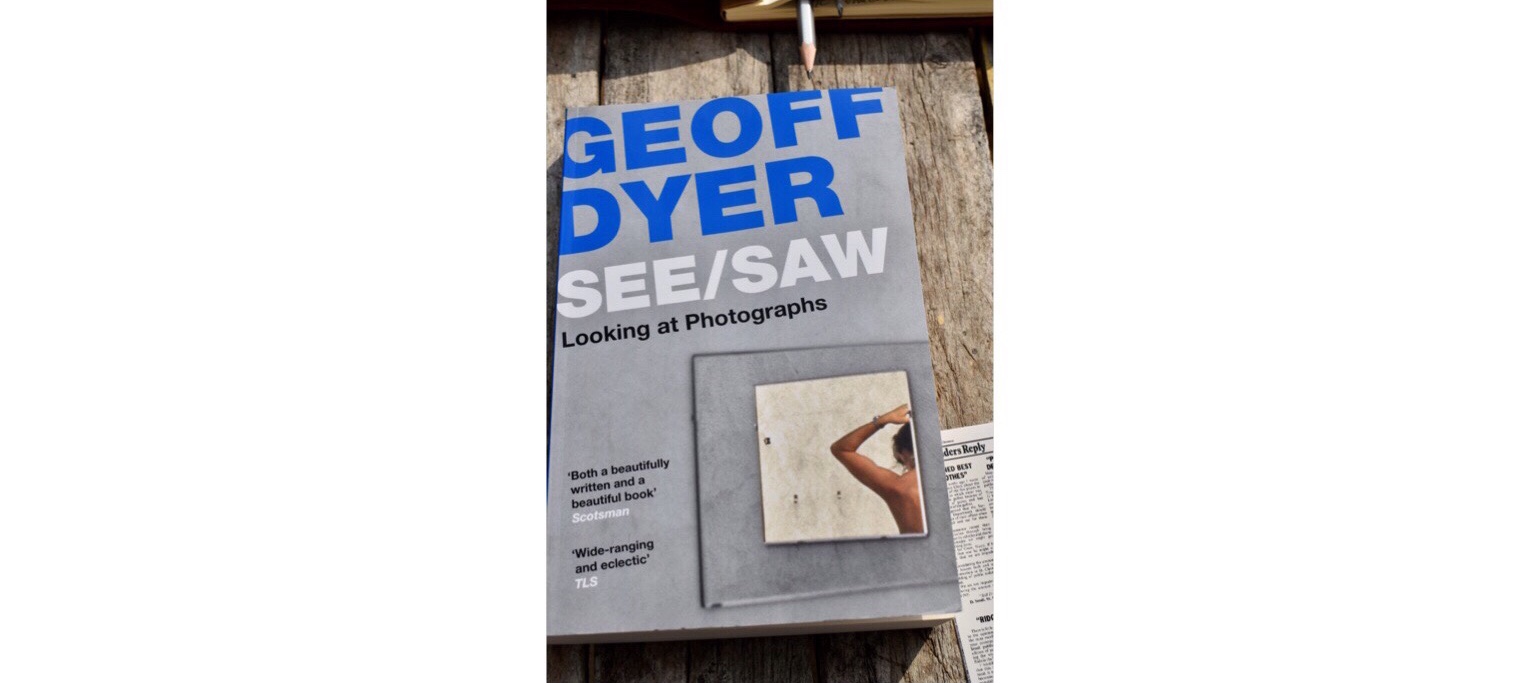
See/Saw: Looking at Photographs, which I am reading at the moment, is different and maybe the reason why it hasn’t captured my interest to the full is that I am not into art criticism. Geoff Dyer reflects on photographs differently, depending on their signature styles, which only demonstrates his ability of looking at, understanding and writing about a photograph, and some of his essays I found fascinating, like the ones on Helen Levitt’s streets and Vivian Maier. It’s probably because I simply love the photography of Helen Levitt and Vivian Maier. Here is how beautifully he dives into Levitt’s street children photography: “Of all Levitt’s marvelous pictures, the one of the kids, the bike and the mirror is by far the busiest and most complex. I refer to it like that because there’s a nice rhythmic similarity to The Lion, the Witch and the Wardrobe, the first of the Narnia novels by C.S. Lewis, in which children pass into another world through a wardrobe.” His words simply add something new to the photograph, but not just an analysis – I don’t exactly believe that a photograph should be explained – but something much more important, a personal meaning to it.

It’s just like with films. If I don’t like a film, I don’t see any reason of going further into it. But when I do, that’s why and when I am willing to attach my own interpretation and my own feelings to it. And then I would love to have someone with Geoff Dyer’s writing skill and looking ability to muse on it.

 
Listening

The soundtrack: Until the End of the World, because this is how much I loved the film.


Making

Hats. Agave Road Hats. This is a brand with a beautiful story behind and a beautiful narrative into the present. It was created by JonCha, composer, play director, actor and writer, a full-fledged creative but who however missed working with his hands. After road tripping in America, from Austin to L.A., and digging out old western hats from every shop along the way, he was inspired to create his own. So a little while after returning to Europe, he moved from Sweden to the South of France with his family and set up his own business in his backyard. He started to make hats, with the Mediterranean nature to inspire their name – Agave Road Hats. JonCha says he likes to imagine his hats “on the head of a beloved barefooted great grandchild or in a small town shop in a hundred years so they can inspire someone else like the old ones I found and inspired me to become a hat maker”. Seeing his family wear these hats, it’s obvious that they are part of their life, accompanying them in writing their story. This kind of making fashion I like and understand.

 
Exploring

After recently watching an episode from Ben Fogle’s New Lives in the Wild (about the only tv I watch), I was completely transformed by Rhona Mitra’s story and the wild and free sanctuary she has made for herself, and the paradise of unconditional love and support she created for horses with The Last Ark Orphanage, in the Uruguayan pampas. Rhona is a beautiful and wild soul and I truly feel she is one of those special people who have the rare gift to inspire change in others and be the voice for the voiceless, both humans and animals. The kind of role model, or hero if you like, we should be for our children or should guide them towards.


“Going to the mountains is going home.”

John Muir


A great companion to the story above is the book Forest Bathing: The Rejuvenating Practice of Shinrin Yoku, where Hector Garcia and Francesc Miralles remind us of the strong connection between man and nature, offering us an excellent introduction into shinrin-yoku, the Japanese art of forest bathing, this green therapy that has proven a key element for us humans’ health. This book (which also includes one of the most inspiring quotes for me, John Muir’s words written above) reads not just like a call to nature, but like a return home, just like Rhona Mitra’s story.
 

On an end note

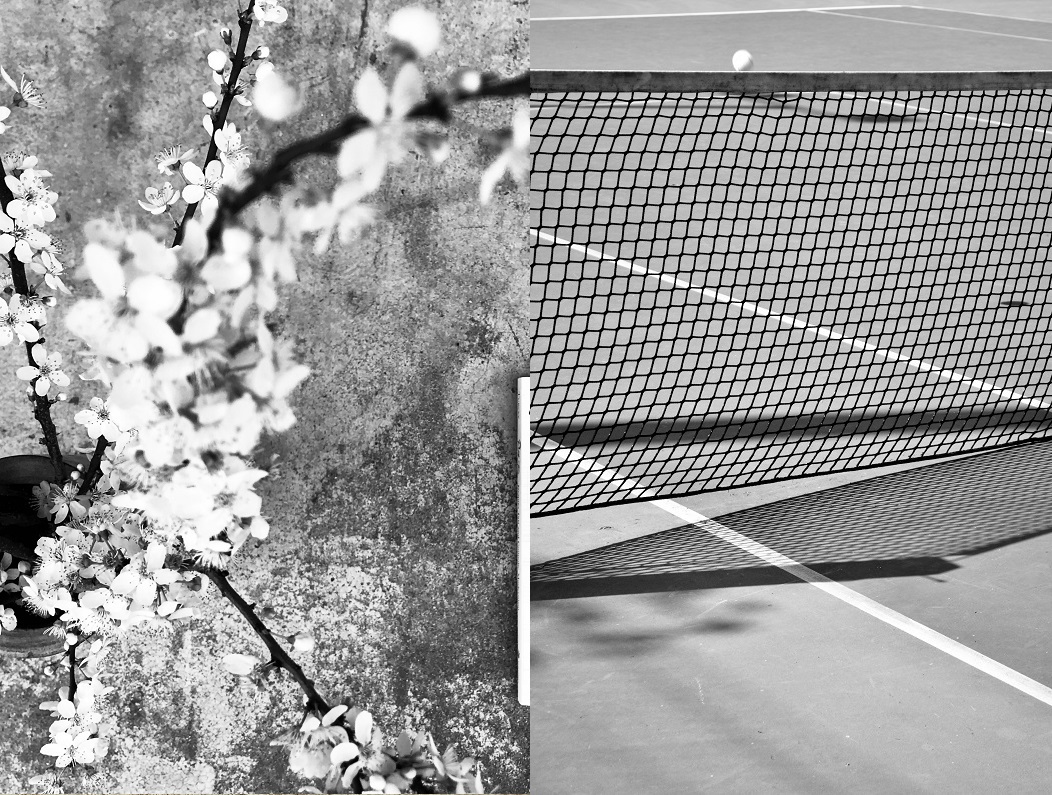
It’s the most wonderful time of the year… Clay season! Which means that besides the sport itself, I will be diving into everything surrounding clay court tennis, from art to Racquet’s on court coverage.

 
The regulars: The interviews, newsletters and podcasts I turn to every week and/or every month because they are that good. Craig Mod’s newsletters: Roden and Ridgeline. Soundtracking, with Edith Bowman. Alicia Kennedy’s newsletter. Gone to Timbuktu, Sophy Robert’s podcast on the art of travel. Sirene and Racquet magazines, in print.


Posted by classiq in Books, Culture, Film, Newsletter | | Comments Off on April Newsletter: Helen Levitt’s Streets, Film Endings, and Rhona Mitra