Running Up That Hill, Max Mayfield, and that unbelievably perfect character-music connection

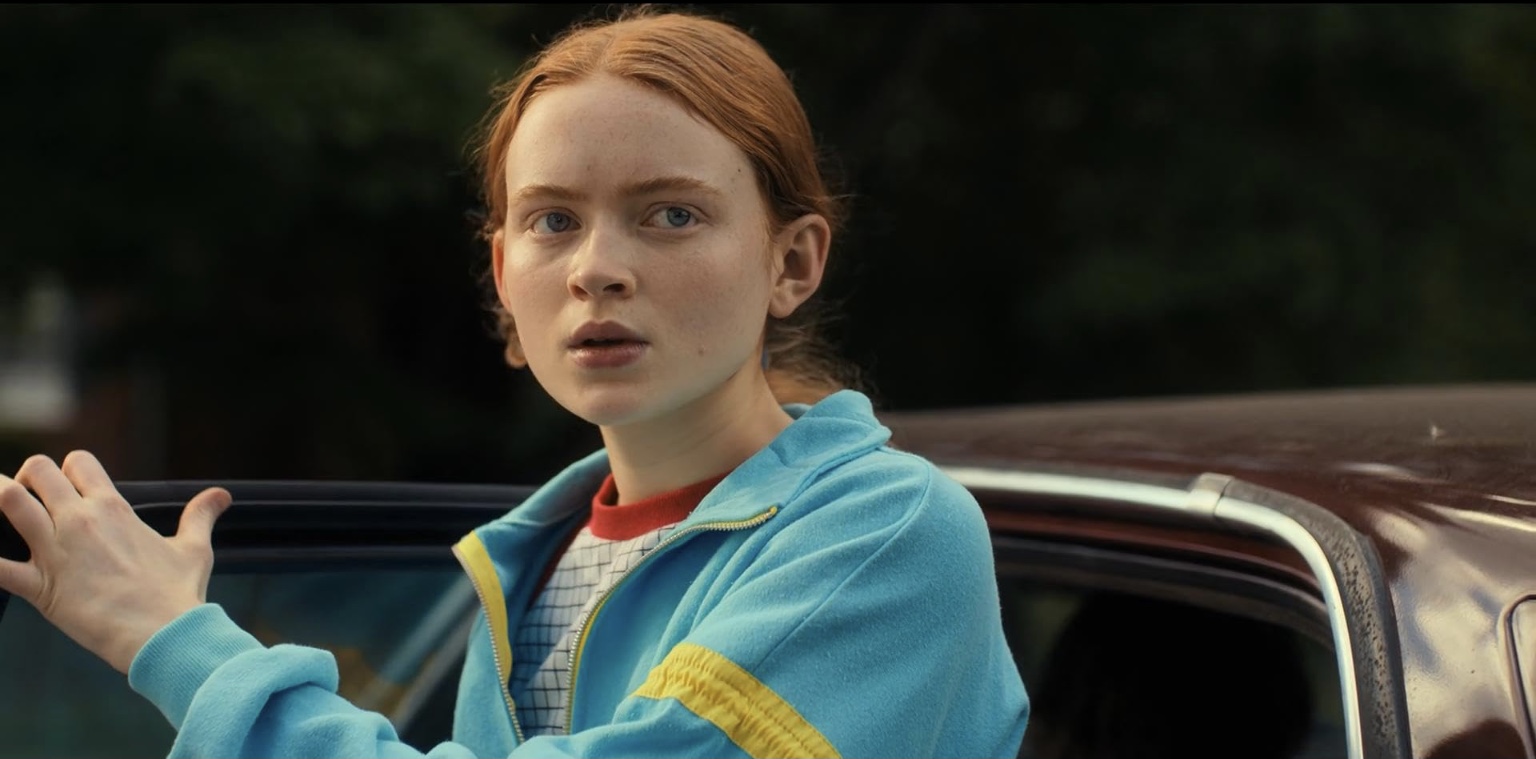
Sadie Sink as Max Mayfield in “Stranger Things”, season 4. Netflix


We will forever be grateful to Martin Scorsese for revolutionising movie soundtrack, being one of the pioneers (before Quentin Tarantino and Wes Anderson) in using preexisting music, approaching soundtrack construction with a record collector’s curiosity and passion. The music in his films is so good. People listen to the music in Scorsese’s films. Who can forget The Ronettes’ “Be My Baby” that opens Mean Streets, showing us Charlie (Harvey Keitel) in happier times, before everything comes apart? And what about Ennio Morricone’s distinctive whistle in the theme of The Good, the Bad and the Ugly, which remains one of the most instantly recognisable elements in the history of cinema? Or the coyote call in the opening credits… “L’estasi dell’oro” (Ecstasy of Gold), the piece of music that accompanies Eli Wallach when racing through a cemetery in a desperate search for the grave where he believes the missing gold is buried. The haunting, melancholic ballad “La Storia de un soldato” (The Story of a Soldier) sung by a group of prisoners to cover up a violent episode when Tuco is tortured. Ennio Morricone’s music has the power to make you appreciate a film in a new way.

But in recent years it has been Stranger Things, the worldwide phenomenon created by the Duffer Brothers, and its no less than phenomenal soundtrack that has taken over the public’s collective mind, sieving through the present day popular culture, in unprecedented ways. No other tv series has done that, not to this level. Twin Peaks was the pioneer (wasn’t it?), and had remained a sort of a lone star on this scene. The whole Stranger Things soundtrack – which combines original composed music and amazing needle-drops that reference the decade and also bring something new and fresh – was part of the narrative from the very beginning, with characters and important plot points being defined either by a specific theme, The Clash’s “Should I Stay or Should I Go”, Joy Division’s “Atmosphere” and so on, and finally, those new heights reached by that unreal, unbelievably perfect character-music connection: Max Mayfield and Kate Bush’s “Running Up That Hill (A Deal with God)” in the fourth season. The track plays a very complex role, way beyond Max’s favourite tune. It represents a crucial moment in the plot, and is part of the whole emotional arc, woven into the narrative on multiple levels.
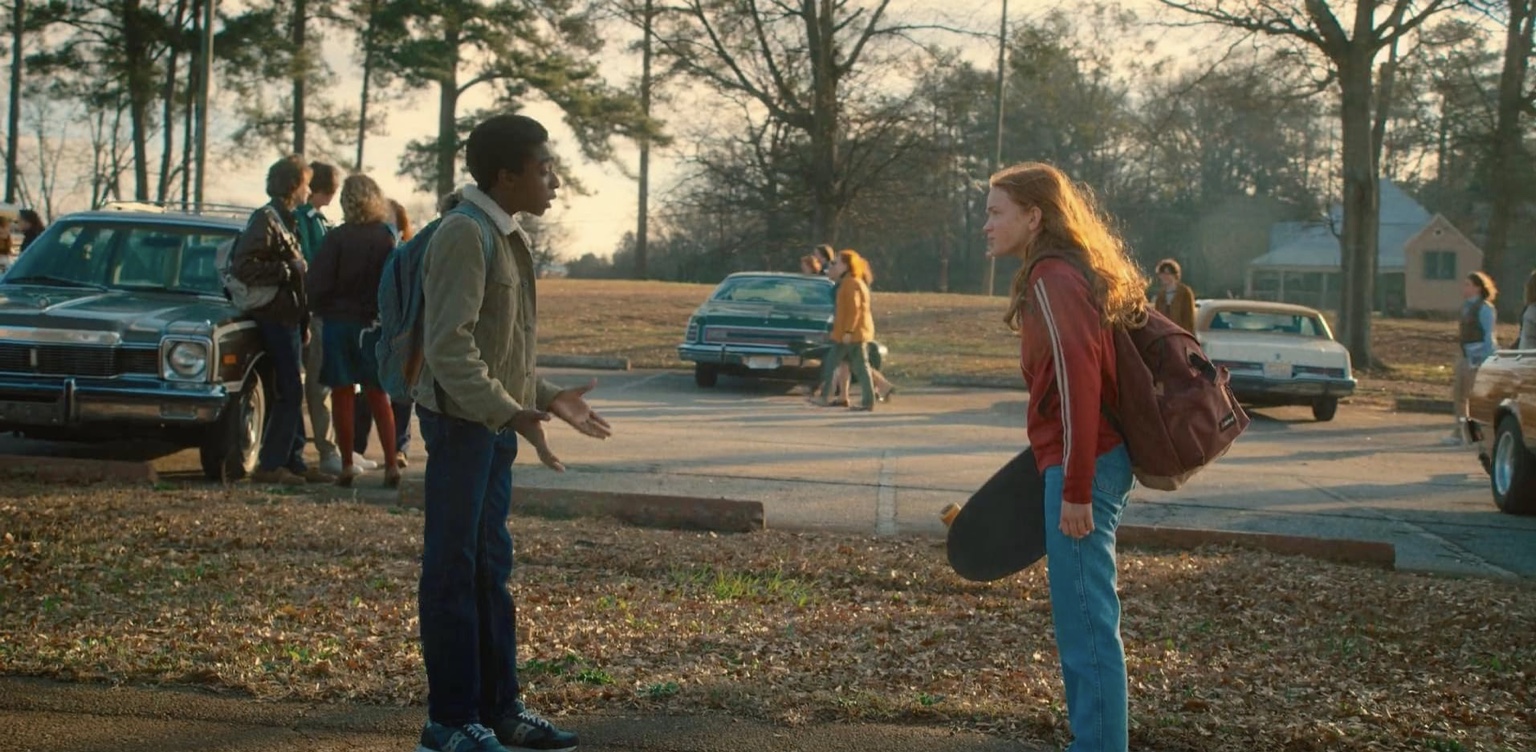
 

Sadie Sink as Max Mayfield in “Stranger Things”, season 2. Netflix


Why I have resisted watching Stranger Things just before its fifth and final season was about to air, I don’t quite yet fathom. But on November last year, I embarked on a marathon to watch the whole show over the weekends, which lasted until January. And now I am rewatching it with my son, who has found the experience fully immersive. No other film, and he’s already seen quite a few great ones (from Jaws, E.T. and Alien, to Harry Potter and My Neighbour Totoro) has succeeded in grabbing him with the same intensity since he watched Jurassic Park a few years ago, age 7 (a time my husband and I already nostalgically call “the dinosaur era”, and which lasted for about two full intense years). And maybe that’s just it. I wouldn’t possibly have enjoyed Stranger Things more than I am enjoying it right now, getting to experience it through my son’s eyes as well. The musical theme of the show, opening each episode (we don’t skip intro, we don’t skip to the next episode, we want to hear and see it all), as we are humming along, is our portal to the sensational world of the group of friends from 1980s Indiana who encounter supernatural forces and unravel upsetting mysteries and secret government programmes. That pulsating, transportative sound is shuddering through the cinematic world, by going deep, not wide, into your emotional and imaginative core.

Music and cinema are an outrageously powerful force. You know that moment when you are watching a film and a song starts flooding the soundtrack and you feel that there is nothing in the world right then that you’d rather do? That this is what you are supposed to be doing? Because the right song can not only jolt a film to something wild and emblematic, but it can transform your own existence, too. And you may already know the song, but in that moment, in that movie, it reaches new heights, new power, new life.
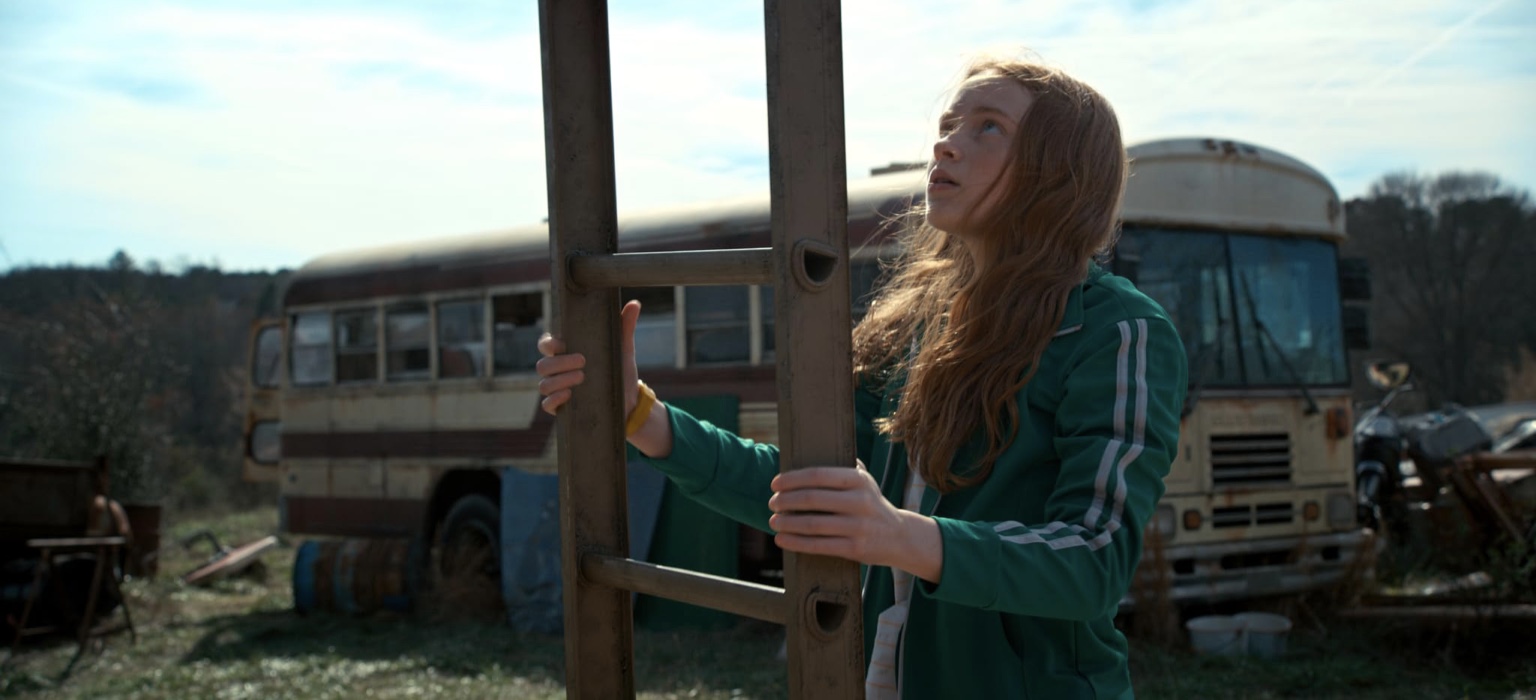
 

Sadie Sink as Max Mayfield in “Stranger Things”, season 2. Netflix


They’re a few very clear needle drops that have definingly transformed movie moments and have lived in my memory for years. Two of them have always stood out. One of them is Just Like Honey – The Jesus and The Mary Chain, in Lost in Translation. That final scene, when Bob (Bill Murray) hugs Charlotte (Scarlett Johansson) and whispers something to her before they part. We don’t hear the words he speaks, nor are we meant to. And there is no exaggeration when I say that is one brilliant ending. Every time I watch that film, when that scene plays with the music in the background, there are so many things that are flooding my mind, in the most emotional and moving way, things I might not be able to think of in any other context or to say out loud at all.

The other movie music moment is when Yasmine Hamadan is performing “Hal” in Only Lovers Left Alive. Again, it occurs towards the end of the movie. I’m not sure I can even describe that feeling in words, but it was like hitting that point when you sensed you were finally completely drawn into the world of the two characters, dark and timeless and otherworldly and overwhelming. I sometimes listen to that song, but the effect is not even closely the same. For me, that song lives in that film. The two forms of art form a common language. The song was not composed for Jarmusch’s film, and that makes its effect all the more striking. When Tilda Swinton’s character, Eve, suggests that Hamdan should be better known, Tom Hiddleston’s character, Adam, says she shouldn’t, because “she’s too good”. Maybe the song is only meant to come alive in the film, in that story – I am not sure an appropriate moment exists in real life. Maybe only in Tangier, “a place where, unlike Marrakech, the old world and new world are not separated by a gulf as though looking at each other. It’s all mixed,” as the director described the atmosphere and location for his film.

What is different with Stranger Things and “Running Up That Hill” is that the impact has been different, at least as far as I am concerned. Despite the song being so intrinsically linked to the story and to the character of Max Mayfield (Sadie Sink), it has seamlessly transgressed the screen, into the real world, into the present culture, and back into the charts. It can live, and thrive, outside that imaginary story.
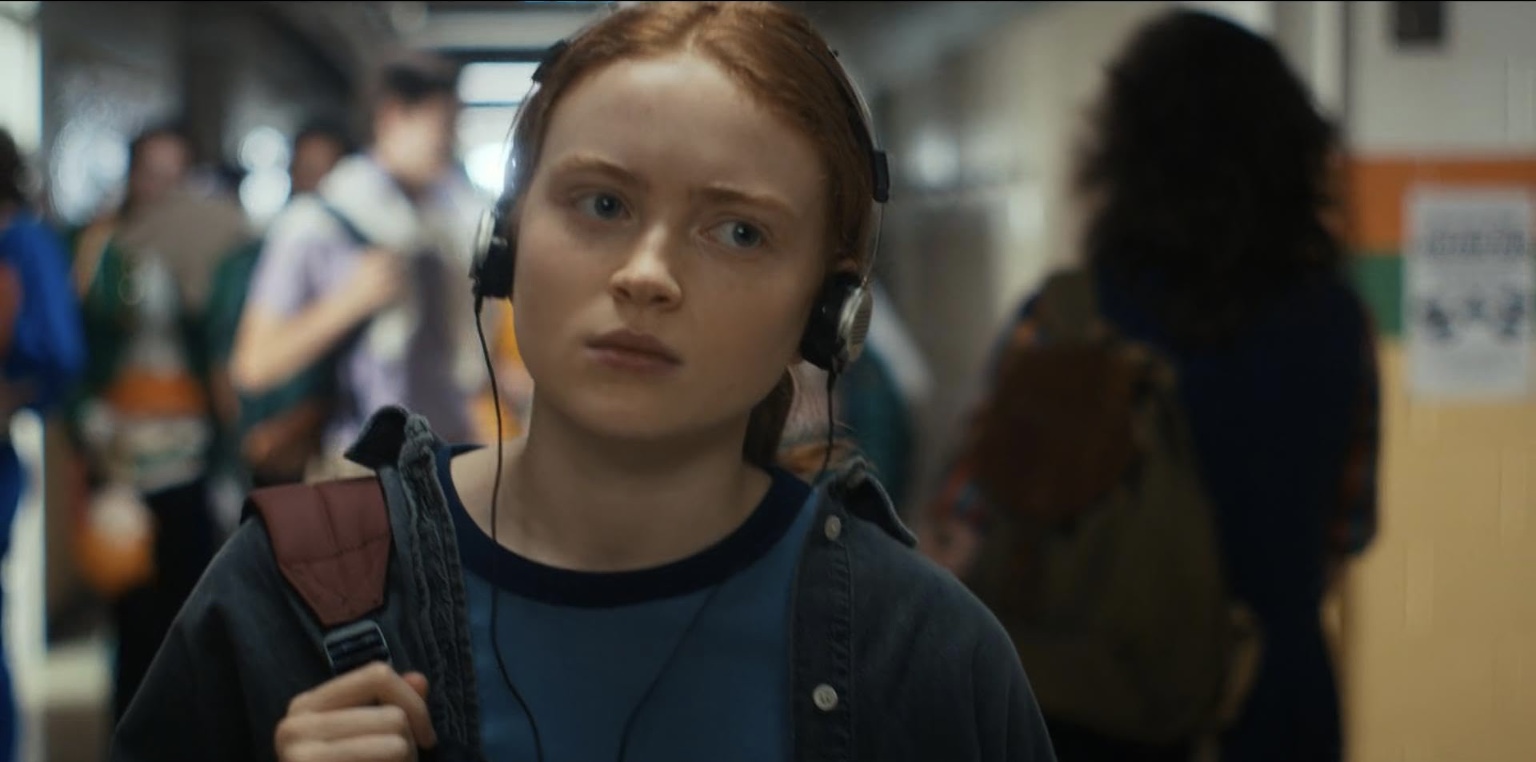
 

Sadie Sink as Max Mayfield in “Stranger Things”, season 4. Netflix


On June 22, 2023, Kate Bush’s song reached one billion streams on Spotify, as well as significant interest and sales in CDs and vinyls, a soaring triggered by the song’s appearance on Stranger Things 4. Nostalgic revolution? More likely, an everlasting feel.

When it was released, 41 years ago, the album from where the tune originated, “Hounds of Love”, which the musician reportedly called her most complete work, was considered progressive and experimental, combining modern technology and Bush’s quintessential vocals. It still feels liberatingly authentic, universally relatable, eternally cool.

“Music is mysterious; it doesn’t offer many answers,” Ennio Morricone remarked. “Film music, on the other hand, is even more mysterious at times, both because of its bond with images and because of its way of bonding with the audience.” Kate Bush’s music from this album was not created for film, but there is a mystery and expressivity and tempo in these lyrics, especially in “Running Up That Hill”, that makes them land very well cinematically.

Max Mayfield (Sadie Sink) makes “Running Up That Hill (A Deal With God)” her personal hymn. Max is the first outsider who joins the group of four (five, if we count Eleven) in season two, hailing from sunny California. She likes listening to music on her Walkman and skateboarding, the most rebellious of them all, fully embracing the counterculture of the times, its raw energy and youthful grit. But she also comes with a lot of emotional baggage and, in season 4, she also experiences a serious disconnection from her friends. It’s the reason why she becomes the target of telepathic new villain Vecna. It’s music that turns out to be the kids’ secret weapon, helping them break the psychic hold the monster has over Max. “Running Up That Hill” is her salvation, the gate back to a stronger self and her incredibly caring and understanding friends. That is what is so overwhelming, her friends are her lifeguard, only she doesn’t realise it yet. Music is there to always help her find her way, when she has a hard time understanding herself, others or when she is feeling misunderstood. Music always finds a way, in good times and in dark times, and even in the Upside Down.
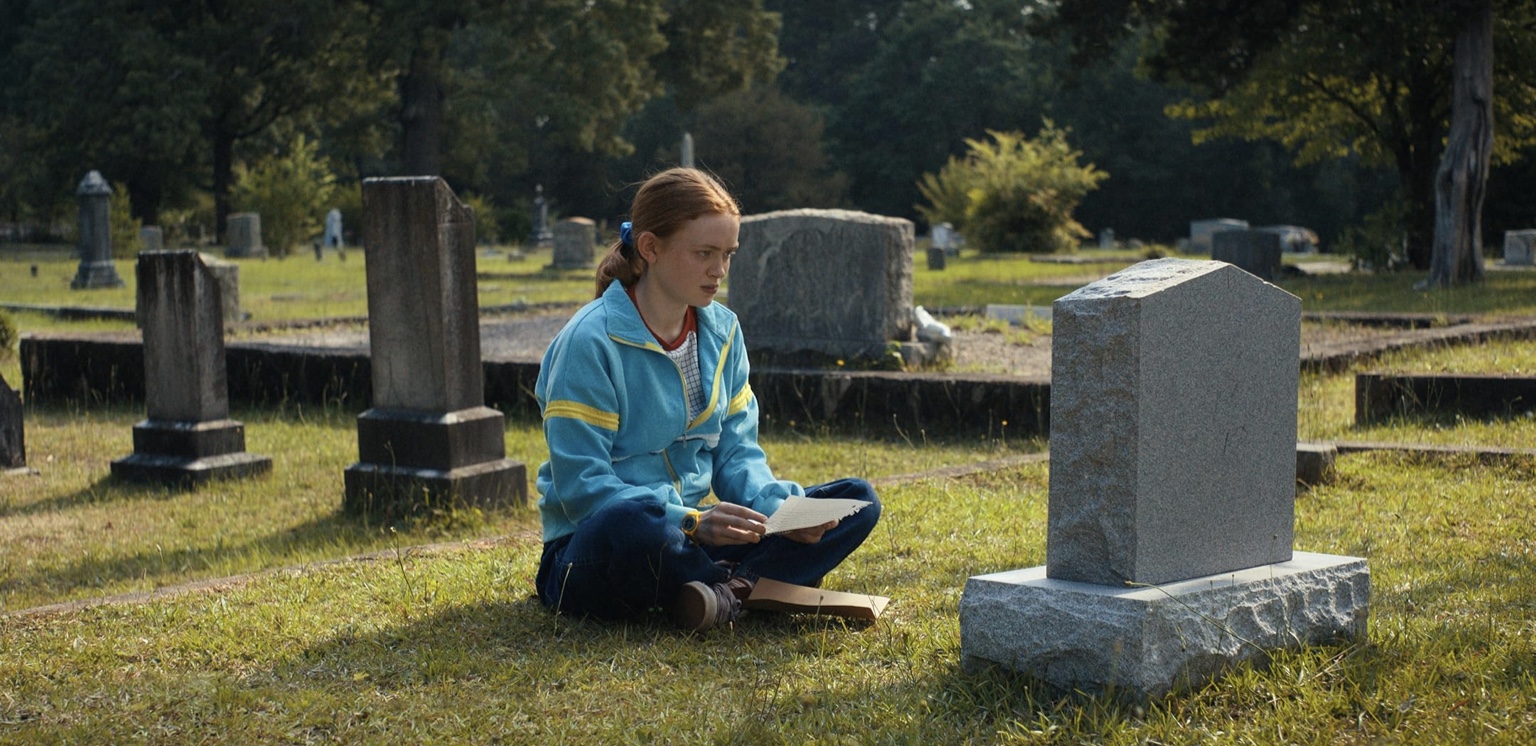
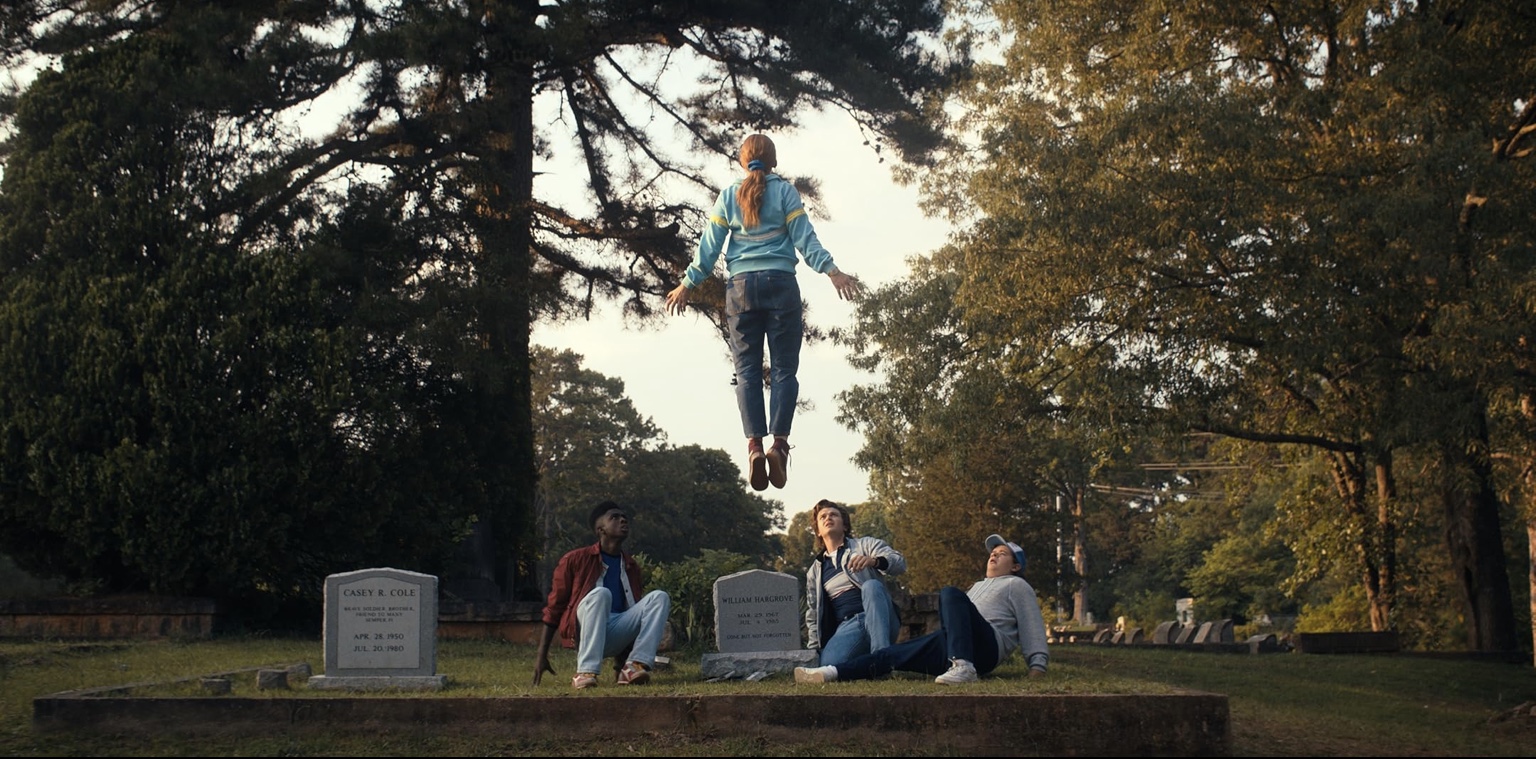


”Stranger Things”, season 4. Netflix


MORE STORIES

“Happyend”: In conversation with cinematographer Bill Kirstein

“I draw on everything I know and feel”: In conversation with photographer Chris Boulton

“After the Hunt”: In conversation with production designer Stefano Baisi
Posted by classiq in Editorial, Film, Sounds & Tracks | | Comments Off on Running Up That Hill, Max Mayfield, and that unbelievably perfect character-music connection

“Continually honing my ability to imagine is an important part of my work”: Interview with cinematographer Bill Kirstein

”Happyend”, 2025, directed by Neo Sora. Zakkubalan, Cineric Creative, Cinema Inutile


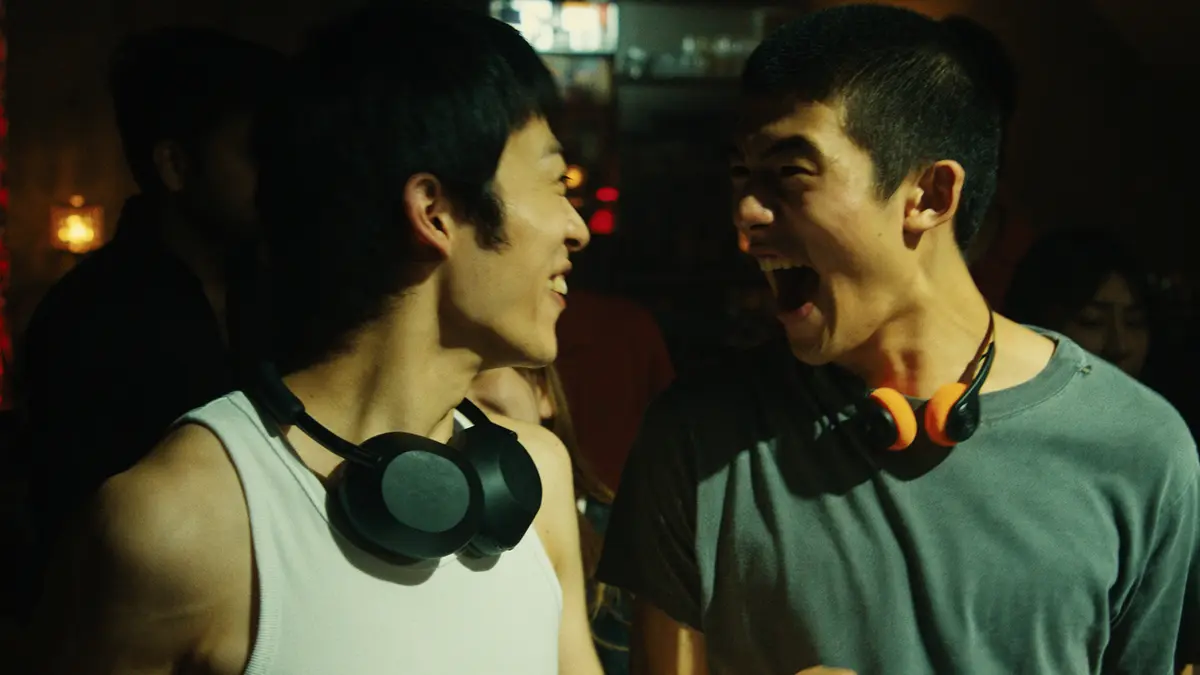
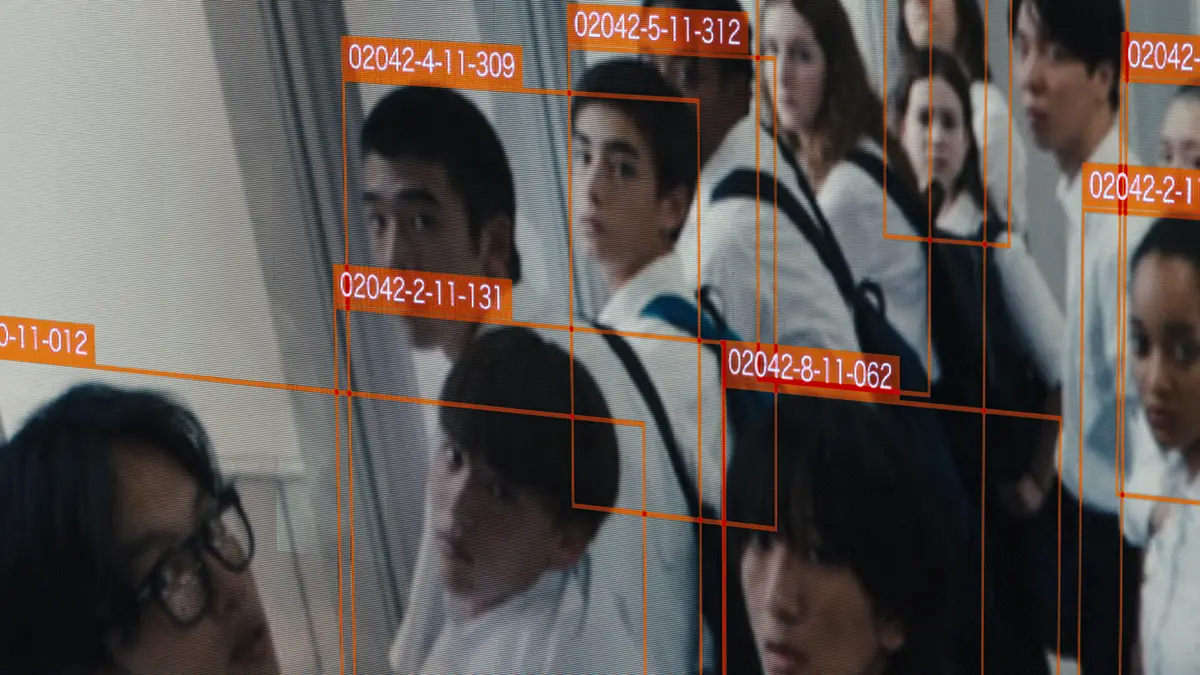
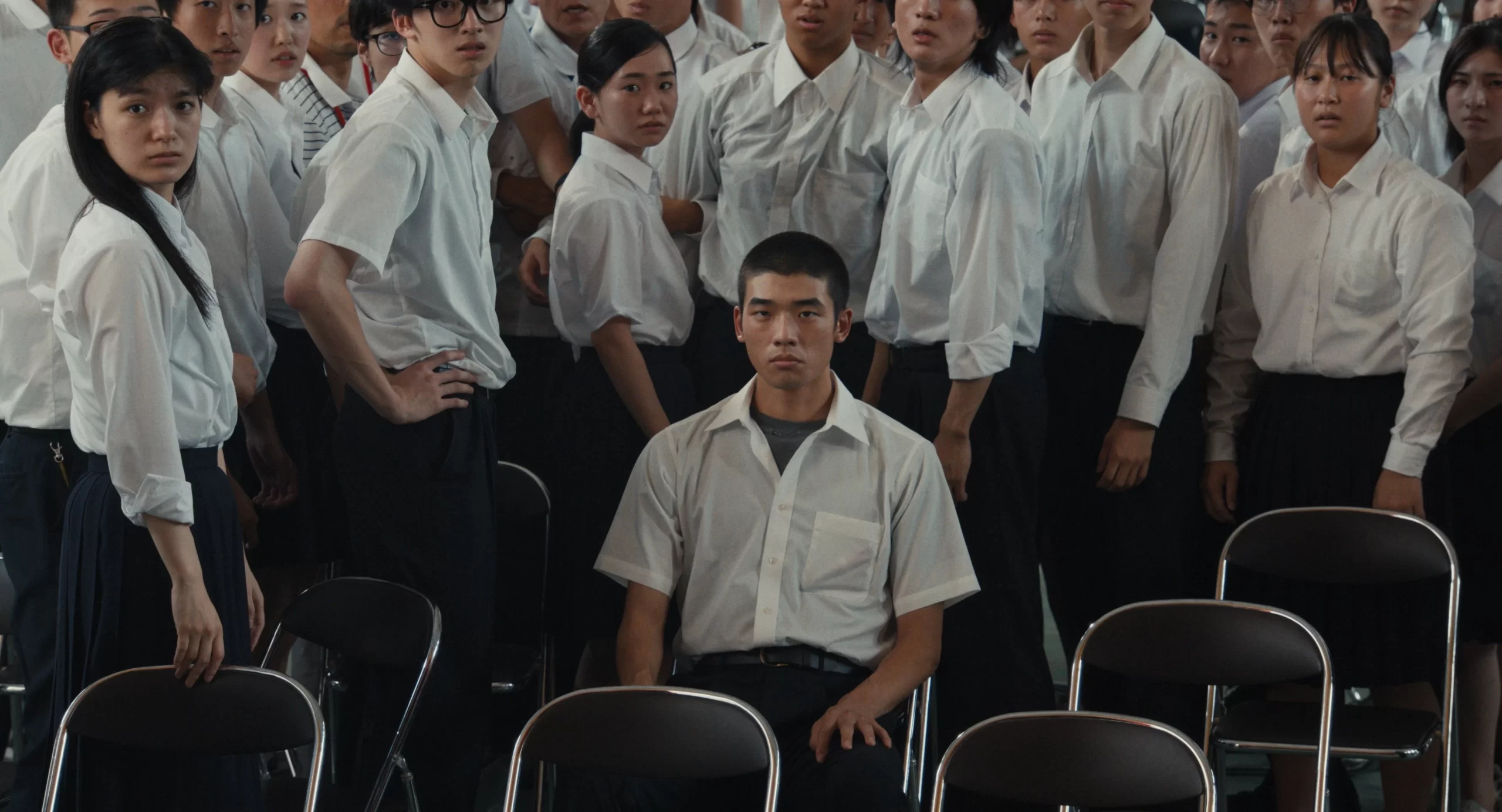
There is this energy that runs as an undercurrent along with a lot of on screen teenage angst in Happyend. Neo Sora, at his debut feature film, explores the transformative moments between two contrasting best friends, navigating youth and rebellion, and the unpredictable dynamics of friendship in a near-future Tokyo, in a world fraught with social and political tensions and where the threat of a devastating earthquake pervades daily life. What I believe is so defining of Happyend, in both its look, and, quite uniquely, in the individual character studies, is how the city is ever present – you are made aware not only of the world they are inhabiting, but of the way those cityscapes impact the characters’ own inner feelings. The story is set in the near future, but the characters seem alienated in the present and we are gazing at them from afar. It sounds complicated, but it feels and looks seamless, in a way that we, the audience, are not aware of. This image that the film conveys has stayed with me and it was the first thing I knew I wanted to ask cinematographer Bill Kirstein, because it is key to how the intricate characters and the powerful visual storytelling create such a compelling narrative that resonates on many levels. In an ever-growing disconnected world, this is the kind of film that hits that universal cord under which we all connect.

In our interview, Bill Kirstein and I talk about how the collaborative work on Neo Sora’s previous short films has allowed them to bring the vision for Happyend forward, about the crucial question to ask when shooting a film, how the novel as an art form has particularly nurtured him as a cinematographer, working in his mind’s eye, and the childhood movie theater that kindled his love for cinema.


”Happyend”, 2025, directed by Neo Sora. Zakkubalan, Cineric Creative, Cinema Inutile


First of all, Bill, congratulations on Happyend! You have previously filmed Neo Sora’s much acclaimed short film Ryuichi Sakamoto: Opus. Was Happyend a natural continuation of your collaboration?

Thank you so much! Happyend was a very natural continuation of our collaboration. We were actually working on Happyend long before Opus and were able to do some scouting together while I was in Tokyo for the Opus shoot. Before that, I shot Neo’s short film The Chicken in New York on 16mm, so we already had a good creative shorthand. Opus was a very special project for so many reasons. Besides developing our visual style further, it was the first time Neo and I had a chance to shoot something together in Japan. It became a helpful testing ground for translation and to explore how our working style would fit in with a Japanese crew. One of the most important takeaways for me was the confidence that our approach was working. We had constructed the visual language primarily as a series of evolving long takes that would be cut together at specific points. These pieces would be interspersed with songs where editing was the primary cinematic tool for conveying the movement of the music. Relatively early in post production, Neo told me that the edit was falling into place almost exactly as planned. Seeing how clearly our preparation translated to the final film helped free us to follow our instincts when prepping and shooting Happyend.


“Ultimately, I think the look of the film evolved through
long conversations about the script and the story itself.”


The story is set in a near-future Japan, not much more authoritarian than our current world. Because of the looming catastrophic earthquake and the surveillance state, there is an atmosphere of anxiety that permeates the narrative, yet the film feels very nostalgic, too. How do you achieve this visually? And how did you agree with the director how the film must look like? How did Neo Sora articulate what he saw in his mind, and did you have a clear idea from the get-go how you would be able to realise it?

Neo and I have a lot of shared references that ground our approach. Early in the process, we returned to films by Tsai Ming-Liang, Edward Yang, Ernst Lubitsch, Hou Hsiao-Hsien and Shinji Somai to get the gears turning. These films were helpful for starting a dialogue, but ultimately I think the look of the film evolved through long conversations about the script and the story itself. To me, one of the crucial questions to ask when shooting a film is “What perspective is the story being told from?” One of the superpowers of both cinema and literature is that you can tell a story from any perspective and include as many different viewpoints as your budget or imagination allow.


With Happyend, Neo wanted to approach the films as if it was a memory shared by Kou and Yuta many years after the events of the film take place. As we started to unpack this idea more, it provided specific answers for how we should shoot the film. Since the film takes place in the future – we realised that we must shoot the film as a memory of something that hasn’t happened yet. This implies a visual paradox: an image that looks like it’s from the future while still being mediated by the haze of time and memory. Our answer to this challenge was to use longer lenses (mostly 50mm and above) combined with a more distant camera position and deep depth of field. The subconscious effect of this strategy is an image that feels present and grounded in reality, but glimpsed from afar – remembered. The subtle version of the way looking through a pair of binoculars collapses space and allows you to see distant details, while still feeling far away from them. The last piece of the puzzle was the texture of the image itself. We used one of the newest digital sensors at the time – the Sony Venice 2 combined with rehoused vintage lenses (Minolta Rokkors) and a very subtle low contrast filter that we found through testing. This combination provided the layered feeling of a present tense and urgent story with the air of memory/nostalgia that you mentioned.


”Happyend”, 2025, directed by Neo Sora. Zakkubalan, Cineric Creative, Cinema Inutile


“One of the superpowers of both cinema and literature is that
you can tell a story from any perspective and include as many
different viewpoints as your budget or imagination allow.”


There is a clear relationship between characters and the landscape of urban life. Did you reference any films in terms of the way you compose spaces and cities?

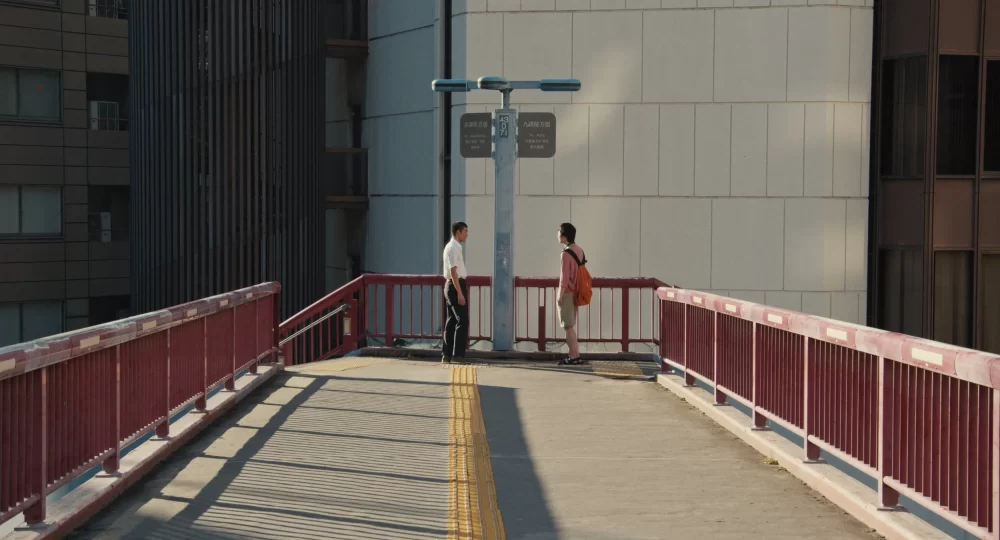
This was another formal choice derived from the story that Neo shared with me early in the process. Because so much of the film revolves around the idea that a major earthquake could strike at any time, we wanted to find a way to visually convey this sense of impending cataclysm. Tokyo is a very vertical city. Buildings tower over the characters as they move through the world. Neo chose to elegantly explore this physical relationship by suggesting we use mostly closed frames throughout the film, meaning that we would film the characters against backgrounds that don’t show any sky. As a result, throughout the film the audience is subconsciously filling in the rest of buildings towering above the characters out of frame. This strategy creates a psychic weight akin to what the characters might be experiencing, feeling like the buildings could come crashing down on them at any time.


Friendship plays a center role in the film and the actors breathe life into the characters. Directors are usually asked how they work with actors. But I always feel that this question should be further extended and find out the DP’s perspective as well. Camera work is not just about lens, filter and light. It involves character and emotion and actors. Was it easy to create a relationship with the actors on set?

The actors on this film were all so kind, excited about the work, and focused. They became a real friend group just like the characters in the film. I don’t speak Japanese and most of the actors didn’t speak much English, so most of our verbal communication ran though Neo or other crew members who could translate. We also naturally developed a language of fist bumps, hand gestures, facial expressions and a few key words in Japanese and English; this kind of communication was all about exchanging positive energy or slightly adjusting blocking for camera. I still feel incredibly grateful for their kindness, and for their patience with my lack of Japanese language skills. Projecting this kind of energy and professionalism from behind the camera can be an important part of helping make people comfortable in front of it.


“I don’t think a filmmaker should necessarily build
with images first – it really depends what kind of
development leads to the most interesting story
and their personal working process.”


Did you work with storyboards? Do you believe a filmmaker should build a film with images first, to make sure everything is comprehensible visually, and only then add dialogue?

We did work with storyboards a bit. Neo is a talented sketch artist and I have the ability to at least convey shot scale and perspective using stick figures. For the most part though, we used a written shot list and images captured in the actual locations using a viewfinder app (an app that allows you to closely replicate the angle of view of our specific lenses and focal lengths). We incorporated these images into our shotlist, making a hybrid storyboard/shotlist document.


To answer the second part of your question, I don’t think a filmmaker should necessarily build with images first – it really depends what kind of development leads to the most interesting story and their personal working process. At some point though, I think it’s important to turn to the image and consider how it’s functioning on a moment to moment basis and how that fits into the visual language of the film as a whole. I think it’s worth noting that what’s excluded from the frame is just as important as what’s in it. In Happyend, for example, many of the more intimate moments were shot with what Neo and I called a “considerate camera.” Rather than intruding on a moment, we would often stay wide or see people only in reflection, leaving room for the viewer to imagine the intimacy between the characters. I think visual storytelling is just as much about activating the audience’s imagination and making them realise what’s going on as it is about showing things clearly.


“There’s a freedom that comes from observation –
seeing that bold choices can also be incredibly natural
as long as they support the story.”


As a cinematographer, you have to interpret a script and transform it into images. You are a visual storyteller. Is there any art form in particular that has nurtured you and built you as a cinematographer?

Visual inspiration comes from so many different places and different art forms. Photography, painting, sculpture. I especially spend a lot of time observing natural light in different settings and have used this practice to escape the particularly coercive power of “realism” or “naturalism” when it comes to lighting. Something feeling “natural” can of course be incredibly important when it affects a viewer’s suspension of disbelief or ability to get absorbed in the story. But I’ve found that, in nature, almost any lighting scenario is actually natural. There’ve been so many days that I’ve seen the sun break through a dark cloudy sky and light the land with an incredibly unnatural-feeling hard light. Or sunset light bounce off a big white building and light someone across the street with the softest, most flattering light you could ask for. To me, there’s a freedom that comes from observation – seeing that bold choices can also be incredibly natural as long as they support the story.

To bring it back to art forms – one that has particularly nurtured me as a cinematographer is the novel. When I’m absorbed in a book, my brain is just watching a movie that it’s rendering in real time. Instinctively, I’m picturing very specific images as they are conjured by the description on the page. And crucially as it relates to film, they are images in motion. I think this is a very similar experience to the job of a cinematographer – to imagine how to tell a story visually and then be able to construct that image in physical reality and render it through the camera. Being able to visualise what the script and director are trying to communicate is the first step to shooting something, so continually honing my ability to imagine is an important part of my work as a DP.


Cinema must, and will, survive. Why do movies still need cinemas? What does the cinema experience mean to you?

I started loving movies as a kid going to the Uptown Theater in D.C., which was a massive curved screen built for Around the World in 80 Days. I was always seeking out films, watching them with my family, going to the theater. The communal viewing experience went hand in hand with developing an understanding about how stories could be told visually. Before I even had the language to describe it, hearing the audience react around me and seeing them be affected emotionally at the same time I was, created a deep shared experience with strangers. When you make eye contact with people walking out of the theater after seeing a great film, there’s a new recognition. You share something with that person. The cinema connects us, it makes us feel less alone. To me, shared experience is the starting point for friendship, romance and community. The theater can plant these seeds and strengthen their bonds. Sitting quietly in the dark together as any story ever conceivable is whispered to us through flickering images, sound and music. There’s nothing like it.


“To me, shared experience is the starting point for
friendship, romance and community. The theater can plant
these seeds and strengthen their bonds. There’s nothing like it.”


”Happyend”, 2025, directed by Neo Sora. Zakkubalan, Cineric Creative, Cinema Inutile


MORE STORIES

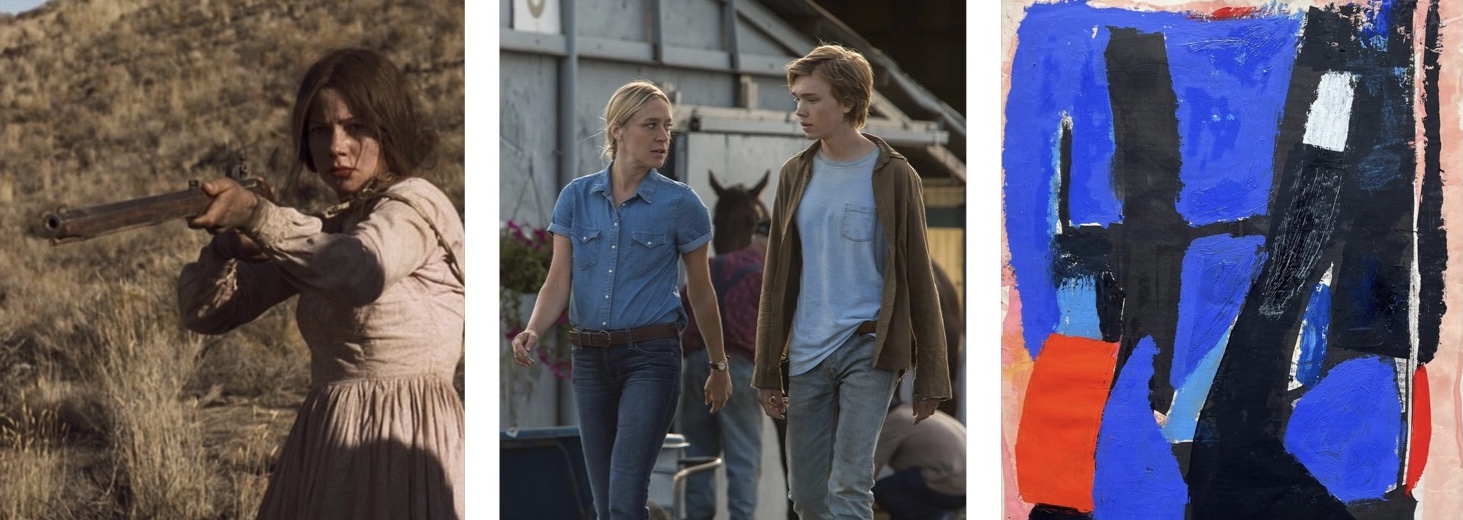
From the period authenticity of “Meek’s Cutoff” to the contemporary realism of
“Boys Don’t Cry”: In conversation with costume designer Vicki Farrell

“Lean on Pete”: In conversation with production designer Ryan Warren Smith

“This is truly who I am”: In conversation with artist Heather Chontos

Posted by classiq in Film, Interviews | | Comments Off on “Continually honing my ability to imagine is an important part of my work”: Interview with cinematographer Bill Kirstein

February newsletter: Downhill Racer, Hounds of Love and West Coast Ivy

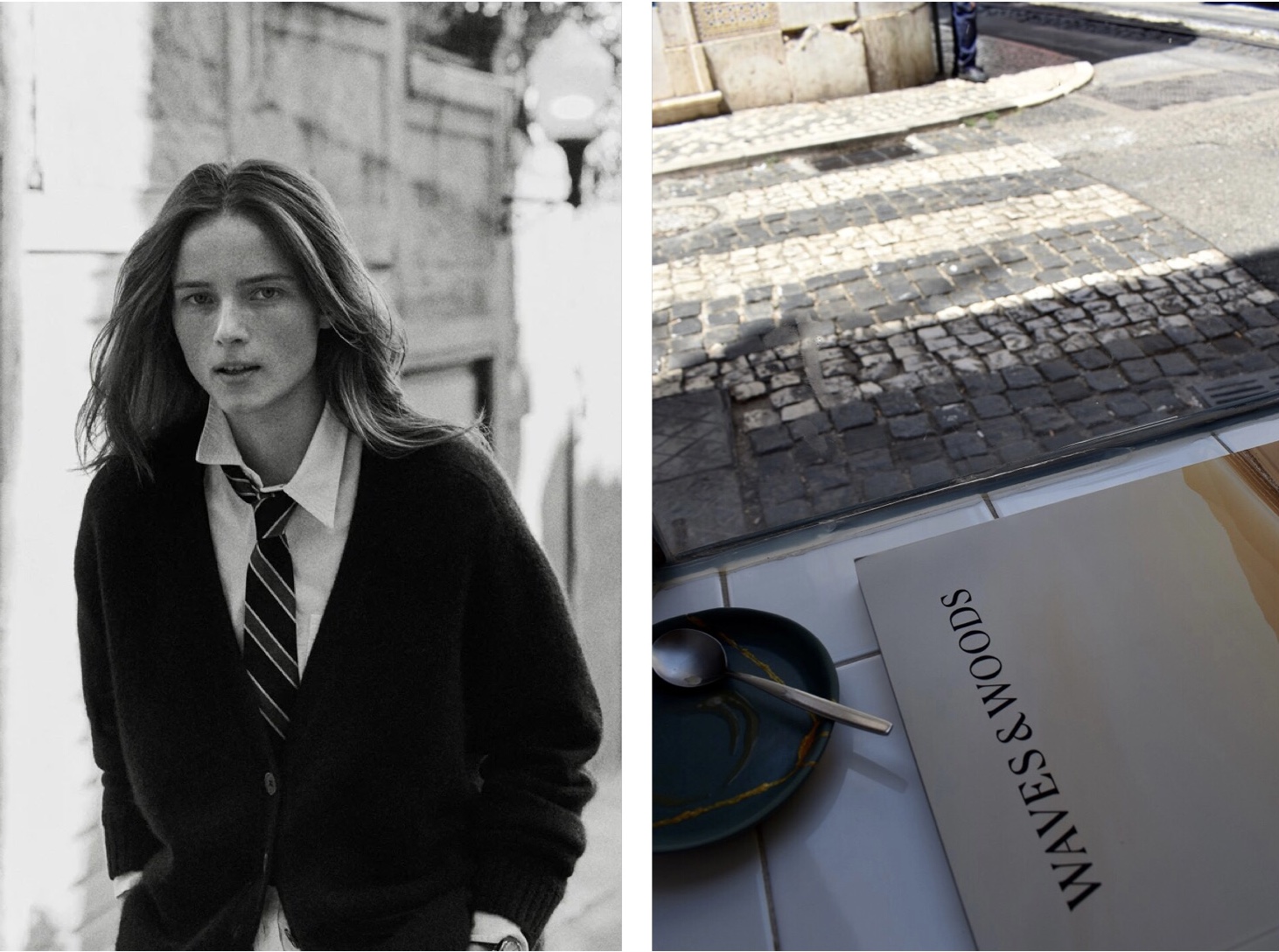
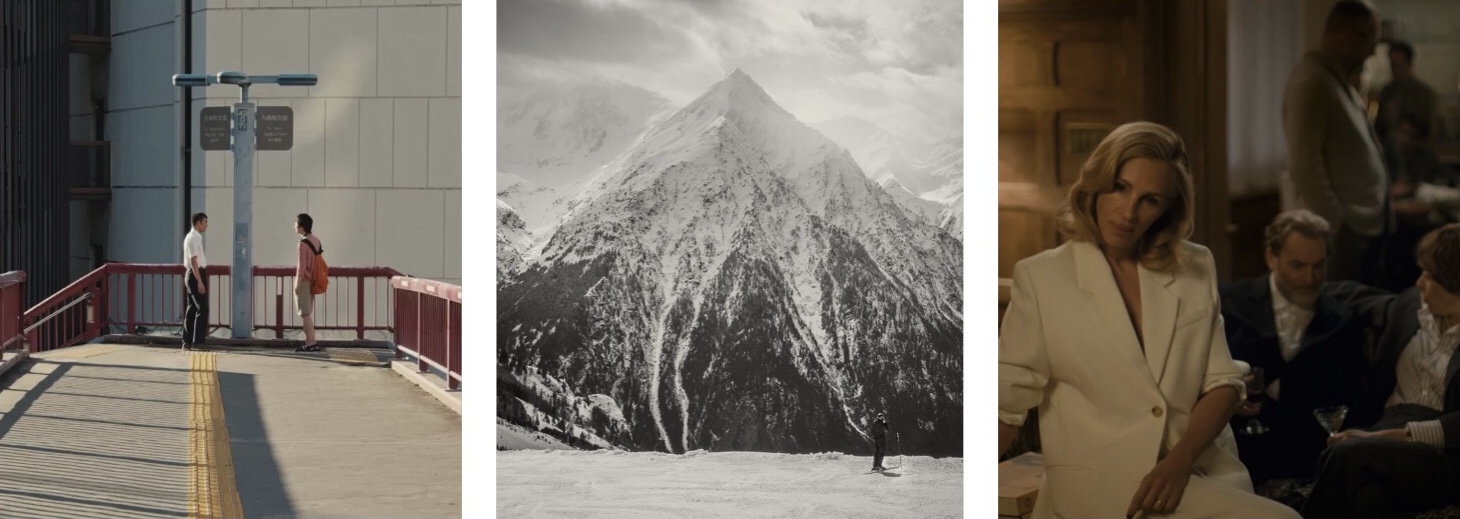
Photos: Buck Mason Ivy Collection lookbook (left). Classiq Journal (right)


“And if I only could
I’d make a deal with God
And I’d get Him to swap our places
Be runnin’ up that road
Be runnin’ up that hill
Be runnin’ up that building
Say, if I only could”

Kate Bush, Running Up That Hill


Classiq Journal Editions, available in the shop


Viewing

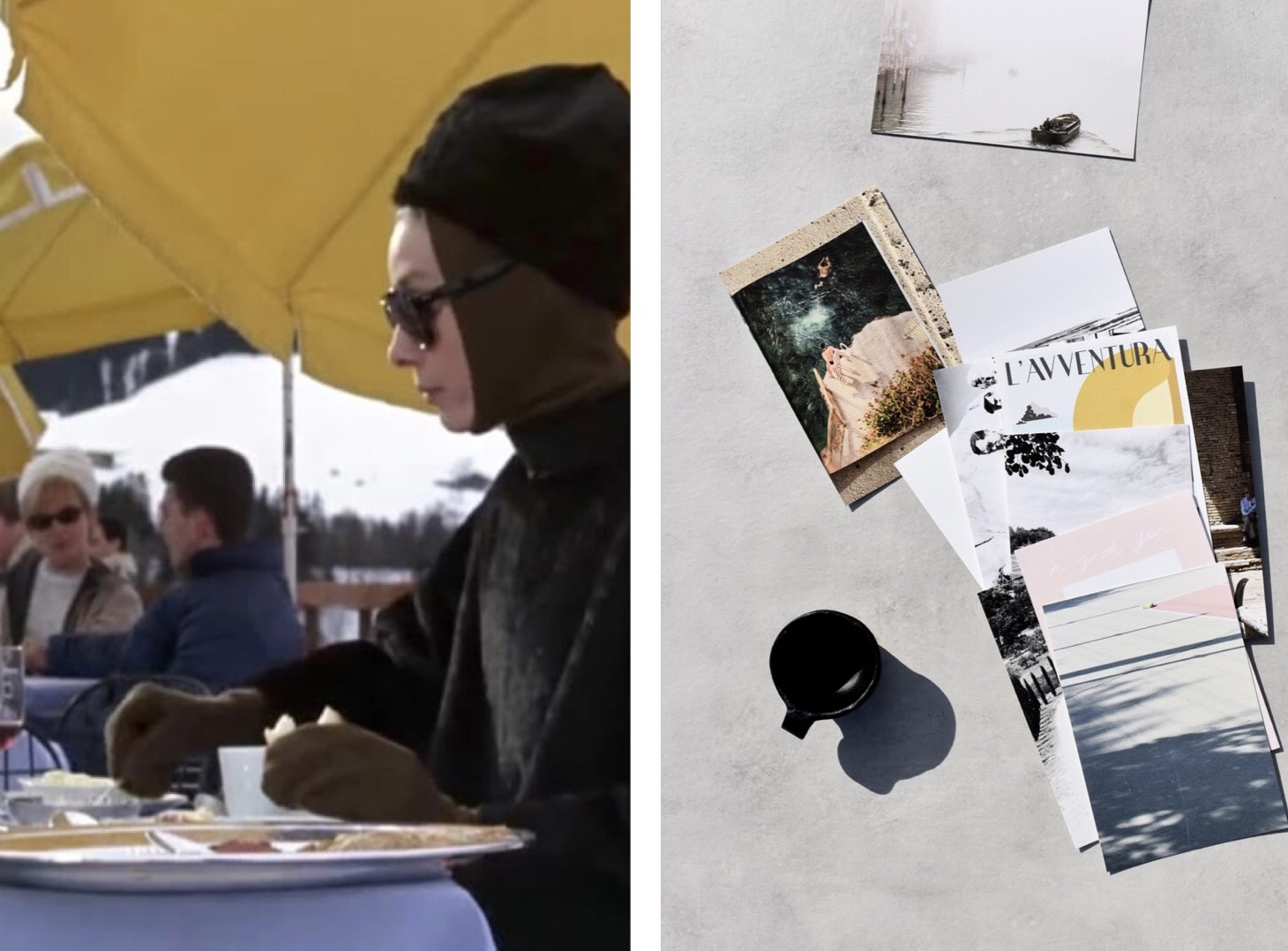
Downhill Racer, 1969
Michael Ritchie

Simply put, this is one of the best movies about sports, about winning and the mystique of sport. Robert Redford is David Chappellet, member of the US skiing team. “What does winning really mean?” was what Robert Redford, one of the producers and the one who brought director Michael Ritchie and screenwriter James Salter together, wanted the movie to be about. Skiing and winning are all that matter to Chappellet, a character that is presented unidimensional, from the angle of a driven, self-centered professional sportsman, without insisting on any personal drama or feelings. “I’ll be famous, I’ll be a champion”, Chappellet tells his father. That’s all he is interested in, dismissing any interest, even in the financial side.

But there is also Redford’s sweater trim silhouette, namely the black pullover with a chest-crossing black and white stripe, that any discerning sportsman, and any man and woman for that matter, should channel today. It’s minimalist, modern, so classically sporty. It was the time of Jean Claude Killy, when the best downhill racers wore sweaters of pure wool. If it was good back then, why wouldn’t it be good today? My grandfather, an active man his entire life who always lived (and could only have lived) in the countryside, where the winters used to be much harsher than they are now, never wore a jacket. His winter outerwear was a thick hand-made woolen pullover, worn with a proper base layer, and a sheep shearling vest on top of it. I believe in family traditions and that rich experiences involve people and nature and not much material stuff, and I also believe in simple, timeless sports traditions. Reclaiming natural fibers should go hand in hand with our newly-refound reconnection with nature, steeped in an elegant practicality.

“It was the ’70s and skiing was the scene. Everyone wanted to be outdoors with each other, bold and beautiful and kissed by the sun. It was like nature was a game. The air got you high, the sky, and there was the feeling of something wondrous and once in a lifetime.” – The God of Skiing, by Peter Kray


Happyend, 2025
Neo Sora

The story is set in a near-future Tokyo, not much more authoritarian than our current world. Because of a looming catastrophic earthquake and paranoid surveillance, there is an atmosphere of anxiety that permeates the narrative, yet the film feels very nostalgic, too, especially through the eyes of the characters, mainly teenagers. Friendship, teenage rebellion and romance play center role in this high school dystopia, unexpectedly laying the background for the most poignant social and political commentary. There is also a clear relationship between characters and the landscape of urban life, something I believe Japanese films are particularly good at, and completely different than any other cinema. I would have loved to ask cinematographer Bill Kirstein how he composed spaces and city.


Marty Supreme, 2025
Josh Safdie

The film belongs to Timothée Chalamet. I believe it, therefore I am it. Nobody (be it character in the film or audience) seems to make up their mind whether they are annoyed by him or completely fascinated at any given time.


Cloud, 2025
Kyoshi Kurosawa

Toshiba (Masaki Suda) is a hustler who buys stuff online and sells it at excessively higher prices. A pretty ordinary life and quite telling about our times. But it is the way the director wields elements of suspense and empty spaces and the way he restraints from using music (employing instead diegetic soundtrack to dial up tension) that grabs your attention. That’s cinema, after all.


Stranger Things (2016-2025)

Since the last newsletter I have finally watched all seasons and the bottom line is I loved it even when I didn’t like it (especially season 3). And now I am rewatching season one, this time with my son. He was hooked from the first episode and totally digs the decade I was born in. The soundtrack is all we’ve been listening to, we want to play Dungeons and Dragons, and we want Dustin and Mike and Lucas and Will to be our friends.


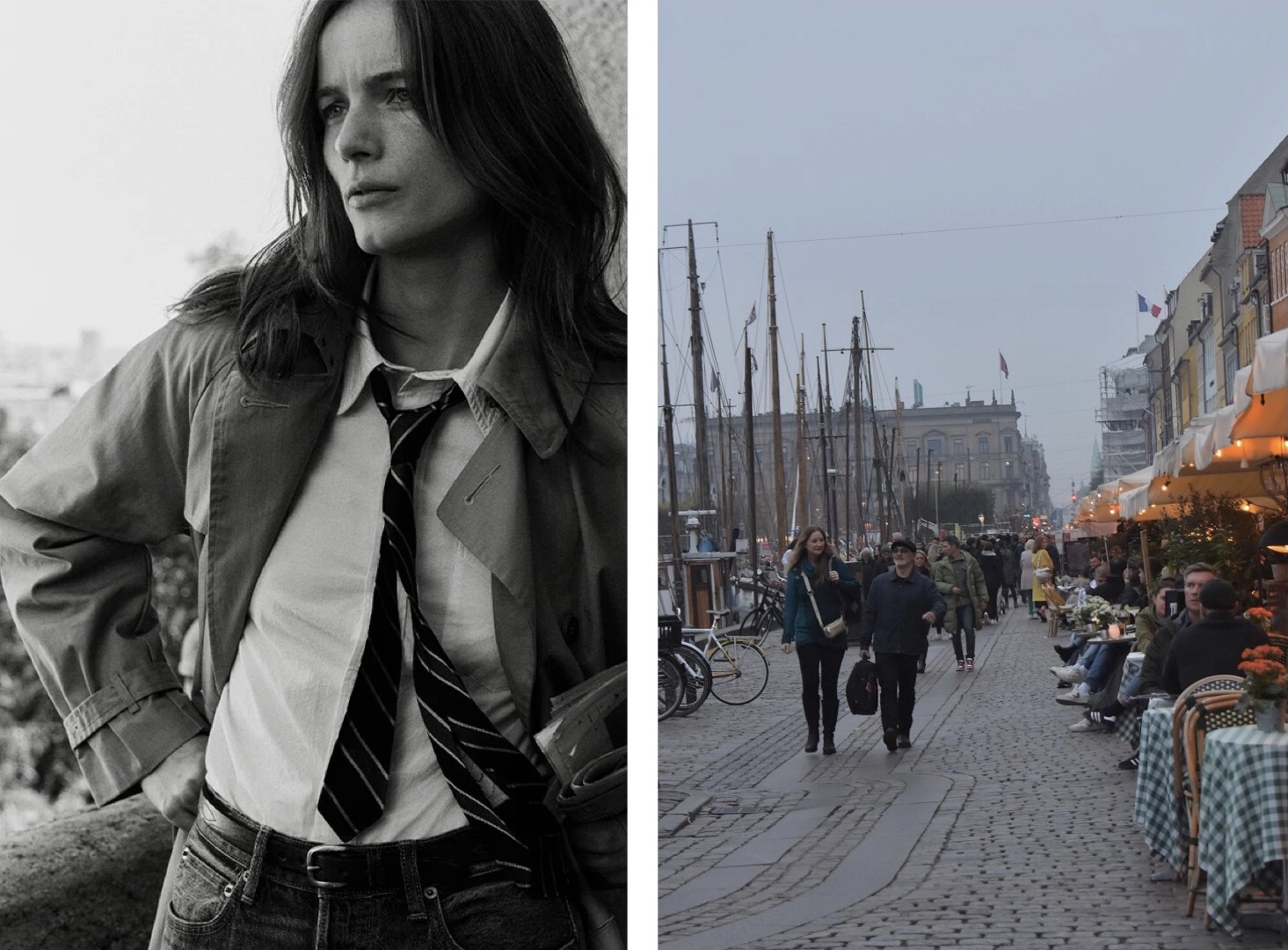
Photos: Buck Mason Ivy Collection lookbook (left). Classiq Journal (right)


Reading

The latest issue of Légende magazine is dedicated to David Bowie and it truly is a collector’s item, just like every edition is (the Bob Dylan, Rafael Nadal and Brigitte Bardot issues are three more that I personally treasure). As Légende editor-in-chief Éric Fottorino says, Bowie was a unique phenomenon, in his own way and in every way, and it is a joy to rediscover this multicoloured phoenix, an angel of light and darkness who, ten years after his death, has neither finished singing nor enchanting us.

Some of the best books about making movies are not the ones staring you in the eye from every overrated top ten list, but these three books: Conversations with Dean Tavoularis, Conversations with Darius Khonji and Conversations with James Gray. are A collection for film lovers featuring some of the greatest artists and craftsman of our time.

From the journal’s archives: In tribute of the Winter Olympics, for anyone loving sport and style and the cultural ramifications surrounding them, because neither sport nor style should be self-referential, my writing piece A sporting life: In search of its lost elegance.

The interview: Chris Gayomali in conversation with Judith Thurman, The New Yorker staff writer. “The qualities that tend to make someone’s outfit interesting aren’t all that different from the qualities that make for a memorable sentence: funny juxtapositions, departures from the common wisdom, grace notes that wink and surprise. Not many writers working today are stylish enough to pull off the latter. An even smaller fraction are capable of dressing cool, too.”


Listening

The podcast: This Cultural Life

The soundtrack: Stranger Things, the whole series

The album: Hounds of Love, Kate Bush


Making

I like a good story. And the Ivy Look has quite a story to tell, spanning movies and movie posters, pilgrims of modern jazz and graphic design, writers and hipsters. More than half a century since its heyday (the 1950s and 1960s), the Ivy Look is as fresh, stylish and relevant as ever, and it inspires us to be as rich in character and innovation as the original era of the look was. Enter Buck Mason’s West Coast Ivy Collection. “West Coast Ivy is our unbuttoned take on East Coast prep—rooted in tradition, yet worn with a studied carelessness synonymous with the California lifestyle. Carefully considered but never constrained, silhouettes move with ease as classic menswear staples are softened and relaxed for Los Angeles.”


Exploring

My Cortina, an insider’s guide to the 2026 Winter Olympics.

The art and iconic posters installation at Triennale Milano. The two Iconic Posters of the Milano Cortina 2026 Olympic and Paralympic Winter Games, created by Olimpia Zagnoli and Carolina Altavilla, are on display until March, along with the Art Posters – ten posters commissioned from some of the most compelling Italian painters, invited to explore the intersection of art and sport. Displayed alongside the posters are the Olympic Torch and the Paralympic Torch, symbols of the Games.


On an end note

We are all inspired and challenged by greatness and by the highest achievements in any domain. But not chasing greatness at all costs is okay, too. The mountain isn’t just about winter sports and pushing one’s limits, and that’s one of the things I love so much about the film Le otto montagne (The Eight Mountains), directed by Felix van Groeningen and Charlotte Vandermeersch. It is an ode to mountain peaks, to friendship, to life. Is there anything more beautiful than that? A film in harmony with the seasons, a film that takes its time to unfold, as it tells the story of a city boy, Pietro, and Bruno, a village boy, who meet in an isolated village in the Italian Alps, where Pietro’s family spends the summers (because summer is when I love the mountain best and the mountain in the summer is much too underrated). A profound bound forms between the two, which will shape and mark their adult lives. Childhood unites them (the film is also an ode to childhood and its free and unspoiled spirit), life takes them on different paths and tragedy reunites them again, with the mountain and the beauty of nature, with its untamed and unpredictable force, always presiding over their existence. The film was based on the eponymous book written by Paolo Cognetti and what I find extremely meaningful and extraordinary about the author’s books I have read so far (The Eight Mountains and Without Ever Reaching the Summit), and which is also why they sit close to my heart (so much more than those of pioneer climbers, great explorers or biggest travel writers), is that they bring back a sense of wonder and they bring man closer to nature, not as a conquerer, but as a curious mind, eye and heart.


The regulars: The interviews, newsletters and podcasts I turn to every week and/or every month because they are that good. Soundtracking, with Edith Bowman. Ruthie’s Table 4 with Ruth Rogers. Fashion Neurosis, with Bella Freud. My New Roots monthly newsletter. Craig Mod’s newsletters: Roden and Ridgeline. Racquet’s Rennae Stubbs tennis podcast. Gone to Timbuktu with Sophy Roberts. Sirene Journal, Racquet, and Waves & Woods in print.


“Did the one who went around the eight mountains,
or the one who reached the top of Mount Sumeru, learn more?”

Paolo Cognetti, The Eight Mountains


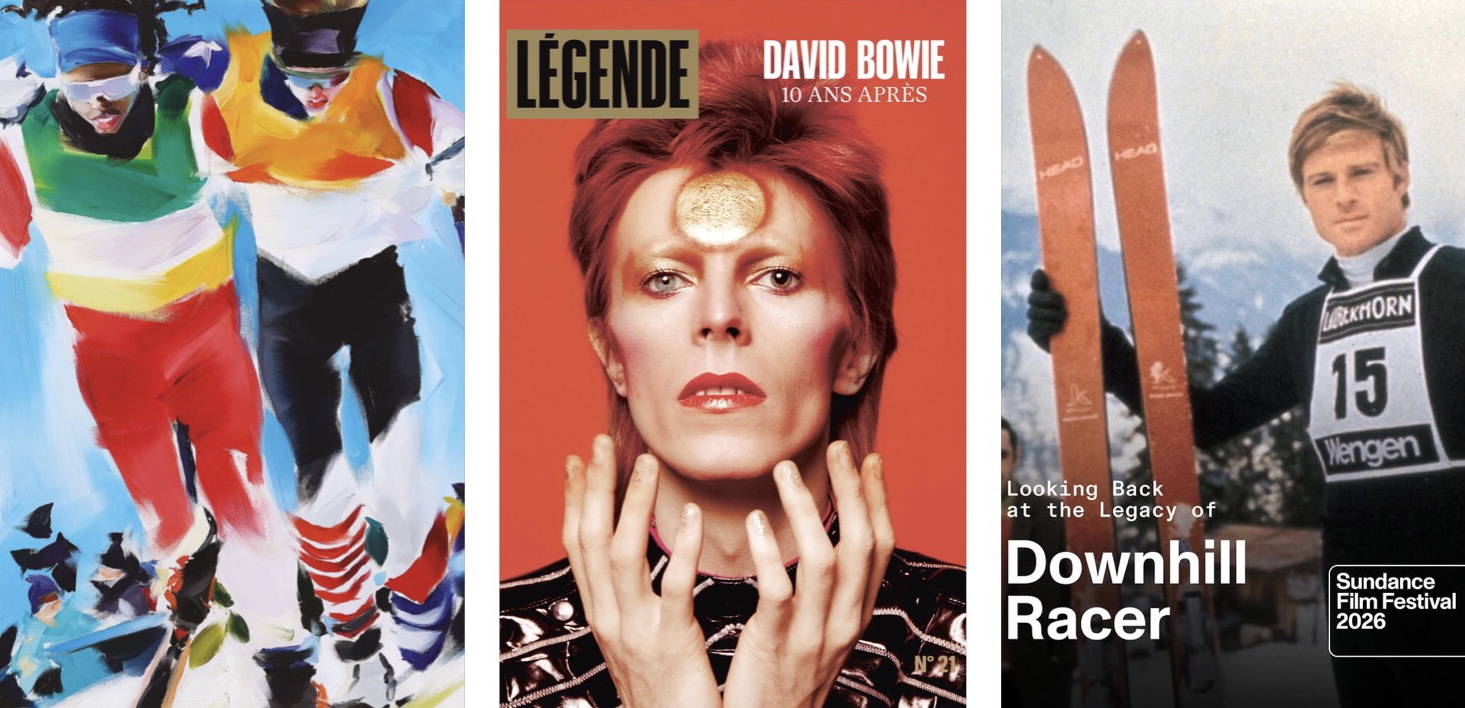
Milano Cortina 2026 Paralympics poster by Andrea Fontanari / Légende magazine / “Downhill Racer” poster for Sundance Film Festival 2026


Posted by classiq in Books, Culture, Film, Newsletter | | Comments Off on February newsletter: Downhill Racer, Hounds of Love and West Coast Ivy

Tennis whites conceal dark times in “The Garden of the Finzi-Continis”

”The Gatden of the Finzi-Continis, 1970, directed by Vittorio de Sica. Titanus, Documento Film, CCC-Filmkunst


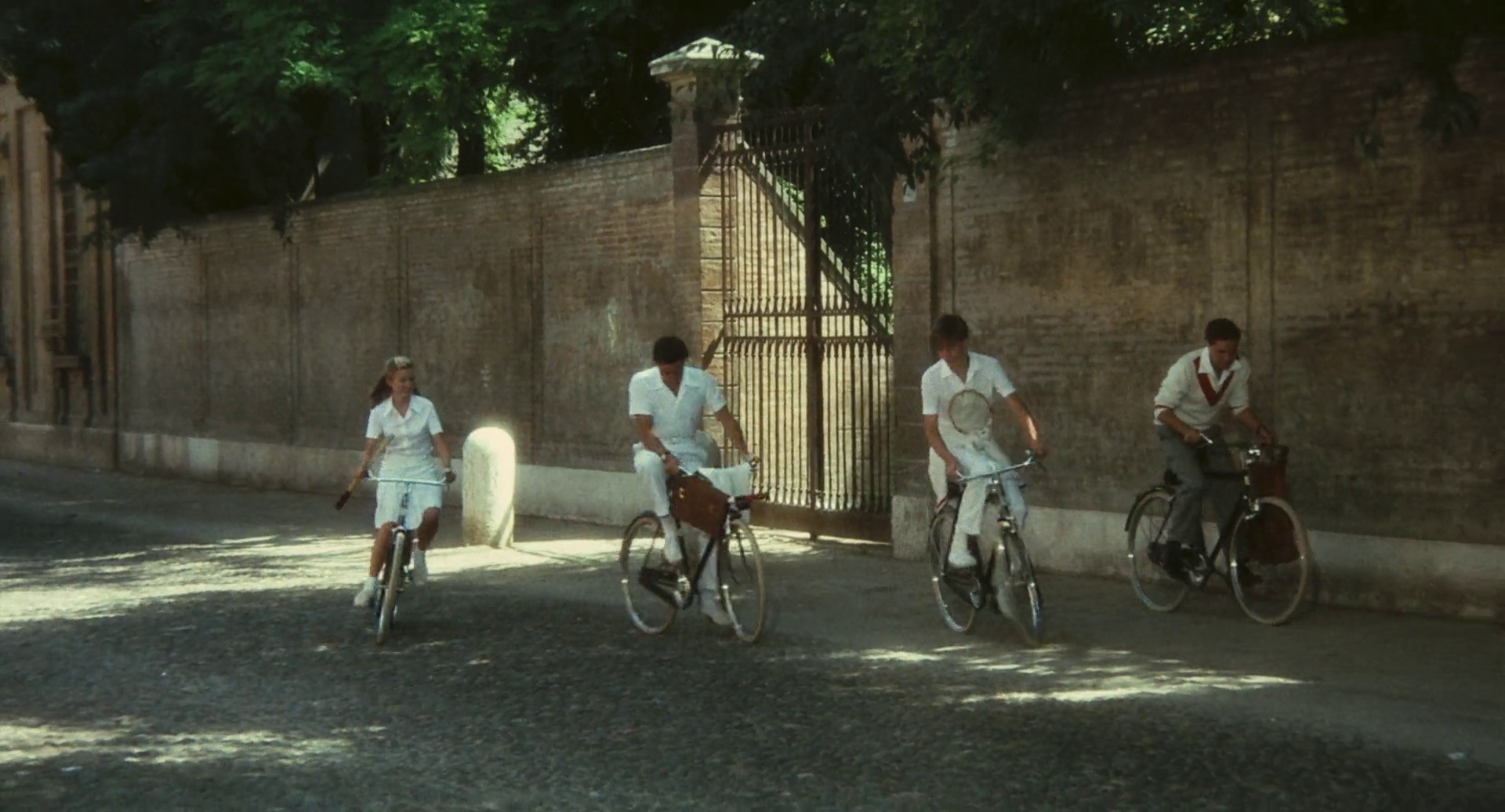
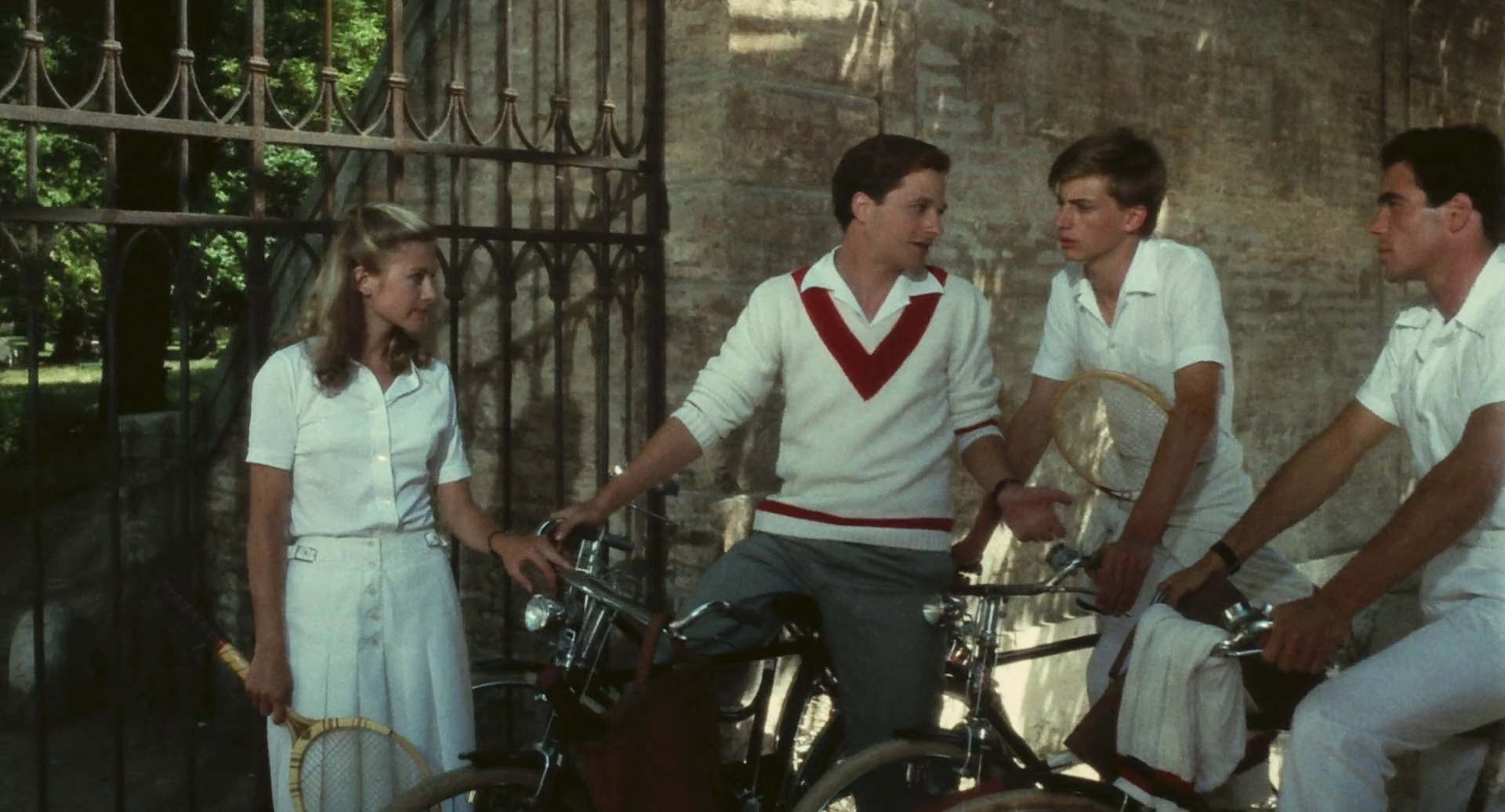
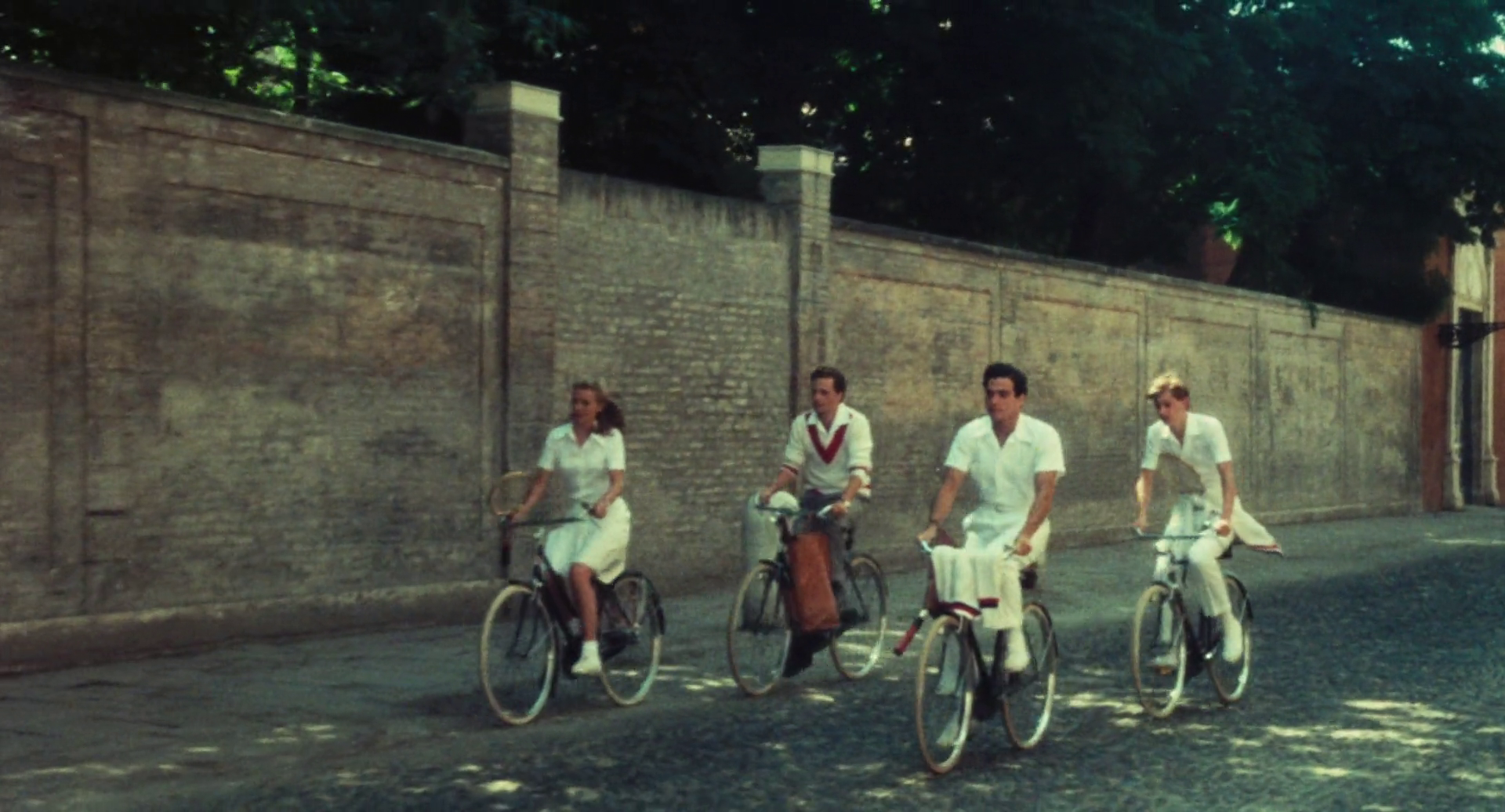
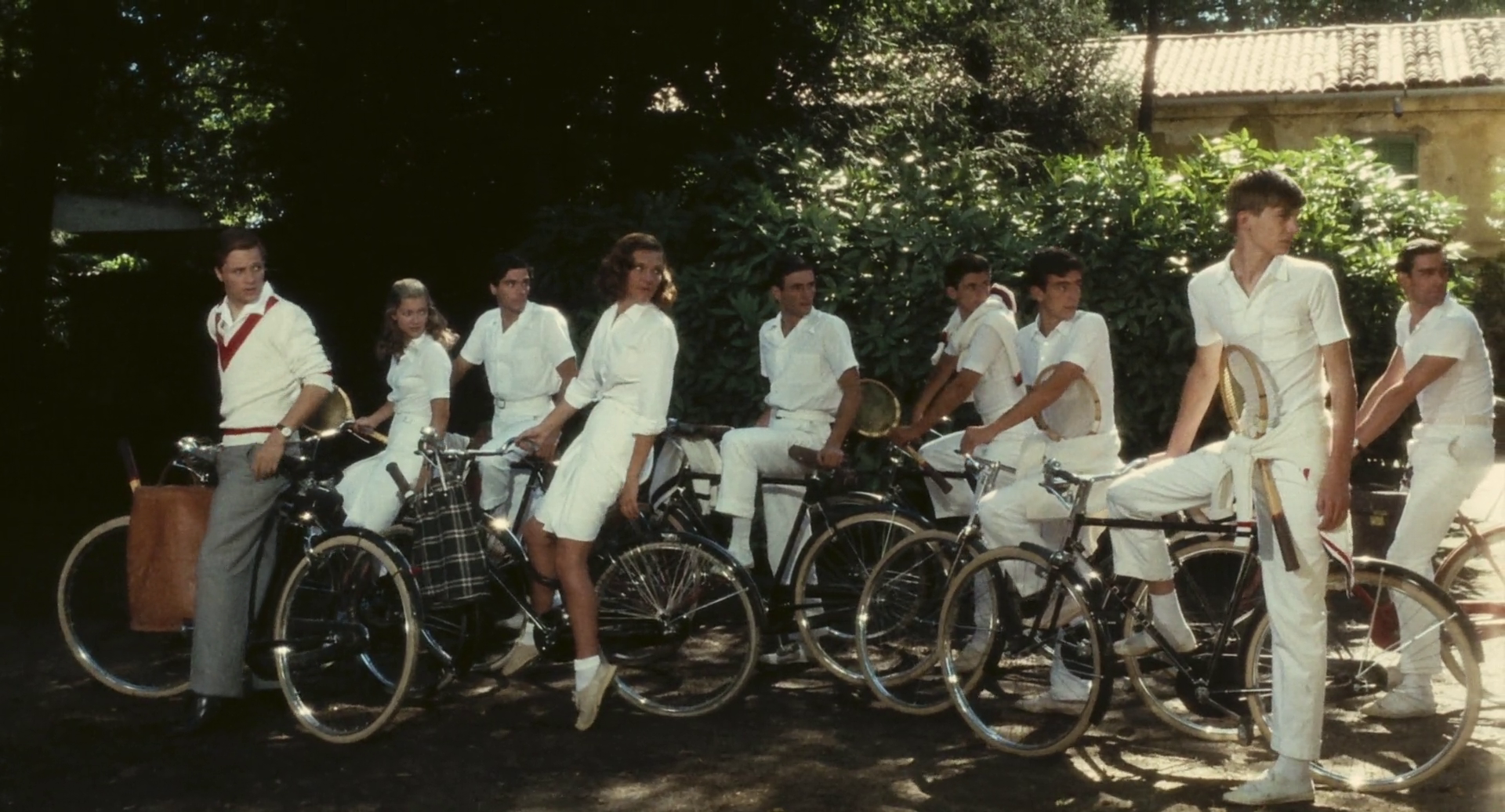
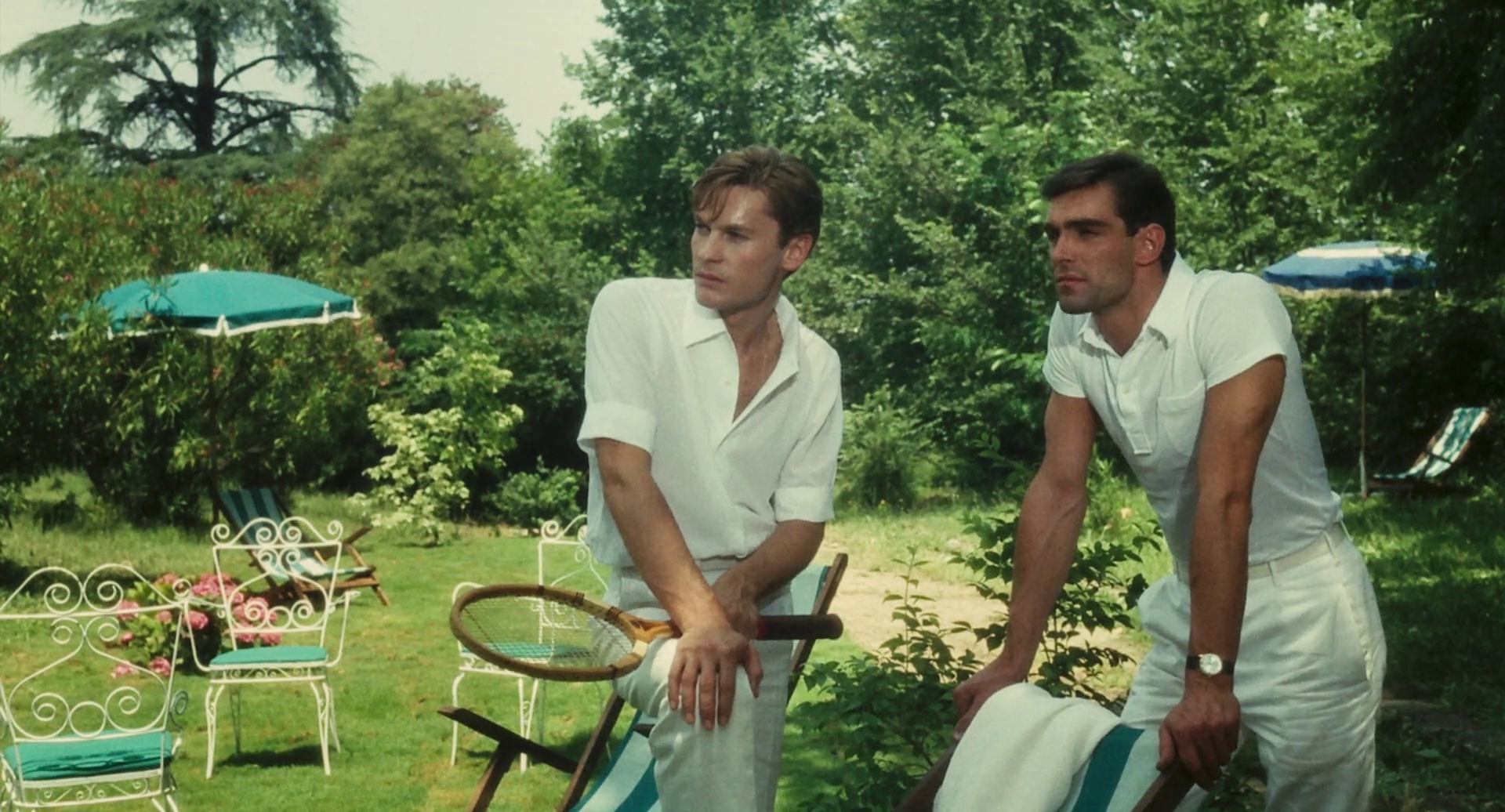
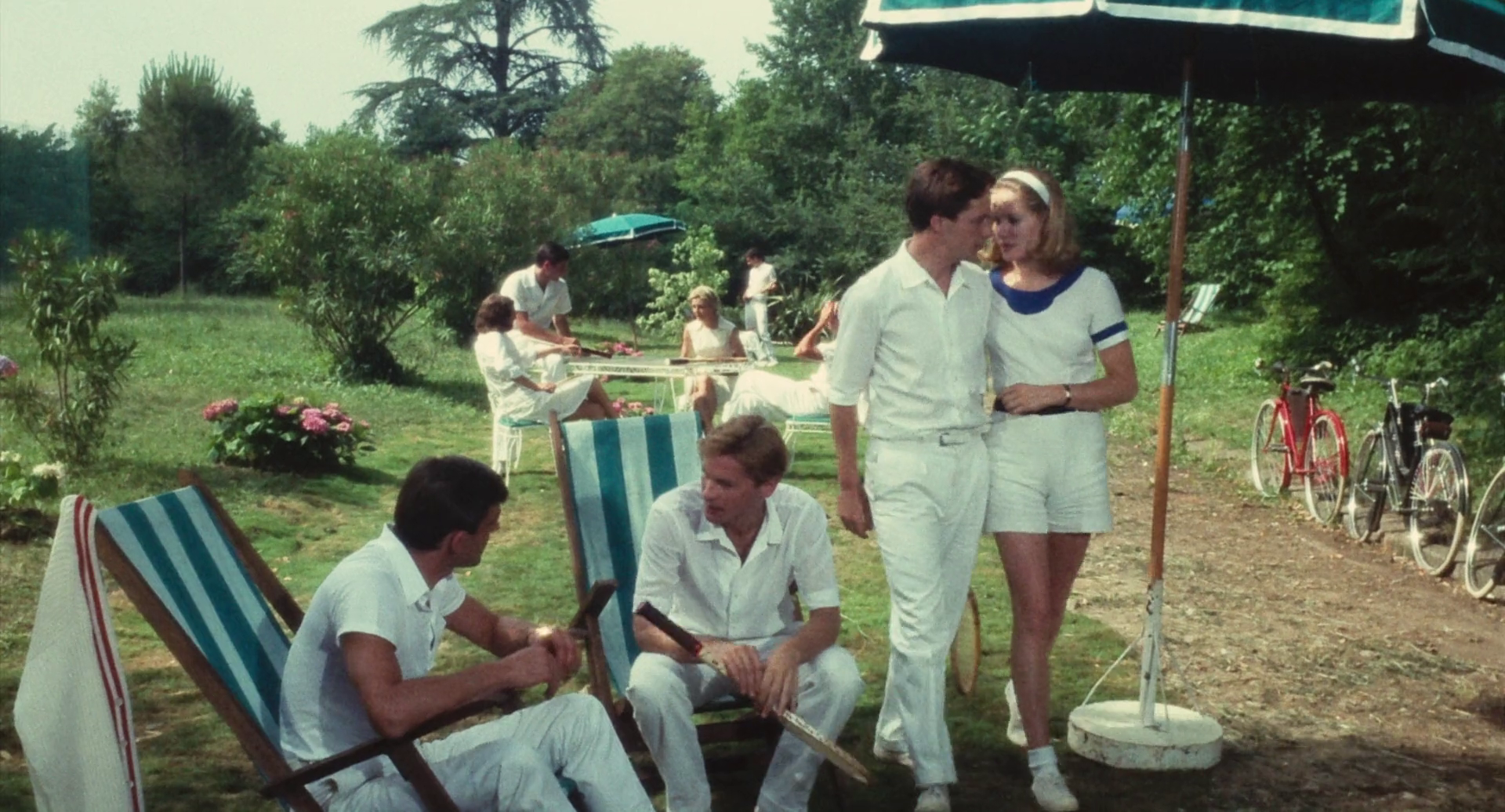
There has hardly ever been a more good-looking cast opening a film than this bunch of youngsters dressed in all-white tennis attire riding their bikes in the opening shot of Vittorio de Sica’s The Garden of the Finzi-Continis. It’s the late 1930s, Ferrara, Italy. They ride alongside a tall and extensive brick wall and stop by the gate of what seems to be a park or the garden of an estate. They are trying to get in and are told by the caretaker to use a different gate, where they meet another good-looking group of tennis clad friends on their bikes. When we see them behind the gates, we realise it is the private gardens of a grand estate that they are entering. Yet, we are not pass the moment, that moment at the start of a film, when there is that wonderful sense of wonder: what the story is about and where it will take us. But none of those imagined scenarios foresees how darkness will gradually creep in.

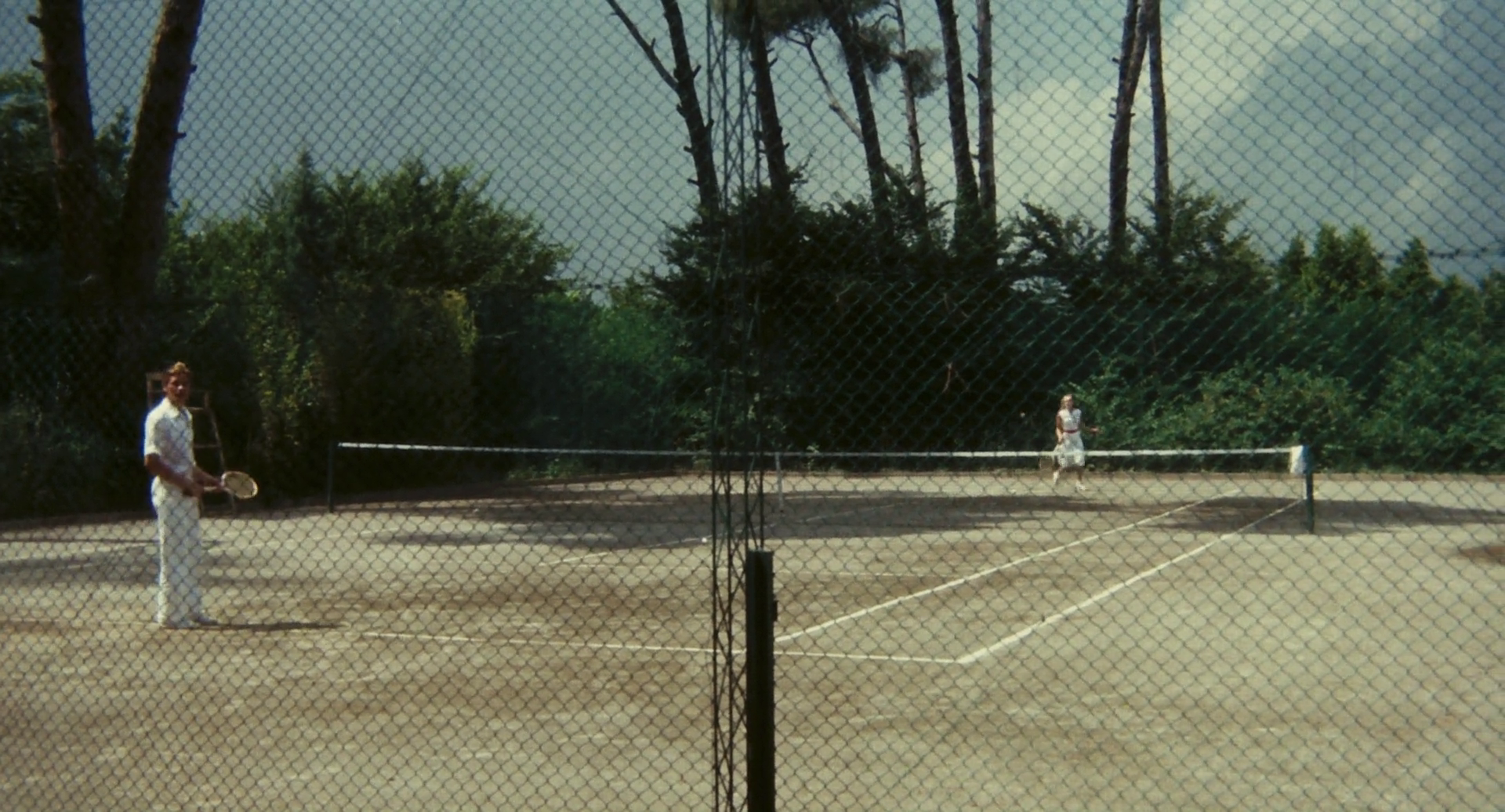
The garden of the Finzi-Continis belongs to a wealthy Jewish family from Ferrara’s upper-middle class. Amid the rise of fascism and anti-Semitic policy, all Jews are excluded from the town’s tennis club, so the Finzi-Continis stop going into town altogether and remain within the walls of their estate (“The Finzi-Continis never leave their kingdom,” comments our handsome group of friends when they enter the gates), opening up their tennis court to other Jewish students, fiends of their children, and then their home impressive library to Giorgio, their daughter Micòl’s childhood friend, when he is banned from the school’s library. They sense the looming danger, but choose to use their protected and privileged place as a fortress, not because they feel safe or above the others, but to avoid persecution for as long as possible.


”The Gatden of the Finzi-Continis, 1970, directed by Vittorio de Sica. Titanus, Documento Film, CCC-Filmkunst


The remarkable thing about this film is that, the way it is bathed in a golden light and the way it indulges in the tennis court shots, it feels nostalgic, harking back into the glamour of days gone by, a lost paradise. And yet, if you pay attention, there is an uneasy feeling tightly knit into the narrative from the very beginning. If Ladri di biciclette (Bicycle Thieves) was de Sica’s supreme achievement and seminal work of Italian neorealism, The Garden of the Finzi-Continis was the sublime work of his later years. In every lingering shot, every dialogue exchange, every unspoken word, life and history are hard at work, at that confluence between Italy’s grand past and its darkest fascist years. There is a chilling undercurrent all along in the way the film so unexpectedly and subtly portrays not only how the victims react differently to what is happening – from resistance, to restraint, to obedience – but also the creeping normalisation of oppression that makes the outcome all the much worse.

And it is the character of Micòl, enigmatic and seductive, intelligent and free, tough and vulnerable, generous and unattainable, who is at the center of the film and who amasses all these contradictions. She alone embodies all those other characters, their resistance, restraint and obedience.

Dominique Sanda plays Micòl, and I can not but think of another Italian film from 1970, directed by Bernardo Bertolucci, and starring the same enigmatic Sanda. In Il Conformista, Dominique Sanda, like a star from the thirties, is leaning against a door with a cigarette in her mouth and her thumbs in her trouser pockets in classical Dietrich style. “Directing actors means, above all, liking people, liking certain things about people. I looked at Sanda and I imagined her look like that and we tried it and it worked because it was already in her. It’s really a matter of discovering and bringing out of the actors what they really are, and nothing else. Characters must be built on that – on what the actors are in themselves”, is how Bernardo Bertolucci describes the character of Anna Quadri. It is the character who stands apart in Il Conformista. When Quadri first walks into the film, you feel her presence. She has that uniqueness, she is readily distinguishable from the rest. She carries herself differently than the other leading lady, Giulia, and from the other women in Il Conformista, and that’s not just on account of her clothes, a mix of feminine and masculine, that nonetheless echo that she is not afraid to stand out from the crowd.

In the enclosed environment of the Finzi-Continis, Dominique Sanda is again the one who stands out.


”The Gatden of the Finzi-Continis, 1970, directed by Vittorio de Sica. Titanus, Documento Film, CCC-Filmkunst


But let’s get back to the tennis whites and the time when elegant and pristine were proper tennis attire. We are in the second week of the first Grand Slam of the year, the Australian Open, and in the spirit of that, I wanted to highlight the classic tennis clothing worn in The Garden of the Finzi-Continis.

The tennis clothes are a wonderful blend of 1930s (the time the action takes place) and the 70s (the time the film was made). In film costume, period reconstruction doesn’t have to be 100% historically accurate but rather it must be done in a very individual way. Films draw on complex codes of authenticity in order to convince and attract their audiences, therefore costume appropriation depends not only on the period of the story, but on the period when the film is released, and, most importantly, on the director’s vision. And I’d like to linger on on that vision.

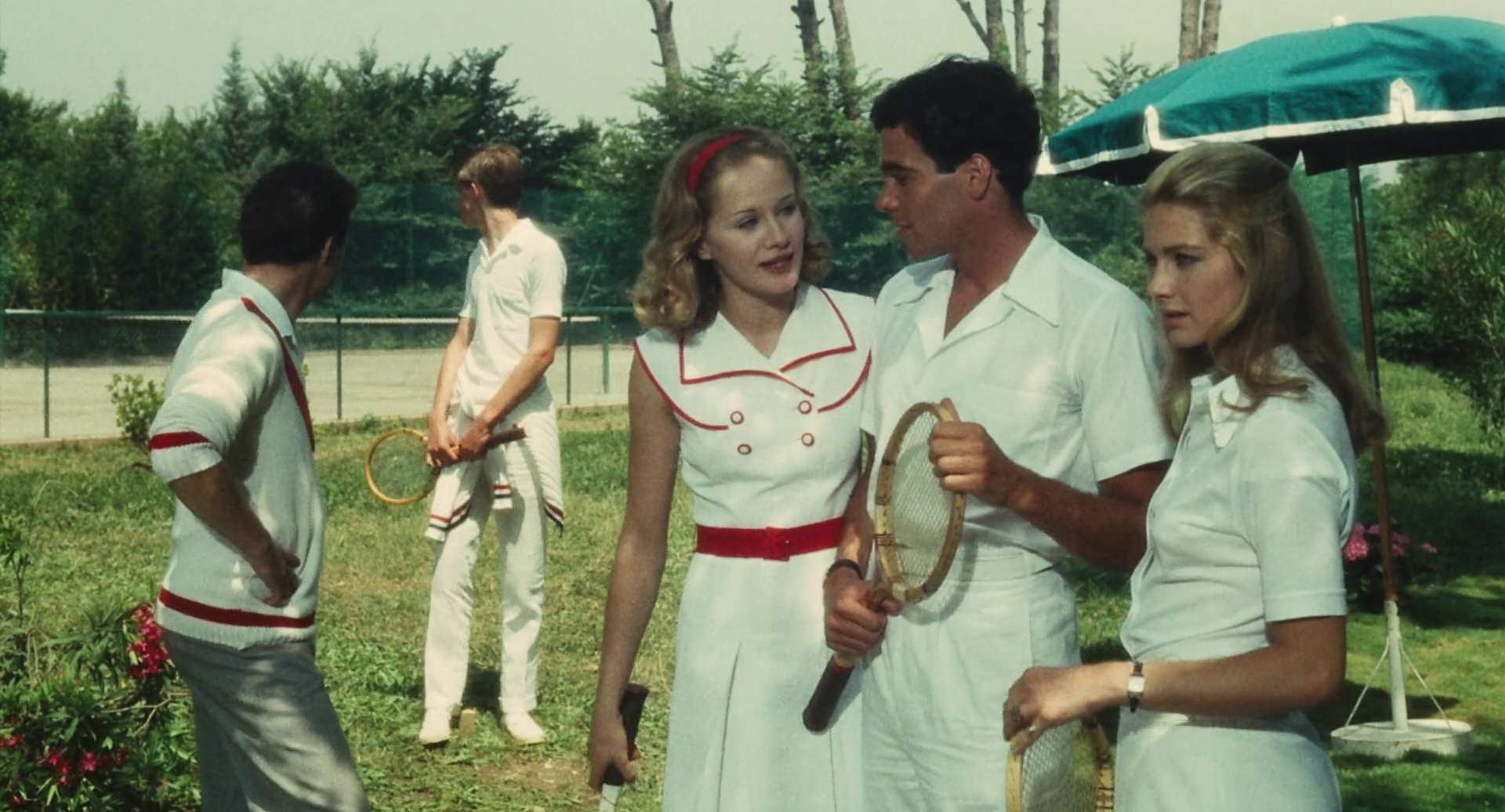
According to Josh Sims in his book, Icons of Men’s Style, “before Lacoste, professional tennis was a sport of rigorous sartorial rules: women dressed in blouses and full-length skirts; men in flannel trousers and full-sleeved shirts, sleeves rolled. Until, that is, Lacoste wore a short-sleeved shirt in a lightweight, breathable cotton known as jersey petit piqué, with an unstrached collar – soft but stiff enough to be turned up to protect the back of the neck from the sun – and three-button placket.” In de Sica’s film, we see the men wear long white trousers, but paired with both white shirts with rolled-up sleeves and polo t-shirts. The clear departure from the 1930s is in women’s clothing. The length of the skirt (slightly above the knee) is certainly more 70s than 30s (matched with polo shirts or shirts with their sleeves turned up) and we even see Micòl in a pair of shorts that certainly resemble those worn in the 1930s, only not on the tennis court.

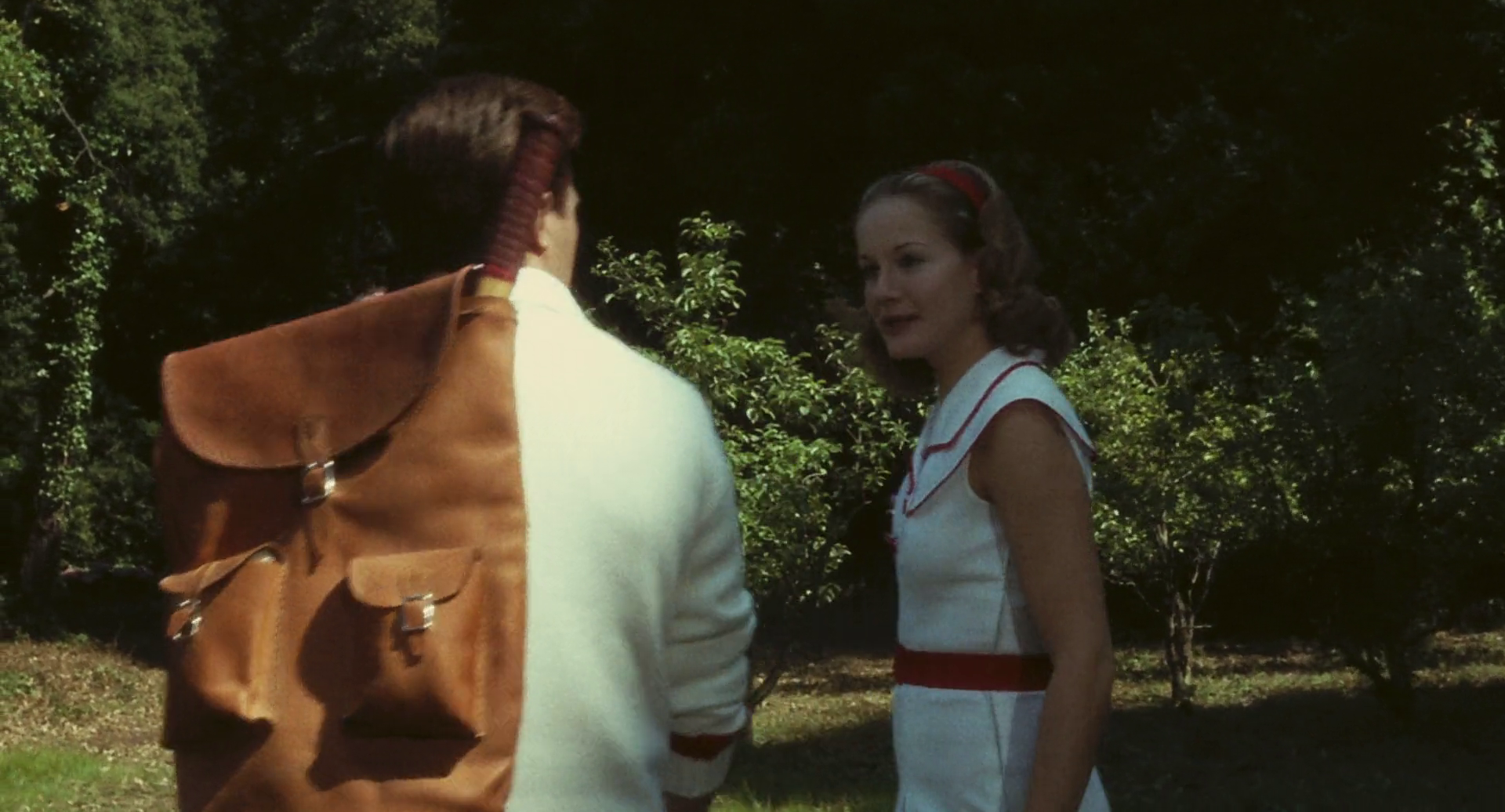
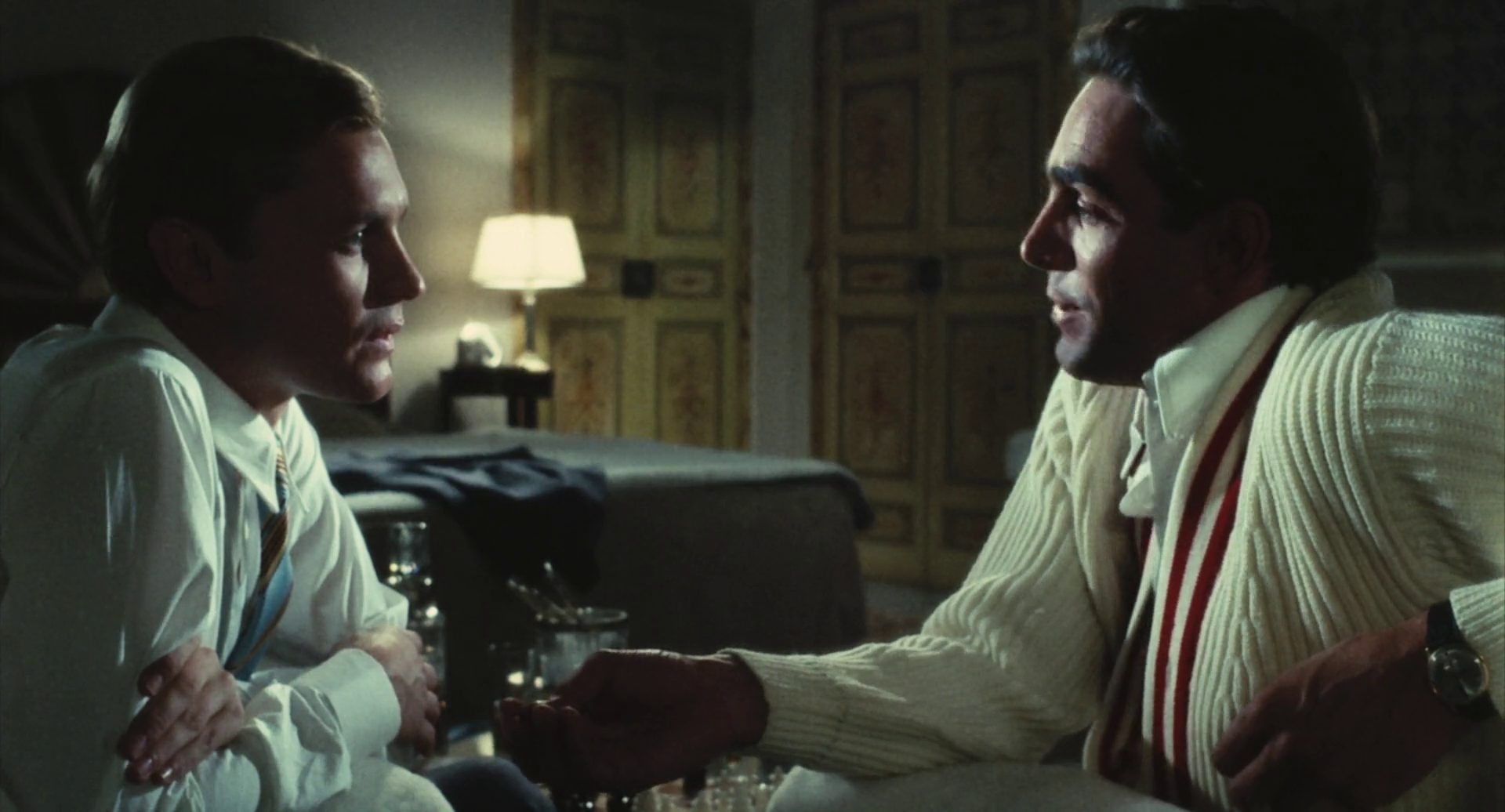
René Lacoste had already introduced the polo shirt, in 1929, and eventually founded his brand and legendary crocodile logo in 1933. We know now the far-reaching appeal of a well designed tennis clothing item, that its practicality and ease prompted it to be worn away from the tennis court. But before the polo t-shirt, there was the tennis sweater, which actually predated the game of tennis by several decades, originating as part of the cricket uniform. It is the tennis sweater that has always been the biggest style staple, on and off court. As Debra Wise wrote in GQ magazine, in 1987, “the original de rigueur tennis outfit consisted of white flannel trousers, a white cotton-broadcloth or Oxford-cloth shirt with rolled-up sleeves, white socks and rubber-soled shoes. And off the court, in the cool of the country-club twilight, the sportsman wore a cream-colored cable-knit wool pullover, with his club colours set in around the deep V-neck and the waist.” By the late 1920s, the sweater had made its voyage into the game of tennis on both sides of the Atlantic and remained popular throughout the 30s and 40s, the heyday of tennis whites, and the time of our movie here.

Like all great classic items, the tennis sweater, crisp and sporty-looking, comfortable yet elegant, has been devoted to stories and ideas that readily translate to practicality and to life off court. That’s what tennis attire, when done right, still does. Tennis has always been not only aesthetically, but also culturally driven, constantly referencing art, literature, music. It’s a conversation starter. We see it worn by the guys over their polo shirts or tied around their waists, the most original carry-on’s for a racquet. That’s the bit I like the most about its styling in the movie. And that’s just as valid a conversation starter as any other.


”The Gatden of the Finzi-Continis, 1970, directed by Vittorio de Sica. Titanus, Documento Film, CCC-Filmkunst


MORE STORIES


Talking film costume in Bernardo Bertolucci’s “Il conformista”

Interview with photographer Laura Wilson

“The Lost Daughter”: In conversation with costume designer Edward K. Gibbon

Posted by classiq in Film, Film costume | | Comments Off on Tennis whites conceal dark times in “The Garden of the Finzi-Continis”

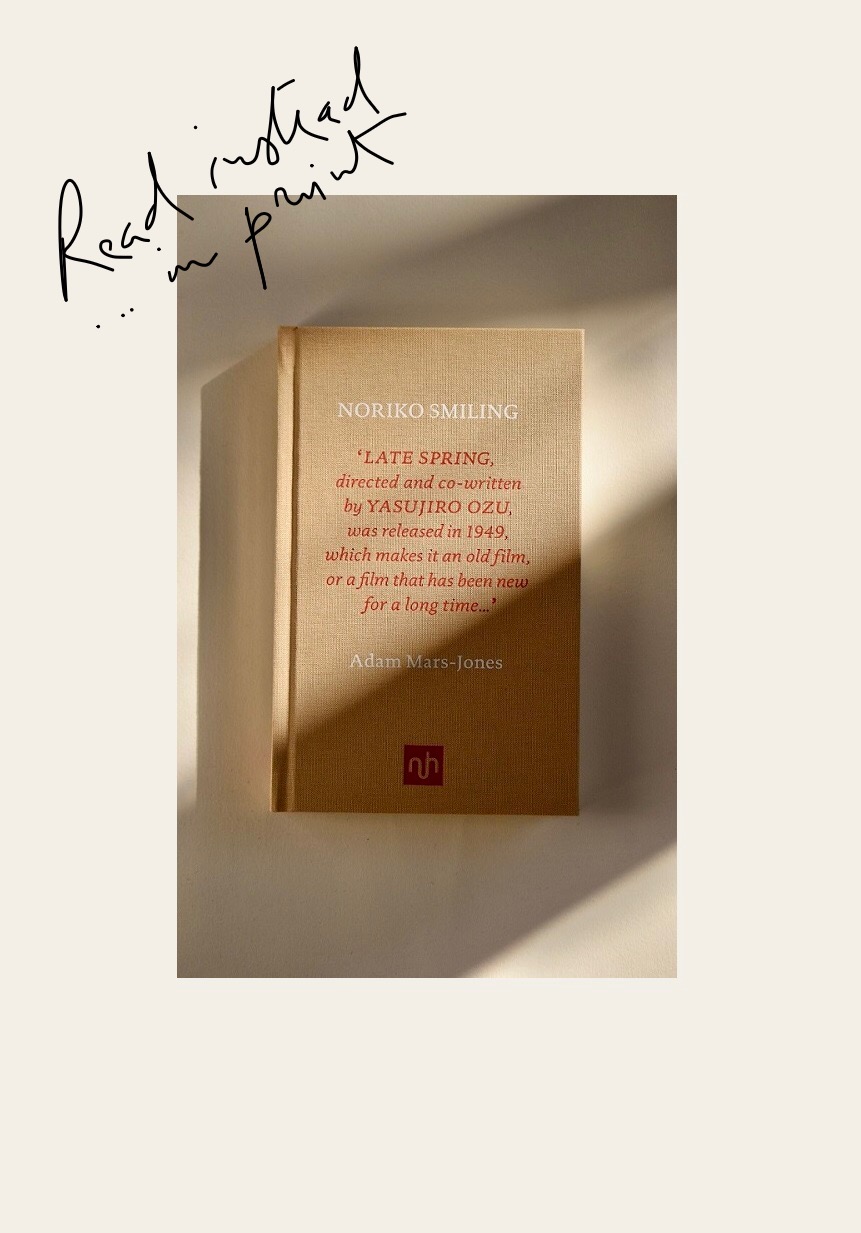
Read instead…in print #40: Noriko Smiling


Looking close at one single film, Late Spring, Adam Mars-Jones draws a compelling, passionate and rigorous study that considers the film’s aesthetic and technical qualities and, most importantly, new ideas and interpretations different than any other Western and westernised critical arguments and perceptions. Mars-Jones does indeed “defend a work of art against its advocates”, and “rescues a great film from its reputation”. Noriko Smiling is also, thankfully, the author’s personal response to this beautiful film directed by Yasujirō Ozu. Isn’t that why we watch movies? For the unique, personal experience of it all?

“If there’s one thing the actress playing Noriko, Setsuko Hara, is known for, it’s her smile. It’s the key to her mystique. This is a facial expression that seems to come from the depths, not something put on for the purposes of social appeasement, yet it doesn’t necessarily have strong links with happiness or even contentment. The ‘Noriko smile’ is a filmed entity which obeys its own laws, like Chaplin’s little tramp walk or Fred Astaire’s way with a song.”

It’s also worth mentioning that the book is part of the Noting Hill Editions handsome and collectible titles. Because the look of a book is never to be underestimated.


Read instead… in print is about a good book about cinema or filmmakers. No discursive, pretentious analyses, no verbose scrutiny. Because the idea is to invite you to read the book, not read about it here. But instead of using social media, I use my journal. Back to basics. Take it as a wish to break free of over-reliance on social media (even if it’s just for posting a photo of a good book) for presenting my work, cultural finds and interests. These are things to be enjoyed as stand-alone pieces in a more substantial and meaningful way than showing them in the black hole of Instagram thronged with an audience with a short attention span. This is also a look through my voluminous collection of books about film that I use as research in my adamant decision to rely less and less on the online and more on more on print materials.


MORE STORIES


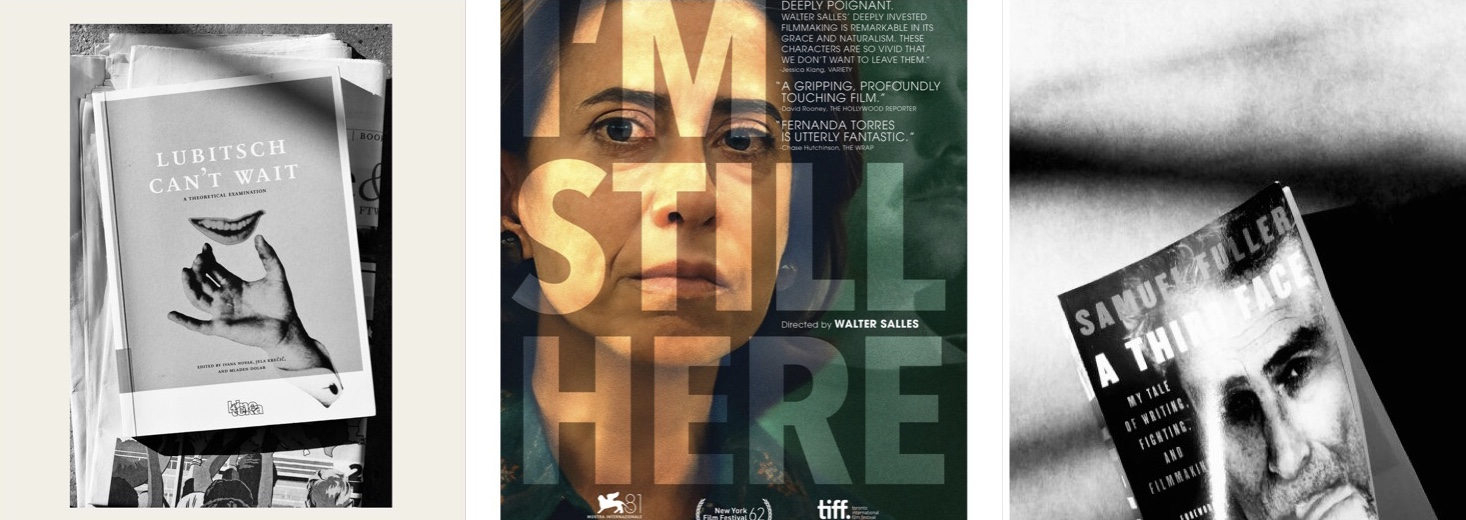
Read instead…in print #39: Lubitsch Can’t Wait

“I’m Still Here”: In conversation with cinematographer Adrian Teijido

Read instead…in print #24: Samuel Fuller: A Third Face

Posted by classiq in Books, Film, Read instead...in print | | Comments Off on Read instead…in print #40: Noriko Smiling