Photos: Classiq Journal
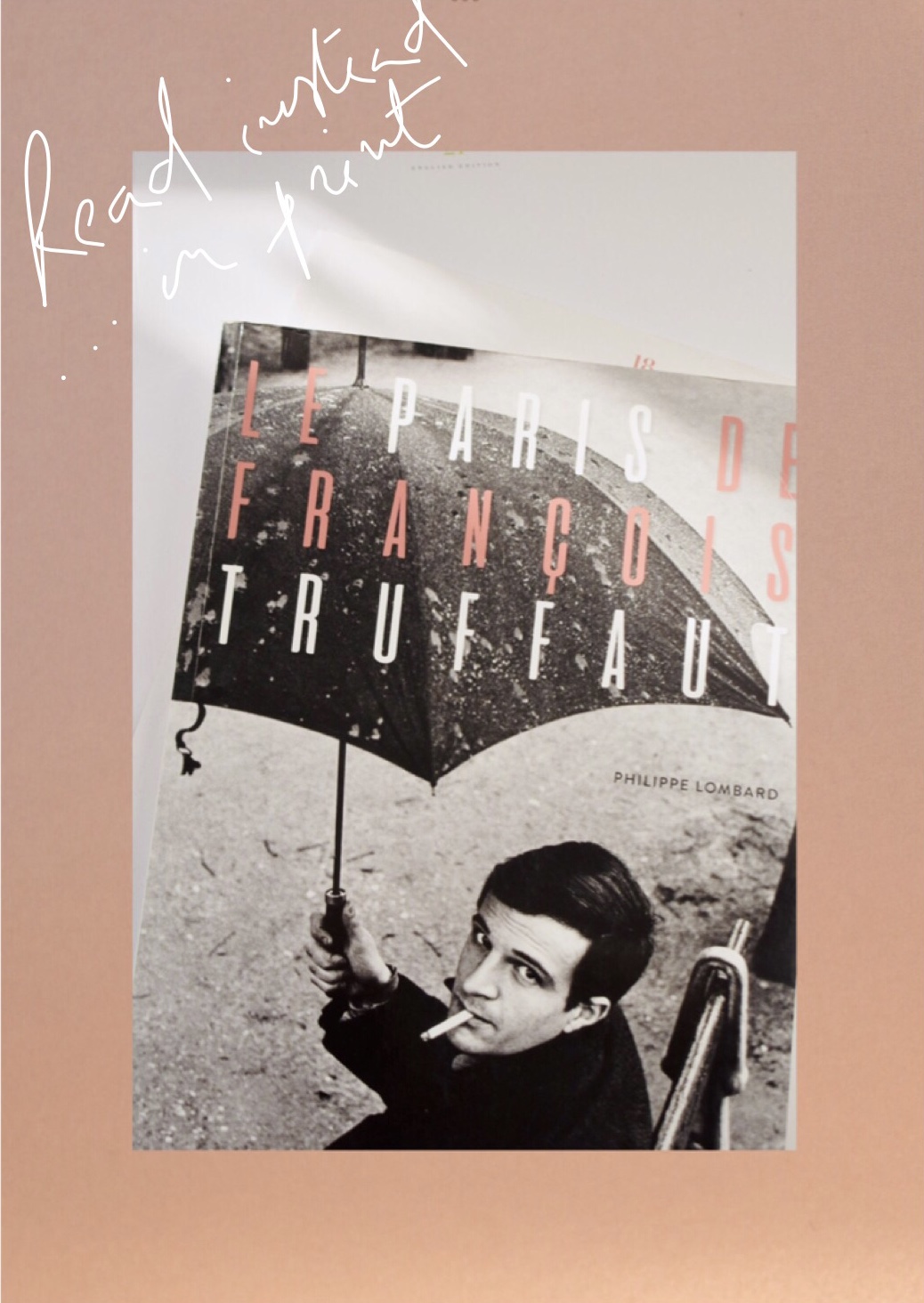
“I love cinema to the point that I cannot bear the company
of people who do not like it. One day, I gave a ride in my car to
a German who was hitchhiking. I spoke to him about Fritz Lang.
He didn’t even know the name, nor of Max Öphuls – and so,
I made him get out of the car at Lyons, leading him
to believe that I was stopping there.”
François Truffaut
Viewing
Sentimental Value, 2025
Joachim Trier
It’s a film about a house, it’s a film about a family, it’s a film about a filmmaker. Film director Gustav Borg (Stellan Skarsgård) is an estranged father who reunites with his daughters, Nora (Renate Reinsve), a stage actress, and Agnes (Inga Ibsdotter Lilleaas), who had showed great natural talent in a role in one of his films as a child but has chosen a different path, and the ways art intersects with real life and their complicated family dynamics. It’s a film about family, reconciliation, and all that complex relationship and unspoken language and connection between children and parents. And in this particular family, it’s through art that they can communicate best, especially to each other. It’s a film that pauses and asks of you to be present for the story, and that’s beautiful, and beautiful and essential to be seen in cinemas.
Une belle fille comme moi (A Gorgeous Girl Like Me), 1972
François Truffaut
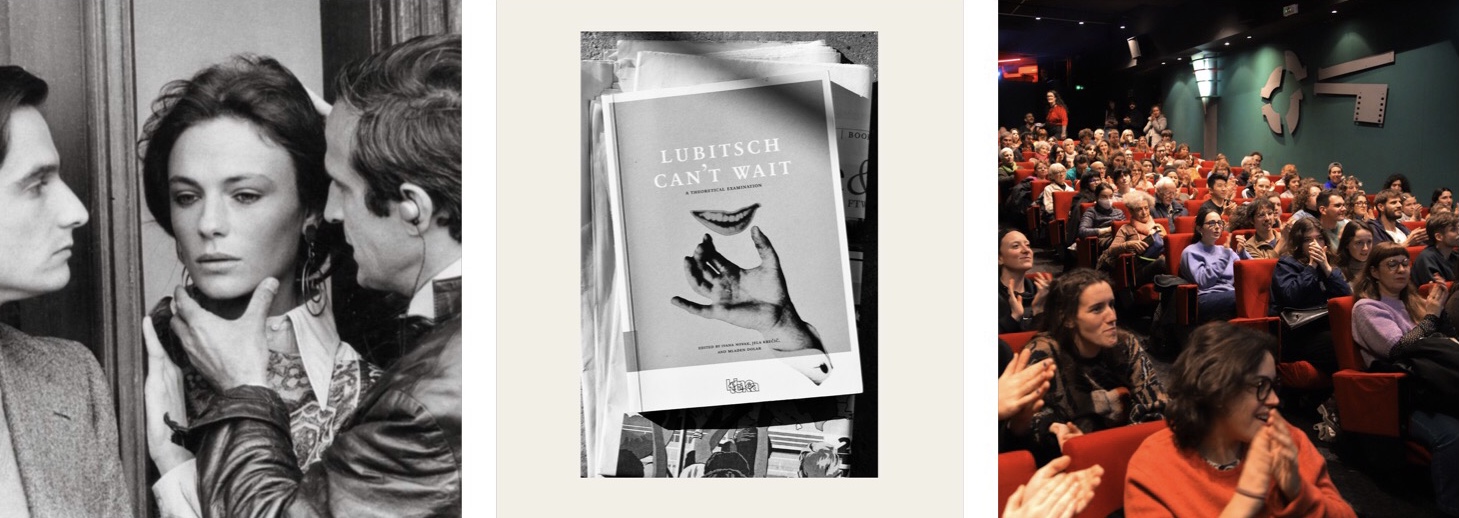
Truffaut adapted the story from a novel by the American writer Henry Farrell, as he became interested in a completely invented kind of language, “a very coarse form of slang, some might say vulgar”, but “that occurs when one is trying to be refined and distinguished, whereas in actual fact one is not. That is not the case with Camille.” Sociologist Stanislav Previne, who is too theoretical and too academic and doesn’t understand life at all, makes research for a book he wants to write about criminal women. Among his research subjects is Camille, accused of killing her husband and her lover. But Stanislav falls madly in love with her and he arrives at a crazy interpretation and he wants to force everyone to see her as a victim of society, whereas the opposite is true. “It is a mocking of romantic love, and an affirmation of brutal reality, of the struggle for life… It is a film that displays an exaggerated vitality.” There are no sentiments here, a too lighthearted comedy to be bitter. There is a touch of madness in every character, and a touch of Lubitsch (those elements of indirect comedy, trying to tell stories that are very simple but in an indirect way) in the story, too. “This one is my first film that is really comic,” Truffaut said.
Here is how Truffaut described Camille in his interview with Monique Sobiesky, from Le journal du show-business, May, 1971 (republished in the book Truffaut on Cinema, compiled by Anne Gillain): “Here’s how I would put it: Bernadette’s character in this film does not represent women as they ought to be, but real life with its drive, and, above all, what these days we would call a sense of survival. She struggles for life throughout the film, and I am absolutely not concerned with notions of sympathy or antipathy – when people came and told me that she was a real slut, I was genuinely astounded. I said to myself that they had not watched the film very closely. […] I laugh at someone who persists in seeing life from a romantic perspective: I agree with the girl, who is a kind of hoodlum, who has learned to mistrust everyone, and the need to struggle to survive.”
Mr. Scorsese, 2025
Rebecca Miller
Captivating from the very start. You enter Martin Scorsese’s world. A portrait of the man and filmmaker. A very personal visual journey into his dreams and fears, into his artistic risk-taking and triumphs. It’s also a film class. But in the end, it leaves you curious, in awe, a childlike enthusiasm at gaping at not the skill, not the knowledge, not the remarkable works, but at Martin Scorsese’s undying love for movies.
Father Mother Sister Brother, 2025
Jim Jarmusch
Jim Jarmusch probably remains the only American independent filmmaker, steering a courageous course making the movies he wants outside the Hollywood studio system. I think his movies talk for themselves and for himself. Uncompromising, humane. Father Mother Sister Brother is a film in three chapters, featuring some of Jarmusch’s close collaborators, like Adam Driver and Tom Waits. The three stories are about mothers, fathers and their grown-up children, and each story takes place in the present, in different parts of the world: the US, Dublin, Ireland, and Paris, France. Children going to see their parents, parents getting ready to see their children. There is a palpable anticipation, but then time seems to stay still until it’s too late that they have to leave. It unfolds subtly and quietly, carefully constructed as if we are waiting for something extraordinary, or shocking to happen. But the extraordinary thing is that it is in fact about human beings, their contradictions, what brings them together and what makes them apart. You can say so much with a look or with a gesture. People, family even, who are in the same room but there is so much space between them. Simplicity is the greatest form of complexity.
Reading
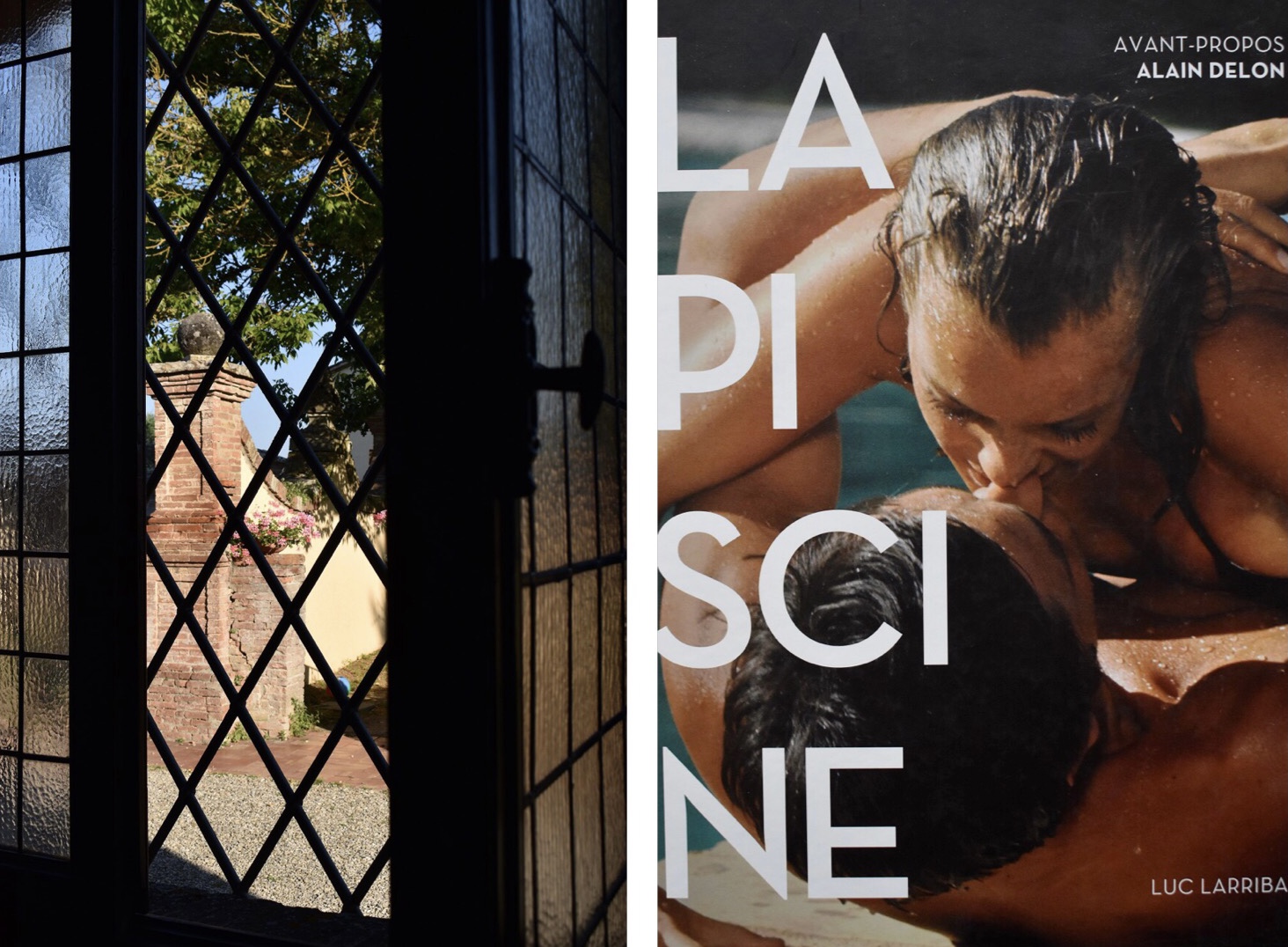
Finally, a book about Jacques Deray’s film La Piscine and its making. I have come to realise that this has become, in time, one of my favourite movies (my article The searing style of Jacques Deray’s “La Piscine” was dedicated to it). Because it’s a special piece of cinema – a film about human contact, silences, glances, where we see “all the nuances of regret, jealousy, friendship, and desire, and where the atmosphere is crucial” – and because Alain Delon and Romy Schneider are together on screen.
Luc Larriba’s book, La Piscine, is a beautiful tribute to the film. With an emotional introduction by none other than Alain Delon, comments from everyone who worked on the film, from Jacques Deray and his co-writers Jean Claude-Carriere and Alain Page, the cast (Romy, Alain, Maurice Robert and Jane Birkin, and the supporting cast), and the assistant director, the covering of every aspect of pre-production and filming, the search for the perfect couple, the screenwriting, the location, music, costumes and settings (and even the cars used in the film, both the Renault 8 Gordini, a symbol of the era, and the Maserati Ghibli, object of desire, symbol of freedom, element of jealousy), the critical and public reception of the film, and even the endless attempts of a remake until The Bigger Splash (if I treat it differently than the remake, chances are to see it in a more favourable light), and the most beautiful photographs, from the film and from the set, the book has become part of the visual identity of the film and of the film’s legacy. But, most importantly, it speaks to you, the viewer, about how the film got to be made, how it was made, what the atmosphere on the set was, who the characters were. And about what the lives of the actors were at that particular time – and the most wonderful part is that we don’t invade their privacy to find that out, they candidly tell us themselves. You are on the set, you are right then and there. It is a tangible and timeless special feature.
In his introduction to the book, Luc Larriba writes: “Alain Delon often said that La Piscine was his best memory of filming. As for Romy Schneider, without this film, her life would have been completely different. La Piscine remains a unique film for both actors. It is also singular for director Jacques Deray, who demonstrates remarkable technical audacity, but, above all, establishes himself as a true auteur. Thanks to this story, these characters, and the actors he directs and elevates, he completely distinguishes himself and enters the ranks of the greats alongside René Clément, Alfred Hitchcock, and James Gray. Jacques Deray creates a film of exceptional quality in both content and form, ultimately making it a true work of art. Filmed in 1968, a pivotal year in many respects, no external elements are apparent in the film, which undoubtedly renders it timeless. The sets and costumes transport the viewer to a specific moment, but the overall setting gives the impression that the action took place last summer. The film doesn’t belong to any particular era. That’s why it continues to fascinate.”
Listening
The soundtrack: Father Mother Sister Brother
The album: Back to Little Eden
We Are Rewind: Isn’t it wonderful how, in the digital age, analogue formats are coming back with a vengeance, gaining more and more terrain? The vinyl is back. And now the cassette is back (and part of the credit goes to Max Mayfield and Kate Bush, right?). So the French brand We Are Rewind has decided to bring the cassette player back as well. We Are Rewind is the modern take of the nostalgic cassette player. This is technology put to great use, where attention to detail, cool design and the incomparable experience of listening to analogue music merge. We already use and love our Kurt. Oh, yes, each model, in a different colour, is named after a musician. There is Kurt, and Amy, and Edith, and Keith, and Serge, and Elvis in a limited edition, and also Duran Duran in a limited edition. A mixed tape, anyone? They have thought of that, too.
Stop. Listen.
Making
The art of Stepháne Manel, which I have come to instinctively associate with one of my favourite magazines, Legénde, because a Manel illustration accompanies each editorial written by Éric Fottorino. He also illustrated Come Together: The Rock Bands Game, a playing card game with a cultural vibe. Our home is free of electronic devices games, but when we are at home, we do love any other kind of entertainment, from music and film to playing every good old-school board game that’s ever been invented, and I always jump at something new.
Exploring
The Marilyn Monroe exhibition at Cinematheque française, in celebration of a century since the birth of the American icon (June 1st).
Á propos, Legénde is also dedicating its latest issue to Marilyn Monroe.
In the same regard, you can read this short interview that I did quite a while ago with Pierre Vudrag, the president and founder of Limited Runs, about a very special photo sessions of Marilyn and writer Carl Sandburg by photographer Len Steckler, titled “The Visit”. The result? Simply, an afternoon between friends, that just happened to be captured on film – some of the most beautiful, natural, relaxed photos of Marilyn Monroe ever taken, just nine months before her untimely death.
On an end note
Påskekrim (“Easter crime”) is the name of a Norwegian tradition that began in the 1920s with a crime novel that was published around Easter and generated a huge interest and sales. Since then, the Easter holiday has gained a new tradition, the reading of detective and mystery stories, an activity that the Norwegians enjoy during their Easter break spent in their holiday cottages in the mountains or countryside, where they devour classics such as Agatha Christie (I wholeheartedly concur) or their own local crime literature writers. In my interview Norwegian children’s books illustrator and writer Øyvind Torseter (one of this year’s Hans Christian Andersen award nominees – the winners will be announced on April 13 at the Bologna Children’s Book Fair), he told me: “I read several of the Norwegian fairy tales as a child. They can be both fascinating and grotesque. There is so much happening in them that is not in the text, only in your head.” I believe it’s Norway’s dark landscape and northern climate that fuel its people’s dry sense of humour and obsession with crime fiction especially this time of year, and which has given birth to this unique and darkly comedic tradition that blends culture, time outdoors and Easter celebration. Now that’s a tradition to my liking, and, unlike Halloween or Valentine’s Day, worth borrowing.
Having said all that, it baffled me when I read that Norway is fighting back to reverse the catastrophic decline in reading for children caused by the introduction, 10 years ago, of free iPads to every child when they started school at the age of 5 (!). Being liberal with tech devices is not to the benefit of children and it’s shocking to realise it has taken the world so long to realise that and to finally start to take important steps against it.
PS: It’s April, and so Clay Season is upon us, and I suspect Andrea Petkovic’s Finite Jest will be a great companion for the intake of matches I am about to have.
The regulars
The interviews, newsletters and podcasts I turn to every week and/or every month because they are that good. Soundtracking, with Edith Bowman. Ruthie’s Table 4 with Ruth Rogers. Fashion Neurosis, with Bella Freud. My New Roots monthly newsletter. Craig Mod’s newsletters: Roden and Ridgeline. Racquet’s Rennae Stubbs tennis podcast. Gone to Timbuktu with Sophy Roberts. Sirene Journal, Racquet, Waves & Woods, and Legénde in print.
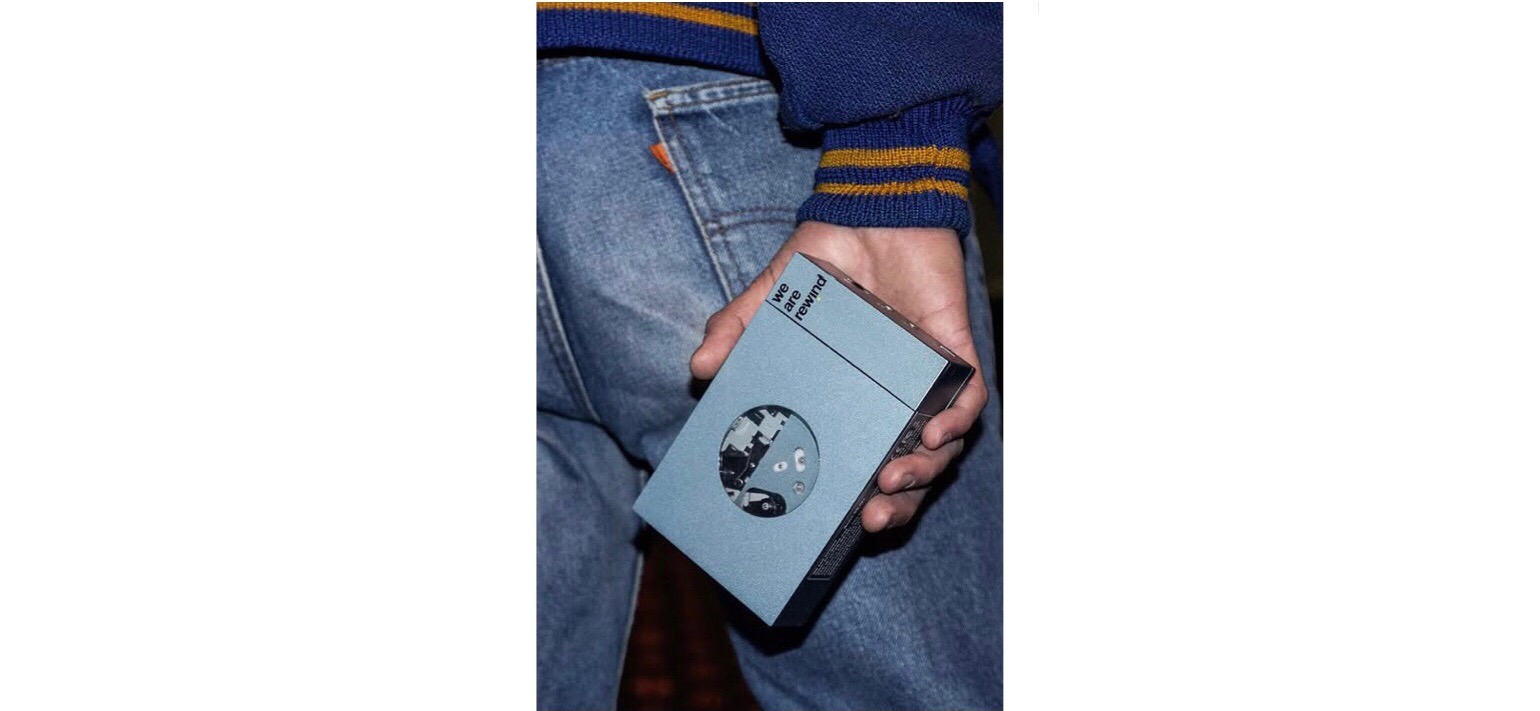
We Are Rewind, “Kurt” cassette player