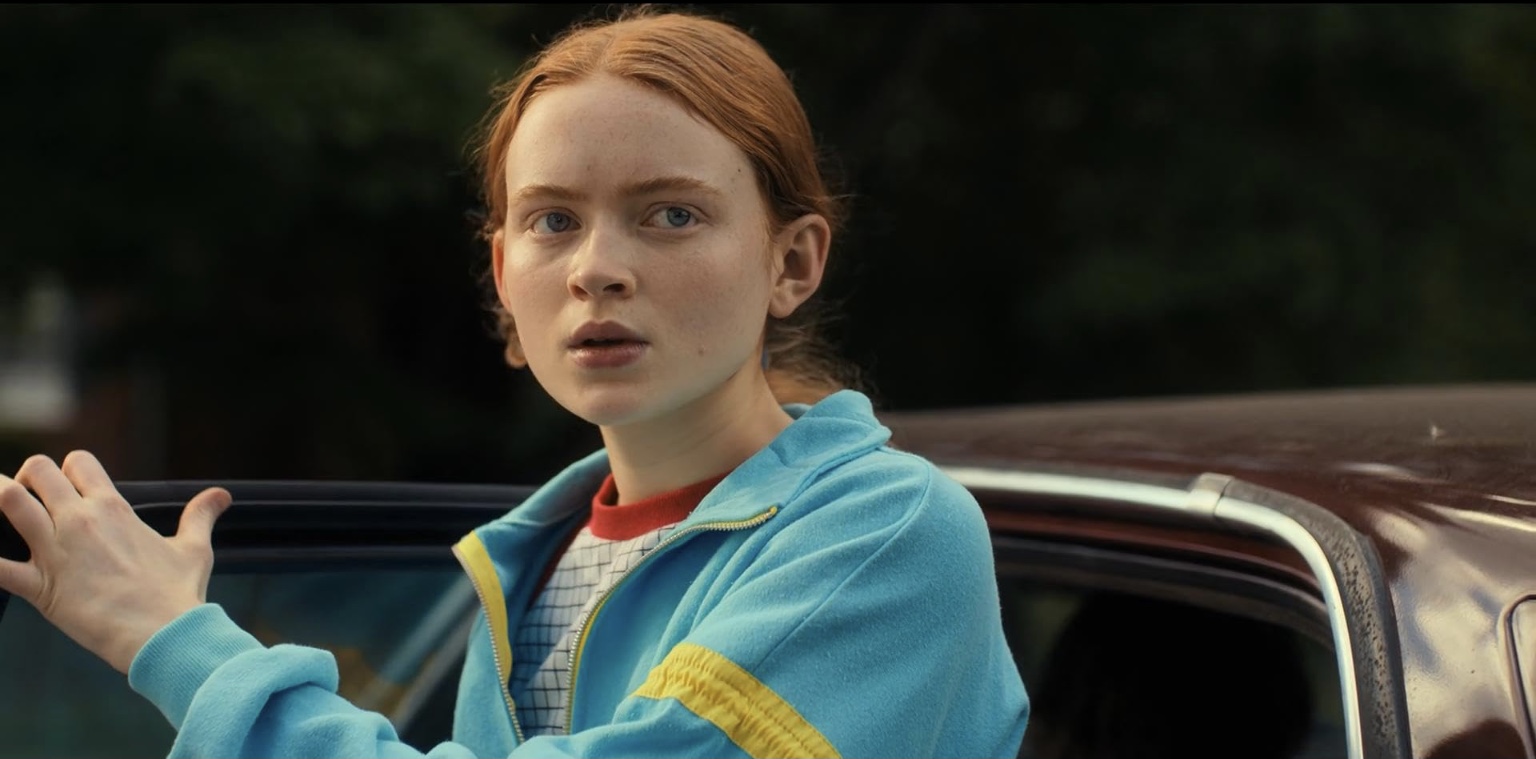
Sadie Sink as Max Mayfield in “Stranger Things”, season 4. Netflix
We will forever be grateful to Martin Scorsese for revolutionising movie soundtrack, being one of the pioneers (before Quentin Tarantino and Wes Anderson) in using preexisting music, approaching soundtrack construction with a record collector’s curiosity and passion. The music in his films is so good. People listen to the music in Scorsese’s films. Who can forget The Ronettes’ “Be My Baby” that opens Mean Streets, showing us Charlie (Harvey Keitel) in happier times, before everything comes apart? And what about Ennio Morricone’s distinctive whistle in the theme of The Good, the Bad and the Ugly, which remains one of the most instantly recognisable elements in the history of cinema? Or the coyote call in the opening credits… “L’estasi dell’oro” (Ecstasy of Gold), the piece of music that accompanies Eli Wallach when racing through a cemetery in a desperate search for the grave where he believes the missing gold is buried. The haunting, melancholic ballad “La Storia de un soldato” (The Story of a Soldier) sung by a group of prisoners to cover up a violent episode when Tuco is tortured. Ennio Morricone’s music has the power to make you appreciate a film in a new way.
But in recent years it has been Stranger Things, the worldwide phenomenon created by the Duffer Brothers, and its no less than phenomenal soundtrack that has taken over the public’s collective mind, sieving through the present day popular culture, in unprecedented ways. No other tv series has done that, not to this level. Twin Peaks was the pioneer (wasn’t it?), and had remained a sort of a lone star on this scene. The whole Stranger Things soundtrack – which combines original composed music and amazing needle-drops that reference the decade and also bring something new and fresh – was part of the narrative from the very beginning, with characters and important plot points being defined either by a specific theme, The Clash’s “Should I Stay or Should I Go”, Joy Division’s “Atmosphere” and so on, and finally, those new heights reached by that unreal, unbelievably perfect character-music connection: Max Mayfield and Kate Bush’s “Running Up That Hill (A Deal with God)” in the fourth season. The track plays a very complex role, way beyond Max’s favourite tune. It represents a crucial moment in the plot, and is part of the whole emotional arc, woven into the narrative on multiple levels.
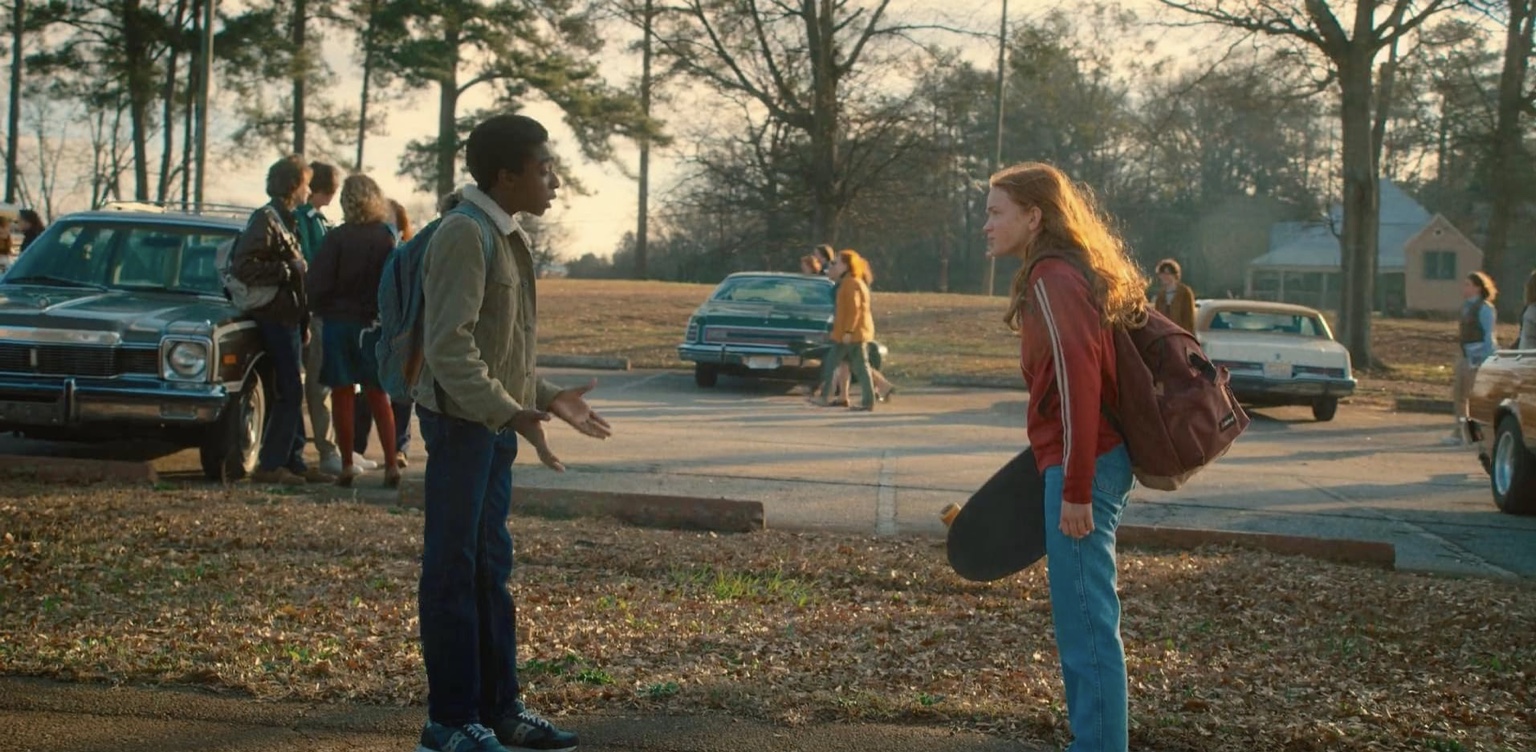
Sadie Sink as Max Mayfield in “Stranger Things”, season 2. Netflix
Why I have resisted watching Stranger Things just before its fifth and final season was about to air, I don’t quite yet fathom. But on November last year, I embarked on a marathon to watch the whole show over the weekends, which lasted until January. And now I am rewatching it with my son, who has found the experience fully immersive. No other film, and he’s already seen quite a few great ones (from Jaws, E.T. and Alien, to Harry Potter and My Neighbour Totoro) has succeeded in grabbing him with the same intensity since he watched Jurassic Park a few years ago, age 7 (a time my husband and I already nostalgically call “the dinosaur era”, and which lasted for about two full intense years). And maybe that’s just it. I wouldn’t possibly have enjoyed Stranger Things more than I am enjoying it right now, getting to experience it through my son’s eyes as well. The musical theme of the show, opening each episode (we don’t skip intro, we don’t skip to the next episode, we want to hear and see it all), as we are humming along, is our portal to the sensational world of the group of friends from 1980s Indiana who encounter supernatural forces and unravel upsetting mysteries and secret government programmes. That pulsating, transportative sound is shuddering through the cinematic world, by going deep, not wide, into your emotional and imaginative core.
Music and cinema are an outrageously powerful force. You know that moment when you are watching a film and a song starts flooding the soundtrack and you feel that there is nothing in the world right then that you’d rather do? That this is what you are supposed to be doing? Because the right song can not only jolt a film to something wild and emblematic, but it can transform your own existence, too. And you may already know the song, but in that moment, in that movie, it reaches new heights, new power, new life.
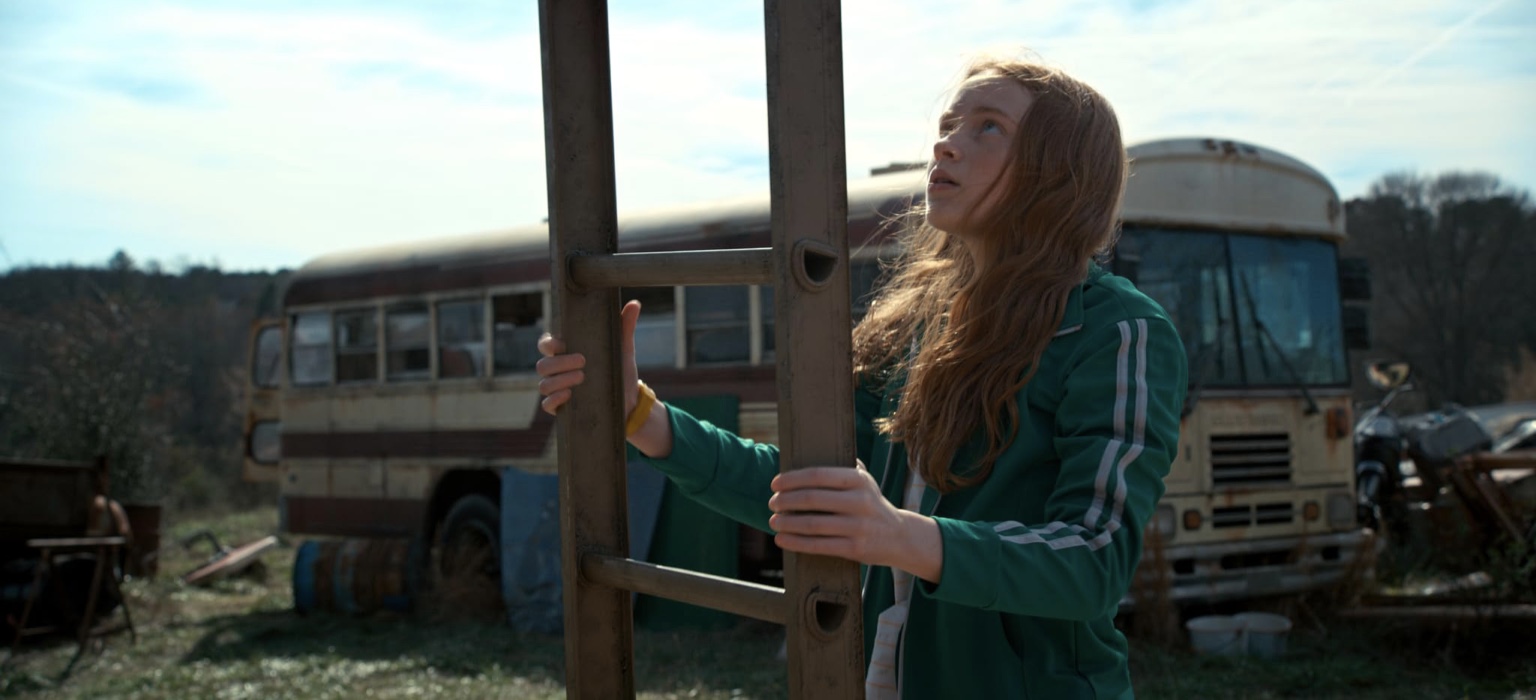
Sadie Sink as Max Mayfield in “Stranger Things”, season 2. Netflix
They’re a few very clear needle drops that have definingly transformed movie moments and have lived in my memory for years. Two of them have always stood out. One of them is Just Like Honey – The Jesus and The Mary Chain, in Lost in Translation. That final scene, when Bob (Bill Murray) hugs Charlotte (Scarlett Johansson) and whispers something to her before they part. We don’t hear the words he speaks, nor are we meant to. And there is no exaggeration when I say that is one brilliant ending. Every time I watch that film, when that scene plays with the music in the background, there are so many things that are flooding my mind, in the most emotional and moving way, things I might not be able to think of in any other context or to say out loud at all.
The other movie music moment is when Yasmine Hamadan is performing “Hal” in Only Lovers Left Alive. Again, it occurs towards the end of the movie. I’m not sure I can even describe that feeling in words, but it was like hitting that point when you sensed you were finally completely drawn into the world of the two characters, dark and timeless and otherworldly and overwhelming. I sometimes listen to that song, but the effect is not even closely the same. For me, that song lives in that film. The two forms of art form a common language. The song was not composed for Jarmusch’s film, and that makes its effect all the more striking. When Tilda Swinton’s character, Eve, suggests that Hamdan should be better known, Tom Hiddleston’s character, Adam, says she shouldn’t, because “she’s too good”. Maybe the song is only meant to come alive in the film, in that story – I am not sure an appropriate moment exists in real life. Maybe only in Tangier, “a place where, unlike Marrakech, the old world and new world are not separated by a gulf as though looking at each other. It’s all mixed,” as the director described the atmosphere and location for his film.
What is different with Stranger Things and “Running Up That Hill” is that the impact has been different, at least as far as I am concerned. Despite the song being so intrinsically linked to the story and to the character of Max Mayfield (Sadie Sink), it has seamlessly transgressed the screen, into the real world, into the present culture, and back into the charts. It can live, and thrive, outside that imaginary story.
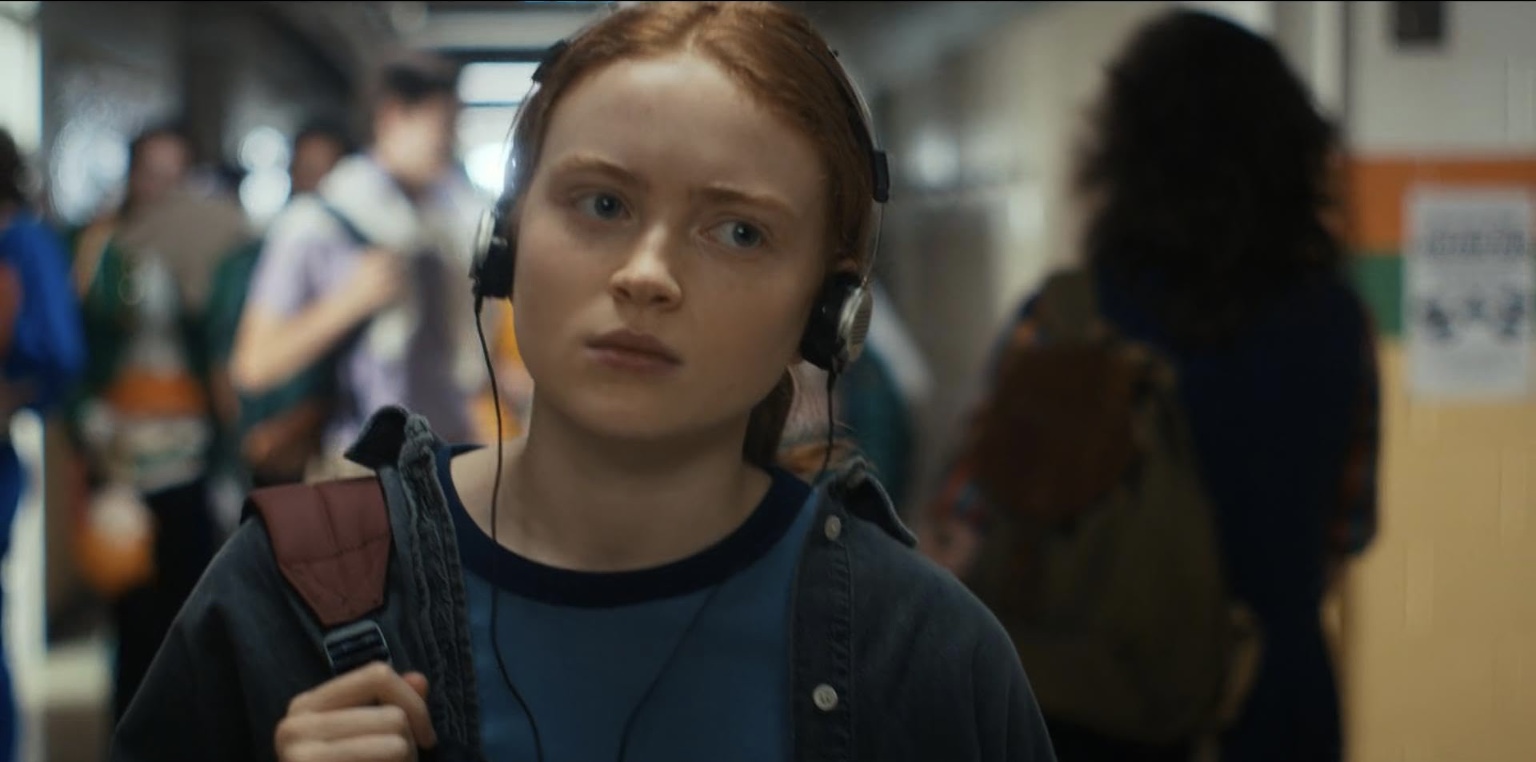
Sadie Sink as Max Mayfield in “Stranger Things”, season 4. Netflix
On June 22, 2023, Kate Bush’s song reached one billion streams on Spotify, as well as significant interest and sales in CDs and vinyls, a soaring triggered by the song’s appearance on Stranger Things 4. Nostalgic revolution? More likely, an everlasting feel.
When it was released, 41 years ago, the album from where the tune originated, “Hounds of Love”, which the musician reportedly called her most complete work, was considered progressive and experimental, combining modern technology and Bush’s quintessential vocals. It still feels liberatingly authentic, universally relatable, eternally cool.
“Music is mysterious; it doesn’t offer many answers,” Ennio Morricone remarked. “Film music, on the other hand, is even more mysterious at times, both because of its bond with images and because of its way of bonding with the audience.” Kate Bush’s music from this album was not created for film, but there is a mystery and expressivity and tempo in these lyrics, especially in “Running Up That Hill”, that makes them land very well cinematically.
Max Mayfield (Sadie Sink) makes “Running Up That Hill (A Deal With God)” her personal hymn. Max is the first outsider who joins the group of four (five, if we count Eleven) in season two, hailing from sunny California. She likes listening to music on her Walkman and skateboarding, the most rebellious of them all, fully embracing the counterculture of the times, its raw energy and youthful grit. But she also comes with a lot of emotional baggage and, in season 4, she also experiences a serious disconnection from her friends. It’s the reason why she becomes the target of telepathic new villain Vecna. It’s music that turns out to be the kids’ secret weapon, helping them break the psychic hold the monster has over Max. “Running Up That Hill” is her salvation, the gate back to a stronger self and her incredibly caring and understanding friends. That is what is so overwhelming, her friends are her lifeguard, only she doesn’t realise it yet. Music is there to always help her find her way, when she has a hard time understanding herself, others or when she is feeling misunderstood. Music always finds a way, in good times and in dark times, and even in the Upside Down.
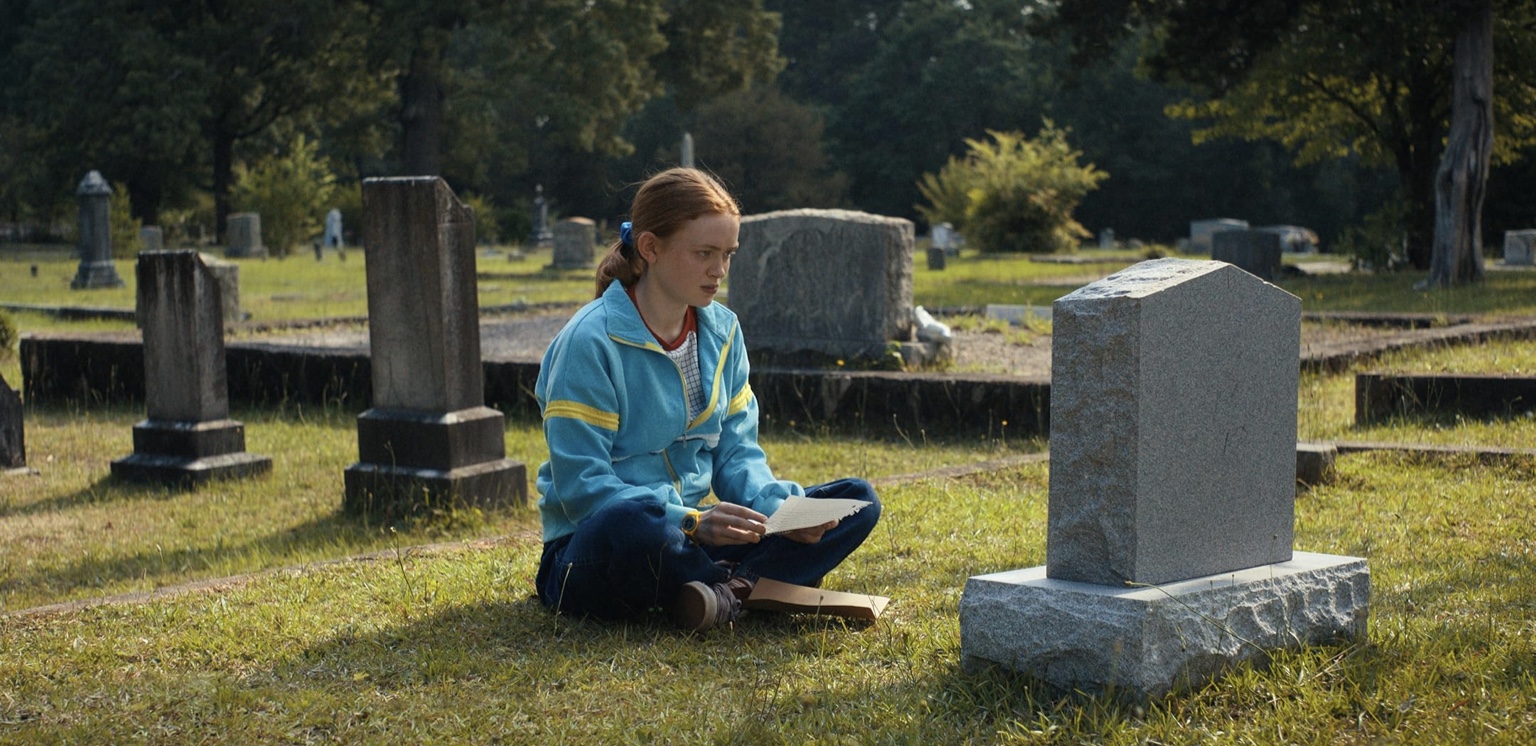
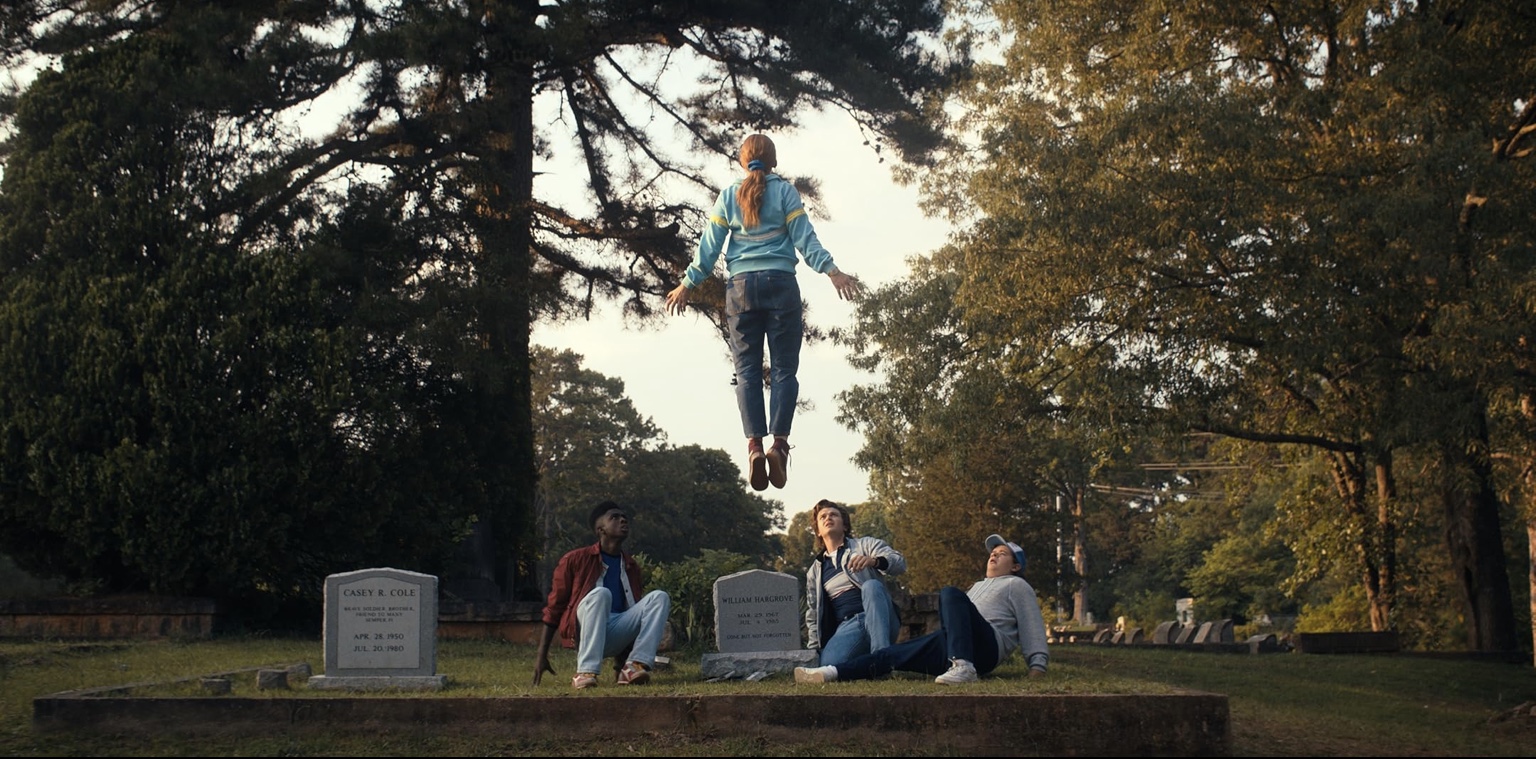
”Stranger Things”, season 4. Netflix
MORE STORIES
“Happyend”: In conversation with cinematographer Bill Kirstein
“I draw on everything I know and feel”: In conversation with photographer Chris Boulton
“After the Hunt”: In conversation with production designer Stefano Baisi