May Newsletter: AccuRadio, The Summer Book, and the groundbreaking road movie of the ‘90s


Photos: Classiq Journal


“When you’ve realised your dream, it’s time to dream a new one…”

Daniel Espírito Santo (“I Love the Seaside” surf & travel guide to Southwest Europe)



Viewing

Thelma and Louise, 1991
Ridley Scott

Thirty-five years after the world premiere of Ridley Scott’s film on May 20, 1991, in Cannes, Thelma and Louise are back… on the official poster! So what better time to revisit the film? I will also leave here a paragraph from a previous article I wrote about the film and which you can read in full here. Directed by Ridley Scott and scripted by Callie Khouri, Thelma and Louise bends so many genres, having been predominantly acclaimed as female revenge movie or female liberation and empowerment film, but to not see it as what first and foremost is, a great film and groundbreaking road movie, would mean to subverge it in a sub-genre of feminist cinema meant to please academic film criticism, which would be an injustice. Moreover, this is a road movie in outlaw and buddy movie trappings, standing alongside the another great of the kind, Butch Cassidy and the Sundance Kid. But by making both protagonists female, Thelma and Louise formed its own identity. Another pivotal element, more important than any feminist appeal, was that the film, just as Butch Cassidy and the Sundance Kid, depicted real bonding and real friendship of two memorable characters. Because despite common belief, that doesn’t come off that easily, neither in real life nor in film. In life, it’s rare to find people to take a journey with, let alone a life and self-defining journey. In film, it has rarely been depicted truthfully. Maybe that’s why the film has appealed so much to both men and women. Because every great film does not consider gender.


Razzia sur la chnouf (Chnouf), 1955
Henri Decoin

“Chnouf” is a French term for powdered drugs. The film is based on Auguste Le Breton book – he also wrote Rififi and Bob le flambeur, beautifully adapted for the screen by Jules Dassin and Jean-Pierre Melville respectively. Jean Gabin is Henri le Nantais, the manager of a nightclub that serves as a front for a narcotics operation. Gabin had finally made his postwar transition (which had proven to be a challenge) into remarkable films such as Le plaisir (1952), directed by Max Öphuls, and especially Touchez pas au grisbi, 1954, by Jacques Becker, heralding a new kind of French noir or policier and a new Gabin persona on screen. In his films of the 1930s, such as, for example, Pépé le Moko, Jean Gabin was one of those tragic victims of society, a character he was identified with in that period, the French cinema of poetic realism. Unluck plays a big role in his character’s life in Pépé. It is usually unluck who puts him on the wrong side of society. It is unluck that makes him fall unhappily in love with the wrong woman. It is emotion that drives him and his faith is dictated by his emotions. But his exterior, his manner, his profession is tough and unsentimental, and it is this contradiction of terms that made Gabin the actor so magnificent.

Chnouf came after Grisbi and reunited Gabin with Lino Ventura, at his second role (after Grisbi), one of the few actors who could stand up to Gabin on screen. Henri is tough and implacable, but Roger the Catalan (Ventura) is vicious, and you can almost feel his viciousness. Lino Ventura was one of those actors who had something special. He stood apart through his modesty, frankness, humour and humility and a classic, distinctive elegance. He is best known for films such as L’armée des ombres, Classe tous risques, Un papillon sur l’épaule, and the two aforementioned films co-starring Gabin, but I always love seeing him in more under the radar movies, such as La cage. Watching his range of emotions unravel in a story that mainly takes place in a single room is a proof of his natural, instinctive talent.

Razzia sur la chnouf reprises the myth of the weary old crook, but goes into a much more realistic territory: the drug world, an underworld riddled with mistrust, greed and violence, a relatively uncommon subject in French cinema at that time. It’s a somber, unsentimental, stark, fast-paced film that shows without holding back the entire economic and commercial drug circuit, from its manufacturer to the whole seller to the small reseller to the final consumer, and when it gets to that, with the appearance of Lila Kedrova, in an extraordinary performance, as a drug addict, the impact is terrifying.


Project Hail Mary, 2026
Chris Miller & Phil Lord

I went into seeing Project Hail Mary without knowing much about it in advance, and my experience was much more rewarding for it. So if you haven’t watched it and don’t know much about it, I won’t give it away, except that it’s about a school teacher and biologist, Ryan Gosling who is unwillingly sent to space to save planet Earth. Ryan Gosling can do just about anything, can’t he? Even play an astronaut by chance with humour and still make us believe in him. I will just say that it was beautifully done and it says much more about loneliness and humankind and friendship and hope than many films that are set out to do exactly that in a much more familiar environment and with many more words. And I liked how they played with language, reminding me of another sci-fi that played with the language between worlds but very differently than this one and which I also liked very much, Denis Villeneuve’s Arrival, a film that had I felt it did something else, too: it had the courage to approach the element of time in such a way that recalls to mind Tarkovsky’s Solaris.


The Morning After, 1986
Sidney Lumet

The only picture that Lumet shot in Hollywood was also one he didn’t shoot out of a major studio, but using a pickup crew of technicians. Alex Sternbergen (Jane Fonda), a washed-up actress, wakes up on Thanksgiving morning with a hangover in an apartment she doesn’t recognise and with no recollection of the previous night, and with a dead body in bed next to her. Unable to go to the police, because of a previous conviction, she tries to tie the pieces together, reluctantly turning to an ex-cop, Turner Kendall (Jeff Bridges), for help. Both Fonda and Bridges’ performances are truly great and the relationship forming between them looks very genuine, even though secrets and resentments are part of it. Broken people can mend other broken people.

“Don’t the 80s now seem naïve and colourful compared to the cool, elegant decade the 90s tried so hard to be?,” Jürgen Müller remarks in his film comments on the 1980s. That’s one of the things I like about the films of the 80s. I also like the atmospheric, colourful density provided by L.A. in The Morning After, interspersed with sunlit vast open spaces. It’s part of the storytelling. Because form follows function. Sidney Lumet wanted to use primary colours because “living in Los Angeles was part of the debilitating influence on the character played by Jane Fonda. I wanted all colour exaggerated: reds redder, blues bluer. We used filters.” Los Angeles is known, and is known in movies, for its light and you really get that feeling when Jane Fonda steps out in the blinding light, shot from above, pinned on the canvas of a bright red building. She looks trapped in that strong, harsh, anti-glamour light. And she looks small passing by those endless colourful walls Sidney Lumet was mentioning. They look threatening and that’s the idea.


Reading

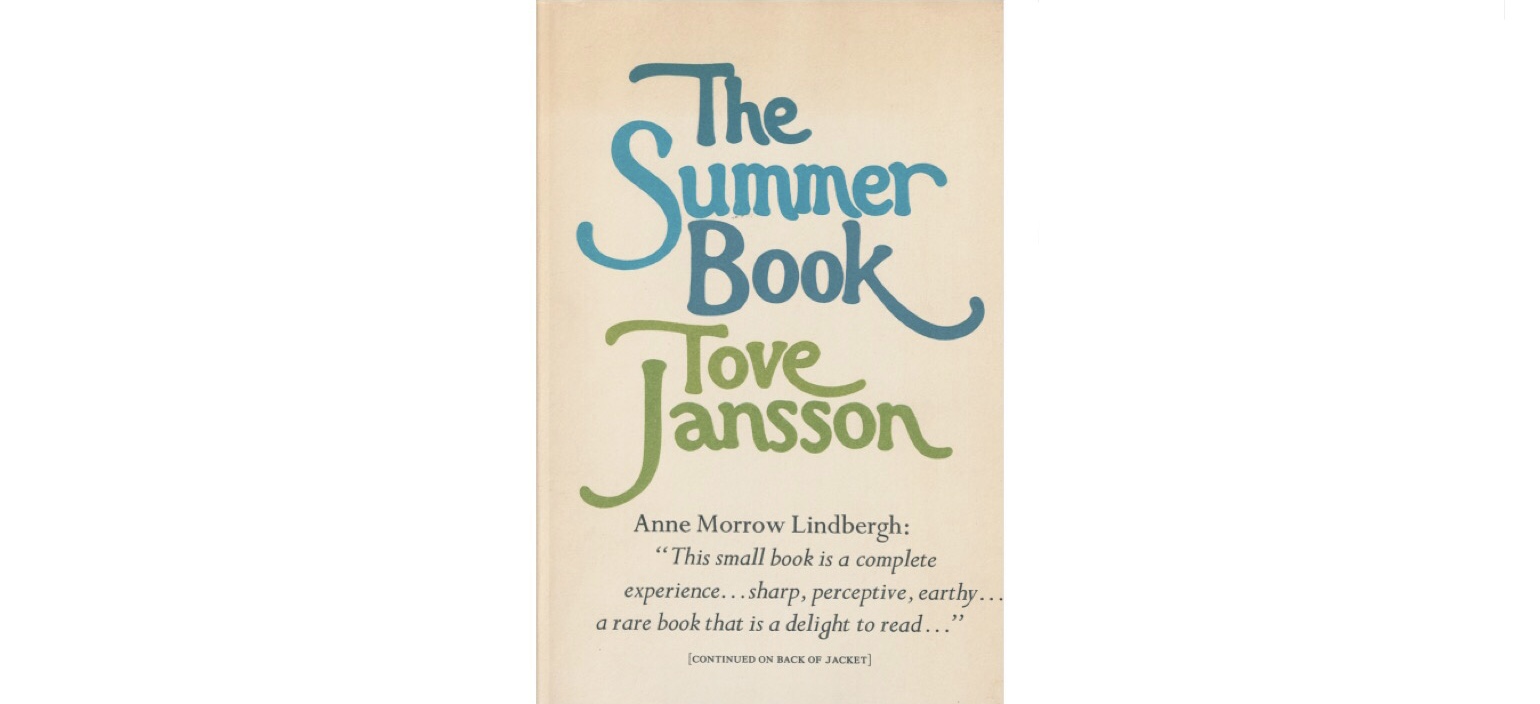
The Summer Book. This wonderful little book is about a little girl, Sophia, who is just starting to open her eyes to the world, her grandmother, and their unforgettable summers on a tiny island off the Golf of Finland. I read in the book The Illustrators: Tove Jansson that the writer’s mother had once suggested to her the theme of an elderly grandmother and a little girl. Jansson’s writing is extremely moving in its lack of artifices, filled with her crisp humour, tender love of nature, summer and childhood memories, warmth, sincerity and wisdom, and her profound insights on life and death from the perspectives of both the child and the grandmother. Jansson subtitled it “A Novel” to suggest that the book was not intended for children, but her German publisher persuaded her to add seventeen illustrations. I didn’t know that and my copy unfortunately doesn’t include the illustrations – “she draws both characters always from behind or at a distance, behind a book or even as clouds, so they stay faceless and universal.” And eternal in the reader’s heart.


Listening

The radio: AccuRadio. It’s curated by real humans. How science fiction is it that we have to use that phrase when we talk about music, and art, and film, and culture? But I will use it as often as I have to. AccuRadio offers an incredible variety of music, free and ad-free, and therefore it’s always on in the car. Like once upon a time.


The soundtrack: Project Hail Mary


The podcast: Kermode on Film. Regardless of how much in detail film critic Mark Kermode goes, frequently accompanied by filmmaker Jack Howard, their film discussions revolve around the idea that movies are first and foremost a deeply personal experience, and that movies should ask more questions of the audience than give answers. I find their conversations engaging, entertaining, thought-provoking and extremely relatable to my own movie experiences.


The album: Pablo Honey, Radiohead


Making

The culture of tennis is not just about the game. It’s about connecting aesthetically, about shared passions, from art to music, and yes, about the love for to the sport itself. I salute Palmes’ commitment and dedication to open tennis up as a sports and culture “because a lot of people don’t feel like they can identify with this preconceived image of tennis as high-brow. So we’re here to lower the cultural barrier of entry because maybe if someone buys one of our t-shirts, they’ll want to try and play tennis,” Palmes founder Nikolaj Hansson told Racquet Magazine. Their Hitting With is a portrait series where they meet friends of the Palmes Tennis Society who share their love for tennis while excelling in their creative field.


Exploring

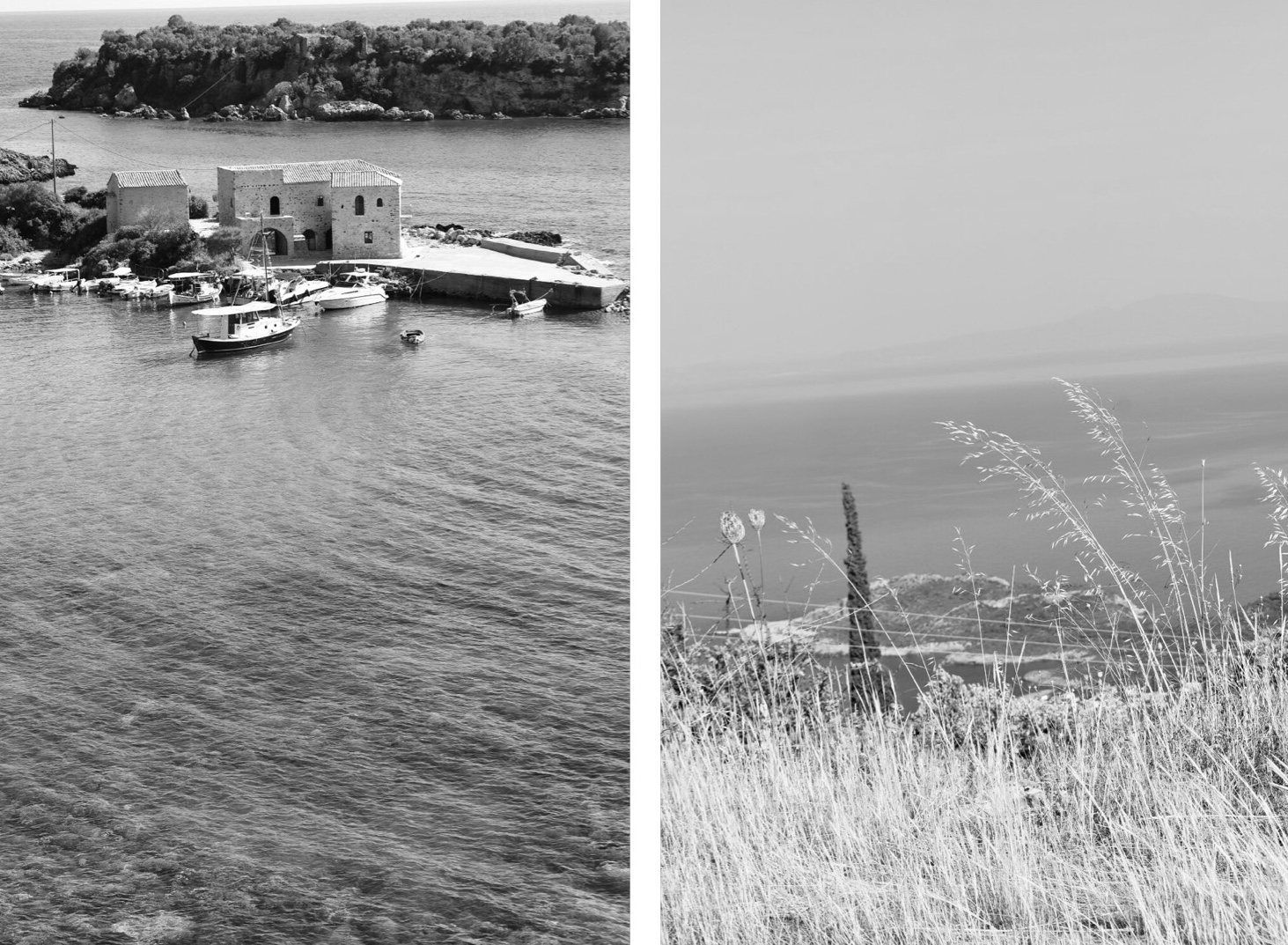
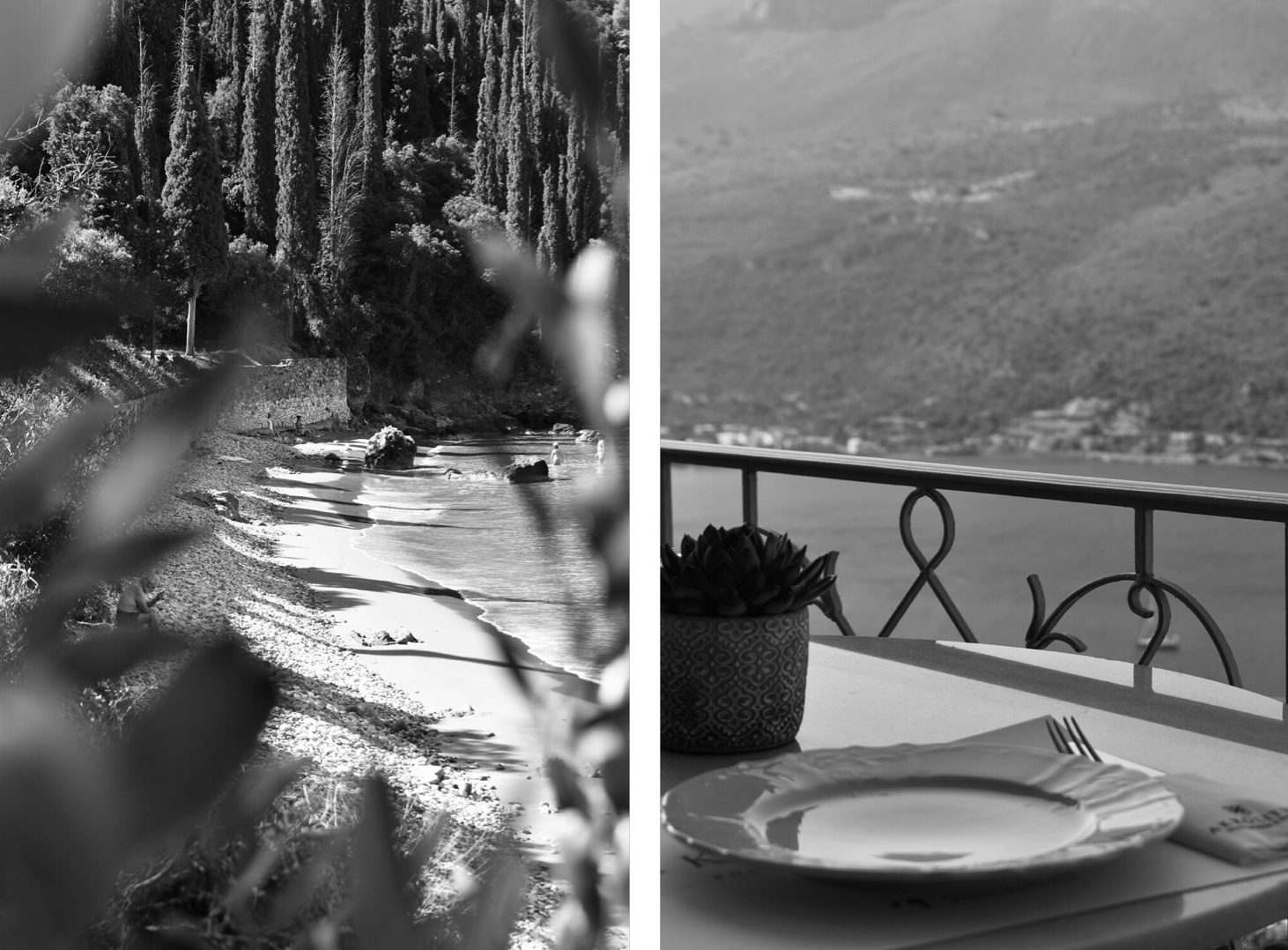
The photography of surfer, photographer and cinematographer Daniel Espírito Santo. It’s timeless. There is also a feeling of suspended reality to it, carrying you not to a definite place in space and time, but to somewhere you can make your own. Because another thing that immediately drew me to Daniel’s photography is that he doesn’t title his photos with the name of the location, which again speaks of a timelessness, and of a quiet elegance.


The regulars

The interviews, newsletters and podcasts I turn to every week and/or every month because they are that good. Soundtracking, with Edith Bowman. Ruthie’s Table 4 with Ruth Rogers. Fashion Neurosis, with Bella Freud. My New Roots monthly newsletter. Craig Mod’s newsletters: Roden and Ridgeline. Racquet’s Rennae Stubbs tennis podcast. Gone to Timbuktu with Sophy Roberts. Sirene Journal, Racquet, Waves & Woods, and Legénde in print.



Posted by classiq in Books, Culture, Film, Newsletter | | Comments Off on May Newsletter: AccuRadio, The Summer Book, and the groundbreaking road movie of the ‘90s

“Simplicity takes time”: In conversation with artist and designer Lucrecia Rey Caro


Photos courtesy of Lucrecia Rey Caro


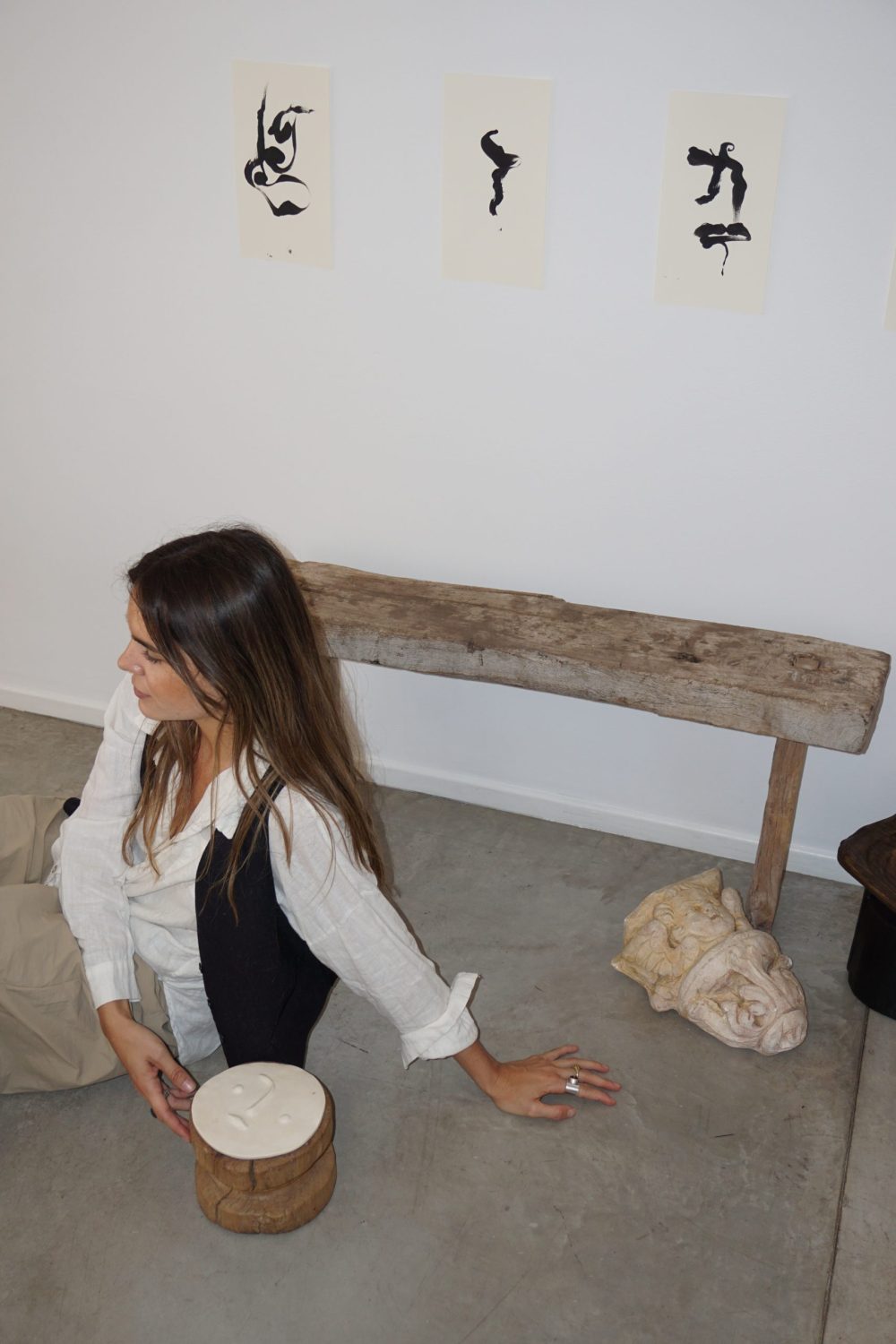
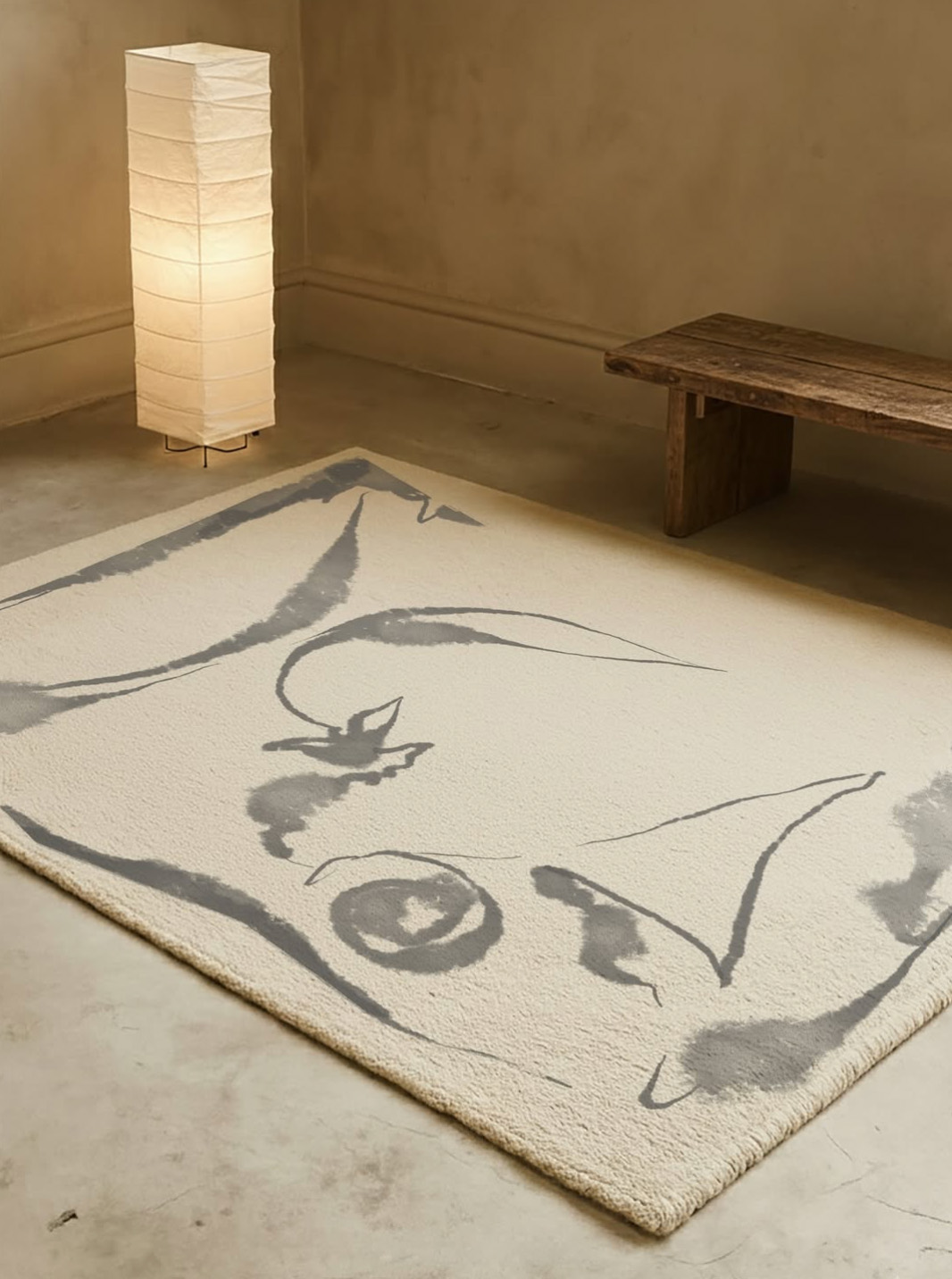
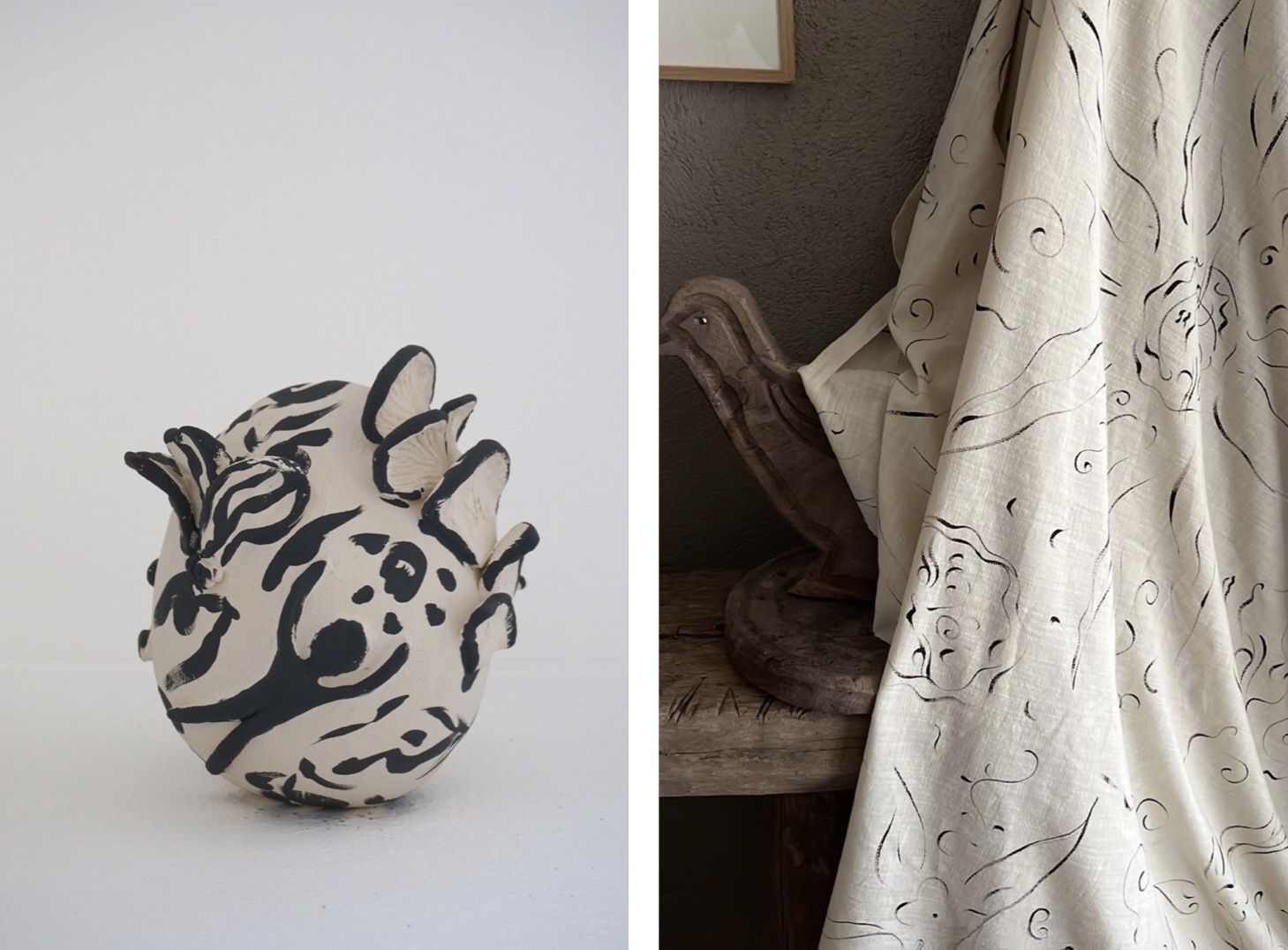
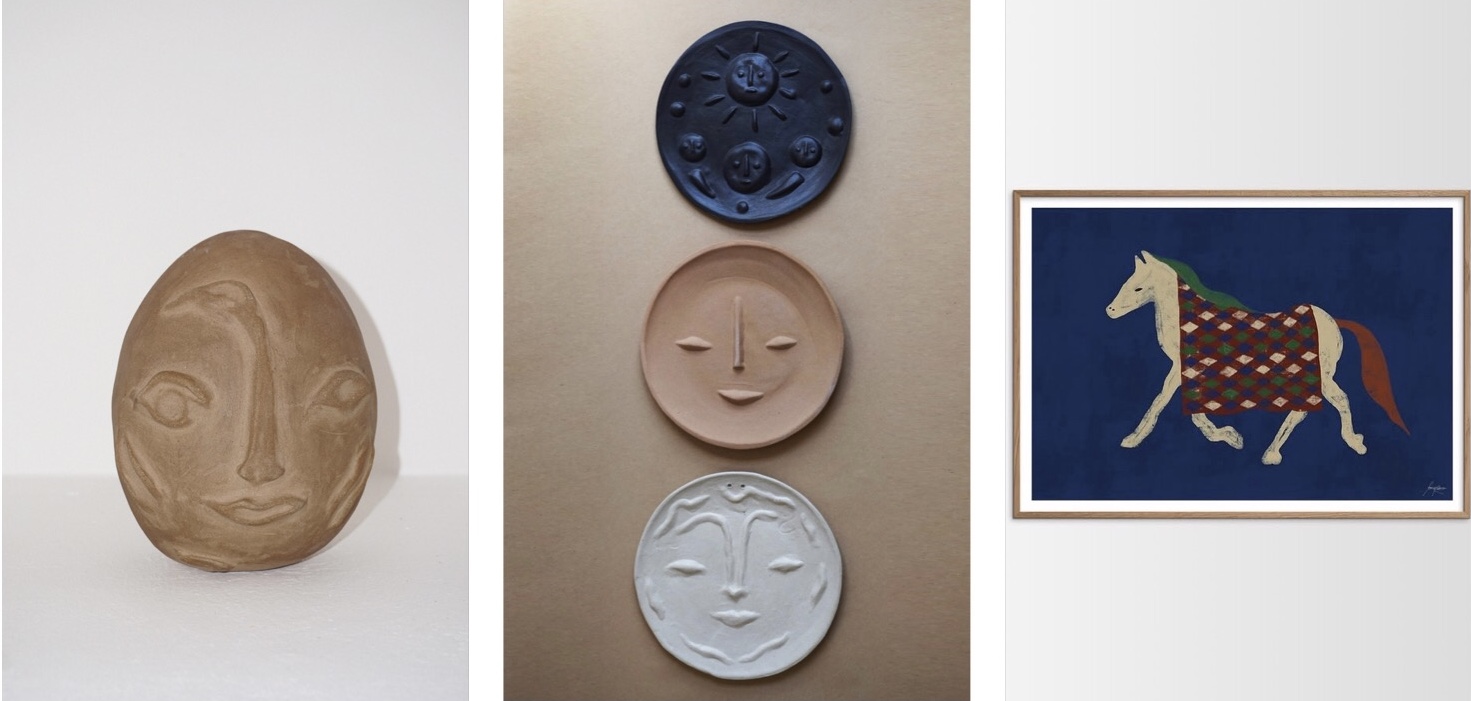
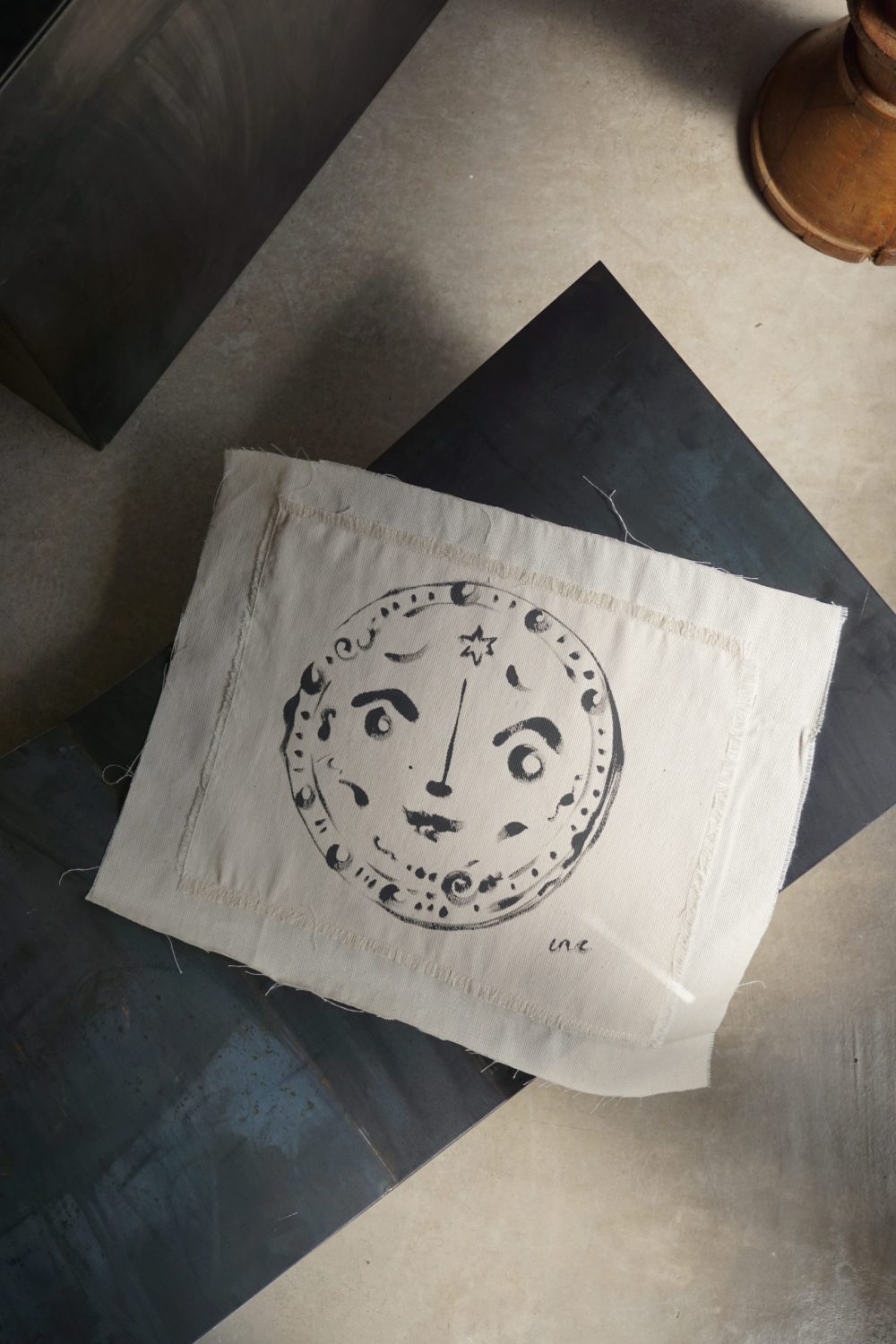
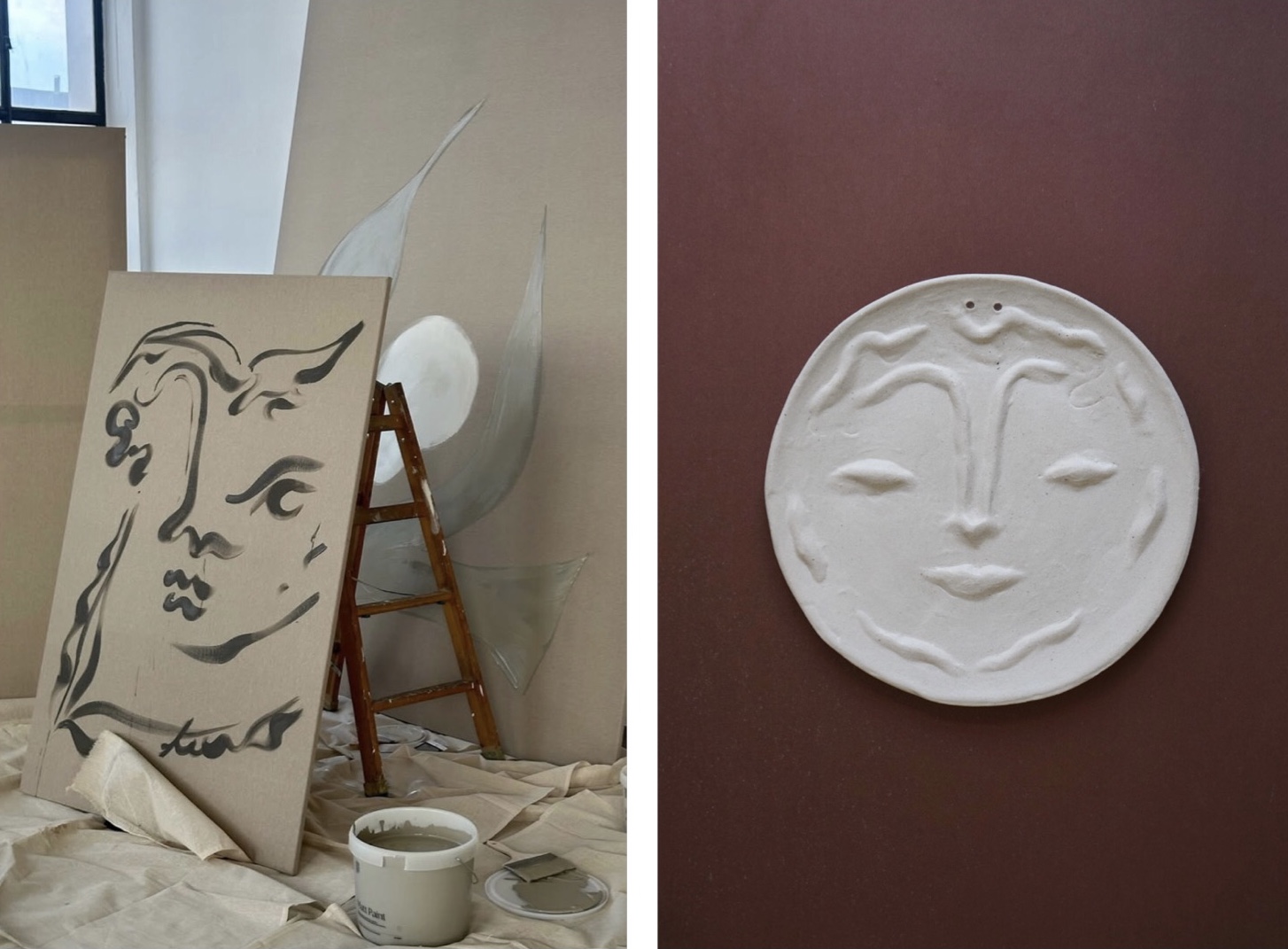
Artist and designer Lucrecia Rey Caro’s creations range from fine art, sculpture and ceramics, to art direction and identity design concepts tailored to the narratives of worldwide brands. I was instantly drawn to these universes she creates and each time I return to one of them, I find that that first moment when I experienced it, so valuable for the freshness of its impression, always returns. There is something poetic about this ability to communicate with the viewer that I believe also has to do with the ability of the maker to enter, at will, the world of fantasy, but to leave it too.

It is the journey of life and travel that inspire Lucrecia Rey Caro the most. She takes her time when she travels. Journeys, in fact, turn into living experiences, each one a new way of seeing, each one carving a new path to creativity, each place continuing to live on in her artistic works. Curiosity takes time and space to develop. Living takes time, roots must grow before wings do, being attentive to life is essential, and so is an ever present mind on the alert for emotions seeking out unfamiliar territory. A moment of inspiration can be the fruit of a long acquaintance, or one of surprise, but doesn’t it come from a wellspring inside? A new path intersects an old one.

Creativity is a very long process that has no shortcuts. That is the thread that goes through my conversation with Lucrecia. We also talk about the ambiguity of good and bad design, what she is committed to doing every single day, and why preserving her artistic integrity comes so naturally in her collaborations.


Lucrecia, is simplicity the first prerequisite of universally comprehensible and effective communication?

I feel that there aren’t really any rules or requirements for expression, but to me, simplicity is just so direct and honest. I’m drawn to it in every sense – though I can also find beauty in the opposite. Ultimately, I feel that when you strip away the noise, the message just lands more genuinely.


Is simple design difficult to achieve?

I think it’s a path that takes time. Not just simplicity itself, but finding your own way of communicating in a simple way. It took me a few years — along with emotional and creative ups and downs — to arrive there.


“I feel that when you strip away the noise,
the message just lands more genuinely.”


Are you a big believer in the emotion of design, in that initial emotional response that someone has to a product, to a story, before they get the rest of the information?

I deeply believe in emotionality and apply it to my design process. For me, everything begins with feeling; it is through that sensibility that I create, dream, and imagine. The fact that we don’t all feel or notice the same things is precisely what makes design so interesting. I trust that initial intuition that sets the stage for everything to follow.


What is your first drawing memory?

I remember that even as a young girl, I was passionate about inventing characters on paper. I would spend hours filling entire sheets until there wasn’t a single blank space left, completely immersed in my own world.


Did your family foster your creativity as a child?

I’m not sure if they actively fostered it, but they always supported me. I went to painting classes and craft workshops as a child, which was a great form of encouragement. They also took me to art and archaeology museums from a very young age, and I was fascinated. They always supported whatever I wanted to pursue, and I value that deeply.


“I trust that initial intuition that sets
the stage for everything to follow.”


In today’s world, where there is so much visual material that people can’t discern any more what’s good and bad, who is it up to to set the standards?

I believe we are responsible for our own choices and emotions; we have the freedom to decide what resonates with us. I find it somewhat jarring when someone assumes the role of dictating what is ‘good’ or ‘bad,’ as those are deeply ambiguous concepts.


I agree, good and bad, especially when it comes to art and design, are highly subjective concepts. But the visual noise in our lives today can be overwhelming. You can not have art and culture on the go. How do you navigate that?

Noise is an important issue, in every sense. It overwhelms us, both visually and mentally. I think it’s essential to find balance, or moments of rest, when that noise becomes too much. Because it’s in silence that creativity begins to awaken.


“Good or bad, those are deeply ambiguous concepts.”


Are you a fan of complete silence when you work?

It depends on the mood. I often work in silence because it helps me focus — I tend to be easily distracted. When I do listen to music, it is usually something calm, something that doesn’t interrupt the flow of concentration.


What’s something you’re committed to doing every single day?

I am committed to remembering that we are here to play ‘the game of life.’ Every single day, I consciously choose to keep creating, experimenting, and keeping that curiosity alive.


“It’s in silence that creativity begins to awaken.”


The artist must find joy in his/her work, just like a child. What triggered your imagination as a child, more than anything else? And what triggers your imagination now?

I consider myself someone who has always had a strong capacity to imagine and to dream. As a child, what sparked my imagination most was learning new things and experimenting freely. Now, as an adult, it is travel that awakens it – stepping beyond my comfort zone, encountering different forms and rhythms of life, and learning to adapt to unfamiliar situations.


Is there any travel experience that has left a defining mark on your work?

I’ve been traveling a lot since I was very young, and I feel that every journey marks a new beginning in my life. Each one has been meaningful in its own way, especially because most of them I’ve done alone and for long periods of time. That pushes you to experiment, discover new things, connect with people, and rely entirely on yourself. All of that inevitably leads to personal change. My mind opens, expands, and imagines more freely and I always come back with new ideas.


“I feel that every journey marks a new beginning in my life.”


Where does an artist call home?

Right now, I feel like I’m in the process of searching for my home. But there are a few places that already feel familiar to me. I like to think that when a place resonates deeply, it’s because we’ve met it before in some way — and we’re simply finding our way back to it. I’ve felt that a couple of times. Now it’s more about choosing which one to stay with.


What is your background story? How did you begin in art and design?

From an early age, I was drawn to working with my hands — craft, painting, and the act of making. I loved creating scenes, reshaping spaces, and rearranging things until they felt more meaningful in a different order. I always sensed that my path belonged to art and design. I began by studying architecture for a year, then went on to complete a degree in graphic design. Later, I continued my training through a sculpture workshop, and I remain committed to learning and experimenting as I go.


You work across an impressive range of mediums. How do you approach a new project or medium?

It’s a question I’m often asked — and one I sometimes ask myself. At times, I don’t fully understand how I manage to hold so many projects at once. But I believe that this multiplicity is what gives me energy: the constant shift, the variation, the movement between ideas. It keeps my mind active and allows me to develop projects across creative direction, design, and art in an organic way.


You work with various brands, each with their own message to tell. How challenging is it to preserve your artistic identity while tailoring it to their message?

I feel very fortunate to say that preserving my artistic identity and values has always come naturally when working with brands. I believe the brands that collaborate with me choose me for what I do and who I am, which makes the process much easier and more authentic.


“I believe that this multiplicity is what gives me energy:
the constant shift, the variation, the movement between ideas.”


Are there any artists who have been particularly important or inspiring to you?

There are many artists who inspire me, but what moves me most is experience itself — the journey, life as it unfolds. Visiting a museum, discovering new stories, engaging in meaningful conversations, and connecting with new emotions and challenges — these are the things that truly inspire me and, in turn, allow me to create.


In this time and age, what do you wish people appreciated more?

I wish people valued time, care, and the attention we give to the things that matter to us.


Website: lucreciareycaro.com | Instagram: @lucreciareycaro

Prints for sale: theposterclub.com


MORE STORIES

“Continually honing my ability to imagine is an important part of my work”:
Interview with cinematographer Bill Kirstein

In conversation with film poster artist and graphic designer Matt Needle

“It’s about having an emotional reaction”:
In conversation with photographer Clément Vayssierres


Posted by classiq in Art, Interviews | | Comments Off on “Simplicity takes time”: In conversation with artist and designer Lucrecia Rey Caro

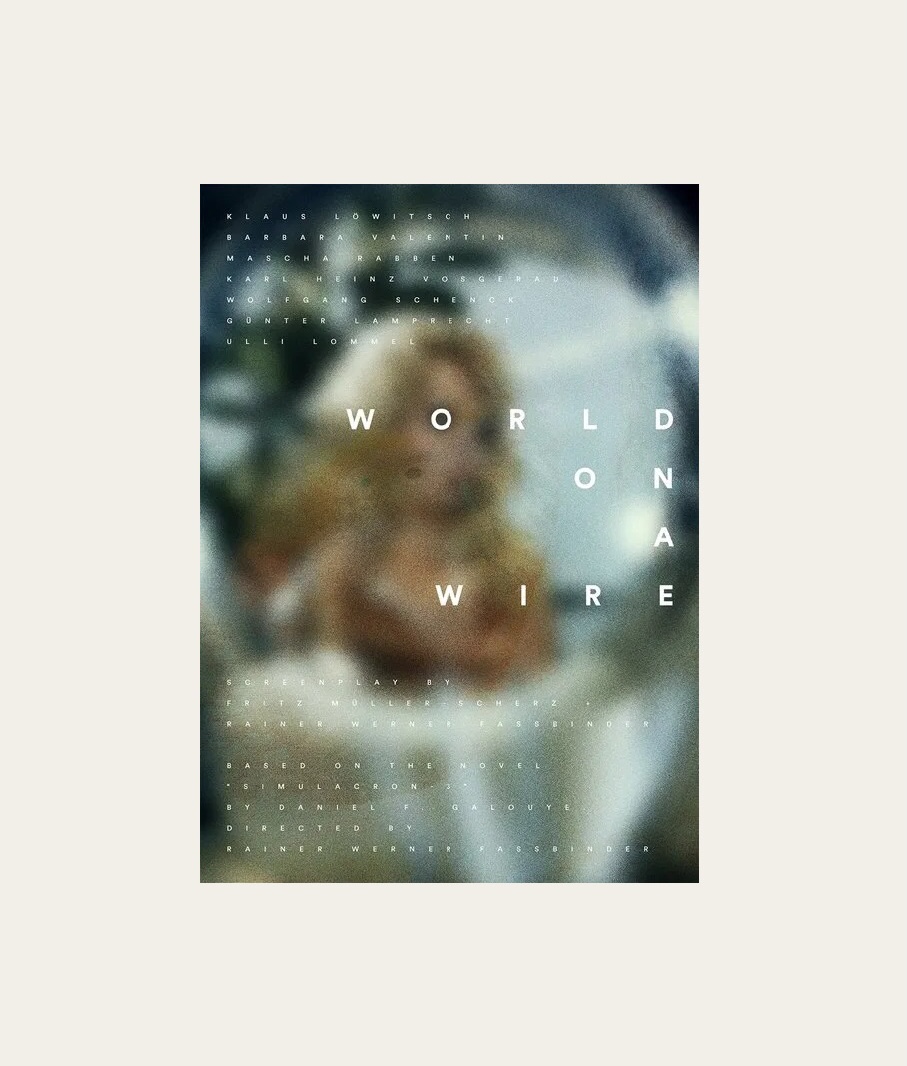
World on a Wire


This film.

One of those films that fall into the category of “I wish I could say that this film saved the world from itself”: Rainer Werner Fassbinder’s Welt am Draht (World on a Wire), 1973.

What effect can films have on society? What can a filmmaker do for society? Fassbinder was asked these questions in a conversation with Hella Schlumberger, included in the book The Anarchy of the Imagination. Interviews, Essays, Notes: Rainer Werner Fassbinder. “He can do a lot. Entertain. Tell stories in such a way that the moviegoer is entertained and afterwards is no stupider; he can make various things clear to him or make him want to get various things straight for himself, he can express fears. For others. If no one does that, we’d withdraw into the kind of silence in which sooner or later you become a moron. Film can give the moviegoer the courage to continue expressing things, taking position on them, and making it known. I do feel that film as a medium can be effective in all sorts of ways. And it’s always a means of entertainment, and should remain that, too. Like literature, which is also supposed to be fun, or music, quite aside from the effect it can have.”

Films can make the conversation easier to have, I believe, about anything. “I don’t throw bombs, I make films,” Fassbinder once said. Exactly.


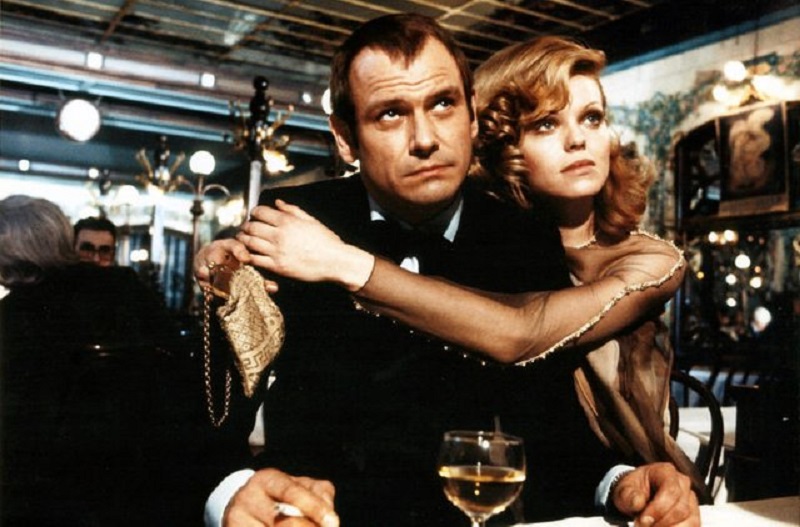
Klaus Löwitsch and Mascha Rabben in “Welt am Draht”, 1973


A glamorous cocktail party, circa the 1970s. The camera slowly glides past men and women jumping into the indoor swimming pool. Others stand at the bar in elegant evening attire. In the background, men with hats, with the air of secret agents, are watching. The camera stops on a good-looking man in a tuxedo. And only when we see him do we realise that something is slightly off with the rest of the party guests. People act strangely rigid, the facial expressions are minimal, their movements seem slightly mechanical, the language somewhat controlled and stiff. The man in the tuxedo is Dr. Fred Stiller (Klaus Löwitsch) and he is the most humane of the people there. He is a scientist. He helped develop the Simulacron computer system, a simulation model of the real world, on the basis of which one hopes to gain information about future economic and political developments, to learn consumer habits decades from now. Since the mysterious death of his predecessor, Vollmer (Adrian Hoven), who shortly before his death spoke of having uncovered a terrible truth, he has been the new head of the Institute for Future Research.

Stiller starts doubting that his world is the real one – does he also perceive what is in fact his imaginary world as if it were the real one? Or is he delusional? 25 years before The Matrix, Rainer Werner Fassbinder made Welt am Draht. What Fassbinder’s film brilliantly does is that it denies the viewer the show elements that are usually present in American sci-fi films. The simulated reality could very well be the present day of the 1970s and the alienation theme is more disquieting than any artificially-looking futuristic setting. And the ones populating this world, whether it’s real or virtual, seem to be mere images of themselves caught in their own contained universe. Is it real? Is it simulated? Half a century later, this sounds frightfully familiar. How frightening is it that we let it happen?


MORE STORIES

“We are taking culture into our own hands”: In conversation with Cinema La Clef

“You only need to assemble, or even easier: distract”
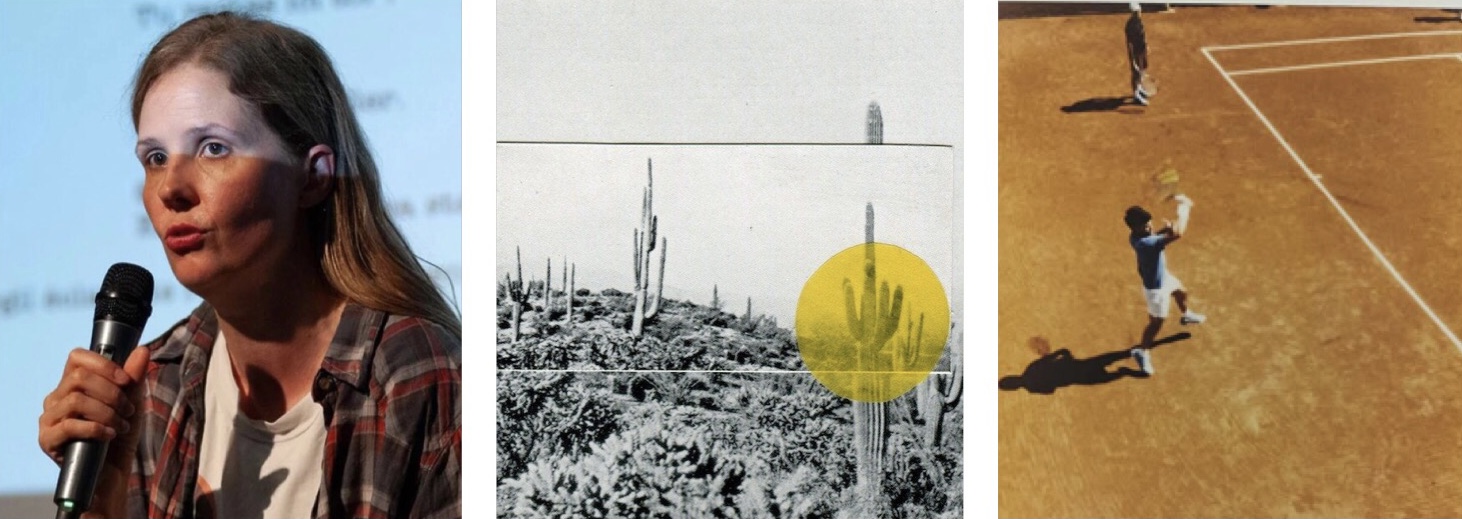
In conversation with collage artist Vesna Vrdoljak

“Feeling the sport through the images”: In conversation with photographer Alexander Aguiar

Posted by classiq in Editorial, Film | | Comments Off on World on a Wire

Marilyn Monroe and blue jeans in “Clash By Night”

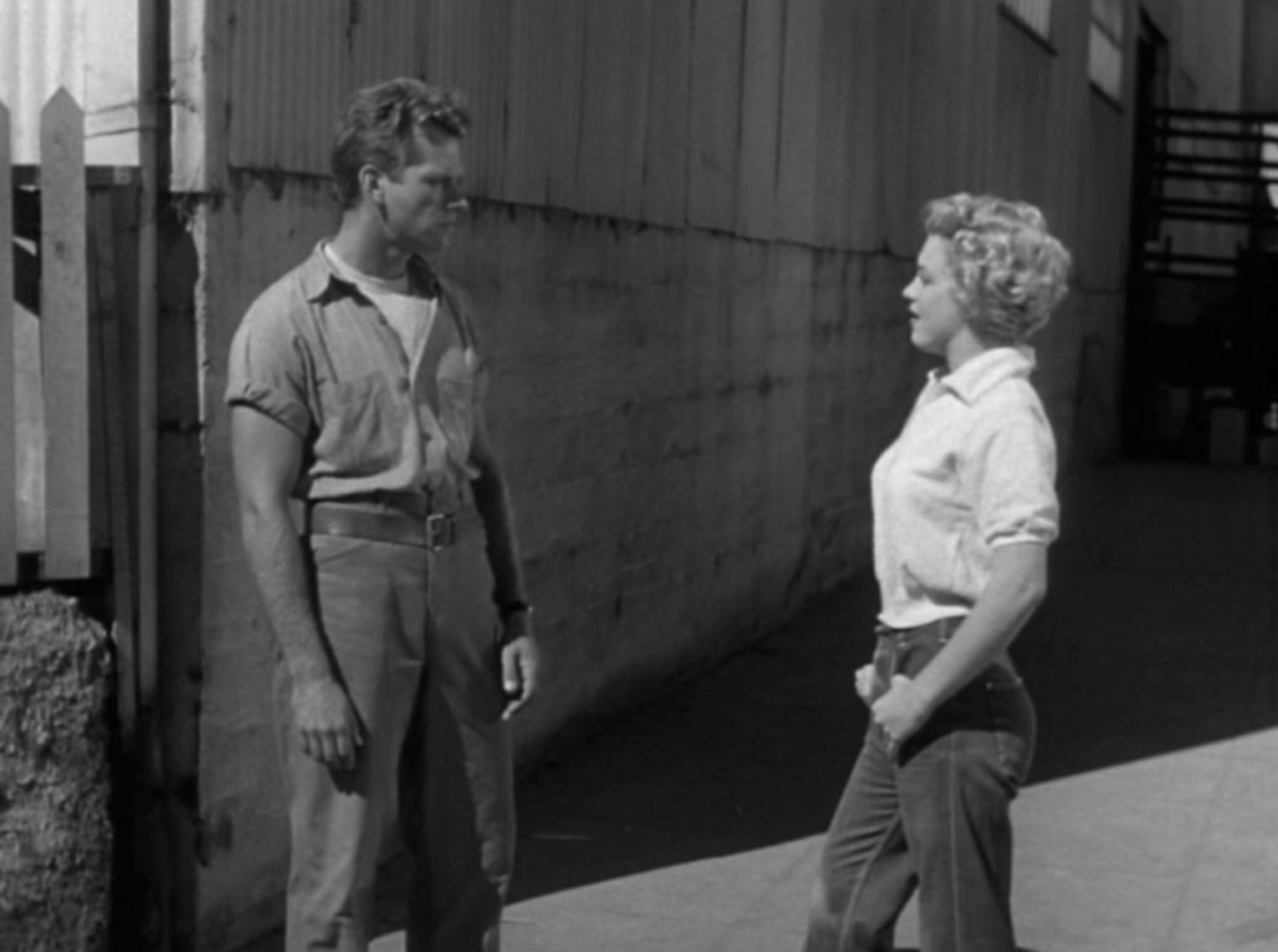
Keith Andes and Marilyn Monroe in “Clash by Night”, 1951 | RKO Radio Pictures


Marlon Brando wore his in 1953, in The Wild One. James Dean wore his in 1955, in Rebel Without a Cause. Marilyn Monroe wore her blue jeans in 1951, in Clash By Night. Brando and Dean made denim defiant and sexy in the 1950s – the first decade in which young people’s style was distinguished from their parents’. But it was Marilyn who embodied the rebelliously attractive look first. She was one of the very first women and Hollywood stars to demonstrate the appeal of jeans. It is her jeans looks that play a big part in Monroe’s statute as one of America’s biggest symbols of youth culture, her pervasive image having held an influence over generations ever since.

I had watched Fritz Lang’s Clash By Night some time ago, but I was eager to rewatch it because, firstly, I felt like reviewing Marilyn Monroe in one of my favourite roles of hers before the centennial anniversary of her birth coming this June, and secondly, because I frankly could not remember if the edition I own had the complete opening sequence (apparently, in some copies of the film in circulation today, this introductory scene is incomplete) that Lotte Eisner describes in her book Fritz Lang: “Swarms of seagulls fly in the sun on a clear sky, waves break on the shore, a big fishing boat glides along, the masses of glittering fish are pumped by pipeline into the holding tanks. Inside the cannery, women briskly process them into canned food. The atmosphere is so airy and sunny, the impressions all so glittering that it is hard to realise it is not in colour.”

So I’ve watched the film again. The opening sequence was all there. It was shot on location, in Monterey, and the sense of place is absolutely wonderful. It is in this fish can factory in the maritime community that we find Marilyn Monroe’s Peggy, a small-town working girl and the girlfriend of high-minded Joe Doyle. She has a mind of her own and she is looking for more than marriage and being a dutiful wife. And when Joe’s sister, Mae (Barbara Stanwyck), returns home after having failed to fulfill her big ideas in the big city, Peggy instantly feels a connection with her – her right to being independent, to having her own dreams, to laying down your own rules and abiding by them rather than by society.


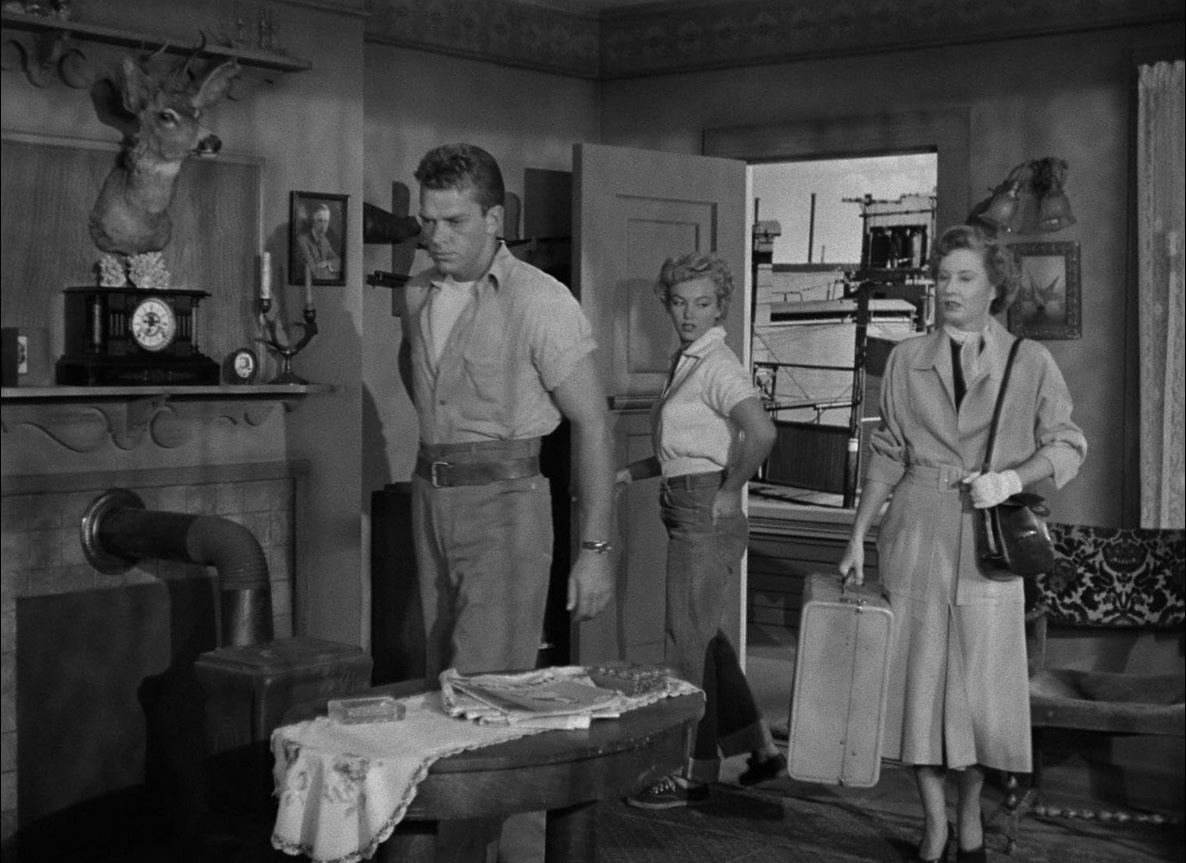
Keith Andes, Marilyn Monroe and Barbara Stanwyck in “Clash by Night”, 1951 | RKO Radio Pictures


The film is sometimes designated as noir, but of the emotional lives (carefully mapped out on a mise-en-scène of great subtlety and power) of the handful of characters we get to know (played by Barbara Stanwyck, Paul Douglas, Robert Ryan, Marilyn Monroe and Keith Andes), only Ryan’s Earl has a noir side to it. His violent nature, hostility towards women and love-hate relationship with Stanwyck’s Mae may attest to this noir element. Mae has now settled down and is married to Earl’s friend, a simple, kind and hard-working man, Jerry (Paul Douglas), who knows he married a woman with a past. He eventually does not seek vengeance. For Lang, verisimilitude is more important and lies elsewhere. I wouldn’t call it happy ending, but rather an ending that is more apt at raising questions and avoiding complacent categorisation.

Marilyn Monroe and Keith Andes’s story provides a counterpoint action to Mae and Jerry’s. In her straight-cut blue jeans, white cropped top and sneakers, Peggy does not only represent youth, but a free and modern personality, breaking away from conventions and parents’ old ways. Part tomboy, part typical American girl, her look is very natural and understated. Simple, confident, an ahead-of-her-time remarkably cool style that Marilyn would often times emulate off-screen, too. It shows a sense of style rather than a love of fashion, and closer to the real Marilyn than the star-image makers that put her in fur, sequins, pink and silver, cared for her to envision. Marilyn played a great role in making jeans the mainstay garment of the twentieth century, part of America’s heritage, but, most importantly, part of modernity.

I like that it was Lang’s film that put her in jeans on screen (you know they’re blue, even if the film is black and white, just in that airy and sunny opening sequence), before her “starring roles”, where the image of Marilyn created for the screen and her cinematic persona often took over an honest appreciation of her performances (and would also be hard for Marilyn to leave out of a role, too). Some say that Bus Stop was the film that started to establish her as an actress rather than a presence, but I think that Clash By Night says otherwise.

She did not step easily into character. As Lotte Eisner notes in her book, “Lang recalls that it required a lot of patience to deal with her. Shy and unsure of herself, she would arrive late for work – either out of stagefright or because unconsciously she was nervous of her more experienced colleagues. At the same time she was clearly aware of her sex appeal.” But she was “ambitious and keen”, and with Barbara Stanwyck’s friendly support and Lang’s patience, she delivers “a performance that seemed free and spontaneous and earned Monroe some excellent reviews.”


Keith Andes and Marilyn Monroe in “Clash by Night”, 1951 | RKO Radio Pictures


Marilyn would wear again jeans in The Misfits, her last film, in 1961, just one decade later, like a preordained message of how she should be remembered. John Huston, her director on this film, as well as on her first significant acting role, The Asphalt Jungle, observed in an interview with Peter S. Greenberg for Rolling Stone magazine, from 1981, that she had “the ability to go down within herself and pull up an emotion and put it on the screen.” In an earlier conversation, from 1974, with Rosemary Lord, he said he would “put Katey Hepburn at the top of my list of actresses – and Marilyn Monroe of course. What they say about her now… It’s tragic exploiting a tragic memory. Good hearted girl – a great heart she had. I think the Bogarts and the Monroes were new in their own generation – they weren’t like anybody else, and people are never replaced.” But “thanks to this medium,” he continued, “they’ll be there for a long time.”

In the same interview mentioned above, Huston remembered how even in The Misfits, when everyone knew there was definitely something wrong with Marilyn, a premonition of doom closing in, there was still a freshness about her that had endured from the first time he met her, when they did the screen test for The Asphalt Jungle. And that was the uniqueness of Marilyn. That appeal is still there, in the public conscience, in all her films. It is argued that her public image lives on because she brought in people a feeling that she was headed for disaster, that she showed a vulnerability that made people feel very protective towards her. Her appeal has to do with more than that, just as it has to do with more than her sex appeal. Because she moved men just as much as she moved women. Just like James Dean. She brought along not just a new look, but a new voice. And in none of her films seems that image more penetrating than in these two films, Clash By Night and The Misfits, where she dressed so casual and free, the voice of every generation since.


Editorial sources: “Fritz Lang”, by Lotte Eisner (Da Capo Press); “John Huston Interviews” (The University Press of Mississippi)


MORE STORIES


The individualistic minimalism of the 1980s: Kim Basinger in Nine 1/2 Weeks

The voice of a generation: James Dean in Rebel Without a Cause

An American Original: Steve McQueen in Bullitt

Posted by classiq in Film, Film costume | | Comments Off on Marilyn Monroe and blue jeans in “Clash By Night”

Read instead…in print #42: Veronica

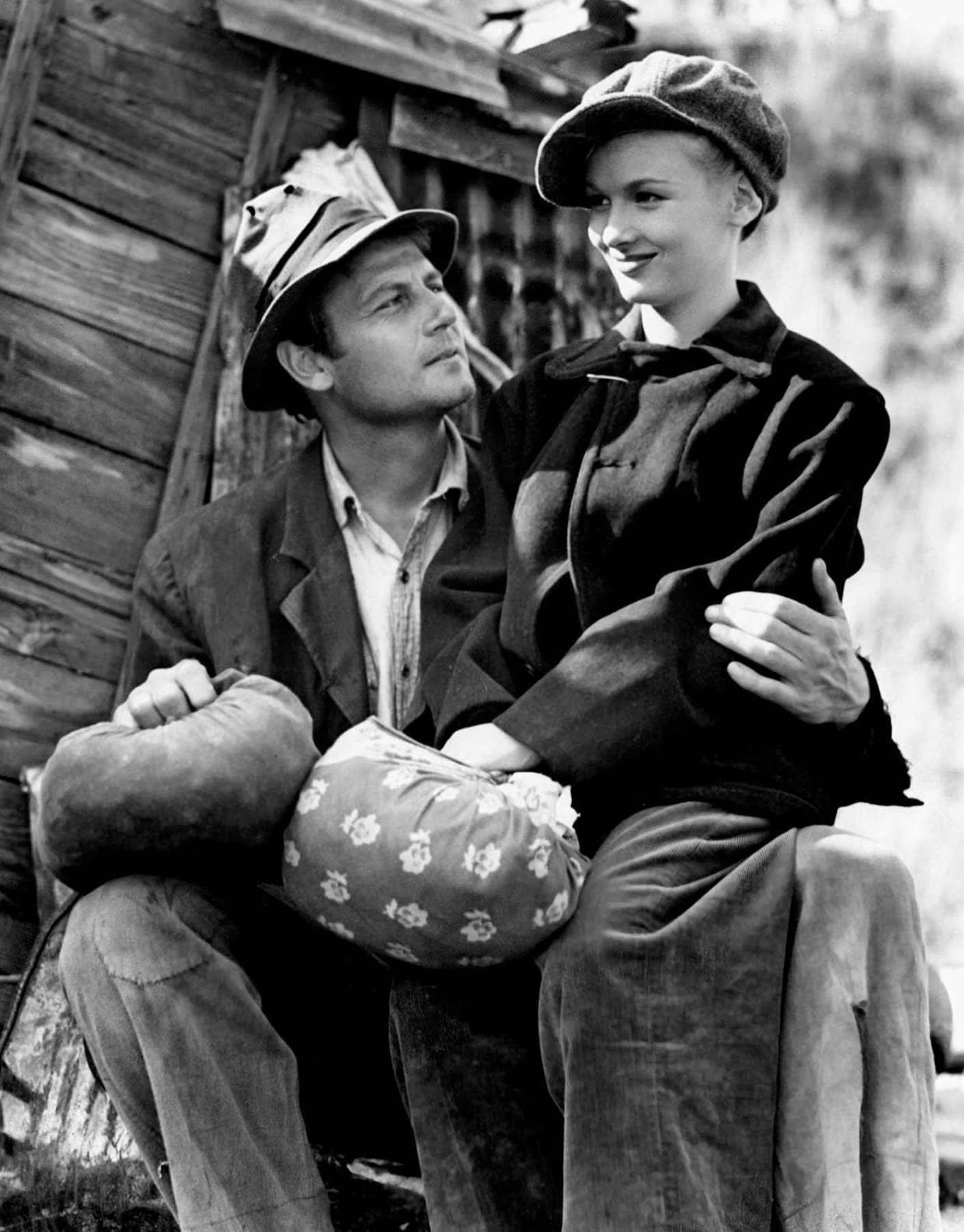
photo: Joel McCrea and Veronica Lake in “Sullivan’s a Travels”, 1941 | Paramount Pictures


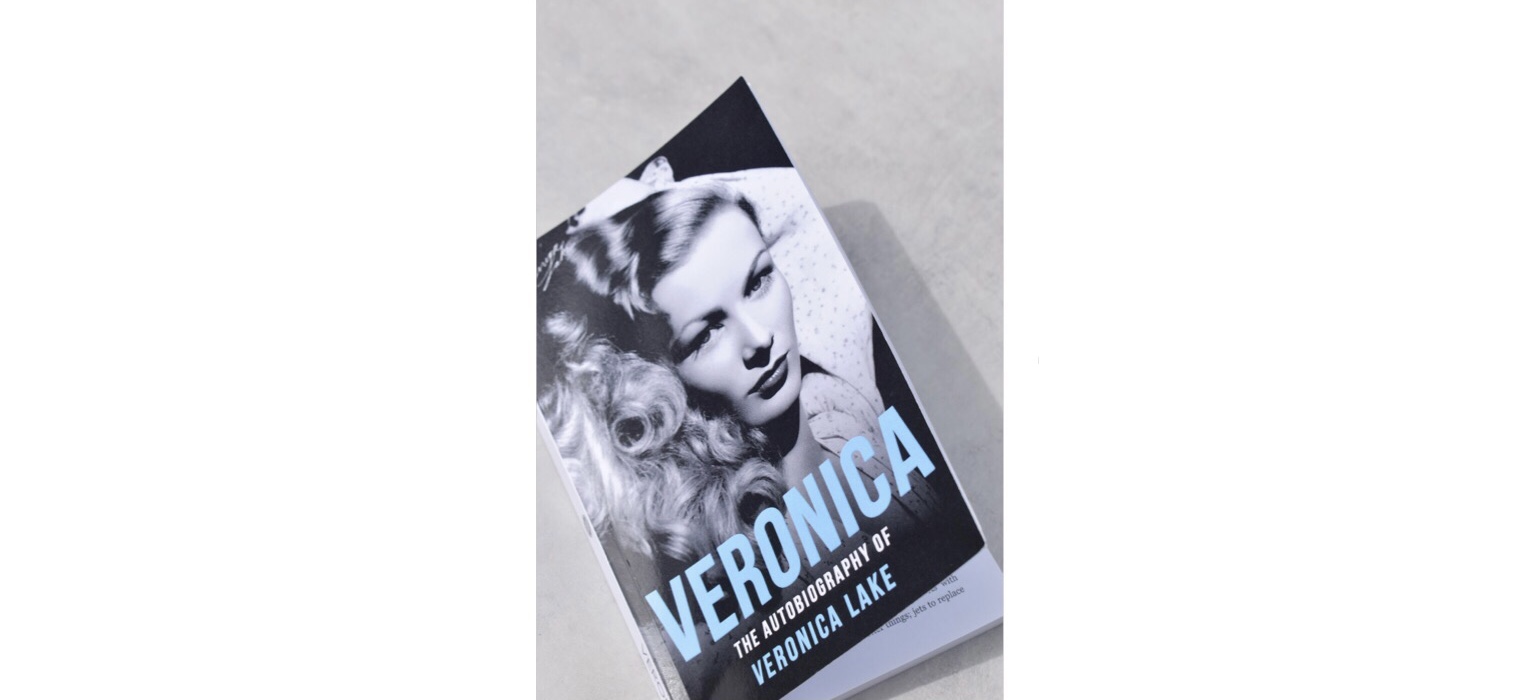
Veronica: The Autobiography of Veronica Lake had been out-of-print, rare and sought-after for many decades, and was reissued 5 years ago by Dean Street Press. It is a good memoir. Veronica Lake was a star, “professionally conceived through Hollywood’s search for box office”, but she didn’t play the Hollywood game very much, she said what she thought and she certainly resented that her box office climbing came with her giving up “something in return. I had obliterated any inroads I’d made as an actress in Sullivan’s Travels. I was right back in the low-cut gowns and wearing the sexy hair.”

Her book is not pretentious. It gives you a little taste of fame, more bitter than sweet, and a lot more taste of real life, with spurs to success, sour disappointments, limelight moments, gritty reality checks. It’s less of a pretty sight of Hollywood and more of a slice of hard-earned and hard-lived life. She doesn’t pretend to be someone she’s not and I wish all the adepts of the celebrity culture that’s riding so high right now could see behind the glitter. Veronica Lake tells her life simply, with no flourishes and no lingering over her successful Hollywood years, but her satirical touch enriches it beautifully. “They gave me a job wrapping packages, a dull routine except for the little bell I had at my disposal. I could ring it – ding-ding – and a teenage runner would appear to run errands for me. He would get me more wrapping paper or twine or Christmas stickers and the like. I was drunk with power.” I thought of Sullivan’s Travels when I read this, how good a comedienne she was.


Read instead… in print is about a good book about cinema or filmmakers. No discursive, pretentious analyses, no verbose scrutiny. Because the idea is to invite you to read the book, not read about it here. But instead of using social media, I use my journal. Back to basics. Take it as a wish to break free of over-reliance on social media (even if it’s just for posting a photo of a good book) for presenting my work, cultural finds and interests. These are things to be enjoyed as stand-alone pieces in a more substantial and meaningful way than showing them in the black hole of Instagram thronged with an audience with a short attention span. This is also a look through my voluminous collection of books about film that I use as research in my adamant decision to rely less and less on the online and more on more on print materials.


MORE STORIES


“I like to think with pencil in hand”: In conversation with graphic designer F Ron Miller

Read instead…in print #32: Costumes for the films of Andrei Tarkovsky

Veronica Lake in “The Blue Dahlia” and her star image making

Posted by classiq in Books, Film, Read instead...in print | | Comments Off on Read instead…in print #42: Veronica