Read Instead…in Print


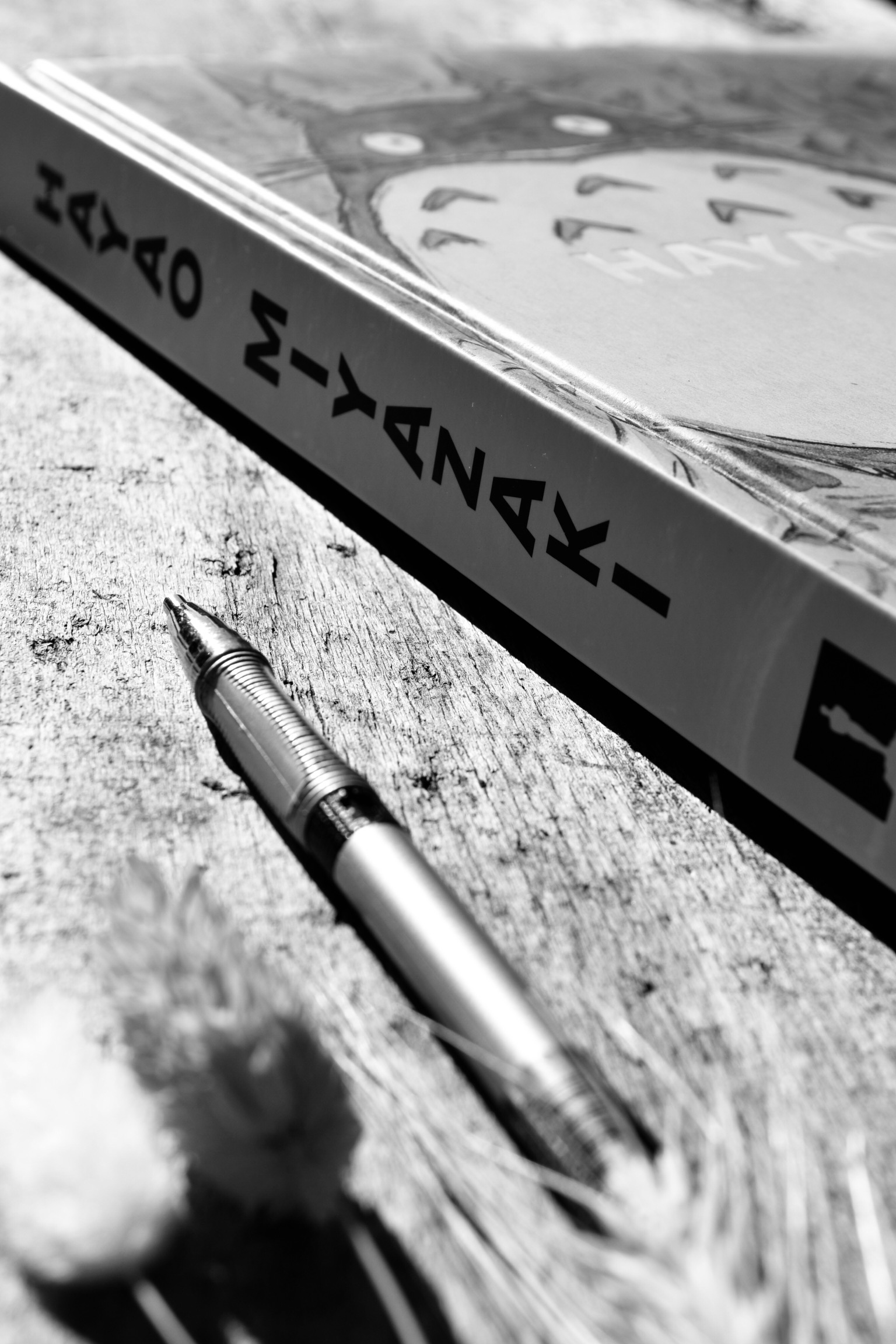
A photo of a good book about cinema. No discursive, pretentious analyses, no verbose scrutiny. Because the idea is to invite you to read the book, not read about it here. But instead of using social media, I use my journal. Back to basics. Take it as a wish to break free of over-reliance on social media (even if it’s just for posting a photo of a good book) for presenting my work, cultural finds and interests. These are things to be enjoyed as stand-alone pieces in a more substantial and meaningful way than showing them in the black hole of Instagram thronged with an audience with a short attention span. This is also a look through my voluminous collection of books about film that I use as research in my adamant decision to rely less and less on the online and more on more on print materials.

Stella Adler’s book, The Art of Acting, is not about cinema, but about theater, and that’s why it’s even more valuable – it rises above the world of film that has become debased. She didn’t prepare her students for careers in television and movies but for the supreme confrontation – dramatic literature. And she went against the Method, teaching acting as non-acting, as a way of experiencing much more than the actor’s own life and feelings, and using the imagination to reach the character. “In our theatre the actors often don’t raise themselves to the level of the characters. They bring the great characters down to their level. I’m afraid we live in a world that celebrates smallness.” And if the world celebrated smallness decades ago, how small are we today?


“The actor can not afford to look only to his own life for all his material
nor pull strictly from his own experience to find his acting choices and feelings.
The ideas of the great playwrights are almost always larger
than the experiences of even the best actors.”


Why this book is even more valuable, it’s because is for everyday life, not just about acting, or for actors. It’s for every one who truly believes in something and in himself. Train your innocence, preserve it, get wise, realise that the currency of civilisation is art, recognise the importance of living every moment (“You don’t have to amplify it, just recognise it“), take things from life, not from a second form or a second rate truth (the tv), use your imagination, do not look for pleasing anyone but yourself but be demanding, keep the instinct of fighting boredom alive (just like children), read, study the human behaviour, fight the disposable culture surrounding us, truly see. Don’t remain small.


“We live in a society where more than one thing is always happening.
When you go to a movie you have popcorn in one hand, a Coke in the other.
You have no concentration. You’re modern by not concentrating, or by concentrating
on something electric that’s doing it for you, that’s the problem with mechanization –
the machines do the living now, not us. All we can do is watch.
There’s nothing left to lift the spirit. So we go to psychologists.”


MORE STORIES

Read instead…in print: The Contender: The Story of Marlon Brando

The undesigned outfit, the new symbol of American maleness:
Marlon Brando in A Streetcar Named Desire

Read instead…in print: Unquiet, by Linn Ullmann

Posted by classiq in Books, Film, Read instead...in print | | Comments Off on Read Instead…in Print

January Newsletter: On Rebelliousness to Last a Lifetime


Photos: Classiq Journal


”Because I still forget that I’ve aged. My head and my heart
still seem to play this cruel trick on me, deceiving me with
the illusion of youth as I greet the world every day through
the idealistic, mischievous eyes of a rebellious child who
constantly seeks adventure and magic. I still find happiness
and appreciation in the most basic, simple things.”

Dave Grohl

 
I have been waiting for a Dave Grohl book, without knowing he was writing a book, and without realising how much I needed to read his own story, as well as the only story I have ever wanted to read revolving around Nirvana. Ever since he started his own band, Foo Fighters, 28 years ago, Dave Grohl has been much more than “that guy from Nirvana”, even though he admits he would be proud if that were the case – “Those three and a half years that I knew Kurt, a relatively small window of time in the chronology of my life, shaped and in some ways still define who I am today. I will always be ‘that guy from Nirvana’, and I am proud of it. […] I knew deep down that nothing would ever compare to what Nirvana had gifted to the world. That sort of thing only happens once in a lifetime.” The Storyteller: Tales of Life and Music is a love letter to music and to a life dedicated to music, but also to finding the thing that you love doing and living for it, because apart from family and friends, that’s where you find guidance, counseling, love, hope, belonging.

“What was once my life’s greatest joy had now become my life’s greatest sorrow, and not only did I put my instruments away, I turned off the radio, for fear that even the slightest melody would trigger paralyzing grief. It was the first time in my life that I rejected music. I just couldn’t afford to let it break my heart again,” he writes about his feelings after Kurt’s death. Humbleness in musicians is not that easy to find, and only great people have it.

And it’s the way he speaks of Kurt… the only way the whole world should remember him. Why is this the only story I have ever wanted to read about Nirvana? Because making personal perception of a person a significant part of anything and everything ever written about him without the slightest constraint, without enough hindsight to keep from making his death a defining part of his life, is the easy way, and easy is the way much of the world goes for. I am not interested in that. Dave’s is the most touching and sincere tribute.
“And Kurt.
If only he could have seen the joy that his music brought to the world, maybe he could have found his own. My life was forever changed by Kurt, something I never had the chance to say while he was still with us, and not thanking him for that is a regret I will have to live with until we are somehow reunited. Not a day goes by when I don’t think of our time together, and when we meet in my dreams there’s always a feeling of happiness and calm, almost as if he’s just been hiding, waiting to return.”

Nirvana’s music seamlessly found its way into my life, not in an abrupt way in my teens, but in a subtler, more consistent way throughout the years. But it always harkens back to those years of what seemed like aimless wandering, trying to make peace with not belonging in the most popular groups, or later on, in the crowds of trenches trying to find a pre-defined notion of success in the safety of a nine-to-five job. And it always makes me smile.


Viewing

The French Dispatch, 2021
If I could sum up Wes Anderson’s latest film, I would say: Play is a serious thing. His signature filmmaking style – the playfulness and precision with which the objects and narratives are arranged, the use of set design, camerawork, stop motion, the alternation of black and white and colour, of animation and live action, are a guarantor of authenticity of film as a work of art – seems to have reached a new level. The French Dispatch brings to life a collection of stories from the final issue of an American magazine published in a fictional 20th-century French city. In a recent interview, Bill Murray, a long-time Wes Anderson collaborator, says about their first film together, Rushmore: “He was just a kid, but he was also a guy who knew what the hell he was doing and what he wanted to do, right from the beginning.”

Il ferroviere, 1956
Postwar Italy seen through the eyes of a poor railroad engineer, father and husband, Andrea Marcocci (Pietro Germi), who sees his family crumble within a society that goes through fast economical and social changes. It’s both moving and realistic, and that’s largely because the story is also seen through the eyes of 8 year old Sandro (Eduardo Nevola). Director Pietro Germi, whose neorealist films I have always liked more than his acclaimed late comedies, tells great truths through great simplicity.

I have been on a Bertrand Tavernier film marathon (four of which follow below). I have to admit that I had seen few films of his until recently. I had known more about his work as a cineaste, further fueled by the extraordinary book released earlier this year, Amis américains: Entretiens avec les grands auteurs d’Hollywood, than about his films. But now I have become hooked on his films. “All my films are about subjects that I know little about but wish to discover. For me, film is an exploration in which I am going into a semi-unknown country to share with people I do not know the things that make me laugh and make me angry. I do not like films that are like organised tours,” said Tavernier in an interview with Jason Wood from 2002. Maybe that’s one of the reasons I love his films. There’s always something new to discover in each of his films, you want to understand that world, not just look at it from afar, from the comfort of your seat.

L.627, 1992
One of his first films dealing with contemporary social ills and issues in France, offering a timely observation on drug abuse. Watching L.627, whose title refers to an article of the Public Health Code prohibiting the consumption and trafficking of narcotics, I realised it may have been an inspiration for Maïwenn‘s Polisse (2011), a shockingly realistic chronicle on the daily life of an investigation group of the Parisian Brigade for Child Protection. The subject is different, but the incredibly realistic and piercing way the two police brigades and their very specific behaviour and sense of humour are depicted, are very clear similarities between the two films. Because it is above all the description of a group (not of the police force as a whole and the politics behind it), how it functions, how it evolves in everyday life, how they cope with the harsh realities of their job. It feels like Tavernier did not use any artifice in the way he filmed, just instinctively recording what he saw.

Ça commence aujourd’hui (It All Starts Today), 1999
Bertrand Tavernier was a great observer of society. He also had the humanity to observe it with understanding. He proved it in L.627, and again in Ça commence aujourd’hui, a social drama revolving around the efforts of a schoolteacher (Philippe Torreton) to bring change to his demoralised, largely impoverished community after the coal mine in the village closes down.

Un dimanche à la campagne (A Sunday in the Country), 1984
An aging father welcomes his children and grandchildren for a Sunday at home in the countryside. But it’s the affection that Tavernier lends the father-daughter relationship that stands out, such a beautiful portrait of a parent-child deep bond, beyond words, just through mere looks, that can instantly reignite after a long time apart. Watching this film can be such a bittersweet, ravishing experience, for anyone living apart from but who has had a beautiful relationship to his parents, but especially grandparents. For every visit, even if it lasts a day or just a few hours is met with unprecedented joy and no reproachful words, and with just a saddened, smiling sendoff after the visit that can take you back and forth your entire life in the blink of an eye, a bridge between the hopes for the future and the nostalgia for the past.

In the Electric Mist, 2009
In an interview for Cineaste after the film’s release, Tavernier said about the novel his film was adapted from, In the Electric Mist with Confederate Dead, and its writer, James Lee Burke: “I like his style, the melange of introspection, lyricism, description that is very meditative and beautiful and then, of course, the dialog. I find Burke a writer of genius when it comes to dialog. He knows how to evoke the character in a few phrases. He writes romans noirs in which characters come before the intrigue.” The film has this meditative beauty and noir darkness, too. Tommy Lee Jones’ character, Dave Robicheaux, is a man of integrity but with dark sides, who has his doubts, questions, and his own past demons, and in which, in turn, make him human, vulnerable, flawed, relatable. And the Louisiana we discover is different than what I have seen in American films (and I wouldn’t be surprised if it were among the most accurate depictions of the place), it has something mystical in it, both fascinating and dangerous. And yet, Tavernier made it clear that he “didn’t want to show it as a French director. I wanted it to be as seen through the eyes of Dave Robicheaux. You discover a country through the eyes of the people who live in it.” And there is Buddy Guy on the soundtrack (and he also appears in the film), a soundtrack that deserves a stand-alone mention. The film makes indeed great use of the music, light, history and characters that are inextricably linked to Louisiana.


Reading

Moby Dick. One chapter a day, the best piece of advice I have received about re-reading this book after so many years. There was a time when, for one reason or another, I didn’t read fiction anymore. I read everything else but fiction, from essays to autobiographies, from history books to film commentary. When I asked my favourite bookstore owner what he would suggest, he said: “We simply have to search, all the more so if we have distanced ourselves from fiction, and find a text that can be anything – a haiku, a poem, a SF, a collage or a classic novel – that will wake us. I don’t have any other solution. What I know for sure is that – it sounds like a banality, but it never hurts repeating – reading, especially fiction, is an activity that must be exercised daily, just like physical exercising, otherwise we go numb.” Moby Dick is the book that would wake me.

My interview with photographer Laura Wilson, a frequent collaborator of Wes Anderson. “I’ve known Wes since he was an undergraduate at the University of Texas, and because of his friendship with my sons, Andrew, Owen and Luke, and with us, my husband Bob and I, we have a special bond. I was the first person to photograph Wes when he began in film as the director on Bottle Rocket, and he has remained loyal to me for many years.” We talked about her portraits of the great American West, her work with Richard Avedon, about photographing Wes Anderson’s films and Hollywood royalty.
 
Listening

Buddy Guy for In the Electric Mist. Foo Fighters, The Colour and the Shape.

In order to keep his hearing trained during the pandemic, composer Alexander Liebermann started to transcribe the sounds of animals and birds into partitions: The Birdsong Collection, Songs from the Sea, and Various Animals. There is nothing more therapeutical than the sounds of nature.
 
Exploring

Plăiuț is the most playful and creative travel guide for children I have seen, perfect for their curious and adventurous minds. Accompanied by a traditional map, it’s the most beautiful way of discovering a country for children, parents and grandparents alike.

 
The regulars: The interviews, newsletters and podcasts I turn to every week and/or every month because they are that good. Craig Mod’s all three newsletters: Roden, Ridgeline, and Huh. Wes Del Val’s book-ish interviews. Soundtracking, with Edith Bowman. Team Deakins, with Roger and James Deakins. Alicia Kennedy’s newsletter. The Adventure Podcast: Terra Incognita. Monocle and Sirene magazines, in print.
 

“We had always been the outcasts.
We had always been the weirdos.
We were not one of them.
So, how could they become one of us?”

Dave Grohl


Posted by classiq in Books, Culture, Film, Newsletter | | Comments Off on January Newsletter: On Rebelliousness to Last a Lifetime

Revisiting North by Northwest and Its Costumes


It’s easy to inhabit Alfred Hitchcock’s worlds. In his films, nothing is left to chance. Everything is thought out to the tiniest detail and you slip right in. Time stops and the rest of the world falls away. North by Northwest is one of those films I would watch (and have watched) over and over again. From that first sound of Bernard Herrmann’s music, my interest doesn’t waver and I wait with anticipation every next scene as if I didn’t know what is about to happen. And I don’t know how, but it seems to get better every time. As always, François Truffaut had the answer to that: “For his pictures, made with loving care, an exclusive passion, and deep emotions concealed by exceptional technical mastery, are destined to circulate throughout the world.” Throughout your mind, and throughout the decades, one might add.

In North by Northwest, Cary Grant is Roger Thornhill, an advertising executive who is mistaken for a George Kaplan, an imaginary agent invented by a US intelligence agency and given an identity through a name, a suite in a New York hotel and an elegant wardrobe. Roger Thornhill becomes a man-on-the-run, chased by other spies, led by Vandamm (James Mason), and thrown into a set of wild and dangerous circumstances – abducted, nearly driven off a cliff, framed for murder, crop-dusted and trapped on the Mount Rushmore monument – hard to get away from intact (“It is the biggest, fastest and most beautiful of Hitchcock’s chase movies,” Paul Duncan writes in Alfred Hitchcock: The Complete Films), especially when the unpredictable Eve Kendall (Eva Marie Saint) enters the picture. And with her entrance, we find ourselves at that great train dining car sequence, one of my favourite train encounter sequences (before James Bond and Vesper Lynd in Casino Royale, there was Roger Thornhill and Eve Kendall in North by Northwest). The witty and tongue in cheek dialogue, the glances, the seductive ease of their manners, and a whole lot of class from both sides thrown in for good measure.


Eva Marie Saint is one of Hitchcock’s quintessential blondes, and then some. She’s got the looks and the brains, and she is always part of the action, and her clothes part of her seductive perfection, a meticulously stylised combination of feminine refinement and sexual attraction – but it’s the kind of sex appeal that is not blatantly obvious, but the kind that the audience has to discover themselves. In a conversation with Alfred Hitchcock, from 1973, Arthur Knight remarked: “You have a way of discovering things in your actresses that no one else ever finds. I keep thinking of Eva Marie Saint, who never looked more sparkling, attractive, or seductive than she did in North by Northwest.” To which Hitchcock replied: “I watched every hair on her head. She had two wardrobes made for her and I discovered when we screened them that the wardrobe department designer was dressing her up as a waif. She was dressing up the Eva Marie of On the Waterfront. And I finished up behaving like the character that James Mason played in that film (ed. note: Eva Marie Saint plays a woman kept by a rich man). I went along to Bergdorf-Goodman’s myself and sat with her as the mannequins paraded by. I chose the dresses for her.”

Alfred Hitchcock understood the power of clothes, a central element to many of his classics. Not only were the costumes a tool in his movies, but style was often of the utmost importance. “Hitchcock made everybody in the picture dress in a classic style…,” Eva Marie told Richard Torregrossa in the book Cary Grant: A Celebration of Style. “He didn’t want the picture to date because of the clothes. There’s not one outfit I couldn’t wear today with a few minor adjustments and not look stylish.” Pencil skirt suits, full skirts and dresses, nipped waists, restrained tailoring, classic totes and clutches, prim hair, gloves of all lengths, the most feminine dresses for the evening, fur stoles and coats as outerwear – they were part of the classic Hitchcock heroine’s wardrobe. It’s the elegance, timelessness and the bygone glamour, yes, but there is something more to it that makes his heroines fascinating. Mysterious and alluring, icy seductive and cool on the outside, and often vulnerable and passionate on the inside. Hitchcock’s each heroine was a very complex character, and each one different than the others. And he often used costumes to play with their personality, their clothes an integral part of who they were.
 

Full-skirted black silk dress with a red roses pattern, almost off the shoulders
continuing with a bare back, nicely paired with the wrist-length gloves.


Details are everything. Above: The stone of the ring picks up the colour of the rose pattern.

 
But it was Cary Grant who gave Eva Marie Saint the greatest confidence before the shooting of the film began, by saying to her that they were going to have a wonderful time because she didn’t have to cry in that movie, alluding to her previous melodrama roles, the aforementioned On the Waterfront included. “He set the pace that first day,” she recalled, “broke the ice, and I thought, ‘Oh yeah, I could play a sexy lady-spy; what’s wrong with that? He suddenly gave me confidence, and we had so much fun.”

Eva Marie Saint is absolutely wonderful in the role of the spy infiltrated in Vandamm’s gang. The scene when she is at the auction with Vandamm and his men, and Thornhill follows her there, taking her by surprise, is beautiful. The look on her face shows she’s utterly unprepared for seeing him there and I can not wonder whether Hitchcock had kept this moment quiet, not telling her Thornhill was about to show up there, to catch her by surprise, as he would often do with his actors. Eve Kendall is also the classiest of spies. And it is only fair to admit that this is a quality that has also to do with Eva Marie Saint’s own personality, just as in the case of Cary, not just with the character she played. But, of course, the important thing is that it’s a quality that suits the character like a glove. She and Cary were a perfect match.

As previously stated, quoting Hitchcock himself, Eva Marie Saint’s wardrobe for this movie was entirely shopped directly off the models at Bergdorf Goodman, as opposed to leaving all or part of it to be designed by the film costume department. Though since the late ’60s-early ’70s this has become a common practice, it was still a radical idea in the 1950s. MGM had been the one studio that had a consistent design staff. But in this case, Helen Rose, the studio’s head designer, was unable to be on set as much as Hitch had expected and he almost asked for Edith Head’s assistance. In the end he did not, nor did he like the studio’s sketches for the character of Eve Kendall, so instead he took Eva Marie shopping. And he was right to do so. Her signature red brocade floral dress still stands out today.
 

It’s interesting and a welcome change to see a bag in the ’50s in a different colour than the shoes or the rest of the accessories.


Colour however isn’t just supposed to blend in with the rest of the decor in a Hitchcock film. Whenever Eve’s identity is questioned, or her life is in danger, the costumes seem to pick up on that trail. It happens with the floral dress and it happens again with the burnt orange suit she wears towards the climax of the story.
 

Orange wool dress with a neckline scarf detail (attached to the dress).


Colour and costume are employed differently when it comes to the male hero of the picture.

In his forward to Richard Torregrossa’s book Cary Grant: A Celebration of Style, Giorgio Armani wrote: “In my designs, I see elegance as the most important quality, as it gives the wearer confidence and the look of someone not trying too hard. Cary Grant managed to give great performances in comedies, thrillers, and romances, and at all times he appeared cool and immaculate. He had an easy manner, his ready wit and charm complemented by his ability to wear clothes effortlessly. Cary Grant always looks relaxed in his stylish outfits.”

Hardly have I seen anyone more relaxed in his suit than Cary Grant in North by Northwest. Such ease and naturalness does he display that he seems to glide through the scenes, his suit a second skin. The elegant mid-grey worsted-wool Kilgour suit is one of those film costumes that can not be separated from their characters. Cary Grant usually used his own wardrobe in his movies. He had already done it in a previous Hitchcock film, from four years before, To Catch a Thief. “First of all, you have available to you a film star by the name of Cary Grant. Don’t lose sight of that element. You are actually playing a character, but you are also playing the personality of Cary Grant,” Hitchcock concluded in an interview with the American Film Institute, from 1972. Carlo Brandelli, creative director of Kilgour, Savile Row, further remarked: “The male movie stars of that era didn’t have the luxury of big wardrobe departments and stylists swirling around them. They were film stars because they were also incredibly elegant men. Their wardrobe just went hand in hand with the work they did, so they’d obviously be at their tailors.” And Cary Grant was the most stylish movie star of them all. In 1959, the time North by Northwest came out, Cary Grant was at the height of his sartorial prowess.

“Cary was always beautifully dressed. But he wasn’t a clotheshorse. His tastes were really simple, elegant but simple,” his North by Northwest co-star, Eva Marie Saint, would remember. Roger Thornhill goes through every possible ordeal in North by Northwest, “all sorts of things happen to the hero with such bewildering rapidity,” Hitchcock himself told Truffaut in their interviews, but Cary Grant remains perfectly dressed and unruffled. Implausible? Not at all. Richard Torregrossa came with the perfect explanation: “Hitchcock joyfully placed Grant into the most absurd ordeals, as if toying with and teasing him, deriving a kind of sadistic enjoyment – and exquisite dramatic tension – from the established fact that here is an urbane actor perfectly dressed, immaculately attired, more suited to the drawing room than the landscape of the action hero. The joke seems to be on Grant, but only momentarily, for Grant turns the tables by remaining unruffled, his suit dusty, maybe a bit scuffed here and there, but nothing a good dry cleaner couldn’t take care of in a few hours.”

The idea that remains is that a good suit, or the proper clothes for that matter, move along with the wearer. And our wearer always lands on his feet. “It’s almost as if Cary Grant is equally determined to save his life and his suit,” Richard Torregrossa further advances. “The suit is the life giver, the lucky charm. The suit and the man are inextricably linked.” But “before it becomes armour, it makes him seem vulnerable, naked, alone.” That, it does, too, because he is always on the run, he has no place to hide, not a moment to change or conceal his clothes. Hitchcock doesn’t let loose and makes the grey suit the target. And the man and the suit simply have to prove that they are indestructible.
 

The posture. Cary Grant felt so at ease in a suit, just like most men feel in jeans and t-shirts.

 
The suit jacket in North by Northwest is ventless and Cary is always wearing it unfastened at the first button. This helps his suit move gracefully with him during his unrelenting ride. And there is beauty in the way Cary moves. It’s almost an artistic, certainly an athletic, ability. The result of his past as an acrobat, yes, but also of a perfected style acquired over the years. He used to customise his suits and have his tailor lengthen the single or double vents of the suits beyond their normal boundaries. This made the jackets more functional and also created the illusion of greater height and slimness. “Think thin”, Roger tells his secretary to remind him to write on his desk. The illusion of a lean line is also created in the film by the choice of matching grey socks and by eschewing a belt. The chocolate brown Derby shoes are the only contrasting accessory, and, of course, the right colour coordination to the rest of the outfit.
 

Who other than Cary Grant could pull off these sunglasses?

 
So many years after I was introduced to Roger Thornhill and so many viewings of North by Northwest later, I am just as intrigued by the sunglasses Cary Grant wears in Hitchcock’s thriller. In orangey turtoiseshell, with green lenses, they are not exactly what you’d expect, rather unusual, but that’s exactly what makes them enduringly classic. Sharp and daring, they are a piece you won’t forget, and one that won’t age either. They are cool. And Cary Grant made them that. Any other style on him in this film wouldn’t have had the same impact, nor would have these sunglasses had the same effect on any other face – “such a nice face,”, too, Eve Kendall muses over dinner. I am sure their appeal has to do not only with Grant’s effortless composure, or with the character’s sense of humour, but also with being used as a last resort to take the attention off the suit, and therefore off himself. He knows he is unconvincing when he uses them trying to hide from the police at Grand Central Station. He shows the same sense of humour, and cool demeanor, when he is trying to seduce Eva Marie Saint in the dining car (while still wearing the sunglasses). Or is it the other way around? Anyway, the effort and the exchange of words with Eve Kendall are both memorable.


White shirt, grey tie, French cuffs. Throughout the entire movie, whether he stands, sits or runs, the shirt cuffs always show. And only on Cary. Another custom-made element? Most probably. The grey of the suit attractively matched even his greying hair. Cary Grant was a man of details. “I can’t think of him without thinking of him in a beautiful suit, shirt and tie,” Eva Marie Saint remarked. “I never saw him in jogging clothes or t-shirts; that was such an important part of his image. It was so smart of him. I don’t know any other actor who could do that.” Richard Torregrossa had again the last word on that as well, in our interview: “Cary Grant was the Last Gentleman.”


images: stills from “North by Northwest”, Classiq Journal | photo credit: MGM
editorial sources: Hitchcock, by François Truffaut / Alfred Hitchcock: The Complete Films, by Paul Duncan / Cary Grant: A Celebration of Style, by Richard Torregrossa / Alfred Hitchcock Interviews, edited by Sidney Gottlieb / Edith Head: The Fifty Year Career of Hollywood’s Greatest Costume Designer, by Jay Jorgensen


MORE STORIES

Production designer François Audouy takes us behind the scenes of Ford v Ferrari

Interview with Richard Torregrossa, author of the book Cary Grant: A Celebration of Style

The Nest: In conversation with costume designer Matthew Price

Posted by classiq in Film, Film costume, North by Northwest | | Comments Off on Revisiting North by Northwest and Its Costumes

Read Instead…in Print


A photo of a good book about cinema. No discursive, pretentious analyses, no verbose scrutiny. Because the idea is to invite you to read the book, not read about it here. But instead of using social media, I use my journal. Back to basics. Take it as a wish to break free of over-reliance on social media (even if it’s just for posting a photo of a good book) for presenting my work, cultural finds and interests. These are things to be enjoyed as stand-alone pieces in a more substantial and meaningful way than showing them in the black hole of Instagram thronged with an audience with a short attention span. This is also a look through my voluminous collection of books about film that I use as research in my adamant decision to rely less and less on the online and more on more on print materials.

The book Hayao Miyazaki, marking the current film series and exhibition at the Academy Museum of Motion Pictures, is a magical portal into the films and worlds of the Japanese filmmaker. We are offered details about the creative process, but there is so much “emotional setting for the sensations stemming from imagination” in his films that I believe the best thing is to appreciate the talent and just experience the films without seeking out too much explanation. The words, but especially the drawings, storyboards and character designs take us on a fascinating journey of discovering not only hidden and enigmatic cinematic worlds, but to seeing our world with new eyes, with interest, curiosity and hope. We adults simply don’t do much observing and imagining.

Hayao Miyazaki’s fantastic worlds are unlike anything done before, free from typical fairy tale characters. Miyazaki’s characters are driven by their own logic. Good characters can become evil just by a change of scenery, can take the shape of human, animal or river spirit, a child enters a strange world and anything can happen. It’s simply this free flow of events and transformations and beings that just happen, that just are. You believe in those worlds because there is always a balance between magic and reality, between calmness and drama, between joy and hardship, because Miyazaki finds the extraordinary in the ordinary.

“We have to give children back the energy that they once used to have, to give them the energy that once gave them strength and allowed them to stand up a little adversity.”
 

MORE STORIES

Read instead…in print #4

The Sea Library: In conversation with Anna Iltnere

Read instead…in print #2

Posted by classiq in Books, Film, Read instead...in print | | Comments Off on Read Instead…in Print

December Newsletter: On James Bond and a Time for Short Stories

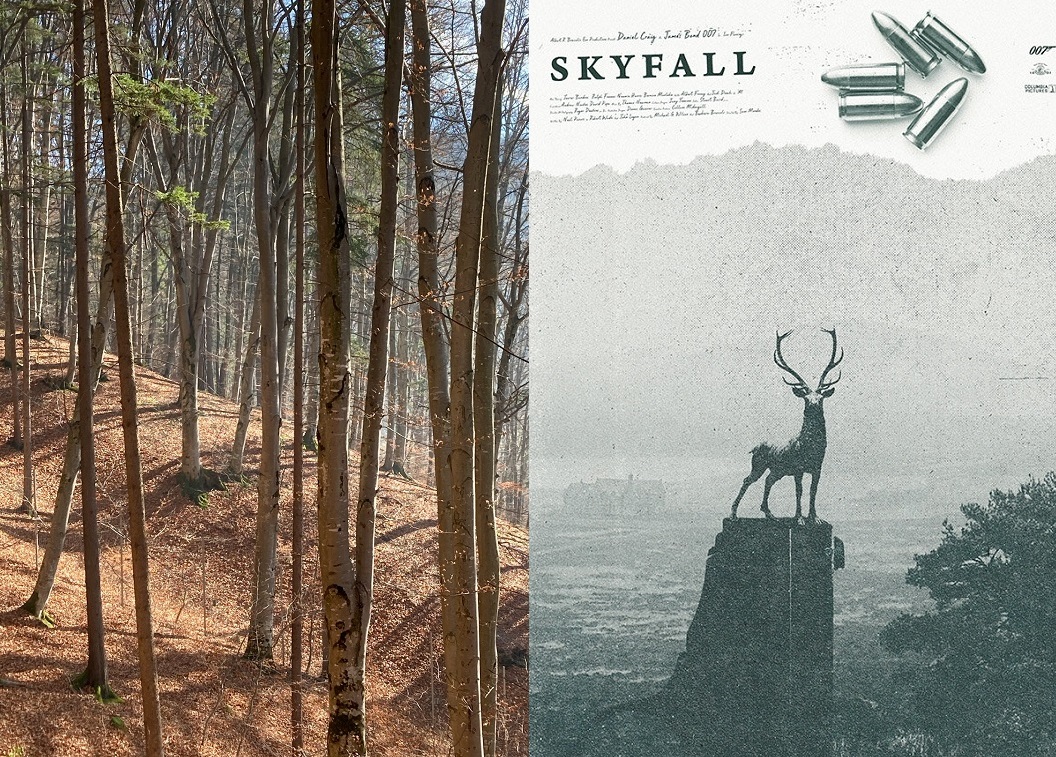
Right: “Skyfall” film poster designed by Matt Needle, part of the Classiq Journal personal collection


Photos: Classiq Journal, unless otherwise stated


No Time to Die takes James Bond back to Venice with Madeleine. He is back where his story with Vesper Lynd ended. It makes sense. The last Daniel Craig Bond is probably also the last Bond as we’ve known him and loved him. One can not talk about No Time to Die without talking about the Daniel Craig films as a whole. Without giving anything away for those who have not yet seen the film, certain plot elements in the movie already prepare us for the revisionist changes we might expect to see from now on in the character. Casino Royale marked a new beginning as well. With a story anchored in reality, and with a Bond who would be darker, sharper and edgier – “Daniel to me is like Gary Cooper or William Holden,” would say Sam Mendes, director of Skyfall and Spectre. “An actor from an era when men were men, there’s a sense of reality about him. He feels like he gets his hands dirty.” – but also more humane and vulnerable than the earlier Bonds. It’s James Bond before becoming 007, the definitive James Bond story. The Bond girl was different, too, with her own past and her own present agenda, a character so strong, so enigmatic, complex and tragic that her presence would be felt in all other Daniel Craig movies. She is the one he falls in love with and loses. The one who places the biggest mark on him for the rest of his life. In Casino Royale, The Monty Norman James Bond theme appears only in the final act. That’s the first time we see the James Bond we’ve known from the other films.

After watching No Time to Die, I rewatched Skyfall and I have realised it may be the best Bond film, and, hmm, my favourite, getting ahead Casino Royale for the first time. There is this realistic feeling to it that makes it so good and so different. And there is grittiness to it that makes it fascinating to watch, especially this time of year, especially for those who have an ambivalent attitude towards the end of the year. For many, “winter is a time of darkness and introspection, of intense loneliness and alienation” Sting remarked in regard to his winter-themed album, If on a Winter’s Night.

Skyfall is indeed the darkest Bond film. It’s again a personal story, which goes back deep into the character’s past to confront his demons, and I love how Matt Needle’s poster design taps rights into that. I love everything about this film, really, from its title – “I think Skyfall is a great title for the movie,” said screenwriter John Logan. “It’s arresting, mysterious, sounds wonderful aloud, and would be a lovely reveal for the audience when you pan up and see the word carved into the gates at the end of the Scotland sequence.” – to the gritty London – “London is a character in the story,” said Ben Whishaw who plays Q. “It is rarely represented on film in a way that captures the glamour, the mystery, the danger, and the madness of it.” – and the majestic Scottish Highlands so beautifully rendered through the richness of Roger Deakins’ photography who made this the most visually beautiful Bond film, and this incredibly dark, haunted by memories, James Bond who nonetheless shows his weakness in the end through his complex relationship with Judi Dench’s M.

It’s just great, strong storytelling. It’s a proper movie. And of course Sam Mendes and Roger Deakins had a crucial role in that. “Even as a teenager, I really wasn’t a big fan of Bond movies,” Deakins told Entertainment Weekly before No Time to Die premiered this fall. “But there’s something about Skyfall that’s very different, and I found Sam’s take on it really interesting. It’s much more a kind of film noir, I think, and it has much more discussion of a character who’s facing his own mortality, in a way. It kind of encouraged me to do silhouettes and have people come in and out of darkness.” And if Roger Deakins says it, film noir meets James Bond, I mean, it can’t get any better than that.

The latest – although I want to say the last – Bond film is emotional and I doubt anything that will come from now on will harken back to the classic routes and play on nostalgia, whilst also being modern, fresh and contemporary the way the Craig films did. Because as much as I have enjoyed the evolution of the character in all its facets, even if every time I have written about a Daniel Craig Bond film, my readers would write back never shunning to point out that Sean Connery remains the only true James Bond, my unwavering opinion remained, I am afraid change for the sake of change in this character simply does not work for me. I am being sentimental, but come on, it’s the end of an era.


Viewing

The Power of the Dog (2021)
It’s all about that ending. A film that takes a little longer to comprehend and works on subtlety so finely is hard to come by nowadays. And everything else, from cinematography to music (by Jonny Greenwood, whose score for Lynne Ramsay’s You Were Never Really Here still haunts me, the way Joaquin Phoenix’s character just pulls you in with his tormented mind, an incredibly subtle and interiorised performance, leaving room for absolutely no predictabilities) and incredible acting are beautifully tuned in this elusive, thought provoking western filled with tension, set in 1920s Montana but filmed in New Zealand.

Bergman Island (2021)
I love the unrushed pace of Mia Hansen-Løve’s latest film. I watched it right after I read Linn Ullmann’s book, Unquiet, a wondrous journey into her relationship with her father, Ingmar Bergman, and into love, and loss, and longing, and belonging, and because of that, the film felt all the more special. Melancholic yet interspersed with subtle humour, it slowly reveals a depth and strength you can’t quite grasp from the beginning in this story of a filmmaker, Vicky Krieps, struggling towards the idea for a new film.

Interiors (1978)
It’s different. The most Bergman-esque Woody Allen film. Match Point is different, too. They are my favourite Woody Allen films, along with Crimes and Misdemeanors.

Babette’s Feast (1987)
Based based on Karen Blixen’s story by the same name, this is another one of the Danish author’s books which was beautifully served by the moving picture. It is the tale of Babette, a Parisian chef (Stéphane Audran) displaced by the 1830s Communard uprising who comes to live in a frugal Christian community on Denmark’s Jutland coast. She works as a maid and cook to two elderly and she also cooks for the elderly in the village, all of whom are unaware of her culinary past. Babette, who hovers a subtle sensuality over this remote community and over the movie, bends to their ascetic life and diet for years, but when she wins the lottery, instead of returning to France, she takes the opportunity to treat the community to a lavish, multi-course French dinner. The feast is indeed one of my favourite parts of the entire movie, but what I enjoyed probably even more was the sly humour throughout the entire film, the nuanced notion underneath that these people, for whom food is a mere necessity, are clearly missing out on something.
 
Reading

“At present, we seem to be suffering from a widespread failure of literary imagination. We have become worse at imagining the experiences of other people, less inclined to credit these experiences as being as valid and real as our own.” George Saunders has just started a newsletter, Story Club with George Saunders, a decision he made after the response he received from his readers after the release of his book, A Swim in the Pond in the Rain. “These were really nice letters to get – by far the most passionate (grateful, engaged, urgent) response to my work I’d ever received, and they spoke to the existence of a community of people who love the short story, people who don’t see stories as separate from their real life, but essential to it.” Whether they come from books or films, I believe that stories are part of our lives, not separate worlds we escape to and shut down as soon as we finish reading a book or watching a film.

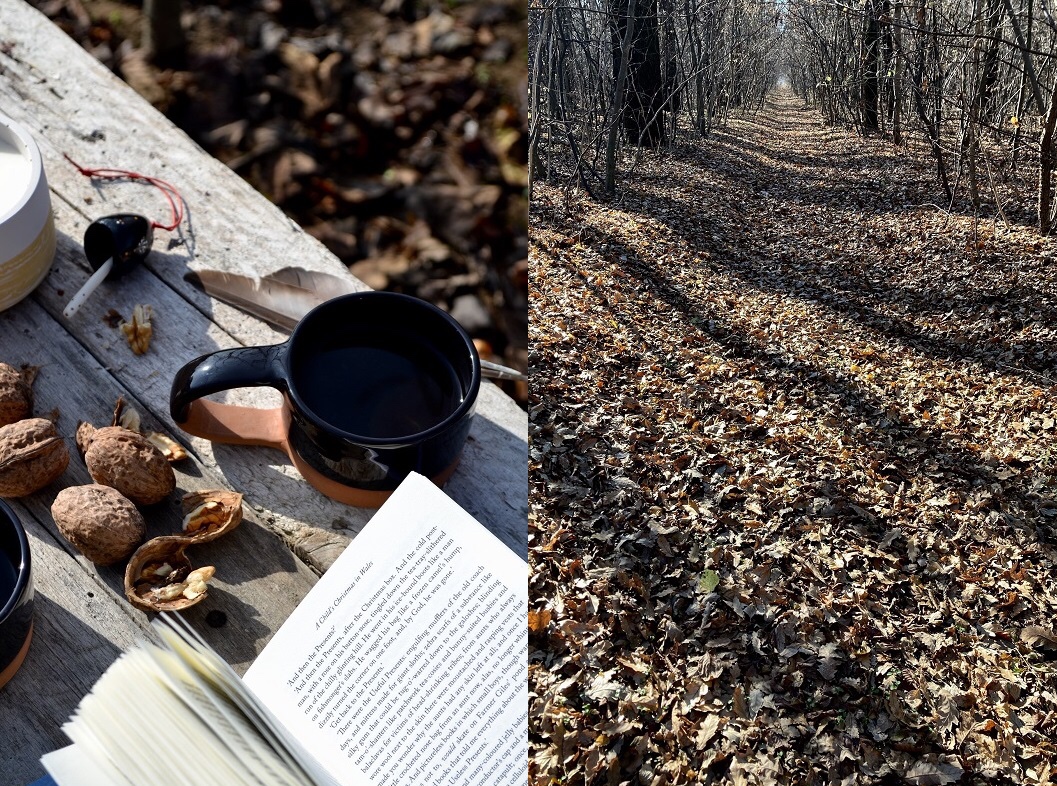
A Cold Christmas Walk in the Country (included in The Penguin Book of Christmas Stories), by Laurie Lee. A story that truly feels like Christmas. It makes you realise how simple things can be. Laurie Lee’s beautiful descriptive writing fuels the imagination and a longing for a Christmas in the country, but, most importantly, has a reminiscent power – of a joyous childhood play in the stillness of a winter day.

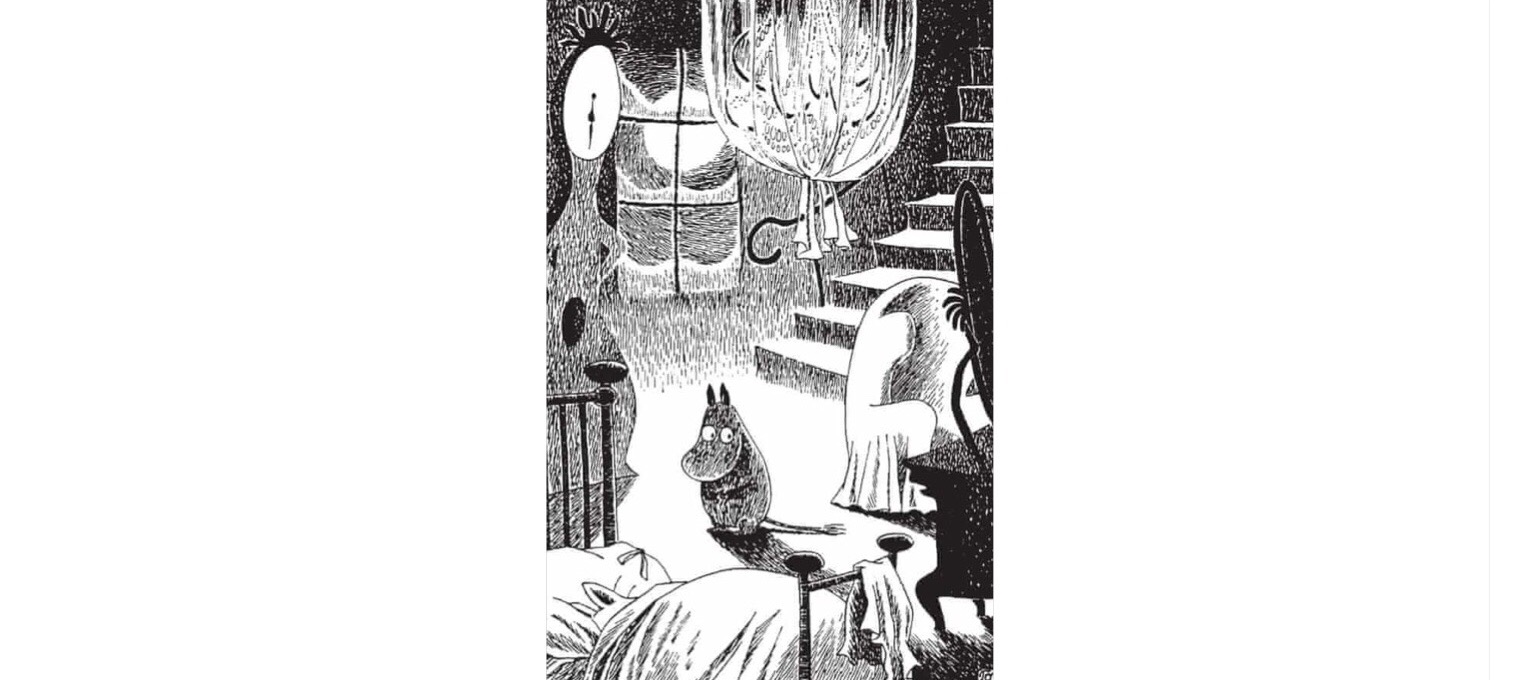
I recently found this new edition of Moominland Midwinter in a bookshop and couldn’t resist it. The tone is more introspective than in Tove Jansson’s previous books in the series, a perfect evocation of winter, one in which children find wonder and thrills, and adults, new meaning. That’s the brilliance of it.


Left: “Casino Royale” film poster designed by Matt Needle, part of the Classiq Journal personal collection
Right: The Grand Canal in Venice in the fog, photo by David C. Phillips, full-size print available on shop.classiq.me


Listening
Tattoo, Rory Gallagher. And Sting’s If on a Winter’s Night.

I have been diving into the archive of cinematographer Roger Deakins’ podcast, Team Deakins, and it’s glorious. And, of course, I dug out the Sam Mendes interview.
 
Making
A wooden story, especially the children’s collection, inspired by the love of nature and by the beautiful shapes and textures of wood. Lemnivor is “a little universe crafted in an atelier where we play with ideas and tell stories carved in wood.”
 
Exploring
Photographer Sophie Denux was telling me in our recent interview that she finds great inspiration in cookbooks, more so than in travel books. I love cookbooks, too, for the same reason, especially those which come with side stories. Grand Dishes is about time-perfect dishes and stories from grandmothers of the world. It’s really about simple food, but each one comes with a wealth of flavours, traditions and memories that transforms each recipe into a rich experience for the reader.
 

The regulars: The interviews, newsletters and podcasts I turn to every week and/or every month because they are that good. Craig Mod’s all three newsletters: Roden, Ridgeline, and Huh. Wes Del Val’s book-ish interviews. Soundtracking, with Edith Bowman. Team Deakins, with Roger and James Deakins. Alicia Kennedy’s newsletter. Sophy Robert’s The Art of Travel. Monocle and Sirene magazines, in print.


“The picture that so haunted me shows that very moment:
Moomintroll, his eyes wide and frightened, staring at his sleeping
mother. The dread of being a child awake in the depths of the night,
with everything that should be a source of comfort rendered unfamiliar
and menacing, has never been more brilliantly evoked.”

Tom Holland, My favourite book as a kid…Moominland Midwinter
The Guardian


Posted by classiq in Books, Culture, Film, Newsletter | | Comments Off on December Newsletter: On James Bond and a Time for Short Stories