“E.T. The Extra-Terrestrial”, 1982. Universal Pictures, Amblin Entertainment
Some things are non-negotiable, and so they should be. A library of books in one’s home is one of them. And I strongly believe that so is a library of films. But even if I am a cinephile and we do own a vast collection of films on physical format in our home, I would have welcomed a thoughtful round-up of children’s films when my son was smaller. But the good part is that we have thus had the chance to try and watch a lot of films together and now, aged 11, he’s already seen a great diversity of films. That’s how this library of children’s films, which will have a permanent home here on the website (see sidebar), was born.
These are the films that have worked best in our home, so if you are wondering why some Pixar films are among my picks while others aren’t, that would be why. We also encourage surprising and thought-provoking stories, without forgoing entertainment. It’s a library created from a very personal perspective (you will see that many of the films listed here have a high level of subjectivity and personal notes attached to them, because of how our family has experienced them, because, after all, that’s the beauty of cinema, isn’t it?). There are also movies like Jaws or Alien that may not be considered quite age-appropriate, but I do believe that this political correctness is too exaggerated. This again is a very personal matter, and a discerning parent should know what’s best for his/her child – I think, for example, that Stand By Me might be trickier to watch than Jaws, Alien or The Birds. However, for easier navigation through the library, which, for the beginning, includes 50+ titles but will be regularly updated as we rewatch movies I haven’t yet included and discover new films, there is an official audience recommendation at each entry.
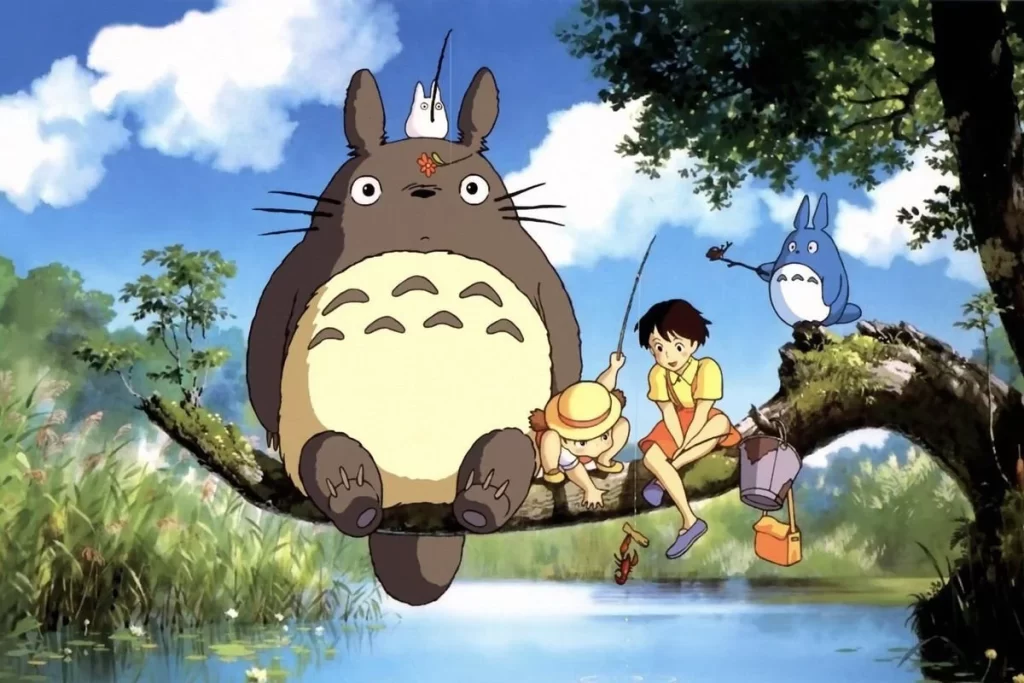
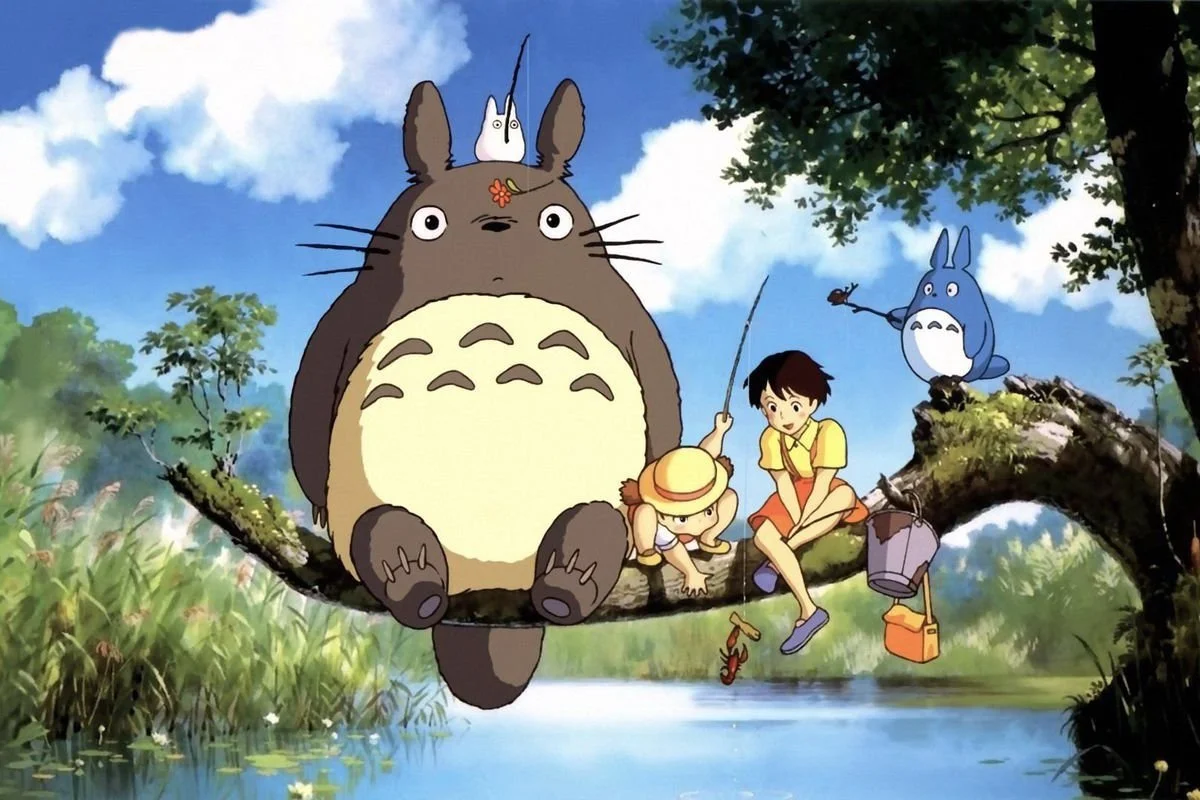
“My Neighbour Totoro”, 1988. Studio Ghibli
My Neighbour Totoro, 1988
Hayao Miyazaki
Blessed those who haven’t yet watched Hayao Miyazaki’s films! My Neighbor Totoro is about two sisters finding forest spirits when they move from the city to the rural countryside. Watching the film for the first time several years ago, when my son was about 5, reminded me of the words of another great filmmaker, Abbas Kiarostami: “The most wondrous period in the life of a human being is childhood, when encountering even the most minuscule things becomes a process of radical exploration. It’s a pity we leave those times behind so quickly.” My son was fascinated by the film, but I think I was even more enthralled with it, because I was discovering it myself for the first time and because I was watching it through his eyes, too. It was like a beautiful reminder that it isn’t that difficult to tap into that wondrous period as an adult.
The two little girls can see Totoro and adults can’t. And it made perfect sense for my son, too. He just accepted it, fascinated by the mystery, not so much wondering about the why’s but eager to meet Totoro again and again and accompany him and the girls in their adventure. Children and adults see this film differently, naturally, but it’s equally important for both children and adults. And it’s all because of the genius of Hayao Miyazaki, who weaves the story together with such emotion and intensity. Reality and mythology seem to coexist so naturally in the Japanese culture and daily life. And there is such a ritual to the everyday life for the Japanese, and I noticed how my son loved observing those daily rituals of the girls, or the moments when nothing seems to happen but moments which give both the characters and viewers the respite to just be present, and that’s something very precious. Because it gives the children watching the chance to just think at what has just happened, imagine for a bit what’s about to happen, without keeping them in constant action and distraction. And that is simply extraordinary, letting the children navigate their own feelings and emotions, while giving them joy and astonishment. It’s about telling the story in the most engaging and in the most emphatic way at the same time, and that’s a true gift for children. This is the kind of narrative freedom that you rarely find in films, but more likely in books, and which, combined with the visual power of cinema, gives birth to an emotional honesty and artistry hard to be equaled. (U)
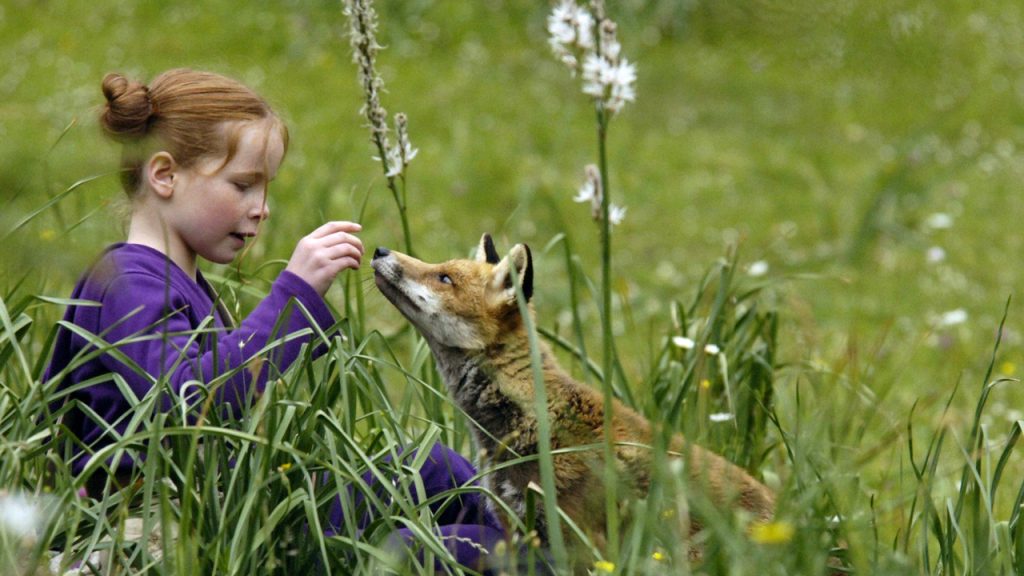
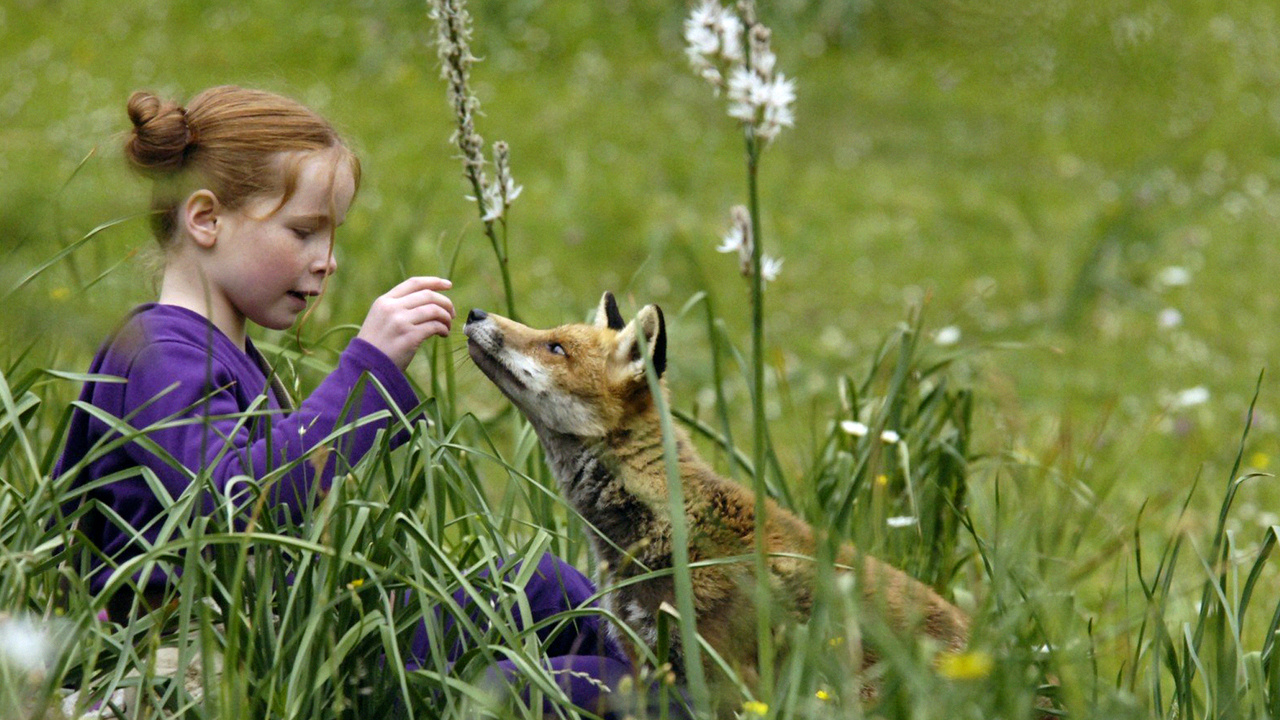
“Le renard et l’enfant”, 2007. Bonne Pinoche, France 3 Cinéma, Wild Bunch
Le renard et l’enfant (The Fox and the Child), 2007
Luc Jacquet
It takes patience and it takes effort and time to gain others’ trust, especially when you are part of two different worlds. It’s an incredibly valuable lesson for this fast world where we want everything to happen now, and The Fox and the Child is the kind of film that children respond very powerfully to, I believe, because of the way it is told, through the eyes of a little girl and the bond and friendship she forges with a wild animal, which leads to the most wonderful adventure. It also features the most beautiful autumn scenes I have seen in a movie. I recommend the French narrated version. (U)
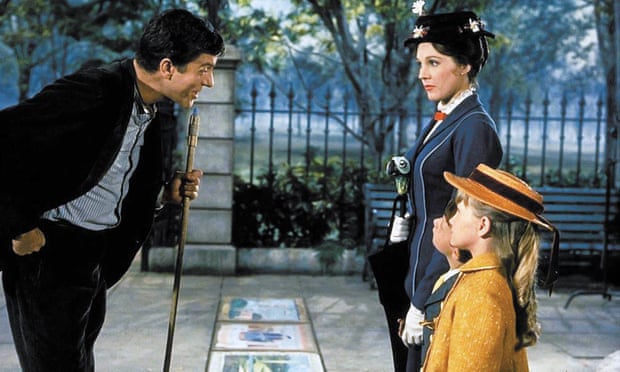
“Mary Poppins”, 1964. Walt Disney
Mary Poppins, 1964
Robert Stevenson
I love the feeling that this film gives me that Mary Poppins has a secret life, that she’s someone different than her prim appearance. And children love something and someone different, don’t they? They are drawn to her because she is real yet capable of all those magical things, maybe even hinting at something dark underneath. I keep coming back to the words of Johann Christoph Friedrich von Schiller: “Deeper meaning resides in the fairy tales told to me in my childhood than in any truth that is taught in life.” When all is cheesy and cheeky all the time, how can you know the meaning of magic? That’s why I am so keen on classic fairy tales for children, where they can see both mystery and truth, good and bad, on exposing them to a world of fantasy through books and films. And I also believe they have to discover these worlds when they are young enough to still have that sense of wonder intact. As for the song Chim Chim Cher-ee (just listen to it), there is a mystery to those lyrics and sounds evoking a much darker and introspective lore than what first meets the ear and watching the film during the darker months of the year infuses it with an even much more eerie feeling. (U)
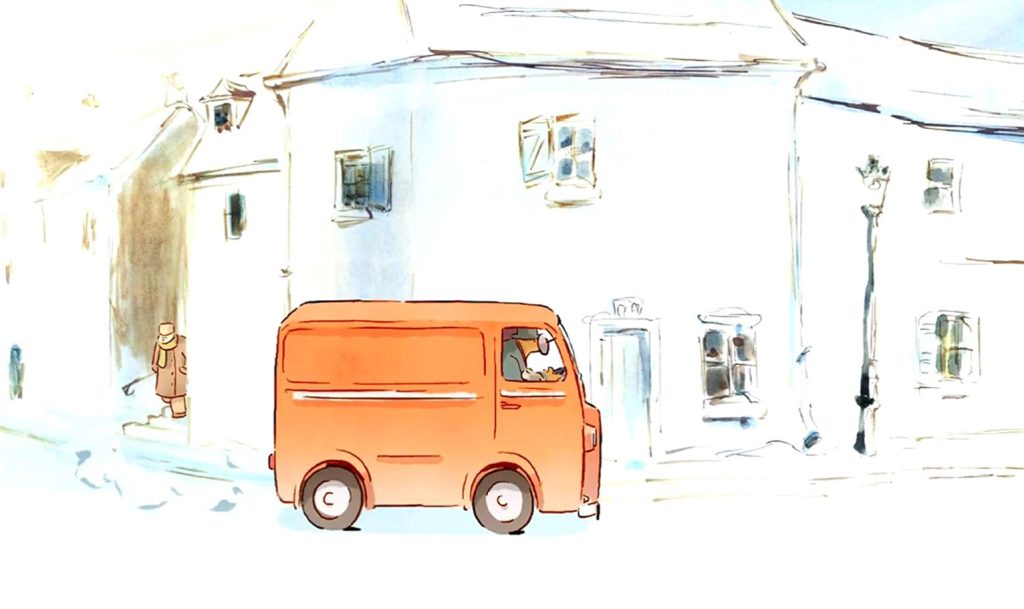
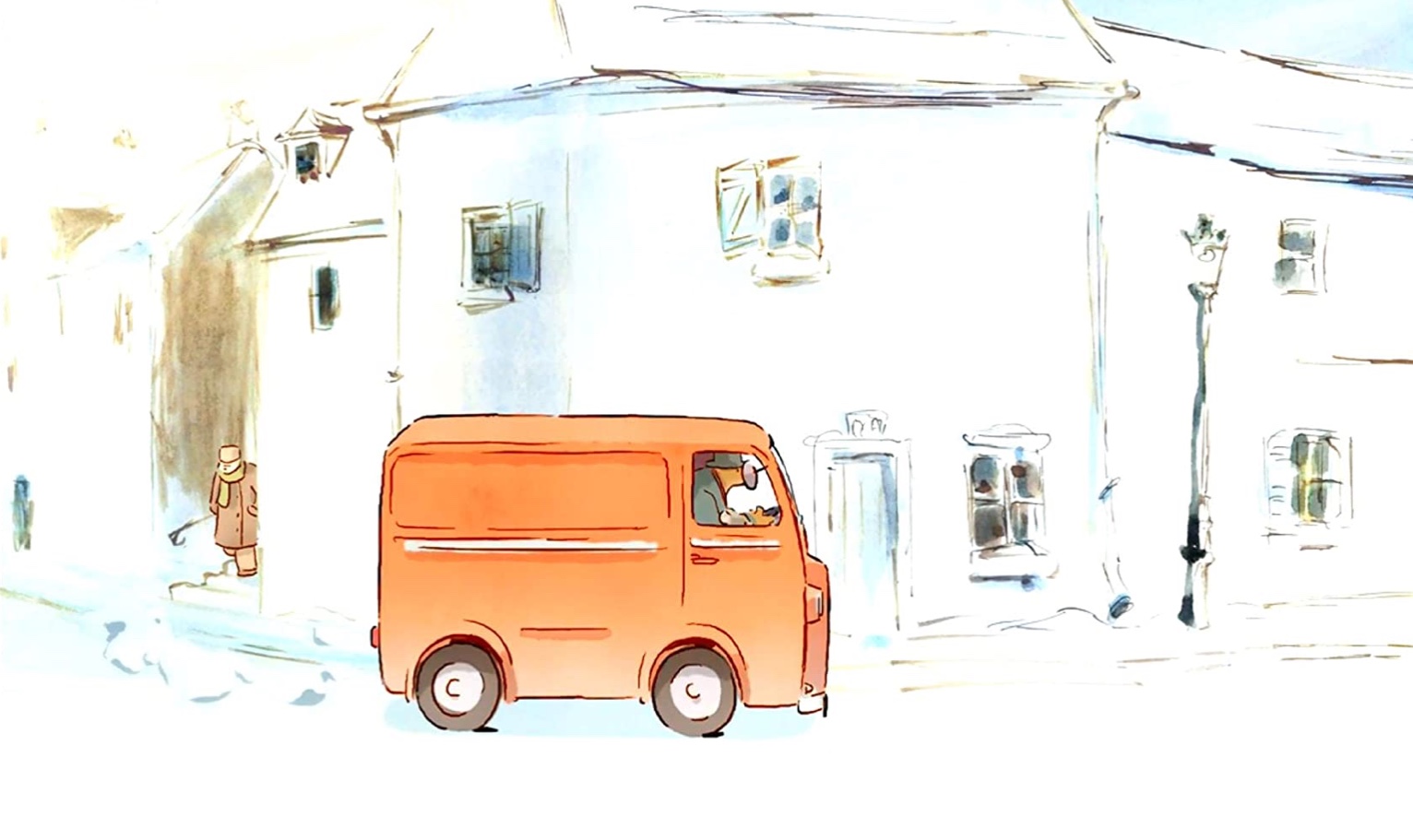
“Ernest & Celestine”, 2012. La Parti Productions, Les Amateurs
Ernest & Celestine, 2012
Stéphane Aubier, Vincent Patar and Benjamin Renner
Based on Gabrielle Vincent’s books and directed by Stéphane Aubier, Vincent Patar and Benjamin Renner, the film is a simple story about a friendship between a mouse and a bear who should not be friends, because they live in different worlds and societies and they are raised to live in fear or disapproval of the other, but they befriend nonetheless. It is a beautiful and moving message, and one which children of a very young age fully comprehend, and it is so beautifully and humbly rendered. This is a film confident in its ability to convince with kind gestures, not with big words and big action scenes.
The minimalist and expressive hand-drawn watercolour brushstrokes and the blank space left in the frames leave the impression that this is a classic illustrated children’s book brought to life on screen. And that’s what’s so special about the film. Is is a film made for children, like a beautiful transition from books, the first imaginary worlds they familiarise with, to movies, with its simple drawings yet fluid animation. The transition is gentle, as it should be, but no less fascinating. It is not an animated film for adults, like so many Hollywood productions are, which may seem that they are made for children but clearly aimed at adults (with pretentious messages and triumphant endings), it is an animated film with children at heart, in which children and adults alike find joy and meaning. (U)
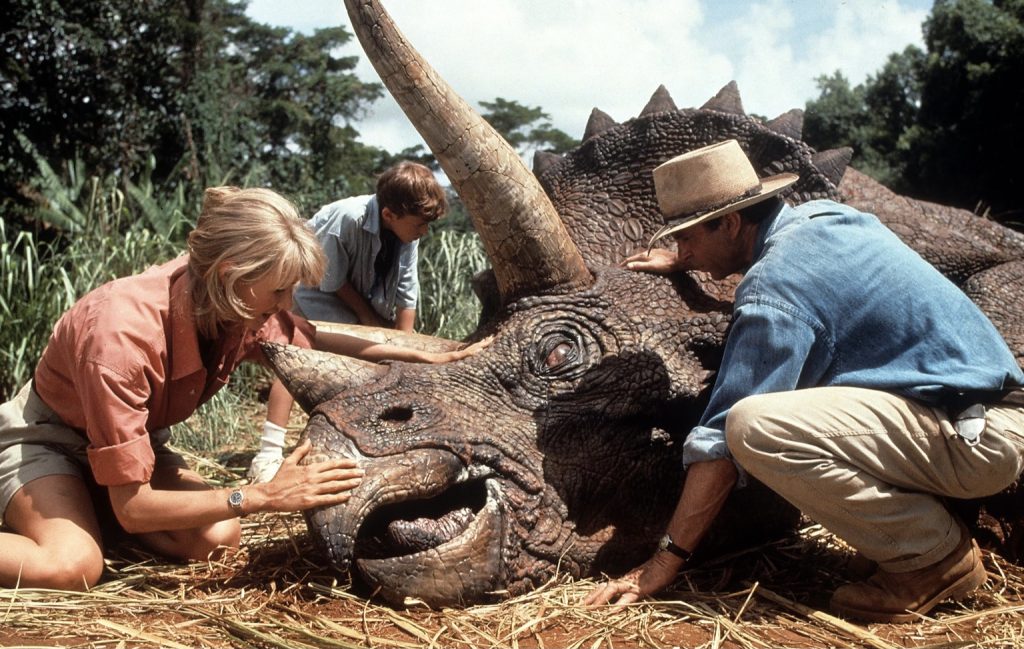
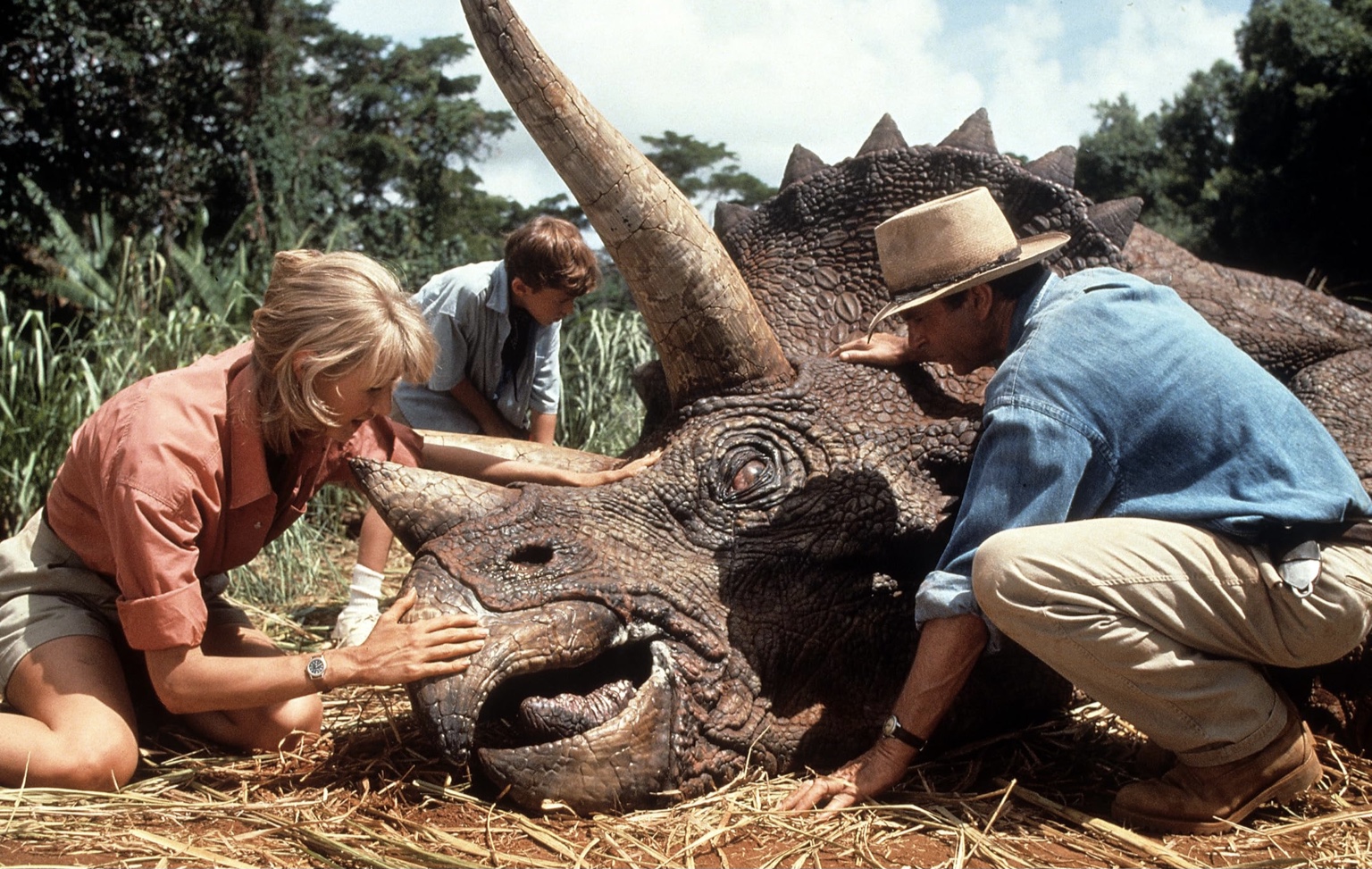
“Jurassic Park”, 1993. Universal Pictures, Amblin Entertainment
Jurassic Park, 1993
Steven Spielberg
For a couple of years my son had a passion for dinosaurs. He dreamt, drew and breathed dinosaurs, and the whole family became experts in the Latin names of dinosaurs, and Jurassic Park became one of our go-to family movies. That age has dawned now (and we become nostalgic every time we think of it), but now he’s read the book, too, and Jurassic Park still enters our conversation. We still love it, we still marvel at all that inception idea (and at Michael Crichton’s ingenious mind), we still fear the velociraptor more than the t-Rex (“Clever girl!”), we still think it looks very real, we still get carried away by John Williams’ music, we still can not resist a sequel although we all agree there is just one Jurassic Park film, and I thank Steven Spielberg for learning so well from Hitchcock. “The public is avid for everything that touches the imagination… as long as it remains credible.” – Steven Spielberg
(PG)
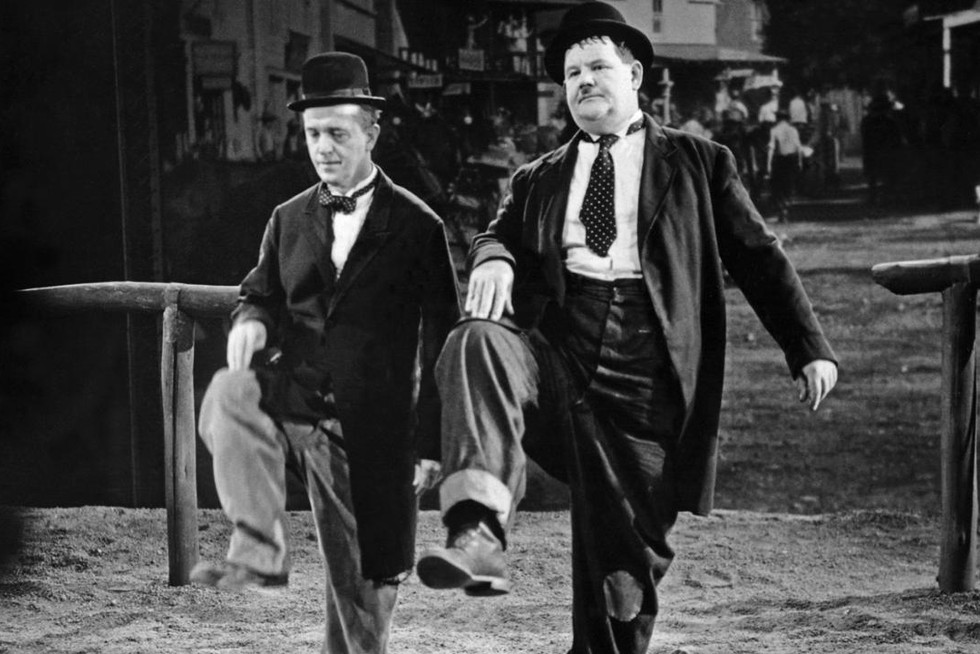
“Way Out West”, 1937. Hal Roach Studios, Stan Laurel Productions
Way Out West, 1937
James W. Home
I wonder, is there anyone in the world who wouldn’t laugh at seeing Oliver Hardy wrapped in a blanket right up to his belly (he’s naked underneath), being towed by a donkey, with his laundry hanging above him? The road is bumpy and he is grumpy. Stan Laurel is walking by the donkey and he is, of course, the one responsible for Oliver’s condition. The previous scene from Way Out West, with a slumbering Ollie (this time dressed) being towed by the mule, is one of the funniest entrances of the duo. For the next ten minutes after that first close-up, I laughed so hard that my belly hurt. Then I gave up – some moments were so funny that you didn’t even feel like laughing anymore, if that makes sense. Sometimes I think people have forgotten what is funny. Todd McEwen, a Laurel & Hardy devotee, who got up at 4.30 in the morning as a kid to watch their films, says it best in his book, Cary Grant’s Suit: Nine Movies That Made Me the Wreck I Am Today: “Disney cartoons aren’t funny. At Disney they wasted all their time and money on capitalism winsomeness.”
A coach ride later, after Stan hitches a ride on a passing coach by doing an impression of Claudette Colbert in It Happened One Night, showing off his leg (more belly-aching laughs), we witness one of the most joyous moments in any film. The two encounter a singing quartet in front of a saloon and they get caught up in the rhythm of a song. Not only is their dance a perfect comic moment, it simply makes you happy. A good comedy should never be underrated.
And who else but Oliver Hardy could get away with pulling the audience back from the illusion of watching a film by casting a glance in our direction whenever Stan Laurel does something foolish? It’s a paradox, but it just works. Wouldn’t any other character, in any film, just drive you crazy? (PG)
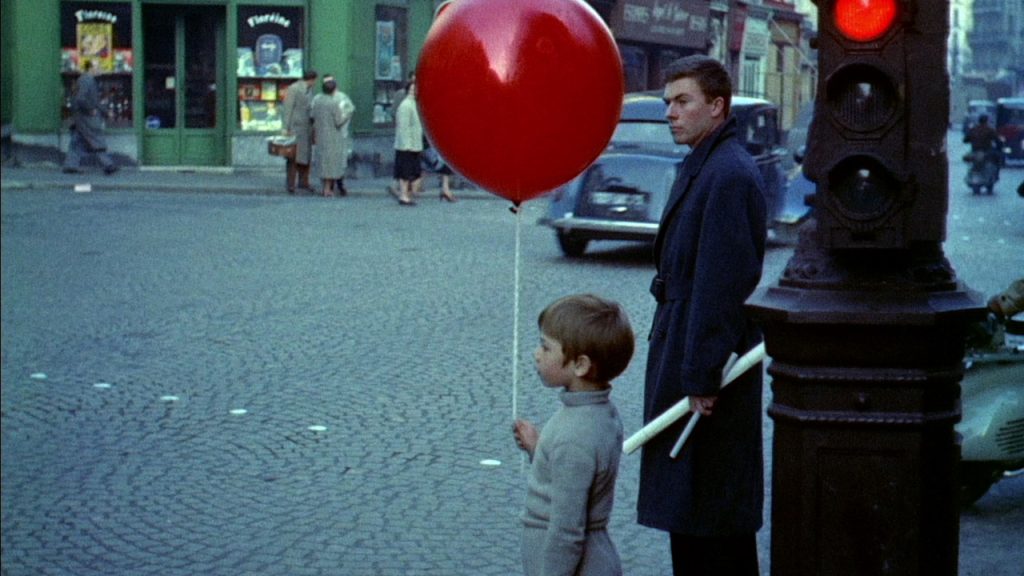
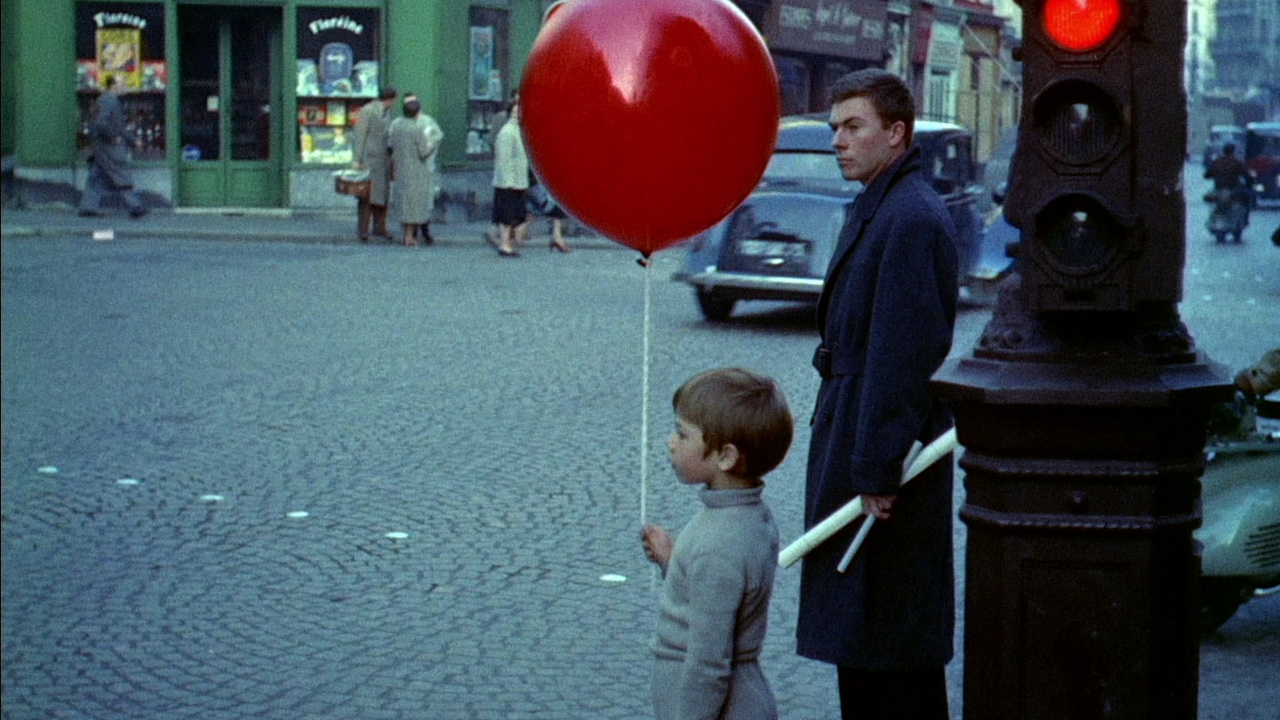
”Le ballon rouge”, 1956. Films Montsouris
Le ballon rouge, 1956
Albert Lamorisse
It is one of the most beloved films of all time, a fantasy film that reminds me about the beauty of childhood. The message is so simple, but the film, almost entirely wordless, is one of the best examples of pure cinema, so artistic, visually powerful and beautifully shot that it won a special place in my heart.
On his way to school one morning, Pascal finds a stray red balloon. Soon a bond is created between the child and his new toy and they become inseparable. Pascal discovers the red balloon has a mind of its own and it follows him everywhere by its own will, waiting for him in the schoolyard, outside his bedroom, following him even inside the church, teasing him to make sure Pascal deserves its friendship. The red balloon becomes the best friend he doesn’t have and they attract the envy of the boys in the neighbouhood, who soon destroy it. The ending of the film is magical, when all the balloons in Paris gather and come to Pascal’s rescue, taking him on a fairy tale balloon ride over the city.
Le ballon rouge will lift up your spirit. Aren’t we all children at heart? In today’s world, we should all fight for children not to lose the innocence and joy of play. (U)
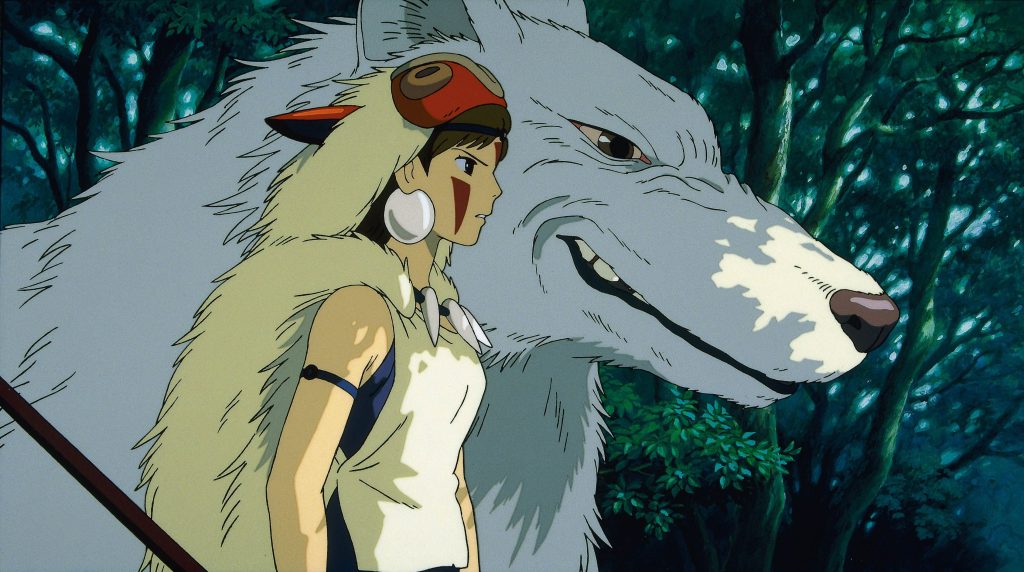
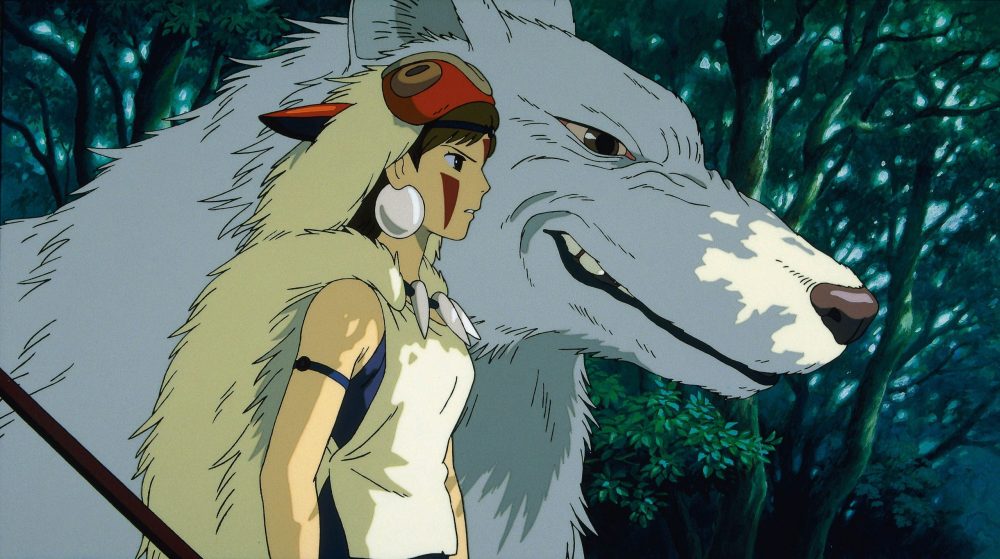
“Princess Mononoke”, 1997. Studio Ghibli
Princess Mononoke, 1997
Hayao Miyazaki
It’s a story about a prince, Ashitaka, inflicted with a deadly curse by a boar creature when the boy kills it to defend his village. His fate is sealed, the village elders tell him, but he decides to leave and search for the place where the boar came from and the reason for its rage and hatred against people. On his way, he meets San, who calls herself Princess Mononoke, a human raised in the forest by the wolf goddess Moro. San’s plan is to kill local industrialist Lady Eboshi, who has destroyed the animal habitat while and with the manufacturing of iron and guns. It was a gun shot that had transformed the boar, himself an animal god, into an evil creature. And the moment I realised that, the brilliance of the entire film dawned on me.
Inspired by the Muromachi period (1336-1573), which saw the introduction of firearms to feudal Japan, the film is a work of art in the way it conjures a simple natural world where animal gods and tree spirits roam the earth, until they start to be threatened by humanity’s technological progress and cruelty. But another amazing thing about the film is that humans are not explicitly categorised in bad and evil. Each character is flawed, and yet the writer-director does not pass judgment on them. Everything seems to exist at the confluence of tragic and magical, of shadow and light, of good and evil – I smiled when, after we realise what Lady Eboshi is doing in her village, making firearms in order to take over the surrounding natural world, it is revealed to us that she has liberated prostitutes from brothels to come and work for her and made a safe home for the lepers, too. I love how the film refuses to conform to a simplistic, black and white view on human nature, and how it avoids sentimentality and a romanticised ending.
The film is filled with such richness and complexity that can reach children in this seemingly simple way – it may be simple enough for them to enjoy, but I think that, even with children of five, it sinks deeper than that. By the contrasting nature of each character, of nature vs civilization, children are shown, even if they don’t comprehend the dimension of it all, the strengths and weaknesses inherent in human nature and instills in them moral behaviour and they are provided with a moral code on which to start to develop their own lives. But that sense of bewilderment and surprise prevails at all times and that’s the film’s secret – when, at the end, after disaster occurs in the natural world and a single small tree spirit appears suddenly, that’s a moment of pure joy and hope. Earlier in the film, tens, and then hundreds, of small tree spirits had sprung one after another in a frame, and that was a joyous and hilarious moment – what a wonderful way Miyazaki has to speak with children at just the right moments. (PG)
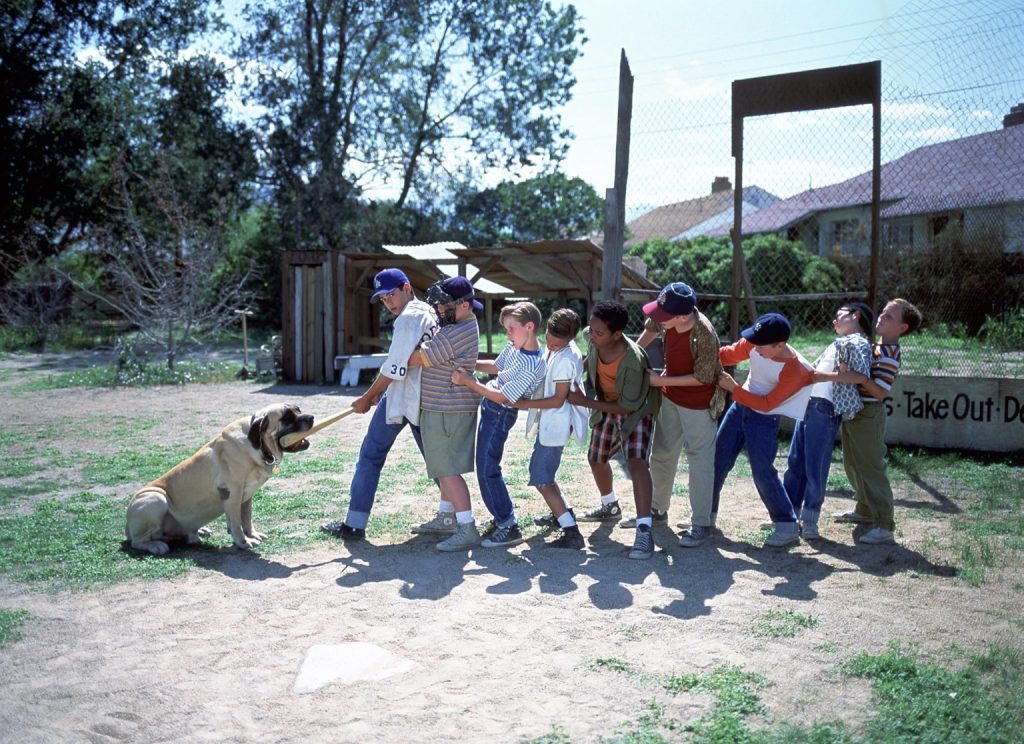
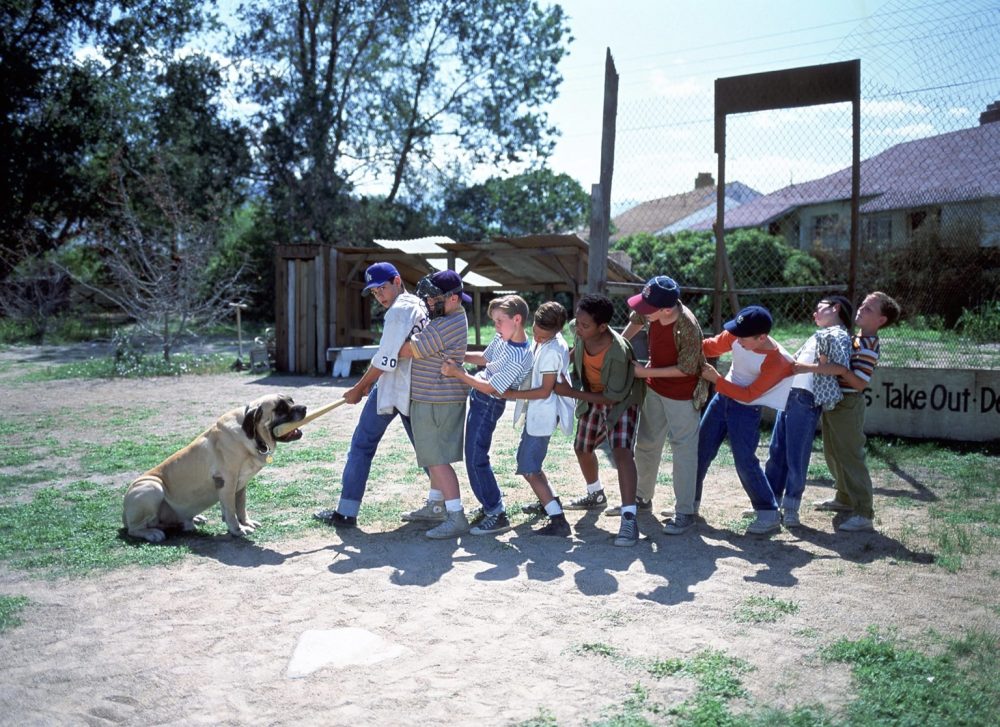
“The Sandlot”, 1993. 20th Century Fox
The Sandlot, 1993
David Mickey Evans
A small American town in the 1960s, during the summertime. A group of young boys are the sandlot team. All they want to do is play baseball, during the long hot days of summer, when everything seems to stand still, except for one thing that’s constantly on their mind: play baseball. But it’s not about big games, making into the school team and so on. They play ball because they love the game and because they just want to hang out together. It’s not about winning and losing. This is not a film about success, the manic preoccupation of parents today. It allows kids to just be kids and have a childhood, and create a world of their own, with their own rules and dreams and fears they find a way to face, and make memories that will carry them through life. In the course of a summertime afternoon, everything can change, and you can make friends for life. That’s the magic of childhood and the magic of summer. (PG)
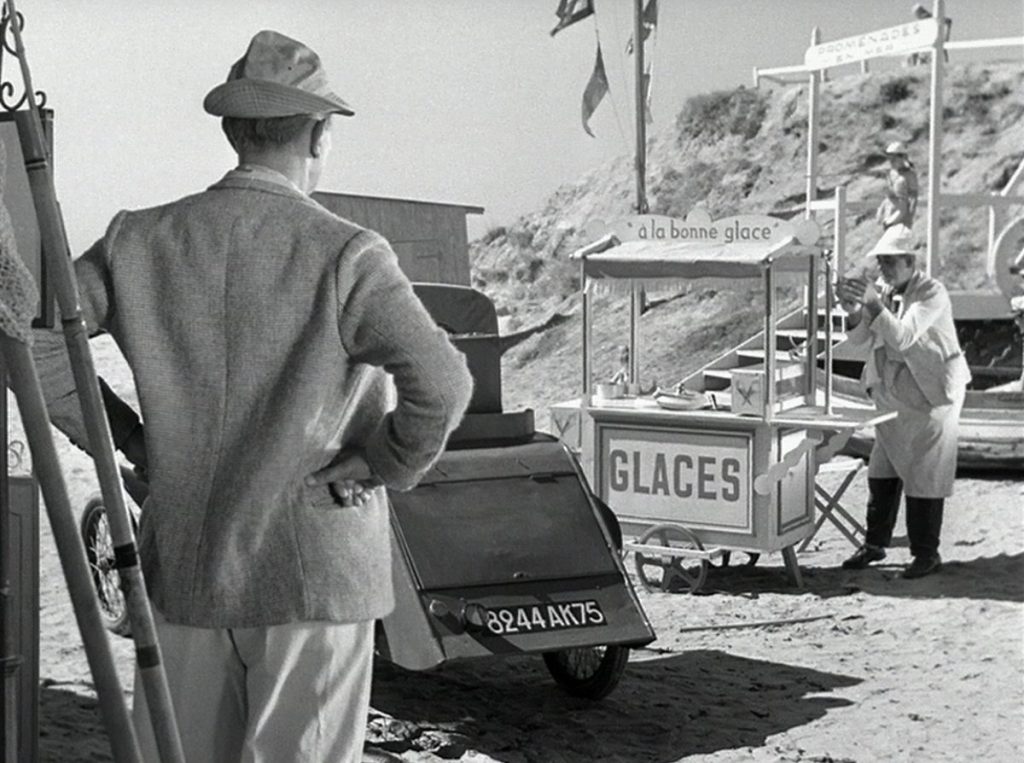
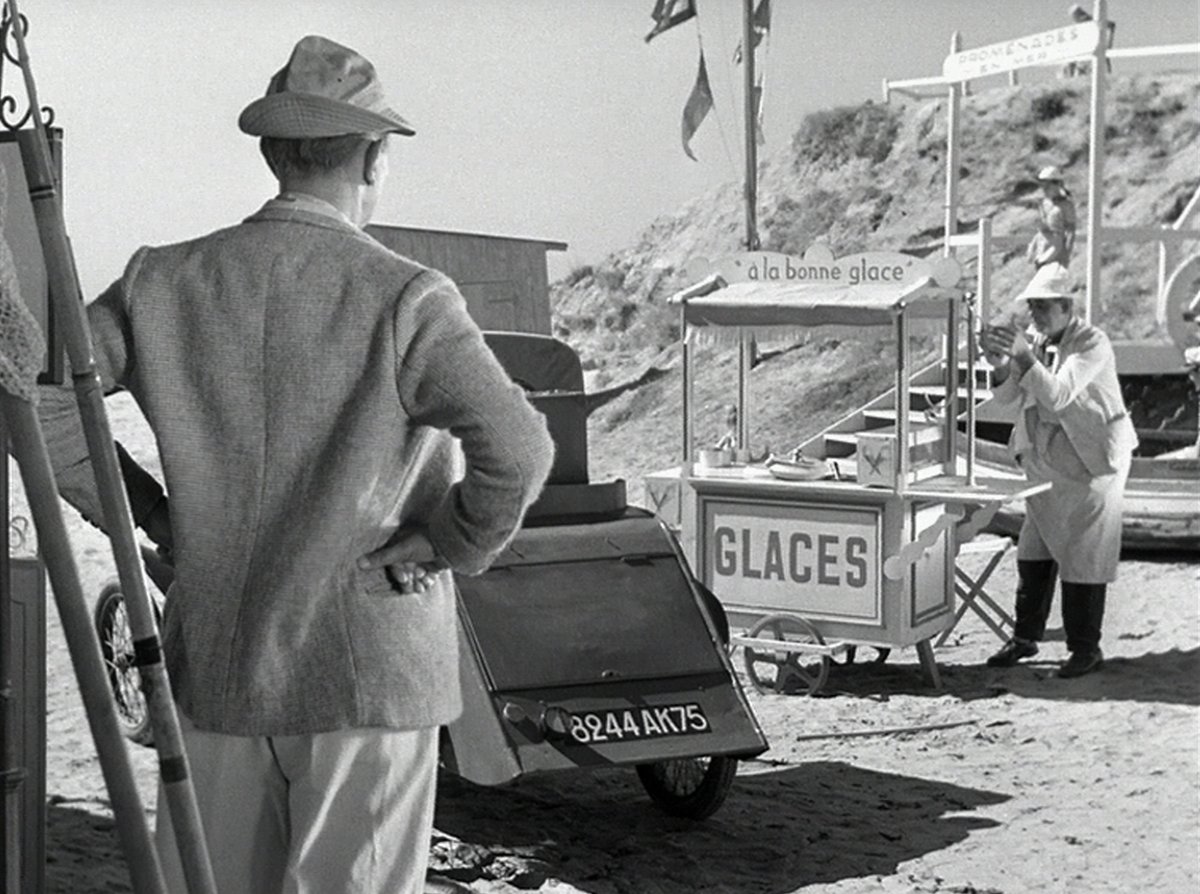
“Les vacances de Monsieur Hulot”, 1953. Discina Film, Cady Films
Les vacances de Monsieur Hulot, 1953
Jacques Tati
For this one, I would like to quote the great late artist Tony Stella. I am forever grateful for the couple of conversations I had with Tony throughout the years and his great generosity in letting us all on his well of knowledge through his work. “From the opening notes of Alain Romans’ score, I am immediately transported to a blissful childhood nostalgia. Summer, Sun, Sea and Tati’s timeless observation of the human character. In 1953, it was Tati’s second film and the first introduction of “Monsieur Hulot” – also my first Tati film. It is forever linked to the time it was shown to me by my Parents – laughing together recognising others and ourselves on summer vacation – rushing to the wrong platform mislead by the unintelligible station information. The world of Monsieur Hulot was still visible in my childhood; I am afraid it is now gone forever, but, because of his genius, I’ve become a Monsieur Hulot myself refusing to let go – always trying to put the fallen brick back on the crumbled wall… I am forever indebted to Jacques Tati and Pierre Étaix whose posters and illustrations shaped my work even beyond the film.” (U)
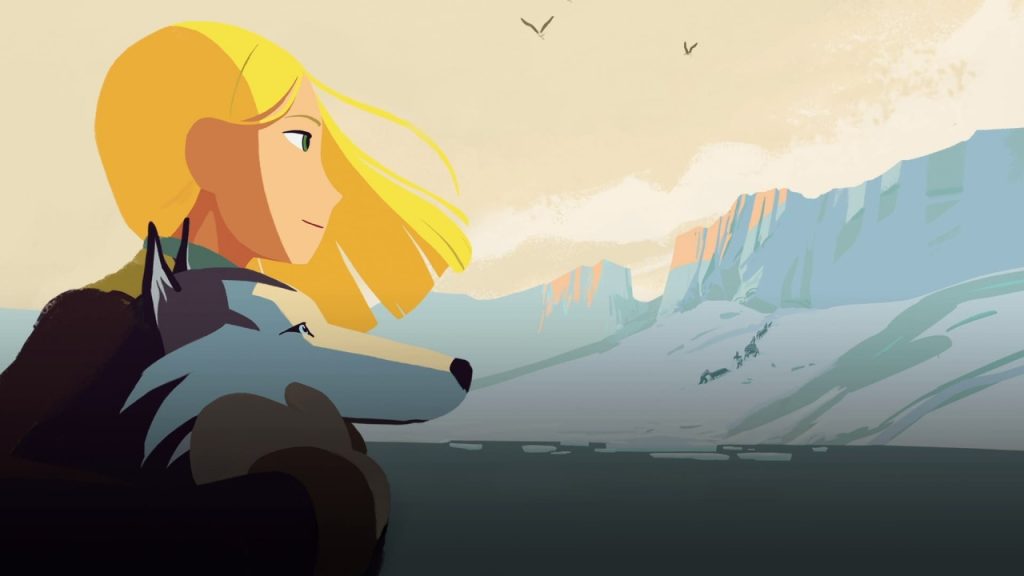
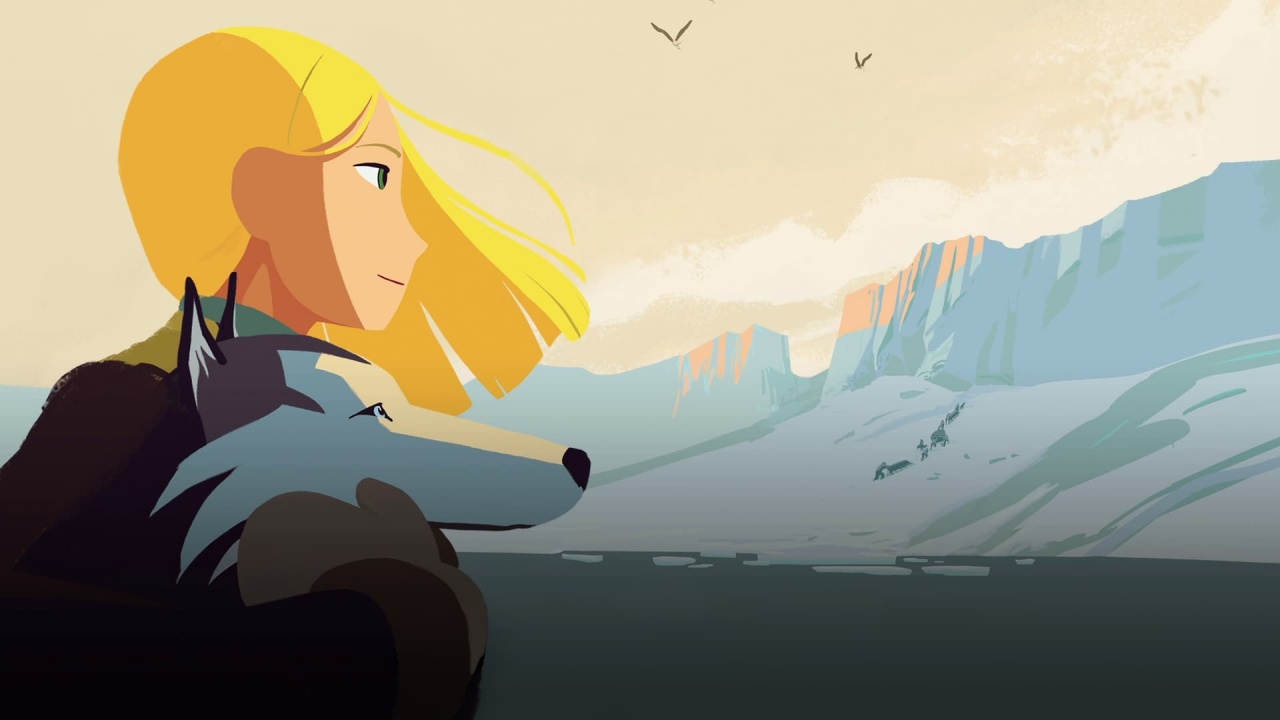
“Tout en haut du monde”, 2015. Sacrebleu Productions, Maybe Movies
Tout en haut du monde (Long Way North), 2015
Rémi Chayé
“I think the style of Long Way North is a way to look at reality through light, shapes, and colours, evoking emotion and tickling the imagination. To me, drawing is about interpreting reality – it’s a way to look at a chair, to make the spectator interpret that chair in a way that says something,” director Rémi Chayé said in an interview with Cartoon Brew after the film’s release. “One thing I noticed that was strange to the Americans is our frequent use of holds. In American animation, something has to move all the time. Europeans are closer to Japanese animation in the way that we make greater use of silence. Personally, I very much enjoy those type of Japanese films where nothing happens except drinking tea.” Tout en haut du monde tells the story of Sasha, an aristocrat Russian girl, who, in 1882, goes on an journey to the North Pole to find out what happened to her explorer grandfather who had left on an expedition and never returned. With an animation and composition that are simple and captivating and very appealing aesthetically, and its storytelling quality, the film captures our sense of adventure. (PG)
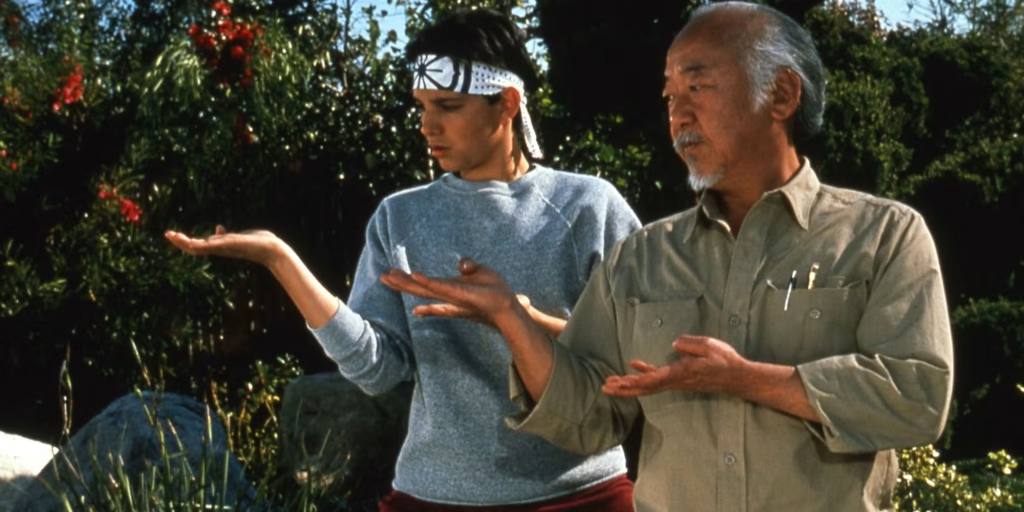
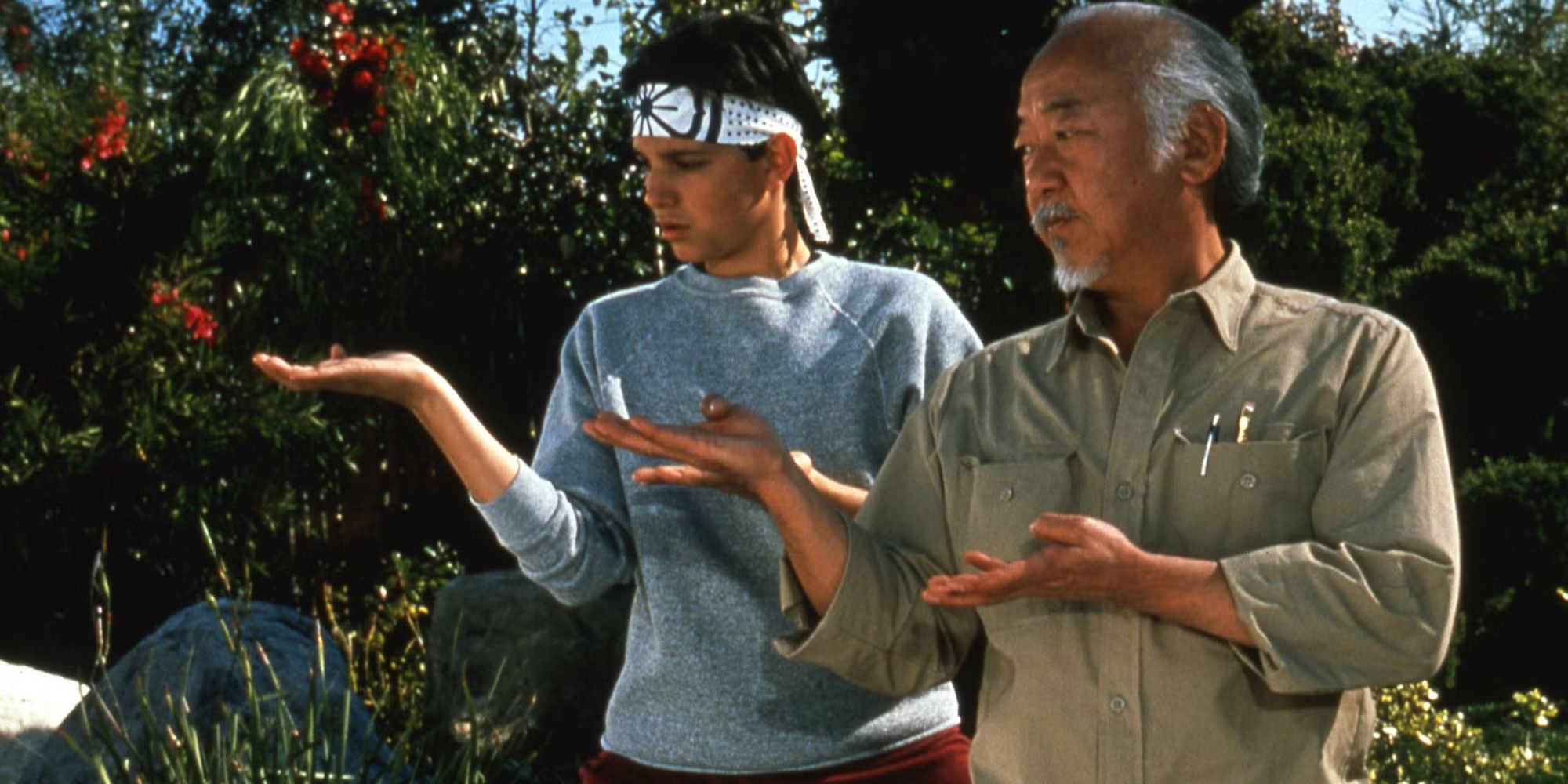
“The Karate Kid”, 1984. Columbia Pictures
The Karate Kid, 1984
John G. Avildsen
This is a wonderful, heart-warming story about the friendship between Daniel (Ralph Macchio), a New Jersey kid who moves to Los Angeles with his mom, and Miyagi (Pat Morita), an elderly Japanese janitor who works in their building. Miyagi is also a karate master and agrees to take Daniel, who has trouble at school with the Cobra Kai gang, as his student. I have to admit that my favourite part of the film is Mr. Miyagi’s unconventional training, as he has Daniel washing his car, painting the fence and house, sanding the floor, which ultimately leads to Daniel’s understanding that Mr. Miyagi has trained him karate without him even realising it. Pat Morita gives life to a completely original character, and Daniel and Miyagi form one of the most best friendships on screen. “He taught him that the secret to karate lies in the mind and heart. Not in the hands.” (12A)
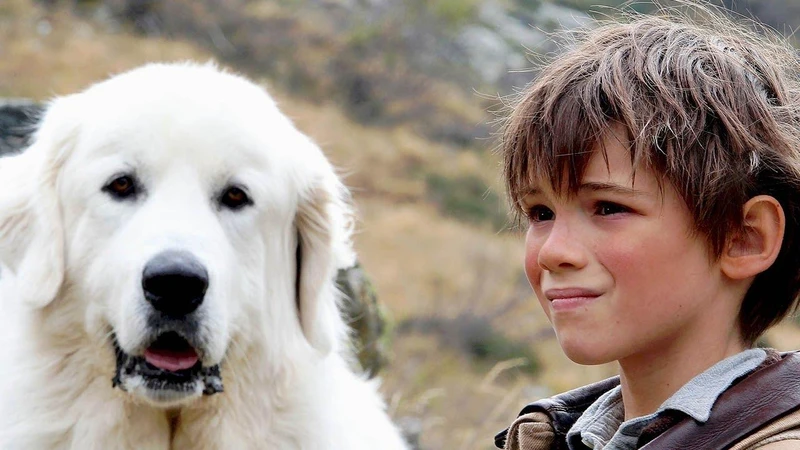
“Belle et Sébastien”, 2013. Radar Films, Gaumont
Belle et Sébastien, 2013
Nicolas Vanier
“A true ode to nature, it’s the story of an encounter between a lonely child and a wild dog. The story of Sébastien who tames Belle. The tale of a little boy searching for his mother, an old man searching for his past, a resistance fighter searching for love, a young woman in search of adventure, and a German lieutenant seeking forgiveness.” It’s the most beautiful description of the film, courtesy of director Nicolas Vanier. (PG)
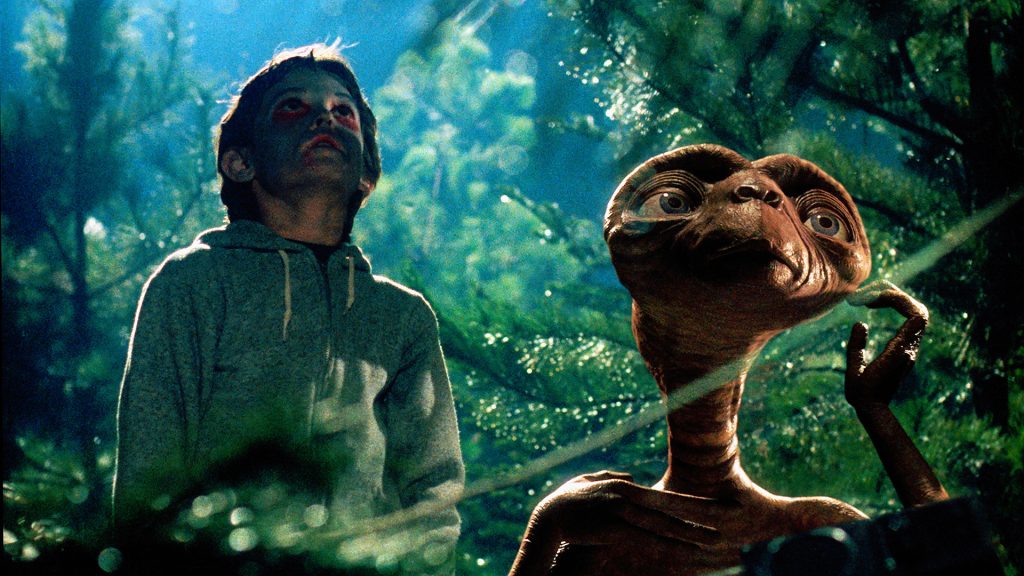
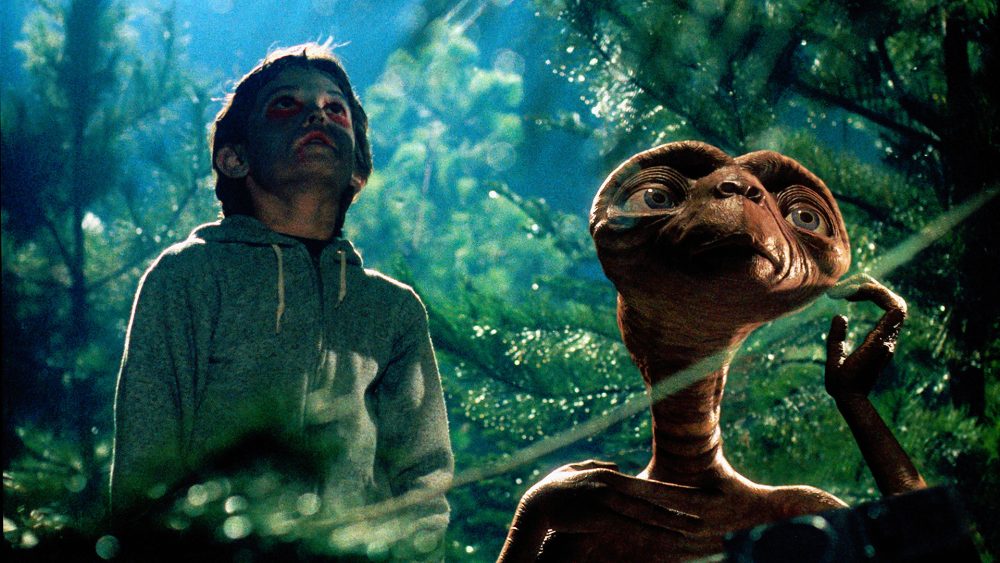
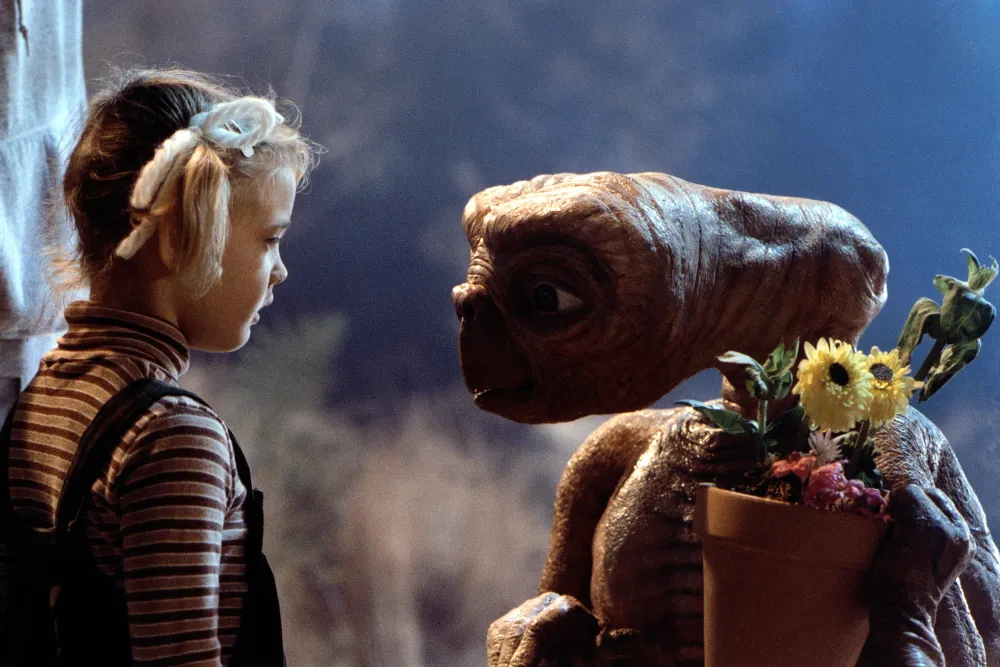
“E.T. The Extra-Terrestrial”, 1982. Universal Pictures, Amblin Entertainment
E.T., 1982
Steven Spielberg
I think it is marvelous how, to this day, adults can still identify with E.T. and Elliot, experiencing the children’s emotions in their relationship with their friend from outer space. The childlike enthusiasm in us is still intact, and so is our sense of wonder. And the film remains a celebration of friendship and love, regardless of race and culture. It still gives children things to think about, it makes them, and us all, let’s be honest, feel, and enjoy, and dream. “My greatest dream is to one day have this same experience. To see something that neither science nor logic can explain.” – Steven Spielberg
(U)
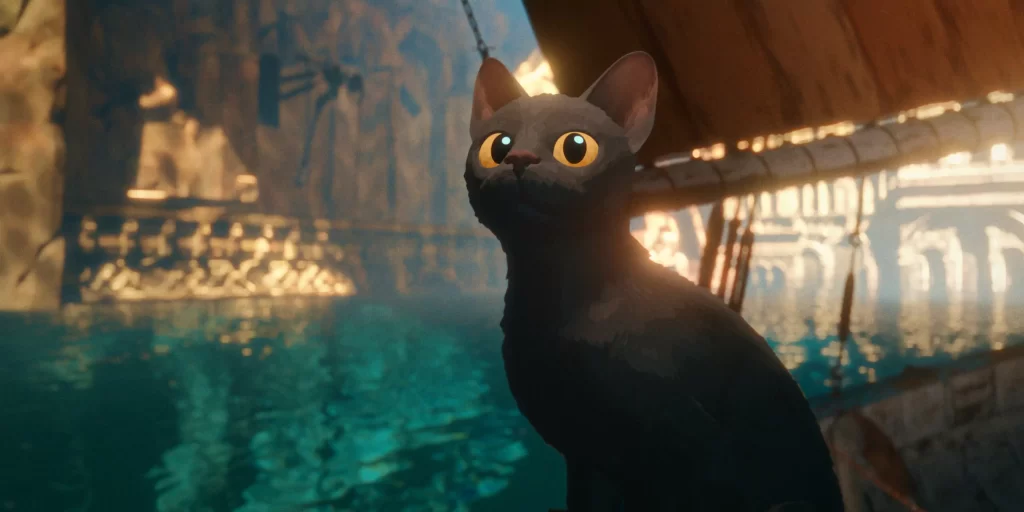
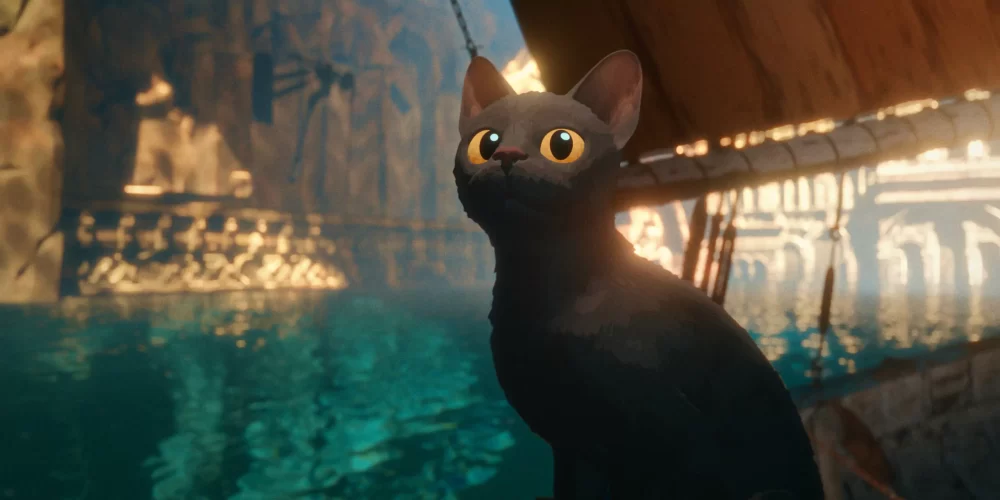
”Flow”, 2024. Dream Well Studio, Sacrebleu Productions
Flow, 2024
Gints Zilbalodis
A captivating adventure that shows us again that cinema is image, not words. (U)
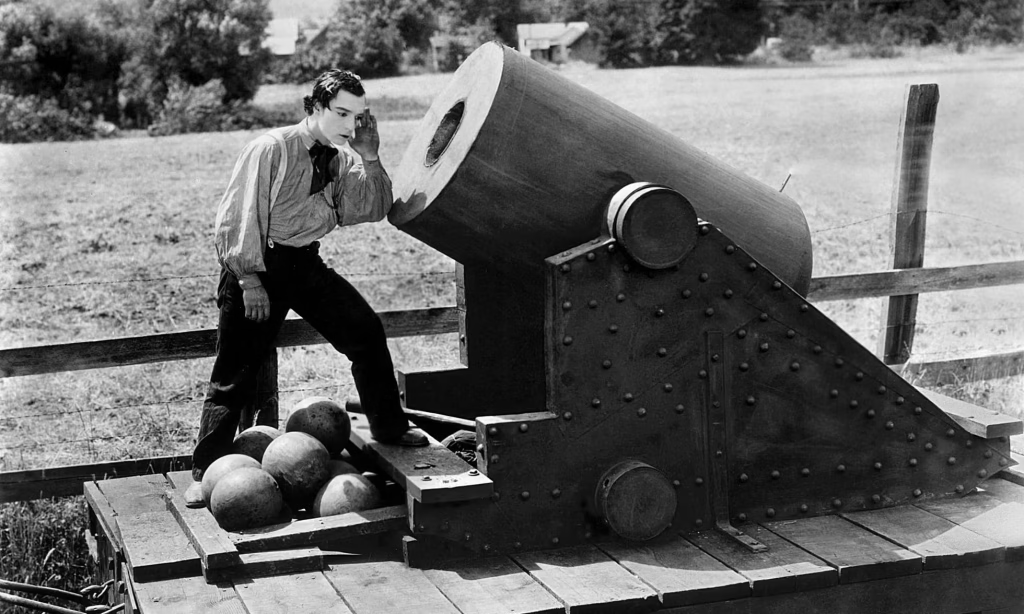
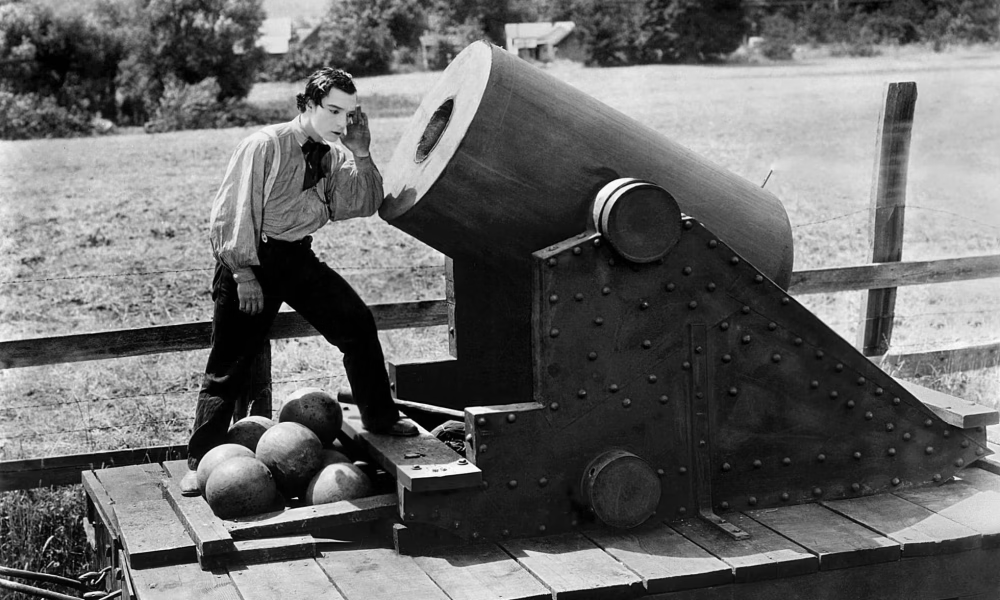
”The General”, 1926. Buster Keaton Productions
The General, 1926
Buster Keaton
„A good comedy can be written on a postcard.” – Buster Keaton
The silence of the images in Buster Keaton’s brilliant comedies frees the comic imagination. With Buster, more than with any other silent filmmaker, it couldn’t be more fascinating to watch a silent film, because the images will simply guide you. So, yes, I do believe that silent films can have an audience in the 21st century. (U)
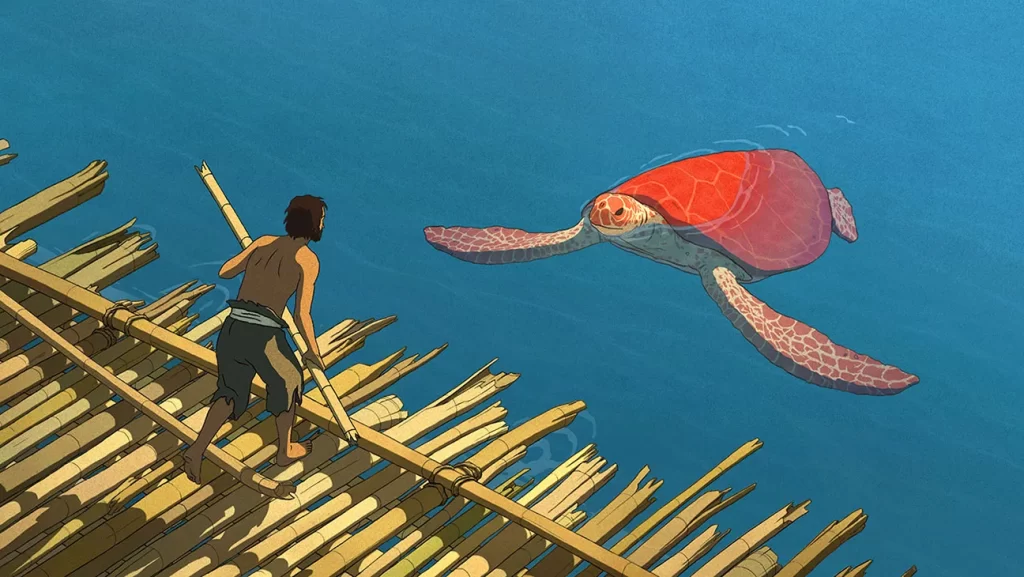
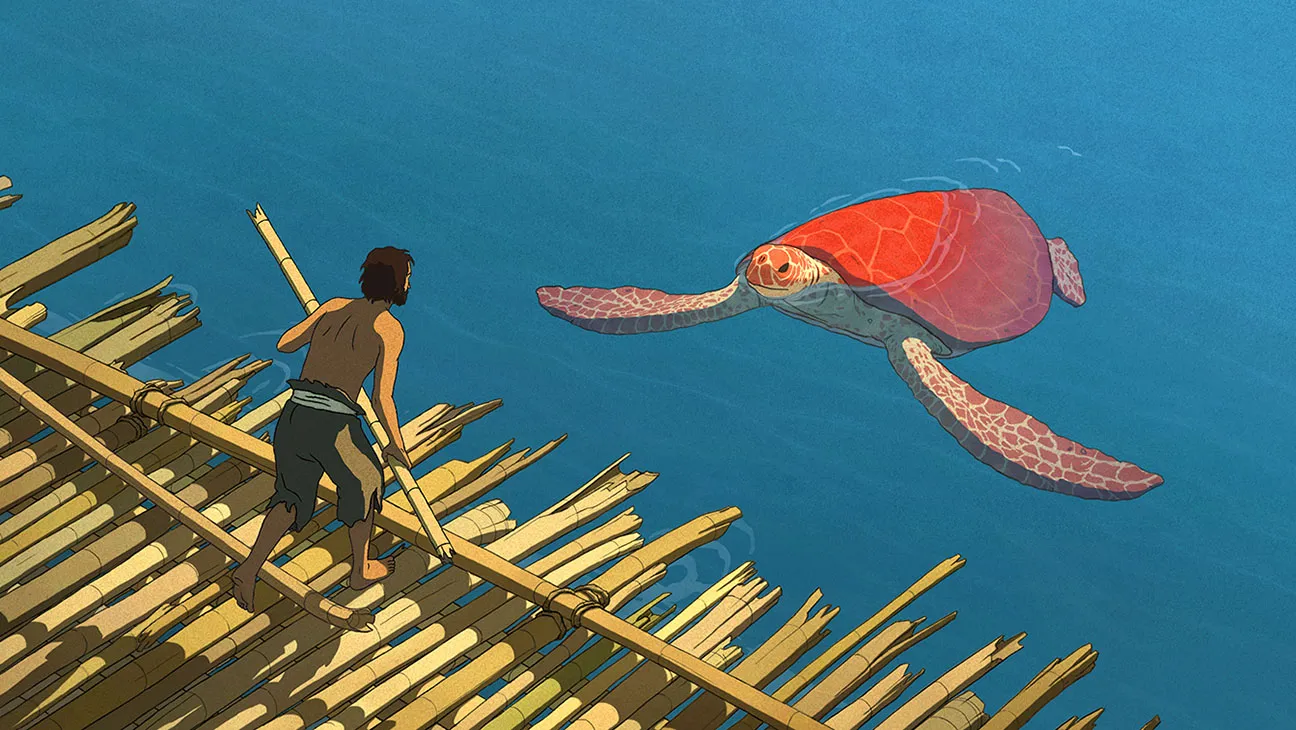
”The Red Turtle”, 2016. Prima Linea Productions, Why Not Productions, Wild Bunch
The Red Turtle (2016)
Michael Dudok de Wit
This film, about a man who is shipwrecked on a desert island and encounters a red turtle that changes his life, runs for 1 hour and 20 minutes. Only near the very end, my son, who was six when he watched it, observed very casually: “This film is silent.” The idea is that the beautiful animation carries this fantasy story flawlessly. Produced by Toshio Suzuki, the Studio Ghibli producer, The Red Turtle is the studio’s first film made by a non-Japanese director. What is special about this film is that it makes great use of the medium, cinema, and it demands that you pay attention to what is happening, to the surroundings, to the island’s personality, without the need to know much about the characters or the world outside the island. It has mystery and humour – it’s the little crabs that provide the funny element, which nicely balance the fantastical side of the story. I just love films that know how to grab children’s attention gently. (PG)
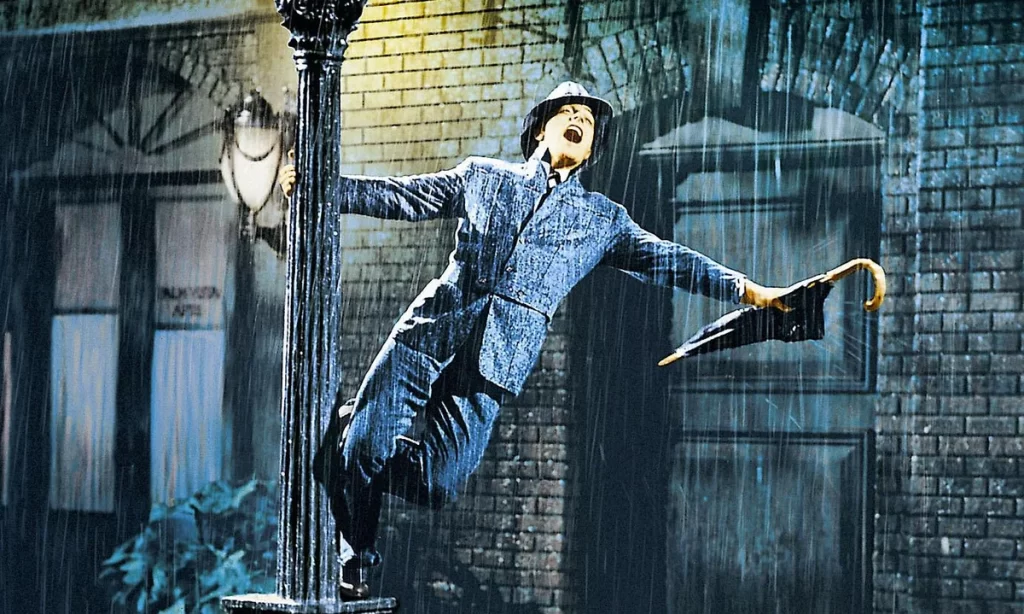
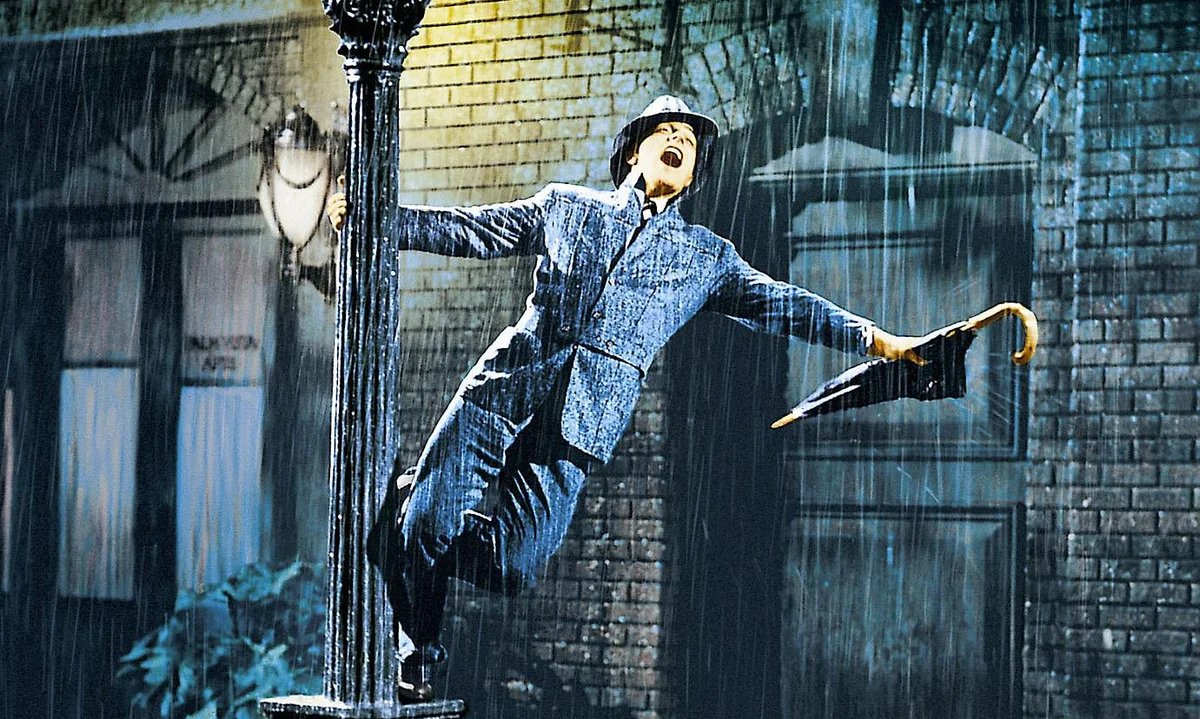
”Singin’ in the Rain”, 1952. MGM, Lowe’s
Singin’ in the Rain, 1952
Gene Kelly
When I first watched Singin’ in the Rain, I couldn’t stop marvelling at the all-singing, all-dancing Kelly, and at how the musical numbers were so seamlessly integrated into the plot, and such a good story it was, too. Absolute joy! Absolute genius! Now I have rewatched it with my son and we still marveled, our eyes glued to the screen, at how an actor, singer, director, dance choreographer, could also be so masculine and an athlete of that caliber. (U)
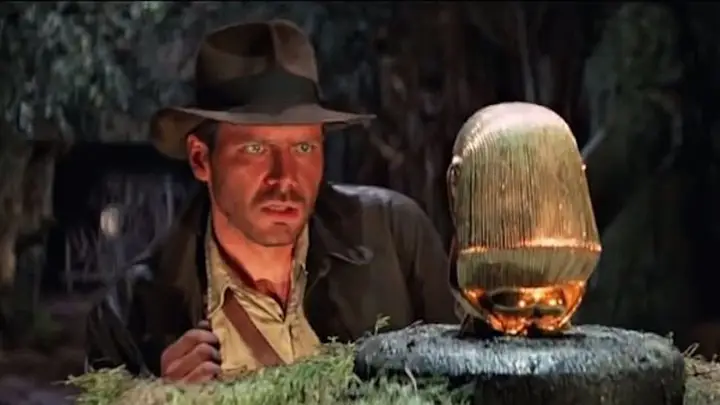
”Raiders of the Lost Ark”, 1981. Paramount Pictures, Lucasfilm
The Raiders of the Lost Ark, 1981
Steven Spielberg
In 1981, Indiana Jones took the world on his first and greatest adventure on screen. To this day, the film imagined by Steven Spielberg and George Lucas has remained, for many, the quintessential adventure movie. An exercise in pure cinematic style, Raiders of the Lost Ark has every bit of action held together by an irresistible mixture of boyish spirit and a romance with classic cinema. Drawn from forgotten Saturday matinee serials of the 30s, comics, and Howard Hawks films, Steven Spielberg created the kind of adventure he would have loved as a kid. Throughout his career, Hawks, too, had wanted “to merge his fictional ideals with his real life, a boy’s fantasy being played out every day”, as Todd McCarthy analyses in his book, Howard Hawks: The Grey Fox of Hollywood, something he always sought for in his adventure films. And what Spielberg did with Indiana Jones was hold the visual reins and create a world that the audience did not know or only dreamed of and thrust them into it and into a feeling of adventure and fantasy. The legend still looms large. (12A)
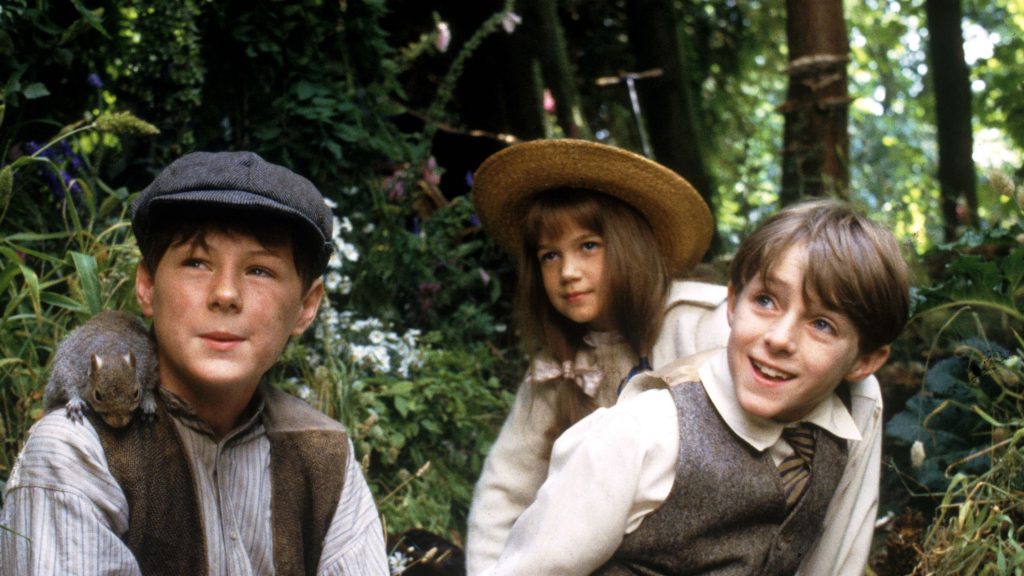
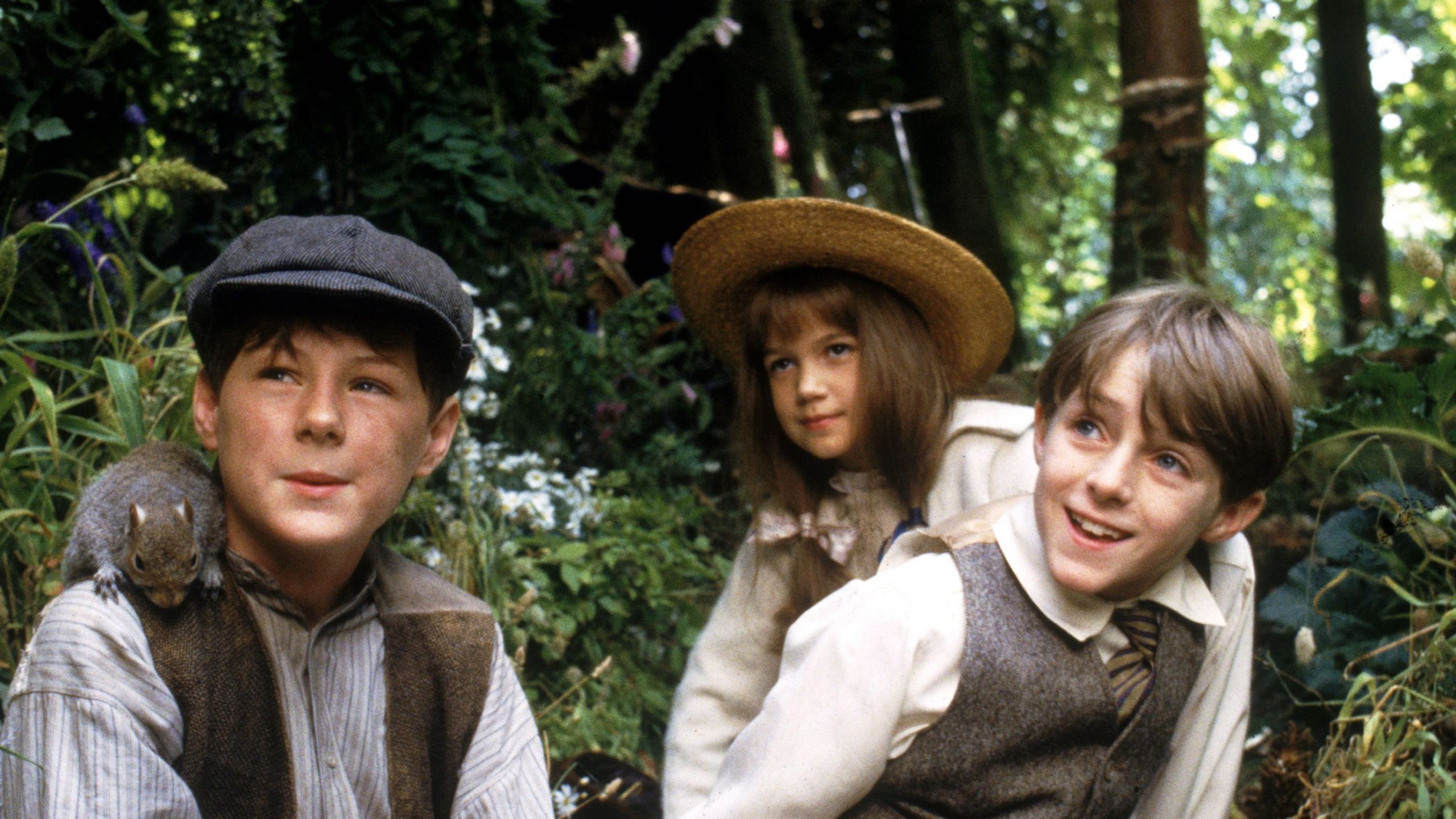
”The Secret Garden”, 1993. Warner Brothers, American Zoetrope
The Secret Garden, 1993
Agnieszka Holland
After young Mary is orphaned by an earthquake in India, she is sent back to England to live in her uncle’s castle. Soon, she discovers some dark secrets emerging from the castle wrapped in fog, but a beautiful garden, too, and sets out to explore its own secrets. Directed by Agnieszka Holland and adapted from Frances Hodgson Burnett’s book by the same name, The Secret Garden has both beauty and darkness in it, which I think is enriching for a child and everyone watching. And, most of all, I love the character of Mary Lennox (played with such feeling by Kate Maberly), how genuine she is. Rarely is a child depicted on screen as innately having both good parts and bad parts (which I think is very true with every child, as with every individual) and it’s beautiful how the story, and the film, charters this character, not by taming her, but by letting her shine in her own time. (U)
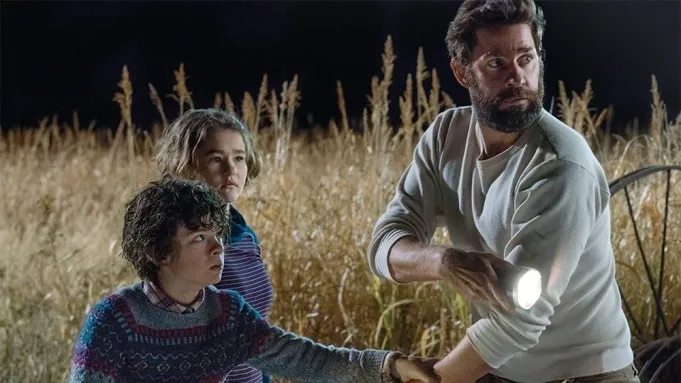
”A Quiet Place”, 2018. Paramount Pictures, Platinum Dunes, Sunday Night
A Quiet Place, 2018
John Krasinski
Set in a post-apocalyptic wasteland, where sightless alien creatures hunt their prey on even the faintest sound, this is a world in which only very few and the most quiet and careful humans survive. There is not much that can be invented in cinema anymore, but that concept felt new and thrilling in A Quiet Place. Silence never sounded so terrifying. Emily Blunt and her real life husband, John Krasinski, who also directed, play a loving couple with young kids. They have to speak in sign language and walk with bare feet and even the vaguest sound can mean almost instant death. It’s clever, nerve-shredding and beautifully executed, and I kept telling myself that this can’t be so good until the end. But it absolutely is. And it also feels like a great yet trying adventure of this wonderful family who only have each other. This is a film that I love so much that I have kept postponing watching A Quiet Place: Part II (and now Part III is about to be released), and I have to admit that I still wish they never made a second part. But I eventually did watch it. The element of new is gone, which was to be expected, but the film is good, it keeps the suspense, the completely silent scenes are unbelievable, and Regan, the Abbots’ eldest daughter, played by Millicent Simmonds, beautifully leads the story and her family. (15)
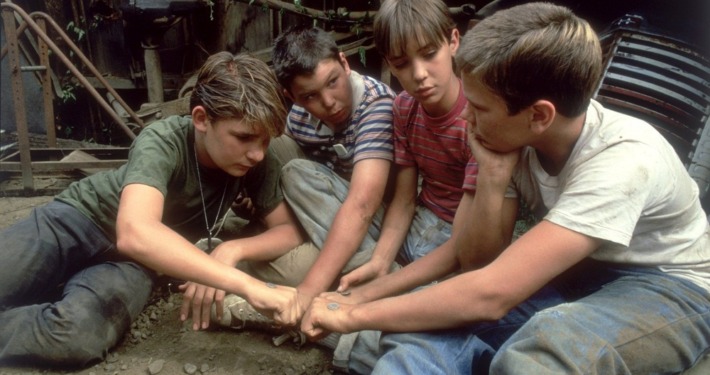
”Stand by Me”, 1986. Columbia Pictures
Stand by Me, 1986
Rob Reiner
“I never had any friends later on like the one I had when I was 12. Jesus, does anyone?” A group of four friends, lead by Chris (River Phoenix) spend the summer of 1959 doing pretty much nothing but hang out, until they find out about a dead body (the film is based on Stephen King’s book The Body) and set off on a long walk to find it. This is one of the most poetic films about friendship. There is wonderful sense of place in Stand by Me (childhood summers are so closely knit into the place we spent them in, aren’t they?), and an even more beautiful tale of friendship, depicting the games, thoughts, secrets and bonds shared by good friends. Over the years, it’s that tightly-knit friendship that has stayed with me, a window into my own childhood friendships, like something that still exists suspended somewhere in time, where you can return to and be best friends with the rest of the gang. (15)
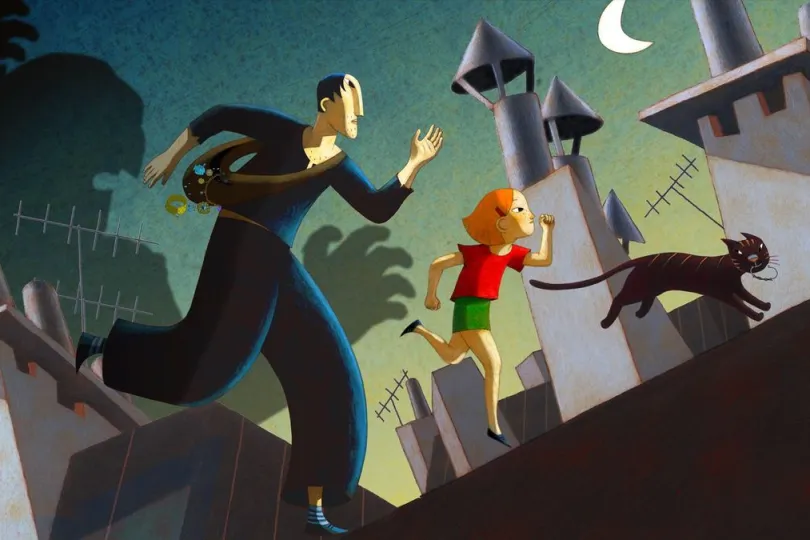
”Une vie de chat”, 2020. Folimage
Une vie de chat (A Cat in Paris), 2010
Jean-Loup Felicioli, Alain Gagnol
When everything seems to go in the same direction, and I am especially referring to Disney animated films, when you watch a film like Une vie de chat, you realise how much we have lost, creatively, emotionally, and our need to return to “more sensitive, more humane things”, as directors Alain Gagnol and Jean-Loup Felicioli remarked after their film’s release. With drawings made by hand, on paper, the old way (then scanned and transferred to computer for the finishing touches), the film is not only a celebration of traditional craftsmanship, but a good story about a cat that lives a double life, a pet for little Zoé by day and partner in crime for a burglar who uses the rooftops of Paris as escape routes by night, with a nice thrill of gangster films thrown in the mix. (PG)
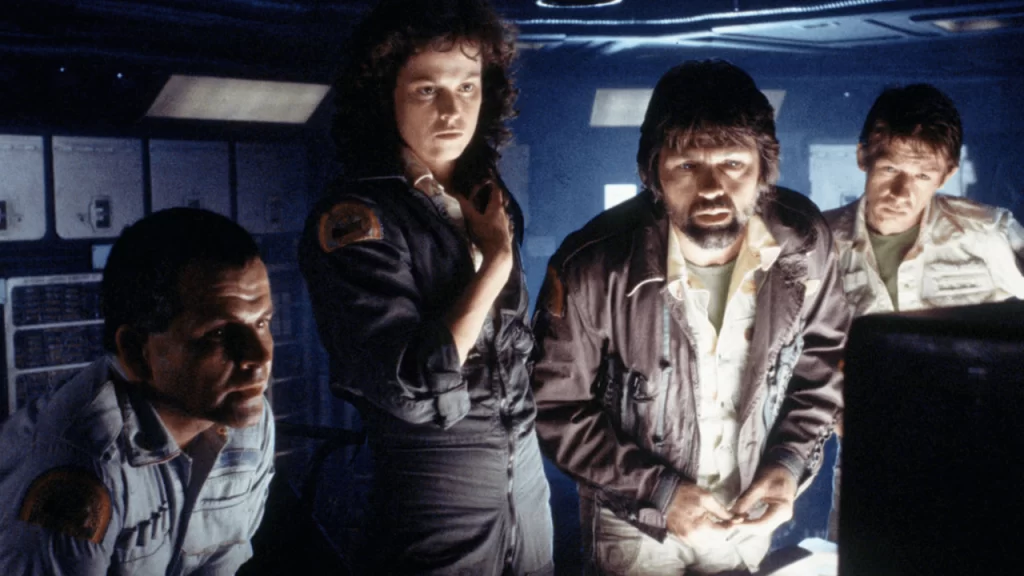
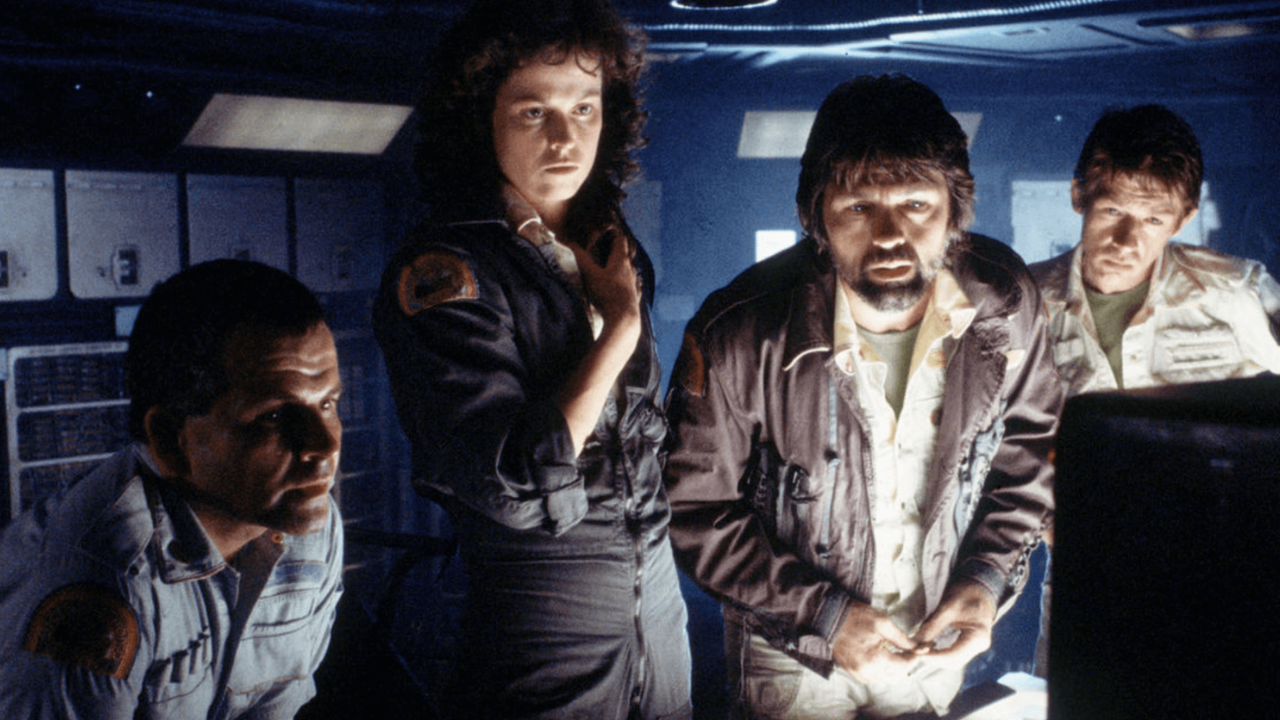
”Alien”, 1979. 20th Century Fox, Scott Free Productions
Alien, 1979
Ridley Scott
What, in my opinion, makes Alien extraordinary is that it belongs to itself, and to cinema. Retaining a trace of the independent spirit of the New Hollywood, as well as an European sensibility, Alien created a world that lived on its own. A world, mainly contrived to the interior of the ship Nostromo, with its empty and immersive corridors and spaces and a feeling of otherness, that I think can be best described as organic. It merges biology and technology in a way it had never been done before, nor since, in sci-fi cinema, investigating how it is to be human in a hostile universe where you encounter other biological and artificial life.
It is not an action film, there are no hierarchies, no gender references, no sentimental dialogue (all paths that, unfortunately, the ordinary sequels subsequently took). None of this matters out there, in the infinite space. There is something bigger than you out there. You simply get the sense of that watching the film. It uniquely conjures up primal emotions, the kind I imagine you would experience if you witnessed the dawn of human existence. That’s my personal relationship with Alien, one of those few films you don’t just experience, but rather inhabit.
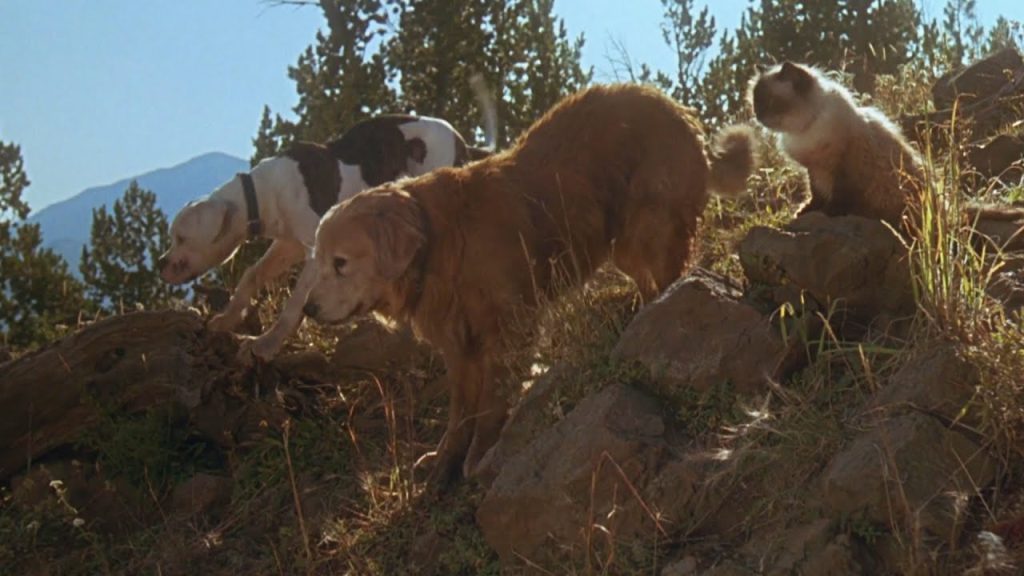
”The Incredible Journey”, 1963. Walt Disney Productions
The incredible journey, 1963
Fletcher Markle
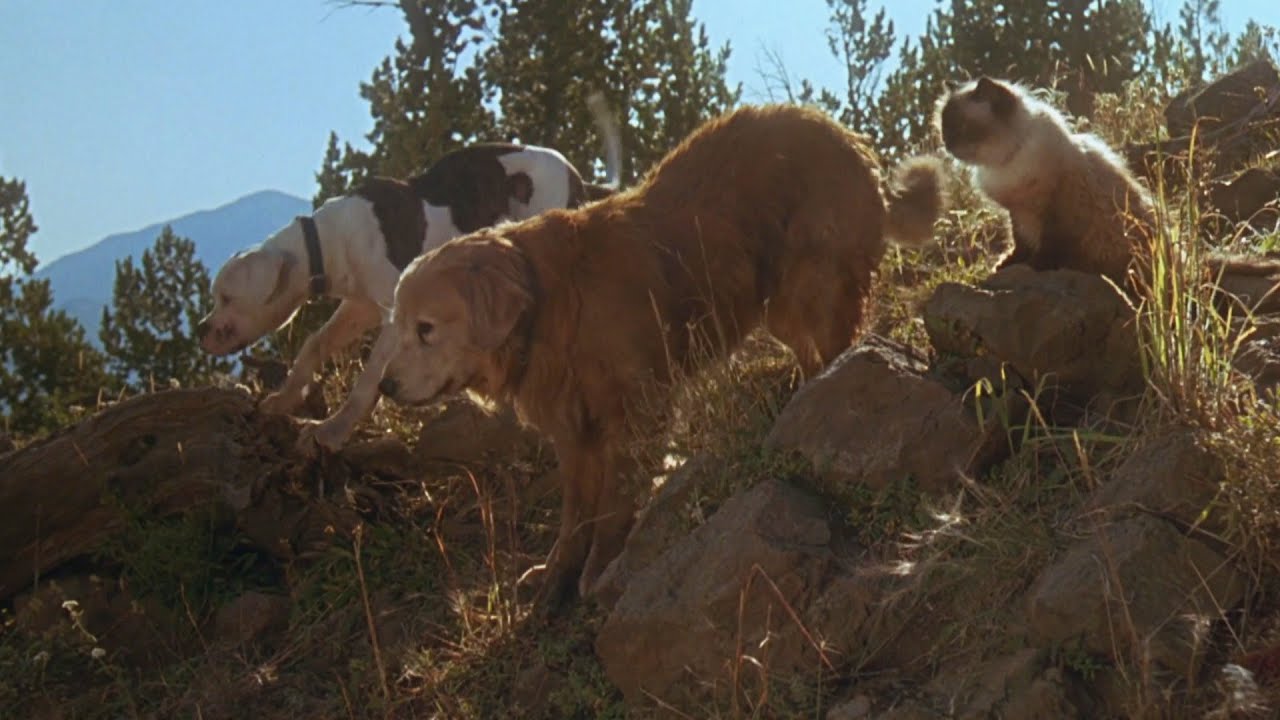
Granted, I watched this film, about three pets, two dogs and a cat, who cross a perilous mountain range to go home, with my son, and that’s part of the reason why I liked it very much. It’s about an exciting and charming adventure that doesn’t have to make perfect sense but catches children’s enthusiasm. (U)
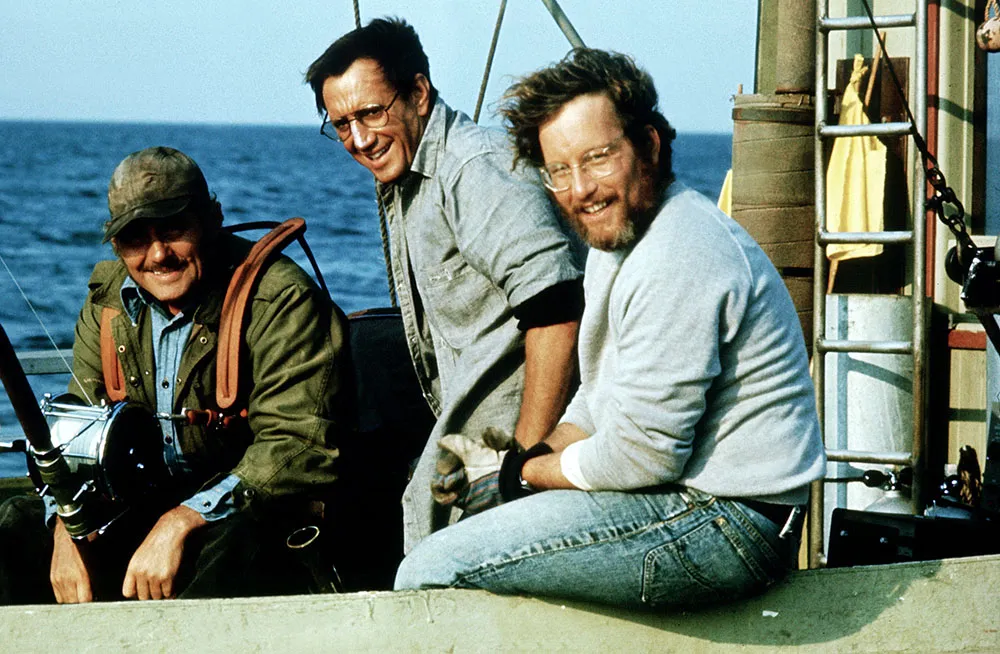
”Jaws”, 1975. Universal Pictures, Zanuck/Brown Productions
Jaws, 1975
Steven Spielberg
Jaws is a classic. It is also a (the) blockbuster. But a blockbuster in the 1970s meant an entirely different thing than it means today. Most importantly though, it’s a great film. Brilliant and terrifying, Hitchcock-style. Jaws (1975) is plain and simple a great adventure movie and one of the most effective thrillers ever made, the kind that keeps you on the edge of your seat, getting you to identify with the characters and asking yourself what you would do if you were them. It is a story that scares the hell out of you from the very beginning (skillfully using the power of the unseen – it is what you don’t see that scares you the most), which is why, I think, it is perfect to watch on the idle days of summer. (A)
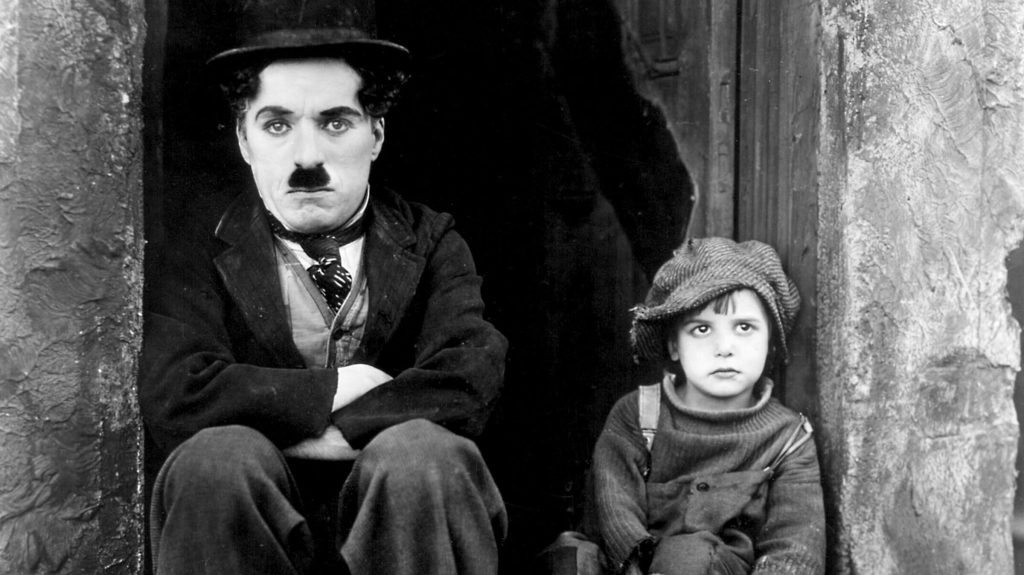
”The Kid”, 1921. Charles Chaplin Productions
The Kid, 1921
Charlie Chaplin
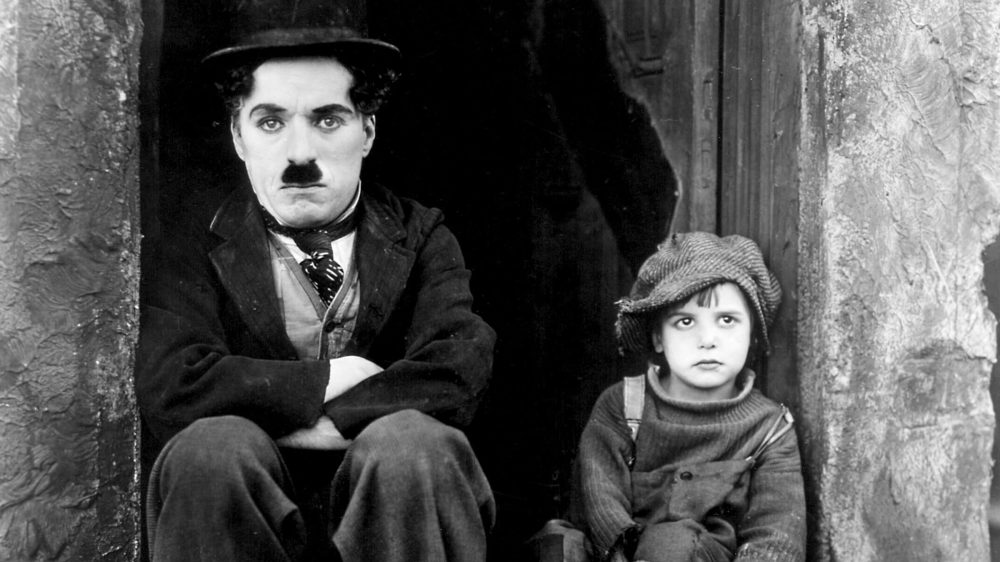
Chaplin’s silent films will never age. There is such fluidity in the narrative, so much is said with so little, they make you laugh hard, and show you a hint of darkness in the human heart… They can’t be really explained in words, they are simply fascinating to watch. And everyone is moved not just by the humour of The Tramp’s body in motion, but by the weaknesses of the character – a universal language that is not just always in action, but instantly reacts to the surrounding world. It makes you present. (U)
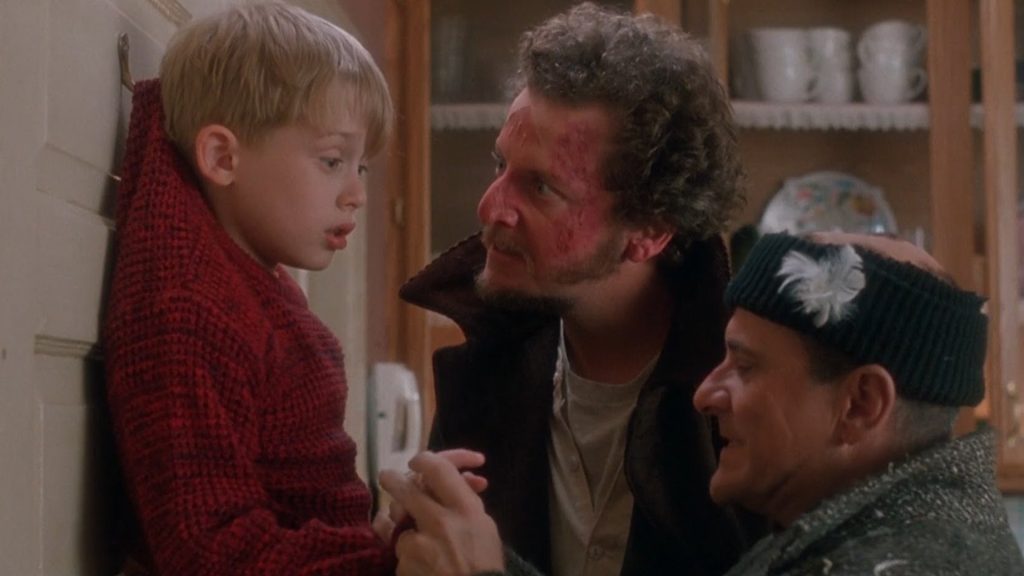
”Home Alone”, 1990. 20th Century Fox, Hughes Entertainment
Home Alone, 1990
Chris Columbus
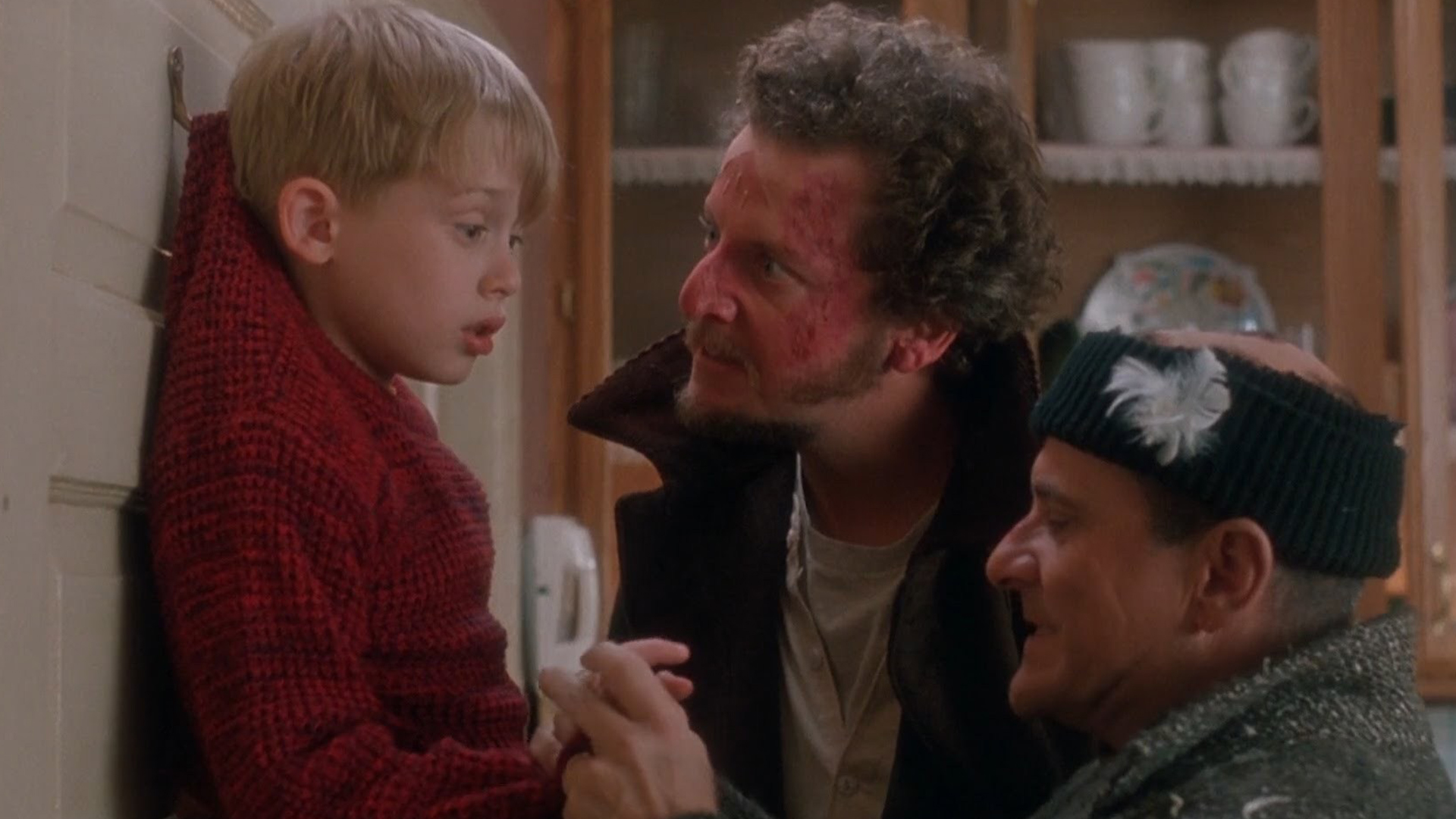
The ultimate Christmas film, in the best possible sense. The laughs are the same, no matter how many times I have watched it, and so are the tears that never fail to come out at the sentimental ending (thanks to the wonderful Catherine O’Hara) that, surprisingly, doesn’t bother me. The turtle doves scene in Home Alone 2 is always a reminder to look for the special significance of Christmas each year. (PG)
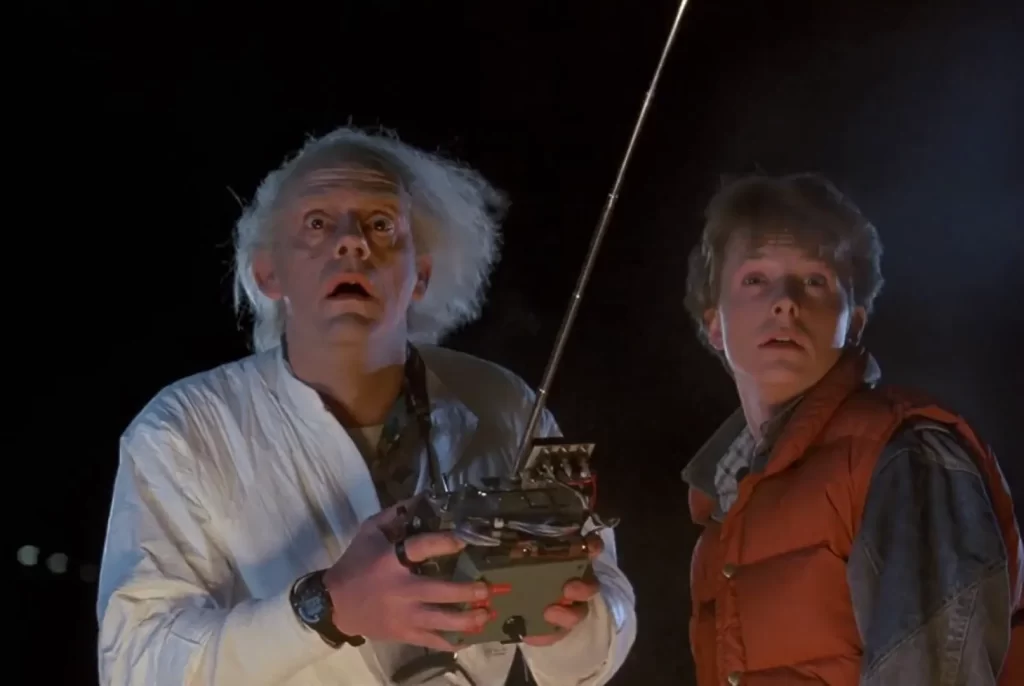
”Back to the Future”, 1985. Universal Pictures, Amblin Entertainment
Back to the Future, 1985
Robert Zemeckis
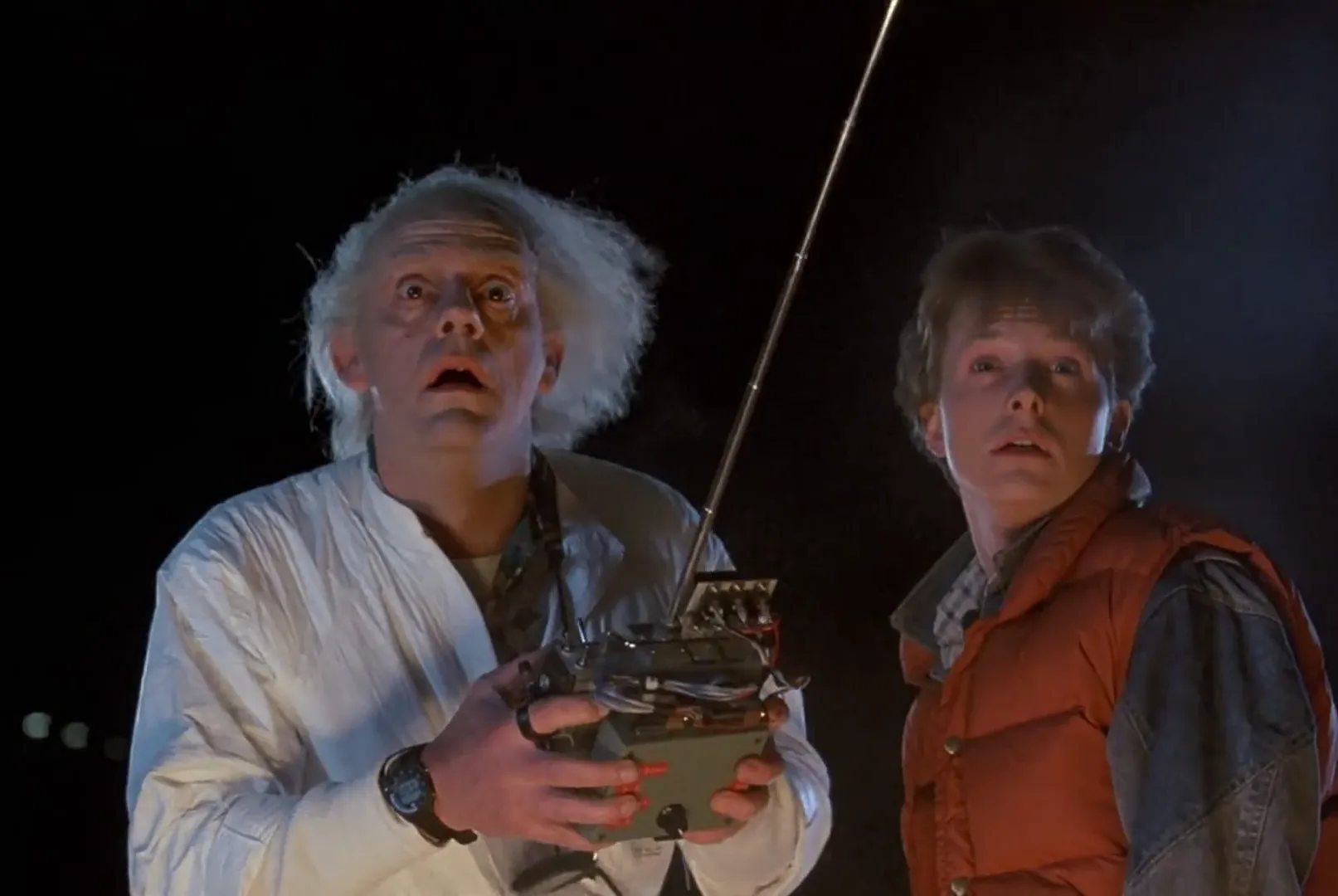
When the stars align, or, more realistically speaking, when the many moving parts that create a film work in perfect harmony, a movie reaches the public’s imagination on a whole new level than the rest and is burnt forever in their collective memory. And sometimes they continue to reach the hearts of the next generation and the next. Back to the Future was one such film. Marty (Michael J. Fox) is a seventeen year old who spends most of his time with Doc (Christopher Lloyd), whose latest homemade invention is a time-travel machine in the shape of a DeLorean car – “If I am going to build a time travel machine, why not make it in style?” – that accidentally sends Marty 30 years back in time, back to his hometown when his parents were themselves teenagers and had barely met. And so he interferes with the course of history ad his whole existence is put into question.
“Back to the Future is a comedy-adventure-science-speculation-coming-of-age-rock-and-roll-timetravel-period-film,” director Robert Zemeckis told Films and Filmmaking. It’s the blend of all those things that appealed to the imagination of moviegoers generations apart. It is a film that is witty in portraying two epochs and two generations with humorous, intelligent and ironic references to popular culture and American history and with a fantastic soundtrack that goes from the edgy 80s music (Huey Lewis and the News, Eric Clapton, Phil Collins, Fleetwood Mac) back to the early classic rock of Etta James, Johnny Otis, Chuck Berry. The contrast between the 1950s and the 1980s provides a good deal of humour for the film’s main characters, as Bob Gale explains, “I think one of the great time travel fantasies is the idea of going back and being superior because you have prior knowledge in those areas.” (PG)
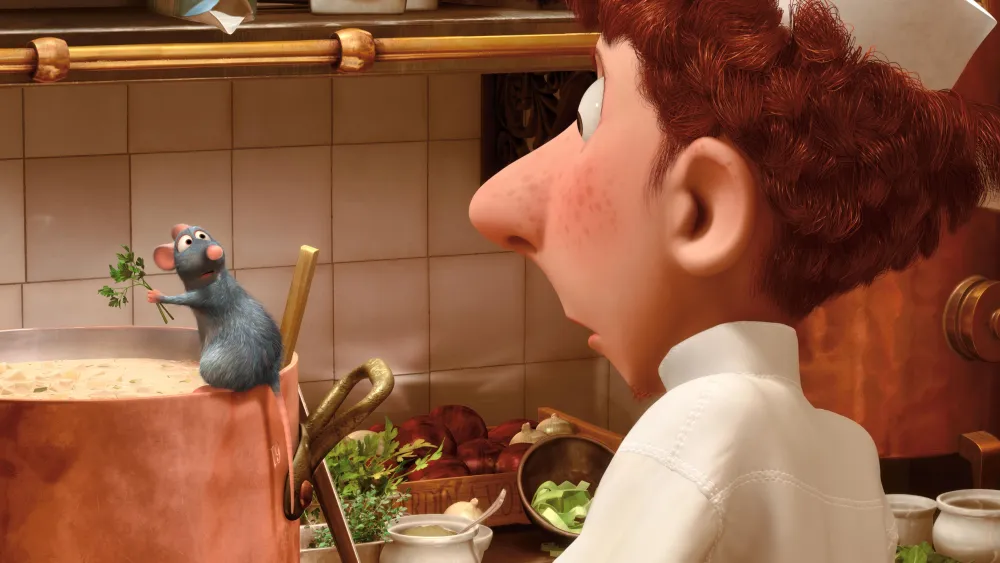
“Ratatouille”, 2007. Pixar
Ratatouille, 2007
Brad Bird
One of the things I love the most about this beautiful film is that it has taught me a universal truth when I watched it on repeat with my son (it was his first favourite film, until he saw Jurassic Park): children will always root for animal characters more than for any other character. (U)
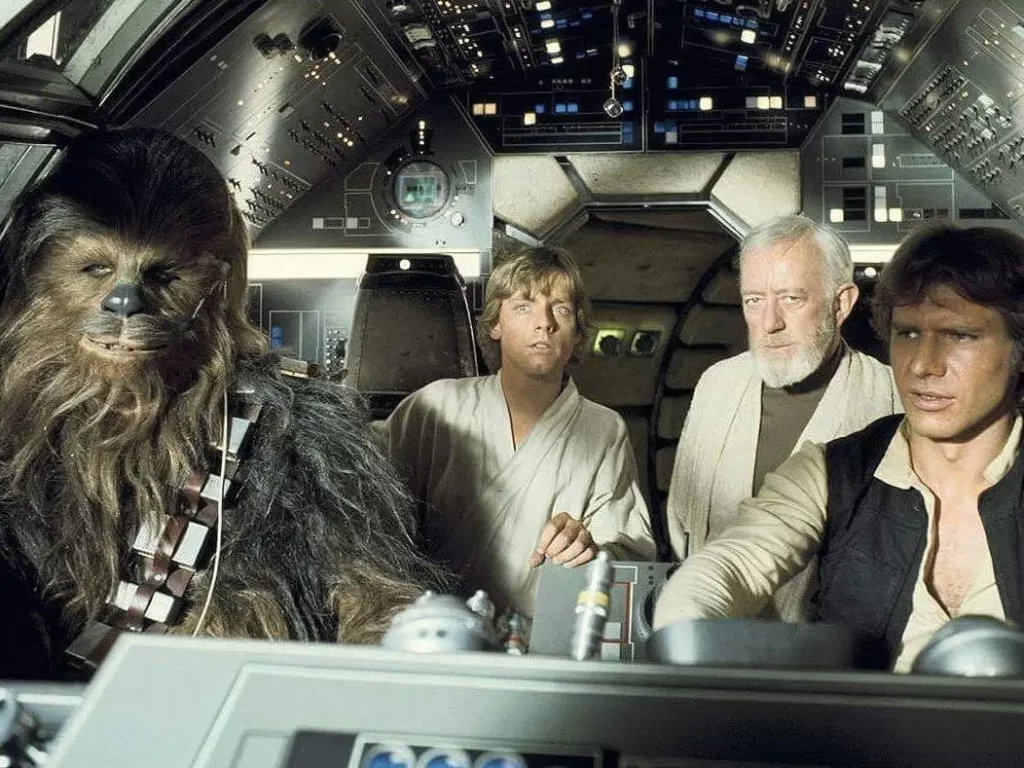
“Star Wars”, 1977. Lucasfilm, 20th Century Fox
Star Wars, 1977
George Lucas
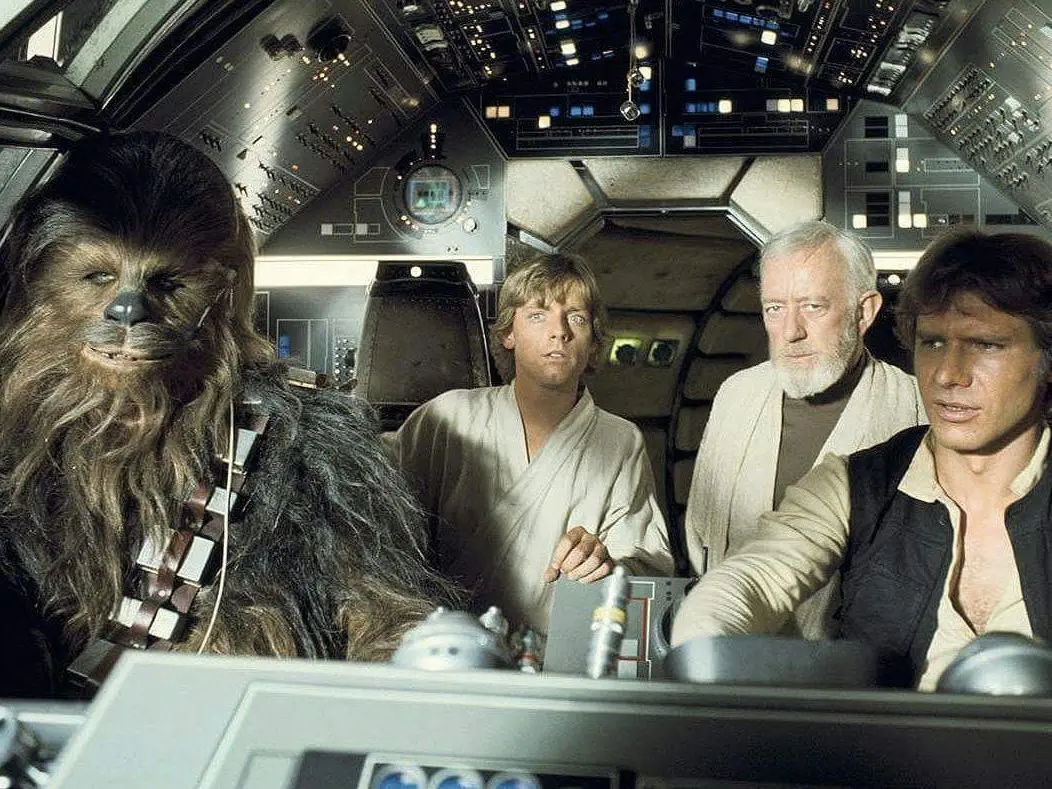
“I wanted to make a film for kids, something that would present them with a kind of elementary morality. Because nowadays nobody bothers to tell those kids, ‘Hey, this is right and this is wrong.’” This is a film that can simply connect with every age group. I did not grow up watching Star Wars. In fact, I watched them for the first time with my son, usually over summer holidays, and I came to appreciate them more than I had expected, from the sheer enthusiasm put into their making and the way in which George Lucas clearly embraced the form of this specific medium of telling stories, to the escapism so beautifully crafted. (U)
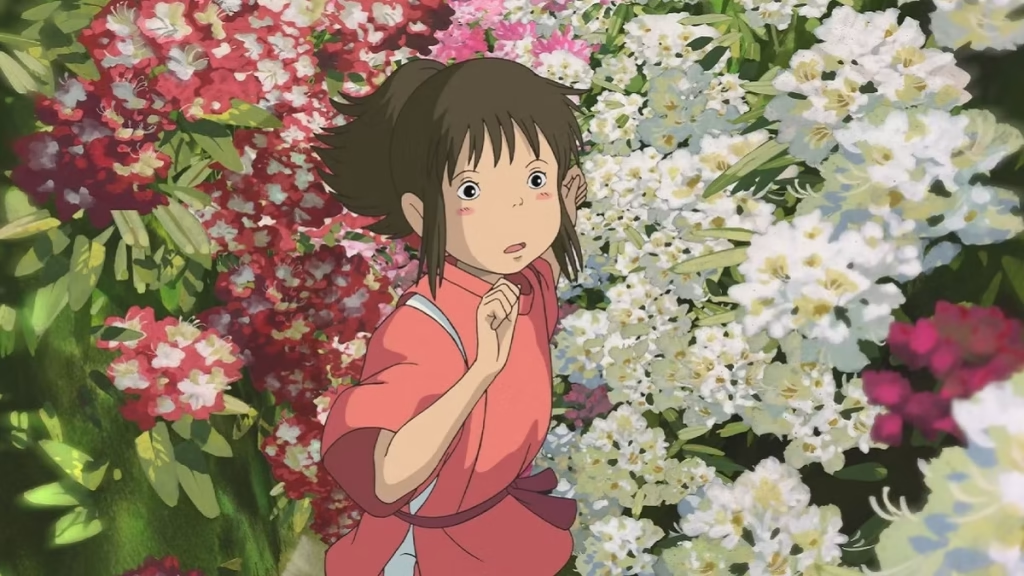
”Spirited Away”, 2001. Studio Ghibli
Spirited Away, 2001
Hayao Miyazaki
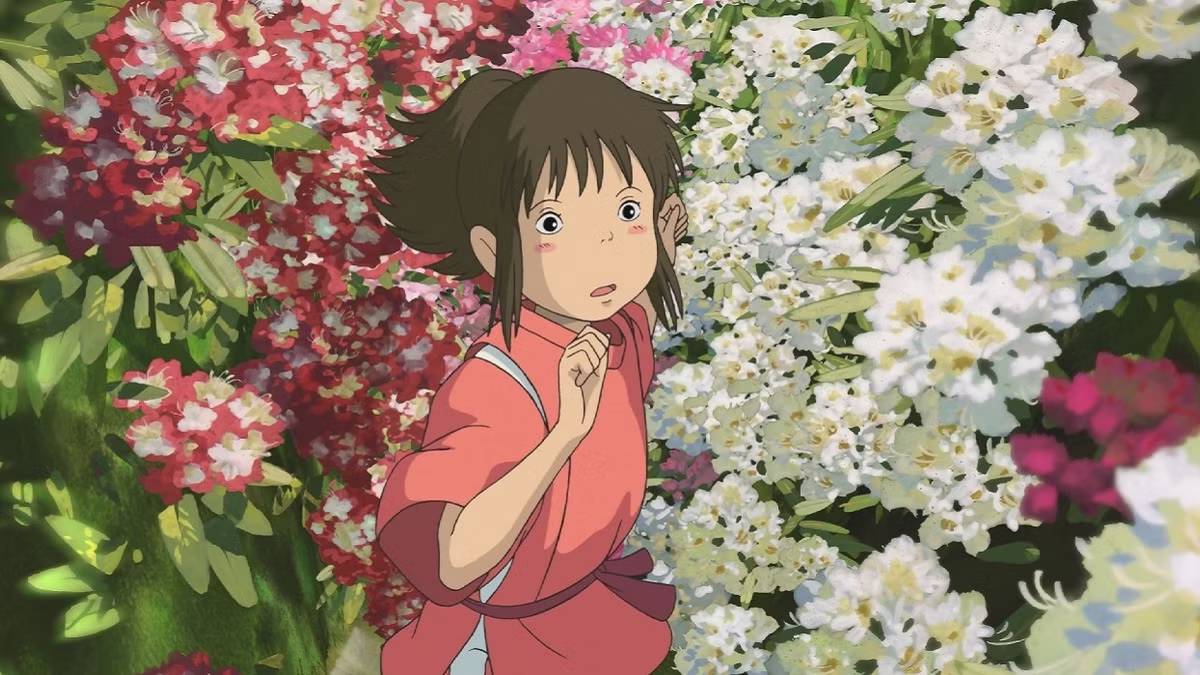
When Chihiro and her parents take a wrong turn on their way to their new home, they stop to look around and go through a tunnel at the end of which they reach a strange world, a seemingly deserted themed park. When night falls, the park becomes a world populated by spirits and witches, dust balls and a river creature whose body has absorbed decades of pollution – again, it’s amazing on how many levels Miyazaki’s stories work. Chihiro has to work at a bath house so that she, with the help of a young boy who himself had long ago entered this world and now can not escape, can save her parents who have been transformed into pigs.
Once again, Hayao Miyazaki’s fantastic world is unlike anything done before, free from typical fairy tale heroes and anti-heroes. Miyazaki’s characters are driven by their own logic. Good characters can become evil just by a change of scenery, can take the shape of human, animal or river spirit, a child enters a strange world and anything can happen. It’s simply this free flow of events and transformations and beings that just happen, that just are. And the beauty of it all is that they take you along for the ride. And you just have to do what children do: be astonished! (PG)
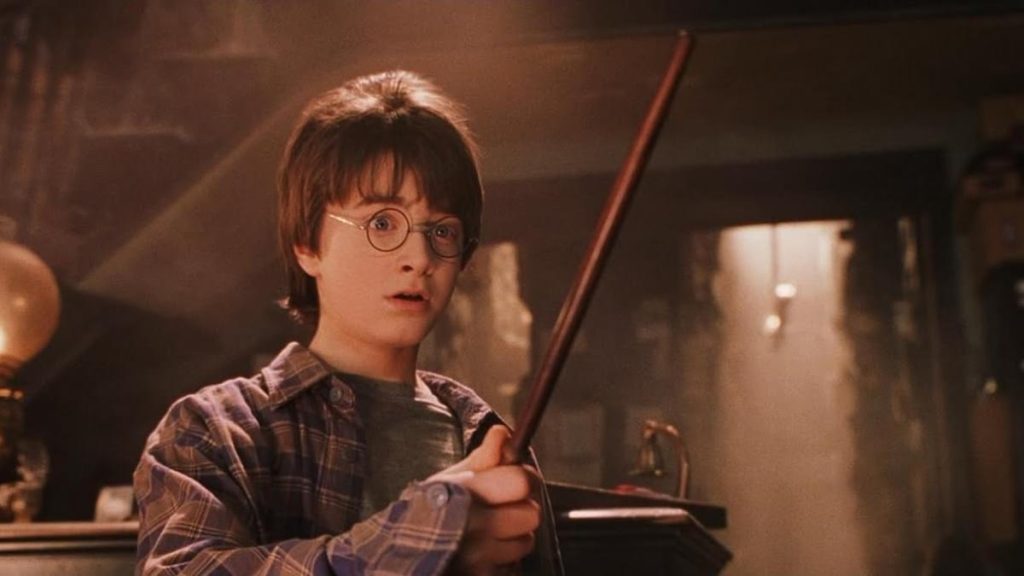
”Harry Potter and the Sorcerer’s Stone ”, 2001. Warner Brothers
Harry Potter and the Sorcerer’s Stone, 2001
Chris Columbus
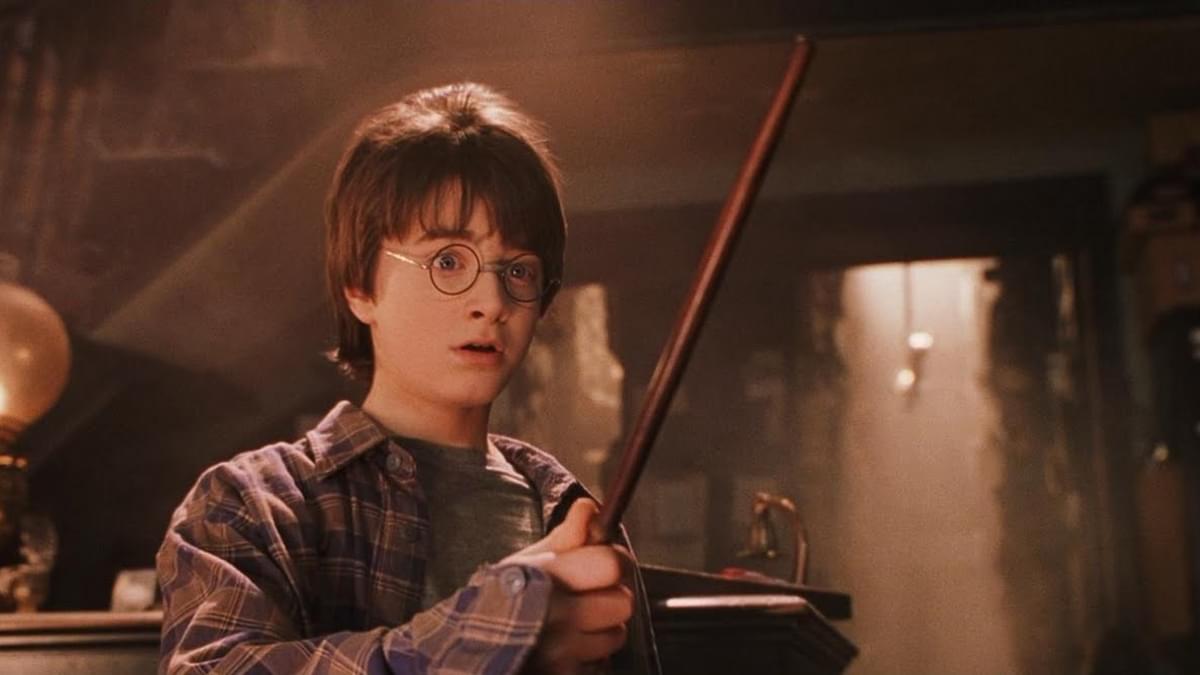
There are 8 films in the Harry Potter franchise, but I am putting down the first one, because it was Chris Columbus who unlocked the magic of the Harry Potter world to us all. He also directed the second film, Harry Potter and the Chamber of Secrets and returned as a producer for the third, directed by Alfonso Cuaron, Harry Potter and the Prisoner of Azkaban (one of my favourites), and it feels like he was the one who took us on this fantastic journey that gets darker and darker with each film. To quote Ethan Hawke during a Q&A that I took part in some years ago, “if it [Hogwarts] really existed, I wish I were cool enough to go there”. (PG)
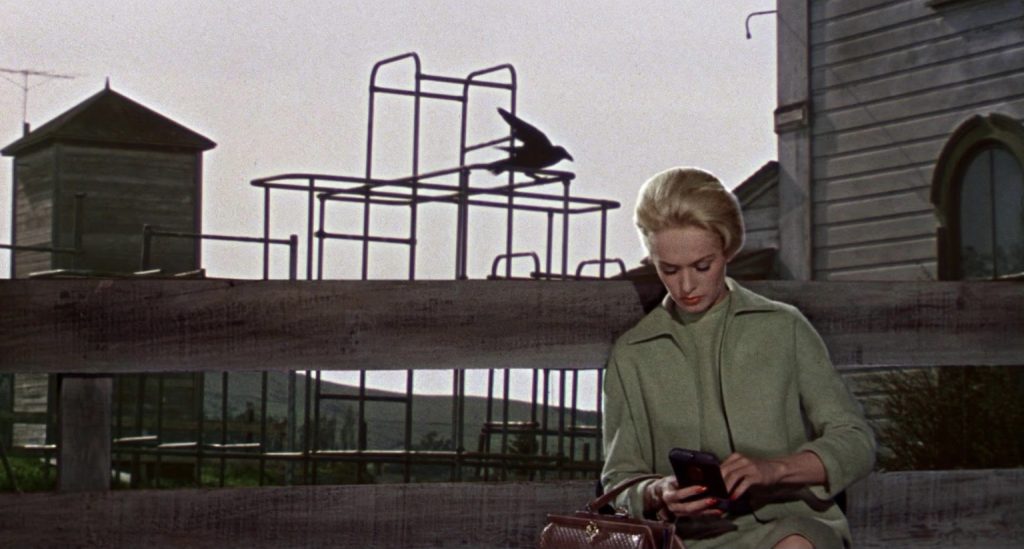
”The Birds”, 1963. Alfred J. Hitchcock Productions, Universal Pictures
The Birds, 1963
Alfred Hitchcock
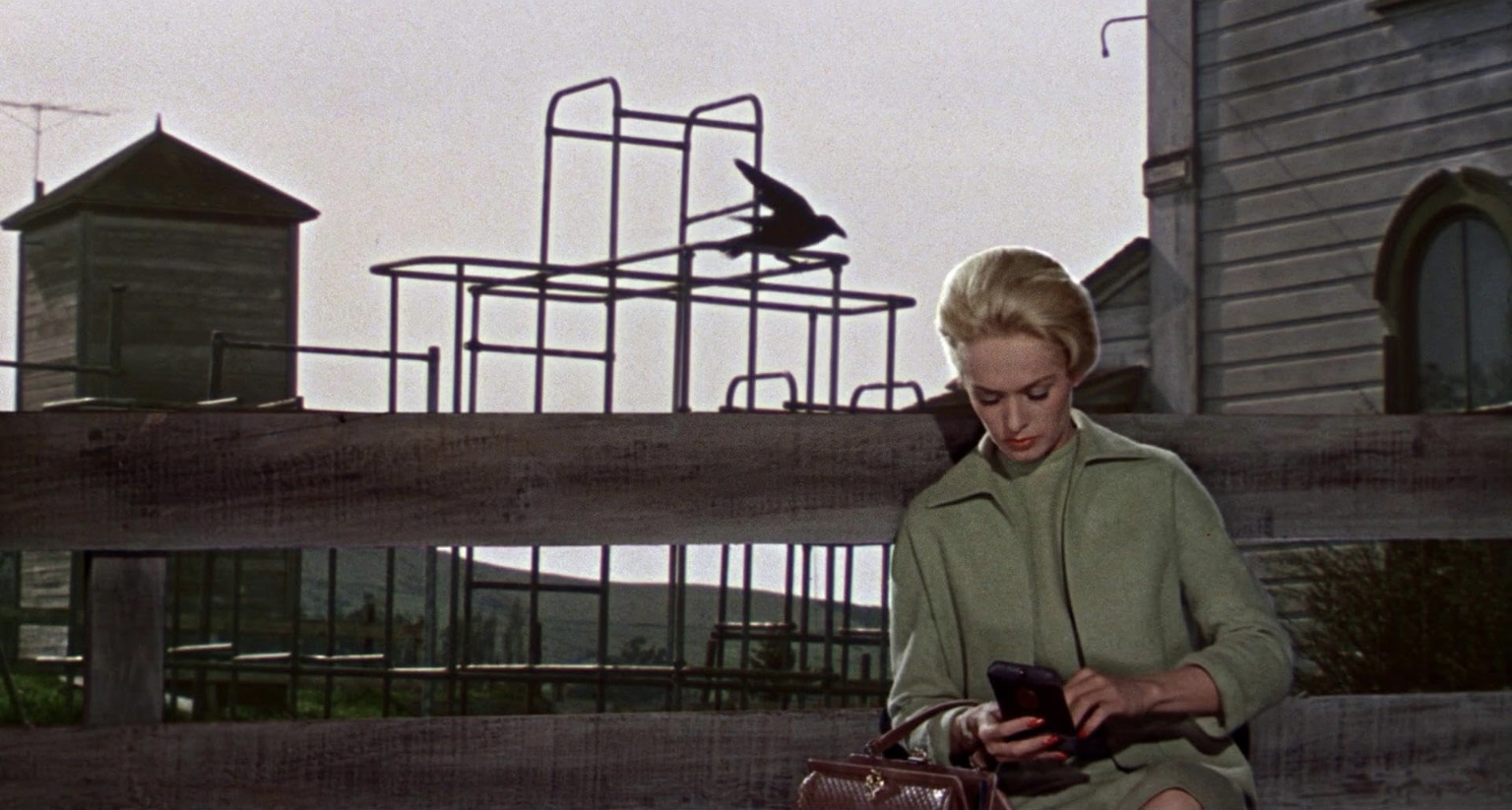
In the Bodega Bay schoolyard, crows are flocking one by one behind Melanie Daniels (Tippi Hedren), who is waiting outside for the children to finish class. There is a long, silent gathering behind the protagonist, no apparent explanation of what attracts them there. But when Melanie eventually turns around, after catching the sight of a bird approaching in flight, the climbing frame is jammed with crows. That scene alone is probably more surprising and shocking than the actual attack upon the children that follows or any other scene in the film, and I think it is brilliant in showing even children a thing or two about cinema.
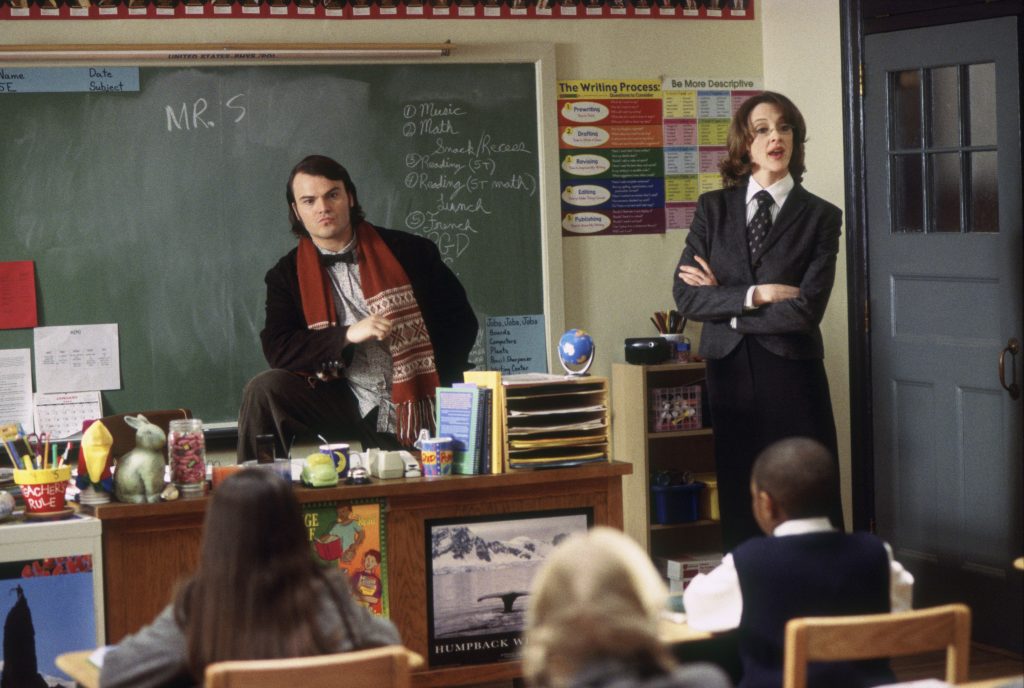
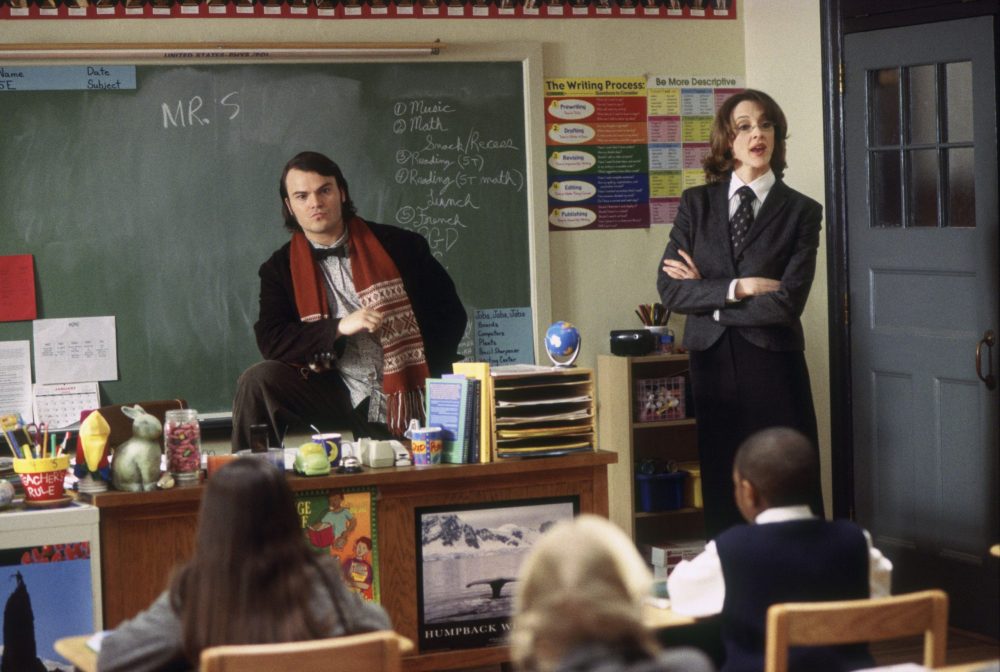
”School of Rock”, 2003. Paramount Pictures
School of Rock, 2003
Mike White
Jack Black teaches children rock in school. Yes, rock, good music, should be taught in schools. This film is downright funny and it brings me joy to see how music brings children, parents and teachers together. (PG)
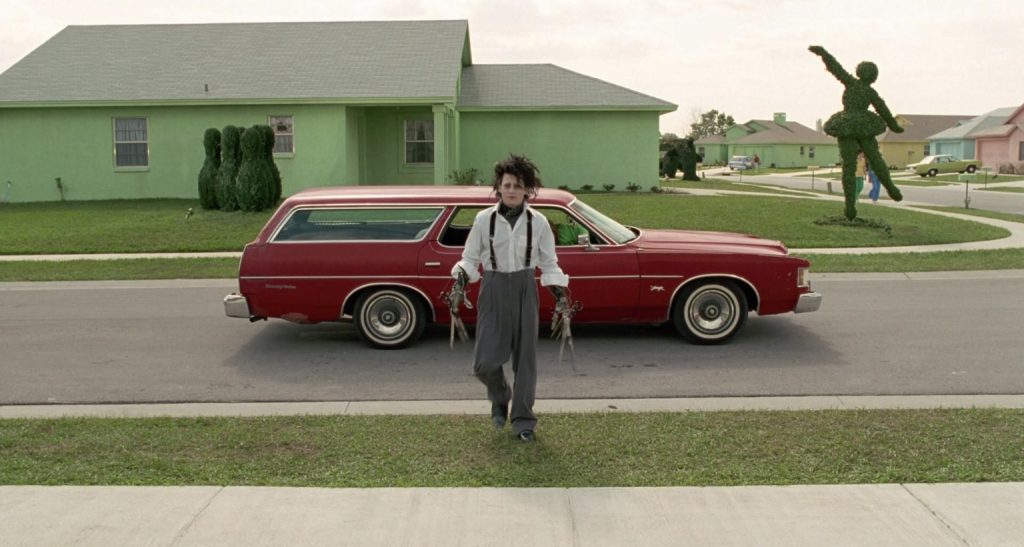
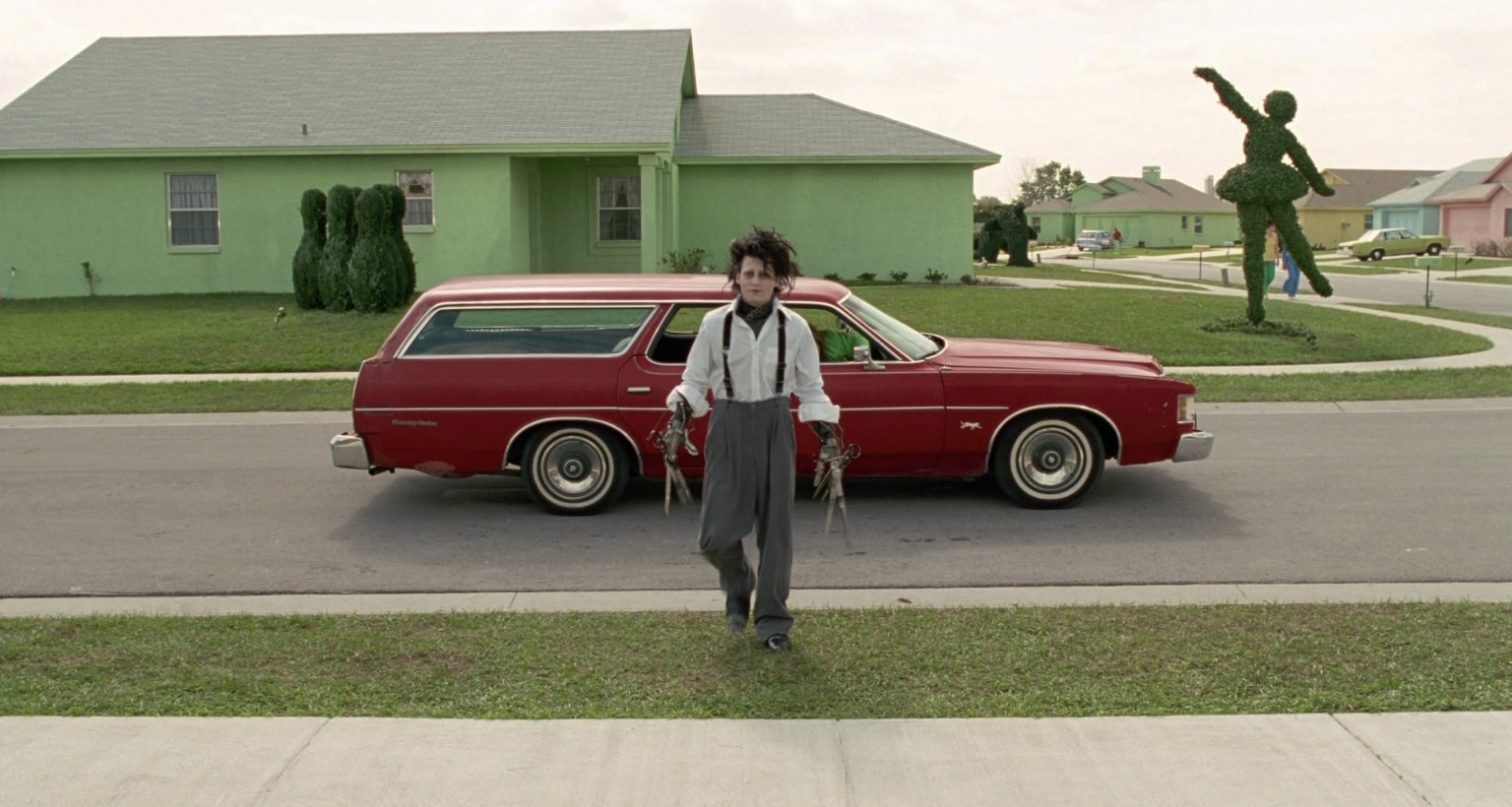
”Edward Scissorhands”, 1990. 20th Century Fox, Tim Burton Productions
Edward Scissorhands, 1990
Tim Burton
Edward is a lost soul. He is an unfinished artificial humanoid, with scissors instead of hands, because his inventor died before he had the chance to finish him. It is a timeless fairytale, whimsical and profoundly moving. It is about the sadness of being misperceived, and Johnny Depp, with his sensitive performance and eyes that can say things without speaking, plays him to perfection. As we follow him from his solitary gothic world to the pastel-coloured, stylised suburbia neighbourhood among people, we root for this innocent and lonely outsider desperate to fit in, but realising, before he does, how much more special it is to be different, but how painful it is, too, to discover that the most affectionate and the gentlest touch of his scissorhands can make others suffer. (12)
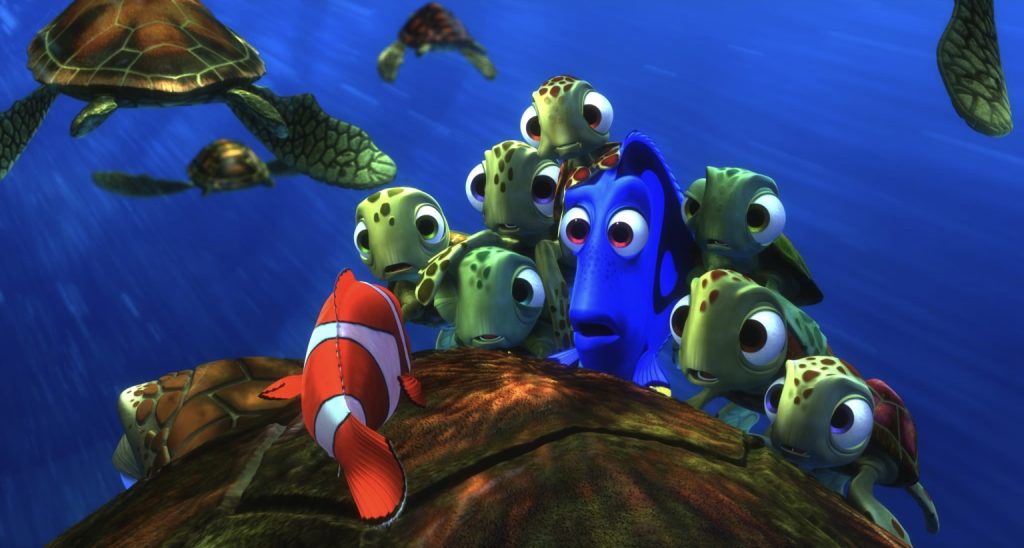
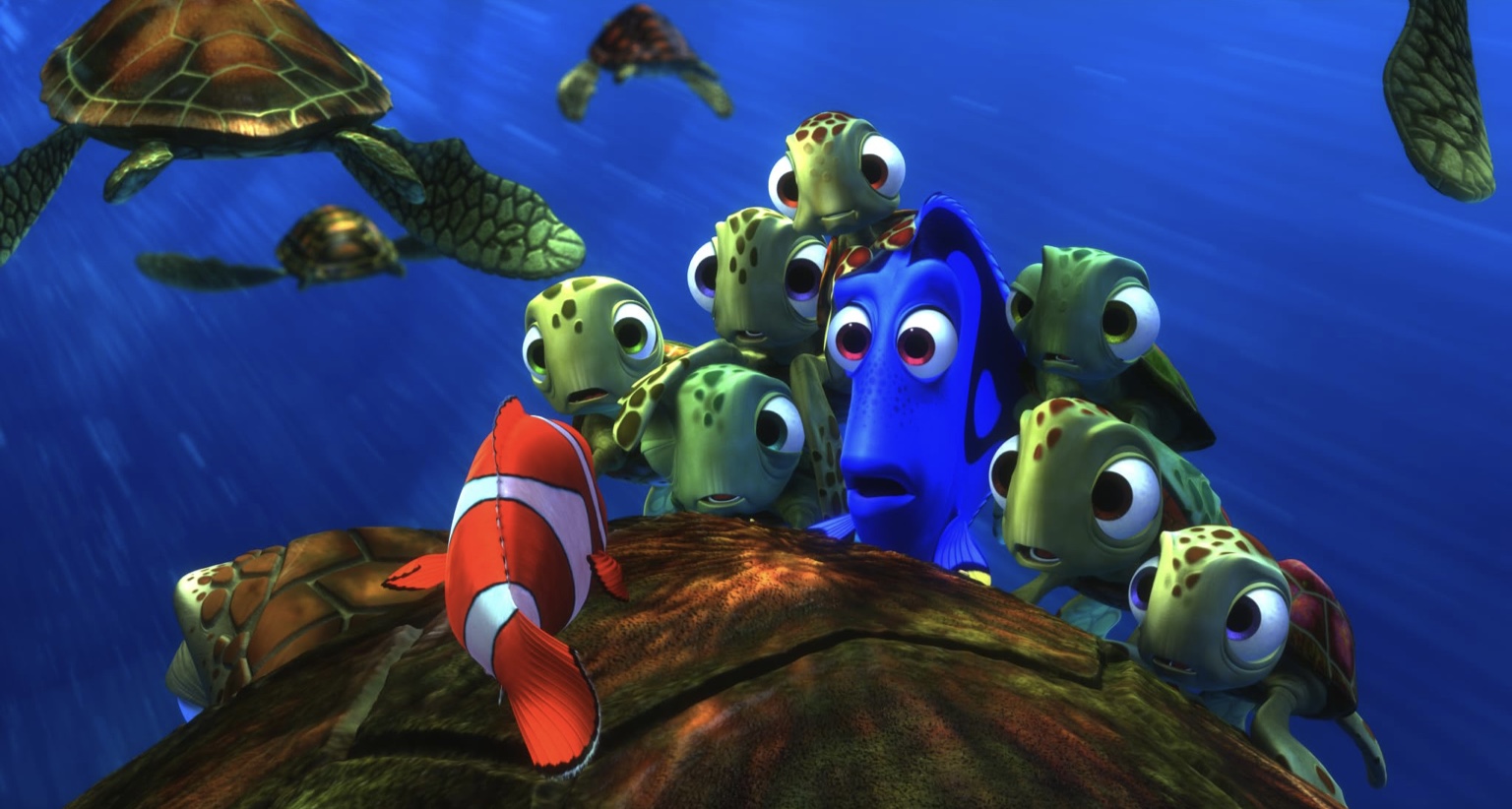
”Finding Nemo”, 2003. Pixar, Walt Disney
Finding Nemo, 2003
Andrew Stanton
I love how Finding Nemo succeeds in engaging children in the story from the get-go, taking them on this colourful, wondrous and action-driven adventure. But the most beautiful part is that the best character is the father – we need more such father-figure characters, don’t you agree?(U)
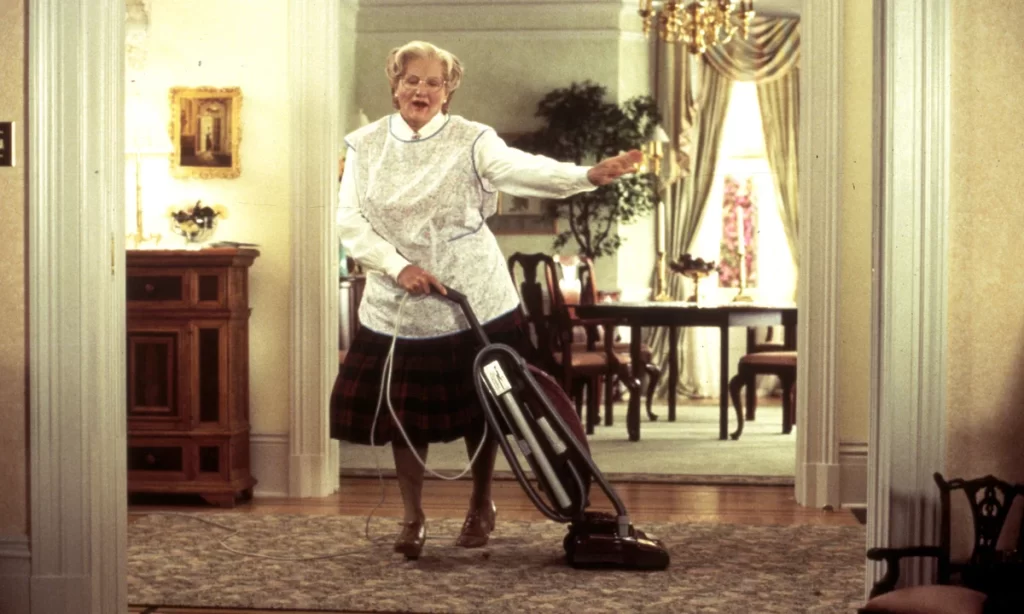
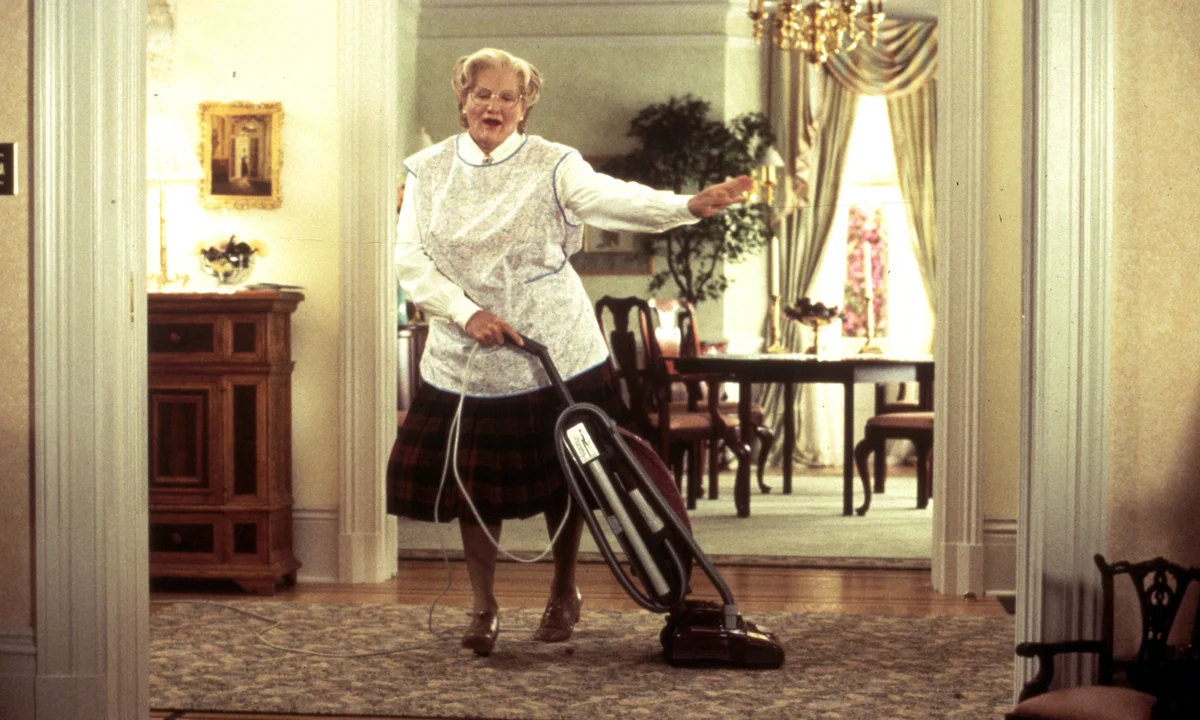
”Mrs. Doubtfire”, 1993. 20th Century Fox
Mrs. Doubtfire, 1993
Chris Columbus
This is one of those rare movies that make you feel sadness now and one minute later make you laugh out loud, and it does it with genuine warmth and perfect comedic timing, led by the incredible acting force that was Robin Williams, with his instinctive talent for slapstick and physical comedy, but also with the biggest heart of the most loving father – I don’t think I have ever seen a father character more lost than when he loses custody of his children after divorce. Children love the funny parts, but, between the laughs, they also understand that life gets complicated. Yet the underline is that we must believe that things will work out in the end. (12)
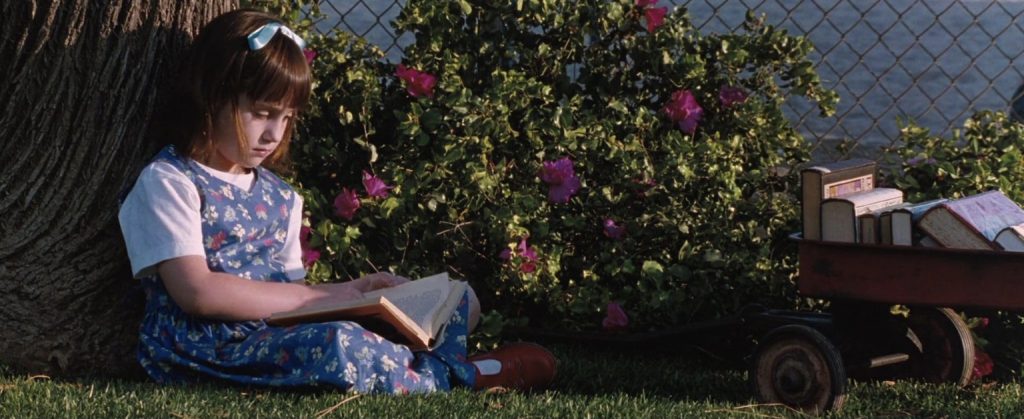
”Matilda”, 1996. TriStar Pictures
Matilda, 1996
Danny DeVito
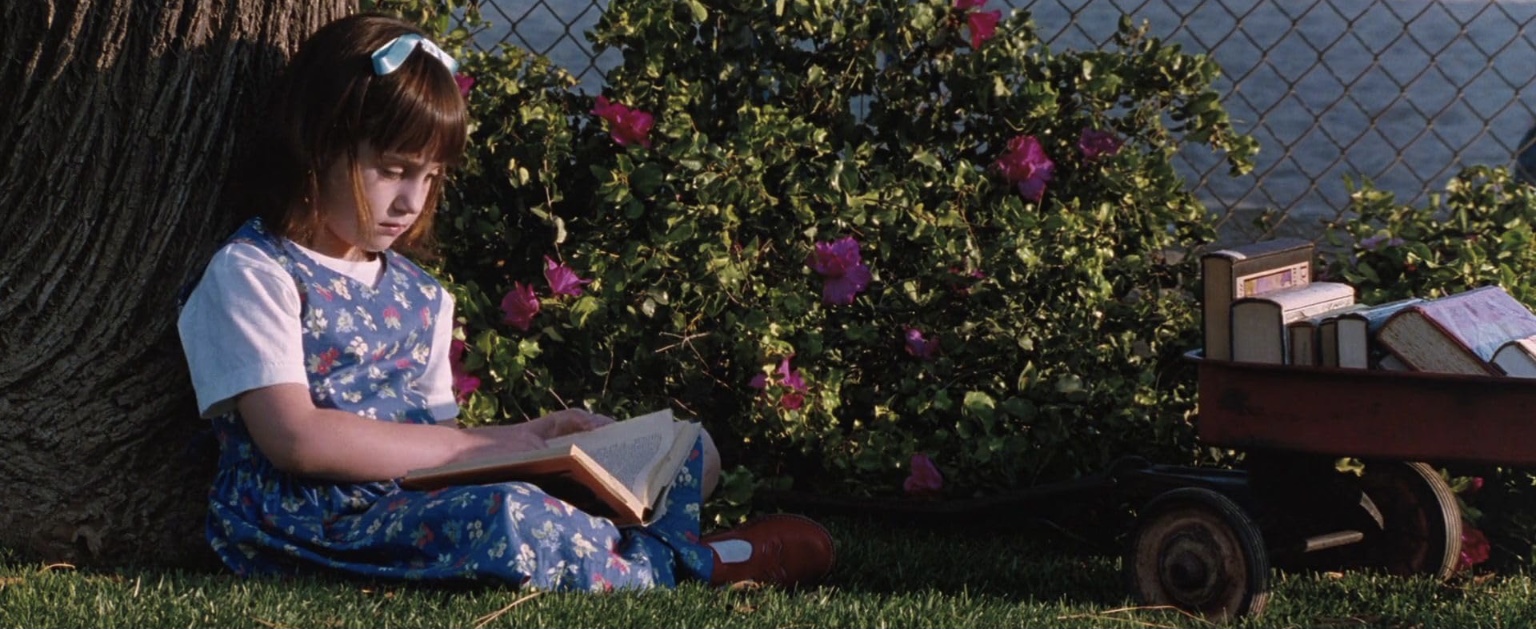
One of the best adaptation of a Roald Dahl book. Because I do think that it’s important to expose children to Dahl’s universe. As Wes Anderson told Matt Zoller Seitz in their book, “Roald Dahl really did have a knack for seeing from a child’s point of view. The details he focuses on and vividly describes are just the ones that might most fully and directly capture a child’s attention and inspire a child’s imagination. Or it might just be that his books show a true interest in the things that make children laugh and frighten them. He never particularly held himself back from the extremely scary or disgusting things. He had such a broad imagination and would turn some real-life inspiration into something fabulous. He also had this tremendous facility with inventing characters, and he could just weave a plot that was real.” (PG)
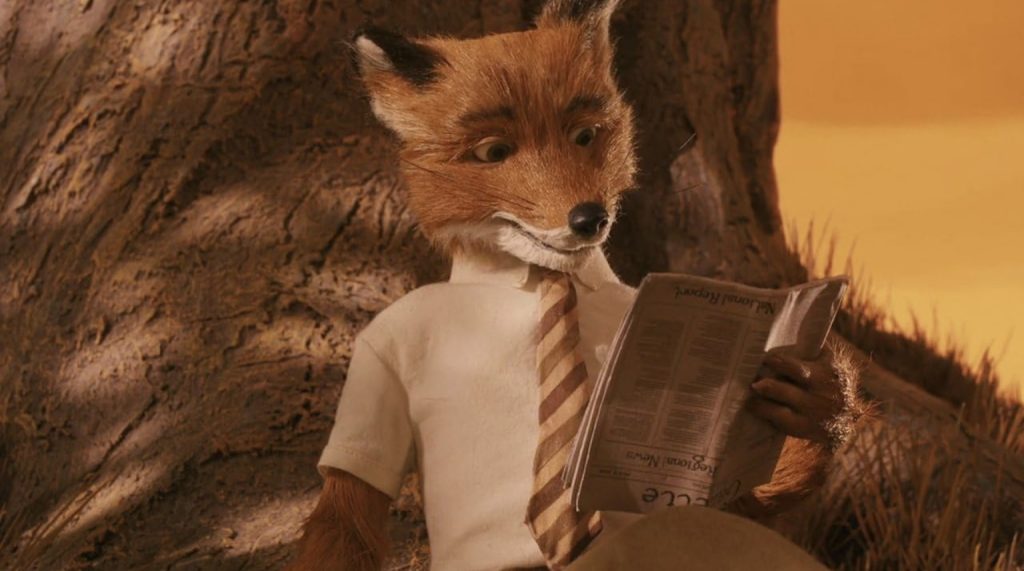
”Fantastic Mr. Fox”, 2009. 20th Century Fox, Indian Paintbrush
Fantastic Mr. Fox, 2009
Wes Anderson
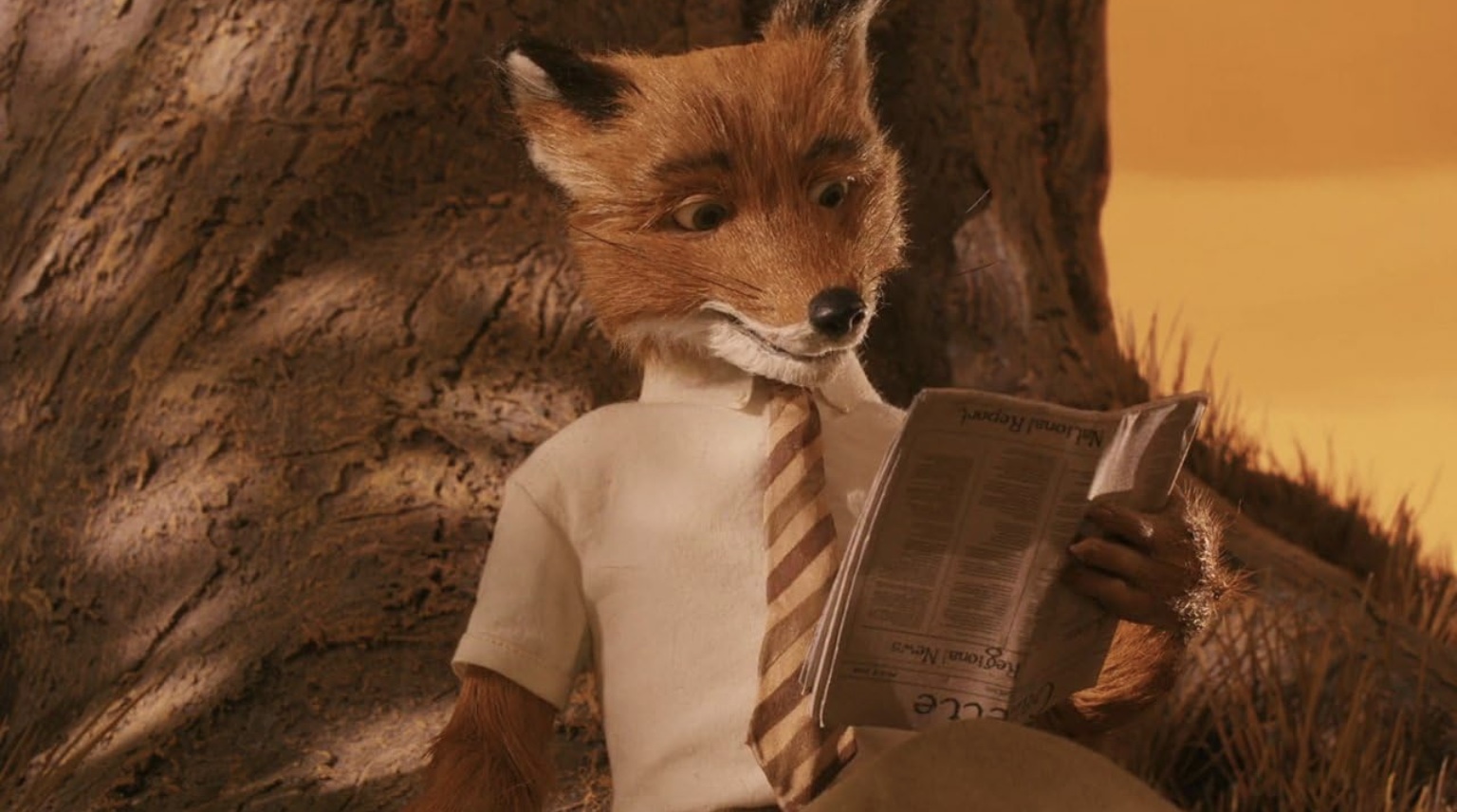
This stop-motion cartoon about a family of chicken-stealing foxes and the corporate farmers trying to snuff them out is truly my favourite Roald Dahl adaptation. Wes Anderson’s incomparable cinematic style and themes and the kind of universe he creates to surround his characters with are all there and the best part is that children, too, can understand them and enjoy. (PG)
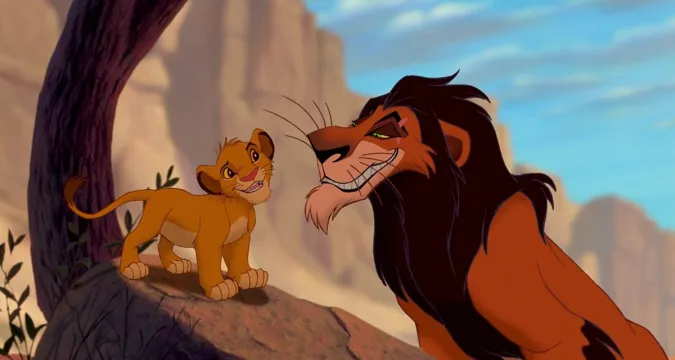
”The Lion King”, 1994. Walt Disney
The Lion King, 1994
Roger Allers and Rob Minkoff
Having such a wonderful bad character in Scar, voiced by Jeremy Irons, makes it so much more interesting. (U)
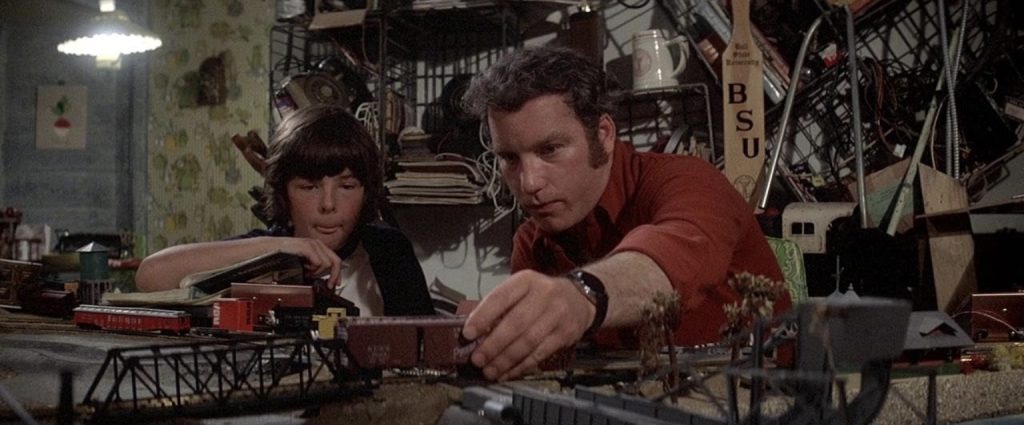
”Close Encounters of the Third Kind”, 1977. Julia Phillips and Michael Phillips Productions, EMI Films
Close Encounters of the Third Kind, 1977
Steven Spielberg
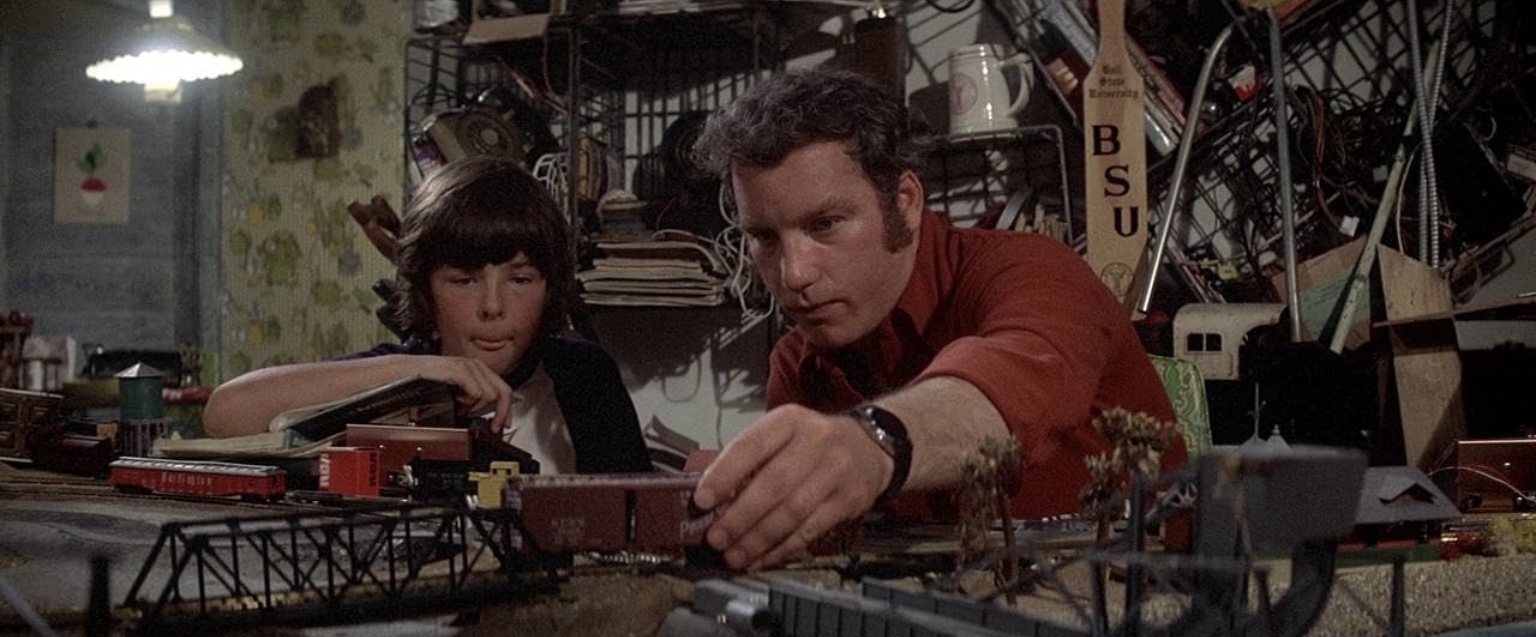
During a night-time procedure, electrical engineer Roy Neary (Richard Dreyfuss) has a strange experience: he sees aliens. But no one believes him. He is fired from the company, everybody makes fun of him and he is misunderstood even by his family. What he doesn’t know is that his encounter is part of a strange phenomena that have been occurring around the world. This is a more serious, more complex, more mature sci-fi narration than E.T. and the great thing is that children as small as 8 years old love serious, thought-provoking sci-fi questions and stories. (A)
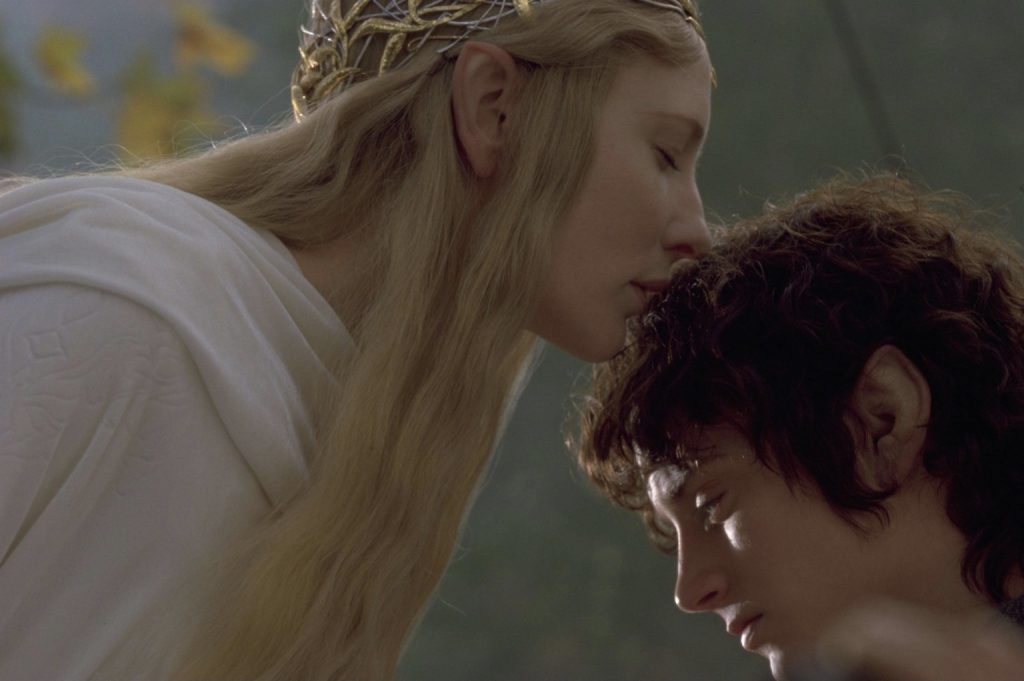
”The Lord of the Rings: The Fellowship of the Ring”, 2001. New Line Cinema
The Lord of the Rings, 2001, 2002 & 2003
Peter Jackson
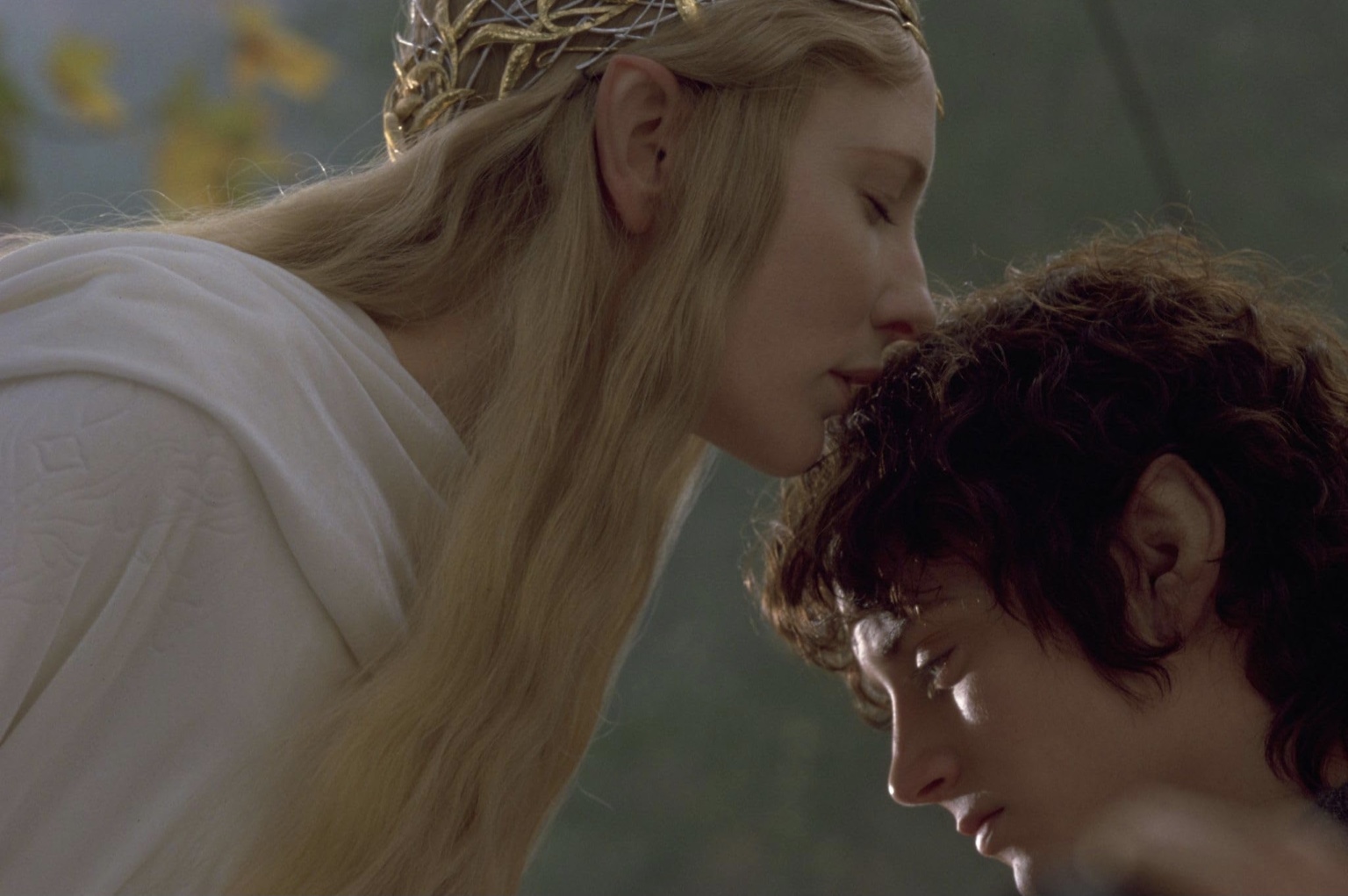
Every film is a world in itself, but few take you on such an amazing journey like The Lord of the Rings trilogy. And for children, entering this world of fantasy will work up their imagination and sense of curiosity just like a book does, but enhanced by the visual spectacle. (PG)
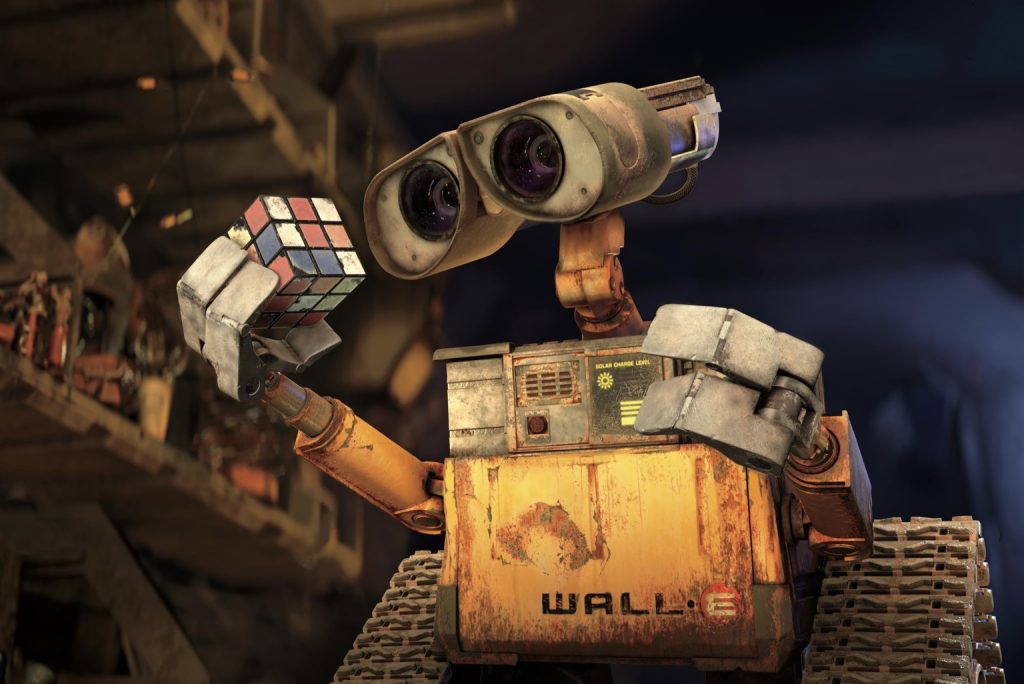
”Wall-E”, 2008. Pixar, Walt Disney
Wall-E, 2008
Andrew Stanton
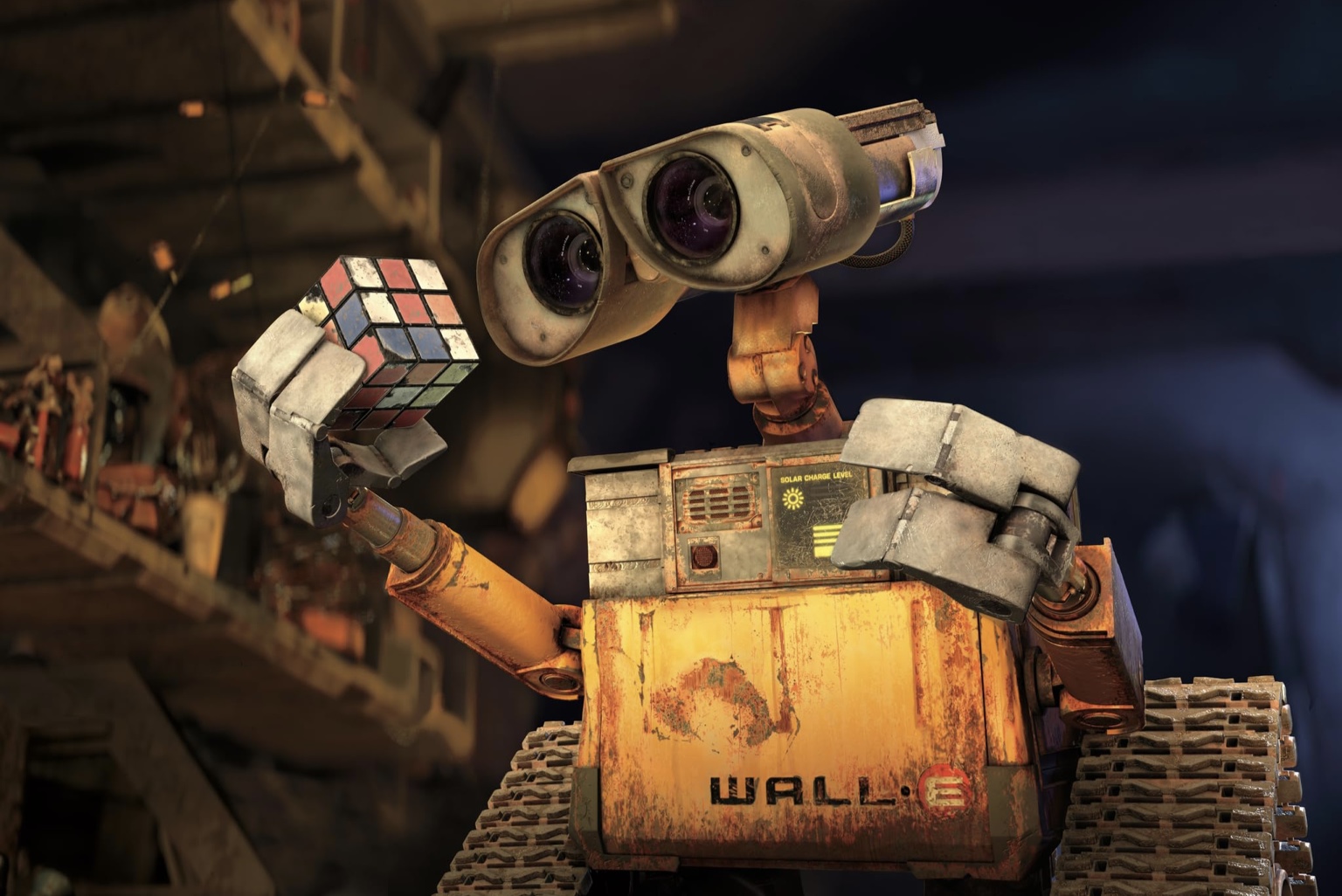
Wall-E has a great sci-fi idea at the core and it already felt timeless when it came out. Alien, Star Wars, Blade Runner, Silent Running, they all had something of their own that made them stand alone. Wall-E does that, too. In the 29th century, humans have long left Earth for life in outer space. Wall-E, a trash-compacting robot, was left behind to clean up a pollution-swallowed planet. When he meets Eve, another robot sent to Earth to detect plant life, they embark on a space journey to bring humans, and humanity, black to Earth. The film was made almost two decades ago, but it saw into a future that has almost become reality, maybe not the part about the people living in outer space, but certainly the part about the people losing touch with reality in a troubled millennium. (U)
SHORT FILMS
A word on short films.
One makes you laugh with tears, another one combines humour with the realities of life teaching children through a funny, light touch that prepares them for the world. Another one is incredibly prescient in regards to the man of the modern age and the ever widening gap between nature and people, and yet another one is about finding the courage to face your biggest fears. And so on. I can honestly say that nowadays I often find in short films the creativity and freedom of artistic expression that feature films so rampantly lack lately. French short film, in particular, has the courage and brilliance to touch our imagination, hearts and minds without one single word. People, the human behaviour (and children are the best example), react more to what they see than to what they hear. Which is why we should be more selective with what we watch.
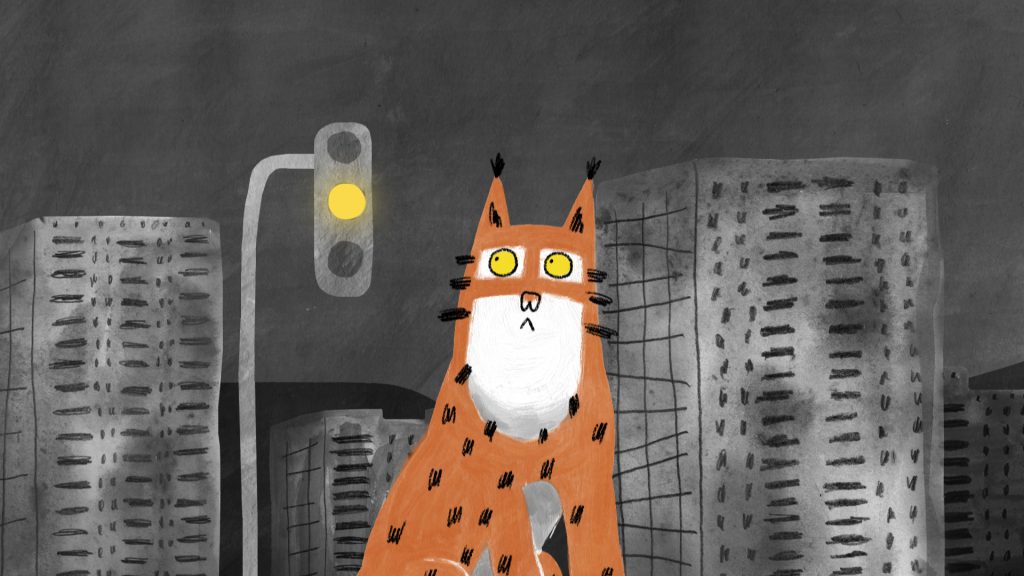
”Un Lynx dans la ville”, 2019. Folimage
Un lynx dans la ville (A Lynx in the Town), 2019
Nina Bisiarina
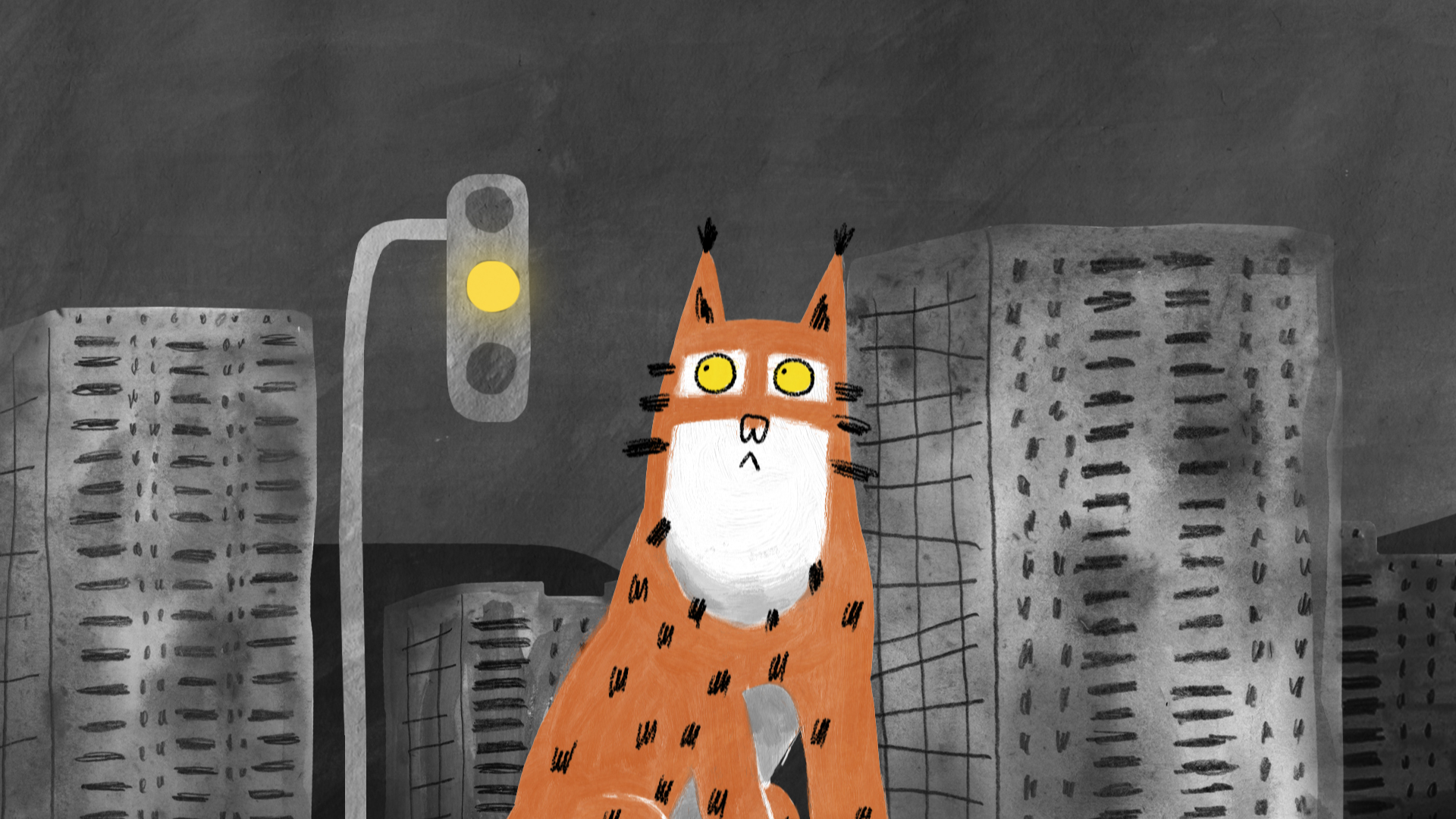
Leaving his home forest, a lynx goes into a town nearby and he starts to explore it. He finds it curious and amusing until the inhabitants find him under the snow in the morning.
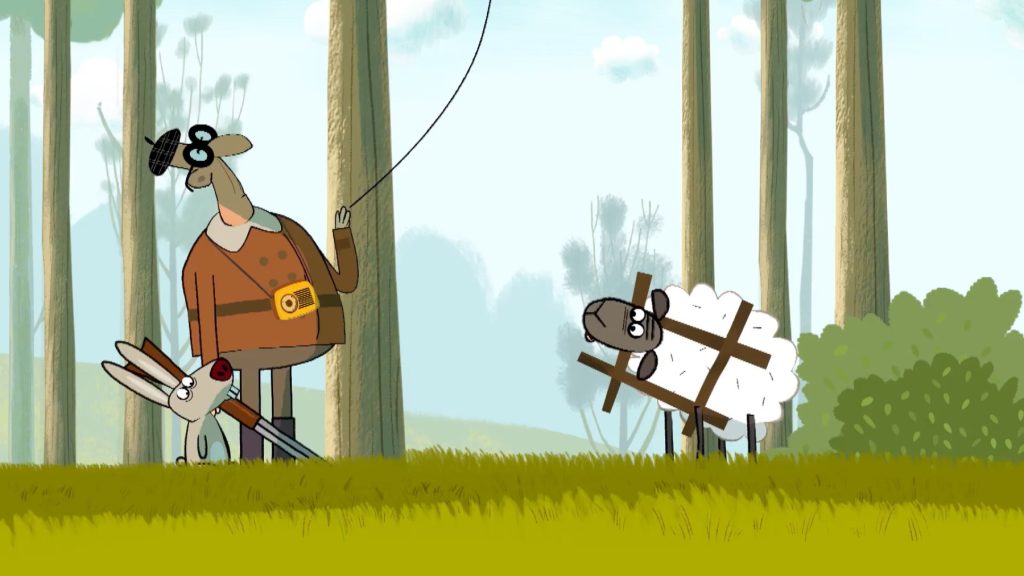
”La chasse”, 2017. France
La chasse (The Hunt), 2017
Alexey Alekseev
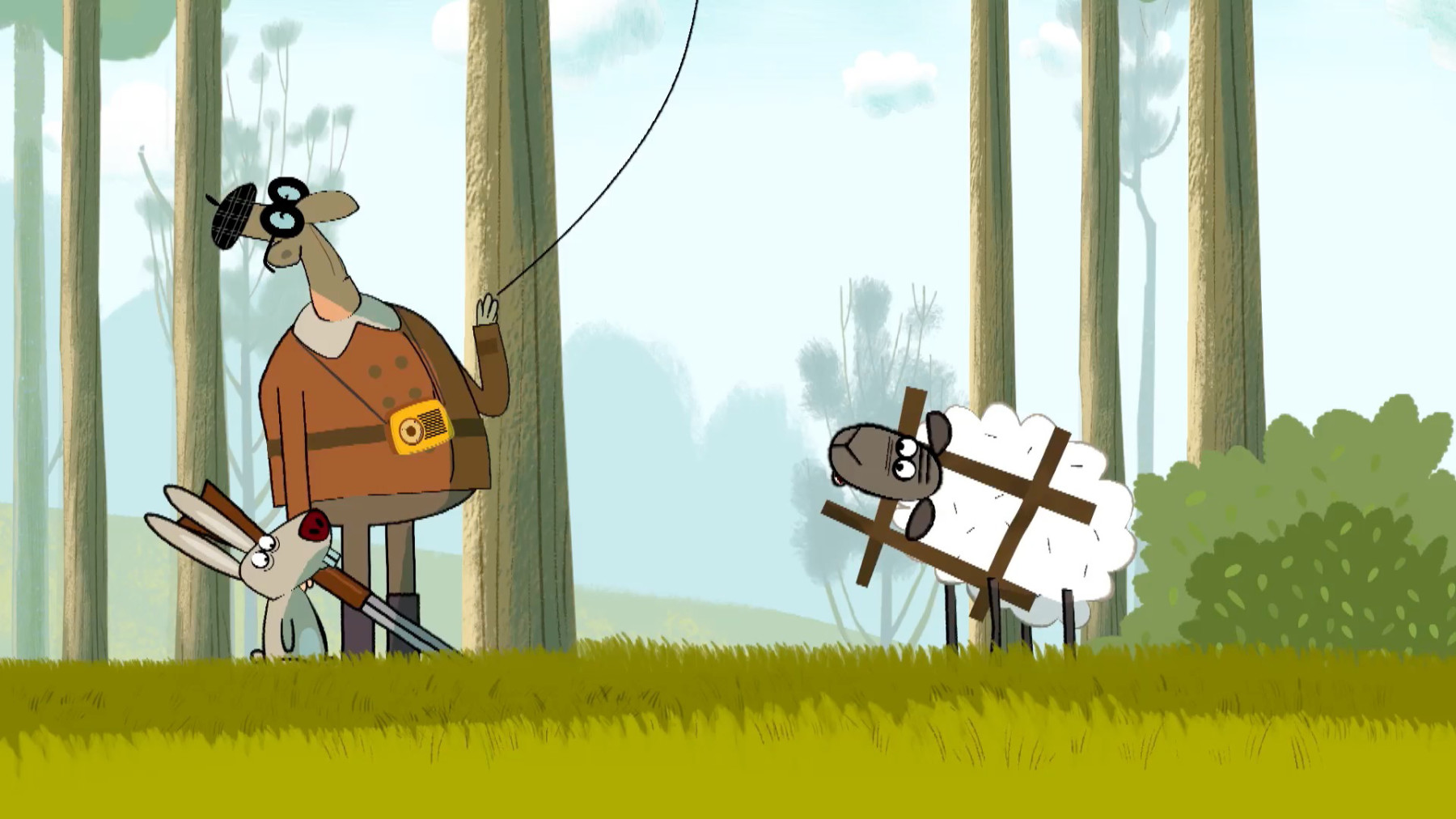
A nearsighted city hunter takes a rabbit with him instead of his dog when he goes hunting. In the vein of the great French comedies, this is a film that makes you laugh with tears.
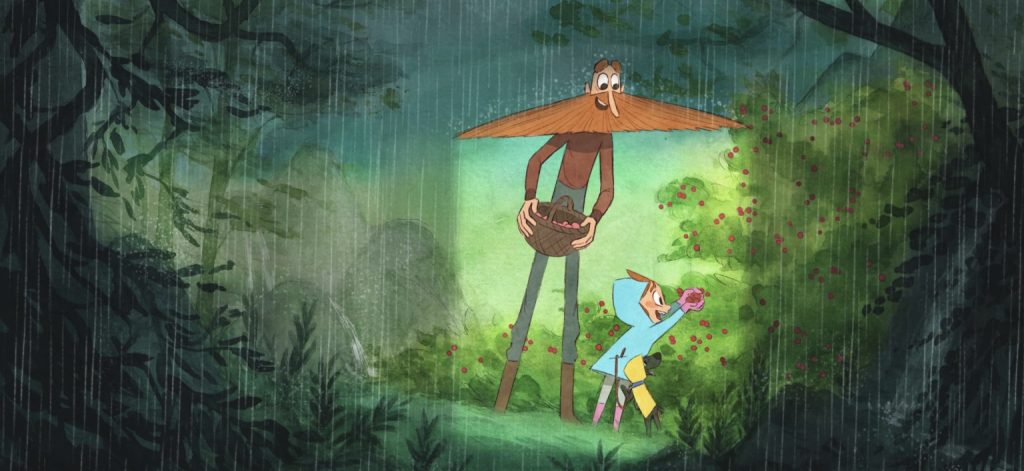
”Parapluies”, 2020. Bigaro Films, Moukda Production
Parapluies (Umbrellas), 2020
José Prats, Álvaro Robles
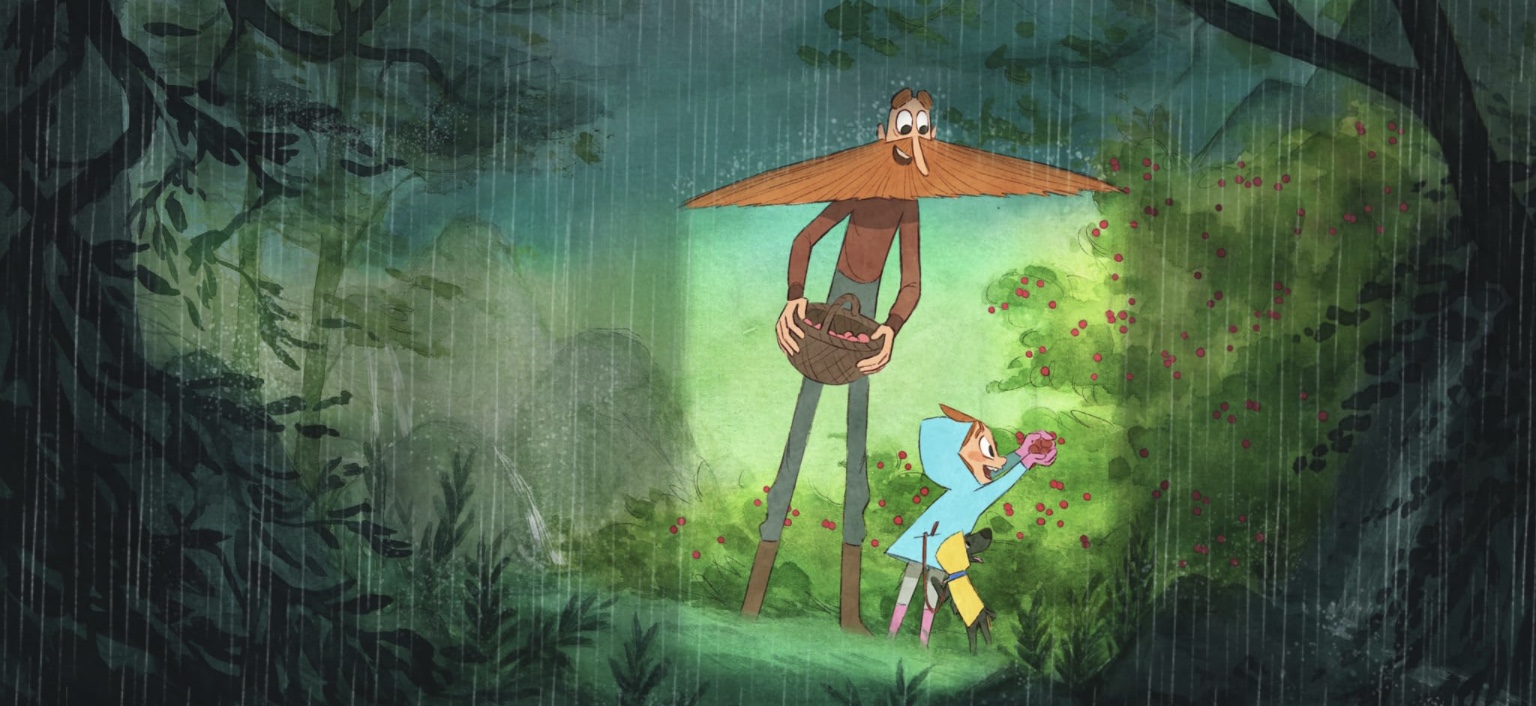
In a remote village where the rain never stops, six-year-old Kyna spends her days playing happily protected under her father’s umbrella beard. One day her dog, Nana, disappears, and, to find her, Kyna has to face her biggest fear: the rain.
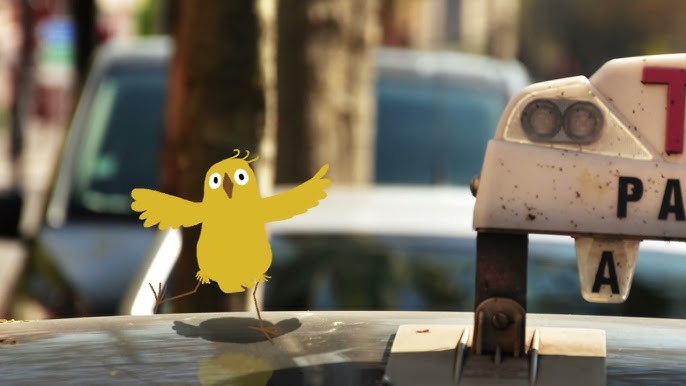
”Kiki la plume”, 2020. Prototypes Productions
Kiki la plume (Kiki the Feather), 2020
Julie Rembauville, Nicolas Bianco-Levrin
Kiki the canary lives in captivity in a cage, where he is fed by an old lady. He dreams of flying with the birds outside. One day, when the door of the cage remains ajar, he escapes. Outdoors, he must learn how to fly and he discovers the good and bad that comes with being a free bird. It teaches us all about freedom.
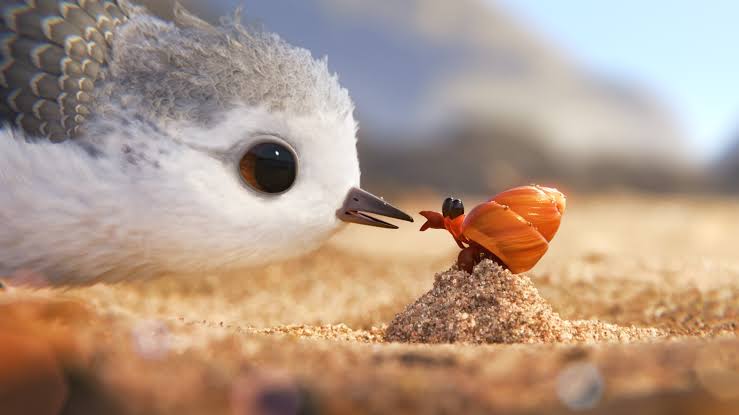
”Piper”, 2016. Pixar
Piper, 2016
Alan Barillo
The short film is a space for infinite freedom, as filmmaker Nicolas Bianco-Levrin said in our interview. Life is very simple once you overcome your fears and become self-sufficient. This short film about a little sandpiper offers an invaluable life lesson in just 6 minutes, with no words, and it does it with an incredible sense of humour, too. And it made both my son and me happy when we watched it.
(U)
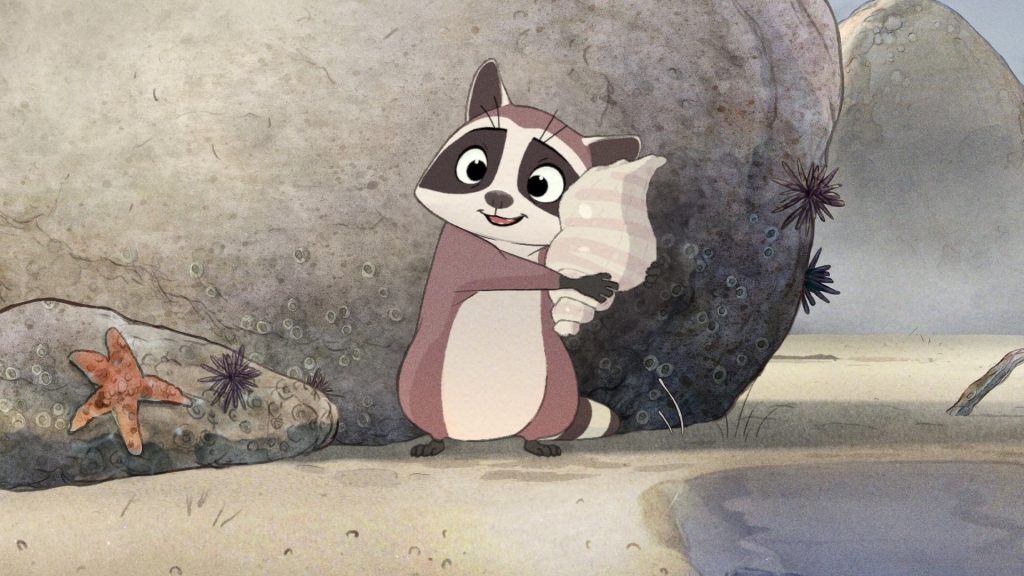
”Far from the Tree”, 2021. Walt Disney
Far from the Tree, 2021
Natalie Nourigat
Far from the Tree is another short that takes place in the animal world. Isn’t it interesting how easily viewers of all ages relate to animal characters? Another one of my interviewees, children’s book author and illustrator Marianne Dubuc had a straightforward and logical explanation for it: it is easier to have more readers identify with a cat than with a human being who looks different from you. “The freedom of interpretation that is so important to me can be helped with animal characters, since they give a broader answer to culture, identity, etc,” she said. Returning to Far from the Tree, we are again served a life experience that is however different in approach. Darker, allowing difficult questions about the real world, and, yes, about the dangers of life, be answered sensitively. (PG)