Read Instead…in Print


A photo of a good book about cinema or filmmakers. No discursive, pretentious analyses, no verbose scrutiny. Because the idea is to invite you to read the book, not read about it here. But instead of using social media, I use my journal. Back to basics. Take it as a wish to break free of over-reliance on social media (even if it’s just for posting a photo of a good book) for presenting my work, cultural finds and interests. These are things to be enjoyed as stand-alone pieces in a more substantial and meaningful way than showing them in the black hole of Instagram thronged with an audience with a short attention span. This is also a look through my voluminous collection of books about film that I use as research in my adamant decision to rely less and less on the online and more on more on print materials.

Read instead…in print #17.

Just as Martin Scorsese writes on its cover, Nathaniel Rich’s San Francisco Noir “puts you right in the middle of some wonderful movies”. An urban setting is key to many films noir (without a particular placement, a rainy derelict city street lined by tall buildings and lighting poles helps achieve the odd camera angles and deep-focus photography, the nocturnal and shadowy atmosphere, and even the cynical tone of film noir), but what the settings in the films collected here do is even more important than that: they give the story a sense of place. And Nathaniel Rich achieves this really nice balance of content related to the film, scene and location. It’s the kind of writing, not analytical and remote, but personal and engulfing, that immerses the reader in the story, to the point of almost becoming a viewer.


MORE STORIES

Darkness under the Limelight: Tyrone Power in “Nightmare Alley”

Read instead…in print #16: Jules Dassin: The Life and the Films

Not just a leading lady, but a character actor: Gloria Grahame in Film Noir

Posted by classiq in Books, Film, Read instead...in print | | Comments Off on Read Instead…in Print

September Newsletter: The New Year Starts on the First Day of Autumn


Photos: Classiq Journal


The new year starts in September. Doesn’t it make sense? School starts in September, and, with it, the enthusiasm of a new beginning, of new discoveries, of growing wings, of greater horizons. And it all comes naturally. As adults, we consider ourselves lucky if we feel that sustained enthusiasm in what we do, for such a long stretch of time as that amassed by the school years.

Hogwarts. That name and that place have such a special meaning. I love watching the Harry Potter films at the beginning of autumn. It’s like meeting up with old friends again, and a little like going back to school again. I have watched all the Harry Potter films as an adult, but I like to imagine how it would have been to discover them when I was a child. Because I like to imagine that all the school children believe they can perform anything. It’s a lot like believing they can perform magic.


Viewing

Paris, Texas
Wim Wenders

I remember how photographer Laura Wilson described in our interview the story behind a photo of Harry Dean Stanton on the set of The Wendell Baker Story: “In this moment, Harry Dean Stanton, oblivious to the heat, waited near a beautiful aluminum Beech 18 for the next scene in The Wendell Baker Story. He sang one of his favorite tunes, Canción Mixteca, the story of a man filled with sadness and longing for his home in Oaxaca, Mexico. With almost 200 films over 50 Hollywood years, Harry Dean is known on movie sets to regularly serenade actors and crews with Mexican Ranchera music. He has the same strong, haunting voice he had nearly a quarter-century ago when he sang Canción Mixteca for Wim Wenders in Paris Texas and, before that, the gospel song A Closer Walk with Thee for the soundtrack of Cool Hand Luke“. I would watch Paris Texas over and over again just to watch and hear Harry Dean Stanton, this incredible character actor who simply fills the screen. He doesn’t just act, he exists in his films. He doesn’t just talk, he makes you listen. Paris Texas is definitely a great road movie and Harry Dean Stanton is such a big part of it. And although his scenes with Nastassja Kinski are a defining point in the story, it’s his scenes with the little boy, his son in the film, that carry more weight for me. Those, and that finale embrace between mother and son.

And as long as I am on the subject of Harry Dean Stanton, I just have to bring up his role in Pretty in Pink, as Andie’s (Molly Ringwald) father: simply one of the best father characters we have seen on screen. I like to keep him in mind, his way of listening and giving advice, in those moments that call for a parent’s advice.
 
La French, 2014
Cédric Jimenez

I watched BAC Nord, the latest film of Cédric Jimenez, in 2020 when it was released. Based on a true story, a major police scandal in the Northern suburbs of Marseille, from 2012, when several polices officers from the anti-crime unit were arrested for extortion and drug theft as part of an organized gang, the film follows the story without judging or taking sides. “Whether they’re guilty or innocent, what I’m really interested in is the person caught up in this kind of crisis,” said Jimenez, a Marseille native who grew up in those same suburbs, in an interview at the Cannes Film Festival where the film premiered. It is this human quality that makes the film very powerful. I just watched La French, from 2014, the director’s second film, the other night and I realised this human quality felt in his films is one of the director’s traits.

La French. Based on a true story. Marseilles, 1975. The drug war is led by a single man. Pierre Michel (Jean Dujardin) is named police magistrate after being promoted from juvenile judge and he dedicates his job to cracking a heroin ring (la French) mastermind, Gaëtan Zampa (Gilles Lellouche). Dujardin and Lellouche recounted that they turned to the films of Sautet, those performed in the past by Montand or Piccoli (as stated in Jean Ollé-Laprune’s book, Le cinéma policier français) in preparation for their roles. I am not surprised. Claude Sautet was the kind of director who inverted the moral dilemma of the crime film and showed both criminals and lawmen with strengths and fragilities, seeking out those constant trials and errors that anchor an individual in his singularity, character study prevailing crime genre. And about their scene confronting each other, Lellouche confessed: “Jean and I understood what was at stake. That day, we weren’t friends at all.”
 

Where Danger Lives (1950)
John Farrow

Robert Mitchum (Jeff Cameron) knows all along that it’s not love that draws him to Faith Domergue (Margo Lannington), but he can not escape it until it’s almost too late – and that’s what’s wrong with the film, because no matter what he does from the moment he meets her, it should have been too late to escape his fate. The French poetic realism in Faith Domergue’s performance calls for a sealed fate for both characters. That’s just the way it is. That’s just the way it should have been left at.


Reading

Noir City magazine. Some of the best writing on film available today. Personal, engaging, putting you right in the middle of the films I love the most.
 

Listening
 

The soundtrack: Ry Cooder’s score for Paris, Texas. “Seldom has any artist captured that ineffable ‘high, lonesome sound’ quite as beautifully as Ry Cooder did on his landmark soundtrack to Wim Wenders’ 1984 film Paris, Texas. Not quite blues, not quite bluegrass, not quite ambient, Cooder’s haunting, evocative score mirrors the existential journey of Harry Dean Stanton’s Travis Henderson as he wanders through the empty Texas prairie landscape in pursuit of his irretrievable past.” (Real Gone Music)
 
The album: The Head and the Heart, Signs of Light.


Making

I am forever in love with the printed page and with writing on paper. It has to do with an appreciation of the finer things in life, with the never-fading beauty of the tangible, with taking the time to sit down with a paper book or magazine that speaks with you, with the intentional act of writing with your own hands. Zuriell is the notebook I swear by. I have tried countless notebooks, from Moleskine to my very own custom-made cloth-bound notebook. Zuriell is simply above everything else. The most beautiful design, the finest paper. For dreamers, travellers, artists, thinkers and scribblers alike.

 
Exploring

Children’s books in rhymes. Some classics: The Cat in the Hat and the books of Nina Cassian. They are fantastic for children, and for adults as well. As Ian Worboys, the author of the wonderful Crush series, told me in our interview: “I loved the humour and illustrations of Dr. Seuss’ The Cat in The Hat, as the books made me laugh.” That’s the magic word for everyone.
 
 
The regulars: The interviews, newsletters and podcasts I turn to every week and/or every month because they are that good. Craig Mod’s newsletters: Roden and Ridgeline. Soundtracking, with Edith Bowman. Alicia Kennedy’s newsletter. The Racquet magazine newsletter. The Adventure Podcast: Terra Incognita. The print magazines Monocle and Sirene.


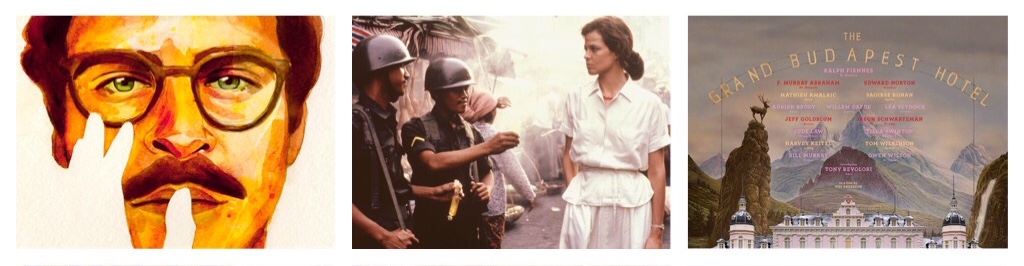
Film poster for “La French”, 2014, directed by Cédric Jimenez


Posted by classiq in Books, Culture, Film, Newsletter | | Comments Off on September Newsletter: The New Year Starts on the First Day of Autumn

Play Misty for Me and the Last Days of Summer

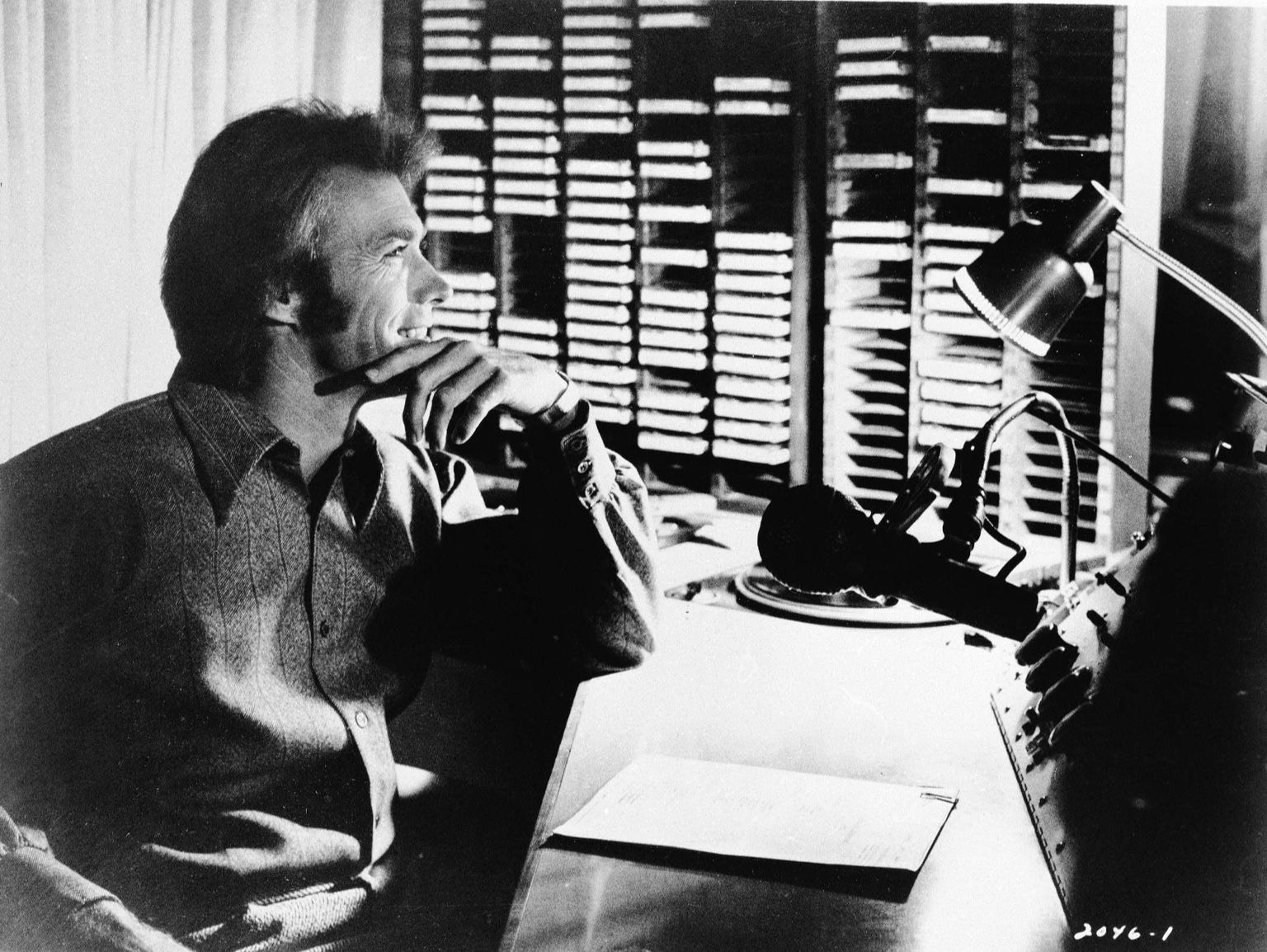
Clint Eastwood in “Play Misty for Me”, 1971. The Malpaso Company, Universal Pictures


I have always loved the atmosphere in Play Misty for Me, Clint Eastwood’s first film as a director, from 1971. It’s one of those films that has a mood. I seek that out in a film, or rather, I like the feeling of a film grabbing you, visually and emotionally, with a composition that is just right. It’s not about the style of the film. The mood is something else altogether, “a combination of pace and an eye for composition,” in Clint Eastwood’s own words, from an interview with David Thomson for Film Comment, in 1984. Play Misty for Me has that. It also has a remarkable sense of place, of the characters being part of the story, of the landscape, of their surroundings. It’s like a slice of the characters’ life. There is always this idea that movies transport you to a different world, place and time, but few truly accomplish that. “Play Misty for Me is superbly paced, unhurried, cool, and giving a strong sense of real time,” Richard Thompson and Tim Hunter perfectly captured the film’s atmosphere in Film Comment in 1976.

I have re-watched the movie this summer. I wish I had saved it for these last days of summer, because it’s exactly when I would place it. This time of year has a feeling to it, and it’s exactly that nicely paced, unhurried, cool, real time feeling that envelops Play Misty for Me. As much as I love summer and that sense of suspended reality, I am also the first one to admit that I always come to the point when I don’t mind trading it with the brisk return to reality that autumn brings along. The film’s strong sense of place and character plant the story so well that you get to live it, too.

Writing for Millimeter in 1980, Ric Gentry said: “When Eastwood reads a script, he visualises it, both in terms of shots and composition. But pre-eminent is the mood gleaned from the material, the overall sensuous texture of environments and movements that have implicit emotional resonances. […] Eastwood first seeks a confirmation of the mood, or the nearest approximation of it, in an appropriate location. It is no coincidence, then, that one of his salient features as a director is his penchant for landscape, the widest concentricity of a dramatic center.”

For Play Misty for Me, Eastwood chose the spectacular and diverse territory of Carmel and Monterey, California, the area near his home, “to suit the unstable psychology of the characters”. He also chose it to help him for characters development, because a friend of his, who had some features in common with his character, was a disc jockey for a Carmel radio station. “I scout locations in different ways,” the director explained. “You have to find locations that read into the story. Sometimes you just have to keep looking because there’s always a million other places you could do a picture, some maybe better, some maybe not. The location just has to correspond with the concept of the film, to the atmosphere created by the story.”

Eastwood chose the script because he had lived through a similar, albeit less dramatic, situation, and the idea of commitment misinterpretation, of how responsible we are for the relationships we establish, interested him. He plays a jazz-loving disc jockey in Carmel, who accidentally gets involved with a psychotic young woman. Dave (Eastwood) meets Evelyn (Jessica Walter) in a bar one night, they have a one-night stand and she tells him that she’s the one who calls every night on the radio asking him to play Misty. Dave is complacent and casual about the affair, but Evelyn becomes obsessive. And that’s the base of the story. We don’t get to know her background or anything else about her, we get to meet her and be shocked by what is happening exactly when he is and feel all the suspense because we simply want to know what happens, without revelatory explanations and blasts from the past. It’s a thriller that works tremendously well, especially on the backdrop of the rocky seascape and the apparent calmness of a small town. It’s all the more special because, as Tim Cahill wrote in Rolling Stone in 1985, “of all the roles he has played, Eastwood in person seems most like the mild-mannered California jazz DJ he portrayed in Play Misty for Me, a man happily out of step with the times and secure in his private enthusiasms.”
 

MORE STORIES

Art directing film posters: In conversation with illustrator Akiko Stehrenberger

This summer we’re channelling: Sigourney Weaver in “The Year of Living Dangerously”

Everything you see in a film is there for a reason: Interview with graphic designer Annie Atkins

Posted by classiq in Film | | Comments Off on Play Misty for Me and the Last Days of Summer

This Summer We’re Channelling: Mary Stuart Masterson in “Some Kind of Wonderful”

Mary Stuart Masterson in “Some Kind of Wonderful”. Hughes Entertainment, Paramount Pictures

 
Of all the cool, rebellious, outcast teens from the other side of the tracks, Watts from Some Kind of Wonderful must be my favourite. Played by Mary Stuart Masterson to perfection, Watts is a street wise-rebel yell-new romantic tomboy that flaunts the subcultural musical theme of the 1980s, her appearance flawlessly punctuated by the thudding drum beats of the soundtrack.

When he made Some Kind of Wonderful in 1987, Howard Deutch had only done one other film (both were scripted by John Hughes), Pretty in Pink (1986), and a few music videos for Billy Idol and Billy Joel, and had worked on trailers for Francis Ford Coppola, Woody Allen and Martin Scorsese. But his naturalistic approach and his sensibility for young characters have never been more deeply felt, especially visually, than in this music-ridden teen movie centered on a non-conventional love triangle.

I can not talk about this film and about Mary Stuart Masterson’s character without talking about the music. It’s the music that takes us from the start through to the end of the story, many times on the drum beats of Watts herself – even when she doesn’t play, she carries her drum sticks around. John Hughes’ thirst for 1980s music is part of his cinematic teen universe. But no other soundtrack from his films compares to the one in Some Kind of Wonderful – he reportedly wrote the film to the music. It’s this very soundtrack that I had in mind when I read Billy Idol’s words in his book: “With our slightly more straight-ahead rock ‘n’ roll direction, we picked up an audience that wasn’t exclusively punk. So we outraged some purists but drew in music lovers and started created the larger-than-life images that went beyond punk and into the ‘80s. […] We were focusing on our own obsessions, problems, and frustrations, but also adding in romance instead of just negativity.” Billy Idol was a rock star of the eighties, with a punk pedigree to boot, so how could his music not be related to this film? His song, Catch My Fall, is on the soundtrack.


Mary Stuart Masterson and Eric Stoltz in “Some Kind of Wonderful”. Hughes Entertainment, Paramount Pictures


We can find Watts somewhere in that “straight-ahead rock ‘n’ roll” description from above and also in the look that mirrored that identity: “To create your own image, you had to invent your own fashion, something original to put on your back.” Fashion was as important as the music itself. Watts, with her bleached cropped hair, is defined by both her music and her clothes. You sense and you see her anguish of being an outsider, you also see that at her core she is an outsider, and it’s all portrayed in the clothes. Marilyn Vance, John Hughes’ frequent collaborator, was the costume designer. Vance has an incredible talent at shaping a character just by the way he/she is dressed, and she even did that through just one costume in The Breakfast Club, where five high school teens meet for detention on a Saturday and each character is flawlessly established – a brain, a beauty, a jock, a rebel and a recluse – through costume alone in the first minutes of the film.
 

Mary Stuart Masterson in “Some Kind of Wonderful”. Hughes Entertainment, Paramount Pictures


The nonconformist clothes that Watts is wearing align with the individualistic trend in teenage fashion that Madonna opened the door to in the mid-1980s, a thrift-store street style associated with punk subcultures. The red fingerless fringed gloves that Watts is wearing all the time, the lace leggings, the bandana, the vests on top of faded-out t-shirts, the loose sleeveless tops, the trousers with braces, the ripped-off blue jeans, the chunky black loafers worn with white socks, the cropped black leather jacket…, they are all part of that pioneer look of the 1980s that channeled the teenage angst of working-class youth. The only way out was by being an original, and the way to look it was DIY style.

A key fashion moment for Watts is the driver costume, designed by Marilyn Vance. Watts wears it when Keith (Eric Stoltz), oblivious to her feelings for him, enlists her to chauffeur him when he takes Amanda (Lea Thompson) out on a date. Watts is wearing black lace leggings and her omnipresent red gloves, but she adds a slick black chauffeur jacket, a hat and some pointed flats to the mix. She takes off all her earrings and dangling jewellery and covers her tattoo on the neck with make-up. She’s not just focusing on her “obsessions, problems and frustrations, but also adding in romance”. It’s her way of showing her love.
 

Mary Stuart Masterson in “Some Kind of Wonderful”. Hughes Entertainment, Paramount Pictures


MORE STORIES

This summer we’re channelling: Brad Pitt in “Once Upon a Time in…Hollywood”

The photographer who was as great as the stars he shot: Bob Willoughby Interview

Bring back a sample of dirt: Costuming “Once Upon a Time in the West”

Posted by classiq in Film, Film costume, This summer we’re channelling | | Comments Off on This Summer We’re Channelling: Mary Stuart Masterson in “Some Kind of Wonderful”

Read Instead…in Print


A photo of a good book about cinema or filmmakers. No discursive, pretentious analyses, no verbose scrutiny. Because the idea is to invite you to read the book, not read about it here. But instead of using social media, I use my journal. Back to basics. Take it as a wish to break free of over-reliance on social media (even if it’s just for posting a photo of a good book) for presenting my work, cultural finds and interests. These are things to be enjoyed as stand-alone pieces in a more substantial and meaningful way than showing them in the black hole of Instagram thronged with an audience with a short attention span. This is also a look through my voluminous collection of books about film that I use as research in my adamant decision to rely less and less on the online and more on more on print materials.

Read instead…in print #16.

A first full account in English of Jules Dassin’s life and work. Jules Dassin, who, according to François Truffaut, “made the best film noir I have seen.” Truffaut was, of course, referring to Rififi, which Dassin filmed in France, the first in five years of having trouble finding work after having been blacklisted in Hollywood by the House of Un-American Activities Committee. So I can not help feeling that Peter Shelley’s singular book on Dassin’s films, published as late as 2011, is the result of a facile reading of a great director. Ignorance continues to run deep unfortunately.

Part personal history, part reporting, part film commentary, the book, exhaustively researched (a journalistic trait I place great value on), is a comprehensive study of Dassin’s entire filmography. Because I like to stay away from film reviews, I often favour this documentarist approach. And I only wish I had Melina Mercouri’s autobiography, I Was Born Greek, which has been out of print for years, for an even more complete picture of her husband’s films and filmmaking.


MORE STORIES

Read instead…in print #15: Room to Dream by David Lynch

RÉUNI: Interview with Adrien Garcia

Still vividly connecting to audiences of all ages: Taking a shot at Paul Newman

Posted by classiq in Books, Film, Read instead...in print | | Comments Off on Read Instead…in Print