Seberg, Belmondo and Godard’s Film de Cinéphile: À bout de souffle

Jean Seberg in À bout de souffle. Les Films Impéria / Les Productions Georges de Beauregard /
Société Nouvelle de Cinématographie (SNC)


After her debut in Hollywood, with her first role, at age nineteen, in Otto Preminger’s 1957 Saint Joan, and another Preminger movie a year later, Bonjour Tristesse, this one filmed in France (both poorly received), Iowa-born Jean Seberg appeared in Jean-Luc Godard’s directorial debut, À bout de souffle (1960). Breathless came out after the first films of other three emerging New Wave film-makers, Agnès Varda’s La Pointe Courte (1955), Claude Chabrol’s Le beau serge (1958) and François Truffaut’s Les 400 coups (1959), but, with Truffaut as screenwriter and Chabrol as technical advisor, it was Godard’s film that marked the definitive breakthrough towards a new language of cinema, one that went against any cinematic conventions, and brought in a new aesthetic, innovative techniques, bold and vigorous narrative, improvised dialogue, leading us through the streets of Paris, mingling actors with passers-by, in a frenetic and realistic pace similar to that of a modern day reporter.

A Paris where two lovers are overwhelmed by fate and where the image of Jean Seberg as Patricia Franchini strolling down the Champs-Elysées in The New York Herald Tribune t-shirt became an everlasting style headline and the star of the French New Wave. À bout de souffle would have an impact on fashion and beguile international audiences to this day. The French New Wave films exquisitely captured the life of the young in France and especially in Paris, the fashion, the urban professional life, the ideological struggles, the carefree minds, the spirit of youth.


À bout de souffle film poster


It was a film de cinéphile, Godard said. “Our first films were all films de cinéphile – the work of film enthusiasts. One can make use of what one has already seen in the cinema to make deliberate references. This was true of me in particular. I thought in terms of purely cinematographic attitudes. For some shots I referred to scenes I remembered from Preminger, Cukor, etc. and the character played by Jean Seberg was a continuation of her role in Bonjour Tristesse. I could have taken the last shot of Preminger’s film and started after dissolving to a title, ‘Three Years Later’. Godard was indeed first and foremost a cinephile, and when he went from the front of the camera as editor of Les Cahiers du Cinéma, to behind the camera as a film-maker, he frequently made allusions to his director peers whom he admired. There are many “film in film” sequences in À bout de souffle, such as the one when Patricia hides in a cinema, the famous Le Mac Mahon, from the police, and the show that they are announcing next is Preminger’s very own Whirlpool (1949).

“À bout de souffle was the sort of film where anything goes: that was what it was all about. Anything people did could be integrated in the film. As a matter of fact, this was my starting point. We are living on the Champs Elysées. Well, before À bout de souffle, no film showed what it was really like. My characters see it sixty times a day, so I wanted to show them in it. You rarely see the Arc de Triomphe except in American films.[…] What I wanted was to take a conventional story and remake, but differently, everything the cinema had done. I also wanted to give the feeling that the techniques of filmmaking had just been discovered or experienced for the first time.”

Raymond Cauchetier, the film set photographer, also known as the photographer of the New Wave, will confide that “everything or almost everything was improvised. We were shooting in the streets, in hotel rooms with just a few lamps illuminating the ceiling, without direct sound recording. Godard wrote his dialogues on a bistro table and whispered their text to the actors during takes.” The method pleased Jean-Paul Belmondo, but was disliked by Seberg.

Jean Seberg and Jean-Paul Belmondo in À bout de souffle. Les Films Impéria / Les Productions Georges de Beauregard /
Société Nouvelle de Cinématographie (SNC)

“I improvise, certainly, but with material which goes a long way back,” revealed Truffaut. “Over the years you accumulate things and then suddenly you use them in what you’re doing. My first shorts were prepared very carefully and shot very quickly. A bout de souffle began this way. I had written the first scene (Jean Seberg on the Champs-Elysées), and for the rest I had a pile of notes for each scene. I said to myself, this is terrible. I stopped everything. Then I thought: in a single day, if one knows how to go about it, one should able to complete a dozen takes. Only instead of planning ahead, I shall invent at the last minute. If you know where you’re going it ought to be possible. This isn’t improvisation but last-minute focusing. Obviously, you must have an over-all plan and stick to it; you can modify up to a point; but when shooting begins it should change as little as possible, otherwise it’s catastrophic.”

Raymond Cauchetier captured through his lens enduring moments that Godard’s shoot only implied. There is a scene on the Champs-Élysées, filmed in long shot and from overhead, in which Godard has Seberg give Jean-Paul Belmondo a sweet peck on the cheek. Cauchetier brought the actors together to reproduce the scene in a close-up, which became one of the movie’s iconic images despite not existing in the film at all. Cauchetier caught the film’s immediacy and free-form style, as well as the star power, ease and effervescence of Seberg and Belmondo throughout the shoot.


Ramond Cauchetier’s shot of Jean Seberg and Jean-Paul Belmondo that did not appear in the film but became iconic.
Les Films Impéria / Les Productions Georges de Beauregard / Société Nouvelle de Cinématographie (SNC)


That ease is spoken through their costumes, too. The film does not credit any costume designer for the wardrobes. It is very likely that Jean-Paul Belmondo and Jean Seberg made their own sartorial choices or even wore their own clothes on set – the late ’60s, only a few years later, would mark the beginning of the reign of the stylists in film wardrobes, choosing rather than designing the outfits. But in the French New Wave films, actors usually wore their own clothes – the whole cast of Vivre sa Vie wore their everyday clothes, except Anna Karina, Godard recounted, for whom they bought a skirt and a sweater. La nouvelle vague displayed an aestheticism that was very fresh, very modernist, the new French.

Belmondo set the standard for smoky French sex appeal, with his naturally lively and exuberant acting style, so different than the Belmondo we would see in Melville’s films, for example, where his expressions were more subdued and restrained, as Denitza Bantcheva, writer of Jean-Pierre Melville – de l’œuvre à l’homme, remarked. “In À bout de souffle I was looking for a theme right through the shooting, and finally became interested in Belmondo,” Godard explained. “I saw him as a sort of block to be filmed to discover what lay inside.”

Seberg, with her infusion of French chic into her American sporty, preppy style (just like Seberg in real life), finally made a big entrance on screen and would be admired and copied by the worldwide public for generations to come, creating the stereotype of the French gamine. She is all light and cool and mischief. Patricia Franchini, an American student working for the European edition of the New York Herald Tribune in Paris, made style news with her pixie haircut, black eyeliner and an effortless, natural, carefree, fresh wardrobe packed with sailor stripes, oversised men’s shirts, ballet slippers, loafers, trench coat, skinny trousers and a Trilby hat borrowed from Jean-Paul Belmondo’s Michel.


Jean Seberg in À bout de souffle. Les Films Impéria / Les Productions Georges de Beauregard /
Société Nouvelle de Cinématographie (SNC)


In a rare interview talking about the movie, taken just before shooting a scene in À bout de souffle, Jean, dressed in the striped dress that Patricia wears in the film, Seberg depicted her character as “a very franchised American girl, a very sophisticated American girl, I suppose what some would call a very liberated American girl” and further concluded that she was one of the first Americans to speak French in a French movie. Belmondo was one of the anti-heroes of La nouvelle vague and she was the anti-heroine of this new cinema that had new life in it, that questioned the establishment, that wanted to experiment in new ways with everything.

Years later, Godard would confess that he felt he had missed the realism, the concreteness in À bout de souffle and considered Une Femme est une femme his first real film, just as he considered Jules et Jim to be Truffaut’s first real film. That does not whatsoever take anything from what he achieved with À bout de souffle and the huge impact the film has had on cinema from then on. Hardy anyone could have said it more simply and better than Henri Jeanson: “I love this movie and I’m jealous of it. It is the first film of revolt of the French cinema and of cinema in general. Tell me if you love À bout de souffle and I’ll tell you who you are.”


Jean Seberg and Jean-Paul Belmondo in À bout de souffle. Les Films Impéria / Les Productions Georges de Beauregard /
Société Nouvelle de Cinématographie (SNC)


MORE STORIES

François Truffaut’s heroines

Jean-Luc Godard and Anne Wiazemsky as seen in “Le redoutable”:
Interview with costume designer Sabrina Riccardi

The French noir antihero and the trench coat

Posted by classiq in Film, Film costume, This summer we’re channelling | | Comments Off on Seberg, Belmondo and Godard’s Film de Cinéphile: À bout de souffle

August Newsletter: Summer Rain, The Lagoon and Bottle Rocket


Photos: Classiq Journal


“He stood lonely in the searching sunshine;
and he looked beyond the great light of a cloudless day
into the darkness of a world of illusions.”

Joseph Conrad, The Lagoon


Viewing

Bottle Rocket, 1996
Wes Anderson

Still my favourite Wes Anderson film. Pure indie, so fresh, so free flowing. I have in mind the photo taken by photographer Laura Wilson (and the mother of Owen, Luke and Andrew Wilson) and which she shared in our interview, of Wes and Owen Wilson right after getting the green light from Paramount for their movie, giddy with excitement. Their joy is simply felt through the enthusiastic creativity of the film.


Maigret tend un piège (Maigret Sets a Trap), 1958
Jean Delannoy

It took me a long time to watch the films based on Georges Simenon’s Maigret books, I don’t really know why… And yet, maybe I do, and that’s because I believe nothing really compares to Jean Gabin’s films of the 1930s and 1940s (Pépé le Moko, La grande illusion, Le jour se leve, Le quai des brumes, La bête humaine). But I found this to be a very good film. First, it’s the striking black and white cinematography. Watching the film, I kept thinking that, to this day, there are so very few colour films that are more expressive than black and white. Then it’s the style of filming chosen by Jean Delannoy, who came up with the idea of adopting the point of view of the killer by using a subjective camera showing hands gloved, a style figure that will become emblematic of a genre, the Italian giallo. And, naturally, it’s Jean Gabin as Maigret, who makes the character his own. Since as early as 1937 had Simenon expressed his wish to see the actor embody his characters. He finally got his wish in 1950, when Gabin appeared in Marcel Carne’s La Marie du port. When Gabin impersonated Maigret for the first time in 1958, Simenon was so impressed with him that he said he would no longer think of Maigret except through Gabin and Delannoy. He would reconfirm this feeling later in his opinion that the best Maigrets on screen were “Pierre Renoir, Michel Simon, and, of course, Jean Gabin, who had, I think, never seen a commissioner in action and was a little too negligent in his appearance with his crooked tie, but which gives the role his own authority.”


Pile ou face (Heads or Tail), 1980
Roberto Enrico

In Bordeaux, inspector Baroni (Philippe Noiret) suspects Édouard Morlaix of having murdered his wife, who fell from the fifth floor after an argument. His relentlessness is such that he neglects another important file, with harsh consequences. From Coup de torchon to Ripoux and Les Aveux les plus douces, Noiret is linked to policier roles, which he admitted he always had fun playing. In each one, he brings something new to the part. This time, it’s some sort of melancholy and disillusion that come from some hidden secret from the character’s past but also something that reverberates from Noiret’s personal life at the time – the filming was delayed for one year because he had fallen ill and had to give up alcohol and smoking. I like how the ending has the subtle power to take us by surprise and rethink, with much precision, a few of the early scenes – the devil is in the details.


Le 4ème pouvoir, 1985
Serge Leroy

Another Philippe Noiret film, this time in the role of a journalist for a daily newspaper, who is taken hostage by a criminal on the run and then unexpectedly released. But one of my favourite parts of the film is seeing Nicole Garcia in the role of Catherine Carre, a successful television presenter who comes into the possession of proof of a political assassination and has to navigate through the entire spectrum of professional values and personal feelings, from journalistic integrity to choosing between rediscovered love and the desire to move up in career. Catherine’s 80s power dressing is worth a special mention.


Hidalgo, 2004
Joe Johnston

An adventure film in the realm of the classics, with Viggo Mortensen and Omar Sharif perfectly cast – “it has the purity and simplicity of something Douglas Fairbanks or Errol Flynn might have bounded through,” wrote Roger Ebert. “Whether you like movies like this, only you can say. But if you do not have some secret place in your soul that still responds even a little to brave cowboys, beautiful princesses and noble horses, then you are way too grown up and need to cut back on cable news.” Enough said.


Reading

The Lagoon, Joseph Conrad


A brilliant interview with Jean-Luc Godard, conducted by Cahiers du Cinéma, from the book Godard on Godard. “I like to be surprised. If you know in advance everything you are going to do, it isn’t worth doing. If a show is all written down, what is the point of filming it? What use is cinema if it trails after literature? When I write a scenario, I too want to write it all down on paper, but I can’t do it. I’m not a writer. Making a film means superimposing three operations: thinking, filming, editing. Everything can’t be in the scenario; or if it is, and people laugh or cry while reading it, then why not just print it and sell it in bookshops.” And another one with Jean Renoir, conducted by Godard. Quite frankly, all the interviews in the book are great reading.


Mike Nichols: A Life, by Mark Harris.


Listening

The album: Electric Trim, Lee Ranaldo


Making

Rag of Colts is a handmade, repurposed leatherwork studio in Bruton, Somerset, England. Founder Caroline Strecker started Rag of Colts in 2016, from a love for well worn leather and a passion for sustainability that lead to the repurposing of old saddles to make handbags, belts and other leather accessories. Each piece is made from wonderful old saddlery leather which has been worn and aged to perfection over decades of use, each with its own rich character, depth of colour and distinct look.

“Designed and constructed to be worn day in, day out and taken on adventures -these hand stitched saddle leather bags are pretty much indestructible and will only improve with age and use.

Accept no imitations.”


Exploring

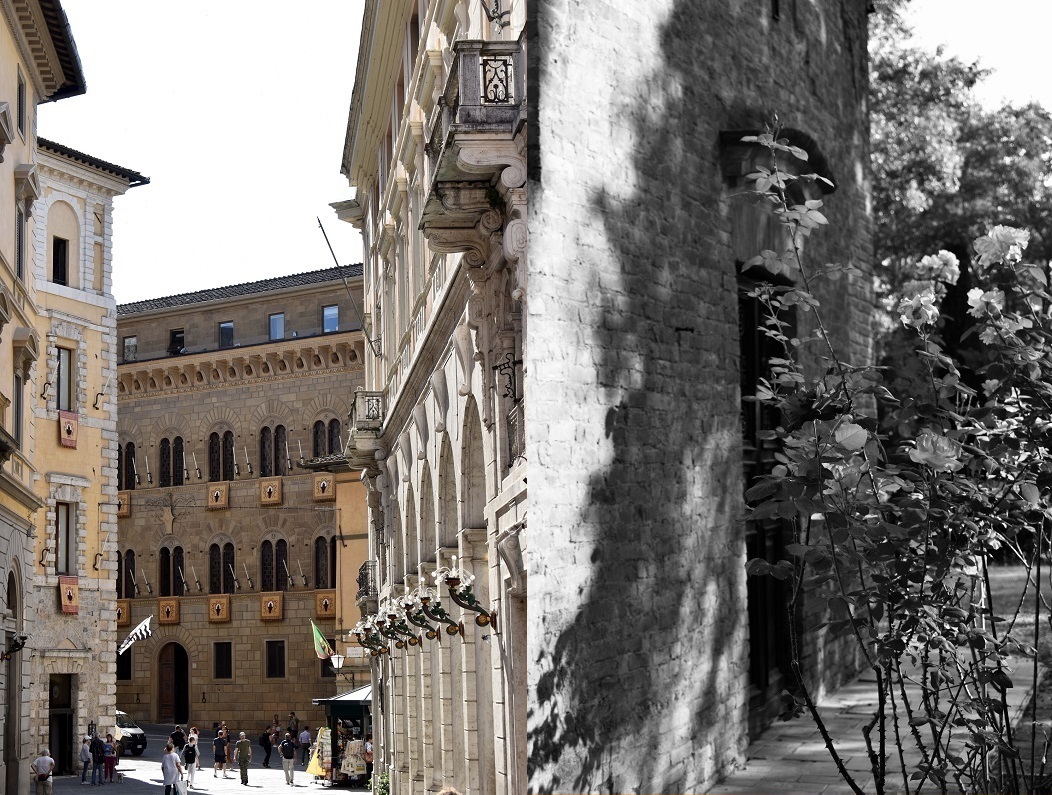
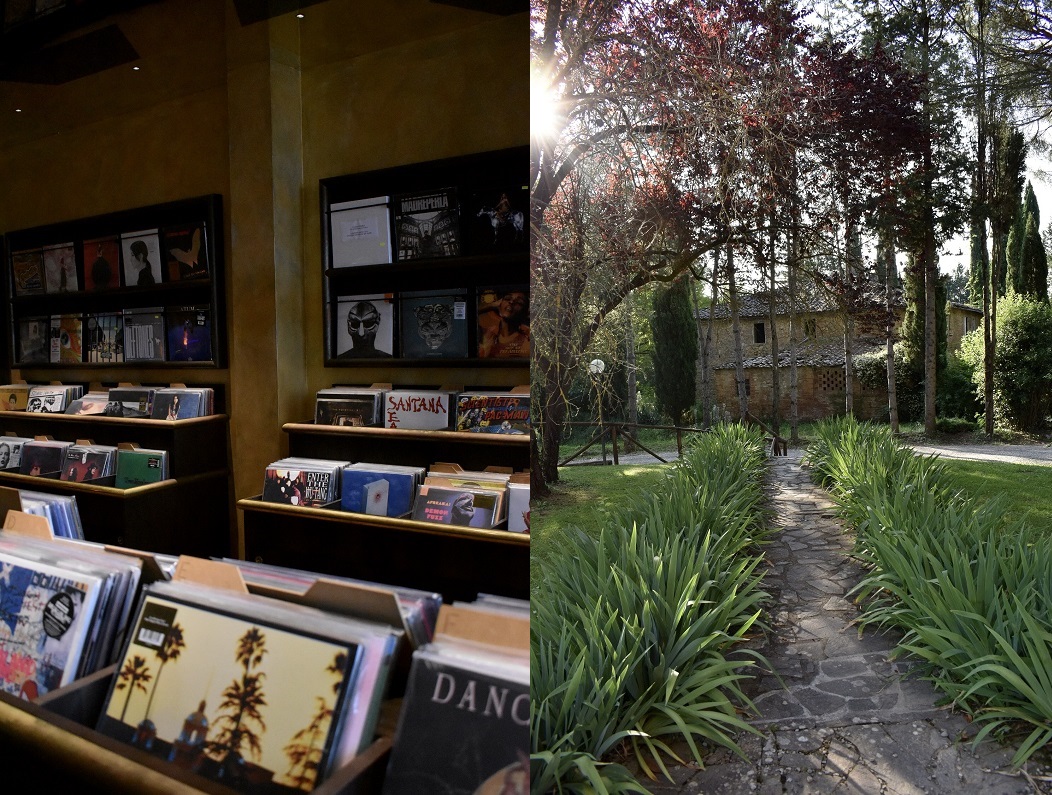
The vinyl shops of Firenze on a rainy summer day. Remember the scene in High Fidelity when John Cusack’s Rob claims he can sell five EP copies of the Beta Band just by playing “Dry the Rain” to the customers in the shop? And then he drops the needle and he gets the reaction he was waiting for. It’s great experiencing a needle drop in a record store, namely Move On, with a view to an overcast Piazza Duomo, void of tourists even if for only a couple of hours.


The regulars: The interviews, newsletters and podcasts I turn to every week and/or every month because they are that good. Craig Mod’s newsletters: Roden and Ridgeline. Soundtracking, with Edith Bowman. Alicia Kennedy’s newsletter. Gone to Timbuktu, Sophy Robert’s podcast on the art of travel. Wachstumsversuche, with Sarah Schill. Sirene, Racquet, and Yolo Journal, all in print.


Posted by classiq in Books, Culture, Film, Newsletter | | Comments Off on August Newsletter: Summer Rain, The Lagoon and Bottle Rocket

Read Instead…in Print


Read instead…in print #26


“If The Lord of the Rings movie thrilogy portrayed New Zealand at its most magical, The Piano shows it at its most real. This haunting and enigmatic period romance winds back to colonial times when Aotearoa was no enviable holiday spot but rather a place of hardship: isolated, untamed, fierce.”

I always welcome a different take on the cinematic experience. Sarah Baxter’s Cinematic Places takes us to destinations that have set the scene for some great worldwide films. Each film story woven around a place yet revealing essential parts of its life, each place a character in its own right. We get to see each location with fresh eyes, not just through Sarah’s words and our visual memory, but also through the illustrations of Amy Grimes.


Read instead… in print is about a good book about cinema or filmmakers. No discursive, pretentious analyses, no verbose scrutiny. Because the idea is to invite you to read the book, not read about it here. But instead of using social media, I use my journal. Back to basics. Take it as a wish to break free of over-reliance on social media (even if it’s just for posting a photo of a good book) for presenting my work, cultural finds and interests. These are things to be enjoyed as stand-alone pieces in a more substantial and meaningful way than showing them in the black hole of Instagram thronged with an audience with a short attention span. This is also a look through my voluminous collection of books about film that I use as research in my adamant decision to rely less and less on the online and more on more on print materials.


MORE STORIES

Read instead…in print #25: David Mamet: On Directing Film

The all-natural look of two mythical creatures: Thelma and Louise

Real emotion and visual power: Interview with illustrator Matt Needle

Posted by classiq in Books, Film, Read instead...in print | | Comments Off on Read Instead…in Print

Midsummer Book Dispatch


The Illustrators: Tove Jansson, authored by Paul Gravett, is part of the Thames & Hudson illustrator series with Quentin Blake as consultant. “A creative force, drawing and writing naturally from infancy with her parents’ complete encouragement, the grown-up Jansson was to become a painter, illustrator, cartoonist, stage designer and muralist, as well as an author of memoir, fiction, children’s books and plays. The marvel was that she shone at them all.” The book captures the spark behind Jansson’s creativity and offers a very welcome present-day appreciation of her art and work that can become an inspiration for new generations. But most of all it reacquaints us with the Moomins books that still have the power to fascinate children and adults alike. “Largely what creates the spells of these Moominland books is that by no trace of explanation or apology does the author mar the dreamlike possibility of her world.”


Alice nel paese delle meraviglieAlice nel paese delle meraviglie, by Lewis Caroll. What made me buy this Italian version of Alice in Wonderland this summer from a little bookshop in Siena is that it is illustrated by Salvador Dalí. It’s a collector’s book, for anyone who loves illustration, books, art, and to keep the marvel of life and of dreaming alive.


My Friend Maigret, by Georges Simenon, a Penguin Clothbound Classic. I started to read Simenon only after I had seen dozens of films adapted from his novels. Akira Kurosawa paid homage to Simenon with his Stray Dog, Bertrand Tavernier’s The Clockmaker (L’horloger de Saint-Paul) is an expertly crafted adaption of a Simenon novel, and Jean Gabin played France’s most celebrated home-grown detective character Jules Maigret multiple times. But the film that finally prompted me to read his works was Claude Chabrol’s Betty, starring Marie Trintignant and Stéphane Audran. Chabrol has a strong stamp of individuality on his films. Hitchcockian and thriller impulses, shrewd humour, bourgeois mores… these are cinematic phrases that Chabrol prefers. But through the character of Betty, closely inspired by Georges Simenon’s novel by the same name, the filmmaker throws the audience into the unknown. “I remember two long conversations with George Simenon that went on into the night,” Claude Chabrol recalled in the production notes that appeared during the theatrical release of Betty. “For Simenon, it was not our intelligence that proved the superiority of the ‘human animal’ (he loved this term). At this time – this was in the sixties – he was more fascinated with man’s survival instinct, a topic which greatly inspired him. It was during this time that he wrote Betty. […] In many of Simenon’s novels, the central mystery, and the one that is never completely resolved, is the human spirit. This is consistent with his creation of Betty, the character and the novel: a human being to be explored, yet whose secrets could not be full known or understood.”


Babette’s Feast, by Karen Blixen, another Penguin Clothbound Classic and which gathers Babette’s Feast as well as other four short stories of the author. And again I watched the film, directed by Gabriel Axel, before reading the short story, but fortunately it was beautifully served by the moving picture. And I was actually glad I watched the film first, because I loved reading the book with the image of Stéphane Audran as Babette, a Parisian chef displaced by the 1830s Communard uprising who comes to live in a frugal Christian community on Denmark’s Jutland coast, where she works as a maid and cook to two elderly and she also cooks for the elderly in the village, all of whom are unaware of her culinary past.


Claudia Cardinale: L’indomitable (The Indomitable), published by Cinecittà. A never-before-seen portrait of Claudia Cardinale, as retold by multiple voices that reveal the true Claudia, her indomitability that, like a common thread, can be traced throughout her entire life, at times stitched inside her tailored outfits, at others as explosive as Angelica’s laughter in The Leopard. Luchino Visconti envisioned the path Cladia’s story would take when he described her as “a splendid tabby cat that for the time being scratches at the cushions in the living room (…) but that one of these days we will realise is a tiger (…).” And Giorgio Armani perfectly captures her aura: “Claudia is undeniably indomitable. There could not be a better adjective to describe her. Her indomitability is the fruit of a tender pride, of an assertive, kind personality, discreet and gentle, completely independent while never aggressive. Claudia does not impose herself on others, but she will not allow the environment or the situations to take over. She leaves a strong impression that is hard to put into words: it is an absolute and intangible feeling. When Claudia enters a room, one is immediately drawn to the energy she radiates. But unlike other stars, she does not try to draw attention, and yet her presence is invariably felt: her deep eyes, her disarming smile, and a beauty that consists of layers of experiences and cultures. She perfectly embodies my ideal: elegance is not about getting noticed, but about being remembered.”


MORE STORIES

Closer: Marie Trintignant in Claude Chabrol’s “Betty”

The poetic power of illustration: Interview with William Grill

Bring back a sample of dirt: Costuming “Once upon a Time in the West”

Posted by classiq in Art, Books, Children’s illustration, Film | | Comments Off on Midsummer Book Dispatch

This Summer We’re Channelling: Ava Gardner and Grace Kelly in “Mogambo”

Ava Gardner in “Mogambo”, 1953. MGM


It was in film noir that Ava Gardner had her breakthrough performance, as beautiful, sultry, double-crossing Kitty Collins in The Killers (1946). The ultimate femme fatale role was made for Ava Gardner and The Killers set her off to stardom. But it was in Mogambo, six years later, when she looked her most beautiful and most natural. Shot on location in Africa and brimming with its director’s verve for the great outdoors, John Ford’s safari adventure film reeked of British colonialism for its critics, but for the large audience stood for adventure and romance, in no small part due to the star-power of the actors. And if you are a true movie goer, then you will ignore the tiresome scolds who criticise the film for what it is not and let yourself the freedom to respond to everything that was that made the adventure genre the world of fantasy that grown-ups still believed in.

Ava Gardner is Eloise Kelly, a show girl who winds up stranded in the hunting outpost of Victor Marswell (Clark Gable), a big-game hunter, who also runs a safari, and the two soon start an affair. She is a natural fit for Gable. Donald Nordley (Donald Sinden) is an English anthropologist, who hires Victor to take him and his wife into the African wild for their gorilla documenting safari. Grace Kelly is in the role of the wife, Linda, outwardly stiff and prim, but secretly harboring a lust for Victor. A love triangle unfolds on the background of the beautiful and rugged African landscape.


Grace Kelly and Ava Gardner in “Mogambo”, 1953. MGM


Helen Rose was the costume designer and it’s more than safari clothes that we get to see. In his brilliant book, Making Movies, Sidney Lumet remarks: “When Betty Bacall makes her first appearance in Murder on the Orient Express, she’s wearing a full-length peach-colored bias-cut velvet dress with a matching hat and egret feather. […] Now, Tony Walton (who did the clothes) knows that nobody gets on a train dressed like that, but what people actually wear when getting on a train is the last thing we would have considered, the object was to thrust the audience into a world it never knew – to create a feeling of how glamorous things used to be.” Things get glamorous in Mogambo as well, from elegant gowns and red lips, to strands of pearls, high heels and chunky gold link bracelets. It was a different time, when women dressed up for dinner, even on safaris. It was a different time for movies, too, when making a movie was an adventure in itself and when the quality of stardom had yet not been degraded. “There’s no one like Ava Gardner,” photographer Terry O’Neill recalled, “who was incredible looking and didn’t need a posse of stylists fluttering around her.” The glamorous looks in Mogambo work up the imagination just as the utilitarian looks – khakis, safari shirts, jodhpurs, midi skirts with riding leather boots, linen jackets and scarves – work up the active spirit. This merging of styles, set against the wild landscape and rugged beauty of Africa, becomes a romantic symbol of elegance and adventure.


Grace Kelly and Clark Gable in “Mogambo”, 1953. MGM

Ava Gardner and Clark Gable in “Mogambo”, 1953. MGM


The safari jacket was part of the westerners’ clothing in Africa. Initially part of the equipment of European soldiers serving in warm climates starting from the 19th century, for its comfort (it kept the heat out) and practicality (its beige colour was a great camouflage in the desert), the safari jacket entered the civilian gentleman’s wardrobe in the 1930s. Ernest Hemingway often wore one. Before Yves Saint Laurent made it universal, it was the films of the 1950s, which shaped the audience’s romanticised vision of Africa, that made the safari jacket the symbol of explorers and adventurers in far-flung locations. Nobody wore it more sensually than Ava Gardner in Mogambo.


“Mogambo”, 1953. MGM


Grace Kelly makes her entrance in her own safari suit, with soft skirt, white gloves, satchel bag and pith helmet. The look says ladylike demeanor, even if there are elements that hint of an individual sense of style, like the lapel-less shirt underneath the safari jacket. This was Grace Kelly and Helen Rose’s first film collaboration and the latter would become one of the three costume designers, along with Oleg Cassini and Edith Head, who would help the actress shape up her personal style.


Ava Gardner and Clark Gable in “Mogambo”, 1953. MGM


The two leading ladies are dressed similarly, but they wear their outfits differently, which reflects their different personalities. This is what costume design did so well in classic films: informing on the character and plot without standing out. Linda wears everything by the book, everything is refined, very posh and very English about her. Eloise’s style is more relaxed, unstudied and carefree: turned up sleeves and trousers, popped up collars, hair cut short – she is very confident of her attractiveness.

Ava and Grace were both nominated for the Oscar for their performances, but Ava outshines the perfect and unassailable Grace, and she steals the show from both Gable and Kelly. Feisty, red-blooded and cool, Gardner is enticing and she also has the best lines in the movie.

It’s interesting how the choice of costumes subtly reveal the plot and character traits, like making a well placed remark. It seems like the roles are switched when Grace is wearing the purple dress and Ava is wearing the white dress (below). Linda is the tempted wife and Eloise is the seductress with a heart of gold. What a scene that is! And Ava in the white dress is a sight to behold.


“Mogambo”, 1953. MGM


But there are glimpses into a different trait of Kelly’s character that goes unnoticed at first sight, for example in the way she casually ties her unbuttoned safari jacket, well into the storyline (she wears it buckled up when she arrives). In the midst of wilderness, she loosens up, willing to break free from her cool and collected self. Hitchcock would be the one who would exploit this quality best in his films with Grace Kelly: “The subtlety of Grace’s sexuality – her elegant sexiness…conveyed much more sex than the average movie sexpot. With Grace, you had to find it out – you had to discover it.”

We also get to glimpse into the real Grace Kelly from simply looking at the way she wears a headscarf off set – as a top when she rides a horse. That look is as modern today as it was ahead of its time back then. “You trusted Grace’s beauty. You knew it was natural, unpretentious,” said Howell Conant, Grace’s favourite photographer and the one who took some of the most disarming photos of her. In this image from the set of Mogambo, what we see is Grace Kelly not as the star who had cast her spell on audiences everywhere, but simply smiling and carrying herself. Stars back then were individuals and that had nothing to do with the movie industry.


Grace Kelly and Clark Gable in “Mogambo”, 1953. MGM


MORE STORIES

The safari style in “Hatari!”

This summer we’re channelling:
Indiana Jones and “The Raiders of the Lost Ark” at 40

This summer we’re channelling: Faye Dunaway in “Bonnie and Clyde”

Posted by classiq in Shop | | Comments Off on This Summer We’re Channelling: Ava Gardner and Grace Kelly in “Mogambo”