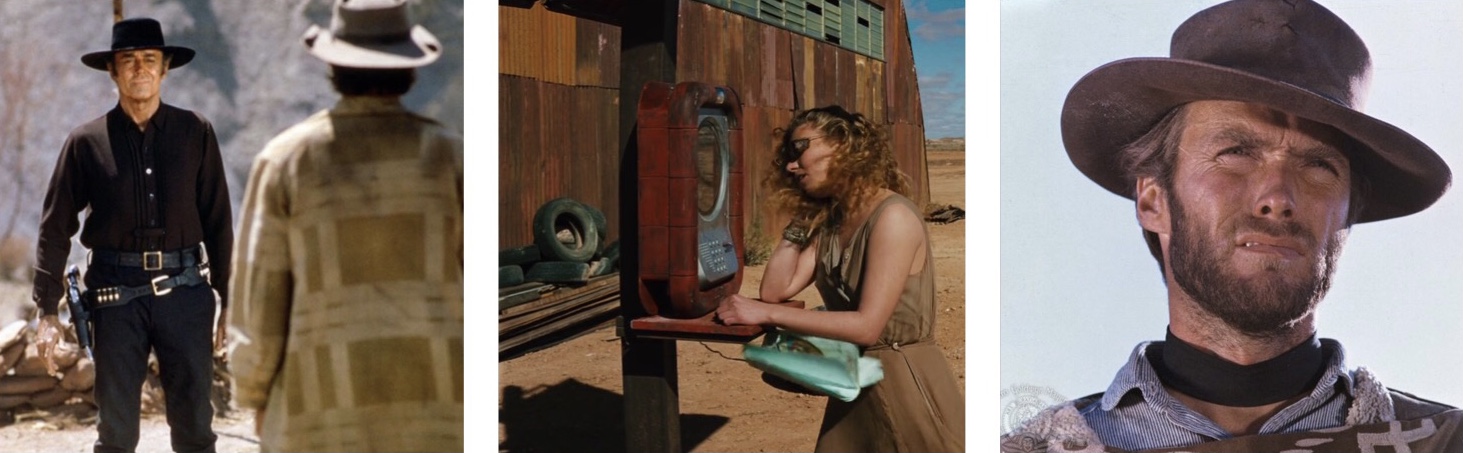
September Newsletter: Rattle That Lock, Westerns Music and Writing on Paper

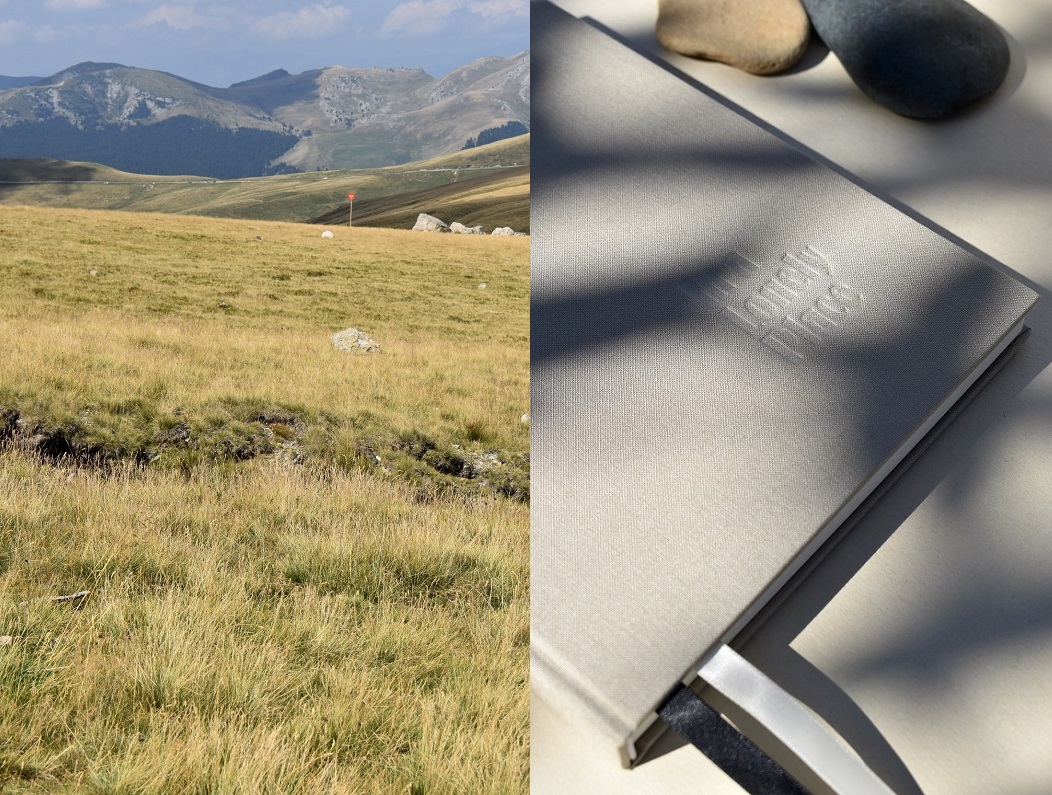
Left: Introducing our limited edition collection of hand-bound journals, “In a Lonely Place”, available in the shop


Photos: Classiq Journal


“What do you hang on the walls of your mind?
When I became a photographer I began, assiduously,
to collect favourite images which I filed away
in my imagination to bring out and examine
in moments of stress and moments of quiet.”

Eve Arnold, Eve Arnold: Lives Behind Photographs
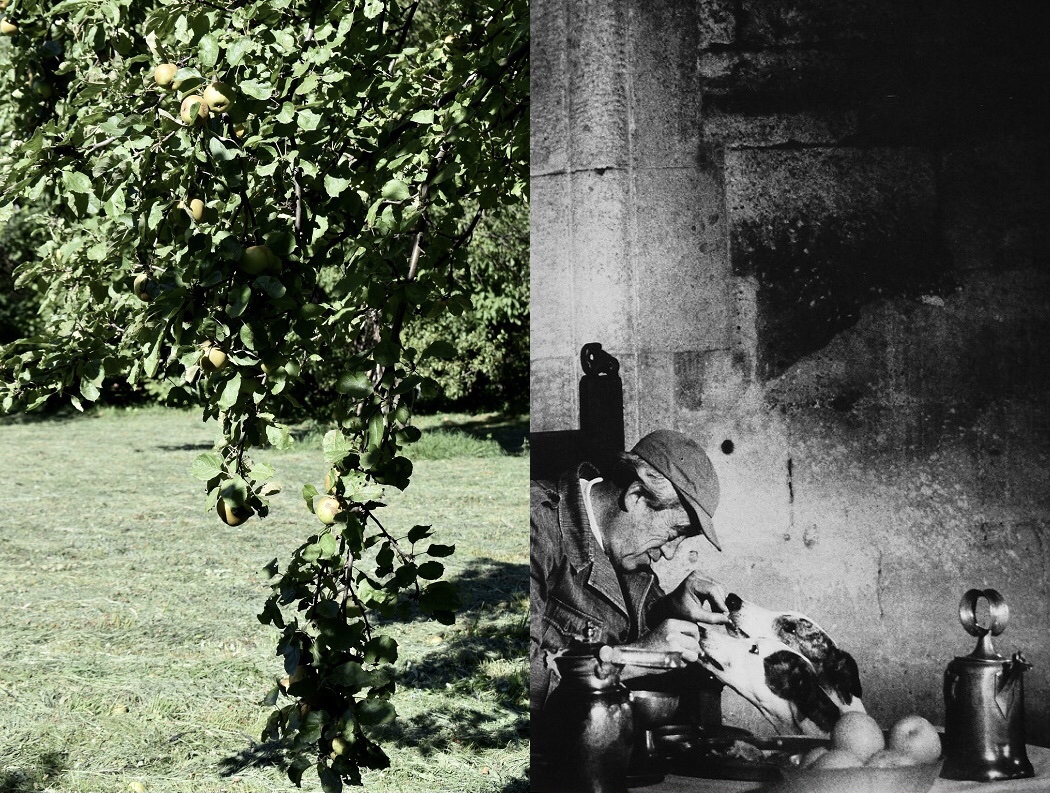
 

Right: John Huston photographed by Eve Arnold with his dogs at home in St. Clarens, Ireland, 1968


Viewing

Man in the Wilderness, 1971
Richard C. Sarafian

Think The Revenant, only better. I hadn’t even heard of it until my brother made me watch it this summer. A story of survival in the great wilderness of the American Northwest. Zach (Richard Harris), the scout of a group of fur trappers, is attacked by a bear and severely wounded. He is left for dead, but he survives and pursues his former companions through dangerous Indian territory. I like to revise the films I have watched through particular scenes and there are quite a few here, like the scene of the Indian woman giving birth, only indirectly suggested by the way nature is portrayed, the colours, the extraordinary music, the image of a father talking to his unborn baby and the mother’s look in her eyes – the power of this exchange, between mother, father and son, rests on the situation, visually, much more than on the words spoken. It’s a very shattering and powerful moment. And then there’s John Huston, larger than life in every scene he’s in.


Kompromat, 2023
Jérome Salle

The word “kompromat” refers to compromising information that is used to discredit someone, usually for political reasons. Cultures crash between the French and the Russians in Siberia and a French diplomat, Matthieu Roussel (Gilles Lellouche), is wrongly accused and jailed. Good thrillers don’t come too often anymore. But Kompromat, based on a true story of a man who had to escape from Siberia, is certainly one of them. I watched it during the summer at a favourite small cinema and, as always, I stayed right until the end of credits, taking the music, originally composed by Guillaume Roussel, all in right to the end.


The General, 1926
Buster Keaton

„A good comedy can be written on a postcard.” – Buster Keaton
The silence of the images in Buster Keaton’s brilliant comedies frees the comic imagination. I watched The General with my eight year old son and he loved it – he has watched two other silent films, The Kid and The Red Turtle, and I was glad to see how he embraced them, so much so that while watching The Red Turtle I remember that he remarked only towards the end that it was silent. And with Buster, more than with any other silent filmmaker, it couldn’t be more fascinating to watch a silent film, because the images will simply guide you. So I do believe that silent films can have an audience in the 21st century, it’s only up to us, as parents, what to watch with our children.


Les Ripoux, 1984
Claude Zidi

Inspector in the 18th arrondissement in Paris, René Boisrond leads a pleasant life, between bribes and horse racings. The arrival of a young colleague from the province, amicable and idealist, his new partner, disturbs his routine. A policier with one of the most unique characters played by a heavy of the French cinema, Philippe Noiret. A film that is a very skillful blend of comedy and action.


The Andromeda Strain, 1971
Robert Wise

A government satellite crashes outside a small town in New Mexico and kills every inhabitant of the town, except for a crying baby and an elderly man. The satellite and the two survivors are sent to Wildfire, a top secret underground laboratory equipped with a nuclear self-destruct mechanism to prevent the spread of infection in case of an outbreak. Realising that the satellite brought a lethal organism from another world, a team of government scientists race against the clock to understand the extraterrestrial virus – codenamed “Andromeda” – before it can wipe out human kind. Adapted from Michael Crichton’s novel and directed by Robert Wise, this biological thriller is more haunting than ever.


This summer I have also made it my mission to rewatch a few classics. Lawrence of Arabia, an epic of a film that left me with the same feeling as the first time I saw it many, many years ago: Omar Sharif was the one who impressed me the most with his performance. Mogambo, one of my absolute favourite adventure movies, and one that is somewhat underrated in my opinion. I have also rewatched North by Northwest and Vertigo. Give me Hitchcock any day. Brilliant! Loved them more than ever before if that is possible, and I have watched these countless times. Hitchcock’s films are the ones I love (and live, I might even say) best, yet they are the ones I find the most difficult to talk about. In a way, it makes sense. “Although Stewart isn’t aware of it yet, the viewers already know that Judy isn’t just a girl who looks like Madeline, but that she is Madeline! Everyone around me was against this change,” Hitchcock told Truffaut in their interviews. “They all felt that the revelation should be saved for the end of the picture. I put myself in the place of a child whose mother is telling him a story. When there’s a pause in her narration, the child always says, “What comes next, mommy?” Well, I felt the second part of the novel was written as if nothing came next, whereas in my formula, the little boy, knowing that Madeline and Judy are the same person, would then ask, “And Stewart doesn’t know it, does he? What will he do when he finds out about it?” Of course, Hitchcock is right.

About no other film have I ever felt so profoundly that it was made of two parts. And up until this viewing, I had always liked the first part best, as a movie in itself, maybe the best of them all. But this time something changed and I saw the film as a whole, with different eyes. “The scene in which James Stewart takes Judy to the dress shop to buy a suit just like the one Madeline wore, and the way in which he makes her try on shoes, are among the best. He’s like a maniac,” Truffaut remarked. No scene is too small in a Hitchcock film.


Reading

A question I always ask photographers in my interviews is: “What does it take to go there, to want to tell a story through your photographs?” In the book Lives Behind Photographs: Eve Arnold, part of the Magnum Legacy series that seeks to explore a photographer’s life between and around the photographs, Eve Arnold gives her answer to that: “What drove me and kept me going over the decades? What was the motive force? If I had to use a single word, it would be curiosity.” Eve Arnold is one of my favourite photographers, having photographed everyone, from Hollywood legends (like John Huston in the images above) and French fashion designers to Atlan dancers in Afghanistan and horse training for the militia in Inner Mongolia, China. Always with a personal passionate approach. The was she immersed the viewer in a person’s story and environment is absolute and disarming at the same time. You are curious and empathic in front of her photographs, she just makes you look, really look, and see.


As research: Nicolas Roeg’s The World Is Ever Changing and Escape Artist: The Life and Films of John Sturges, written by Glenn Lovell.


Listening

The soundtrack: The Hateful Eight. I watched and rewatched many classic westerns this summer (from The Searchers to The Magnificent Seven) and also wanted to revise Tarantino’s. Somehow music plays differently in western movies, contributing tremendously to the creation of iconic imagery and atmosphere. Ennio Morricone however, who finally accepted Tarantino’s proposal to work together on one of his films, did not consider The Hateful Eight a western, which he had promised himself he would not do anymore. The way he described it to Alessandro De Rosa when asked the question in their book-long interviews (Ennio Morricone: In His Own Words) was: “Rather, I see it as a historical adventure film, in a sense. The characters are described with such meticulousness and universality that the fact that they wear cowboy hats is nothing more than an alternative setting.”

About his collaboration with Tarantino, Ennio Morricone said: “Before The Hateful Eight, Tarantino had always compiled preexisting music. How could I write something that would sound new for him and yet keep with his idea of my music, which he knows so well and considers perfect? […]

Moreover, I was always concerned with the eclecticism of his musical choices, as he always juxtaposes such diverse array of pieces, following very subjective associations. On the other hand, there was so much of my music already among the tracks he had used in his films, that I might have expected to compose something akin to the stuff I had already done.”

Morricone was finally convinced by his admiration for Tarantino, his wish to cross generational boundaries, the well written screenplay and the fact that this was a new challenge at his age (he was in his eighties). “The main theme starts with two bassoons in unison, as I reprise it later in the film with a contrabassoon dubbed by the tuba. As you just said, I wanted to express a visceral, hidden, or buried core, something latent and yet bodily present.”

I have said it before and I will say it again: What I believe is extraordinary about Morricone’s film music in general is that he is an innovator, especially for the way his film music carves out its own path while still informing the plot, for the way it bonds with images and for the way it bonds with the audiences. In other words, I believe that his film music has made it possible for many people to appreciate a kind of music, a craft, a profession that requires patience, study, hard work, comprehension, and reflection, in a day when such qualities are less and less valued and when people are after easy success more and more often.


The album: Rattle That Lock, David Gilmour


Making

Introducing our limited edition collection of ”In a Lonely Place” hand-bound journals. Inspired by my favourite film noir. Imagined by my endless love for the printed word, writing on paper, and for the never-fading beauty of the tangible. Crafted by the wonderful and talented artists of Ink Tales.

For artists, dreamers and scribblers alike.

The notebooks come in linen-bound hardcover with premium book cloth and blind letterpress, in two elegant colours, and are exclusively available in the shop.


Exploring

VISITOR, the fourth exhibition of photographer Bill Phelps at Robin Rice Gallery. The opening reception will be held on Wednesday September 27th from 6pm to 8pm at 325 West 11th street, New York, NY 10014.


I am happy and deeply grateful that Bill asked me to write the presentation for the exhibition, and I am citing part of it here:

“Through light and shadow, a gaze, a mindset, Bill Phelps’ fourth solo show at the Robin Rice Gallery, VISITOR, inspires the imagination. About life, about being, eye and heart his greatest companions, in images that breathe in their own atmosphere. A moment of pure sincerity, a world of surrealism, or suspended reality. It’s like a wondrous path in which spontaneity, intimacy and a truthful eye are at play time and again. You feel time passing, memories forming or coming to the surface, capturing the moment and its eternity with your mind’s eye, but also in his. The VISITOR projects this otherworldly image of someone in search of something more, a deeper understanding of life, or maybe a youthful appreciation of it, or maybe both. The captured quiet of the muse seen through the suspended focus of the 8×10 view camera, the nuance, the in-between, the gaze. Every human being is a poet, a dancer, a VISITOR. Bill Phelps’ portraits, whether it’s someone he may know or not, are not frozen captures of stillness at a moment in time, but surrender to chance occurrences, always. He creates a curiosity, it can often be an invitation. No hurried departure, no preconceived destination, just a perpetual search.”

The exhibition runs through November 26, 2023.


The regulars: The interviews, newsletters and podcasts I turn to every week and/or every month because they are that good. Craig Mod’s newsletters: Roden and Ridgeline. Soundtracking, with Edith Bowman. Alicia Kennedy’s newsletter. Gone to Timbuktu, Sophy Robert’s podcast on the art of travel. Wachstumsversuche, with Sarah Schill. Sirene, Racquet, and Yolo Journal, all in print.
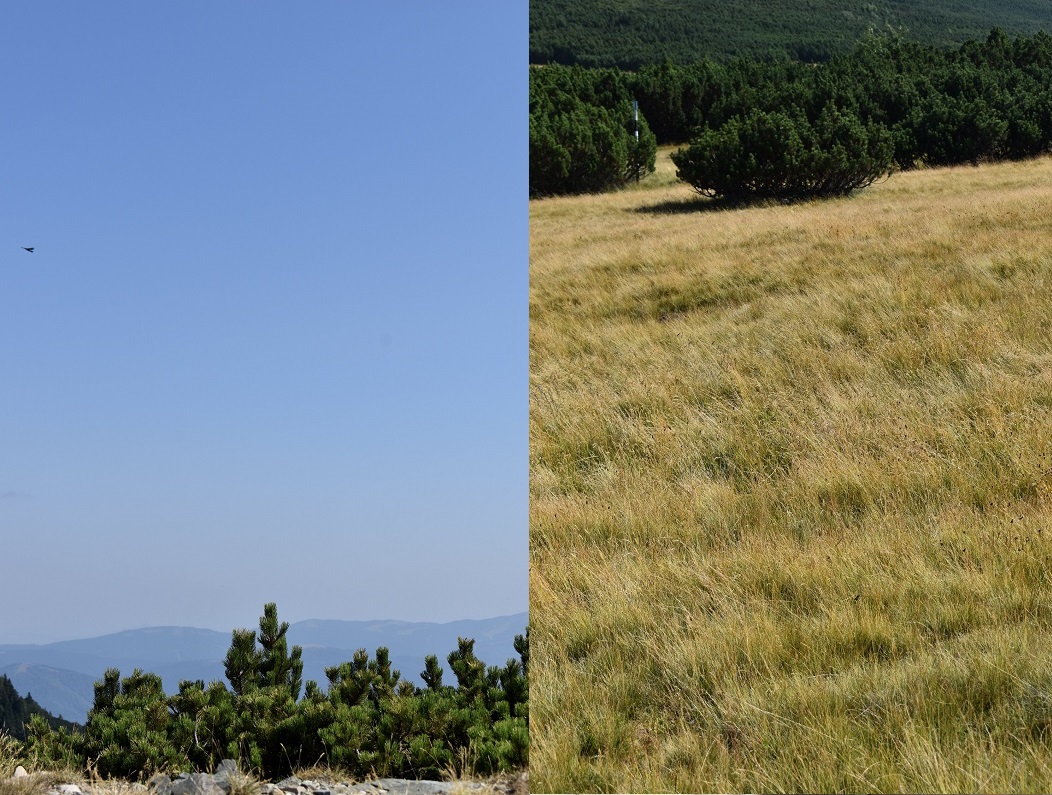


“I must look at China in her own perspective,
remembering her history, trying to understand her character
and being totally aware of her needs… I must try and not judge
by my Western eyes but must try and think in Chinese, look in
Chinese, while still retaining my own point of view.”

Eve Arnold, Eve Arnold: Lives Behind Photographs
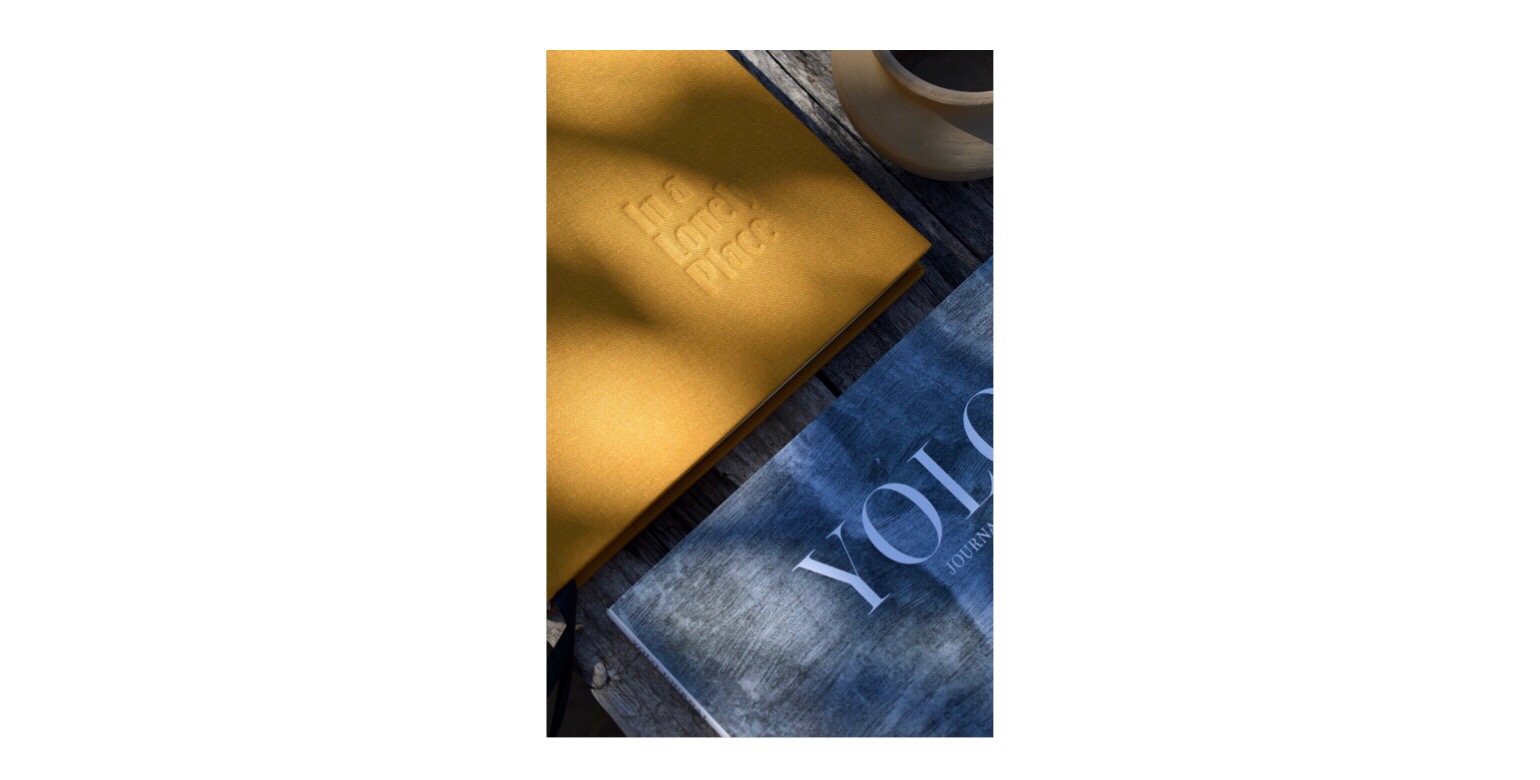
 

Our “In a Lonely Place” hand-bound journals collection available in the shop


Posted by classiq in Books, Culture, Film, Newsletter | | Comments Off on September Newsletter: Rattle That Lock, Westerns Music and Writing on Paper

“She’s the Beast in the Jungle”: Anne Bancroft’s Mrs. Robinson in The Graduate

Anne Bancroft in “The Graduate”, 1967. Lawrence Truman Productions


There are quite a few iconic images from the set of The Graduate: Katherine Ross and Dustin Hoffman running from the church, Dustin Hoffman hiding in his room, and that striking shot of Anne Bancroft in close up and Hoffman in the back. They were shot by Bob Willoughby, the Hollywood photographer who was as great as the stars he shot. Bob Willoughby is considered Hollywood’s first behind the scenes photographer, the first “unit photographer”. His job was to capture the moments of a performance live, during a take as it was unfolding, and also between takes, watching everything as the world was being made. “He wasn’t a unit photographer actually,” his son, Christopher Willoughby, told me in our interview. “A unit photographer is a union photographer traditionally hired by the studio and is part of the film crew – and when they’re done, they hand over all the work to the studio. Bob was referred to as a special and retained ownership of his work. The images were licensed to magazines and other clients, including the studios, for publication.”

Bob Willoughby’s job was to create a story for his clients, the filmmakers, within their own world. “He always read the script and the shooting schedule and would research the film,” Christopher Willoughby remembers. “Was it to be on location, were there historical aspects to the script he could incorporate? When dad started on the film (ed. note: The Graduate), he was introduced to the cast, including Dustin Hoffman, a young New York actor doing his first film, but he looked familiar. As they were shaking hands, dad asked if his mother’s name was Lillian and his father’s was Harry – and Hoffman said “Yes”. “Dusty! I used to babysit you and your brother Ronald a hundred years ago on Orange Drive”.

Dustin Hoffman, a Broadway actor at his first film role, was not what Mike Nichols and Buck Henry, the co-screenwriter, first had in mind for Benjamin Braddock. “Sand in the genes, the roar of the ocean. Robert Redford and Candice Bergen, the ideal couple – that’s what we were thinking,” Henry recalls, as cited in the book Mike Nichols: A Life, by Mark Harris. Eventually they chose Dustin Hoffman and Katharine Ross. After his screen test, which Hoffman barely got through because of his nervousness, nobody thought he was going to get the part. But when Nichols saw the screen test on film, he knew he had found Benjamin. “He had this thing I’d only seen in Elizabeth Taylor, and that I’d certainly not seen in any of the other tests. That secret. That deal with Technicolor where you do nothing and it turns out you were doing everything. He was compelling and hilarious and impassive, it was startling. That’s what a great movie actor does. They don’t know how they do it, and I don’t know how they do it, but the difference is shocking.”

There was something more in Hoffman however, and more in Hoffman as Benjamin, that Nichols saw in his lead man. A resemblance to himself, “a visitor in a strange land,” writes Mark Harris, “the story of an alienated young man cosseted by privilege, smothered by the comforts that surround him, and determined to listen to himself.”


Anne Bancroft and Dustin Hoffman on the set of in “The Graduate”, 1967, photographed by Bob Willoughby


The Graduate was something new altogether, modern-looking and an important exploration of the generation gap that dug into youth counter-culture and sensibilities more straightforward than any other film of the 1960s. The soundtrack was part of that look. The Graduate was one of the first films to be defined also by its music and one of the earliest needle drops (the use of pre-existing music in film). Nichols chose the music for the film himself after, during in preproduction, he listened over and over again to the album Sounds of Silence, by Simon & Garfunkel, which his brother had sent him. And it wasn’t until he played his team the music, William Daniels (who played Mr. Braddock) remembers, that they realised “this was all going to be told through Dustin’s eyes,” and that it might be “a significant film”.

Nichols liked and had this ability to see and tell a story from a different angle, breaking away from the conventions of both theater and old Hollywood. He had done that in his plays as well (his first theater play, Barefoot in the Park, starring Robert Redford, was considered revolutionary), after he had honed his style and verbal with with Elaine May in their innovative comedy act, and now he was doing it in his movies (The Graduate was only his second film, after his much acclaimed debut feature, Who’s Afraid of Virginia Woolf?). “My father was a big fan of Mike Nichols and was impressed by his intellectual flexibility,” Christopher Willoughby says, “his ability to change direction on set; getting the cast to play a serious scene for laughs for instance.” Nichols would say that “it’s only when rehearsals start, and the characters begin to be people, that I see what’s happening and what has to be made stronger,” writes in the book Mike Nichols: A Life. “That’s when I begin to have my ideas.” His visual idea on film for was something entirely new in the film world in the 1960s, at a pivotal moment for the future of the American cinema, heralding the birth of the New Hollywood.

Audiences identified with Benjamin, just as they identified with Simon and Garfunkel’s music that they were already familiar with. A recent graduate from an East Coast school, Benjamin returns to his parents’ California suburban house and finds himself stuck in their empty-headed materialism, his confusion bordering on despair, smothered by things in excess and tangled up in a relationship with his parents’ friend’s middle-age wife Mrs. Robinson (Anne Bancroft). His disorientation is revealed in his clothes as well. An East Coast Ivy look – brown corduroy or navy jacket, button-down shirts, striped ties and chinos – that says so clearly that he is still not past his college years. “Here’s Benjamin. He is a little worried about his future,” read the tagline on the film’s official poster. College had given him an identity. Now he is lost, unsure of what to to with his life, but certain that he doesn’t belong in his parents’ world of plastic. The anxiety, fear and loathing he projects in the face of all that are so understated yet unfadable that it’s haunting.


Anne Bancroft's style-The Graduate-2

Anne Bancroft’s leg in a nylon stocking is the star of one of the most recognizable movie posters in the history of cinema.


“Mrs. Robinson, you are trying to seduce me… Aren’t you?”


Anne Bancroft in The Graduate Style in Film

Style in film Anne Bancroft The Graduate

Anne Bancroft and Dustin Hoffman in “The Graduate”, 1967. Lawrence Truman Productions


Anne Bancroft was thirty-six at the time, a decade too young for Mrs. Robinson. Make-up, lightning and a grey streak in her hair were used to make her look older than she was. Mike Nichols and Dick Sylbert, the production designer, were looking “to create the leathery tan of a middle-aged woman whose empty days left her with too much time to lounge by the pool,” writes Mark Harris. Film costumes have hardly ever been more character-defining than the clothes of glamorous, elegant cougar Anne Bancroft in The Graduate. It was Mike Nichols who insisted on her being wrapped up stylishly in nothing but animal print throughout the film, and he and Sylbert came up “with a palette – shiny blacks, animal prints, and wildly overgrown garden foliage for Mrs. Robinson’s lair (they called her ‘the beast in the jungle’)”. Her intentions are clearly outlined by her clothes, designed by Patricia Zipprodt. The sixties were the time when animal print was still considered the height of elegance when done right. And there is no one who has worn it more fiercely yet ladylike than Anne Bancroft as Mrs. Robinson.

But it was Mike Nichols who helped Anne Bancroft get into that state of anger, cold bitterness and predatory power that defines her character. “She’s much too nice,” Nichols told Bancroft when he admitted to her that he didn’t like her approach to the character. Then he gave a line reading, “something he almost never did, in a chilly, detached, almost entirely uninflected tone,” Mark Harris relates in his book, and it was enough for Anne Bancroft to find her character: “I can do that. That’s anger.”


Anne Bancroft's leopard coat in The Graduate

Anne Bancroft's style The Graduate

Costumes in The Graduate

Anne Bancroft costumes The Graduate

Anne Bancroft's style-The Graduate-3

”The beast in the jungle”, as Mike Nichols and Buck Henry described Mrs. Robinson.
“The Graduate”, 1967. Lawrence Truman Productions


Ava Gardner was initially considered for the film, but it is now impossible to imagine anyone else in the role of Mrs. Robinson than the ironically cool Bancroft. In a 2000 interview with Charlie Rose, she said: “There was nobody else who could play the part like I did.” She found her fame after she played to perfection Mrs. Robinson, a married woman who uses her worldly sexuality to seduce a young college graduate. Her multi-layered performance reveals not only a tawdry seductress with a scheming exterior when dressed in animal print, but a vulnerable middle aged housewife when she is stripped of her clothes. Arthur Penn, who directed Bancroft in the two plays she won Tony Awards for and in the film The Miracle Worker (1962), which won her an Oscar, told The New York Times: “More happens in her face in 10 seconds than happens in most women’s faces in 10 years.” She says more by saying nothing at all, she says more with her eyes and face than most actors do in lengthy monologues. It’s all in the attitude. And doesn’t any symbol of glamour, like animal print here, first and foremost require the right attitude to wear it large and wear it right?


MORE STORIES

Seberg, Belmondo and Godard’s film de cinephilé: À bout de souffle

Playing Tom Ripley to perfection: Alain Delon in Plein soleil

A Southern girl who was dying to get put of the South:
Faye Dunaway in Bonnie and Clyde

Posted by classiq in Film, Film costume | | Comments Off on “She’s the Beast in the Jungle”: Anne Bancroft’s Mrs. Robinson in The Graduate

Bill Phelps: VISITOR at Robin Rice Gallery

”MINNEAPOLIS THREE”, 2016, ARCHIVAL PIGMENT PRINT. Bill Phelps


A conversation with Bill Phelps is just like his photography: you don’t know where it will take you. I am deeply grateful for our conversations that have in time forged a special connection. The art of storytelling seems to be anew in our talks, as well as in his photography. I am honoured to have been invited to write a few words for his up-coming exhibition, VISITOR, which will open on September 27 at Robin Rice Gallery in New York.


“Through light and shadow, a gaze, a mindset, Bill Phelps’ fourth solo show at the Robin Rice Gallery, VISITOR, inspires the imagination. About life, about being, eye and heart his greatest companions, in images that breathe in their own atmosphere. A moment of pure sincerity, a world of surrealism, or suspended reality. It’s like a wondrous path in which spontaneity, intimacy and a truthful eye are at play time and again. You feel time passing, memories forming or coming to the surface, capturing the moment and its eternity with your mind’s eye, but also in his. The VISITOR projects this otherworldly image of someone in search of something more, a deeper understanding of life, or maybe a youthful appreciation of it, or maybe both. The captured quiet of the muse seen through the suspended focus of the 8×10 view camera, the nuance, the in-between, the gaze. Every human being is a poet, a dancer, a VISITOR. Bill Phelps’ portraits, whether it’s someone he may know or not, are not frozen captures of stillness at a moment in time, but surrender to chance occurrences, always. He creates a curiosity, it can often be an invitation. No hurried departure, no preconceived destination, just a perpetual search.

Everything is new. In the image “Rome Two”, 2021,a cityscape charged with intimacy, you listen to every step that has crossed the cobblestones before him, you envision every beam of light guiding him through the day to that very moment, anticipate what awaits beyond the dramatic halo of twilight, as the day’s memories start to unravel, you are aware of your senses and everything surrounding you as it happens only when you visit a place for the very first time. You want to feel what the photographer felt, and to go where he has been. The story is in what you see and in the unseen in equal measure. You are a witness, a believer, alive, a VISITOR.”


The opening reception will be held on Wednesday September 27th from 6pm to 8pm at 325 West 11th street, New York, NY 10014.

 The exhibition runs through November 26, 2023.


MORE STORIES

Emotionally caged and extravagantly clad:
The Bitter Tears of Petra von Kant

Bob Willoughby, the photographer who was as great as the stars he shot:
In conversation with Christopher Willoughby

Sigourney Weaver in The Year of Living Dangerously

Posted by classiq in Photography | | Comments Off on Bill Phelps: VISITOR at Robin Rice Gallery

Read instead…in Print


”I liked the theater very much.
But movies were where you could watch and not be you.
You could be a lot of other people. I liked that.”


Read instead…in print #27


Mike Nichols: A Life, by Mark Harris. An intimate and sincere account of a life, of making movies, of success and failure alike. A rich portrait of the man, the artist the self-made myth, a complex, complicated and consequential figure of the world of theater and film. But it’s the making movies part that fascinates me the most, the creative collaboration with Elaine May, the ups and downs of the creative process of an original, how each movie came to be, the stories within, the way everything was a collaborative craft. The movies, the way it used to be. The only way. Mike Nichols meant making movies, not business, and, my God, doesn’t that make all the difference!


”It’s only when rehearsals start, and the characters
begin to be people, that I see what’s happening
and what has to be made stronger.
That’s when I begin to have my ideas.”


Read instead… in print is about a good book about cinema or filmmakers. No discursive, pretentious analyses, no verbose scrutiny. Because the idea is to invite you to read the book, not read about it here. But instead of using social media, I use my journal. Back to basics. Take it as a wish to break free of over-reliance on social media (even if it’s just for posting a photo of a good book) for presenting my work, cultural finds and interests. These are things to be enjoyed as stand-alone pieces in a more substantial and meaningful way than showing them in the black hole of Instagram thronged with an audience with a short attention span. This is also a look through my voluminous collection of books about film that I use as research in my adamant decision to rely less and less on the online and more on more on print materials.


MORE STORIES

Read instead…in print #24: David Mamet: On directing

The Undesigned Outfit, the New Symbol of American Maleness:
Marlon Brando in “A Streetcar Named Desire”

Read instead…in print #8: Once Upon a Time in the West: Shooting a Masterpiece

Posted by classiq in Books, Film, Read instead...in print | | Comments Off on Read instead…in Print

Dressing Character in John Sturges’ The Magnificent Seven

Steve McQueen and Yul Brynner in “The Magnificent Seven”. The Mirisch Company, Alpha Productions


The American western by way of Akira Kurosawa. For The Seven Samurai, Akira Kurosawa was inspired by the Westerns of John Ford, and made a bold departure from both the Japanese traditional sword fight pictures, the jidai-geki, and the most American of American movies. The Seven Samurai was a masterpiece, from a director whose filmography defies categorisation in the world cinema landscape. It would serve as inspiration for many American movies and westerns, the most successful of which was John Sturges’ The Magnificent Seven. This cultural crossover time and again only makes filmmaking more fascinating, given that each movie stands on its own.

The Magnificent Seven is a classic of another sort, a reimagining of a story rather than a remake, and a good film in its own right, every note of Elmer Bernstein’s score embedded in the story. “You try to make them entertaining and engaging within a certain frame, conforming with what happened in reality,” John Sturges remarked in an interview with Elwy Yost about westerns. “Because the way it was was very exciting. We never attempted to make a documentary, we never advertised in titles that this was the way it was, but the way it was was very colourful and effective.” Character, action and words, they are all treated with care for realism in The Magnificent Seven.

A poor village of Mexican farmers (the film was entirely shot in Mexico), at the mercy of bandits who return every year to steal their food and crops, take the radical decision to fight back by hiring gunmen to protect them from the jefe de los bandidos, villainous Calvera (Eli Wallach), and his marauding bandits. They send three of their men across the Rio Grande to find the gunfighters. Chris Larabee (Yul Bynner) is the first one they hire, offering him all the money they have, which is not much. “I have been offered a lot for my work,” he says, “but never ‘everything’”. He starts gathering his group of six more mercenaries. They all come for different reasons, united by an unwritten code of fraternity and a thread of anti-hero running underneath.

John Sturges was an innovative filmmaker, one that made great use of the vast landscape and his characters. His camera moves with ease and his characters seem to glide through the frame, most notably an Eli Wallach escaping being caught at full gallop wearing a red bright shirt, the director persisting in the overall feeling that Calvera’s presence is pervading – the narrative evolves around him, even though we see him much less than we hear about him. Or a James Coburn of very few words who is repeatedly provoked to fight and he repeatedly, patiently abides, not uttering a word, just taking position and proving his mastery at throwing a knife. John Sturges loved movement, but also had patience with the camera, even in action, something filmmakers today hardly do anymore, and that’s just beautiful, real-time feeling, to watch. James Coburn based his character, Britt, on the Seven Samurai character played by Seiji Miyaguchi, the best sword man of the ronins. “I had 11 lines,” he said in an interview for Entertainment Weekly. “That was it. But it was all action. It doesn’t matter how many lines you’ve got: It’s how you perform, what performance you put forward.”


“The Magnificent Seven”, 1960. The Mirisch Company, Alpha Productions


Yul Brynner is not the typical Western hero. More exotic looking than even his origins (Russian), bald and dressed in all black, he is quite a presence on screen. He moves quietly, but is quick with the gun. He has a stoic look, a carefully calculated pace and he means what he says, even if he himself doesn’t see himself as necessarily good or bad. “It’s only a matter of knowing how to shoot a gun. Nothing big about that,” he tells Chico (Horst Buchholz), the youngest and most impulsive of them. There have been other westerns where the antihero wore black. Henry Fonda gone bad in Once Upon a Time in the West, Robert Redford in Butch Cassidy and the Sundance Kid, as one of the two of the greatest outlaws on screen (the other one was Paul Newman), fading into photographic memory in one of cinema’s most memorable endings, or Montgomery Clift bringing in a new type of manly ideal and rivaling the man who was no less than the epitome of American manhood (John Wayne) in Howard Hawks’ Red River (1948). All anti-heroes from three of the westerns that challenged the romantic notion of the West and brought in a new Western character archetype. They all were black. There is something of this revisionist Western idea in those words Chris says to Chico, as well as in Chico’s finishing lines, after the battle, when there were only three of them still alive: “Only the farmers won. We lost. We always lose.” There is no romanticised notion of the Western gunman in John Sturges’ The Magnificent Seven. What we have here are characters who are closer to reality, often walking that grey area that the human being – and not the movie one-sided hero – is all too familiar with, where he knows fear, doubt, courage, wit, humility, regret, hope and resilience in equal measures.

Much like the main character in the film, John Sturges had to gather his troop of actors rather fast. “It was very easy to work with the actors, all potential stars at the time,” said Sturges. The film turned out to the breakthrough not just for Steve McQueen, but also Charles Bronson, James Coburn and Robert Vaughn. Steve McQueen was at his second big role, and “everybody else was glad to have their parts,” continued Sturges. McQueen, as Vin Tanner, is often filmed right next to the main character Yul Brynner and he manages to hold his own, and then some. He is restless in The Magnificent Seven, always fidgeting, the perfect counterpart to Brynner’s quietude. And dressed in jeans, pink shirt, half unbuttoned, revealing his blue neckerchief and golden medallion, and faded brown hat and boots, he couldn’t be more different than all-clad-in-black Brynner. He’s more of the typical Western hero, but not quite so. There was something inherently modern about Steve McQueen even when he played a character in a classic western.


Steve McQueen and Yul Brynner in “The Magnificent Seven”, 1960. The Mirisch Company, Alpha Productions


“An American original” is how photographer William Claxton describes Steve McQueen in his book, Steve McQueen: William Claxton Photographs. A self-made man, McQueen would confess to Claxton in 1962, two years after The Magnificent Seven, when he had already made it in Hollywood, recalling his New York City years as a struggling young actor: “Man, I was starving – I did everything and anything to survive.” But I think he was also being himself. In Bullitt (1968), director Peter Yates understood the McQueen image and molded the character of anti-hero cop Frank Bullitt on Steve’s own style and personality. A hip personality, a special kind of existential cool, detached and rebellious, his own guy, a tough guy, who loved cars and speed – he convinced Yates to include an extensive chase scene in the film, which resulted in a eleven-minute sequence and one of the most famous movie car chases ever made. His movies, even from the very beginning, elevated his low-key, functional, visceral style to cult status.


“The Magnificent Seven”, 1960. The Mirisch Company, Alpha Productions


Just like Clint Eastwood’s Man with No Name in The Good, the Bad and the Ugly, whose poncho was not like anything seen on an American horseman, not in a classic Western anyhow, Charles Bronson’s Harmonica’s checkered coat and off-white trousers in Once Upon a Time in the West were a unique choice of costume. And just like The Man with No Name was coming from nowhere, going nowhere, without a past, without a future, we can not be sure about anything about Harmonica, and can not place him in any particular archetype, except that, as Leone explained his choice of Charles Bronson for the role, “he is the face of Destiny, with a whole world behind it, a kind of granite block, impenetrable but scarred by life“.

In The Magnificent Seven, we meet him at home, and there is nothing unique about his clothes. Yet there is something else about them that stands out: they are timeless. Denim on denim. Not coincidently, his story will be the one the children will remember. Bronson’s Bernardo O’Reilly is the sensitive tough guy who becomes the kids’ hero: “Don’t you ever say that again about your fathers, because they are not cowards. You think I am brave because I carry a gun; well, your fathers are much braver because they carry responsibility, for you, your brothers, your sisters, and your mothers. And this responsibility is like a big rock that weighs a ton. It bends and it twists them until finally it buries them under the ground. And there’s nobody says they have to do this. They do it because they love you, and because they want to. I have never had this kind of courage. Running a farm, working like a mule every day with no guarantee anything will ever come of it. This is bravery. That’s why I never even started anything like that – that’s why I never will.”


Yul Brynner and Charles Bronson in “The Magnificent Seven”, 1960. The Mirisch Company, Alpha Productions


MORE STORIES

Bring back a sample of dirt:
Costuming “Once Upon a Time in the West”

Solveig Dommartin is wearing Yohji Yamamoto in Wim Wenders’ “Until the End of the World”

The Man with No Name but with an iconic look:
Clint Eastwood in “The Good, the Bad and the Ugly”

Posted by classiq in Film, Film costume | | Comments Off on Dressing Character in John Sturges’ The Magnificent Seven