Interview: Lisa Mayock and Jeff Halmos of MONOGRAM

Monogram interview Lisa Mayock Jeff Halmos

Wet t-shirt, MONOGRAM

 
It seems very simple. The basic, casual, comfortable, familiar t-shirt. But when you choose to shop mindfully for the right tee, it gets complicated. Because I think it is in the most elementary of clothing pieces that quality does show. Not only do you want it to look and feel good, but you want it to look like it belongs to you too from the moment you first put it on. Like a trusted friend you’ve been known for a lifetime who gets only the best out of you. Lisa Mayock (formerly co-founder of Vena Cava) and Jeff Halmos (formerly of Trovata and Shipley & Halmos) created their brand MONOGRAM envisioning that very perfect tee, “that vintage t-shirt you’ve had in your closet for years – it’s delicate to the touch after years of wear”. A classic, clean cut that meets an art-based design sensibility. I believe therein lies the beauty of MONOGRAM. You know it is your personality that makes a statement, first and foremost, but it feels nothing short of liberating to have this great and simple wardrobe item that can back it up.

I recently had the opportunity to interview the CFDA award-winning designers on what sparked the concept and the name of their newly launched line, on the creative styling power of their t-shirts and sweatshirts, and on starting a fashion business as husband and wife.
 
Interview Monogram Lisa Mayock Jeff Halmos

Deep Red sleeveless top, MONOGRAM

 
Lisa, Jeff, why t-shirts? Why not something else? Why is MONOGRAM different than all the t-shirt brands on the market?
Lisa Mayock: There’s really nothing else like it out there! MONOGRAM was born out of our shared love of vintage, and a huge gap we noticed in the market. A perfect vintage t-shirt can be hard to come by (and often pricey), and when we started looking around and doing research we noticed it was really difficult to find shirts that were new but still hit that same vintage sensibility – we couldn’t find anything original or artfully-inspired. So we decided to create our own!

What are the core tenets on which the idea behind MONOGRAM is based?
Jeff Halmos: We started MONOGRAM as a destination for well-designed, art-based graphic t-shirts and sweatshirts in the vein of your favorite vintage pieces.

What makes a perfect t-shirt? Why is it so daunting to find that perfect-fitting tee? How are you addressing this at MONOGRAM?
Lisa: Every one has a different idea of their perfect t-shirt, but for us, we envision that vintage t-shirt you’ve had in your closet for years – it’s delicate to the touch after years of wear. We spent a lot of time perfecting the fabric and washes so every MONOGRAM t-shirt for extremely soft and loved without looking overly thrashed.
 
Monogram Interview Lisa Mayock Jeff Halmos

Tunnel Vision t-shirt, MONOGRAM

 
Why and how should one shop mindfully when it comes to t-shirts? What details prove that your t-shirts are well crafted and what are the factors one should always consider?
Jeff: For us, we lead with the fabric and the right wash, as Lisa mentioned above.

A symbol of timeless, effortless American style and California cool, is the t-shirt one of the essential pieces every woman should own, and why?
Lisa: Just as you would have a different wardrobe of shoes or jackets, I think having a wardrobe of t-shirts is just as important, especially when styled in a way that feels like a foil to an outfit that might be too precious otherwise.

Who do you design for?
Jeff: MONOGRAM’s original graphics are meant to make a personal statement. They’re witty, colorful, subversive, upbeat and fun. We design for every woman (for now!) and hope our graphics inspire wearers to let their individuality and personality shine through.
 
Monogram t-shirts Lisa Mayock Jeff Halmos

left: Torn Paper Eye t-shirt / right: Painted Eye sleeveless top, MONOGRAM

 
I like how style-driven your brand is. I couldn’t help but noticing the styling in the lookbook. I don’t think you have used a pair of jeans even once. It felt refreshing (and this comes from someone who loves jeans, and t-shirts, both apart and together). Your t-shirts simply stand apart. Was it intentional?
Lisa: Yes, we had a lot of fun styling our t-shirts! While we think that a customer is going to look great wearing these t-shirts with jeans, there are a lot of other really unique, nontraditional ways to style t-shirts and sweatshirts. That was really important for us to capture the way of dressing that we see out on the street that really didn’t see anywhere at retail.

How did you choose the name of the brand? And how do you decide the graphics and slogans that go on your t-shirts?
Jeff: What we love about MONOGRAM is that it feels like the company could be in publishing, advertising, fashion, or music. It’s easily identifiable yet somewhat vague in nature at the same time.

What drew you to the fashion business in the first place?
Lisa: It’s been my dream since I was really little, like 5 years old. I remember getting up early and watching Style with Elsa Klensch. It’s what I looked forward to for the entire week.

Interview Monogram Lisa Mayock Jeff Halmos

Lisa Mayock and Jeff Halmos, co-founders of MONOGRAM

 
You are married and have two children. What made you want to also work together and start a business?
Jeff: We actually resisted the idea of working together, at first. But the more time we spent on researching the market and talking about the idea, we both felt super excited and jumped right in!

How difficult is it to make a fashion business partnership work? What is the secret to a good partnership?
Lisa: Making sure that you both have the same work ethic is key. Also, understanding what you both bring to the table, and that you both respect each other’s skill set is extremely important.

How much talent, how much hard work and how much luck would you say that is involved in a successful fashion brand?
Lisa: I’d say that it’s 70% luck (including good timing), 20% hard work, and 10% talent.

Your products are manufactured locally in Los Angeles and you sell straight to consumers. Do you see your company as socially conscious? What are the perks and challenges of a socially conscious brand?
Jeff: What we like about the direct-to-consumer model is that it personalizes the experience – we’re excited to directly connect with our customers. We both have backgrounds in wholesale through previous brands and felt like we were constantly playing a game of telephone with the stores to find out what the customer liked or didn’t like. We wanted to sell direct-to-consumers with MONOGRAM in order to receive direct feedback and inspiration from the community.
 
Monogram Lisa Mayock Jeff Halmos

Solid Tan t-shirt, MONOGRAM

 
Do you collect clothes?
Lisa: I think the room serving as a closet filled with all of my clothes and accessories would point to yes. I may have a problem!

The best piece of advice you have been given, career-wise.
Lisa: Dress for the job you want, not necessarily the one you have.

What does style mean to you?
Jeff: Wearing clothes that are true to yourself and not trying to be someone you’re not.

You feel your best dressed in:
Lisa: A graphic t-shirt paired with something dressy, like this 80s Jaeger pinstripe suit I just got on Etsy.
 
Monogram t-shirt Lisa Mayock

Solid Washed Grey t-shirt, MONOGRAM

 
Where would we find you when not working?
Jeff: On vacation somewhere tropical.

One thing you can’t start your day without:
Lisa: Kisses from my kids.

What is your one favourite thing to do in New York City and which you would miss if you lived anywhere else in the world?
Jeff: If we were to leave NYC, it would likely be for LA, which is where we do all of our production (and where Lisa grew up). I wouldn’t miss the freezing cold winter days, that’s for sure, but I would definitely miss the ability to walk to so many great bars, restaurants, and parks. It’s one of my favorite things about NYC – just being out and about in the neighbourhood.

The latest film you’ve seen.
Lisa: Straight Outta Compton.

What makes you happy at the end of the day?
Jeff: Sitting on the couch watching basketball or football. It’s my way of zoning out.
 
Monogram t-shirt Lisa Mayock

Solid White t-shirt, MONOGRAM

photos: courtesy of MONOGRAM Studio

Posted by classiq in Fashion, Interviews | | Comments Off on Interview: Lisa Mayock and Jeff Halmos of MONOGRAM

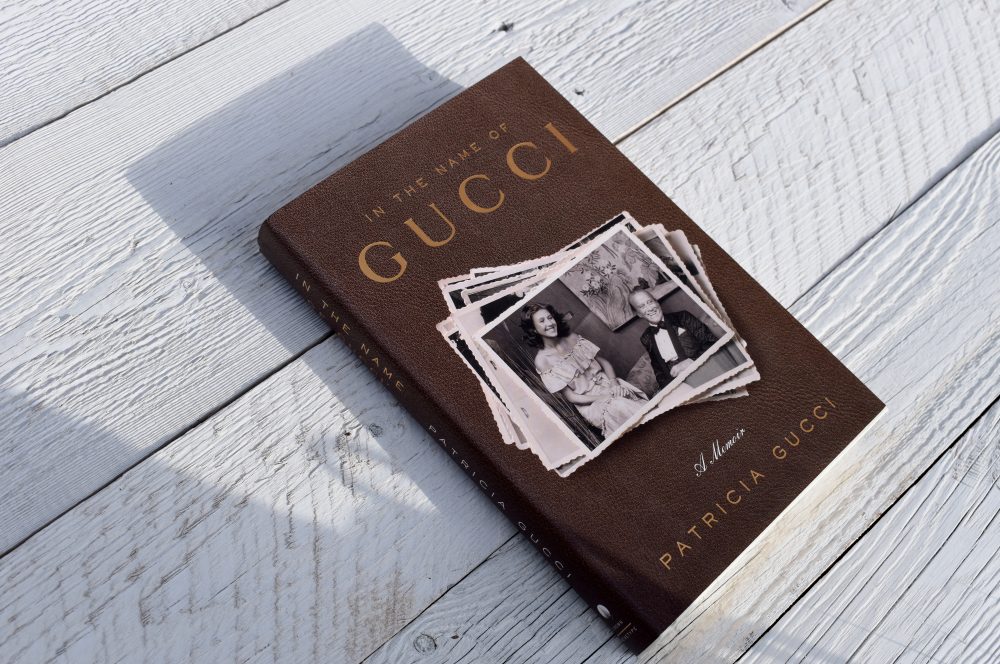
In the Name of Gucci: A Memoir

 
I believe that luxury fashion brands have lost part of their core meaning today. And I think that is because luxury has become too attainable, starting to lose its cultural capital. It is mainly because of digital exposure, which may increase brand awareness, but, in the long run, it can turn into a trap, leading to consumer fatigue, instead of creating higher value. Luxury products are suddenly everywhere. They are not exclusive anymore (a sine qua non of luxury). Nor the retail experience that a discerning luxury customer seeks for. This is a customer who doesn’t remain indifferent if they see an iconic Gucci Bamboo bag on every high-heeled girl posing to have her photo taken for her personal blog or street style photography websites. This is someone who wants to feel like an insider, like they’ve been told a secret that nobody knows. Simply put, you first see the class and understated style with which this kind of customer owns such product, not that they have the money to own it.

I was thinking about all this while I was reading In the Name of Gucci: A Memoir, by Patricia Gucci, the daughter of Aldo Gucci. As the eldest son of Guccio Gucci, the founder of what started as a Florence-based luggage manufacturing company, he was the visionary mind who heralded the “Made in Italy” tagline along with the rise and fulminant success of one of the most prestigious Italian brands – his father always had an aversion towards his son’s plans of growing fast, and would say: “You have to remain small in order to remain great.” (And I would add, isn’t this something that is, by nature, associated with luxury? You have to remain exclusive, in order to remain great).

Patricia Gucci delivers a straightforward, in-depth, unassuming look into the previously untold love story of her parents, Bruna and Aldo, and their secretive and controversial life together (he was married, with three children, in an Italy that prohibited divorce and that held it as illegal to have illegitimate children), into her isolated childhood, and charts the tumultuous history of the label Gucci and of the man, the father and the businessman that was Aldo Gucci. I appreciate learning new things, from a close (both literally and figuratively) member of the family, about such an important figure in the fashion world, but also in entrepreneurship. Personal details of the kind always add a new, complex dimension to the image the public has already formed about a personality.

But I must admit I often found myself looking for paragraphs that described Aldo Gucci’s business side, and the brand, its invention and evolution, all the hard work, determination, time, passion and risk-taking that went into it. Patricia beautifully interweaves the two sides together, giving special, small insights on the business drive, flair, and ethics of her father, keeping the interest up beyond the family drama. That, I truly value. Like the episode when her father spotted a fake Gucci bag on a woman (she didn’t know it was a fake) seated in front of him on a transatlantic flight and, handing her his business card, on which, singing it with his name, he wrote a 30% discount, pleaded for her to use it to purchase an original Gucci handbag. And when Grace Kelly went in to buy a silk scarf in a store when the brand wasn’t yet making scarves, and the manager assured her that exactly what she was looking for was already in production and that she would be the first one to have it – and so they did, Gucci made one especially for her. Or the one when Aldo Gucci opened the Beverly Hills store and allowed access to Frank Sinatra before anyone else, because Sinatra loved Gucci products and wanted the exclusivity. This is the type of customer and luxury retail experience I was talking about above.

Posted by classiq in Books, Fashion | | Comments Off on In the Name of Gucci: A Memoir

Shirt Stories: Francisca Mattéoli

Shirt stories francisca matteoli 

You always notice the person wearing a great shirt. A classic that, for me, holds just as much appeal as a perfect pair of jeans. Shirt Stories is about others who feel the same, women and men, and who wear it well.


At the height of summer, I am turning to travel writer Francisca Mattéoli for a different kind of conversation. We discussed about travel, books and non-profit organizations on our previous talks on the blog (here and here), and while we touched the subject of style on both occasions, this time I wanted to delve deeper into it. Because style is part of who you are, whoever you are. Because Francisca is a woman of style. Because she stands out in simple, bright white. Because she really lives in her clothes. And because, even when she talks about style, she can inspire wanderlust in us all. Here, she gives her rules and inspirations for embracing the white shirt wherever you are and for always packing one in your bag.
 

Your signature shirt is:
Brand: Banana Republic or J.Crew
Colour: white
Always: worn with jeans, and sometimes a pencil skirt
Never: worn with mini skirts, which I never wear

Each of your travels has its own story. Which is the shirt with the most beautiful story attached to it?
Maybe when I arrived in L.A. after a week of sailing. I had to attend a last minute friend’s wedding, but only had swimming suits and sandals left to wear. It was going to be quite a sophisticated occasion. Luckily, my husband had a white shirt among his things. I took it, unbuttoned the last tree buttons and knotted it. It looked great over a pair of dark pants (which I borrowed). Word of advice: always take a white shirt with you wherever you go!


“You feel better when you dress well. I also think it is a way of showing respect.”


Do you often borrow your husband’s shirts? Do you feel different when wearing one?
As mentioned above, one my favorite shirts used to belong to my husband. And I still often borrow his shirts. I like the fitting, the attitude they project (cool and elegant at the same time) – I feel feminine, but not girly, and you can create so many different looks with a man’s shirt. Surely, one of the best ways to look stylish and confident – for me at least!

Which is the most faraway place you wore your shirt?
All the places where I went with my husband for our humanitarian organization “Chirurgie Plus”, such as Cambodia, Benin, Sri Lanka, Rwanda and, more recently, Madagascar.

What are you looking for in a shirt?
Excellent fabrics and quality. I believe that if you wear something simple, it’s how the fabric looks and feels that ultimately really matters.
 
 
Shirt stories Francisca Matteoli
 
Are there any other classic pieces of clothing you can’t live without?
Jeans and good blazers, I guess.

What would you like your clothes (and shirt) to tell about you when you meet someone for the first time?
I’d like the person I meet to think “Wow!”.

Are clothes important? How and why?
Yes, clothes definitely are important, although they are not an obsession or a goal in life. They express what you want to say to others. They reflect an individual culture, personality, preferences, and also, very often, they show how you feel. Have you noticed that when we feel confident and happy, we dress better than when we are gloomy and sad (well, normally…)? It works the opposite way, too. You feel better when you dress well. I also think it is a way of showing respect. For instance, when I go to a party or a dinner, I always wear something nice. It shows that I am happy to be there and it is also my way of saying thank you for the invitation. And an evening is always more successful with people who are looking their best and transmitting good vibes.

How do your style and your profession work together?
I am lucky because I never had to change my style too much for work. I don’t have a “professional style”. Of course, I adopt a different attitude depending on the circumstances but, as a writer, and particularly a travel writer, I can wear what I want. Sometimes I’ll wear something simple and casual, and, other times, something more sophisticated. It’s a question of common sense and education, I suppose. In fact, my style matches the kind of people I work with, and we work together because we have the same attitude towards life (and that includes style).

Is there any question you would like to be asked more often when it comes to your personal style?
Maybe the following one: “Has your upbringing influenced your style?” Personally, I believe so. We are all the result of our environment and I think elegance, style and good manners go together – they also make the world a better place. I grew up in a family where we appreciate courtesy, consideration and refinement. We like to think that elegance goes with simplicity, a positive and unfussy attitude, but cool and classical clothing. I am half Scottish, half Chilean, so I suppose I took from both sides!
 
PS: The English version of Francisca Mattéoli’s latest book, Map Stories: The Art of Discovery (first published in French, last autumn), will be out this October.
 
Related entries Shirt Stories: Heidi Merrick / Chloe Lonsdale / Clare Waight Keller

photos: Julio Piatti, courtesy of Francisca Mattéoli

Posted by classiq in Interviews, Shirt stories, Style | | 2 Comments

Summer Moodboard: Interview with Artist Elizabeth Mayville

Interview with artist Elizabeth Mayville 
Summer… that feeling of simple, tranquil days, when you are taking your time; when you don’t have to wake up early in the morning, but you do so regardless, at sunrise, without any plans for the day ahead, but with a sense of wander; when you can find joy in the everyday and contemplate the unknown with the same enthusiasm. The very same feeling that I had one winter day when I discovered Elizabeth Mayville’s work: it was her series of paintings depicting women in striped t-shirts, with the back to the viewer or with the face not showing, and with the hair tied in a knot or ponytail. As soon as summer rolled in this month, I instinctively thought of Elizabeth’s calm and subtly beautiful paintings which render that same mood of endless summer. An interview with the artist herself soon followed, which gave me the chance and pleasure to find out the real inspiration behind her paintings that sparked that first interest in me, as well as the pros and cons of being an artist in Michigan (and what makes this place unique to live in) and why working with her hands feels like a true gift.
 
Artist Elizabeth mayville 
Where or how did you learn your craft? How early on did you know this was something you wanted to do as a profession?
I’m not sure when I first painted. Obviously, I did as a child, and then I remember making some truly awful paintings in high school art classes. I didn’t really study painting until my second year of college and it finally stuck. While at university, I sort of dreamily thought I would have a career in art, but didn’t really take the time to figure out what steps I needed to take to get there. It wasn’t until I had been out in the working world for over fives years that I decided to make a go of it. I realised that I wasn’t particularly good at or interested in anything else professionally.

What is the best part about working with your hands?
Creating something from nothing is a shock to the system nearly every time. It’s so exciting to be at the helm when a painting finally starts to come together. This is a bit of a cliché, but, in modern times, so many things feel synthetic and removed from us that it feels like a real gift to know how to make a thing that you can hold in your hands.
 
Interview with artist Elizabeth Mayville 
How would you describe and how did you develop your painting style? Who and what has influenced and inspired your work?
My style could best be described as quiet and calm. I never made strides to push my work in that direction, instead, like a lot of young artists I just mimicked the work I liked best and eventually I landed somewhere between my heroes and my basic ability. I love Fairfield Porter, Richard Diebenkorn, Helen Frankenthaler, William Bailey, and David Park.

What are the pros and cons of creating art in Michigan, as opposed to, for example, New York City, the hub of the artistic world? And how does the place you live in influence you artistically?
The biggest pro is that it’s relatively inexpensive to live here and I still have access to customers all over the world via the internet. The biggest con is that my natural inclination to be a bit isolated is totally reinforced here. I just bought a house on four acres of land and I can go days now with only seeing my husband and son, which is amazing, but I’m obviously missing out on culture, real-life art world connections, and the opportunity to see important pieces of art in person. But I do love the quiet and I think that comes through in my work. My aim is to continue living in Michigan, but to get my career to a point where I’m traveling to major cities a few times a year and soaking up all that I can while I’m there.

Many of your works are depictions of objects that convey the space and feeling of “home”, and that celebrate the everyday. Is this what your paintings are aiming to inspire?
Absolutely. I think there’s magic in many of the little bits that make up a day. It’s so easy to overlook it, but it makes an otherwise ordinary day worth experiencing.
 
Artist Elizabeth Mayville 
You have a series of paintings portraying girls/women in striped t-shirts. They make me think of endless summer. What was the idea behind them?
I’ve loved Gerhard Richter’s painting “Betty” since the first time I saw an image of it. It’s a hyper-realistic depiction of his daughter with her back to the viewer. What I loved about that painting is that I have no idea what’s going on. I don’t know what this girl looks like, I don’t know what she’s doing and that makes the whole thing a bit of a beautiful and tranquil mystery. A lot of people buy my prints because they swear they look exactly like someone they know and I love that. I like that they’re open and straightforward at the same time.

I was reading somewhere that art is something about everyday life, about finding creativity in the ordinary. What makes something art?
To me, art is a human expression that strikes a cord with other people on multiple levels and involves some amount of skilled craftsmanship. That isn’t to say that something has to be shared and revered to be art, I think it just has to be capable of resonating with more than one person.

I believe that asking an artist details about his/her creative process is somehow irrelevant, but I would at least like to know where your creative process begins.
My creative process usually begins by going out in the world. Whether it be on a hike or in a museum or at dinner with friends, I usually get the first inkling of an idea outside of the studio. Then, when it’s studio time, I’ll start picking away at the idea with sketches or small gouache paintings. Sometimes it ends there or else it continues further into a large oil painting.
 
Artist Elizabeth Mayville 
Do you consider the prints of your paintings also artworks in and of themselves?
I’ve never thought of it in that way before, but I suppose I do. I love the process of printing them, cutting them down and putting together the packaging. There is certainly the same level of care present in their creation as with the paintings.

Do you have a specific working atmosphere you like to surround yourself with when creating?
This is a tricky question to answer right now. I’ve just moved and my future studio off of our garage currently contains pool equipment and mousetraps, while my current studio is a spare bedroom with a folding table and all of my equipment spread out on the floor. Neither of these is my ideal working atmosphere. My goal for my future studio is a clean, light-filled space with different areas for different jobs (painting, computer work, packaging). But if that doesn’t work out, I’ve found that I’m pretty adaptable and can work just about anywhere.

Does objectivity in the art world exist? Isn’t the emotion the essence of looking at art?
I don’t think anyone can claim to be innately objective, but it’s certainly something one could work towards.
 
Artist Elizabeth Mayville 
What has been your career highlight so far?
I’ve had a few proud moments, but, honestly, I’m still completely excited that painting is my job. The fact that I’m a professional painter is a highlight for me.

What does success mean, to you, in the artistic world?
I’m sure that it means a bunch of different things for each person invested in the artistic world. For me, at this moment, it means being able to continue to contribute financially to my family while making work in which I’m invested.

The best advice you have been given, career-wise.
I don’t know that anyone has boiled down their experience and given me a good quotable piece of advice, but what I’ve gathered from successful creative people is that you must go to your studio daily, work even if you don’t feel like it, be dependable and be kind.
 
Interview with artist Elizabeth Mayville 

One thing you can not start your day without:
Clean teeth and fresh clothes.

What does style mean to you? How would you describe your own personal style?
Style to me is the way in which the world is filtered through an individual. It’s some mixture of that person’s innate and honed skill along with the things they find important.

Where would we find you when not working?
Being a stay at home mom. Hiking with my son, demanding he pick up his toys, cooking dinner, etc.

What is your favourite thing to do in Michigan and which you would miss if you lived anywhere else in the world?
My favourite thing to do here is ride in a boat and go swimming in the middle of a lake. There are so many lakes here and I hope to soon be the owner and captain of my very own boat. I know there are lakes everywhere, but there are five literally within about a mile from my house. It’s fantastic.

Your favourite moment of the day:
I love waking up to the morning sun in summertime and climbing into bed at night in the winter.
 
photos: courtesy of Elizabeth Mayville

Posted by classiq in Interviews | | Comments Off on Summer Moodboard: Interview with Artist Elizabeth Mayville

The Best Sunglasses in the History of Cinema

From the moment I glanced at the mirrored sunglasses of Tilda Swinton in A Bigger Splash I knew it was time to finally make the plunge and have my own take on the best shades in the history of cinema. It’s summer and the fact of the matter is that the summer sun is much more bearable in a pair of sunglasses. And not just any pair of sunglasses, but one with no corner-cutting on style and quality. And I assure you, there is no better place to look for inspiration than the movies. Old and new. But I am warning you. I am biased. They are a rare breed, these pieces I am listing here.

First of all, my selection only includes films that I liked, all of them good movies, from one reason or another. Well, yes, even Top Gun. I mean, have you seen all the good parts of 80s fashion better portrayed in any other film than they are on Kelly McGillis in Top Gun? Secondly, they are all enduring styles and something I myself would wear (that’s why you won’t find the Lolita sunglasses here, regardless of how memorable they have become – the timelessness quality eludes their red-brimmed heart shape) or something I would like to see men wear. Thirdly, need I mention the mandatory character-driven element? All of the above work in concert to compile my very personal view on the subject matter.

Best sunglasses in film - Tilda Swinton in A Bigger Splash 
Tilda Swinton in A Bigger Splash, 2016
“It’s not only about style, it’s a question of cinematographic language as the glasses reflect for the viewer what she sees,” says director Luca Guadagnino about Tilda Swinton’s rock star Marianne in his latest film, A Bigger Splash, loosely inspired by Jacques Deray’s 1969 La piscine, but which also had as a strong reference point Roberto Rossellini’s 1954 Viaggio in Italia. The mirrored sunglasses are one of the standout elements Swinton wears, alluding to Marianne’s rock persona (unlike the rest of her very ladylike clothes). “She has a David Bowie/Freddy Mercury stage persona with a bit of Chrissie Hynde.” Guadagnino worked with Raf Simons again on this film (I Am Love was their first collaboration), as well as with costume designer Giulia Piersanti.
 
Best sunglasses in films - Cary Grant in North by Northwest 
Cary Grant in North by Northwest, 1959
So many years after I was introduced to Roger Thornhill and so many viewings of North by Northwest later (it’s one of my feel-good movies, but about that, on another occasion), I am just as intrigued by the sunglasses Cary Grant wears in Hitchcock’s 1959 thriller. In orangey turtoiseshell, with green lenses, they are not exactly what you’d expect, rather unusual, but that’s exactly what makes them enduringly classic. Sharp and daring, they are a piece you won’t forget, and one that won’t age either. They are cool. And Cary Grant made them that. Any other style on him in this film wouldn’t have had the same impact, nor would have these sunglasses had the same effect on any other face. I am sure their appeal has to do not only with Grant’s effortless composure, but also with the character’s sense of humour. He knows he is unconvincing when he uses them trying to hide from the police at Grand Central Station. He shows the same sense of humour (and wit, too) when he is trying to seduce Eva Marie Saint in the dining car (while still wearing the sunglasses). Or is it the other way around? I do thoroughly enjoy that piece of dialogue every single time.
 
Best sunglasses in film Gene Tierney in leave her to heaven 
Gene Tierney in Leave Her to Heaven, 1945
I wanted to say that these are probably my all time favourite sunglasses ever worn by a woman on screen. I am not so sure after writing this blog post, but there is something very distinctive about them that attracts me. Leave Her To Heaven is a remarkable film, not only because it’s a great noir (and because Gene is a great femme fatale), but also because one fantastic image, a least conventional one, succeeds in summing up the fashion of a decade. Gene Tierney’s famous boat look sees her wearing the least glamorous piece of clothing, a bathrobe (but one with padded shoulders, naturally), completed however with the most glamorous finishing touches: perfect red lipstick, impeccable hair-do and those fabulous sunglasses. Indeed, those sunglasses. What more suggestive way was there to reflect her unblinking cruelty?
 
Best sunglasses in film - Kirsten Dunst in the two faces of January  
Kirsten Dunst in The Two Faces of January, 2014
This is my idea of statement sunglasses. Colourful frames (keeping it in elegant lines though) and a classic shape. Just like the costumes in The Two Faces of January, they have a vintage flair, while looking undeniably modern. Every wardrobe piece is simplified and understated, as costume designer Steven Noble wanted “to keep it minimal, contemporary, and chic”, advancing the idea that only when historical ties are loosened can viewers of today (or tomorrow) begin to identify with the characters on the screen. I agree. About Colette’s yellow dress, the designer said he “went to look at the light, the colour of the stone and the views before I designed that.” He probably had the setting in mind when he chose the yellow rimmed eyewear, too. All three main characters have distinctive sunglasses. They are a must in shielding from the unforgiving Greek sun, but there is something more that is hiding behind each pair.
 
Best sunglasses in the history of cinema Leonardo DiCaprio in Catch Me If You Can 
Leonardo DiCaprio in Catch Me If You Can, 2002
After the lesson in style that Cary served us in North by Northwest, I didn’t think it was very attainable for any actor of today to don any other pair of tortoiseshell shades, especially one with yellowish frames, that could easily pass as cheap and flimsy. But Leonardo DiCaprio did, very much so, in Spielberg’s 1960s-set Catch Me If You Can. DiCaprio’s character thinks he can get away with anything, including with that piece of sun shields. He’s right, as far as those sun shields are concerned.
 
Best sunglasses in the history of cinema-Bibi Andersson in persona 
Bibi Andersson in Persona, 1966
Intensely provocative and clever, with minimalist composition and well defined close-up shootings (much credit due to Sven Nykvist), Ingmar Bergman’s Persona is one of the best psychological thrillers in the history of cinema. In this complex depiction of human identity, frailty and cruelty, Alma (Bibi Andersson) is the nurse who is hired to take care of famous actress Elisabet (Liv Ullmann), after she stops speaking during a performance. They are secluded at the physician’s island house and their identities merge – the hint is in the very title of the film: “Persona”, in singular. Who pays attention to fashion with such an intriguing plot? Well, I do. Because Bibi Andersson’s style in Persona deserves recognition, too. Her pixie cut, sun hats, black dresses and bold sunglasses are mainstays of timeless, modern fashion. But, if we are to read into the character, Alma, with her sunglasses on, looks as if she seeks protection against Elisabet…, or is it against herself?
 
Best sunglasses in film - Marcello Mastroianni la dolce vita 
Marcello Mastroianni in La dolce vita, 1960
Marcello Mastroianni’s shades in La dolce vita may not be as much lauded as those in 8 1/2, but it is in La dolce vita that we first see them take on their own role, as they are used by the main character (who wears them anytime, even at night, and everywhere, including indoors) to evade looks; they are an anti-conversation piece, having the ability to shut people out. His formal clothing is his armour; dressed in slim tailored suits, with his Persol shades on, Marcello Rubini stands in the shadow, detached and observant.
 
Best sunglasses in film Anouk Aimee la dolce vita 
Anouk Aimée in La dolce vita, 1960
As wealthy playgirl Maddalena in La dolce vita, Anouk Aimée is Mastroianni’s equal in terms of both elegance and moral depravity. Her sophisticated wardrobe seems to embody the best of 1950s and 1960s fashion, it’s glamourous and modern at the same time. Her fabulous cat-eye shades, which she, just like Mastroianni’s Rubini, wears even at night (“Everything is wrong tonight”… “I’d like to hide, but never manage it … Rome is such a bore … I need an entirely new life.”), inspired Tom Ford create his retro-looking cat’s eye sunglasses which he called “Anouk”. Anouk Aimée drifts through La Dolce Vita with the hauteur of a feline.
 
Best sunglasses in film  Anouk Aimee in model shop
 
Anouk Aimée in Model Shop , 1969
The first appearance of director Jacques Demy’s Lola character was in his film by the same name, from 1961. Anouk Aimée reprised Lola again eight years later in Model Shop. The story takes place in Los Angeles, where Lola is working her way to get a train ticket back to Paris. Emotionally hurt, Lola goes through her life with detachment, and, behind her sunglasses, she keeps life at a distance. The practical role of the shades isn’t elusive though either: they keep the beautiful, but punishing LA sunlight at bay. But it is consistently clear that this is a Los Angeles that Demy loved (just as he loved Old Hollywood); it’s obvious even when Lola is first seen enveloped in white walking across a pay-by-the-hour asphalt parking lot.
 

Best sunglasses in film Jean Seberg in breathless  
Jean Seberg in À bout de souffle, 1960
Every time I see a beautiful pixie cut paired with a great pair of sunglasses I want to chop my hair off again. I’ve never been complemented more on my looks than when I had short hair. The first film to set off one of the most important cinematic movements in the world, La Nouvelle Vague, Jean-Luc Godard’s Breathless would also be much revered for its fashion, which beguiles international audiences to this day. Jean Seberg’s heroine, with her iconic hair-cut, cat-eye make-up, mirrored cat-eye sunglasses – she simply owns that pair of individuality statement – and a casual, natural, effective wardrobe, packed with sailor stripes (probably her own clothes), captured, like so many other heroines in French New Wave films, the life of the young in Paris, from fashion and the urban professional life, to the carefree minds and the spirit of youth.
 
best sunglasses in movies - Steve McQueen in The Thomas Crown Affair 
Steve McQueen in The Thomas Crown Affair, 1968
The tortoiseshell folding Persols, complete with blue-tinted lenses, that Steve McQueen were in The Thomas Crown Affair, are just as famous as his three-piece suit, the most revered three-piece suit in film history. A thing of beauty, for sure, but I doubt they would have attained cool status and become legendary if it weren’t for Steve McQueen. He had this innate quality of projecting an air of cool on everything he wore. McQueen was a fan of Persol sunglasses and owned a personal collection. The Italian brand celebrated the actor by re-launching the model a few years ago in a limited edition.
 
Best sunglasses in film Audrey Hepburn breakfast at tiffany's 
Audrey Hepburn in Breakfast at Tiffany’s, 1961
The more time passes, the more I realise the many different things I like about Breakfast at Tiffany’s. The fact that Audrey was cast against the type and did a great job at it. The fact that she was funny in the film and that she humorously admitted that she knew she could be a stylish Holy Golightly, even if that was the only thing she could contribute to her character. The fact that she isn’t afraid to wear the same dress over and over again and that she wears a men’s double-cuff dress shirt as night gown. The fact that she hails for the cab. The fact that her glamorous, mysterious, forever modern Oliver Goldsmiths are the accomplice she uses to hide her true expression and conceal her real feelings (and lost nights).
 
Best sunglasses in movies - Clint Eastwood in Dirty Harry 
Clint Eastwood in Dirty Harry, 1971
Eastwood takes the regular idea of “cop” glasses and reinvents it altogether. I will leave the “punk” line out, but these are some death-stare-inducing shades, you have to admit it. He is a street smart detective, and I like that his Ray-Ban Baloramas say the exact opposite. They seem calm and collected. The attraction of the opposites surely works in this case. Steve McQueen may remain the best dressed lieutenant to have ever hit the streets of San Francisco (in Bullitt), but Clint out-grades him out in the shades department. Sorry, Steve.
 
Best sunglasses in film - Thelma and Louise

Best sunglasses in film Thelma and Louise

Best sunglasses in film Thelma and Louise 
Susan Sarandon and Geena Davis in Thelma and Louise, 1991
Few other female characters have come to embody free spirit and fearlessness in being yourself. And maybe Susan Sarandon and Geena Davis would have rocked any pair of sunglasses they had put on in Thelma and Louise, but that’s the most beautiful part. The shades Louise is wearing in the beginning – classic, even a little retro in fact – may be the coolest ever just because she wears them. What’s more interesting is that even when her character evolves (see all three images above) and she changes her look, her clothes, her life and her self, she keeps the sunglasses. Even when she switches to a pair of Aviators, Louise still wears the cat-eye piece, hung on her white tank top. And Thelma gets to wear them, too, but not until she has reached her natural, beautifully simple, mythical look.
 
Best sunglasses in film Robert Redford 
Robert Redford in Little Fauss and Big Halsy, 1970
Okay, there is one exception to the “good film” factor mentioned in the beginning of this article. Robert Redford seems to have worn a great pair of sunglasses in just about every movie he’s made, from Downhill Racer to Three Days of the Condor, both very good films, but the one I associate the most with the actor’s rugged, perfectly weathered, all-American double denim look is the one from Little Fauss and Big Halsy, which, let’s be honest, is an easily forgettable film (although that doesn’t mean Redford’s performance wasn’t good). But only good things can be said about those Aviator shades, as much a part of being an American as blue jeans, especially this American, and by that I mean the actor, as well as the film character.
 
Most iconic sunglasses in movies - Jane Fonda in Klute
 
Jane Fonda in Klute, 1971
There are many films from the 70s that depict the decade’s fashion well, but the one I always tend to think of is Klute. And it’s all the more interesting as most of the clothes Jane Fonda wore in the movie were reportedly her own. It’s probably this sense of reality that I appreciate. I don’t know if the sunglasses were Jane’s as well, but they are oversized, with fading lenses, very much 70s (without looking like a replica of the past) and kind of unlikely to be used as undercover, which makes them perfect for the job.
 
Iconic sunglasses in movies - Tilda Swinton in Only Lovers Left Alive 
Tilda Swinton in Only Lovers Left Alive, 2014
Could Tilda Swinton be the coolest actress of the modern day, with the coolest movie style?
It seems that, lately, every time I write about fashion in film, I mention one of her movies. In Jim Jarmusch’s Only Lovers Left Alive (I seem to mention this one the most, but only because it may be one of my favourite films of the 2000s and I don’t think I can overemphasize how much I loved it), her character, Eve, is centuries-old. Her Wayfarers, the classics of classics, are timeless, too. Her clothes needed to be something without a specific period, and to have simple and clean lines, according to costume designer Bina Daigeler in an interview for The Cut magazine, because “they [Eve and Adam, her husband] had already lived all the fantasies they could live”. The sunglasses are simple and protective, shielding Eve and Adam (Tom Hiddleston) from the outside world, the decaying world of the 21st century.
 
Sunglasses in film-Kelly McGillis Tom Cruise Top Gun 
Kelly McGillis and Tom Cruise in Top Gun, 1986
The Ray-Ban Aviator sunglasses have a place of their own in Top Gun. They simply cut to the image of the tough guy appeal they never fail to evoke. There is probably no other accessory which knew this kind of rebirth thanks to a movie appearance, reconfirming their classic status and becoming style-setters. In Top Gun, the Aviators are the ultimate matchmaker of function and form. Not only that, but the shades (Charlie’s square frames perfectly complementing Maverick’s teardrop style) diffuse the romantic tension simmering between the two. And I will say it again. Kelly McGillis’ film wardrobe remains one of my favourites (yes) in the history of cinema. So simple, so accurate, so enduring. As Jessica Read, the daughter of the film’s costume designer, Bobbie Read, was nice enough to write to me, it made her proud to discover there are people who appreciate her mother’s work and who acknowledge the timelessness of this style. I take it as my duty to do so.
 
 
photos: movie stills from: 1-A Bigger Splash (StudioCanal) / 2-North by Northwest (MGM) / 3-Leave Her to Heaven (Twentieth Century Fox) / 4-The Two Faces of January ( StudioCanal) / 5-Catch Me If You Can (DreamWorks) / 6-Persona (Svensk Filmindustri) / 7,8-La Dolce Vita (Riama Film) / 9-Model Shop (Columbia Pictures) / 10-Breathless (SNC) / 11-The Thomas Crown Affair (Mirisch Corporation) / 12-Breakfast at Tiffany’s ( Jurow-Shepherd) / 13-Dirty Harry (Warner Brothers/Malpaso Production) / 14,15,16- Thelma and Louise (Pathe Entertainment) / 17-Little Fauss and Big Halsy (Paramount Pictures) / 18-Klute (Warner Brothers) / 19-Only Lovers Left Alive (Recorded Pictures Company/Pandora Filmproduktion/Snow Wolf Filmproduktion) / 20-Top Gun (Paramount Pictures)

Posted by classiq in Film, Film costume | | 5 Comments