Make Torre don Virgilio country hotel, Modica, your headquarters for your stay in Sicilia.
Sicilia. One of the most exotic places in Europe. A place that brightens your eyes and enlivens your spirit. A place that teaches you to squeeze joy from the simplest of things. A place where man’s main purpose in life is preserving the land, their traditions and values, and where many mainland Italians are turning to in search of that almost forgotten back-to-the-land ideal, but also a place where lots of Arabic and Greek influences remain. A place that has all the history of Rome, but which is also defined by a romantic and unspoiled small-town charm. And it’s best that you experience it as a traveller, not as a tourist.
Here is our su misura travel guide to Sicilia. A blend of high culture, great food and relaxing seascapes that makes the largest island in the Mediterranean an ideal destination for the summer holiday. But if you are to take just one recommendation from us, let it be this one: Live it your own way, make your own discoveries. Because the most beautiful days will often be the ones when you have no plans whatsoever.
Note: Sicilians have a respect for their origins and take great pride in their language, so please allow us to refer to their island as it is meant to be called, Sicilia, throughout our travel journal.

View down to the town of Scicli
When to Go
During the high summer months, July and August, it gets stifling hot in Sicilia. Choose either June (bear in mind that in the second part of the month it can already be getting too hot) or September. An off-season trip will also mean that you will avoid the suffocating tourist hoards and it will give you the chance to get a real feel of authentic Sicilia and experience the local way of life.
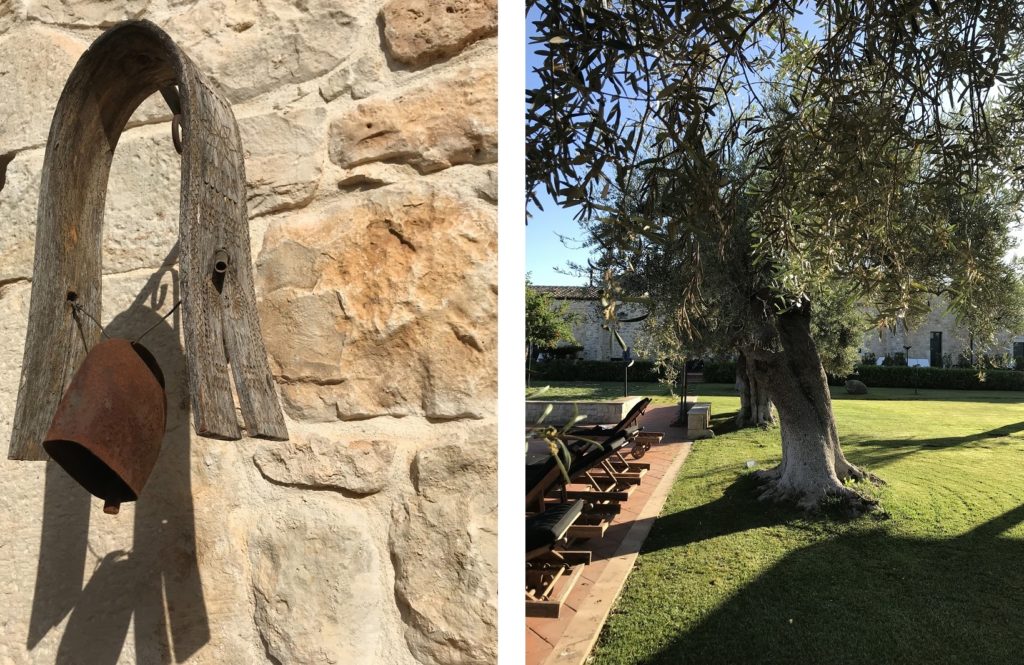
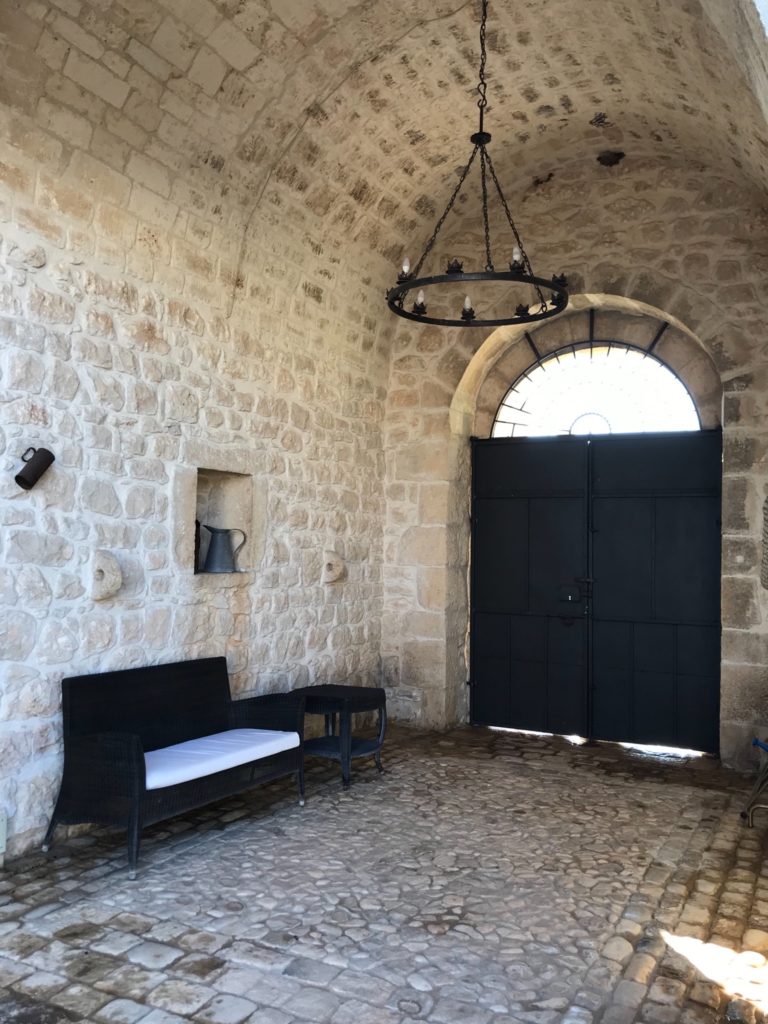
Above: Torre don Virgilio country hotel | The inner courtyard, where breakfast is served each morning al fresco,
exhibits antique tools and decorative elements (the property dates back to the 1660s)
and there is a strong sense of continuity with the past and tradition here.
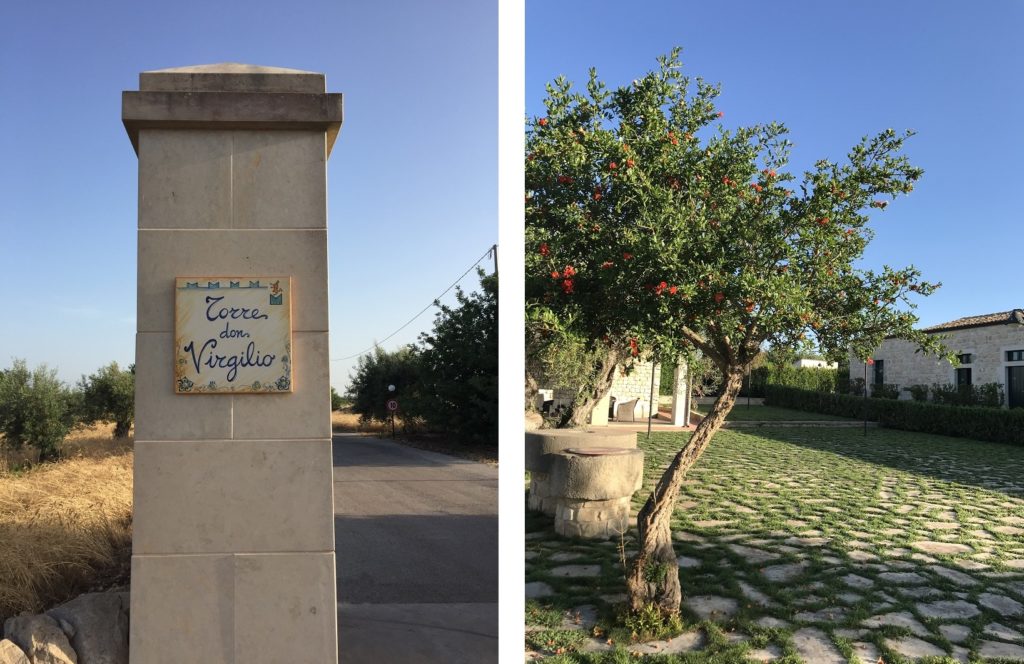
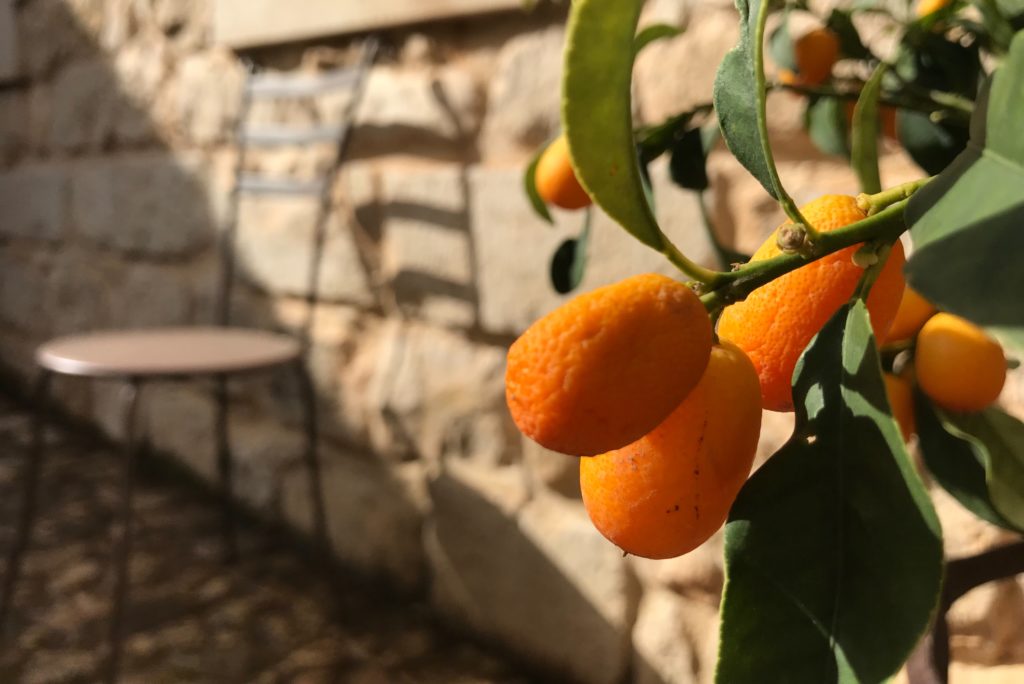
Above: Torre don Virgilio country hotel | Wake up at sunrise, before everybody else, and have the amenities
to yourself to wander around or read a book (this is my reading recommendation).
Where to Stay
The south-eastern tip of Sicilia, between Siracusa and Noto in the east and Ragusa and Modica to the west, is less raucous and touristy than the north-eastern part, and the best option not only for families with little children, but also for living the full Sicilian experience. With its concentration of steeped-in-character hilltop towns, Greek ruins (it is incredible how close all the historic towns in this region are) and quiet, natural beaches, it is the perfect destination for someone looking for a summer vacation that has it all: great culture and small-time relaxing possibilities.
Modica is a charming, historical town in the south of Sicily, close to the coast and which goes back centuries. The steep alleys, winding stairways, historic squares and little cobbled streets make it one of the most atmospheric towns on the entire island. It provides both an intimate feel and exciting sightseeing.
Not far from the city, at a ten-minute drive by car, serependitiously tucked away in the middle of the green fields as far as the eye can see, surrounded by secular olive trees, there is an old Sicilian country house, Torre don Virgilio Country Hotel. An oasis of tranquility in Val di Noto, a UNESCO World Heritage Site, it feels more remote than it is and where you can set your base for exploring the region and even the whole of Sicilia. Combining the hospitality and flavourful food of an agriturismo retreat with the understated design and elegance of a history-filled noble estate (including exposed stone walls and ancient wooden beams), Torre don Virgilio looks and feels like the ultimate luxury, like a stay at the family house of old friends. With a capacity of not too many rooms, most of them on the ground floor, each room with its own terrace overlooking the lush garden lined with olive trees, citrus and carob trees, and with an inviting swimming pool in the center, this boutique hotel is the place where, once you arrive, you tend to stay and look forward to returning to after a long day of exploring the region, close or far away.
They also serve a great breakfast, having a regional approach to sourcing their ingredients, in great respect to nature, its seasons and the origin of the products. From home-made bread and fresh tomatoes and basil, to the best mozzarella and ricotta you have ever tried, traditional home-made pear and apple cakes and fresh fruit, the breakfast is simple but hearty and rich in flavours. The olive oil is made in-house. Sicilians seem to know what the abundance of less means.

Exploring the surroundings of Modica
Get a Feel of the Place
Ask for recommendations and go out to familiarize yourself with the surroundings as soon as you’ve checked in at your hotel. Even if you have a well planned out itinerary, the locals always know best and will guide you to some truly special places you might otherwise overlook. If you are staying close to Modica, head to town at the magic hour in late afternoon (it is a clever call to arrive before the evening, when everybody goes out and you will find it more difficult to find a good parking spot). Take a stroll along the main street, Umberto Corso, soak up the atmosphere, then head for dinner at La Contea and call it a day by exiting the city through the highest point, which has an absolutely breathtaking view of the town and the surrounding countryside for miles around. And just like that, the south-eastern Sicilia has revealed itself in all its splendour in full solar meltdown, setting the tone for the rest of your stay on the island.

View down to the town of Modica at dusk
Getting Around
Rent a car to travel the island. If you want to move around and discover the beauty of the island, you need a car. When you arrive to a town, find a safe parking spot on the main street and walk everywhere. It’s the best way to experience the many fascinating towns and villages Sicilia is packed with, as you will be amazed how many beautiful edifices, hidden palaces and churches lie among the buildings left to decay.

La Contea, Modica | Choose a table on the back alley
of the restaurant for a lively and authentic ambience.
Where to Eat
Each region has its own specialty throughout the island. From Sicilian fish couscous, which reflects the island’s Arabic heritage, and the widest variety of pizzas, to the pastries of Noto and the traditional dish of Sicilia, bucatini con le sarde. Make sure to stop by the outdoor food market as often as you can.
La Contea, Modica. Situated in the heart of Modica, the restaurant fires up some of the best pizzas (as well as pasta, antipasti and salads) in Sicilia and is buzzing with locals and tourists, with tables overflowing onto the busy street and into the nearby alley.
Via Clemente Grimaldi, 15.
Caseificio Borderi, Ortigia. Hands down, one of the most authentic and certainly the heartiest food experience in Sicilia. Outside his small family-run shop located in the Ortigia Market, Andrea Borderi, the owner, creates his famous huge made-to-order sandwiches that are loaded with various Borderi-produced Sicilian cheeses (smoked mozzarella, provolone, ricotta), charcuterie (which can easily be left out if you want a vegetarian sandwich), olives, fresh and sun-dried tomatoes, greens, oregano, olive oil and Sicilian lemon juice. The line is long, but the Borderi family passes out food samples to the hungry crowd, and it’s exciting to watch signore Borderi in action, passionately talking to everyone and feverishly building his ridiculously big and incredibly delicious panini.
Via Emmanuele de Benedictis, 6.
Osteria dei Sapori Perduti, Modica. If you want to taste traditional Sicilian food, this is the place to go. It is good to know that it is also open at noon, unlike many Sicilian restaurants, and you can have a great lunch that does not involve pasta and pizza. Simple food is the best and Sicilia is the place to reinforce that belief.
Corso Umberto I, 228.
Trattoria Piccolo Napoli, Palermo. Operated by the Corona family since 1951, the restaurant determines the menu daily based on the local fishermen’s catch of the day, reserved specially for the trattoria. Try the national dish of Sicilia, bucatini con le sarde: long, tube-like pasta cooked with fresh sardines, wild fennel, pine nuts, raisins and breadcrumbs.
Piazzetta Mulino a Vento, 4.
Note: If you are up for it, try the Mercato del Capo, in Palermo. They say that street food was born in Sicilia.

Antica Dolceria Bonajuto is tucked away on a quaint and old alley, on Corso Umberto, Modica.

Each Bonajuto flavour comes with its own package colour and design.
The Best Chocolate in the World
While in Sicilia, make Antica Dolceria Bonajuto one of your destinations. Italy, and Sicilia, may be famous for its gelato, but it is the chocolate that should take the crown.
Without exaggeration, Bonajuto may very well be the best chocolate you have ever tasted. It is the most singular chocolate taste (not too sweet, but extremely rich), with a unique grainy texture that derives from the fact that the added sugar doesn’t completely melt, because the cocoa is processed at a relatively low temperature. Simply put, this is how chocolate should taste like.
La più antica fabbrica di cioccolato in Sicilia has been producing archetypal chocolate for six generations and for more than 150 years. La Dolceria is still in the same place where its founder, Francesco Bonajuto, opened his small confectionary in 1880, in the center of the city of Modica. Crafted through an old cold-processing method of cocoa used by the Aztecs in 16th-century Mexico (straight from cacao beans, with no cocoa butter or other additives you’ll typically find in chocolate), the Bonajuto chocolate is made exclusively from cocoa mass and sugar and sometimes a little spice or natural essence, each variety having no more than four ingredients in composition. Start your chocolate tasting journey with il cioccolato vaniglia (made of only cocoa mass, sugar and vanilla) and il cioccolato cannella (cinnamon).
Corso Umberto I, 159.

Looking for shade at midday, Noto. One of the most pleasant things to do is take your gelato
to go and savour it under the monumental trees in the piazza in front of the duomo.
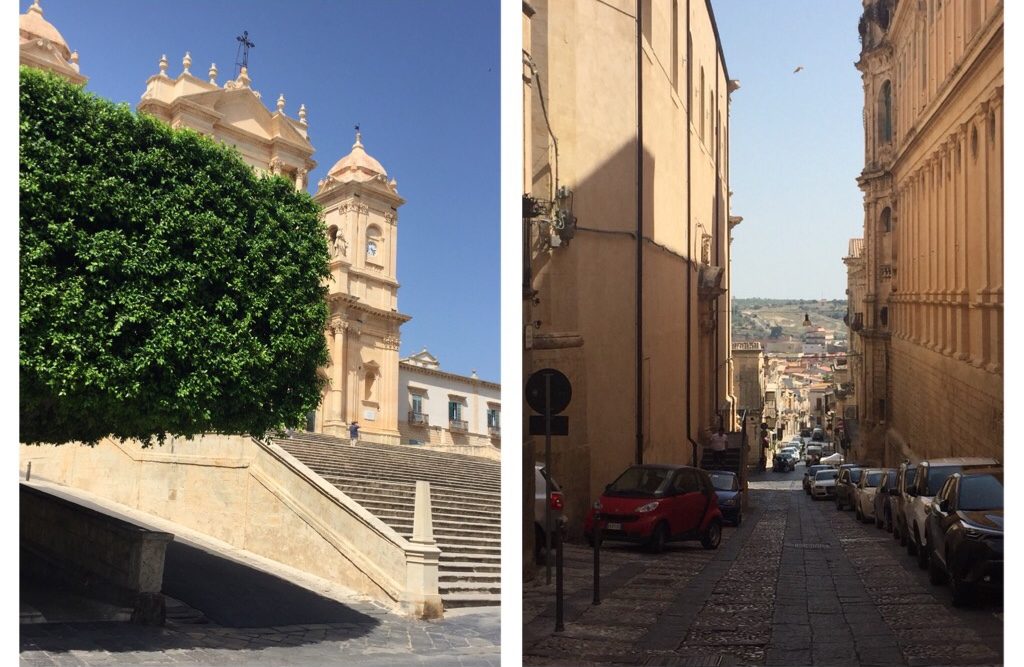
Left: La Cattedrale di Noto, built in Sicilian Baroque style, dating from 1776. Many
of the new structures are built of a soft stone that renders a honey tonality under sunlight.
Right: A steepy street in Noto, a cityscape particularity of all the towns in the region, offers
both a scenic backdrop and a hairpin experience when trying to find your way around by car.
Un gelato, prego!
Or two! Little feet get tired quickly. The best remedy after pounding the pavement that works better than a piggyback ride and the surprise toy you’ve been saving up for difficult moments, is stopping for gelato.
Caffè Sicilia, Noto. A culinary institution that has stayed in the same family for over 100 years, a destination in itself for many visitors, and for us also. Veni, vidi, mangia… and the verdict was this: we came for the gelato, but what we loved the most were the cannolis and the almond-milk granita. But the gelato will still be one of the best you’ve had. Because, honestly, how can it not be? Corrado Assenza’s dishes are distinctly Sicilian, as he uses only the best local produce and dairy from the farms in the area. Chef Assenza is also responsible for saving the Roman almond, a quintessential Sicilian ingredient which was not long ago on the verge of extinction, by using it extensively in his products, making it known to others as well and facilitating trade for the farmers. Respect for land and tradition. Try the ricotta gelato and ask for lesser known specialties as well, like Caffè Sicilia’s own invention, terra nostra (“our land”), consisting of two layers of pistachio and almond sorbet. (Note: Caffè Sicilia is closed on Mondays, as are other caffès and restaurants in Sicilia, so you should check out opening hours and days before you go).
Corso Vittorio Emanuele, 125.
Belfiore Gelato e Cioccolato, Siracusa. Made of natural ingredients, with no artificial flavours. Try the extra dark chocolate for a less sweet option (especially if you don’t regularly eat sugar, but have decided to make vacationing in Sicilia that rare occasion worthy of breaking the rule). Have it outside, in the breezy air, with a view to the bridge over the channel connecting Siracusa with the city’s old town on the island of Ortigia.
Via Luigi Greco Cassia, 5.
PS: This might be one of the best gelati in the whole of Italy (the owners hail from Bologna, which is competing for the title), so you might very well bend the rules a little more. Try the mulberry. Or the pistachio. Or the mandorla.
Gelateria Brioscia, Palermo. Brioche con gelato (a couple of scoops of gelato stuffed into a warm, fluffy brioche bun) is a Sicilian tradition and you can serve it any time of the day, but on a Sicilian summer day, go ahead and indulge yourself and have it for breakfast.
Via Federico Giuseppe Pipitone | Via M. Stabile, 198.
Al Gelatone, Palermo. The shop offers a wide variety of traditional and creative flavours using only fresh and raw ingredients, including dairy-free and sugar-free options. And if you are on your sixth day of gelato eating your away around Sicilia, believe me, you will want to go for the sugar-free. Try the pistachio.
Via dell’Autonomia Siciliana, 96.

Cattedrale di San Giovanni Battista, Ragusa
Where to Go, What to See
Modica. I have already mentioned the town and its particular beauty, but I would like to add one more thing. Modica is known as the town of one hundred churches and I highly recommend you enter one, whether you are a religious person or not. Take a moment for reflection. It will do you good.
Noto. Located on the terraced slopes of Mount Iblei, Noto is an apotheosis of architecture and town planning, currently listed among Unesco’s World Heritage sites. After the devastating 1693 earthquake, it was rebuilt from scratch on a new site about 10 km from the old city, and the new town was meant to be a masterpiece of Sicilian Baroque. And it is. The sensation you get walking through its Baroque center, especially passing by the duomo on one side and Palazzo Ducezio (the City Hall) on the other, is that you are witnessing something grand. You can easily cover the town on foot in a single afternoon along its two main streets, Corso Vittorio Emanuele and Via Cavour, which run east to west, at gelato-eating pace (Caffè Sicilia is right on Corso Vittorio Emanuele).
Siracusa and Ortigia. A microcosm of Sicilian diversity, Siracusa showcases a heritage of classical, medieval and baroque architecture. Ortigia, Siracusa’s tiny historic island center, is separated from Siracusa by a small channel. The food market is something you should experience at least once when you are in Sicilia, and if I have to choose, I would choose the smaller, more intimate Ortigia outdoor food market even over the ones in Palermo. Open every morning but Sunday.
Selinunte. Agrigento may be the most sought after archeological site in Sicilia, and if you are traveling with children, you might not have the chance to see but one such place (although you might find out, to your surprise, that any stone relic is incredibly fascinating for the little ones), so you may want to consider Selinunte, a little further up the west coast. It is the largest archeological site in Europe and one of the most important ancient Greek artefacts. The landscape is wilder there, as the remains of the five temples are set on a high plane and overlooking the sea. There are two entrances, one from Marbella di Selinunte to the east and one from Triscina to the west (Triscina is said to have the best peaches in Sicilia).
Menfi. Surrounded by rolling vineyard-covered hills descending into the wild dunes, white sandy beaches and the translucent waters of the north-west coast, Menfi is one of the centers of Sicilian wine-making. If you choose two destinations as home-bases for your trip, take Menfi into consideration after the southern part of the island, to continue the trifecta of the ideal summer holiday: cultural, food and seaside exploration. There is even a wine festival taking place each year in June, Inycon Festival, where local producers open their doors to the wide public.
Every little town and village in between the big cities holds a disarming humble charm. It may be the small town of Erice, where there are more churches than houses, or the antic Giarratana, on the way from Siracusa to Ragusa, where the men of the town still gather in groups in the side streets, sitting on white chairs and talking. Or it may be the famed Corleone, close to Palermo, where you can pass by a bar that has an image from The Godfather hung by the front door (the town was not a location for the film, but it was the birthplace of Mario Puzo’s character and, subsequently, the movie character – the bar used in the film was Bar Vitelli, in Savoca, Messina) and where children still play unhindered in the streets and shop owners give away their parking spot to you with a smile on their face.
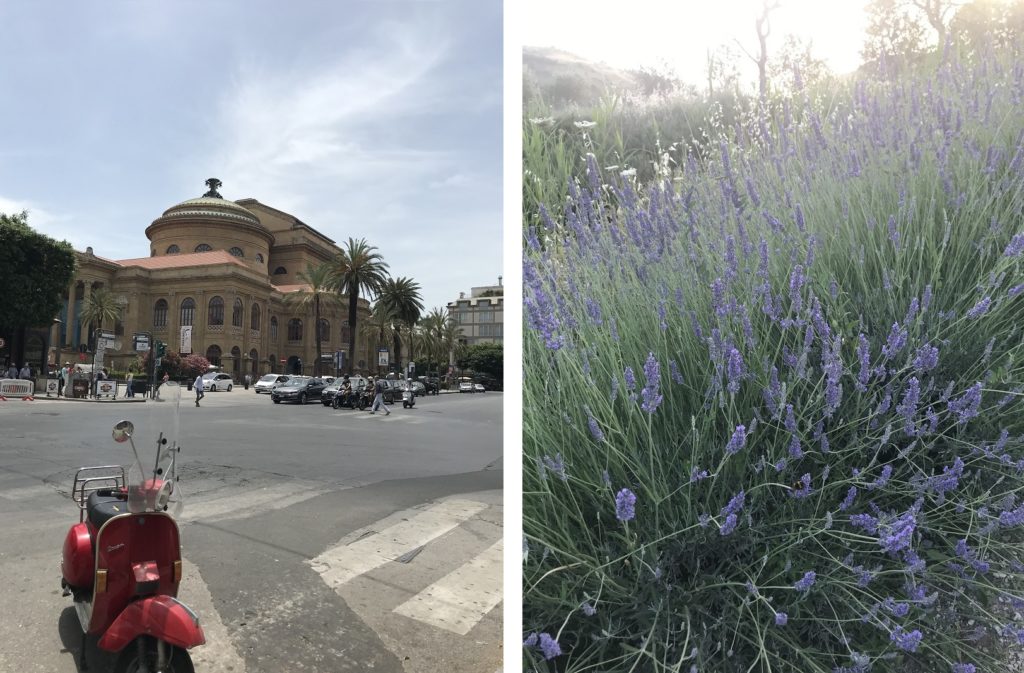
Left: Teatro Massimo Vittorio Emanuele, Palermo, the biggest opera house in Italy, and the third in Europe, after L’Opéra
in Paris and the State Opera in Vienna. This architectural masterpiece in classic style, built with local stone and marble,
was inaugurated in 1897 with a performance of Giuseppe Verdi’s “Falstaff” conducted by Leopoldo Mugnone. The final
scenes of “The Godfather Part III” were filmed here. | Right: Gardens, with flowering plants, trees and herb gardens,
are a highlight throughout the whole island.
Make the wine regions up north the base
for the second leg of your trip to visit Palermo
Once Roman, Byzantine, Arab, Roman, and ultimately Italian, Palermo is an exotic place, a cultural melting pot since antiquity. By entering the city by car and then exploring it by foot, you will inevitably see it in all its authenticity, social stratification and historical comminglings: a riot of poor neighborhoods, crumbling baroque buildings, superb palaces, Arabic domes and modern art, brimming with colour, heat, noise and saga. Palermo is probably the place that best epitomises Sicilia’s heritage of cultural richness and troubled community.
Grab a granita at an outdoor table and watch the Palermitani and tourists walk by, stop by the artists who make hand-crafted jewellery on the site on Via Vittorio Emanuele, make a tour of the Arab-Norman Cathedral of Palermo, i Quattro Canti (the center of the historic quarter) and Piazza Pretoria with its spectacular circular fountain. And do stop by la Feltrinelli bookshop (make it your only visit to a big store while in Sicilia – Via Camille Benso Cavour, 133) for a refill with the most beautifully illustrated children’s books (much needed to keep up the interest for hanging around in the city).
If you are based in the southern part of the island for the entire duration of your stay, you can save a night to spend at an agriturismo retreat in one of the wine regions in the north, or you can plan an entire second leg of your trip here. The second option will give you the chance to appropriately explore Palermo and the surrounding areas.

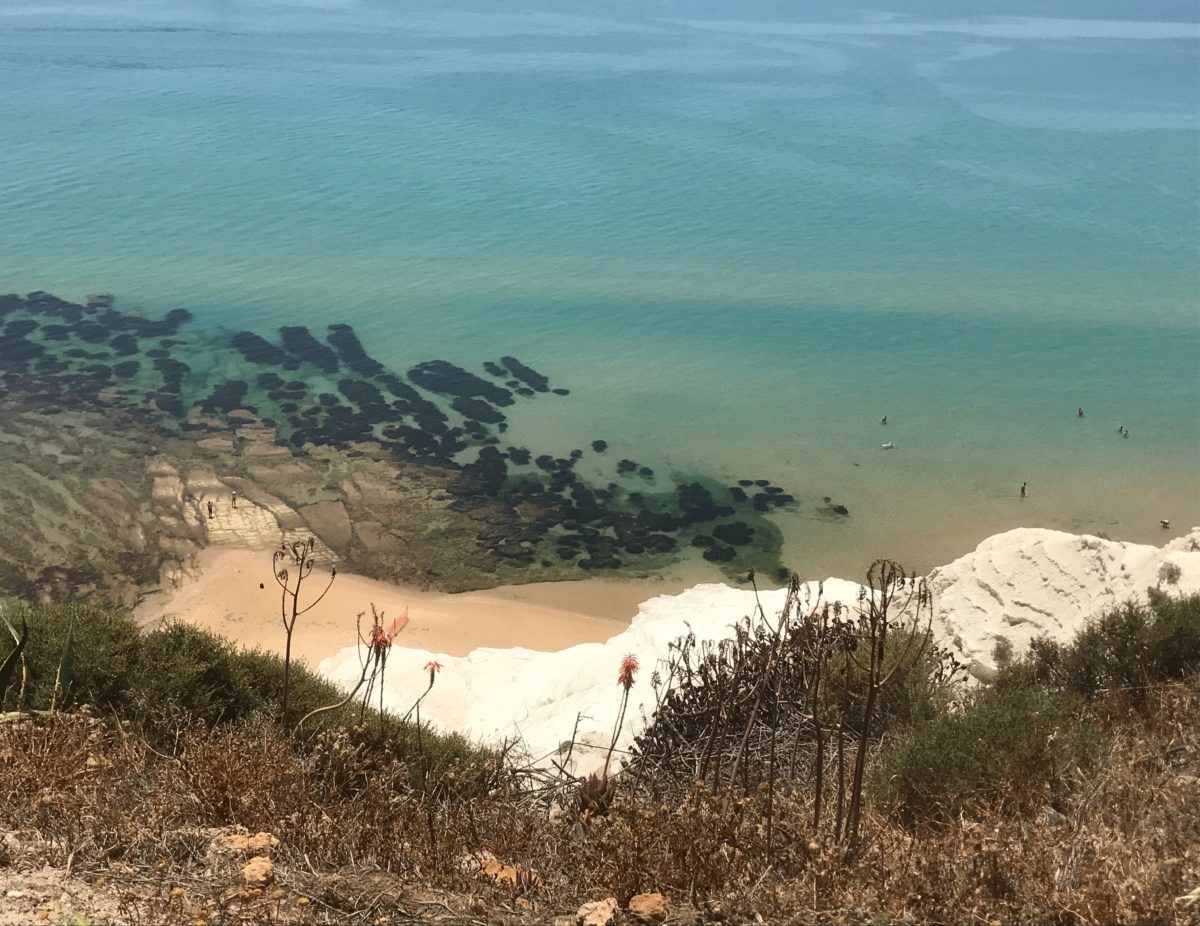
Scala dei Turchi | The natural white rock contrasting with the azure waters offers a splendid view from the top.
Beach Days
The usual scenario: Wake up early, have breakfast and be at the beach by 08.30. Swim, play in the sand, run on the beach. By 10.30, you’ve had your healthy dose of salty sea air, vitamin D and beach activities, so you can pack your things and exit the beach while it is still pretty unpopulated. Heaven. If you love the sea, but don’t sun bathe, repeat the process in late afternoon – early evening.
The Sicilian way: The way of life is different in Sicilia. Many hotels don’t serve breakfast until 08.30 the earliest (if you consider asking why, don’t – “Perché siamo in Sicilia!” (“Because we are in Sicilia!”)). And if you are an early person and travel with children and breakfast is an important meal of the day (as it should be), you would want to book a hotel that serves breakfast. Also note that, if your accommodation is more inland, the beach (especially if you are looking for a wilder and more secluded beach) can be 30 minutes – 1 hour drive away. This leaves you for very little safe time in the sun before noon. So you have to plan your beach days very carefully, which means you can, for example, rule out a morning session and opt instead for a long afternoon by the sea. You can bring dinner to have on the beach.
Marina di Modica. Situated on the most southern part of Sicilia, this large bay with a low-key sandy beach surrounded by dunes is great for running, sports activities and playing in the sand.
Cala Mosche is a little known beach (one of the perks of asking for recommendations from the locals) in the Vendicari Nature Reserve, on the south-east coast of the island. Natural surroundings (it is set between two rocky formations, which means the sea is calm even on a windy day), no bars, sun loungers or beach vendors. Ideal if you are looking for untamed, peaceful beaches, for those who do not sunbathe but love the sea nonetheless. It makes the 15-minute walk through the reserve to get there worth it.
Scala dei Turchi. The blinding white limestone rock formation in the shape of a staircase was created by the greatest artist of all, Mother Nature, which, in time, has made the rock soft and sinuous, with the help of the sea and the salty breeze. Walking on the long strip of sand that takes you to the stairs can be pure madness if you happen to get there at an inappropriate hour, but put on a long-sleeve linen shirt, apply the high protection sun lotion and wear the right headgear and go for it, because the sensation of the steps looming over you as you get closer and closer is truly spectacular.
Lido Fiori, on the south-west coast. Backed by hills, child-friendly Blue Fag sandy beach close to Menfi, not far away from Selinunte. If you are based in the region and a very hot day is announced, skip breakfast the next day and have an early morning seascape.
Note: When you arrive at Scala dei Turchi, especially if it happens to be on the day you make your trip from the south to the north of the island and it’s already too hot, just for the fun of it, pay the 2€ per person (children ride for free) and take a ride in Antonio’s beach car from the top of Scala dei Turchi to get down to the beach. It’s going to be bumpy and speedy, but so much joyful for everyone, especially if the driver is a jovial Italian with a sense of humour and a taste for romantic songs (loud music coming out from the speakers of the car included in price). Not to be missed.

Left: Scala dei Turchi. The hot sun can make the walk on the beach towards the site seem even longer
than it is and the white steps look like a mirage. | Right: Finding shelter from the dazzling sun under a majestic cork tree
(they are everywhere in Noto, Modica and Siracusa, a heaven on a summer day), in the port of Siracusa.

On the way to Palermo
Good Manners for Travelling to Sicilia
Learn a few basic words and expressions in Italian and avoid talking English all the time in restaurants and shops. The Sicilians do not speak English, and even if they do, their vocabulary is very basic. And they will greatly appreciate the effort even if your Italian is middling. And by speaking a little Italian, you just might make new friends (at least for the rest of your stay), because you may not be the only guests of the hotel who have a problem with the air conditioning in the room and by speaking mild Italian you may be in the position of helping out the English couple from next door who have the same problem as you but do not speak Italian at all. Prego.
Sometimes you’ll get bread with diced tomatoes or olive oil to start your meal. Consider it an extra. You may eat it or not, but it will still be included in the general cover charge. It is called il coperto, which includes water, pane e grissini (bread and breadsticks) and the use of cutlery and tablecloth that must be washed. It also means that you can tip much less than you would usually do in other countries (a coin of 1€ or 2€ will be enough or you can simply round the bill to the nearest round number).
Children eat what their parents eat, so don’t ask for a kids’ menu. You will be met with a smile from the waiter when, after he has asked you if you want something special for your little one (kids’ menu or not, they are still polite and ask), you tell him that the child will have what his parents have.
Even if you are on an island, and even if Sicilians consider themselves Sicilians, not Italians, don’t forget you are in Italy. Try not to wear flip flops, not even to the beach, and don’t lose your sense of style just because you are on holiday. And putting a little effort into your dressing just might get you that table you are waiting for before others.
Note: Here is a great guide to Italian travelling etiquette.
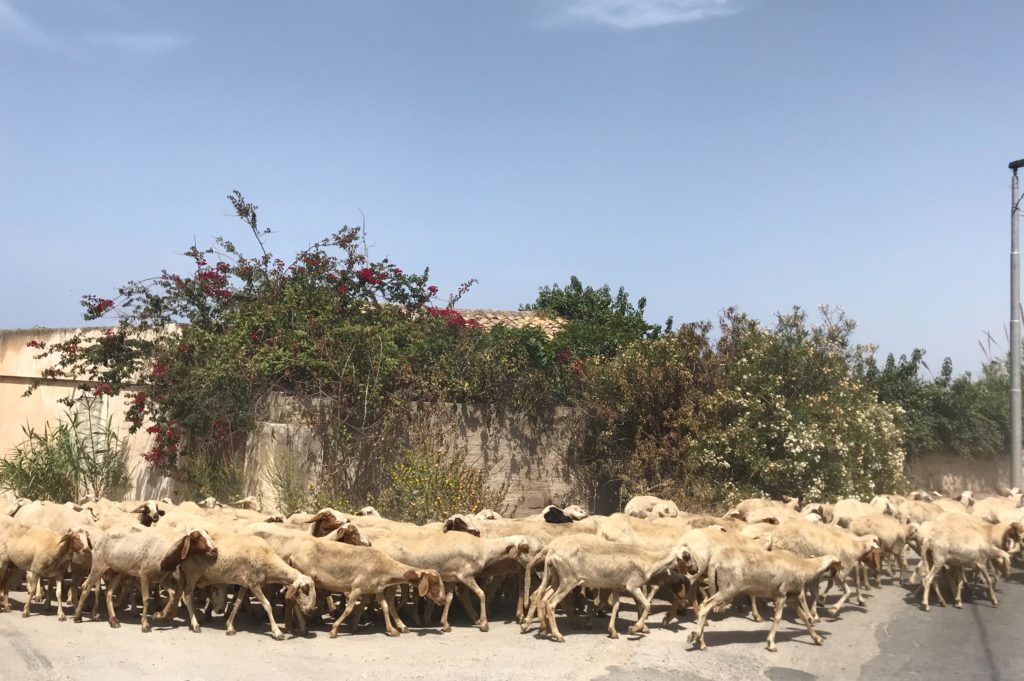
Getting lost is not always bad (but do get yourself a map and don’t rely solely on Google Maps),
because you just might come across a scene that looks depicted from “The Godfather”.

Left: Laundry day, Siracusa. | Right: Oleander should be declared the official plant of Sicilia.
Prendiamo un caffè!
Italians take their coffee seriously and caffès are centers of the social life.
Sicilians take their coffee strong. Do not ask for cappuccino or latte after ten in the morning. Italians only enjoy milk coffee in the morning, never in the afternoon, and especially not after a meal. It is always espresso at the end of the meal, after dessert.
Prendiamo un caffè! (Let’s get coffee!) always refers to an espresso. Bear in mind that ordering un caffè doppio (a double shot of espresso) is not typical in Italy. If you need an extra shot of caffeine, stop at the next caffè again.
Stop by the gran caffè of Sicilia, Caffè Spinnato, dating back to 1860.
Via Principe del Belmonte, Palermo.

View from the winding road down to Corleone
Good to Know
Request a car with GPS since reception can be spotty if you are reliant on Google Maps. Don’t rule out the traditional map. Remember there was a time, not long ago, when you could navigate half a country by using only the trusty old school map and the road signs. Exploring a new place in the true sense should not involve too much technology anyway.
Diving can be an adventure, some even say notorious, in Sicilia. The roads can be narrow, the turns tight, and the drivers often seem to be guided more by timing than by respecting rules. Dolce far niente does not apply to driving, so pay double attention. And bear in mind that the speed limits are not taken too seriously, but don’t do what the Sicilians do.
Do not park in no-parking zones. If you are not sure whether you are allowed or not to park in one place, just ask the shop owner nearby. They will always be helpful.
Being a cinephile and a lover of Italian cinema can pay off when you least expect it. It may lead to your being offered one of the best wines made in Sicilia by the manager of the country hotel you are staying at. So, even if you are a convinced light traveller, you might consider checking in your luggage. Pack a bottle of olive oil from Agrigento (the best in Sicilia) while you are at it, too.
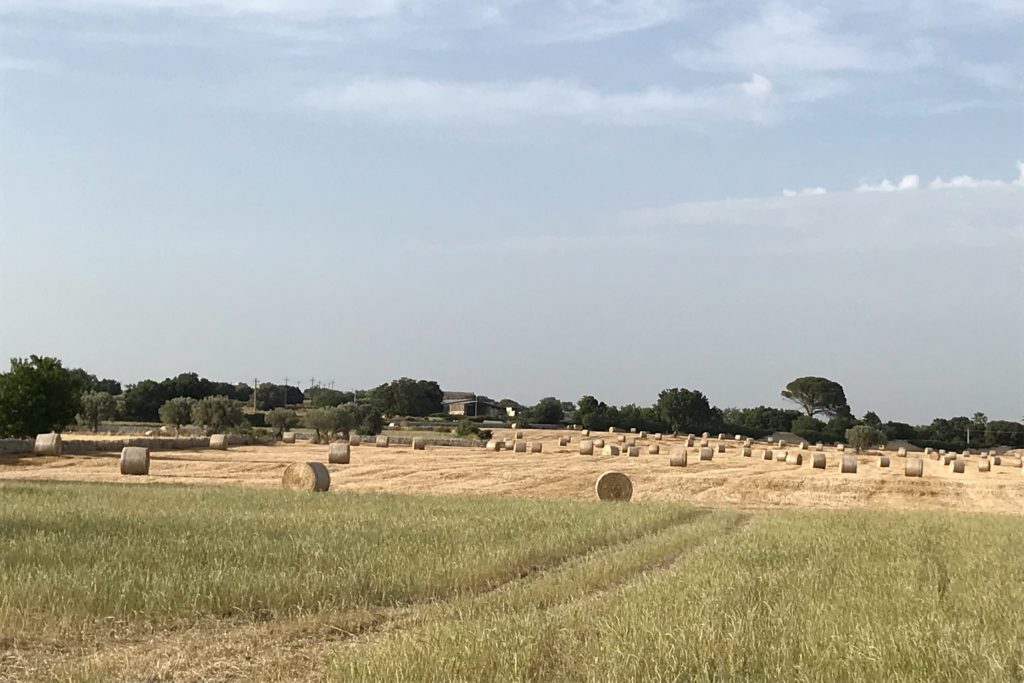
The country scape of Modica.
I would visit Sicilia again just for the Southern part.
What to Take Home
Almonds from Noto. Pistachios from Bronte. Chocolate from Antica Dolceria Bonajuto, Modica. Organic fig and arancia rossa jam. See also the “Good to Know” paragraph above.
Hand-made jewellery from the streets of Palermo. Look for beautiful brass necklaces, bracelets and earrings. Make sure you carry cash, because there is no ATM nearby and although you can pay by card, the process can get very long and your kid/kids might not have the patience for it.
Wooden toys, made in Italy, from the toy store Il Giocattolaio, Modica (on Umberto Corso). While in Sicilia, only visit the local boutiques.
But, most importantly, the experience. The landscape and atmosphere are one of a kind and you will often realise you have forgotten to take photos. And that’s the best sign that you are living la dolce vita, that you are being present and that you are paying attention to all the beauty and wonders around you. The best memories don’t appear in photographs.
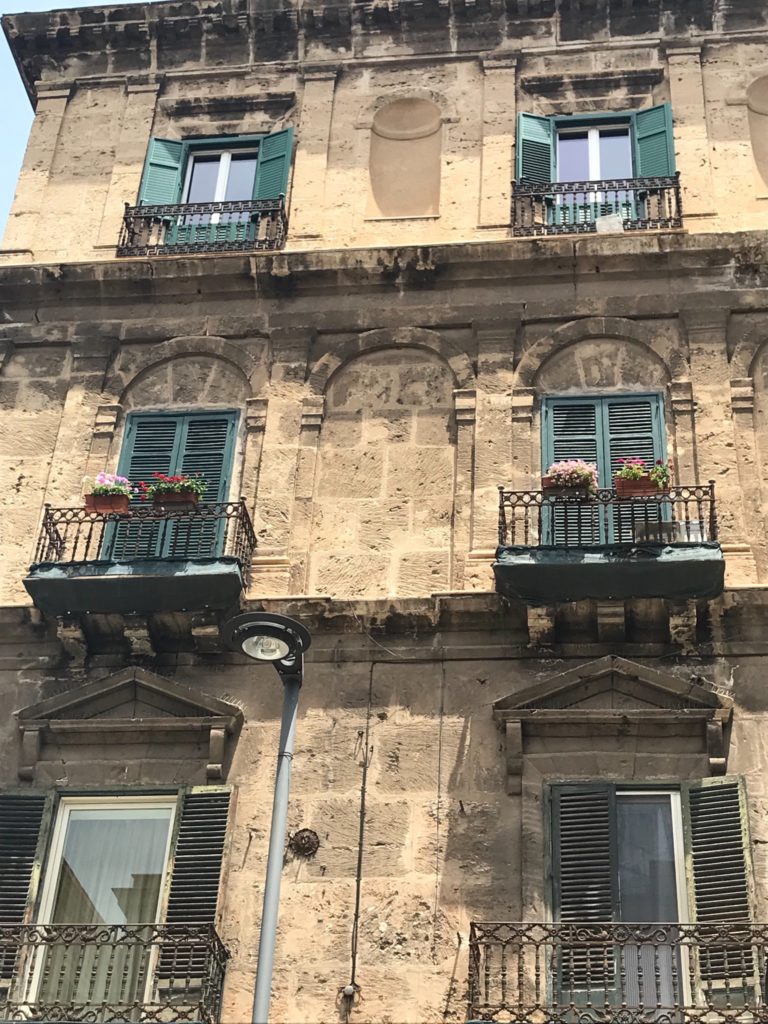
One of the many honey-cream stonebuildings in Palermo (as in the whole of Sicilia), basking in the sun.
Buon viaggio!
Find a radio frequency that plays good music for your road trip. Italians do know good music and rock music, you may find out, and you may also find out that Bruce Springsteen’s latest album, Western Stars, had been the best selling album that week in Italy and you will be happy to get that special vinyl edition you find when you stop by la Feltrinelli. But, honestly, the rhythm and buzz of the towns are the best soundtrack for your Sicilian summer. And watch the road!

Beautiful landscape close to the town of Corleone | An agriturismo retreat is a great alternative
to the busy cities and crowded and noisy seaside resorts.
Photography: Classiq Journal
Five photographic prints from this story are available here.