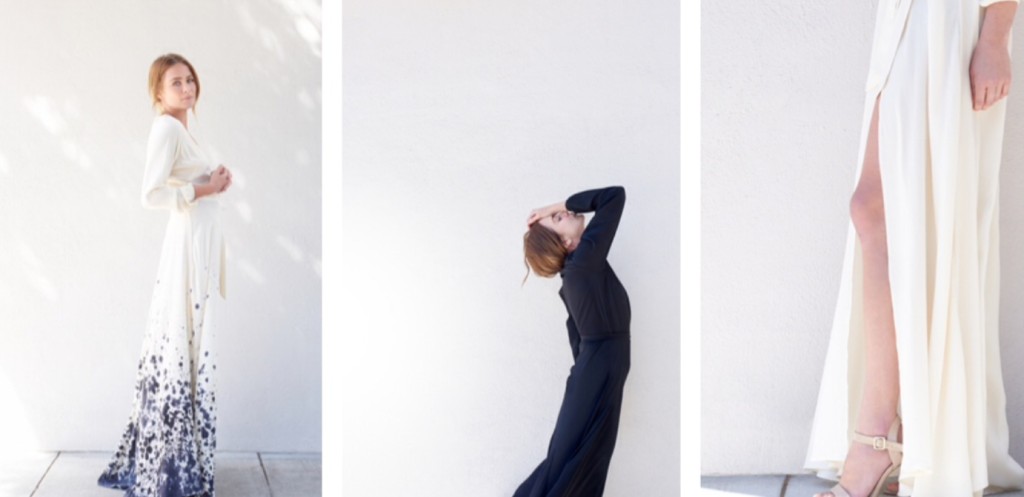
Summer Moodboard by Louise Dahl-Wolfe

Louise Dahl Wolfe photography 
Were you to see this top photograph for the first time, what year would you place it in? I am certain you wouldn’t go as back as 1950. Yes, it does look much more like a 2010s Céline campaign. This was the pioneering vision of Louise Dahl-Wolfe. A new book about the fashion photographer, Louise Dahl-Wolfe, is out, which made me revisit some of her work. Her photographs were infused with natural light, vitality and a new sensibility, which was an overdue departure from the stiff black-and-white society portraits that still dominated the burgeoning world of fashion photography when she was hired at Harper’s Bazaar in 1936. These photos here, for example, are a great reflection of her very relaxed and modern approach not only to fashion photography, but to a new, more natural and more casual look for women.
 
Louise Dahl Wolfe photography

Summer moodboard

Louise Dahl Wolfe photography
 
photos: Louise Dahl-Wolfe / 1,2,4-Hammamet, Tunisia, 1950 / 3-Mojave Desert, California, 1948 / 5-Tunisia, 1950 / 6-Miami, Florida, 1943

Posted by classiq in Fashion, Fashion Photography | | Comments Off on Summer Moodboard by Louise Dahl-Wolfe

Interview with Fargo Costume Designer Carol Case

Interview Fargo costume designer Carol Case 
Noah Hawley, novelist, producer, screen and tv writer, had this bold idea to create a television series based on none other than the iconic Coen brothers film, Fargo. Although loosely inspired by the 1996 (what can already be considered) classic, and showcasing different characters, the tv series Fargo still had some high expectations to meet. And thanks to a great storyline, team and cast, it has become a worthy production in its own right. Season one was a promising spin-off, but Hawley had another challenging idea and wanted to start all over again with season two, with a new cast and a plot placed a few decades back, in the late 1970s. The darkly comic crime drama is a period piece unfolding in the snowy parts of Minnesota and South Dakota, and the characters – brought to life by a fantastic casting, from Kirsten Dunst and Jesse Plemons, to Patrick Wilson and Jean Smart – had to look authentic, like they belonged to that time and place. And here is where the exquisite attention to detail throughout costumes and props comes in.

The series has garnered an increasing interest in the wardrobe department, mainly as far as Peggy Blumquist (played by Kirsten Dunst, who, if I haven’t yet mentioned, is magnetic in her role), a small-town fashion-savvy hairdresser with big dreams, is concerned. Fashion, especially in movies, is much more than just the surface of things, and the costumes in Fargo not only shape the characters and help reinforce the story, but serve as a moodboard of the real fashions of the 1970s, as well. I recently had the opportunity and the pleasure to speak with the show’s costume designer, Carol Case, about her early career inspiration, about the challenge to source era-appropriate clothes and about how Kirsten Dunst’s character managed to sell the particular look of the 70s to a modern day audience.
 
Kirsten Dunst costumes Fargo

Kirsten Dunst as Peggy Blumquist, Fargo season 2

                                                                                         
How challenging was it to work on Fargo given the legacy of the movie?
I think it was a bit daunting for all of us at the beginning, because it has such an iconic look, but the scripts were so intelligent, and the casting so phenomenal that it quickly became clear we were working on something special.

Yes, turning the Coen brothers much acclaimed film Fargo into a tv series in its own right seemed almost next to impossible, but Noah Hawley did it. Maybe an important factor to this is that the series is not exactly a remake, but rather inspired by the movie, with characters who may resemble the originals, but are different and new regardless. What was the Coen brothers involvement with the series?
The Coen brothers were involved as producers, but were not around during the day to day shooting, although I think their spirits certainly were.

What were you references for the wardrobes?
Well, I am old enough to remember it! (the film)

Do you start thinking of full outfits while you’re reading a script? Or you don’t allow yourself to have specific ideas about a character without having a face attached to it?
I think about outfits generally before I know who is playing the role. It is different on every show. I think about what that character wears and what works within the story. Usually I get a picture in my brain of the person, but I try never to solidify it until I know the casting .

Is the writer or the director usually a big part of the costume process? How about in the case Fargo?
In the case of Fargo, I work very closely with the writer and show runner Noah Hawley. In the beginning we discuss an overview of the feeling we would like and then I select looks. Noah is always very interested in the “look” of the characters and the visual feel of the entire show.
 
Kirsten Dunst costumes Fargo

Kirsten Dunst and Jesse Plemons (as Ed Blumquist), Fargo season 2


Lately fashion seems to be in love with the ’70s. Have the collections influenced your work on the series?
I think that I worked more from the vintage side of things, but was very happy that there are a number of really good 70’s fall lines that we could access.

Kirsten Dunst’s character, Peggy Blumquist, has garnered the most interest in terms of fashion. Do actors give any input as far as their characters’ wardrobes? Because Kirsten seems to have managed the challenging task of selling the particular look of the 1970s. How was your collaboration with her?
Television by its nature is a collaborative art. I like to work with actors who are involved in what their characters look like. Kirsten is the perfect example. She rocked the 70’s look and totally sold it. The actors need to buy into the look you are creating or it will never be a part of the character and always look “applied”. Kirsten and I started discussing Peggy’s look early into prep and we exchanged a lot of ideas. When she first arrived we spent an afternoon just trying on all sorts of looks to see what worked for her character and body type.

How would you describe Peggy’s style? What do her clothes convey about the character?
Small town fashionista. She is very aware of high fashion and uses what resources she has to come up with interesting up to date looks. We know she has lots of magazine subscriptions if we look at her house.

Would she wear a daring Halston dress if she lived in a big city?
Well, she might aspire to one, but I doubt she would have that kind of money. Perhaps she would sew a dress that is similar from a pattern and adjust. Not sure she would be up for a super revealing look.

Is there any symbolism to Peggy’s beret? And the red gloves?
Red is a very effective colour to use on the screen, and I think any symbolism involved in the beret and gloves I will leave to the viewers’ imagination and speculation.
 
Kirsten Dunst costumes Fargo
 
The plot is placed in the harsh winters of North Dakota and Minnesota and I think that saying that the outerwear is important is an understatement. It is a matter of practicality and survival, first of all. But how do the coats read into the characters?
In a winter show like Fargo, you know right away that each character will have to have a signature coat acceptable for winter weather. Lots of the show is shot outdoors, so the actors have to be comfortable while still conveying the character. We sourced some dead stock winter clothes from the 70’s and built some items. A lot of the coats had added insulation to keep everyone warm. I tried to keep it to just one outdoor look for each character so that they were readily recognisable in the night scenes and all of the action that goes on. In real life people of that world would just have one or two winter coats. Perhaps an everyday one and a good one for church and special occasions, so that is what we tried to portray.

A costume designer’s job is to reinforce the story and help the actor form an identity of his/her character. But what exactly goes into the work of a costume designer today? How much off the rack shopping, how much vintage and how much making did the costumes in Fargo involve?
We did some off the rack shopping for items that have not really changed over time, and we altered modern items to give them a more 70’s feel, i.e. a lot of Ed’s (Jesse Plemons’ character) shirts were purchased and then the collars were replaced with more 70’s shaped collars. The majority of Peggy’s clothes were made, along with Floyd’s (played by Jean Smart). We did have to source vintage clothes from all over. Many of our characters go through some pretty extreme things, so they would need multiples precluding using any vintage, but we used as much vintage as possible on our characters and all background were in vintage clothing.

How challenging is to source era-appropriate fashion? Where do you start and where do you look for inspiration for period films?
It is always a challenge to find the right looks, but that is the fun of it. I started looking at old catalogues and fashion photos of the time. As our people were not really of the world of fashion, I spent a lot of time researching old family photos (particularly from that area of the world). The other thing I found useful were old sewing patterns of the time.
 
Fargo season 2 costumes

Fargo season 2 costumes
 
Do you think audiences today are more sophisticated in the sense that they expect a certain degree of realism on screen? Do you feel the need to retain a certain modern feel to the clothes even if the story is placed in a different decade?
I think we all look at things from the perspective of “now”, so it’s a fine line. Some of the clothing from the 70’s which did not seem outrageous at the time looks almost cartoon-like, so it’s finding clothing that is correct for the period, but works for both. I try to stay true to the period, but also make choices that don’t “bump” to the modern eye.

Is costume designing for television different than designing for the big screen? How?
I think in days gone by there was a bigger difference between feature designing and series. Lately the bar has been set pretty high for television with all the great new series. Each has their own challenges. Digital technologies and giant screen televisions have transformed filmimg television into a much more exacting art.

Do you feel that fashion designers are permeating the costume designers’ territory? How are you coping with that?
There is room for us all I think. The difficulty is integrating fashion and storytelling. We all come to it in our own way.

What inspired you to become a costume designer?
I started my career in the theatre working with some of the world’s most brilliant theatre designers. I spent many years at the Stratford festival in Ontario with the likes of Desmond Heeley and Susan Benson, and they showed me how vital clear designs are in portraying characters and how much they can aid in the telling of the story.
 
Interview Fargo costume designer Carol Case

Interview Fargo costume designer Carol Case

Jean Smart (as Floyd Gerhardt) and Angus Sampson (as Bear Gerhardt), Fargo season 2

         
Are there any fashion designers who influenced your work on contemporary-set films?
I like different designers for different shows.

Do you have a favourite movie? How about a favourite film in terms of fashion? What is your earliest memory of being impacted by the craft of a costume designer?
I grew up watching all the period dramas of the 70’s, so all those Merchant ivory films are close to my heart.

The best piece of advice you have been given, career-wise:
I am always most in love with what I am doing at the moment.

One thing you can’t start your day without:
Coffee.

Where would we find you when you are not working?
I love to travel, so almost anywhere in the world, and barring that my country home near the Alberta foothills.
 
photos: FX Network

Posted by classiq in Film, Film costume, Interviews | | Comments Off on Interview with Fargo Costume Designer Carol Case

Interview: Kamperett

Kamperett volume 2

Kamperett Volume 2 (latest collection)

 
I like to keep things simple. Now, as a mother of a one-year-old, even more so – time has a new meaning, and so does a no-nonsense approach to life. Simpleness works for me. And when it comes to my personal style, it really works wonders for me. Be comfortable, be yourself, and wear that shirt dress over pants if you feel like it. Naturally, when I come across a brand that inherently projects the image of an effortless, natural and kind-seeming woman, one who weaves her life around family and passion (instead of a simple job), I am reminded why I still hold an interest in fashion – it’s the kind of fashion that it is made with style and lasting memories in mind, the kind of fashion that still feels relevant to me to write about. It is the kind of brand that encourages a tightly curated wardrobe of beautiful pieces with a story of their own rather than a tight three-month update of your closet. The kind of brand that puts price on the way a woman presents herself and on the way she carries herself. The kind of brand that is all about sustainability, ethics, and quality in garments. San Francisco based label Kamperett embodies all the aforementioned qualities. And it does it with real class and confidence. On top of that, it has me seriously considering ditching my uniform of jeans and t-shirt or shirt (no easy feat by any means!) and go for dresses that convey the same sense of ease and timelessness.

Today I have the great pleasure to introduce you to the amazing duo behind Kamperett, Anna Chiu and Valerie Santillo, who have recently talked to me about their story, their brand, and following one’s dream, about the creative heaven that San Francisco is and the last film they have watched.
 
Interview Kamperett

Kamperett co-founders, Anna Chiu and Valerie Santillo

 
Anna, Valerie, what drew you to the fashion business?
Anna: I’ve been kind of obsessed with fashion since the 7th grade. I had Kate Moss plastered all over my walls and sketched dresses incessantly. My mom bought me a sewing machine when I was 11 and I would make my own clothes.

Valerie: Ultimately, an appreciation for personal style. I think my desire to use fashion as a means of non verbal communication has lead me to this industry. I have always been fascinated with looking at how people dress themselves, I think it informs a lot about how someone sees the world.

What are the core tenets on which the idea behind Kamperett is based?
Anna: We wanted to create a line of clothing that was beautiful, comfortable, effortless, and that would become staples in your wardrobe that you could wear over and over. We really just want to make clothes that we want to wear. Women today are so busy, and we personally love things that you can easily throw on and go from meeting to play date to dinner.

Valerie: I think ease and a kind of naturalness – it’s never fussy. Simple, timeless and feminine in an empowering way. We aim to make beautiful, well crafted pieces while staying as environmentally sound as possible.

I see Kamperett as a perfect marriage between femininity and modern simplicity, between easy elegance and practicality, and the perfect alternative to probably the most modern of classics looks out there, jeans and t-shirt (I am a denim girl through and through). Is there a particular woman you design for?
The woman we design for is comfortable in her own skin. She is confident, sophisticated, and has a deep appreciation for good design, high quality, art, and ethical production.
 
Kamperett Spring 2016

Kamperett Volume 2

 
What is the tagline that would best describe Kamperett?
Effortless and beautiful clothing for the modern day woman.

The name of your brand is a hybrid of your mothers’ maiden names, Pferdekamper and Garrett. Are they your inspiration? Who and what else inspires you?
Anna: Definitely! My grandmother and mother taught me that it’s smarter to invest in one thing that is the best quality and that you love versus a few cheaper things, that life is short and to follow your heart, that you can find unending inspiration and peace in nature, and the importance of being a good person and helping others. These values influence my decisions and how I live my life every day both personally and professionally.

Valerie: So much so. My mom had a big influence on me as far as having an appreciation for history, nostalgia, and quality. I think I am so drawn to vintage and antique things due to her and that really has always been at the core of my style and inspiration- clothing or otherwise. It not only is the details found in the construction and craftsmanship of vintage garments, but it’s beyond that, too – I love thinking about the story, memories and history those objects hold. I am just sentimental at heart, so I tend to hold onto the past a bit and that has always held a strong presence in how I perceive my surroundings, I think.
 
Kamperett volume 2

Kamperett Volume 2

 
What is your background and how did you come to work together?
Anna: I studied biology and was pre-med in college, but switched gears and pursued fashion after I graduated instead of medical school. I worked at an Australian label called Ksubi, ran a high-end children’s clothing line, and most recently was a product development leader for Restoration Hardware. Val studied Visual Arts, and then Fashion Design at the Academy of Art, worked with Cynthia Rowley, designed lingerie, and is also a talented painter. We’ve known each other for years and worked together on a few projects for RH. After having my first son, Kai, I decided to quit and start my own thing. Val and I talked late one night in my car after dinner and decided to do this line together.

How difficult is it to make a fashion business partnership work? What is the secret to a good partnership?
We are lucky in that we both get along really well and have a very aligned aesthetic. I would say good communication and a positive attitude help make a successful partnership.

How much talent, how much hard work and how much luck would you say that is involved in a successful fashion brand?
I would say all three, but mostly talent and hard work. But the hard work comes from a place of love and passion, so it’s not like it’s torturous. Hard work can be fun and fulfilling too.
 
Interview Kamperett founders

Kamperett Volume 2

 
Your collections are locally manufactured in California, using sustainable fabrics. Do you see your brand as socially conscious? What are the perks and challenges of a socially conscious brand?
Definitely! Before we started, we wrote in our manifesto that we wanted to run our business ethically and with as minimal carbon footprint as possible. As a human being sharing this planet with other living beings, it is our duty to live consciously. We manufacture with local, family run factories that provide good working conditions and pay to their employees. We use sustainable or dead-stock fabrics whenever we can. We design our pieces to last, and produce limited quantity styles in small batches to minimize waste. We can sleep soundly at night knowing we are doing our part. A challenge would be the cost, it is much more expensive to produce this way.

How do you get the attention of your customers for long enough to tell your story?
Haha, we’re not too good about telling our story! I think you just try to stay true to yourself and your brand’s identity. I think it’s important to be focused and genuine with what makes you unique, I think people respond to that.
 
Kamperett volume 2

Kamperett Volume 2

 
Do you collect clothes?
Anna: I definitely hold on to certain pieces by designers I love, or vintage pieces I’ve found over the years.

Valerie: I am actually fairly good at constantly editing my wardrobe. I like to live pretty minimally and I find I naturally edit things out of my closet on a regular basis. I however have a bit of a problem when it comes to lingerie! Especially vintage. I used to work in the lingerie industry and naturally it became a bit of an indulgence for me. I have a pretty decent collection of vintage pieces that I mostly don’t even wear, but just love to admire – there is something about the fabrics, colors, construction and stitching found on vintage slips and foundation garments that I just love and draw a lot of inspiration from.

The capsule wardrobe seems to be all the rage these days. Imagine a woman about to embark on a mass edit of her closet. What items would you tell her to keep?
Anna: The pieces you feel the most comfortable and beautiful in.

Valerie: The ones that she actually wears and feels the best in. The pieces that her future daughter will be upset if she gives away.
 
Kamperett volume 2

Kamperett Volume 2

 
What are the pros and cons of starting a fashion company in San Francisco, away from the fashion capital of New York? And how does living in San Francisco influence you creatively?
Launching our collection in San Francisco has been really awesome. We’ve had so much incredible support that we may not have gotten in NY or even LA where there is so much more competition. San Francisco definitely influences our designs. We love living in such a culturally diverse, historically rich, European feeling urban city that is so close to so much beautiful nature. There is no other city like it.

What is your favourite thing to do in San Francisco and which you would miss if you lived anywhere else in the world?
Anna: I love hiking to the top of Bernal Hill and looking over the city, and going to Baker Beach or East Beach where you are always guaranteed a magical view of the Golden Gate Bridge.

Valerie:Ah, so hard, I love it here so much! One of my favourite things to do here would have to be walking the streets in North Beach and feeling nostalgic about old SF. To me, that neighborhood really embodies true San Francisco.

What advice would you give someone with their own idea or dream?
Anna: Don’t over think it. Just do it!

Valerie: I would say to keep your dream in mind always and to keep pushing forward. Sometimes you can have several false starts and that’s ok. I also think it can also be important to keep an open mind, you many discover something on your journey to your “dream” that is your true calling, it’s important to listen to that. I think the fear of failing and the unknown can be crippling, but you have to try your hardest not to let it keep you from trying. This is advice I would give myself – today even.
 
Kamperett volume 2

Kamperett Volume 2 (latest collection)

 
What does style mean to you?
Anna: Style is so personal. I think style is being honest and true to yourself and your aesthetic, and being confident and comfortable in your choices.

Valerie: Style to me is a way in which someone does something that just exudes their true self, it’s never forced. It’s innate and ultimately I think it’s a way in which someone carries themselves. I think it’s just a way of communicating who you are without speaking.

I feel my best in:
Anna: Depends on the occasion, but I always feel great in a long flowy dress.

Valerie: Something kind of slouchy yet feminine, maybe a bit oversized. Most likely it’s black and a dress.
 
Kamperett Volume 1
Kamperett volume 1

Kamperett Volume 1

 
Where would we find you when not working?
Anna: On some kind of adventure with my kids and husband. We love to travel and explore new places together.

Valerie: On a day trip down the coast of California with my husband and my pug.

One thing you can’t start your day without:
Anna: Coffee and snuggles from my boys.

Valerie: Coffee!

The last book you’ve read and last film you’ve seen:
Anna: A Wild Sheep Chase, Haruki Murakami and The Piano.

Valerie: The last book I read was a biography about Debbie Harry and the last film I watched was Mermaids.

What makes you happy at the end of the day?
Anna: I am happy at the end of the day if I can be productive with work and be present with my family and friends.

Valerie: Spending time with my family.

photos: Kamperett / second image courtesy of Anna Chiu and Valerie Santillo

Posted by classiq in Fashion, Interviews | | Comments Off on Interview: Kamperett

A Sporting Life: Rafael Nadal

A sporting life Rafael Nadal 

 A Sporting Life – taking on the challenge to put together sports and style (not exactly natural bedfellows), and making a plea for outdoor sports

 
Is is clay-court season! My favourite surface of my favourite sport. And Rafael Nadal has just won the Barcelona Open (after having secured the Monte Carlo trophy the week before), equaling Guillermo Vilas’ record of 49 clay-court titles. I have debated with myself whether I should include active athletes in this series. I ofen feel that, earlier on, like at least a couple of decades ago, the values, sport, people were different (for the better), but the fact is history is still in the making. And I am happy to have witnessed the Nadal and Federer era. Two of the greatest champions tennis has ever had. And although I believe Roger Federer is probably the most natural tennis player of all time (tennis is simply a second nature for him), I have always had a soft spot for Rafael Nadal – ever since that memorable 2005 Roland Garros semifinal against Federer, which led to Nadal’s first French Open title, becoming the second player in history, after Mats Wilander, to win the clay tournament at his first attempt.

Nadal is also the second player in history, after Rod Laver, who has won at least two Grand Slam titles on three different surfaces – hard court, grass, and clay. And by winning the 2014 French Open, the Spaniard became the only male player to win a single Grand Slam tournament nine times. There is no doubt he is the best all time clay tennis player, and one of the best the sport has seen. Nadal has had his ups and down in the last two years, but that only makes him human. He remains a champion.

My admiration for Rafa Nadal, however, goes beyond his incredible achievements on the tennis court. I admire his hard-work and determination, his resilience and mental strength, his fair play, his modesty, kindness, courtesy and shyness, his down-to-earthness (while many sports stars choose to move to glamorous locations like Monaco, Nadal still resides in his native Mallorca), the respect he has for his family and for his uncle Toni (his coach), for his roots, and for his fans. That’s the kind of style I wanted to talk about today.
 
A sporting life Rafael Nadal 
Related content: A Sporting Life: Björn Borg / A Sporting Life: Nacho Figueras / A Sporting Life: Jean-Claude Killy

photos: 1-Reuters (Rafa winning his 9th Roland Garros title, 2014) / 2-RafaelNadalIFC

Posted by classiq in A sporting life | | Comments Off on A Sporting Life: Rafael Nadal

A Sporting Life: Jean-Claude Killy

A sporting life Jean Claude Killy
 

 A Sporting Life – taking on the challenge to put together sports and style (not exactly natural bedfellows), and making a plea for outdoor sports


The skiing season may be over, but it’s always a good time to talk about sport (and be inspired by the outdoors and being in the company of nature), and style. Plus, I can’t believe I am saying this, but I find myself longing for much colder weather – we are skipping spring it seems and going right into summer and I simply do not like summer in spring. So, once again, I turned to my father for a little research on the greatest athletes of all time. Jean-Claude Killy was among the first ones he named. One of the greatest skiers in history, if not the greatest, Killy swept the 1968 Winter Olympics in Grenoble (subsequently dubbed the Killympics) by winning the whole three alpine events, Downhill, Giant Slalom and Slalom. He also dominated Alpine skiing in the mid-to-late ’60s and won 12 out of 16 World Cup races during the 1966-1967 season. When on the slopes, he wasn’t matched by any other competitor, in terms of style, skill and speed, says my father.

Killy also developed his own method of starting a race. Instead of crowding as close to the starting line as possible and beginning the race from a standing position as his opponents, he used his upper-body strength and held himself up with his poles and then throwed himself forward to hit the starting bar while already moving forward at the official “Go” starting shout. This may be common today, but Killy was the first to do it.

But Killy wasn’t a game-changing hero just for his sport, but also for the flair in the way he dressed. If there is such a thing as classic slopestyle, then he is the man who had it. He looked good in form-fitting, geometrical patterned racing woollens, and he took a style rooted in function one step further and paved the terrain for après-ski and day-to-day wear, opting for rollneck cable-knit sweaters, shearling jackets, mirrored sunglasses and cool-looking knitted beanies. The French ski champion also remains one of the most important figures to Rolex, having been an ambassador for the brand for more than 40 years, and having a watch model named after him, the Rolex Dato-Compax Jean-Claude Killy. The brand has been associated with the quest for excellence in sport for almost a century. And understandably so. Sports transcend social, cultural, language and ideological barriers, and, quite like nothing else, unite people from all over the world under their common passion.
 
A sporting life Jean Claude Killy

Related content: A Sporting Life: Björn Borg / A Sporting Life: Nacho Figueras

photos: 1,3-Rolex / 2-Hulton Archive

Posted by classiq in A sporting life, Style | | Comments Off on A Sporting Life: Jean-Claude Killy