Dressing the Classes: The Rules of the Game and Gosford Park

Kristin Scott Thomas in “Gosford Park”, 2001 | USA Films, Capitol Films


“I learned the rules of the game from The Rules of the Game,” said Robert Altman about Gosford Park (2001), inspired by Jean Renoir’s La règle du jeu (1939). On the surface, Renoir’s film takes the superficial form of a country house farce resulted in an accidental death, a case of mistaken identity, while Gosford Park employs the genre of the classic British murder mystery, as defined by Agatha Christie: guests and servants gather at a stately house and one of them is murdered. But just as The Rules of the Game is “a fusion of moral statement and social observation, of comedy and tragedy, of fantasy and cruelty, the culmination of Renoir’s quest for la drame gai“, as Andrè Bazin wrote in the book Jean Renoir, Altman uses the setting of the murder mystery but surpasses its limitations and makes it his own, a sardonic, deeply layered story of greed, snobbery, eccentricity and class exploitation. Two satires of two different societies and cultures.

Renoir depicts the ruling class as silly adulterers, with the working class emulating them at smaller scale. He shows husbands and wives, lovers and cheaters, masters and servants sneaking behind doors and into each other’s bedrooms and pretending they are all suitable representatives of a well ordered society. Gosford Park begins with perfect order, too, where everyone up and down the ladder class seems to know their place. Until that order is disrupted by murder and disclosures of unexpected interlinks between the classes, unveiling a labyrinthine plot. Set in 1932, the action unfolds during a weekend shooting party hosted by Sir William McCordle (Michael Gambon) and his wife, Lady Sylvia (Kristin Scott Thomas), at his estate, Gosford Park. Among the guests are friends, relatives, the actor Ivor Novello (Jeremy Northam) and an American producer, Weissman (Bob Balaban, also one of the screenwriters on Gosford Park). Helen Mirren, Alan Bates, Richard E. Grant, Maggie Smith, Clive Owen, Emily Watson, Ryan Phillippe and Geraldine Somerville round the cast. The hunting party is a rehearsal for the party at the estate and this idea came right out of Renoir’s The Rules of the Game.
 

Mila Parely wearing Chanel in “La règle du jeu”, 1939 | Nouvelles Éditions de Films

Nora Gregor dresses in a Chanel hunting suit in “La règle du jeu”, 1939 | Nouvelles Éditions de Films

Kristin Scott Thomas in “Gosford Park”, 2001 | USA Films, Capitol Films


Renoir has a shooting party followed by a party at the château, too, but the game (the game of hunting, the game of love) is much more complex. Renoir’s film is now considered one of the greatest films ever made, but when it was released it was both a critical and public failure, it was soon after subjected to cuts and banned by the French government as demoralizing and unpatriotic and the original negative was destroyed during World War II, to be reconstructed only in 1959. It is a brilliantly constructed film, an intricate flux of movements and events, an extraordinary web of allusions, parodies and recurring motifs, where no scene is unnecessary, where every line of dialogue counts and has hidden meaning, and where the camera becomes one of the characters – it always looks like there are more scenes than one happening in one frame and the photography of The Rules of the Game is considered the precursor of the depth of field in cinematography.

It is the film in which Jean Renoir, the most humanist of directors, showed best his sense and taste of comedy that comes from his deep understanding of human nature and tragedy and his great ability of adapting his artistic sensibility to the realities of the contemporary world. La règle du jeu was made on the brink of the Second World War and it is the most advanced expression of prewar French realism, a portrayal of a corrupted, rarefied, ignorant, decadent society and of a morally defunct upper-class on the eve of the outbreak of world disaster. “When I made The Rules of the Game, I knew where I was going. I knew the evil that gnawed at my contemporaries. My instinct guided me, my awareness of the imminent danger led me to the situations and the dialogue. And my friends were like me. How worried we were! I think the film is a good one. But it is not difficult to work well when the compass of anxiety points in the true direction.”

The Rules of the Game opens with aviator André Jurieux (Roland Toutain) completing a trans-Atlantic solo flight (ten years after Charles Lindbergh) only to lament at arrival because the woman he loves has not come to meet him. The rest of the action mostly takes place at La Coliniere, the country estate of the Marquis Robert de la Chesnaye (Marcel Dalio) and his wife, Christine (Nora Gregor), the love interest of Jurieux. Among the guests invited are socialite Geneviève (Mila Parely), Robert’s mistress, Jurieux and Octave (Renoir himself), the confidant and go-between to all of them. Lisette (Paulette Dubost) is Christine’s maid, who prefers attending to her madame in Paris instead of being a wife to Schumacher (Gaston Modot), de la Chesnaye’s gamekeeper at La Coliniere, and when she does arrive at the estate she starts to fool around with another servant, Marceau (Julien Carette).

In an interview with Marguerite Russot, for the January 1939 issue of Pour Vous, Renoir explained the scenario of La règle du jeu: “A precise description of the bourgeoisie of our age. I want to show that for every game, there are rules. If you don’t play accordingly, you lose.” But added that “but what I want to convey in this film is my great love for women. To do this, I have to show men, men who talk about women, who say everything that can be said about them.” Andrè Bazin observed that “the party at the château is a game, but it is nevertheless a game whose absurd rule is to die of love.” Because the real hunting party occurs at the château – and what confusion, chaos and finally tragedy will this unfold. When one of the characters comments upon Christine kissing Jurieux, another one observes: “We are here to hunt, not to write our memoirs.” The characters racing through the corridors, the exchanges of identity between masters and valets, gamekeeper Schumacher shooting at his wife’s suitor, these constitute the real hunt.
 

Jean Renoir, Roland Toutain and Nora Gregor in “La règle du jeu”, 1939 | Nouvelles Éditions de Films


That exchange of identity between masters and valets is differently but interestingly employed in Altman’s film. Downstairs, to avoid confusion, the valets and maids are referred to not by their real name, but by the names of their respective masters and ladyships. Carefully composed and textured, Gosford Park is a comment on hierarchy, a sharp comparison between the idle, aimless, glamorous above-the-stairs life and the tireless, backbreaking work necessary below-the-stairs to make it happen. One of the most suggestive ways to accomplish this contrast is through costumes. The ones upstairs wear what they like and the most luxurious clothes, the ones downstairs wear uniforms. There is no mingle between the classes, not as far as the clothes are concerned. “Didn’t you hear me? I am the perfect servant. I have no life of my own,” Helen Mirren’s character, Mrs. Wilson, says in Gosford Park. For the English, the working class’s meaning is to serve. “You shouldn’t sneak up on people like that,” says Isobel (Camilla Rutherford) when a valet surprises her talking intimately to one of the guests, Freddie (James Wilby), a married man. “Don’t worry about him, he’s nobody,” the man tells her.

Things are different with the French. The working class simply wants to emulate the ruling class, and the upper-class lets them. Christine takes her maid Lisette’s cloak without a moment’s thought because she can’t stand spending another moment in the house, and when a poacher, Marceau, is hired by de la Cheyniest as valet, he is happy because “I have always wanted to be a servant. Because of the clothes. I’ve always wanted to wear a suit.” The suit is a way to mimic the nobility. But Renoir’s message goes deeper than that. A guest to the house, a general, makes the following observation not once, but twice: “She has a touch of class, that’s a rare thing these days,” and that has nothing to do with the title of the one he is referring to, although she is part of the aristocracy. For Renoir, the matter of true nobility is not one of blood, but of the heart.
 

The English hierarchy of the classes seems well established | Michael Gambon, Emily Watson
and Richard E. Gant in “Gosford Park”, 2001 | USA Films, Capitol Films

The French working class emulates the ruling class at smaller scale | Paulette Dubost and Nora Gregor
in “Le règle du jeu”, 1939 | Nouvelles Éditions de Films


I believe Coco Chanel understood very well this nobility of the heart. She was a self-made woman, with the surest touch in fashion and the shrewdest sense for business, who not only imposed on the French and on the whole world the elements of the Chanel style, she imposed style and came to represent the epitome of class. She was born poor and then made a fortune and her clothes were not made to give women an aura of wealth, but of class, the kind of class that has nothing to do with social hierarchy.

Chanel made the costumes for La règle du jeu. Kristin Scott Thomas also wears one Chanel dress, from my knowledge, in Gosford Park (the first one in the images below). But Lady Sylvia’s entire wardrobe (costume design by Jenny Beavan), from her bias cut white evening dress and little black dresses to her little riding tweed jackets and buttoned-up shirts worn with ties and knitted cardigans, hints at Coco Chanel, beautifully reconciling modernism and tradition, French chic and English good taste. After all, Coco Chanel spent a lot of time in England during her relationship with The Duke of Westminster and knew not only how to impress the English, but drew inspiration from them as well. “At Eaton, Chanel slipped into the role of châtelaine with the same ease as she wore her silk fringed evening gowns, in sapphire blue or black, designed so as no to crease when they were packed for travelling,” writes Justine Picardie in the book Coco Chanel: The Legend and the Life. Chanel’s love affair with the Duke was reflected in her new designs. She not only understood that the clothes had to be more formal in England than for similar occasions in France, but won the admiration of the British with the element of youth she brought to the classics. Chanel’s practical sense of style made sense on both sides of the channel.
 

Kristin Scott Thomas in “Gosford Park”, 2001 | USA Films, Capitol Films


Coco Chanel loved men’s fashion, wanted to free women from the constraints of what was considered acceptable women’s fashion, and soon started to blend menswear and womenswear and to adopt men’s clothes into her own wardrobe and designs. At Lochmore, she borrowed the Duke’s clothes, making his tweeds her own, and wearing them with an elegance not usually associated with traditional sporting attire. She then started to source fabrics from a Scottish tweed mill for her signature little jackets and suits. She also adopted the uniforms and striped waistcoats of the footmen and butlers at Eaton, transforming them into what Vogue and Harper’s Bazaar dubbed “Chanel’s English Look”, which “also included the loose woolen cardigans that she herself wore with the yards of real pearls that the Duke gave to her,” as Picardie writes.

When Geneviève arrives at the château in La règle du jeu, she takes her cheetah-fur coat off and keeps the belt to fasten over her skirt. Make it functional. Minimalize. That’s true sophistication. The skirt has pockets, of course, and it cuts right below the knees in a straight line. She wears it with a buttoned-up white shirt and two strings of pearls over it. Classic Chanel. At the shooting party, both Christine and Geneviève are wearing tailored tweeds, skirt and double-breasted waist-lined jacket, each jacket with rear vents and inverted pleats that allow freedom of movement for the game of shooting. The camera even captures from behind this mobility of the clothes when Christine aims to shoot. La petit robe noir makes its appearance, too, a couple of times. Both versions are worn by Christine, the first one is a day dress, simple and practical, with white collar, cuffs and a little white ribbon subtly placed at the waist, the other one is a silk cocktail dress, elbow-sleeved and with a low neckline fastened by a brooch at the chest. Christine hardly wears anything too lavish, except for the white fur at the beginning of the movie and a white silk night robe later on. It is Geneviève who dresses more exotic – a luxurious embroidered robe when we first meet her, a gold lamé dress at the party, a white night robe with its huge sleeves covered in white fur. Both women’s looks encapsulate their characters best and prove that, for The Rules of the Game, Coco Chanel was a costumière, not merely a fashion designer, albeit a fashion designer who changed fashion forever.
 

Mila Parely wearing Chanel in “La règle du jeu”, 1939 | Nouvelles Éditions de Films


Posted by classiq in Film, Film costume | | Comments Off on Dressing the Classes: The Rules of the Game and Gosford Park

The Culture Edit: January Newsletter


A regular round-up of the latest talks, films,
music, books, interviews and cultural news.

 
Playing football. That’s how our entire family, gathered for the holidays, spent the first day of the new year (no snow this year). Get out, get moving, get on with it. I love Mondays (and dislike Sundays), therefore I love new starts, but loathe New Year’s Eve fancy celebrations (unless they involve a film premiere and a jazz club – any La La Land fans out there?) and love being active while the rest of the world has a hangover. Out with the old, in with the new.

Or so they say. But this does not quite stand for at least two things, as far as I’m concerned. Books and movies. I still struggle with contemporary fiction and call myself lucky that I got to have Philip Roth as a contemporary and rejoice whenever Patti Smith publishes a new book. Will, for example, any author’s work of the last two decades be adapted to films with the same fervent dedication as the classics? One of the presents my son got for Christmas is a shortened version of Jules Verne’s 20,000 Leagues under the Sea. We’ve been reading every evening from it and the awe I see in his eyes when he hears the story is simply flabbergasting, to see how this visionary mind of the 19th century exerts this kind of fascination over a child of the digital age. Because, see, there may be good writers today, and there are, and they, as well as we all, have to adapt to the changing concerns of our history, of our society, of different cultures, of our times, and that each decade is an opportunity to broaden our perspectives and sensibilities and to adapt to our contemporary world. But does good writing truly have an age? And where is the imagination? The creators who sense things in advance? That lust for discovery, the curiosity of the mind, the thought-provoking turn of the phrase? I am at a loss.

In the Bright Lights Film Journal, Matthew Asprey Gear writes about how Orson Welles found in Joseph Conrad’s stories a creative source and a lifelong literary touchstone. Welles considered himself “made for Conrad” and wrote screenplays for never-realized adaptations of three Joseph Conrad novels. In Heart of Darkness, which the filmmaker turned into two separate radio plays, “Welles seems to have found what would become one of his archetypal scenarios: an everyman’s quest for the truth behind an enigmatic “great man” who has succumbed to moral corruption, megalomania, and fascistic abuse of power. It isn’t surprising that Welles eventually elected to play both Marlow and Kurtz on radio and screen, as the story allowed him to simultaneously explore his conflicting identifications with the democratic and aristocratic man.” Will any book published in the last decade ever represent this kind of well of inspiration for other artists? And how will cinema further be transformed in the face of online streaming?

Happy New Year!


1. “New Path: A Window on Nenets Life”, by Alegra Ally (Schilt Publishing) | 2. Children, Outskirts of Comacchio
Emilia-Romagna, 1955, by Enrico Pasquali, from the book “NeoRealismo: The New Image in Italy”, by Enrica Viganò |
3. “Our House Is on Fire”, by Malena and Beata Ernman and Svante and Greta Thunberg (Particular Books)


Elizabeth Avedon gives the best insight on photography books and exhibitions and her interviews are no less insightful and interesting.

Documentary photographer and anthropologist Alegra Ally travelled to the Yamal Peninsula in Siberia to study and document the Nenets way of life. For thousands of years, indigenous Nenets have lived nomadic lifestyles herding reindeer across the Yamal Peninsula in the Russian Arctic. Ally’s book, New Path: A Window on Nenets Life, follows the Khudi family, one of 12,000 Nenets of northern arctic Russia still migrating along the same routes as their ancestors did for centuries. Ally lived for two months in the Arctic tundra with Lena, nine-months pregnant, Lyons, her husband, and their daughter Christina, as they prepared for their annual winter migration. New Path opens a window onto Nenets life today, highlighting the adjustments they have made to modern life, and the challenges they now face in the light of expanding resource extraction in the Arctic, globalization, and climate change.

Ten ways to travel more sustainably. Because when in comes to doing, not talking, there are actually very few people who are willing to limit their travelling and their boasting about it on Instagram. That’s why I appreciate when travel photographers raise up the issue of traveling responsibly.

When I am talking about very few people who are actually doing something, I am specifically talking about Greta Thunberg. The book Our House Is on Fire, by Malena and Beata Ernman and Svante and Greta Thunberg, which will be published in March, tells the story of the Swedish environmental activist and her family, involving Greta’s awareness as an eight-year-old of the climate crisis, her diagnosis of autism and selective mutism, and a family who becomes aware of their new life, which is further imperilled by a rapidly heating planet. “Steered by her determination to understand the truth, the family begins to see the deep connections between their own and the planet’s suffering. Against forces that try to silence them, disparaging them for being different, they discover ways to strengthen, heal, and act in the world. And then, one day, fifteen-year-old Greta decides to go on strike.” If Greta and her actions are not one of the most inspiring ways to enter this new year and decade, then I don’t know what is.


Let’s talk movies.

NeoRealismo: The New Image in Italy 1932-1960 is a collection of photographs, film stills, posters and essays edited by Enrica Viganò, with forward by Martin Scorsese. “The NeoRealismo style became a call for economic justice as well as an artistic movement that influenced the modern world. The achievements of that movement are celebrated in this book with more than 200 illustrations, including exquisitely reproduced photographs and magazine images as well as film stills and posters.”

Michael Wood looks at Fritz Lang’s use of sound in his first two films, M and Der Testament der dr. Mabuse, for the London Review of Books podcast.

Annie Atkins, who has designed props for Steven Spielberg’s upcoming West Side Story, Todd Phillips’ Joker and Wes Anderson’s Grand Budapest Hotel, and whom I have recently interviewed, has a book coming out in February, Fake Love Letters, Forged Telegrams, and Prison Escape Maps.

Jazz and Cocktails: Rethinking Race and the Sound of Film Noir, by Jans B. Wager, offers close readings of such films as Alexander Mackendrick’s Sweet Smell of Success (1957), Louis Malle’s Elevator to the Gallows (1958), and Otto Preminger’s Anatomy of a Murder (1959), with insightful analyses of the contributions of jazz composers such as Miles Davis, Duke Ellington and Billy Strayhorn, Chico Hamilton, and John Lewis, and it considers the complex roles of jazz and race in classic film noir.

With the first trailer of the upcoming new Bond film, No Time to Die, Josh Sims breaks down Daniel Craig’s sartorial legacy, making the case for a more dressed-up Bond than this latest outing as 007. Nevertheless, I am looking forward to the film, especially that I am afraid that the post-Daniel Craig Bond and Bond movies will become too politically correct.

I couldn’t end this January newsletter without a few words about some of the most promising films of 2020. The French Dispatch is the latest from Wes Anderson and is “a love letter to journalists set at an outpost of an American newspaper in a fictional 20th century French city”. Paul Thomas Anderson has an untitled new project, about a child star attending high school in Southern California in the 1970s. Laurent Cantet (his film, L’Atelier, 2017, impressed me even more than his 2008 Palme d’Or winner, Entre les murs, especially after attending a Q&A with the director and hearing how he started to write the script after the Charlie Hebdo attacks, as he wanted to make a film about a new way of seeing the world, about the new violence that’s in the world, Internet technologies, and all that stuff that’s come into the way of the young people, and how we can address all that) will also have a new film out, Arthur Rambo. Oskar Roehler is making a movie about Rainer Werner Fassbinder, Enfant Terrible. David Fincher will direct Mank, based on the months-long period that screenwriter Herman J. Mankiewicz spent with Orson Welles working on the screenplay of Citizen Kane (1941). Mia Hansen-Løve’s Bergman Island, set on Fårö, where Ingmar Bergman lived and shot some of his movies, is about a couple who travel there and try to finish their respective screenplays. Wendy, directed by Benh Zeitlin, is a spin on Peter Pan: “All children grow up, but some, the wild ones, the ones with a light in their eye, escape.” Imagine.
 

Posted by classiq in Books, Culture, Film, Newsletter | | Comments Off on The Culture Edit: January Newsletter

Best Films of 2019

Brad Pitt and Leonardo DiCaprio in “Once Upon a Time… in Hollywood”, 2019 | Columbia Pictures

 
“When I was writing La Belle et la Bête, I tried to make the film I used to imagine – at a time when I was still too young to go to the cinema or the theatre – from my parents’ mysterious outings and the programmes that they left in my room. […] The only hope for a film is that the audience, less deaf and blind than the critics, or I should say more childlike and more ready to be won over, may not obey the veto handed down by literary judges and, as happened with La Belle et la Bête, will view with innocence and love what was hidden from the intelligentsia of the capital by their blinkers.” Jean Cocteau’s words from his book, The Art of Cinema, rang so true to me as I was rounding up my favourite films of the year. These are the films that spoke to me, moved me, thrilled me, made me wander off this past year.

But before getting to them (with the mention that I will update my selection once I’ve had the opportunity to watch more international releases, Bi Gan’s Long Day’s Journey Into Night being one of them), I would like to say a few words about cinema and online streaming. As much as I appreciate a few of the films produced by Netflix these past two years, like Roma and The Irishman and Marriage Story, I have to have my say: It is a shame that Martin Scorsese had to find backing from Netflix for his latest film. If Martin Scorsese had to do it, then is there any future in true filmmaking and movie theaters? Yes, I do see Netflix as a threat to cinema. But the movie industry is at fault itself. In a film industry that puts its money only on safe bets, namely public-pleasing blockbusters and trademarked stories, a film like Ford v Ferrari, a first class Hollywood entertainment movie for grown-ups, an original true-life film, almost did not get made. The independent, visionary artists are starting to be seen as old-fashioned when in fact they are the torch-bearers of individual creation and forward-thinking resisters to corporate production. And some of them are turning to Netflix because no other production company would take the risk. But in a society that is more and more immersed in living life attached to a smart phone or smart tv screen, I don’t exactly see Netflix as the savior of cinema, but rather as a flood of audio visuals by the yard that just keeps people glued to the screen. They do not exactly promote cinema and filmmakers, they promote the consumerism of online streaming.

Everybody is talking about what to binge-watch this holiday season. I don’t have the time, patience, nor appetite to consume hours on end of silliness and mash productions and tv shows. I have not watched any tv series since Breaking Bad. This holiday season, too, I will skip the Netflix offer and will venture out instead and watch as many films as possible at the cinema – I am praying for a decent movie theatre offer. From the way things are going, I will soon be labeled as traditionalist because I still prefer the cinema to potato couching in front of the tv. But, alas, I am a lover of the art of cinema (although I would rather prefer Jean Cocteau’s term, du cinématographe) and movie-making and I would rather wait until a new film is released on Blu-ray than join the tracks of mass tv- and online-consumerism. I wish you a good time at the cinema!

Note: The films included here are films which premiered in 2019, even if some were only viewed at certain festivals for the time-being (Ash Is Purest White, for example, Burning and Capernaum, some of my favourite films of last year were released in cinemas only this year, but I take as reference the time of the premiere).
 

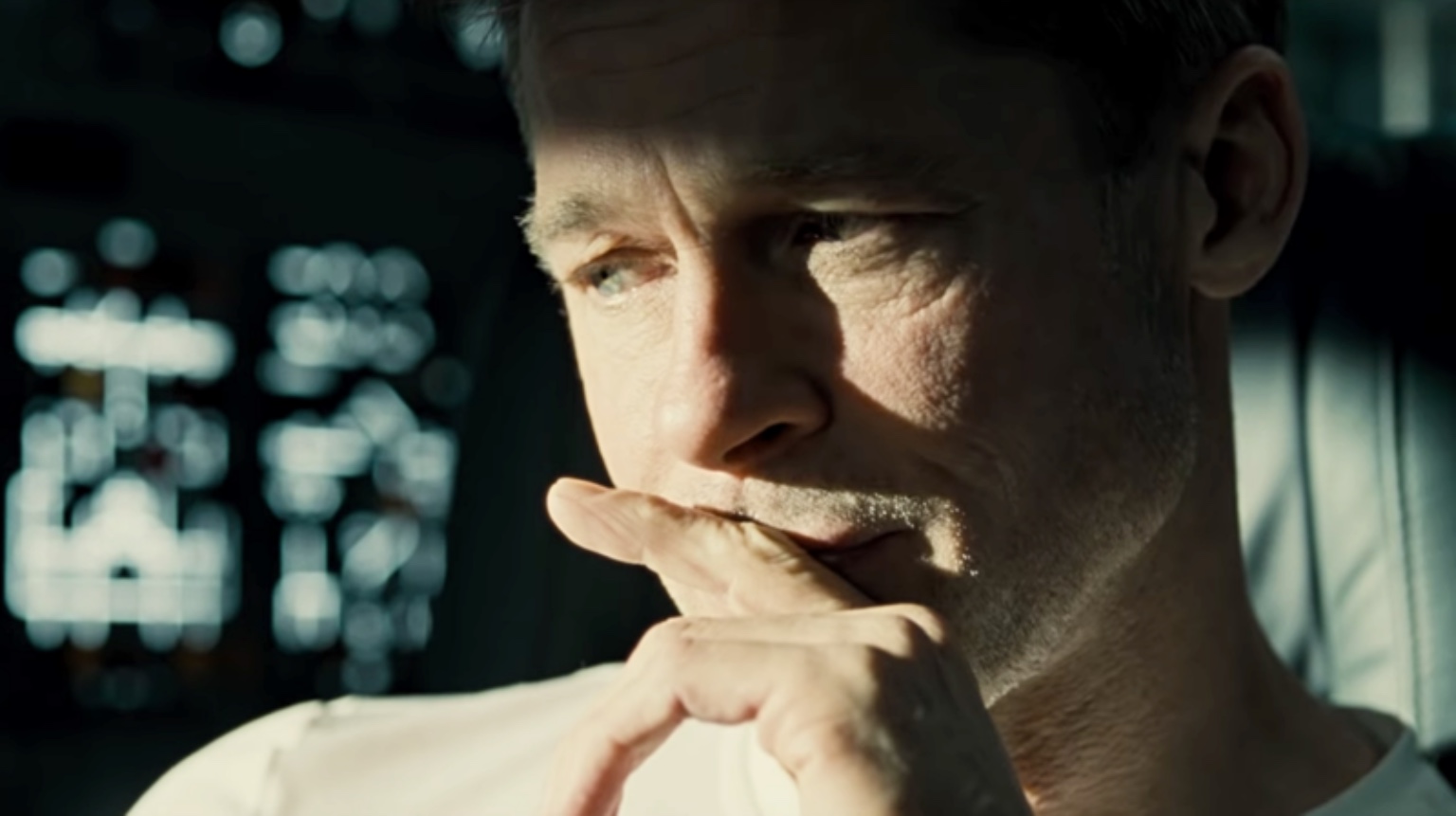
Brad Pitt in “Ad Astra”, 2019 | New Regency Pictures, Bona Film Group, Twentieth Century Fox

 
Ad Astra, directed by James Gray

Brad Pitt in his most subtle, understated performance. I’ve never seen him in such a role and I wish I saw more of this minimalist acting on screen in general. Why is it that this kind of performances are always overlooked to the benefit of physically and mentally challenging or over-the-top characters? The film itself is minimalist, a sci-fi that is not showy, but meditative and realistic, space travel demythologised. The cinematic simplicity achieved by director James Gray, while conveying psychological turmoil and a feasible imaginary future, turns Ad Astra into an instant classic that reminded me of Andrei Tarkovsky’s sci-fi movies.
 

Penélope Cruz in ”Dolor y gloria”, 2019 | El Deseo, Canal+

 
Dolor y gloria, directed by Pedro Almodóvar

Pedro Almodóvar’s incredibly intimate film is enveloped in such a quiet and ravishing beauty and enlivened by Antonio Banderas’ exceptional, career-best performance. There is a laundry washing scene by the river in the film that has made such a huge impression on me, because even if I am from a different country and from a different generation than Almodóvar, there are many similitudes between our cultures (both Latin) and that sequence took me down the memory lane of my childhood and stirred up so many emotions. And if you don’t judge a film by the emotions it provokes in you, then why are we watching movies for?
 

Rodica Lazăr in “La Gomera”, 2019 | 42 km Film

 
La Gomera, directed by Corneliu Porumboiu

The most under-the-radar film on my list and one of the most pleasant surprises of the year. La Gomera (The Whistlers) is a neo-noir thriller with inflictions of black humour and it is woven around El Silbo, the whistled language used by the locals on the island of La Gomera. In the true vein of classic noir, the film portrays a post-crisis period, with morally ambiguous characters, a world where the time of day is appropriately night, because the day always seems to vanish rapidly like the cigarettes the characters are incessantly smoking, where the idyllic island of La Gomera gradually turns into a dark and chilly place, where the meandering scenario only thickens as the plot advances, and everybody is making you doubt them. It is a life and death world.

But Corneliu Porumboiu’s world is a highly stylized world, skillfully constructed, blending reality and imagination, a clear and intentional departure from the realism of the Romanian New Wave and taking a new and fresh direction. It is also an homage brought to cinema in general and to classic cinema in particular, with Hitchcock, Jean-Pierre Melville and western film references throughout the entire story. Ultimately, it is a beautiful piece of cinema and a visually complex film where every camera movement, every frame, every use of colour, every piece of clothing, every dim light counts.
 

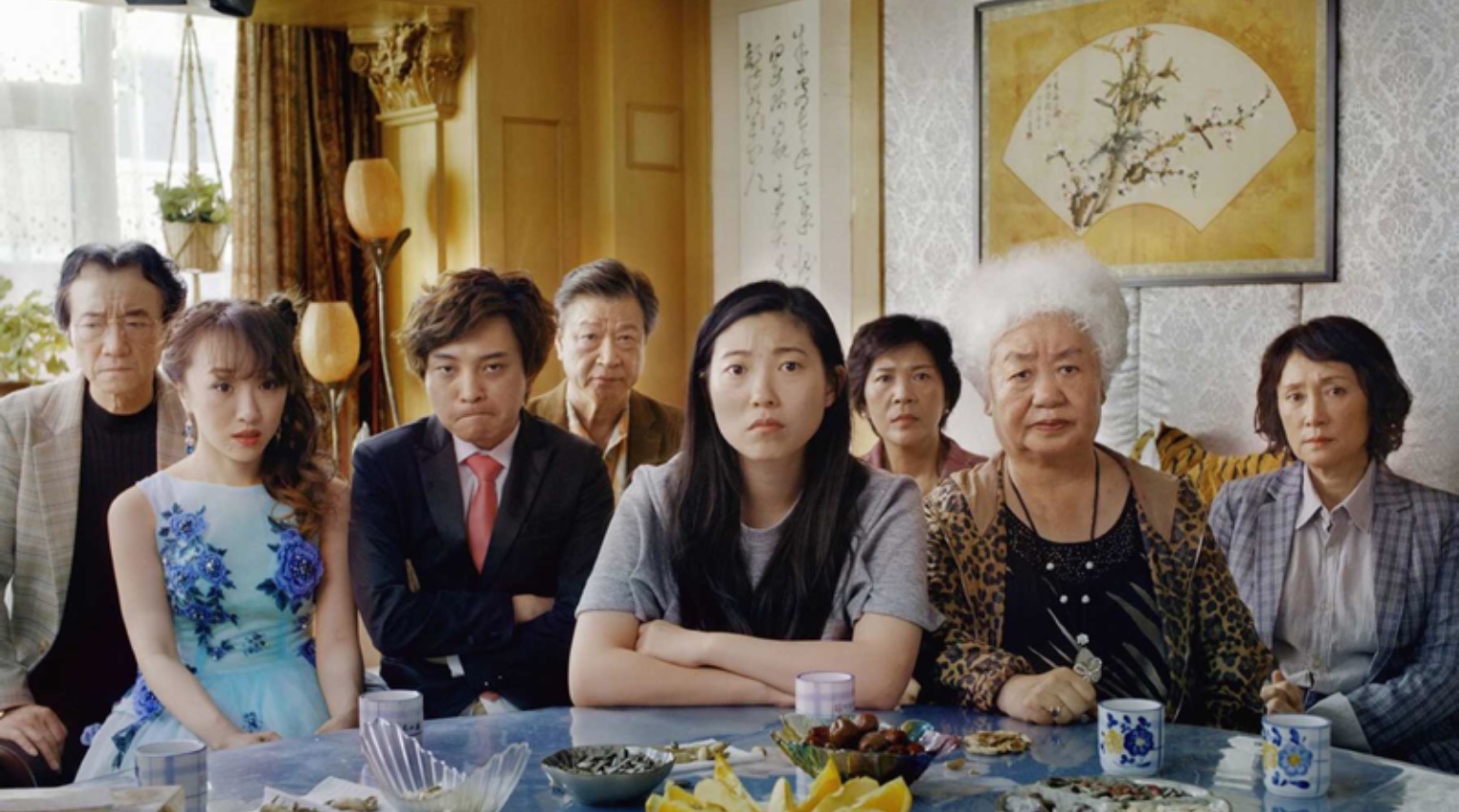
”The Farewell”, 2019 | Big Beach Films, Depth of Field, Kindred Spirit

 
The Farewell, directed by Lulu Wang

It is about the power of positive thinking. It is about family. I believe in this kind of stuff.
 

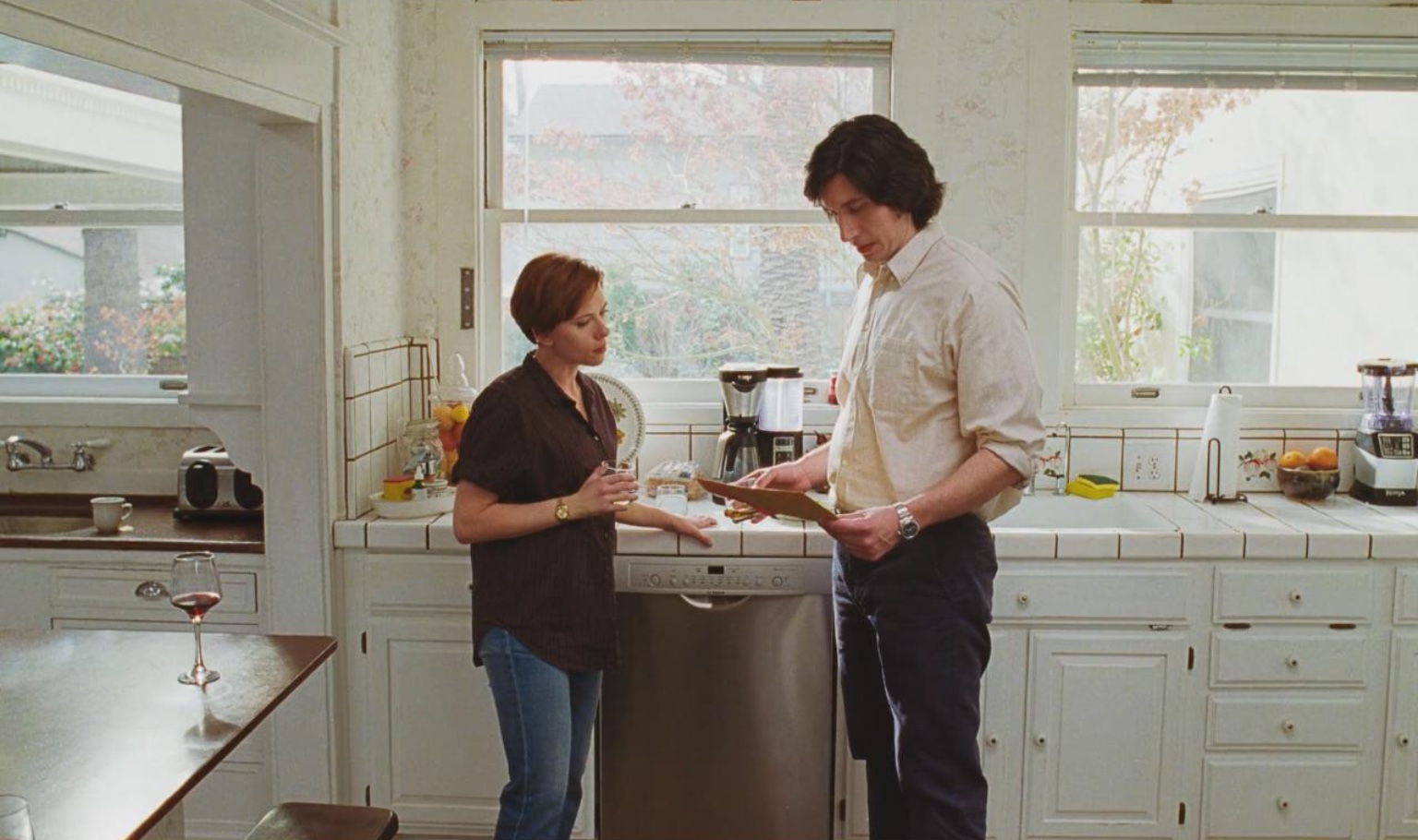
Scarlett Johansson and Adam Driver in ”Marriage Story”, 2019 | Heyday Films, Netflix

 
Marriage Story, directed by Noah Baumbach

The film addresses parental separating and its effects on children. But it’s not the story of every divorce, as director Noah Baumbach draws on his own experience, both as a child and a parent, to tell a very personal story. The film does not take sides, it gives each part, husband and wife, equal gripe time, equal blame and merit. Because that’s how it usually is in a couple. It is painfully relatable and painfully real and the child is not always the one who suffers the most.
 

Christian Bale and Noah Jupe in ”Ford v Ferrari”, 2019 | Twentieth Century Fox

 
Ford v Ferrari, directed by James Mangold

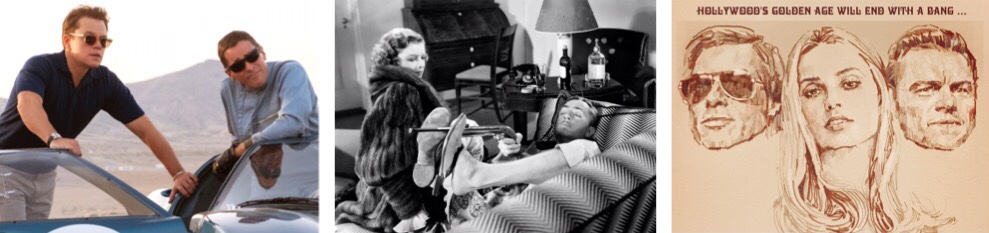
This film gave me joy. I like cars, I like beautiful car designs, I don’t like car racings. But it was thrilling to watch a film about car racing because in fact it was about two men who had a passion and who wanted to do something with their lives. This could very well translate to anyone who has a dream or who is dedicated to doing what he/she loves. As from the point of view of movie-making, it felt like a good old-school, entertaining Hollywood movie grounded by a great piece of storytelling, something very rare these days. It felt liberating. And after talking with the production designer, François Audouy, about the crafting of a 1960s world and of the rebel-vibe of the California car culture of that decade, I became even more devoted to the film.
 

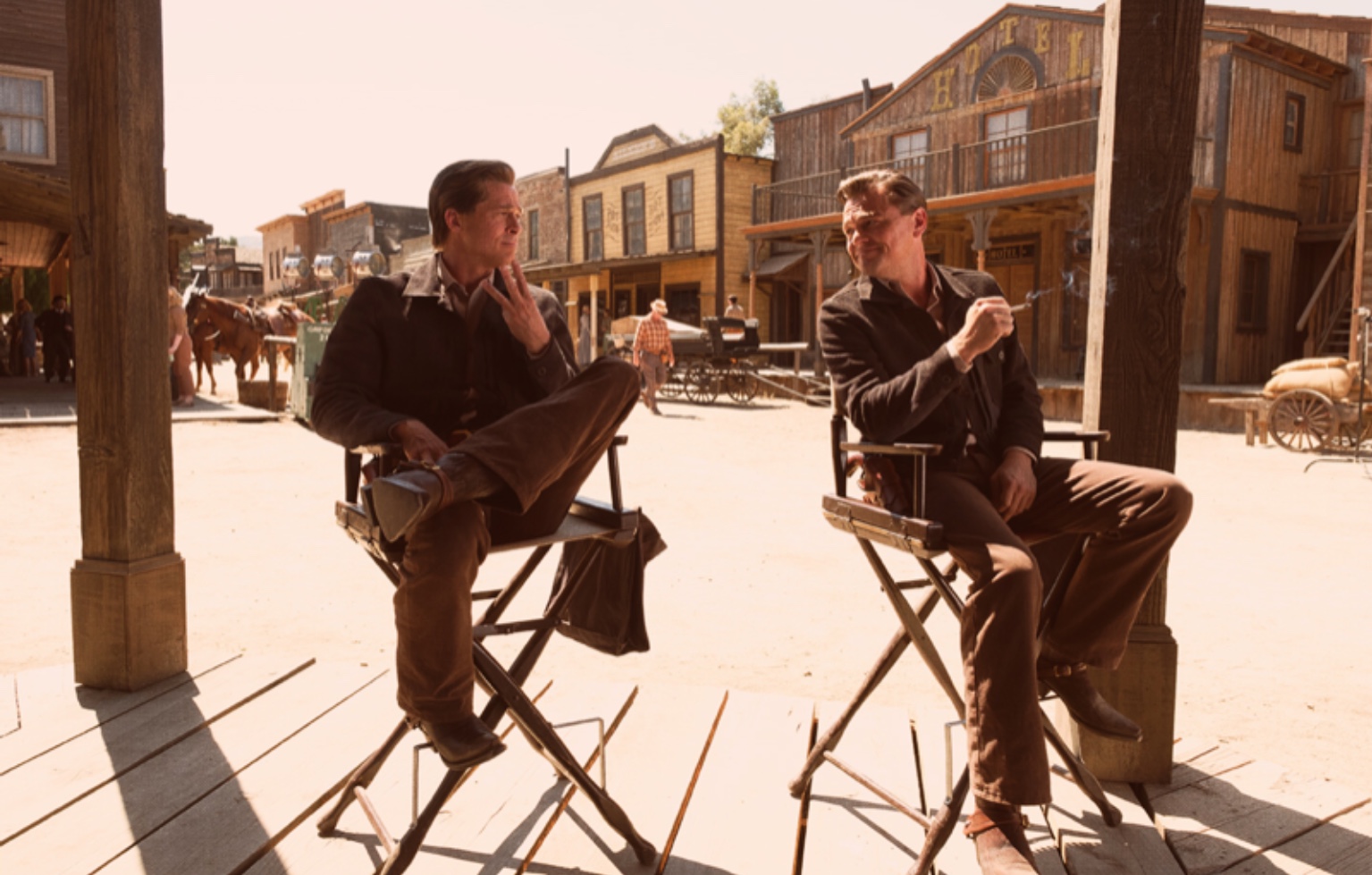
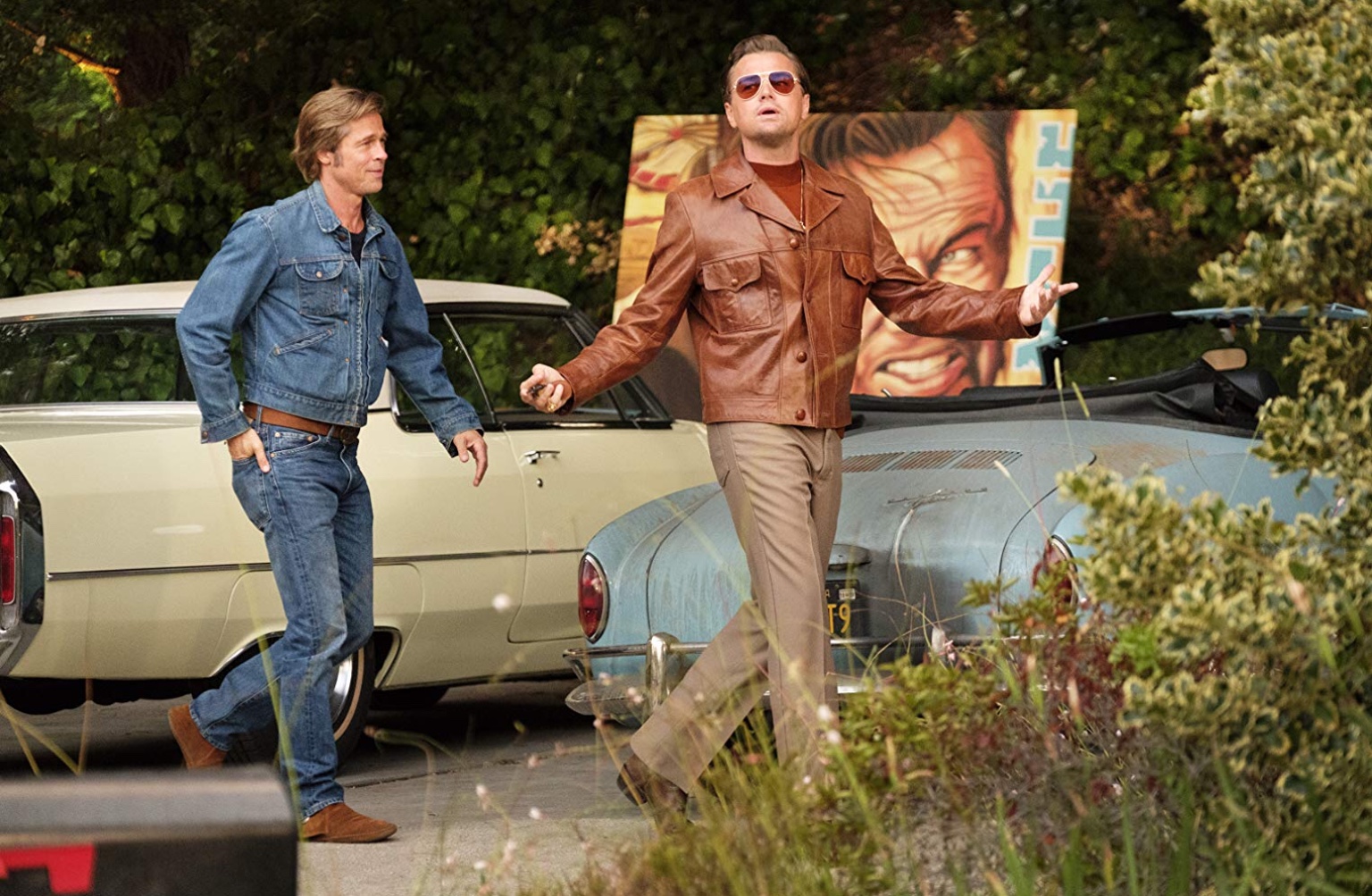
Leonardo DiCaprio and Brad Pitt in “Once Upon a Time… in Hollywood” | photo: Andrew Cooper, Columbia Pictures

 
Once Upon a Time… in Hollywood, directed by Quentin Tarantino

I have debated with myself over and over and over again: Once Upon a Time… in Hollywood was clearly, from the first time I watched it in cinema (I went to see it three times), bound to be one of my favourite films of the year, but was it really the favourite? As it has turned out, it is. And this comes from someone whose favourite film of any particular year is unlikely to be American or big-budget Hollywood production – for example, this was my favourite film of 2018 (and Hirokazu Kore-eda’s Shoplifters was one of the runners-up, unlike this year’s Palme d’Or winner, Parasite, which I believe is the most overrated movie of the year, along with Claire Denis’ High Life) and Andrei Zvyagintsev’s Loveless was my favourite of 2017. But, in 2019, Quentin Tarantino’s ninth film was everything I hoped it would be and more.

Delirious, funny, shocking, exhilarating, beautifully crafted around movie lore and history, blending fiction with reality, brimming with pop culture detail and an idiosyncratic soundtrack that takes you to another time and another Hollywood. You can not remain indifferent to Quentin Tarantino’s black comedy crazy bravura and auteurist excursion. Once Upon a Time… in Hollywood is ultimately about what it is like to live and die in L.A., by way of Tarantino’s liberal take on history and freeing visionary mind. I still believe that Edith Bowman’s description of the film is the best – she said that watching Once Upon a Time… in Hollywood felt like “I had Christmas with Quentin Tarantino and he bought me everything that I wanted for Christmas” – but here is in detail everything I liked so much about this film, and one of the reasons is this: Quentin Tarantino is one of the last purveyors of movie making. So how about celebrating it? He loves cinema. He shows that artistic freedom is still possible, that you can still think in terms of making movies just for yourself, that he puts every thought and every sense and every emotion into making a film, that, yes, he can do what he likes and say what he likes – it’s his story. And he transports you to another time with the kind of film that requires the luxury of taking the time to watch it at the cinema, as one should.
 
 
Related stories: Production designer François Audouy takes us behind the scenes of Ford v Ferrari / Watch a non-Christmas Christmas movie this December / The art of film poster: Interview with illustrator Tony Stella

Posted by classiq in Film | | 2 Comments

Creativity Is the Freest Form of Self-Expression: An Interview with Illustrator Marianna Gefen

Illustration by Marianna Gefen

 
Marianna Gefen is a multi-dimensional artist and illustrator whose works employ different mediums such as watercolour, collage, ink, vintage paper, various textures and layers. Her subject matters range from psychology to fashion, and I find that her singular mixed media art subtly yet thoroughly captures the complexity of our present-day world in a celebration of beauty diversity and human form. But, even more importantly, her illustrations are charged with emotion and energy, with the craftsmanship promise of the classic and the intriguing appeal of the modern, and with that inherent quality of a timeless piece of art: it moves you without requiring or demanding an explanation.

Born in St. Petersburg, Russia, Marianna Gefen is currently based in Berlin, having previously lived in Madrid and different cities of Germany, and her work has appeared in The Washington Post, Frankfurter Allgemeine Zeitung, The Architectural Review, Felony & Mayhem Press and Psychologie Heute, among many others. In my interview with the illustrator, we are talking about the inspiration and process behind her art, how to foster creativity in children, about why new is not necessarily better and about the German silent cinema.


Illustration experiments by Marianna Gefen


”The fact that you can never fully
control the outcome inspires me a lot.”


What is your earliest drawing memory?

My earliest memory is my first “St. Petersburg White Nights” watercolor palette box, which I used as a child to replicate the old Masters’ works and paint fruit arrangements. In fact, I still have it around somewhere for old time’s sake.

Speaking of childhood drawing, what do you think is the biggest mistake parents are prone to making when it comes to the creativity of their children?

I think it’s important to stimulate creativity in children without pushing too much. Parents should present their children with a wide variety of choices, but in the end, it’s the kids who will decide what they want to do. This way they naturally explore what they are passionate about. Creativity is the freest form of self-expression.

Illustration in general is a beautiful art form that grabs the subject matter entirely differently than photography. Do you also see it as a much needed response to this age of overly digitized photography? And what qualities separate illustration from photography?

I’ve always preferred analog to digital photography. For me, there is some kind of magic and mystery behind it. When I come across a good illustration inside a magazine or newspaper next to several photographs, it always stands out and feels like a breath of fresh air. I find that they serve the same purpose while using a different approach. Normally, illustration attempts to explain a topic or an article to the reader in a couple of seconds. Photography, on the other hand, captures the moment.

I see your illustration as intuitive and eclectic in the use of different mediums. Is there a specific medium you prefer, and why?

I always love to combine watercolor and ink as a basis for my illustrations. The fact that you can never fully control the outcome inspires me a lot. You need to embrace the results together with inherent mistakes. With watercolor, mistakes are natural. I also collage various elements and experiment with layers as well as pieces of vintage paper which I get from flea markets or online auctions. I really enjoy to bring all these pieces together to see what works and what doesn’t. It’s a bit like building a puzzle or solving a riddle. My favorite part of the process!
 

Illustration by Marianna Gefen


”If you pay attention to things around you,
you can actually find inspiration in almost anything.”


How would you describe your illustration style? Has anyone in particular influenced it and how did you develop your style?

I would describe my style as colourful mixed media art which includes watercolor, collage, ink, various textures and layers. I love to use watercolor with ink on old yellowed paper or transparent paper. Usually I combine realistic-looking elements with abstract pieces. I was influenced by the bold look of vintage fashion illustrations and analog documentary photography. My style has been shaped through trial and error and has gotten more complex over the years as I try to evolve and add new things.

Where do you seek out inspiration?

I collect vintage books, documents, magazines and get inspired by their patterns, colours or designs which I sometimes include in my illustrations. I have archives of decades-old paper and photos as well as brightly coloured transparent paper. Also, I enjoy contemporary fashion photography, movies and theatre. If you pay attention to things around you, you can actually find inspiration in almost anything.

You have lived and worked in different parts of the world. Has your multicultural background left a mark on your illustrations?

Definitely. I regularly buy old books, documents and patterned pieces of paper from the parts of the world I live in or visit. I then scan these and incorporate into my art one way or the other. Moreover, I keep a journal. I make notes about my impressions when I get acquainted with new cultures and their art scenes. Different places leave a different mark on my illustrations as I adapt myself quite fast.

How big a part does hand- and digital-drawing, respectively, play in your work? Would you ever consider traditional drawing exclusively?

All elements of my illustrations are handmade, just like the textures. To speed up the workflow, I collage and finalize some works digitally. For my personal projects, I prefer to paint and collage exclusively the traditional way. Having said this, I am interested in new technologies and new ways of doing art. For example, I have been experimenting with time-lapse videos and will be exploring this direction further with great interest.

You have illustrated a few book covers for L.R. Wright’s novels, for Felony & Mayhem Press. What makes a good book cover design in your opinion?

It was a really fun commission to illustrate 10 book covers for L.R. Wright’s series of mystery novels. From the publisher I only received short descriptions and the titles. So I didn’t actually read the books. In that project, the key for a good cover was to give a hint at the content without revealing too much. The concept was supposed to be not too complicated while the colours had to pop. A good book cover stands out from the competition on the shelf.

How challenging is for an artist to do commissioned work? How does it relate to your personal, freelance work?

It’s important to keep a balance between commissioned work and personal projects. You need the latter as a playground for art experiments and an opportunity to improve your style. Commissioned work can be quite challenging as the client always has the last say. The freedom you have in your personal projects is very exciting and can in fact influence your commissioned work, so that it doesn’t get repetitive.
 

Illustrations by Marianna Gefen


”New isn’t always better.”


One thing you can not start the day without:
Chocolate!

Where would we find you when not working?

In restaurants, cafés, cinemas, attending exhibitions, antique stores… always around dogs.

What do you wish people appreciated more in this day and age?

The significance and value of art, craft and design. There are so many brilliant artists with small businesses who offer beautiful items. It is important to support them.
I am also a big admirer of vintage architecture and furniture which I like to collect. It has a particular charm generated by its history. New isn’t always better. Surrounding yourself with unique things instead of mass-produced design creates a special vibe.

What is one favourite thing to do in Berlin and which you would miss if you lived anywhere else in the world?

Berlin has some of the best art-house cinemas in Europe. Many of them are really petite with fascinating architecture and interiors. There’s nothing better than watching a silent classic accompanied by a live organ in one of these places.

The Germans had an impressive silent cinema. Any favourites?

Recently I’ve watched Diary of a Lost Girl by Georg Wilhelm Pabst and was really impressed. I must also mention The Adventures of Prince Achmed, by Lotte Reiniger, which is the oldest surviving animated feature. It’s made of silhouette animation. I liked it to the extent that right after watching it, I put a framed picture of Lotte Reiniger in my studio.
 

Illustration by Marianna Gefen


mariannagefen.com | Instagram: @marianna_gefen


Posted by classiq in Art, Interviews | | Comments Off on Creativity Is the Freest Form of Self-Expression: An Interview with Illustrator Marianna Gefen

The Culture Edit: December Newsletter


A regular round-up of the latest talks, films, music, books,
interviews and cultural news that have caught my attention
and have myself experienced in one way or another. Stay cultured!


Our December newsletter doubles as both a conscience call and inspiration for the holidays. You can not have one without the other at the end of a year and especially not at the end of a decade.

We are often asked by many parents why we we don’t take our four year old son to the cinema to watch the latest Disney film. But we are never asked what our son’s favourite book is, or how come he is already inventing his own stories. I will leave you do the logic. The stories we like to read and tell this time of year are mainly winter-themed, but my favourite addition to our collection is The Rabbits, by John Marsden and Shaun Tan. This rich and haunting allegory for all ages and all cultures is not only superbly illustrated – the power of images and illustration goes deeper than words – but also a tale of colliding worlds, technology and nature, “a story about a deep environmental crisis, a crisis of conscience, and a costly failure of communication”, as illustrator Shaun Tan describes it. The book was first published in 1998 and it is unfortunately more current than ever. If you find it hard to initiate a conversation with your children about the environment, nature and humankind, this book is a great place to start.

Greta Thunberg is Time’s person of the year. It was about time.

Following up on the subject of children’s books, did you know that a child from a poor family hears three times fewer words than other more fortunate children, than your child, for example? And that in books there are three times more words than in a usual conversation? Pay it forward with a book this holiday season and whenever you can.

Anthony Hopkins and Brad Pitt have met up to discuss, among other things, the beauty of embracing our mistakes.

Esquire Classic is the stunning archive where every issue from the entire 85-year history of Esquire magazine lives. Esquire’s first issue was published in the autumn of 1933 featuring a dispatch from Cuba by Ernest Hemingway. That story was the first of Hemingway’s many contributions to Esquire. Other writers, as in James Baldwin, Philip Roth, Joan Didion, Nora Ephron and Scott F. Fitzgerald, were regular contributors to the magazine as well, and you can find all their writing pieces, for free, here.

“When there’s no censor to fight against, dart around, and poke fun at, where’s the tension in the contemporary screwball comedy? […] It’s fair to say that since the golden age of the screwball, there have been admirable attempts and misfires and also-rans, with a few rare gems here or there. But generally speaking: screwball belongs to the thirties and forties; to Preston Sturges, Cary Grant, Katharine Hepburn and George Cukor. Why try to improve on perfection?” Here is why they don’t make screwball comedies, the most intractably specific to its era, the most impossible to recreate, of all Hollywood genres, like they used to.

Fred Kaplan writes up a list of his favourite jazz albums of 2019 and Joe Pesci’s Still Singing is among them. Yes, the best actor in Martin Scorsese’s recently released The Irishman, sings, too, and jazz no less.

What happens to the stuff you donate? Adam Minter’s book, Secondhand: Travels in the New Global Garage Sale, due for release in February, follows the multi-billion dollar industry of reuse, from the thrift stores of the American Southwest, to the vintage shops in Tokyo, the flea markets in Southeast Asia and the used-goods enterprises in Africa. “A history of the stuff we’ve used and a contemplation of why we keep buying more, it also reveals the marketing practices, design failures, and racial prejudices that push used items into landfills instead of new homes. Secondhand shows us that it doesn’t have to be this way, and what really needs to change to build a sustainable future free of excess stuff,” reads the description of the book. The author has talked about it with Terry Gross.

The Eloquent Screen, written by Gilberto Perez and published this year, is a closely studied collection of film moments. It is the work of a film lover, not a film critic, and every story is imbued with the author’s personal feelings. Again, it’s about a passion for movies, and it is an invaluable read.
 

Illustration by Shaun Tan from the book “The Rabbits”, by John Marsden and Shaun Tan

 
One of the most valuable independent writer-director-producers in Hollywood, Samuel Fuller, made 29 films in his career spanning four decades, from 1949 to 1989. Starting out as a war journalist, Sam Fuller began to write screenplays for the big Hollywood names of the 1930’s. His films usually employ subjects that involve social aspects, capturing the truth of war, racism and human frailties. Maybe classics such as Pickup on South Street (1953) or Forty Guns (1957) are the first that come to the public’s mind, but one of his films that has impressed me the most was White Dog (1982). An uncompromising film that conveys a racial tolerance message through events that unfold in the eyes of a dog that was destroyed by a crippeled, twisted society when he was a puppy, having been trained to attack black people. Using a dog’s behaviour to emphasize the real human cruelty is the movie’s target and accomplishment. This may as well be the most original movie on American racism ever made. In his book, Samuel Fuller tells his story of writing, fighting and filmmaking.

Is there any more pleasant winter evening indoor activity than playing board games? Now that our son is four and a half, we have finally embraced playing board games as a family and we are happy to have something to alternate our puzzle games with. Our favourites right now are Jeu de l’oie – Goose Game and The Big Book of Christmas Games (only available in Italian at the publisher, but you can look for the English version at your usual book provider or, even better, in your favourite bookshop – because, in the age of e-commerce, it feels good to put a little thought and a little time into scouting an actual store and buying a beautiful gift).

Adrian Curry of MUBI picks the best film posters of the decade. But many of my personal favourites, among which Your Were Never Really Here and Ford v Ferrari, bear the signature of my favourite contemporary poster illustrator, Tony Stella.

A hearty conversation revolving around food that is bound to get you in the mood for Christmas.

This David Bowie box set of 7’’ singles vinyls had me at first sight. It feels more special even than a vinyl album – taking the time to put on and listen to every single song separately keeps you in the moment and immersed into the experience. And it makes a great gift for those who value the good things in life, not only good music.

My complete round-up of the best films of the year will be published next week and Noah Baumbach’s Marriage Story is one of them. It is currently available on Netflix (but if you were able to catch it at the cinema, which I relentlessly support, good for you) and you can also listen to Alec Baldwin’s interview with the director here.

I am a fervent proponent of sports as a key element in the education and health of children – a running joke in our family whenever we hear about someone’s children’s science and maths accomplishments (and don’t get me wrong, I loved math) is: But can he/she run? Let’s foster an interest in sport to last a lifetime: winter is as good a time as any other to start. Let’s hope for many a powder days this winter!
 

Illustration by Shaun Tan from the book “The Rabbits”, by John Marsden and Shaun Tan


Posted by classiq in Books, Culture, Film, Newsletter | | Comments Off on The Culture Edit: December Newsletter