Let’s Explore with Kids Through Books

”Lions and Sailing Ships”, by Svyatoslav Sakharnov*


In times of uncertainty, culture always helps. And now, that we stay home with our children, not only do we want to make them feel safe and happy, but be careful not to limit their sense of exploration, curiosity and imagination that would otherwise be triggered through many other means. So where do we escape with our children, besides play-time in the yard (for those of us lucky to have a yard), and games and activities indoors, especially that we still make efforts to limit screen-time? Books. We read, dream, learn, explore, travel. And then invent our own stories. Not only do books broaden their imagination, but they develop empathy, help them (and us) accept their emotions, deal with fear and scary situations, often times in imaginative ways. We all need that these days.

That being said, you may already own some of the most talked about children’s books, so here are a few great more under-the-radar children’s books you can order online. In doing so, we can also lend a virtual helping hand to the artists who wrote and drew them or maybe to your favourite local bookstore that had to close its doors for the time being. By ordering from them or by buying gift cards or pre-ordering new releases you may ensure they keep their activity going to some degree. Here are five eight ways to support your favourite indie bookshop. The culture-driving businesses are usually the independent and small businesses. Let’s do our part.
 
 
The Wolves of Currumpaw and Shackleton’s Journey, by William Grill

When I first bought William Grill’s The Wolves of Currumpaw and Shackleton’s Journey, I knew they were two of those books to save for later for when my son could truly discover their beauty. It seems we are slowly getting there, not because we can read for ourselves (not there yet), but because the drawings lead us through the stories in a way no other book does, and help us discover the stories in a truly explorative sense. We gave names to all the wolves in The Wolves of Currumpaw, tracked their trail, helped humans make peace with them, tried to understand bad behaviour and accepted that the humans made a mistake and were trying to change, becoming friends with the animals. And then we counted every single one of the 69 dogs in Shackleton’s Journey, studied every map and name written on it (which lead to pulling out the world atlas and to more exploration), checked out every supply and dog igloo and camp activity and sledge in the story. It’s not just a story we take away, but countless. We escape.

That’s what William’s books, with his style of drawing, those effortless, unrestrained, natural-flowing, child-like (in the best possible meaning) strokes of pencil, do: they leave enough room to the imagination, taking us on a journey of wonder.

Note: If you don’t have a local bookshop you can support, you can order William Grill’s books from here if you are in Europe and if you are in the US or other parts of the world you can refer to your regular bookshop or book provider**. There is also an activity book available, or wooden toys you can order directly from William Grill’s online shop.
 

“While looking out over the Currumpaw I knew this view had to be the shot that established Lobo surveying his kingdom.”
”The Wolves of Currumpaw” by William Grill


The Lying King / Crocodile’s Tears / Monkey See, Monkey Draw / The Jungle Grapevine, by Alex Beard

Alex Beard believes it is his ​“duty as a human being to be a responsible tenant of the natural world” and that, as an artist, he has “certain tools to help accomplish that goal, therefore not using the talents at my dispoal for greater good is both irresponsible and selfish”. Nature and those that you find in it are what inspires him the most (no wonder, given his lineage – Alex’s uncle was wildlife photographer and artist Peter Beard). What better example to set for our children?

About his children’s books, Alex has told me: “Tales from the Watering Hole are anthropomorphic parables in the vein of Aesop and Kipling. The Jungle Grapevine is about rumors, Monkey See, Monkey Draw is a book about the fun of making art for little kids, Crocodile’s Tears is a story about endangered species and the environment, and The Lying King is about a warthog.”

Note: If you don’t have a local bookshop you can support, you can order the books directly from Alex Beard’s online shop if you are in the US and if you are in Europe or other parts of the world you can refer to your regular bookshop or book provider**. His illustrations from the books can serve as a creative source for drawing, too.
 
 
Manfish: A Story of Jacques Cousteau, by Jennifer Berne, illustrated by Éric Puybaret

We are into the underwater life. Big time. Journeys under the ocean, the biggest fish, what the blue whale eats, how big the eyes of the colossal squid are (the biggest in the animal world, if you are curious, the size of a bowling ball), what’s the biggest depth of the ocean… we are curious about all of it. So Jacques Cousteau is slowly becoming a hero in our home. It’s about endless curiosity. How can it not capture a child’s imagination and sense of adventure? And children can slowly begin to learn how passion can lead to positive impact. But what makes the story in Manfish: A Story of Jacques Cousteau so irresistible for kindergarten children are Éric Puybaret’s illustrations. His drawings are rooms of wonders, letting fantasy be part of reality.

Note: If you don’t have a local bookshop you can support, you can order the book here if you are in Europe and if you are in the US or other parts of the world you can refer to your regular bookshop or book provider**.
 
 
In the meantime:

Children’s books authors and illustrators are coming up with online readings and drawing tutorials to keep children occupied at home.

Flying Eye Books comes with activity suggestions while staying indoors, some of which are downloadable.

Libraries, archives and other cultural institutions are sharing free colouring sheets and books from their collections for at-home projects for kids.
 
 
* The book “Lions and Sailing Ships”, by Svyatoslav Sakharnov, pictured in the first image, is a classic children’s book that unfortunately has been out of print for years.

** In these trying times, our intention is to support artists and small businesses of any kind, so we will not link to global online book chains or corporations, leaving you to make the choice of helping your favourite independent bookshop. If you don’t have a favourite indie bookstore, here is how to find one you can support.
 
 
More stories: Journeys to the Other Side of the World / Talking Books and the Art of Bookshop Keeping with Vlad Niculescu / Editorial: The Children Are Alright

Posted by classiq in Books | | 2 Comments

On and Off Set with Unit Still Photographer Merie Weismiller Wallace

”The Tree of Life”, 2011 | Photograph by Merie Weismiller Wallace | © Fox Searchlight Pictures

 
By the very nature of photography, you have to get in close in order to get a good picture. But on a movie set, that can become a very challenging job and to do it well can be extremely difficult. That’s the job of the film set photographer. Because a good unit still photographer must get close while remaining unseen, is ever-present yet invisible, incredibly quiet and gentle, yet forceful and determined. They may be obliged to keep the distance, but they must know how to be in the right place at the right time, which is everywhere and at any given time. And so not only do they require technical skill, but they must know and respect film and possess a keen understanding of human behavior and patience. And they wear black and hide so that they record not only the situation that is presented to them and document the film as it’s being made, but also capture the moment. That moment of intensity, of an actor immersed into a role, or that moment of earnestness and contemplation between takes that makes the viewer forget that a film is being made and seems depicted from life itself, not a still-frame of what’s seen on screen but something much more real and authentic, before the editing and special effects come into play. It’s not just about the image, but about the feeling.

Merie Weismiller Wallace is the unit still photographer of so many great films, from Mystic River and Titanic, to The New World and Nebraska, and her beautiful work in cinema is a great reminder that making a film is truly a team work. In our interview, I am talking to Merie about the uniqueness of her job, about how it is like to work with Clint Eastwood, Terrence Malick and Alexander Payne, about the The Society of Motion Picture Still Photographers, and about the importance of putting the camera down sometimes and participating to life instead of watching it.
 

Clint Eastwood on the set of “Flags of Our Fathers”, 2006, Iceland | Photograph by Merie Weismiller Wallace
© Warner Bros. Pictures


Many filmmakers are very particular about the set photographers they allow to document their work. You have repeatedly worked with Clint Eastwood and Terrence Malick, who are well-known for their close and loyal team of collaborators. What is it that gained you their trust?

I believe I gained their trust by being professional and authentic, as they are. They don’t go for pomp and circomstance. And I believe they could see that I take my job with true inspiration as I capture all the collaborative contributions – while still remaining attentive to taking still photographs for Publicity, Advertising, and Archiving.

Do directors usually let you take initiative or do they tell you what they want you to photograph?

Directors rarely tell a Unit Still Photographer what to photograph, unless they see something exciting and they call us over to catch a shot they like. Generally, the only people who tell set photographers what to shoot are the Studio Publicity Department photo editors who read the script and know what shots they want to publicize for the project. However, they too generally let us take our own initiative. We know what is needed, we know how to get it, we know when something remarkable is unfolding, and we know when we need to step back because of personalities or time constraints.

In this regard, how difficult is it to get close while keeping your distance?

Set Photographers do have to remain quiet and unseen, but that is also a bit of a prejudice, we are no different than the boom person, dolly grip, or focus puller; we have a job to do and must do it without being distracting to the cast or other highly focused crew such as the camera operators and director. That goes without saying, it is par for the course. Where the difference is, is that Stills are not required to make a movie, they are required to sell one; so we are guests in that way and yet must become part of the fabric of the set. Also, some people are camera shy, they are distracted by a still camera in a way they are not distracted by a sound microphone. So we must be subtle, unnoticed, while still getting the dynamic shots that the motion picture camera is getting. There have been countless times I was painfully aware of myself and where I had to be to do my job during highly sensitive scenes – that is the story of our profession. We pick our positions, we pick our lenses, we wear black, we move slowly, and we hope the actor can ignore us as they do the rest of the on-set crew.
 

Saoirse Ronan in “Lady Bird”, 2017 | Photograph by Merie Weismiller Wallace | © A24 Pictures


”When a set photographer is trusted,
we are ignored, and then our true abilities
and personal creativity are free to flow.”


There was a time when film set photographers were asked to take a photograph of a scene that had just been shot by positioning their camera in the same spot as the film camera, and to leave immediately afterwards to avoid delaying the work of other technicians. But the role of a unit still photographer has become much more important than that. How do you yourself approach set photography?

Let me say that many photographers consider ourselves lucky if we get to put our cameras where the motion picture camera was, because we rarely get that magnificent angle otherwise! That being said, that is not our job. Our job is to capture the moments of a performance live, during a take as it is unfolding, and it is never, never the same if they hold the set and actors pose for stills. I approach set photography as a witness and an admirer. I watch everything, every moment performed, how the light is falling, how the crafts such as wardrobe, make-up and hair are also telling the story. When we are rolling, I am capturing what the actors are giving as well as the director’s, production designer’s and cinematographer’s visions. Between takes I am watching as the world is being made, the people standing-by as well as those stepping forward in the instinctive choreography of collaboration. When a set photographer is trusted, we are ignored, and then our true abilities and personal creativity are free to flow, and we do our best work.

Do you know immediately when you have taken a good picture, maybe that very photograph that captures the essence of the entire film? Is there a split second when you press the button and you know you have made the shot?

I know when I have seen something remarkable, and that I was in tune and captured the moment. As unit photographers, we lay in wait, watching for the moment when a tear glistens, or mist engulfs. We are poised and atuned, and we know when we have caught a moment as surely as we knew it fleetingly existed.

And then there are shots that show the scale of the set you are working on, like this one from Midsommar (ed. note: image below). The bird’s-eye view evokes this feeling that you inhabit a silent world where you are on your own just watching. And I think that just shows how special the job of the set photographer is.

Films use enormous crane arms for sweeping shots that show the scope of a scene and the emotion of the move, often from wide establishing into the eyes, heart and soul of an actor’s performance. In this shot I asked the generous Grip Department if they would give me their tallest ladder in a position similar to the wide establishing, but just out of their way. Sometimes we are not able to make such a request, because of the impact on the department in the rush of work, but this time I was. It was marvelous being up for a take or two and solitarily watching all the puzzle pieces fall into place. Then I climbed down and went closer for the performances in later takes. When I watch those crane arm shots on the monitor I always wish I could fly!
 

”Midsommar”, 2019 | Photograph by Merie Weismiller Wallace | © A24 Pictures


How often does it happen that the filmmakers and studios choose the images you yourself would have picked to represent the films? Does your idea of what represents the film often differ than theirs or do you often find yourselves on the same page?

I know what type of imagery is needed to publicise a film, and I almost always know which images they will use. We understand genre, we capture the essence of stories and theatrical tone to tell or publicise the story. However, those images are usually not my favourite images from a project. That is why it is so wonderful to exhibit with the Society of Motion Picture Still Photographers: We have the oportunity to show our favorite images, serendipity moments often not suited to a Press Kit.

You were president of the Society of Motion Picture Still Photographers for four years and you are still co-chair of the SMPSP Exhibition Committee and Archive Committee. Could you tell me more about the organization? How important is it to be there and what was your biggest accomplishment during your tenure?

The Society of Motion Picture Still Photographers was founded in 1995 as an honorary organization dedicated to the art of motion picture photography. We pursue exhibiting our favourite images to promote our interest in proper archival preservation of set photography for its intrinsic artistic, historical and cultural importance. To become a member one must have worked as a dedicated unit still photographer for a minimum of eight years, and to show artistic excellence beyond standard craftsmanship; there is a rigorous application consideration process. I had a marvelous four years as SMPSP President recently where we reached out to Studio archivists, promoted exhibitions across the country including three at the Academy of Motion Picture Arts and Sciences in their Mary Pickford Center for Motion Picture Studies, revamped our website to present us clearly and creatively, and worked on committees for outreach and member support.

You have documented so many great films, from Mystic River, Strange Days and Million Dollar Baby, to The Tree of Life, Nebraska and Lady Bird, and each must have been an extraordinary experience. But has there been any particular movie when you felt, during its filming, that you were witnessing something truly special?

Actually, on every movie you listed I felt that way, as I have watched through my lens cinematic history being made. And to your list I will add Sideways, The New World and Titanic. Sideways was an odyssey of humour and human failure, and shooting it became a celebration of capturing director Alexander Payne’s uncanny vision and comedy of farce. The New World was a gorgeous period piece where the wardrobe, lighting and production design were destractingly photogenic – but then in that context, the performances of Colin Farrell and Q’orianka Kilcher were so passionate and arresting that I could not stop shooting the spontaneous moments Terrence Malick inspired.
 

Q’orianka Kilcher in ”The New World”, 2005 | Photograph by Merie Weismiller Wallace | © New Line Pictures


Photographing Titanic was tanamount to living in and capturing a lightening storm. Scene after scene I was swept away by Kate and Leo’s honest, profound, and enchanting performances, by camera operator Jimmy Muro’s uncanny skill in capturing the dynamic world Director James Cameron brought to life. Titanic was an ovation of masterful story telling and pushed the envelope in all departments.

Nebraska was filmed in black and white. Do you think this beautiful form should be more present in contemporary cinema or are there certain stories that seem to lend themselves to being made in black and white?

On Nebraska it was made very clear from the beginning that no colour images were to be released – and I was so excited for that rare opportunity! These days, black and white photography in film-making and set photography is a rare creative choice. And because it is now an option with digital files, the Studios want all set photography in colour, and then they can adapt the file and printing to black and white as needed. As artists, photographers – and cinematographers – love to work in black and white because it conveys imagery in such a striking, stylistic way. Some moments and images we just see in black and white. Others you shoot in colour and secondarily adapt to black and white, play with the greyscale, hard blacks and mixed tonalities; it’s a joy to work with! I believe the Studios are afraid that black and white represents the past, and that modern viewers won’t be interested. I believe that is financial thinking, not creative, and underestimates the power of black and white and the creativity of the audience.


”Good set photography is both creative and witnessing.”


Bruce Dern in ”Nebraska”, 2013 | Photograph by Merie Weismiller Wallace | © Paramount Pictures


Some of the pictures taken by a still photographer are used as film posters. What makes a good movie poster?

A good movie poster is full of the pathos or mirth of the project, is visually dynamic, and presents the subject in a way that invites audience curiosity rather than giving away the punchline or plot twist.

With movie posters, I like it when they use my set photography rather than an organized advertising shoot where the actor looks perfect and is looking into the camera at the viewer. Set photography captures the performances the director inspires, the actors give from the heart and soul, in the lighting the DP intended, in the context the production designer creates; so those moments really tell the story of the film if picked and presented artfully by the Studio Advertising departments.
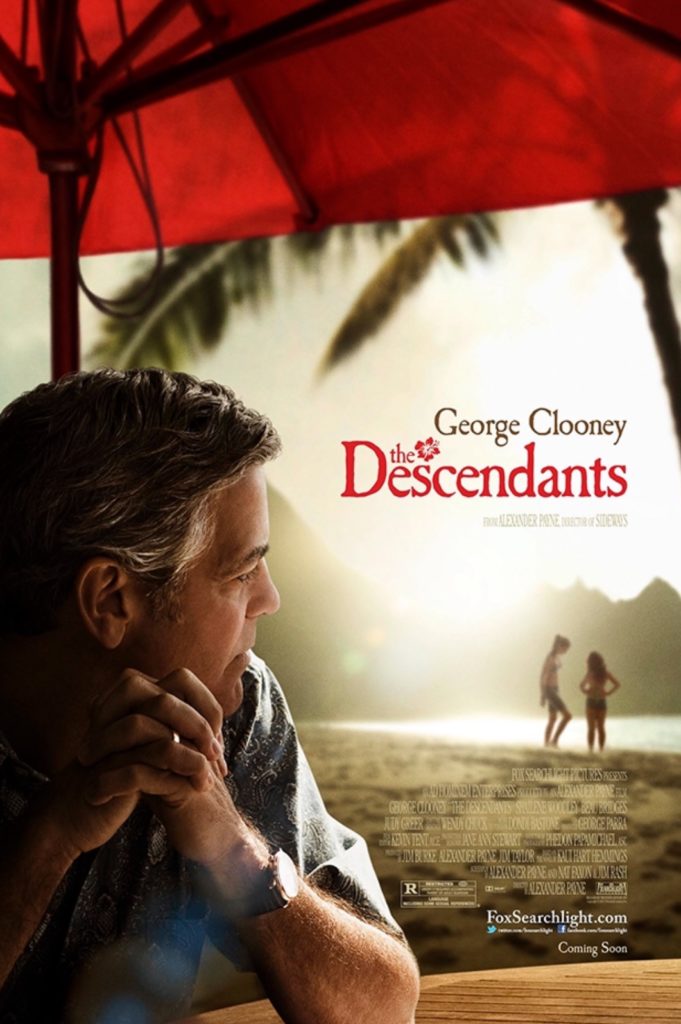
 

”The Descendants”, 2011 | Photograph by Merie Weismiller Wallace | © Fox Searchlight Pictures


Raymond Cauchetier, the photographer of The French New Wave, said: “Artists are creators. I am a witness.” Do you agree?

Some photography requires witnessing and documenting, the astute photographer sees things most people pass by unoticed. Some photography is creative such as when the photographer throws their creative perspective into the mix through lens choice, camera angle, subject-focus; and then some creative photographers light and direct their subjects as well for a purposeful portrait. Good set photography is both creative and witnessing: We have our own creative instincts and abilities which we bring to the table to best capture the artistry presented by the world’s leading collaborative filmmakers.
 

David O. Russell on the set of ”Joy”, 2015 | Photograph by Merie Weismiller Wallace | © 20th Century Fox


How predictable or unpredictable is the encounter between you and your subject when you do a portrait?

There are spontaneous portraits, and then there are posed portraits. Set photographers’ portraits are generally seized moments, so for us it is completely unpredictable. I get an instinct for character very early on when I meet someone, and that is what I generally shoot for in a portrait. I look at the colours they have chosen in their clothes, I look at jewellery and wrinkles, is their hair brushed, what book they are reading, how old are their shoes. It’s great to get to know someone, but often we don’t have the leisure to do that. More so I try to put the person at ease, and let them give me who they are.

What is the biggest misconception people have about Hollywood?

That it’s an actual place you can visit. It is not. Hollywood is an Industry, and it only materializes when all the parts of a production are in place for the fleeting time between Rolling and Cut, between Day One and Picture Wrap.


”It was like Alice through the Looking Glass,
I’ve been shooting ever since.”


Do you always carry a camera with you?

I go through phases. For years I always carried a camera, and often I still do, but one can get lost behind a camera, watch life instead of participating; so now I am careful to put my camera down sometimes and get into the splashes of life.

How did you first fall in love with photography?

I was in Borneo, Malaysia, supervising a 2nd Unit shoot on a feature film called Farewell to the King written by John Milius and starring Nick Nolte and Nigel Havers. The Unit Still Photographer was busy on 1st Unit, so when asked, he said “You do it!” So I did, and it was like Alice through the Looking Glass, I’ve been shooting ever since. In fact, I took everything I earned on that film and went to Singapore on the way back to the States and bought a full Camera set-up to pursue the career! I had gone to USC Film School just before that and gotten an MFA in Film Production, so I thought shooting Stills on set would just be a way to support myself while I continued to learn about Production and continued my goals of screenwriting. But with persistence, my career as a photographer took off, and I ended up just riding the wave.

Have you considered picking up screenwriting again?

For me, writing and photography are somehow mutually exclusive as if it is a right-brain, left-brain conflict: As long as I am shooting individual frames, my mind does not tell me stories. For now, I am still lost in the Wonderland rabbit hole of photography, with no plans for, or against, writing in the future.
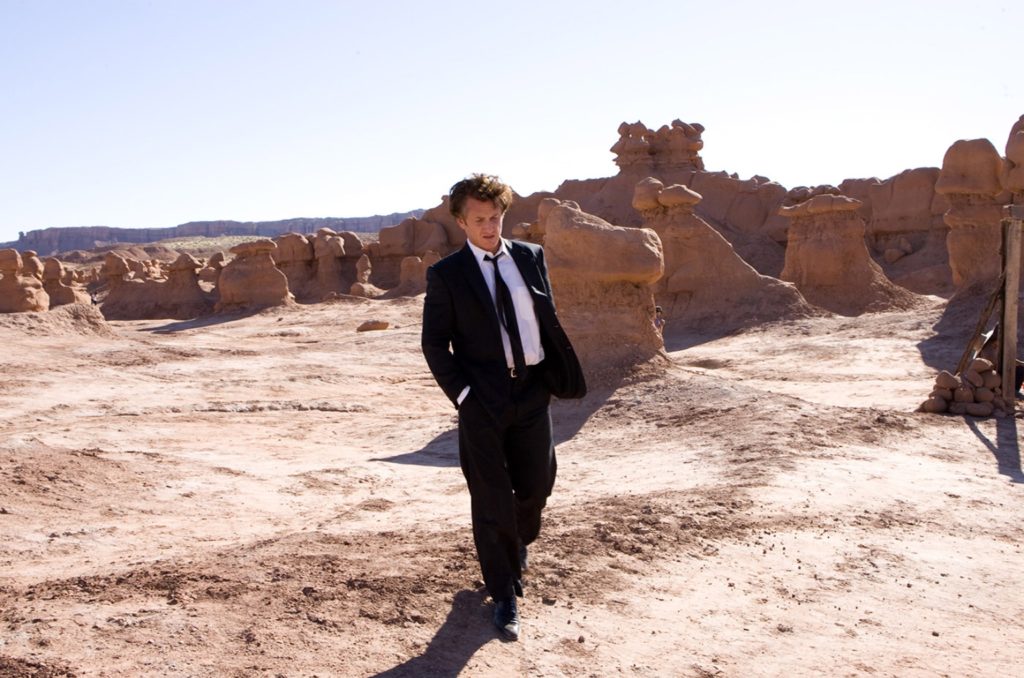
Sean Penn in ”The Tree of Life”, 2011 | Photograph by Merie Weismiller Wallace | © Fox Searchlight Pictures


Website: meriewallace.com
The Society of Motion Picture Still Photographers: smpsp.org


More stories: The Art of Film Posters: Interview with Illustrator Tony Stella / Production Designer François Audouy Takes Us Behind the Scenes of Ford v Ferrari / La enfermedad del domingo: In Conversation with Costume Designer Clara Bilbao

Posted by classiq in Film, Interviews, Photography | | 6 Comments

Life and Film Lessons from Agnès Varda


“The world is in a very bad shape, but cinema in a way is a peaceful life.”


Forerunner of La nouvelle vague, who kept breaking new ground with each new film, be it experimental, documentary or fiction, Agnès Varda always fought for cinematic independence and cinematic vision. She made movies that came from emotion and feeling, movies that had a vital energy because they came from a perpetual urge to create (without compromise, without concerns of good production values) and a perpetual joy in filming. Agnès Varda was always interested in now and here. In seeing. In finding beauty where maybe it’s not. Maybe that’s why throughout her entire work she remained free to experience with all senses the cinematic adventure. Her films gave shape and words to things people have seen and thought without having even realised they have seen and thought. She used cinema as a language. Making each film was a way of living on.

She was in the wave of the New Wave, pioneering a new way of cinema, in tone and style, with her first film, La Pointe Courte, from 1955. In Cléo from 5 to 7 (1962), a beautiful and frivolous singer abruptly becomes vulnerable and has to face reality, life and death, who goes from being happy for being watched to finally waking up and seeing the world. In The Gleaners and I (2000), Varda showed people who lived apart from other people, who eat out of dumpsters and glean provincial fields after harvest, who make art from tossed-away furniture, poor people not speaking badly, behaving badly, or grumbling, but who speak intelligently, without pity or complaint. Jacquot de Nantes (1991) was a documentary about her husband, Jacques Demy, “he’s a child, it’s a fiction, he dreams about making movies, he’s an adult, it’s a documentary, he had made movies”. Each film different from the next, yet each one born out of her reality, her thoughts, her passions, her.

I’ve been diving into Agnès Varda’s universe these days, watching and re-watching her films, along with her husband Jacques Demy’s, and reading about her. Agnès Varda Interviews is a good start, very organic in its composition as it guides you through her films and evolution of her as a filmmaker, and there are so many thoughts on life, and creativity, and freedom, and artistic freedom, and film-making to take away from it.

Stay safe everyone!
 

La Pointe Courte, 1955 | Ciné Tamaris


Life


“The world is in a very bad shape, but cinema in a way is a peaceful life.”

“What culture means is that we are able to associate real things, nature, paintings we have seen, music we have heard, a book we have read, a film we saw, with our real life, our emotional life, which means a lot.”

“I know people like that, I know people who aren’t acquisitive, people for whom bettering their situation isn’t everything.”

“If a thing exists as a common denominator among people, then that’s culture.”


Film-making

 
“I never make a film that people ask me to do or bring me a package with a good book and two actors and all that. I think cinema should be made by coming from nowhere to becoming a film. This I believe in. And that’s why I made so few films.”

“It’s through feelings that we can capture the attention of the audience and then engage them for themselves.”

“I didn’t see myself as a woman, as a courageous woman, I saw myself as a courageous artist, a filmmaker, because nobody was making films at my age at the time – men or women. The young New Wave came later.”

“I am not modest enough. And not militant enough. And too egotistical. I still participate in a burgeons culture in which a film is made by an artist.”

“I try to be very clever in the editing room. But when I film, I try to be very instinctive.”


Hollywood

 
“I make films, not deals.”

“They are unable to distinguish between Lelouche’s Cousin Cousine and me. Godard’s A Man and a Woman, Demy’s Umbrellas of Cherbourg, Malle’s Murmurs of the Heart, and my film Le Bonheur are all the same for them – charming little films.”

“I really don’t like it that aside from a few directors (Cassavetes, Cimino, despite his politics) I find the American cinema a pretty sorry affair. […] Hollywood cinema remains profoundly conservative, profoundly stupid, and often painful.”


Feminism

 
“When I made my first film, La Pointe courte, no one said it was a minor film because I was a woman. Instead they said “You are perhaps changing something in the French cinema and it’s good.” So I never suffered any alienation as a woman in my work.”

“I didn’t ask myself if it would be difficult for me as a woman to make films; I must say I didn’t start with an inferiority complex. I just thought I would like to make films, so try.”

“You don’t have to say “Because I am a woman I should absolutely make feminist films because the feminist point of view is not generally exposed.””

“I am a human being and some things can be understood as a human being. You don’t have to emphasize all the time you are a woman.”

“If I can have a woman I take her. If there is a man who does the job better I take the man. It’s in terms of needing good people to make movies.”
 
 
More stories: Ennio Morricone, In His Own Words / Jacques Demy in Black & White and His Quiet Heroines / A Third Face: Life and Film Lessons from Samuel Fuller

Posted by classiq in Books, Film | | Comments Off on Life and Film Lessons from Agnès Varda

Jacques Demy in Black & White and His Quiet Yet Lyrical Heroines

Anouk Aimée in “Lola”, 1961 | Rome Paris Films

 
Before using colours “like a singing Matisse” in The Umbrellas of Cherbourg, Jacques Demy made the most lyrical use of black and white in his first two films, Lola and Bay of Angels. Before singing heroines bursting on screen on a background of glorious colours and stylised sets (the citizens of Cherbourg allowed Demy to paint their houses) that paid homage to classic Hollywood musicals, a different kind of heroine glided through Demy’s fictional universe: one clearly born in the French New Wave, but one who quietly sang and danced on her own music.

Lola takes place in Demy’s native Nantes, an unremarkable provincial town port, a realistic setting but into which the film-maker introduced an air of fairy-tale romance. Demy wanted Lola to evoke “memories from Nantes, from the time when I was in college and bunked off school to go to the movies.” Filmed in black and white by Raoul Coutard, it is our first encounter with Demy’s singular, fascinating universe, dreamed up by a dreamer and shaped up by a craftsman, that balances melancholy with hope and vivacity, filmic artifice with emotional authenticity, the quest for love and happiness with the realities of everyday life, where music and dance are already informing, although in a subtle way for now, plot and characterisation – “a musical without music,” is how Demy described his first feature film. It was “full of music in all its silence,” felt composer Michel Legrand when Jacques Demy screened it to him.

“In the films, it’s always beautiful,” declares Jeanne, one of the characters in Lola, channeling Demy’s drive to and draw from cinema. His cinema is one of an auteur, but also one of a cinephile – there is a clear allusion to the American dream as well as to other films (Demy’s Lola is a tribute to Max Ophül’s 1955 Lola Montès and also references Josef von Sternberg’s 1930 The Blue Angel and his Marlene Dietrich as Lola Lola) and at the same time it previews future Demy themes when one of the characters mentions Cherbourg, and also that her husband was a gambler, anticipating the subjects of Demy’s next two films, Bay of Angels (1963) and The Umbrellas of Cherbourg (1964).
 

Anouk Aimée on the set of “Lola”, 1961 | Rome Paris Films


Cabaret dancer and single mother Lola (Anouk Aimée) is waiting for the return of her long-gone true love while being suited by an American sailor, Frankie (Alan Scott), and her old friend, love-struck Roland Cassard (Marc Michel) – Demy’s alter ego, who gets fired and the only thing he sees fit is going to the Cinéma Katorza to see Return to Paradise (1953). A saddening awareness of the transience of happiness and of the fragility of love pervades the film. Suggestively set in a port city, it is a story where everyone is wistful, longing for someone or something different, and on the move, either dancing or getting from one place to another in town, or waiting to sail off home, or transiting the city on the way to another gig or business. They are passers-by… through life, through love. Everybody seems to be searching for love, but nobody finds it. “There is a little happiness in wanting happiness.”

Lola is part ingénue, part sexual attraction, part mother figure and part mythical creature, the pure creation of Jacque Demy’s unique universe. But it is the fact that she is an incurable romantic that ultimately defines her as an ethereal identity. “When Jacques gave me Lola, he gave me a marvelous gift,” Anouk Aimée remembered. “A character completely unlike what I’d done before. I’d always played the ingenue, the girl in love. This character was so original. One of those characters he would create, who stepped out of one of his poems. There was such poetry to it all. That’s what helped me walk around with my nylons and move around like that.”

Her clothes are much part of this image. For much of the film, we see her – tall, slim, black-haired – in her signature sexy, black lace corset, black nylons, black fur boa and black pumps. Not even when she goes home to her son does she change, but simply covers herself with a coat. A trench coat, naturally. Later on, she playfully pairs her outfit with Frankie’s white sailor shirt and cap. But when she goes out with Roland, she wears a simple and elegant white crocheted dress and matching jacket, contributing to her suitor’s initial vision of her as a celestial creature (her real name is Céline). The black fur boa on her jacket neckline though is a constant reminder of her other side as entertainer.
 

Anouk Aimée and Marc Michel in “Lola”, 1961 | Rome Paris Films

 
In an interview with Agnes Varda, Anouk Aimée recounted how the producers didn’t find her sexy enough, or beautiful enough, because she did not fit in the beauty canons of the time, and how Demy fought for her. “I’ll never forget that,” she said. He had envisioned her as this original character and Jean-Louis Trintignant told Aimée that the director wanted to meet her. “Lola is such part of me that I can’t tell which part is her and which is me. We’ve grown so close that we mimic each other,” Aimée candidly confessed. Maybe that’s why she made such a fantastic creature believable, both ideal vision of femininity and pure cinematic fabrication, “devoid of any kind of aggressiveness or vulgarity or exhibitionism.“ Demy told her to think of Marilyn Monroe while playing her character, which she did, and it helped. “I should sew some fancy stuff on mine. Something flossy, you know? And something glittery here. It’d look great. And a big plume like Marilyn Monroe’s,” fancies Lola. Anouk Aimée became the first heroine of Jacques Demy’s visual poems. But her voluble, charming, unpolished performance is one of the defining traits of the New Wave heroines, too, thus firmly establishing her as a Nouvelle Vague icon.
 

Jeanne Moreau in “La baie des anges”, 1963 | Sud-Pacifique Films

 
In the sublime La baie des anges (Bay of Angels), 1963, which has not dated one bit in all these years, Jeanne Moreau pursues the goal of a doomed and reckless passion. She is Jacqueline Demaistre, or Jackie, a compulsive gambler. “I wanted to lay bare the workings of a passion” said the director. The gambling passion devours everything in Jackie, “it’s that expectation of something mysterious, it’s like a rite, a ritual”, explained Jeanne Moreau. “Gambling is my religion,” Jackie confesses, “money means nothing to me.” Beautifully shot in crystalline black and white (this time by Jean Rabier), the film is a rigorous work of art that paints an otherworldly atmosphere that delves into the mystique of gambling and is a demonstration of Moreau’s cinematic personality. Because Jeanne Moreau is the soul of the film, in the true vein of all Demy’s movies, as each of them is centered around a female character.
 

Jeanne Moreau and Claude Mann in “Bay of Angels”, 1963 | Sud-Pacifique Films

 
Jean Fournier (Claude Mann) is a bank clerk in Paris, bored with his job (he had already once run away from a life “with no risks, no surprises”), who reluctantly tags along his friend to a casino. He tries to remain cautious but immediately, decidedly becomes hooked and sets off to the gambling palaces of the Riviera, where he meets Jackie. And so he is introduced to a lifestyle he confesses he didn’t know “existed anymore… except in the movies or certain American novels” and they become this obsessed couple (with each other and with the spinning roulette), living in their own world, a world where Chance seems to be the only rule to live by (“You must never let luck pass you by,” Jackie tells Jean), and Michel Legrand’s theme music, repeatedly, obsessively playing like a ballad whenever they are winning or every time they find each other, keeps them in this dreamlike blur. Because one thing Demy’s heroine is in Bay of Angels is a femme fatale. She “embodies sin for him, but she does not know it”.

But her personality isn’t laid bare, she is an enigma, she has an electric unpredictability, there is something not quite real about her. Her appearance, from her Marilyn Monroe hair and make-up and gestures (Demy retains his passion for American movies and for Monroe from Lola), to the impeccable elegance (Demy wanted Jeanne Moreau’s costumes only in black and white and he chose Pierre Cardin to design them, from her white deux-pièces, to her floral print dress and the black gown accessorized with a black and white feather boa), is clearly a creation of her artist’s imagination. But the beauty of this character is that she believes in who she is, she believes in walking on sand in high heels, and we believe it too. Her look is make-believe, but also a well thought-out survival technique, it is formal elegance, but also a façade, a front to mask a reality that is less than pretty. She is dressed to the nines in her perfect white suit, but it’s about the only one she’s got and she wears no jewellery because she sold it all in need of money for gambling, and in a moment of sincerity she tells Jean: “I sometimes feel rotten inside.”

She puts on the best face in front of anguish and shadow, in front of the ephemerality of life. The plot is, after all, only briefly set in Paris, then, as it usually is in Demy’s films, moves on the waterfront, to Nice and Monte Carlo, and the universe it evokes is hardly realistic, but provisional, otherworldly. So is Jackie. She is uniquely herself. “I don’t owe anyone anything. Why deny myself the passion? In whose name? I’m free!” And everything about Jackie and Jean is evanescent, everything happens on the spur of the moment, nothing but the present matters. Because Demy’s films are more concerned with poetic momentum than progressive narrative, much more aware of our fleeting happiness and existence than his more colourful, luminous, yearning romanticism of later on may allude to.
 

Jeanne Moreau and Claude Mann in “Bay of Angels”, 1963 | Sud-Pacifique Films


Editorial sources: interviews with Anouk Aimée, Jacques Demy and Jeanne Moreau available on the special features on The Essential Jacques Demy, released by The Criterion Collection


More stories: Colour and Costume: From The Umbrellas of Cherbourg to La La Land / Travelling Wes Anderson Style / La enfermedad del domingo: In Conversation with Costume Designer Clara Bilbao

Posted by classiq in Film, Film costume | | 2 Comments

Editorial: Through a Glass, Darkly

Film poster for “Elena”, 2011, directed by Andrei Zvyagintsev | Zeitgeist Films


The Editorial: thoughts, short stories
or essays about the world of cinema


It was three years ago when I saw a film by Andrei Zvyagintsev for the first time. It was Loveless and it turned out to be my favourite film of that year. If I were to describe the film in a few words, I would call it the tragedy of modern life. Yes, there is a tragedy occurring in the story, but the film also speaks volumes about the many social ills of our modern world, about the superficiality and nothingness of a world with an unending aspirational demand for status, money, and the social media prerogative of selfies and self-affirmation. Because this film is not just a pitiless critique on Russia, the way many American and Western reviewers rushed to describe it. It is rather, sadly, the story of us all, a loveless world, a hollow society that has lost sight of what is truly important, incapable of supporting human life, or a child’s love.

Visually speaking, the first thing that I was made aware of was that the film had a “style”. “Here is another director with a distinguished filming style,” I thought. As in Hitchcock. The cinematographer, Mikhail Krichman, who has worked with Zvyagintsev on all his feature films from the very beginning (“He found my eyes, my co-author,” the filmmaker said about Krichman in an interview for IndieWire after the film’s premiere), said he wanted to give Loveless a documentary style with realistic, natural lighting: “We wanted to make it as real as possible… That was Andrey’s idea.” The natural light pours in beautifully through the windows that are frequently used in the film, another element that caught my attention. And yet inside the colour palette is dark and steely, everything seems void of life. The windows (the screen of the phone, too, or the lonely waters in the woods on which the camera lingers) seem like portals into another world, a stale, lifeless world, one that unfortunately happens on this earth.

Last night I watched Elena (and the night before, The Return), made 6 years before Loveless, and I realised it already had the maturity of style, the impeccable stylistic control shown in Loveless, and the same realistic and contemporary feel. That striking contrast between the natural light and the dark underlay of the story is also present and it even taps into noir, but the narrative is so disquieting and subtly gripping, further enhanced by the beautiful original score by Philip Glass, with the shocking element that occurs so seamlessly entwined into the pensive minimalism of the film. There is a painterly quality to both films and Krichman confirmed that he often puts the actors in front of windows because “I like silhouettes. I like details behind windows.” The windows play the role of painting frames, and Andrei Zvyagintsev shows framed portraits of his characters. It is the window into his world, an intimate but skillfully created nonetheless world and which is all the more striking as it feels surreptitious while still rooted in the reality of our days, an unforgiving portrayal of a world where money, not the way you make it, is the only prerogative, a world deeply defined by existential unease and spiritual alienation.

Elena starts with a long shot of the branches outside the windows of the apartment where Elena, whose actions trigger the plot of the film, lives with her husband. Elena, played by Nadezhda Markina, is a former nurse from a poor background and the dutiful wife of Vladimir (Andrey Smirnov), a wealthy business man, who married her after she tended to him in hospital some years ago. The film ends with the same stylisation of stillness, the shot of the branches outside the luxurious apartment (its dark colour scheme and engineered good taste will be found again in Loveless), only the scene happening inside is different now. Elena is the only link between past and present. “When you look straight in her face, you see a simple, down-to-earth, working, typically Russian woman. But if you see her sideways — and I do, in the movie, show her in profile a lot — she looks like royalty,” the director explained his choice for his leading lady. “She looks aristocratic. And this duality intrigued me.” Her face may seem familiar at first glance, but there is a mysterious quality to Elena that makes you keep asking yourself: Who is she? Those windows she keeps coming in front of invite to reflection, but no warmth or spontaneous gaiety breaks in. They only glimpse into a dark thread.
 
 
More stories: Editorial: A Raincoat in Sunny L.A. / Editorial: The Children Are Alright / Editorial: The Streets of San Francisco

Posted by classiq in Editorial, Film | | Comments Off on Editorial: Through a Glass, Darkly