Timeless Yves Saint Laurent: Romy Schneider in “César et Rosalie”

Romy Schneider in “César et Rosalie”, 1972 | Fildebroc, Mega Film, Paramount-Orion Filmproduktion

 
There is this feeling you often get from Claude Sautet’s films, indicating that his protagonists are always among us. Sautet seeks out the remains of humanity in his characters, regardless of their past and crimes. It is an intimate and well-crafted world and what I love so much about his films is that they are about real life, about things we have lived, about things that can happen to us, about how people treat each other in a close relationship. They have heart, they are realistic. We identify easily with the characters, with how they feel, act, dress. Even with Lino Ventura’s gangster, Abel Davos, in Sautet’s extraordinary debut film, Classe tous risques (1960). Lino Ventura is a doomed man on the run, he has a sad, liven-in face. His clothes look lived-in, too. His trousers and jacket reflect his turmoil and disrupted life. Only when he goes off to settle matters with his former partners he puts on a trench coat. He has to look like he means business, because he does, and his children are his only drive. He can not escape his fate, but he must do right by his children. There is nothing more powerful than that.
 

Romy Schneider and Sami Frey in “César et Rosalie”, 1972 | Fildebroc, Mega Film, Paramount-Orion Filmproduktion

 
In César et Rosalie (1972), Romy Schneider is Rosalie, a beautiful young woman involved with a successful businessman, César (Yves Montand), but when she crosses paths with a former lover, David (Sami Frey), she doesn’t know who she loves anymore. But she loves life, she loves her big family and she may love both David and César. It is an interesting and observant story about the social and class changes of the 1970s, a bittersweet portrait of France in the ‘70s, about the struggle to leave behind the bourgeoisie ways and breaking away, about the way you change or don’t in life. Romy Schneider and Claude Sautet worked together on five films and she won the César award for her role in Une histoire simple (1978). She was a great character actor, easily taking on challenging parts. Her ability to change was unbelievable. She had a magnetic presence and beauty. And her talent shone even brighter than her beauty. It is her collective performances that have cemented her name, more than her beauty, more than the personal heartbreaks and tragedies that marked her life. It is the character of Rosalie however that came very close to her personality I believe, and, dressed in Yves Saint Laurent, Romy is the personification of the modern woman.

“I tried to escape from this straitjacket, from this little narrow world,” Schneider said when she moved to Paris. “I wanted to get away from this routine I had in Germany. Paris was a new world, a new life. I needed this freedom and I made the most of it.” She credited her transformation to three people: Alain Delon, Coco Chanel and Luchino Visconti (in Boccaccio ’70, dressed in Chanel, she gave one of her best performances). Chanel gave her the look. But it was in Yves Saint Laurent that Romy could find her innate sense of style and the liberty to roam free. Because Romy embodied this modern woman who embraced the times, life, the street wise. She was this free spirit, determined but fragile, flawed but real, mysterious but very human, this natural, untamed beauty that never seemed to find what she was looking for, but, who, dressed in simple, timeless clothes, looked a little closer to that kind of complete freedom that always seemed to escape her.

Michel Piccoli, who starred alongside Romy in a few films, including films directed by Claude Sautet, said in an interview for L’Express: “Romy is the most worried, fragile, uncertain actress I have ever met. Thanks to Claude and me, she had found a couple of men who managed to secure her, amuse her and give her self-confidence. I even went so far as to prank her so that she was more relaxed.” He went on recounting how “like a couple who loves each other after twenty years of living together, we manage to amaze each other. With Romy, it is an energy exchanged at every moment…”
 

Romy Schneider and Yves Montand in “César et Rosalie”, 1972 | Fildebroc, Mega Film, Paramount-Orion Filmproduktion

 
Yves Saint Laurent created a new kind of luxury that had nothing to do with made-to-measure and everything to do with ready-to-wear. He liberated fashion, and, by that, he liberated women. “Yves Saint Laurent had a 50-50 deal with the street. Half of the time he is inspired by the street, and half of the time the street gets its style from Yves Saint Laurent,” said Diana Vreeland in 1983. He placed his belief in the street and gave the women in the whole world the passport to style. He believed only in style, that’s his greatest contribution to fashion.
 

Romy Schneider in “César et Rosalie”, 1972 | Fildebroc, Mega Film, Paramount-Orion Filmproduktion

 
Saint Laurent was also an astute film costume designer, the greatest cinephile among the fashion designers, is how François Truffaut named him. He “really understood what cinema costumes had to be like, and he designed them both for their movement and style.” In César et Rosalie, Romy looks good in her YSL clothes, but, what’s more important, the clothes fit the character. The sheer dress with long billowy sleeves, the feminine/masculine shirts and blouses, the trench coat, the pleated black dress again with long sleeves and deep neckline, the blue jeans, the pea coat, the roller-necks, the safari jacket, the scarf, le smoking (see last image to this article). Items that he worked to perfection collection after collection, convincing fashion and women that they don’t have to change their wardrobe season after season. He gave them style. “For me, the avant-garde is classicism,” it was his belief. In cinema, too, he left a particular mark, which testifies to his great ability to understand an era and the modern woman.
 

Romy Schneider in “César et Rosalie”, 1972 | Fildebroc, Mega Film, Paramount-Orion Filmproduktion

 
Not only does Rosalie know what the modern woman wants in terms of style, but she knows what she wants her modern man to wear, too. We see that from the way she gives César, who is older than her, advice about what he should wear. Not that his clothes aren’t put together – whether his grey flannel striped suit, or black suit, knitted tie and white shirt, or his weekend camel corduroy jacket, or his trench coat, his clothes are staples of men’s wardrobe. He just seems to abide by some certain rules.

On the other hand, with David, who is about the same age as her, Rosalie is not that particular, she is much more at ease, she’s comfortable with the way he dresses, because she sees a match in his own clothes, simple, classic yet modern; she feels they’re on the same level. His clothes are no less classic than César’s, but he wears them more effortlessly, he easily forgoes the tie, and he definitely prefers blue jeans to suits. With him, Rosalie seems much more comfortable in breaking conventions. She is even okay with swapping her elegant (regardless of how minimalist they are) dresses with a simple white t-shirt and jeans when she leaves César and goes away with David, both broke and having to work serving tables in a café. She isn’t afraid to embrace change. Nor was Yves Saint Laurent.
 

Sami Frey in “César et Rosalie”, 1972 | Fildebroc, Mega Film, Paramount-Orion Filmproduktion

Yves Montand in “César et Rosalie”, 1972 | Fildebroc, Mega Film, Paramount-Orion Filmproduktion

Romy Schneider in “César et Rosalie”, 1972 | Fildebroc, Mega Film, Paramount-Orion Filmproduktion

 
Editorial sources: The Films in My Life, by François Truffaut / Yves Saint Laurent, published by Foundation Pierre Bergé Yves Saint / Diana Vreeland: The Eye Has to Travel, by Lisa Immordino Vreeland
 
 
More stories: Style in film: Romy Schneider in La piscine / The French Noir Anti-Hero and the Trench Coat / Catherine Deneuve in Yves Saint Laurent in Belle de jour

Posted by classiq in Film costume | Comments Off on Timeless Yves Saint Laurent: Romy Schneider in “César et Rosalie”

The Culture Edit: May Newsletter

Photograph: Classiq Journal


A regular round-up of the latest talks, films,
music, books, interviews and cultural news.


A few days ago, the co-founders of Wunder Workshop, Tom Smale and Zoë Lind van’t Hof, one of the most inspiring people I have interviewed, shared their thoughts in response to the constant reminder we get every day from the media that these are unprecedented times we are living: “They say there are two things in life you can be certain of: that the time we have now will never come again and that we can not predict the future. So what are the unprecedented times, if this is what we face every day anyway? What makes life magic is uncertainty and infinite opportunities. The way we approach a challenge or change is what matters. At Wunder, whilst we are challenged how to continue our business and support our supply chain, we have been trying to breathe into this time and make the most of it, learning new skills and catching up on the books that have been collecting dust. We are socially isolated but not socially distant and focusing on being more present (if not physically present) with our loved ones. Our wish for all is to stay healthy and stay balanced, riding the waves of this life as best you can.”

The one most important thing these times have taught us and made us aware of more than ever before is this uncertainty of the next moment. And where does this bring us? Cherishing the present. Living in the moment. And while we’re at it, we might as well realise that it’s time we were put on pause. That we took this time and thought about the things we had been doing and the way we had been behaving to ourselves, to our fellow humans, to nature. That we got down to doing and making things ourselves. Because going back is the only way forward. Because the only way we can move forward is slow, small, and in a conscientious manner. In solidarity.
 

Photographs: Classiq Journal


Photographer Ben Weller is documenting his life while isolating with his extended family in the wild English countryside.

Now that some of us are truly experiencing a simpler way of life, here is a podcast I have found very interesting. It is about indigenous technologies and a better understanding of how we can all live in closer harmony with the earth.

Resilience. These John Loengard photographs taken of Georgia O’Keeffe are the visual personification of that. They are worth a thousand words and they have been more inspiring to me than any motivational article (not a great fan of those) I have read lately.

Pedro Almodóvar shares what he is watching in quarantine.

This could be the moment when something significantly changes in the fashion industry. Giorgio Armani, who, after halting production after the lockdown imposed on factories, started to manufacture medical overalls, is the first one to embrace the change. “Beauty and quality, for sure, will regain relevance. Fashion should respond to the needs of people, making life easier and more beautiful. I do not like the blind acceptance of the silliest trends, doing things on repeat with no soul. I am for consistency, and soulfulness. My ideas have brought enormous change to the world of fashion, and I can say that without sounding pompous. I see copies of my work everywhere, and this is the reason for enormous pride because it means I have really touched people’s lives. And this is why I keep on doing my thing,” the designer said for The Talks.
 

Photographs: Classiq Journal


Artists are not considered essential workers, but art and culture and the little things are what keep us sane, always. Now creatives all over the world are stepping up and challenging everybody to get creative.

Cooking much these days? Here are two books I recommend, which are not just about food. Gabrielle Hamilton’s Blood, Bones and Butter: The Inadvertent Education of a Reluctant Chef, a life journey. Gabrielle is also the owner of Prune, one of the best restaurants in East Village, New York City, and her recent piece for The New York Times, is an eye-opener.

In My Paris Kitchen, by David Lebovitz, stories about France are interspersed between the recipes, each recipe inspired by a meal the author ate in France. Each of these two books mentioned above has its own beauty and can be read as a novel.

In his Letter for the New Time, Brunello Cucinelli, one of the pioneer conscientious designers, writes about this new time “brimming with fabulous opportunities, a bearer of new lifeblood, a creator of ideas revolving around a renewed desire for life” and points out that we must shape a future that is about “a virtuous relationship between humanism and technology, between spirit and harmony, between profit and giving back”.
 

Photographs: Classiq Journal | Typecast photograph (left), part of our Classiq Journal Editions, available in our shop

 
And now, onto the movie news.

IndieWire has made a list of the latest released films and where to watch them from the safety of your home, from virtual cinemas (most preferably, because you are directly supporting the film makers and independent cinemas), Kino Lorber and MUBI, to Netflix and VOD.

The Guardian also has a few new recommendations, from Spike Jonze’s Beastie Boys Story, “a Generation X nostalgia trip” (I’m in!), to Bacurau, by Brazilian auteur Kleber Mendonca Filho, an “exhilaratingly eccentric, bloody blend of exploitation thriller, sci-fi and fierce anti-colonial allegory”.

And here are the films I would watch on repeat today, tomorrow or in ten years.

The world’s biggest film festivals unite for a 10-day streaming event, as they announce The 10-Day We Are One: A Global Film Festival, starting on May 29. The movies, documentaries and conversations will be streamed for free on YouTube, but the viewers will be asked to donate to the World Health Organization’s solidarity response fund for the current health crisis.

But remember. As Peter Bradshaw writes in The Guardian, “in the end, after this is all over, people will want to go back to the flesh and blood experience, to see the films on the big screen, that sense of occasion that is the vital curatorial tool for focusing minds on a new film. And people will want to talk about films: talk about them over coffee, over lunch, in the street outside the cinema.”
 

Photograph: Classiq Journal

 
More stories: Wunder Workshop: Interview with Zoë Lind van’t Hof / A New Found Language for Jewellery: Interview with Anna Westerlund / On Craftsmanship and the Modern Woman with Sue Stemp of St Roche

Posted by classiq in Culture, Newsletter | | Comments Off on The Culture Edit: May Newsletter

Sound City

Kurt Cobain photographed by Michel Linssen

 
Sound City pays homage to the famed recording studio by the same name in the San Fernando Valley, California, where musicians such as Nirvana, Neil Young, Johnny Cash, Fleetwood Mac, Tom Petty and many others recorded legendary albums. The film, directed by none other than Dave Grohl, the Nirvana drummer and Foo Fighters frontman, is a love letter to both analog recording and the human element of music in the digital age: “In the age of digital, when you can manipulate anything, how do we retain a human element? How do we keep music to sound like …people? The feeling that I had when I was young?” It is a tribute to a studio and a sound that can not be emulated or recreated digitally.

In 1991, Nirvana was practically unknown when they arrived at Sound City to record Nevermind. The album changed rock music, heralding the last great movement in music. So when the record label had to close its doors 20 years after Nevermind came out, Dave Grohl bought the studio’s legendary Neve recording console and decided to make a film about the studio that changed his life and the music world forever. “We were just kids with nothing to lose and nowhere to call home. But we had these songs and we had these dreams. So we threw it all in the back of an old van and started driving. Our destination: Sound City.”

All the interviews with the musicians in the movie just show how their experience recording there still lives with them. The documentary goes beyond the performers and the music that came out of the studio, to all the people who kept it alive all those years. Because it wasn’t just the sound that made this place special, it was the staff, too. The human element. That’s what gives honesty and truth and integrity and authenticity. You know what I saw when watching the documentary? I saw people at work, people doing real work, people doing what they love, what they are passionate about, whether musicians, sound engineers, music producers or studio managers, people who love music, not the business of music, and who inspire other people to love and/or do music. Something was lost forever when it shut down.

“The movie revolves around this board and this studio, the conversation’s about something a lot bigger: the human element of music. You can still play with each other and collaborate and capture those magical human moments, but we’re living in an age where you can manipulate or change any of that to make it sound any way you want. You can make yourself the greatest singer in the world or the best drummer in the world with the aid of technology. So a place like Sound City, which was just a big, beautiful room where you would hit record and capture the sound of the performer — a place like that isn’t necessarily in demand anymore,” Dave Grohl told NPR in an interview about the film.

I have compiled a list with some of my favourite songs recorded at Sound City, and I have added the movie soundtrack, Sound City: Real to Reel, as well.


1. Come As You Are, Nirvana / 2. Codes and Keys, Death Cab for Cutie / 3. Rebels, Tom Petty and the Heartbreakers / 4. Rhiannon, Fleetwood Mac / 5. The Hellcat Spangled Shalalala, Arctic Monkeys /
6. No Hiding Place, Elvis Costello and The Imposters / 7. Unchained, Johnny Cash / 8. A Sunday,
Jimmy Eat World / 9. Dog in the Sand, Frank Black and The Catholics / 10. Southern Man, Neil Young /
11. California Waiting, Kings of Leon / 12. My Friends, Red Hot Chili Peppers


You can buy the film, watch it online or gift it to a friend here

.
 
More stories: It’s Only Rock ‘n’ Roll But I Like It / Defining Moments in Rock ‘n’ Roll Style (and Who Shot Them) / Riding on the Highest Creative Crests and Living on the Edge of Darkness

Posted by classiq in Film, Playlists, Sounds & Tracks | | Comments Off on Sound City

Play Time: “My Job Is to Bring a Little Smile”


A filmmaker of great visual sensibility, Jacques Tati still can, decades on, just through images, make us question our modern ways and values. And the most extraordinary part is that he does that through humour, humour that is almost entirely visual. He remains one of cinema’s most inventive stylists. His films, especially Mon oncle (1958) and Play Time (1967) were not just funny, they were comic yet profound. They did not criticise modernisation, but the inhuman side of modernisation. What he opposed was this: modernisation just for the sake of change. His films were not against progress, but were a plea for a sense of proportion and humanity against the automation of everyday life, against the consumer society that threatened the authentic and unaffected old ways of life and hailed a culture whose only concern was for status and appearances. Jacques Tati’s main concern was for people to remain human.

He directed his satire against uniformity and the crush of individuality and the rapid disappearance of an earthy way of life. Against a world that is slightly off, a clinical modernity that is concerned with controlling every action and emotion and blocks out any feeling or living out of impulse and spontaneity. Against a world that chases wealth and forgets how to enjoy life, showing how automation, supposedly designed to improve the quality of life, works against comfort, relaxation and pleasure. He opposed the inhuman efficiency of modernisation for instilling deafening routine in people and for annihilating freedom of the mind and of having fun, for triggering mechanical and passive behaviour in people, for baffling the senses, for fostering anonymity, alienation and a lack of communication. He brilliantly revealed the imposing ways of modernisation by showing the rituals of everyday life.

It seems to me that his concerns are picture clear of many wrongs of our modern day society. Maybe we should at least do a little exercise and every once in a while do what Jacques Tati so brilliantly did in his films: give every single object of modern existence (with the proper adaptation to the present day) – television, car, supermarket, phone – new form as a comic object. We may learn something from this experience and I believe that, in the time of Alexa, gadgets and digital-everything, it’s imperative that we guard our ability to judge the benefits and disadvantages of technology, especially during this crisis when we are prone to see only the good parts that it brings us.

The book Play Time: Jacques Tati and Comedic Modernism, by Malcolm Turvey, is a beautiful and incisive piece of writing that offers a substantial and academic view, but a perfectly accessible one at that, on the filmography of Jacques Tati and places it in the context of the times.

Here is another exercise. First, a few depictions from the Arpels’ life in Mon oncle: Neither of the Arpels plays with their son and Gérard is usually positioned in shots away from his parents in the background or off to one side, forced to amuse himself. Nor do they say much to him except to harangue him about tidying his room and staying clean, and at one point, when Gérard runs into the house to talk to his mother, he is confronted by a loud, automatic vacuum cleaner. When they give him a gift, his father places it in front of the boy and immediately walks away. We are living critical times, so especially now maybe the lines written above will give us reason to reflect when it comes to our modern-day and present-day relationship with our children. Jacques Tati’s films have a unique, comic yet heartfelt, way of mirroring life and contemporary society that, all these years later, continues to feel relevant. Maybe it’s time we revisited them.
 

“The trouble is the top people have forgotten
to leave room for adjustment and for spare time.”


“I feel sad because I have the impression
that people are having less and less fun.”


“What I condemn in the ‘new’ life is precisely
the disappearance of any respect for the individual.”


“My job is not to criticize, but to bring a little smile.”


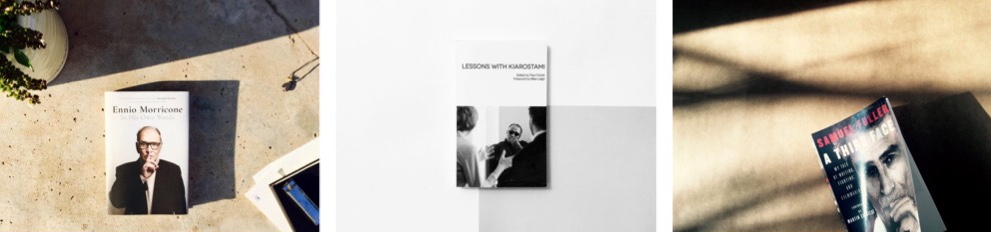
More stories: Ennio Morricone: In His Own Words / Life Lessons from Abbas Kiarostami / The Third Face: Life (and Film) Lessons from Samuel Fuller

Posted by classiq in Books, Film | | Comments Off on Play Time: “My Job Is to Bring a Little Smile”

The Movies I Would Watch on Repeat Today, Tomorrow or in Ten Years

Diane Keaton and Woody Allen in “Manhattan Murder Mystery”, 1993 | TriStar Pictures

 
Here’s the thing. I am getting tired of all this flood of advice on leading a more meaningful life, about what movies to watch, about what books to read, about what music to listen to while in quarantine. Because you know what? We had already been doing that and that’s what this online cultural journal has always been about: living mindfully, living a well-cultured life. So we will continue doing what we have been doing: celebrating cinema, culture, style and storytelling.

Now, I have been watching movies these weeks, obviously, but not more than I usually do, and I haven’t watched Netflix at all. That’s my normal, and I will keep it that way. And if I do have some recommendations, they are on movies I would watch on repeat any given time. These are a bunch of good movies, too, so if you need a respite from what “you should watch”, here are some films worth watching today, tomorrow or in ten years.
 

Montgomery Clift and O.E. Hasse in “I Confess”, 1953 | Warner Brothers

 
Anything Hitchcock

Alfred Hitchcock is the only director whose entire filmography I would rewatch, and have rewatched, time and again. There are movies that stay with you, or movies you watch once and are afraid of rewatching because you are afraid you will not love them just as much. Not Hitchcock’s movies. His movies require constant rewatching because the universe he created is so unique. He developed a singular cinematic style. You don’t just watch his films, you observe details, shots, you participate in the suspense and action. Hitchcock expresses visually everything he wants to, even the thoughts of his characters are expressed by visual means rather than dialogue, and the audience perceives that. That’s the brilliance of his cinema.

In Rear Window, it’s both the row of events and the summer heatwave that make James Stewart edgy, and he transmits it to you too. It’s a perfect blend of thriller (like that scene of perfect suspense when Grace Kelly’s character sneaks into Thorwald’s apartment while he’s momentarily out, and James Stewart powerlessly watches from afar with mounting anxiety, making you jumpy in your own seat), voyeuristic mystery, romance, style, technical mastermind and sharp humour (the priceless silent looks between Jeff and his friend when the latter spots Lisa’s belongings when she is planning to spend the night, or Thelma Ritter’s quippy remarks every time she is on screen). It is incredible how a movie confined to a room – one inside a Hollywood studio, no less – has the ability to give you such a powerful sense of the intoxicating, loud, breathless atmosphere of the city of New York.

In the introduction to his book, Hitchcock Truffaut, Francois Truffaut recounted: “In the course of an interview during which I praised Rear Window to the skies, an American critic surprised me by commenting, “You love Rear Window because, as a stranger to New York, you know nothing about Greenwhich Village.” To this absurd statement, I replied, “Rear Window is not about Greenwhich Village, it is a film about cinema, and I do know cinema.” His movies are entertaining, but what Hitchcock did with them was much bigger than that, his contribution to the art cinema of cinema is the greater achievement.

My top fifteen Hitchcock films: Rear Window, Notorious, Shadow of a Doubt, The Wrong Man, Vertigo, Strangers on a Train, The 39 Steps, Spellbound, The Birds, Psycho, North by Northwest, Dial M for Murder, Rebecca, The Trouble with Harry, To Catch a Thief.
 

“OSS 117: Cairo, Nest of Spies”, 2006 | Gaumont, Mandarin Films

 
French comedies

Maybe it’s the Latin in me, but I believe the French possess an inherent comic sensibility. Just the sight of Louis de Funès’ expressive face in one of his comedies makes me laugh. Or the pitch-perfect parodical recreation of Connery-era Bond in OSS 117: Cairo, Nest of Spies (2006) and OSS 117: Lost in Rio (2009), directed by Michel Hazanavicius (the films are based on Jean Bruce’s spy novel series that actually predate Ian Fleming’s 007 and Jean Dujardin is such a natural, his spy is as stylish as Bond, but he has the upper hand, the humour), where narrow-minded views on French colonialism, racism, religion, sexism and accidental homoeroticism run amok but are made fun of at the same time (there is no other nation that seems so at ease with making fun of themselves) – I don’t believe this comedic freedom is possible anymore and every time I watch these films is like a breath of fresh air. Or the way Marcel Pagnol, with his usual satirical wit, delivers a slice-of-life comedy in La femme du boulanger (The Baker’s Wife, 1938).

Other mentions: La Grande Vadrouille (1966), Le gendarme de Saint Tropez series, Les Tontons flingueurs (1963), Jour de fête (1949), Playtime (1967), Le corniaud (1965), La traversée de Paris (1956), Le Roman d’un tricheur (1936), La cage aux folles (1978), Intouchables (2011).
 

Keith Andes and Marilyn Monroe in “Clash by Night”, 1952 | RKO Radio Pictures

 
The most obscure B noir films

Forget about Double Indemnity, Sunset Boulevard and The Maltese Falcon. I like the more obscure, underrated or least known noir films just as much, if not more. The shadowy visual and shady morals, the grit and glamour never disappoint, and I like to look for them beyond the usual suspects. One of the first on the list would be Ida Lupino’s The Hitch-Hiker (1953). In the 1960s, Ida Lupino “earned the nickname the female Hitch for her… talent at creating suspense” in television productions. She even directed episodes from Alfred Hitchcock Presents. She used the power of the unseen, the open ending, actual locations for shooting, neo-realist twists to noir narrative. Her films dealed with the decadence of man, but also with humanity and decency, and avoided melodrama stereotypes. A claustrophobic road movie, The Hitch-Hiker is Lupino’s most purely cinematic venture, a tough and singular noir vision, bringing consistency and humanity into neo-realist noir. A genuine, unique approach, not a studio- or society-dictated approach.

Other mentions: Clash by Night (1952), Naked Alibi (1954), Caught (1949), No Way Out (1950), On Dangerous Ground (1951), The Naked Kiss (1964), Nightfall (1957), The Narrow Margin (1952), The Reckless Moment (1949), Cry of the City (1948), Too Late for Tears (1949).
 

Peter Falk in “Columbo” | NBC

 
Columbo

His crumpled raincoat, his cheap cigar, his rusty car, his humble manner. Elements that shaped up the image of one of the most distinctive, recognizable and beloved film characters of all time. Peter Falk’s disheveled and disarming, enormously engaging and quirky lieutenant Columbo lives on popular culture in a way that few television and movie characters ever manage – I have been rewatching it in the evenings for the past week (it’s sheer joy to forgo Netflix – the only things I have watched on Netflix in the past year, and way before this crisis, were The Two Popes, Marriage Story and The Crown – and rely on your own film archive) and it’s just as good as it has ever been. I still find it delightfully unexpected, ingenious and believable, brilliantly written and performed.

When talking about what drew him to the role of Columbo, Peter Falk said it was the opposite traits of the character, an average-Joe hero. A regular, next door guy, who is at the same time the most brilliant detective on the globe. The actor himself was an ordinary guy, he confessed, and maybe that’s why portraying the ordinary side of Columbo came easily to him. But he was also a great actor (his performances in John Cassavetes’ intense indie dramas further reinforced it), and that’s why the character endures. It’s a classic.
 

Scarlett Johansson in “Match Point”, 2005 | BBC Films, Thema Production

 
Woody Allen films

Woody Allen’s films have a certain look. Have you noticed? They are beautiful to look at. I feel at ease watching them. It’s like entering a familiar world. And what can be a better frame of mind for watching a film? I can not speak for others, but the cinematography in Allen’s movies has always been one of the things I personally love the most about them, to the point where I think you can not talk about his films without talking about the way they are filmed, just as you can’t talk about them without talking about the writing. Because “cinematography is the medium,” as the writer-director himself insists.

Until Allen came along, comedies did not look like this. “Mostly the good-looking stuff is stuff without laughs in it,” he remarked. The look of comedy, its status as cinematographic artifact, was not something anybody paid attention to or considered important. “I don’t see any reason why movie comedies can’t also look pretty,” said Allen, who hired Belgian cinematographer Ghislain Cloquet, who had worked with Jacques Demy and Robert Bresson, to shoot Love and Death (1975). He then went on to employ The Godfather‘s cinematographer Gordon Willis to shoot Annie Hall (1977), and continued to work with him on seven more movies, including Manhattan, “one of the best-photographed movies ever made,” as Roger Ebert described it, along with the thematically and visually chilly Interiors (1978), probably Allen’s most Bergmanesque film, and Zelig (1983), one of Woody’s most visually complex movies.

Hannah and Her Sisters (1986) marked the beginning of Woody Allen’s collaboration with Michelangelo Antonioni’s cinematographer Carlo Di Palma (Blow-Up, Il deserto rosso), who had had an auspicious beginning in cinema with Luchino Visconti’s Ossessione (1943). They would work together on eight more films and it was in fact argued that it was Di Palma who brought a cosmopolitan, Europeanised look to Allen’s New York. Another Woman (1988) was the first time shooting with cinematographer Sven Nykvist, who had developed an intimate, close-up-driven style of shooting with Ingmar Bergman which he called “two faces and a tea cup”. Allen and Nykvist would do two more films together, Crimes and Misdemeanors (1989) and Celebrity (1998).

He filmed Vicky Cristina Barcelona (one of his his most beautifully shot – how could it not be in the natural vivacity, sun-drenched splendour and luscious beauty of Barcelona?) and Blue Jasmine with Javier Aguirresarobe (of Almodovar’s Talk to Her, Milos Forman’s Goya’s Ghosts). For Midnight in Paris (2011), Allen had discussions with cinematographer Darius Khondji, who would film three more of Woody’s films, about shooting the 1920s sequences in black and white, but they eventually decided to go with colour. “Matisse said that he wanted his paintings to be a nice easy chair that you sit down in, and enjoy. I feel the same way: I want you to sit back, relax, and enjoy the warm colour, like take a bath in a warm colour.”

My favourite Woody Allen films: Match Point, Annie Hall, Hannah and Her Sisters, Manhattan, Vicky Cristina Barcelona, Crimes and Misdemeanors, Manhattan Murder Mystery, Celebrity, Cassandra’s Dream, You Will Meet a Tall Dark Stranger.
 
More stories: Style in film: North by Northwest / Diane Keaton: The Real Look Behind Annie Hall / Lizabeth Scott: She Had what It Took for Film Noir

Posted by classiq in Film | 1 Comment