The Culture Edit: August Newsletter


“People need to realise that every single day,
they make some difference in the world.”

Jane Goodall


The Classiq Journal monthly newsletter goes out every first Sunday of the month, bringing you a personal round-up of books, films, music, podcasts, talks and cultural news. Here is the August culture trip.
 
Reading

Books:
There are two books* that have kept coming my way in the last couple of months, especially through rabbit-hole inducing conversations and interviews: Country Girl, by Edna O’Brien, and American Dirt, by Jeanine Cummins. I am making my way through them and enjoying them tremendously, for different reasons, obviously. Edna O’Brien’s writing is beautiful, and American Dirt is a page-turner, keeping me on the brim of my seat.

Interiors, an online journal that focuses on architecture and film, has released the book The Architecture of Cinematic Spaces by Interiors, a highly visual, graphic analysis of film in terms of architecture, cinematic spaces and production design, and discusses films such as The Cabinet of Dr. Caligari, Rope, Le mépris, Playtime, 2001: A Space Odyssey, Home Alone, Panic Room, A Single Man, Her and Columbus.

These photography books take you on a journey through the fashion of the 1990s, and the supermodels are driving.

The interview:
Jane Goodall thinks we can be better travellers. “People need to realise that every single day, they make some difference in the world.”


Left: Sigourney Weaver in “Gorillas in the Mist”, 1988, Warner Brothers
Right: Photographic print part of the Classiq Journal Editions, available in the shop


Viewing

It’s about that silver lining. The best thing about this summer so far? It’s given us the opportunity to finally set out to set up a backyard movie theatre, making me miss a little less the experience of going to the movies. Here is everything you need to know about building your own outdoor cinema. First movie on the list? Jaws (a family summer tradition), followed by The Birds (by the way, Camille Paglia’s book about the film is the best piece of writing I have read about Hitchcock’s masterpiece).

Five indie films to satisfy your travel cravings.

Gorillas in the Mist, the adaptation of wildlife expert Dian Fossey’s autobiography, a remarkable story of thirteen years spent with the rare mountain gorillas in the heart of Africa, first to study and then protect them from poachers. Superbly acted by Sigourney Weaver, it is a gripping, wondrous, emotional film that sees Fossey’s passion become an obsession, and rightfully so, given the cruel reality she witnesses. There is more than the impressive life story that I took a liking to: the sounds and colours and textures and light (the film is beautifully shot) of Africa, and, not in the least for someone who writes extensively about style in film and costume design, Sigourney’s African life-appropriate looks. You can watch the film here.
 
Listening

Music:
On every road trip this summer (could this be the new era of the road trip?) I am listening to this album.

Quentin Tarantino selects his favourite 10 albums of all time.

Podcast:
Jon Caramanica is joined by Joshua Rothkopf for the latest New York Times Popcast to discuss the unforgettable compositions of the late Ennio Morricone. In one of my interviews with film industry insiders, Alessandro de Rosa, The author of the book Ennio Morricone: In His Own Words, is recalling one of his favourite cinema experiences – it involves a Morricone soundtrack.

Audiobook:
A friend of mine who is a painter was telling me that she’s been listening to audiobooks because after she paints all day long her eyes can not sustain reading a book. So from now on I will try to recommend a different audiobook in each monthly newsletter. The book she recommended is The Water Dancer, the debut novel of Ta-Nehisi Coates, narrated by actor Joe Morton. I was first introduced to Ta-Nehisi Coates a couple of years ago by the man behind this exceptional bookshop, who considers Coates one of the most important discoveries he has made in the past years (and about whom Toni Morrison wrote that he filled an intellectual gap in succession to James Baldwin), and who pointed out the author’s Between the World and Me, winner of the National Book Award for Non-Fiction in 2015 and Pulitzer Prize finalist, to me.


Making

The call of the 21st (that’s the 21st of each month). Are you committed to buying less and buying wiser? Then consider DEMAIN.
 
On an end note

Now more than ever, we have all been seeking refuge in nature. But not everyone can, nor they should, move to the countryside, which is why we have to take better care of our cities. These cities offer a model on how we can build happier communities.

A small French town is fighting Amazon. And here is further proof of how six independent shops have become community anchors in their respective cities, shunning large retailers.

A simple message that goes a long way: Be a lady!


* For an easily accessible, official synopsis of all the books mentioned in this article, I have linked to the respective publishing houses. However, in these trying times, our intention is to support artists and small businesses of any kind, especially bookstores, therefore we will not link to global online book chains or corporations, leaving you to make the choice of helping your favourite independent bookshop and placing your order with them. If you don’t have a favourite indie bookstore, here is how to find one you can support.

Posted by classiq in Books, Culture, Film, Newsletter | | 2 Comments

La Dolce Vita Meets New York Jazz and Beat Scene: Jude Law in “The Talented Mr. Ripley”

Jude Law in “The Talented Mr. Ripley”, 1999 | Robert et Raymond Hakim, Paris Film, Paritalia


This Summer We’re Channelling: a recurring seasonal series
in the journal that celebrates both style in film and summertime.


It begins with a Princeton jacket and an innocent identity mix-up. Tom Ripley (Matt Damon), a working class young man, wears one when he fills in for a friend who has had an elbow injury and can’t play the piano at a high class party. The party is given by shipping magnate Herbert Greenleaf and his wife. They see Ripley in the jacket and assume he is a former college colleague of their son’s, Dickie Greenleaf (Jude Law), who has decamped to Italy, living la dolce vita. His father wants him back home, so he offers to pay for Ripley’s trip to Europe and an extra $1,000 if he persuades Dickie to return to his obligations in New York. Ripley agrees and, dressed in a well-worn and ill-fitted corduroy jacket, sets off for Europe.

The Talented Mr. Ripley, directed by Anthony Minghella, is the second adaptation of Patricia Highsmith’s novel by the same name, after René Clément’s 1960 Plein soleil, with Alain Delon as Ripley and Maurice Ronet as Philippe Greenleaf in the leading roles. The beauty of these two films is that they are different and the viewer is rewarded in different ways when watching them. Minghella’s film is a classic in its own right, and by that I mean it is that kind of film that is character-driven, that kind of film that gives you the possibility and means to get to know the characters and see them evolve, that kind of film where photography, lightning, composition, costume, mise-en-scène are carefully considered and employed to the tiniest detail to ensure a complex cinematic experience, that kind of film that will sustain and reward many viewings over time and that will have later generations turn to again and again. That kind of cinema has been almost completely lost in the last few decades. But maybe the greatest achievement of The Talented Mr. Ripley is that, in the true vein of Hitchcock’s movies, it provides equal parts elated pleasure and simmering tension.

Tom Ripley soon meets a sun-soaked, golden-haired, insouciant Dickie Greenleaf, his no less beautiful girlfriend Marge Sherwood (Gwyneth Paltrow), and his lifestyle in the idyllic coastal town of Mongibello, a fictional location in the south of Italy, and deception takes on new proportions, evolving into a disturbing tale of social climbing, as Ripley’s destructive desire to both acquire and assume the character of Dickie quickly becomes apparent. It isn’t hard to aspire to being Dickie Greenleaf and to his life of Italian leisure. Jude Law’s charismatic Dickie is confident and cool and so comfortable with the good life. Tom Ripley is not, and the only way he sees to create his own identity is to steal Dickie’s – completely outshining the weak and maladjusted and poorly dressed Tom, who looks and feels so out of place in his square glasses, chinos, knitted ties, oversized button-down shirts and the ever-made-fun-of corduroy jacket – an Ivy League look, supposedly a paragon of neatness, gone wrong.
 

“The Talented Mr. Ripley”, 1999 | Robert et Raymond Hakim, Paris Film, Paritalia

 
It was the 1950s, and, as Gary Jones, who teamed up with Ann Roth as costume designers, said in an interview, “it’s really difficult sometimes for us to realize how innocent times were then – the clothes weren’t showy. There was no sexual innuendo – all that came later, in the ’60s.” Indeed, the sixties would be a time when a postwar Italy revelled in a consumer boom driven by film, music, fashion and scooters as the vehicle of choice, an Italy that was “the culture of la bella figura, a belief that appearances, comportment and graciousness are overwhelmingly significant in the well-managed life,” as it is described in the book La Dolce Vita: The Golden Age of Italian Style and Celebrity, by Stephen Bailey, and American actors and socialites, or their privileged children, travelling to Italy were undeterred in embracing the glamorous and decadent life. They brought along the fashions and music and rebelliousness and met with an European sensibility and their own radical demographic shift.

Dickie’s wardrobe does have a rebellious element to it. Things had started to change in the mid-50s when the action is set (a change that Federico Fellini was already able to capture in 1960, in his La dolce vita), on both sides of the Atlantic, the new youth culture movements lead by the Beat Generation were taking over, mingling styles, tastes and world views, dropping out of society and rejecting traditional touchstones. Dickie’s clothes are a reflection of his self-confidence and his leisury and luxurious lifestyle, and his whole way of frivolous living is a form of distancing himself from the previous generation, his parents, especially his father. Summers by the sea, skiing holidays in Cortina d’Ampezzo, jazz clubs in Rome – “Jazz is just insolent noise,” is how his father dismisses Dickie’s tastes in music. Dolce far niente. He makes friends easily and discards them even more easily. He makes plans and then ditches them when something better comes along. He plays the sax, but he may become bored with it and take up the drums. Few things last in Dickie’s life. But his clothes are a mainstay.

He wears beautifully made clothes, adopting the Italian sartorial ways with nonchalant vitality. Italian knits with just the right amount of buttons undone, rolled up white linen trousers, deconstructed linen blazers, colourful patterned shorts, and loafers or plimsolls: the finest quality summer wardrobe. They are made to look like they were tailored to perfection in Italy, which they were in the film – Dickie tells Tom his suits are made at a sartoria in Rome – “Let me get you a new jacket. When we get to Rome, there’s a great place, Batistone.” In reality, the clothes were made by John Tudor, a bespoke tailor in New York. “My job was to show this very well-off boy, Dickie, in Europe, on a very strict allowance, but with a sensational lifestyle,” said Ann Roth. “I had him in a jacket and some shorts, or a jacket and some linen trousers, and that jacket had to reflect a very rich background. And if he had one or two made in Rome, it had to look that way.”
 

“The Talented Mr. Ripley”, 1999 | Robert et Raymond Hakim, Paris Film, Paritalia

 
By contrast, Tom’s clothes were all vintage pieces remade by tailors in NY and Italy, after an assiduous research work in magazines, photographs, into the fabrics and garments of the time, so that they didn’t fit the character. The clothes he wears later on, when he “becomes” Dickie, were bespoke. “Just wear some of my clothes. Wear anything you want. Most of it is ancient,” Dickie tells Tom. It is just what Tom wants and this preoccupation of his is obvious in the scene in the train when Tom juxtaposes his reflection in the window with Dickie’s, which I find even more creepy and disturbing than the scene in front of the mirror when Tom is impersonating Dickie, dressed in his clothes, unknowingly that he is being watched, because it is the former sequence that alludes to the fact that Tom does not just want to look like Dickie, he wants to be him.

But it the clothes nonetheless that prove most efficient to Tom to smudge the lines between appearance and personality, because it is through clothes, the supposedly superficial attributes of one’s self, that one character can pass for another so easily and that also can make himself recognize the other in himself. But there is more to Dickie’s beautiful clothes than superficial outward looks. They are more than a privilege of his social class. Yes, he pays attention to clothes and he buys them well. Yes, looks are important to him – “Without the glasses, you’re not even ugly. I don’t need them. Because I don’t read,” he casually confesses to Tom. But his clothes are not brand new. Actually, they appeal so much precisely because he doesn’t flaunt his dressing style, his clothes are not just for appearance, they seem to have a story, and his style is consistent and authentic, and it has to do with individuality just as much as it has to do with necessity. He is happy with his life in pursuit of pleasure, living on his allowance. But it is a strict allowance nonetheless, so he chooses his clothes well to serve him long, and makes them his own. Actually, his wardrobe is surely made up of things he already had from New York and some new stuff he has purchased in Italy, which would best explain his flamboyant style, with a penchant for hats and rings and an overall look inspired by the New York jazz scene of the 1950s just as much as it is by the easy Italian elegance. He can not completely shun his past, but he makes the best of the present. And maybe that’s the most enviable thing about Dickie Greenleaf.


MORE STORIES


Style in film: Plein soleil
Drawing on the Quiet Moments of a Movie: Interview with Illustrator Michael Boland
When the Man Dresses the Character: Cary Grant in To Catch a Thief

Posted by classiq in Film costume, This summer we’re channelling | | Comments Off on La Dolce Vita Meets New York Jazz and Beat Scene: Jude Law in “The Talented Mr. Ripley”

This Summer We’re Channelling: Ali MacGraw in “Players”

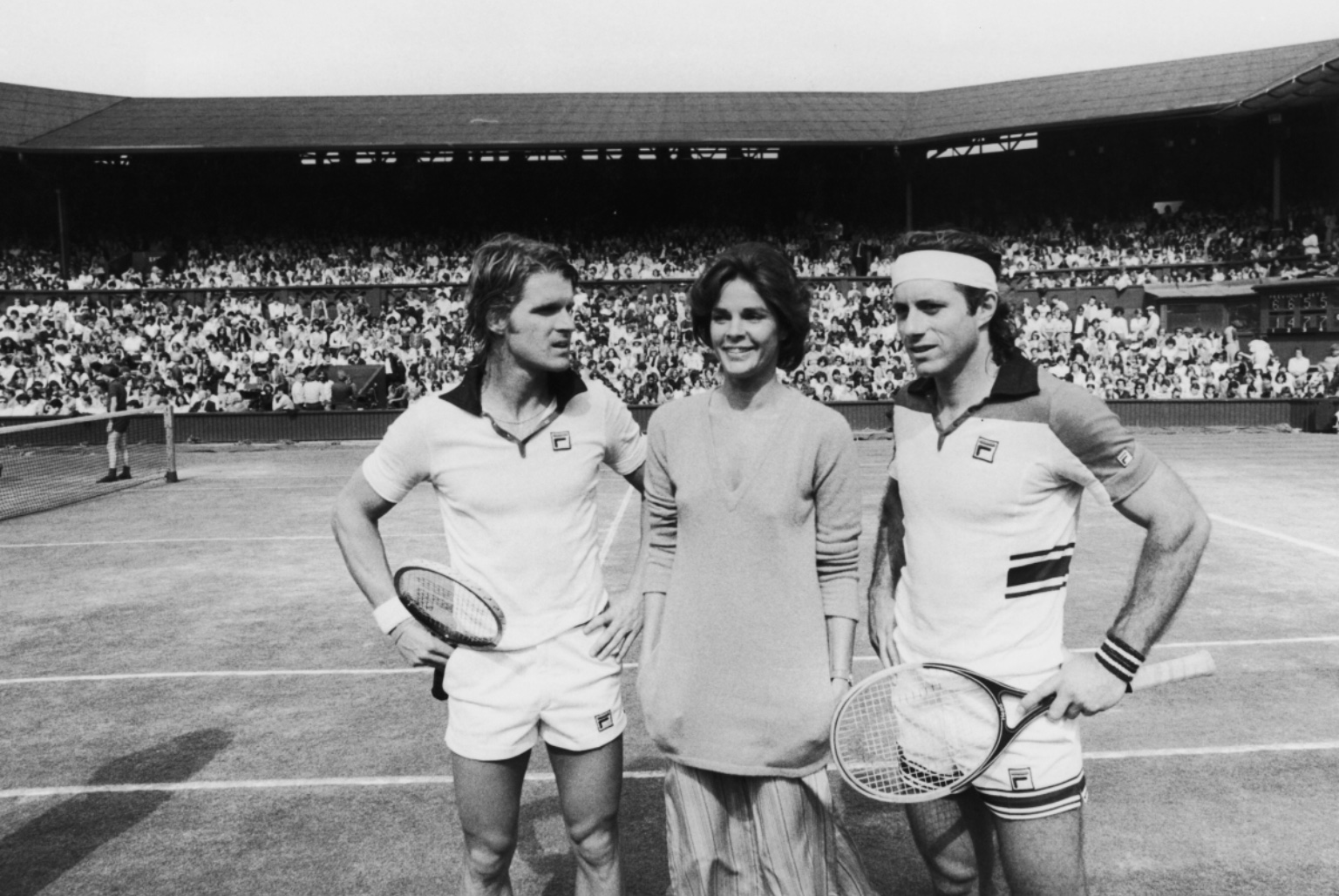
Ali MacGraw and Dean-Paul Martin in “Players”, 1979 | Paramount Pictures


This Summer We’re Channelling: a recurring seasonal series
in the journal that celebrates both style in film and summertime.


There have been many memorable fashion moments in film, characters inextricably linked with their clothes, influencing generations and fashion movements the world over. But only few actors have had the personal style that would transcend the screen, and fashion. Cary Grant was one of them. Steve McQueen, James Dean, Audrey Hepburn, Katharine Hepburn, too. And Ali MacGraw.

Ali MacGraw started out in fashion, as an assistant to Harper’s Bazaar’s Diana Vreeland and then stylist to photographer Melvin Sokolsky. She was part of the world of fashion when the American designers were starting to break free from their own buttoned-up sartorial past and other influences, such as the too prim Parisian elegance, and find their own voice, liberation and trend-resistant style. Clothes started to be more than appearance and frozen perfection. Clothes started to be used as an expression of one’s personality, mere things quickly thrown together before going on with your life. Individuality and independence were the equalizer.

Ali MacGraw had the authenticity, self-confidence, resolute demeanor and classic American sensibility that contributed to her instinctive style. But, as she herself confessed in a Vogue interview, she also had the right person to guide her fashion sense – “I met Halston when he was making hats at Bergdorf Goodman. You ask me what really guided my fashion sense in 1967 and before—it was that guy.”

She also had another American designer, also a byword for American style, Calvin Klein, to dress her in Players (1979). In the book Point of View, Tonne Goodman recalls how the Calvin Klein fashion campaign models “became the essence of unabridged style, whether in collections, jeans, or nude,” and how the shootings would last for days because they had to get the models ready to enter a certain world and so they had to get tanned, work out and rest and do extensive fittings to attain “the Calvin Klein look”. Ali MacGraw already represented the essence of that unabridged style. She didn’t have to get into character to wear Calvin Klein. She “exemplified the great American style”, the designer himself noted, and she immortalized it on screen in the 1970s, defining an era when women were both liberated and celebrated for their femininity.

Players is an easily forgettable romantic drama, but “as a Hollywood tennis sports movie, it’s pretty good”, as Quentin Tarantino noted. Producer Robert Evans, an enthusiastic tennis player, wanted to make a convincing film about tennis (some of the best tennis players in the world, Guillermo Vilas, John McEnroe and Ilie Năstase, appear in the movie) and he wanted a professional tennis player who could act. Dean Martin’s son, Dean-Paul Martin, who played tennis professionally, got the role of the rising tennis star Chris, and Ali MacGraw, Evans’ former wife to whom he had remained close, plays Nicole, a jet-setter involved with a millionaire and who falls in love with the much younger than her Chris. Ali MacGraw’s wardrobe is the second good reason to watch the film.
 

Ali MacGraw, Dean-Paul Martin and Guillermo Vilas in “Players”, 1979 | Paramount Pictures


Her wardrobe is simple. It is a mix of sporty separates and relaxed elegant pieces. Denim shirts. Knitted jersey dresses. White jeans. Long flared skirts and white shirts with rolled-up sleeves and knotted at the front. A knee length skirt and a long sleeved black sweater. Loose-fitting trench. Easy slip-on dresses. And the coolest, most laid back and liberating look of all, mismatched long V-neck knitted sweater and flowy, silky long skirt (image on the tennis court above) – “This is me”, she seems to say. She’s naturally sexy and uncompromisingly modern. That all-encompassing modern style that is comfortable and easy to wear and effortlessly elegant for the woman on the go. For Ali MacGraw, this was not a sought-after look, something that fashion simply had to offer, it was instinctively hers, and it was stripped of any detail that could distract attention from her real self. It was her attitude that moved the youth toward a collective all-American look.

Calvin Klein is one those American fashion master minimalists that cemented the American design aesthetic and inspired generations of designers. But he wasn’t alone in accomplishing this: he had a great design team besides him, namely Zack Carr, who for nearly three decades was the brand’s creative director, who had a great contribution to defining the sexy, clean and minimal Calvin Kline style, which remains consistent to this very day. “I first met Zack in the very early days at Calvin Klein, where he was very much part of that brilliant new design studio,” Ali MacGraw recounts in the book Zack Carr. “Calvin and his team did all the clothes for me for two films. I got to see Zack’s immense talent at work over and over again. I think that he had a big part in the creation of the look that is “Calvin Klein” – the elegance, the color sense, the timelessness, the modernity. But what I think of above all, when I think of my friend Zack, is the quality of human being he was: tremendously talented, of course, but kind and funny and decent and humble. He was a shining star in a particular world that so often produces ego and competitiveness before humanity.”

True style requires a little more than clothes. I believe Ali MacGraw and Zack Carr for Calvin Klein made a pretty good team together.
 
 
More stories: This Summer We’re Channelling: The Safari Style in “Hatari” / An American Original: Steve McQueen in “Bullitt” / The All-Natural Look of Two Mythical Creatures: Thelma and Louise

Posted by classiq in Film, Film costume, This summer we’re channelling | | Comments Off on This Summer We’re Channelling: Ali MacGraw in “Players”

Creating Mystery within a Single Image: Interview with Illustrator Jennifer Dionisio

Noir | Jennifer Dionisio self-initiated artwork


A distinctive cinematic aesthetic runs through Jennifer Dionisio’s illustrations. Her visual stories, through minimal colour composition and a beautiful command of light and shadow and space, transport you to the heyday of film noir and they convey a tangible sense of mystery, intrigue and fateful encounters. Illustration can carry so many meanings and visual possibilities, and Jennifer Dionisio’s illustrations easily accomplish that. Because they not only invite you to reflection and take you to a different time and mind set, but they work up your interest and curiosity as you are beginning to ask yourself questions about the characters you see, their past, their stories. It is a moody, classic feel that offers some detachment from modern reality and puts the focus on imagination and emotion.

In our interview, Jennifer and I are talking film noir and film noir heroines, stylistic approach and film cover images as artworks in their own right.
 

Left: portrait of Emily Weiss by Jennifer Dionisio, Courier Magazine Issue 18 | Right: Jennifer Dionisio artwork for the
cover of Idler Magazine, issue number 54, featuring Julian Barratt as ‘Mindhorn’ and Essie Davis as ‘Patricia Deville’


”A great cover can represent
your first memory of a film you enjoyed.”


There is a distinct cinematic element in your work, with a special emphasis on film noir. Where does this interest in film noir originates?

I was originally drawn to the strong, bold female characters and the look and feel of many classic film noirs. In my personal work I like to create a mystery within a single piece of artwork, and it ends up being very similar to a still from a film.

You recently did a beautiful cover art for The Criterion Collection, for Detour, at its first major restoration so that it can be fully appreciated by hard boiled fans and new audiences alike. Could you walk us through the inspiration and the design process for this particular project?

Eric Skillman, the art director and designer, wanted a composition which reflected the grittiness and shoe-string budget of the production. So I worked to strip back the drawings and use hand drawn textures in pencil and charcoal. Eric created the title treatment to fit within the drawing. The stripe motif is a nod to the original promotional images and the title. It was also great to include a big portrait of Ann Savage. She’s such a fantastic character with one of the best evil crazy stares I have ever seen.

Lizabeth Scott. There is another actress who was made for film noir. Your self-initiated work on her makes me curious: If you could choose one of her noir films to do the cover image for, or better yet, the poster for the film back in the day, which one would it be?

I would love to create a poster for The Strange Love of Martha Ivers, because I also really love Barbara Stanwyck.
 

Blu-ray and DVD artwork by Jennifer Dionisio for Criterion Collection’s re-release of
Edgar G. Ulmer’s 1945 noir “Detour” | Title treatment and graphic design by Eric Skillman


Besides your Criterion collaboration on Detour, you are a frequent collaborator of Arrow Films and did some beautiful artwork for them on films like Jean Grémillon’s The Love of a Woman (1953) and Frank Borzage’s Magnificent Doll (1946). Do you believe that the wonderful work of the likes of Arrow and Criterion, of restoring these classics and building momentums with the help of talented artists who do the cover art, will also bridge this gap between today’s public and online streaming?

I think so, people want a special experience. If you’re a fan of film, owning a physical object with special artwork is worth having and revisiting. I like to display mine like little art pieces on my book shelf.

Do cover images stand as artworks in their own right? Can we judge a film by its DVD or blu-Ray cover?

I think they can absolutely stand alone as artwork. A great cover will make you want to watch the film. And can also represent your first memory of a film you enjoyed.

Which is the film poster or cover art that has impacted you the most? Do you remember the first time when a film poster made you want to watch a film?

I’m very inspired by the film posters of the Russian Avant-Garde era of the 20s and 30s in particular. As for what poster made me want to watch a film, it would have been something by Drew Struzan, like the first Harry Potter movie.
 

A House They Call | Jennifer Dionisio self-initiated artwork


”Illustration is such a beautiful and diverse art form,
it can help cut through the visual noise we all experience.”


Does the design process differ from one film to another? Do you watch the film, does the client come with an idea or a theme from the very beginning, do you seek for inspiration outside the film itself?

Sometime the client comes with a fully formed vision and sometimes they don’t, it depends. Either way, I always watch the film, take notes and makes screenshots. I also research the original promotional material and sometimes other reference research as well.

Have any other film poster designers or illustrators influenced your work and your style of illustration?

Edward Hopper is my biggest style influence. His compositions and use of light and shadow are very inspiring to me. I also look to Gregory Crewdson’s photography for those same reasons. They are both masters at creating mystery within a single image, which is an aspiration of mine.

How would you describe your aesthetic?

Atmospheric, cinematic, vintage inspired.
 

City Noir | Jennifer Dionisio self-initiated portrait of Lizabeth Scott


You also do editorial illustration and you have collaborated with some great print publications, Idler being one of them. What does an illustration bring new to an editorial in comparison to photography? How much research, how much observation and how much conceptual work does an editorial illustration involve?

Illustration can visualise complex ideas in interesting and accessible ways. Illustration often holds the viewers interest for longer, encouraging them to pause and digest the information. Editorial can be highly conceptual and require a lot of research, but it’s a balancing act because the deadlines are often quite short.

For years now, illustration has experienced a revival in the more traditional sense and print magazines have been using it more and more frequently. Is that because the constant feed of photography surrounding us on a daily basis has made the craving of the unique grow stronger?

It helps the publication or article to stand out. Readers may not be conscious of it, but I believe it signals to them that the content they are consuming has quality and is worth spending time on. Illustration is such a beautiful and diverse art form, it can help cut through the visual noise we all experience.

Your work can be found in print magazines and movie cover art, which translates into a physical connection with the public. How important is it to be present online? Does it help that an artist’s work has become so much more visible in this way?

I think it’s important to be visible online, that’s where most of the art directors and commissioners see your work. Having a large online following also can make you more appealing to certain brands. I don’t really like using social media, but do feel it’s necessary. I keep it up to date when I have new projects to share, but I try not to worry about it too much. I’m not willing to dedicate a lot of time to it and don’t feel it’s helpful to my creativity. So far that hasn’t stopped me from being commissioned, which is great. Artists who are willing and post a lot, can do very well from it.
 

Crossfire | Jennifer Dionisio artwork depicting the film “Crossfire”, 1947, for Issue C of Shelf Heroes Magazine


How big a part does hand-work and digital, respectively, play in your illustrations?

I like doing both, so maybe it’s around 50/50. My portraits are always hand drawn in pencil while I’ve been drawing more of the other parts of the compositions digitally.

Your editorial illustrations sometimes accompany articles or interviews regarding new releases. I recently worked on an article in which I asked for the opinions of film industry insiders and film festival directors on why movies still need cinemas. Do you hope that your work could also drive people to the movies and not just to want to read about them in the magazines?

Definitely, I think the cinema is amazing and I love going to see new films. I hope that people will feel encouraged to continue going in the future. It really is a special and fun thing to do. Being in lockdown makes that more evident than ever.

What is one of your most memorable experiences from going to the movies?

My first time going to see the The Rocky Horror Picture Show. We dressed up, sang and danced. There were actors acting out the scenes in front of the big screen, it was so fun!
 

Website: jenniferdionisio.com | Instagram: @jendionisio


More stories: On and Off Set with Unit Still Photographer Merie Weismiller Wallace / Why Movies Still Need Cinemas: In Conversation with Film Industry Insiders / Art Directing Film Posters: Interview with Akiko Stehrenberger

Posted by classiq in Art, Film, Interviews | | Comments Off on Creating Mystery within a Single Image: Interview with Illustrator Jennifer Dionisio

Face It

”Face It” by Debbie Harry

 
She was a punk. She still is. Breaking down walls, “cutting new paths instead of taking the tried and tested roads”, making music because they wanted to make things happen, being artistically strong because they had something to say.

Debbie Harry calls herself a visual thinker, and her songs, she sees them as moving pictures. She confesses that her “punk bombshell” image was influenced by old movie stars, predominantly Marilyn Monroe, who fascinated her with the fantasy her image projected on screen (much more a character invented by Marilyn herself than a fabrication of the publicity machine behind her), “the mother” of her Blondie character. Only there was also a “dark, provocative, aggressive side” to Debbie Harry’s cool and understated sexuality and platinum hair. A punk aesthetic born in “a special time in New York, with the wild beauty of the decayed and dirty city in the seventies. The garbage strewn everywhere, where you found fabulous things that people threw out and you deconstructed them and you put the pieces together with creativity and irony as the glue.”

The arresting depiction of the New York City punk and cultural scene of the 1970s is one of the best parts of Face It*, the memoir of Debbie Harry, the face and front singer of Blondie (but also solo musician and independent movie actor), the band she co-founded with Chris Stein in the 1970s, pioneers in the American punk and then the new wave scene of the mid-1970s in New York. A dark, dusty and dirty New York City, but ripe with creativity and rich in struggling artists who had no money but who were culturally central to the city’s life. Glory came with no shortage of grime.

How can you explain that to the young people of today raised in an affluent lifestyle, with the personal Mac and companionable iPhone? How can you explain to them that people had to go out there to try and make it (some still do), who did something because they believed in it, who made music to express themselves, before making money out of music became a subject taught in school? How do you explain someone raised on online social media that music and the music scene used to serve as a source of social documentation, revelation, as a way to read body language, as a way of learning how to express and read oneself physically and be comfortable in one’s own skin? How do you explain body language to someone whose only “idols” exist on Instagram? How do you explain to them that fame came only after one had accomplished something truly remarkable? How do you explain all this to someone who hasn’t been exposed to the reality of life and to history?

Through intuitive and intimate storytelling accompanied by striking visuals, including personal photographs, drawings and fan-art illustrations, Debbie Harry comes through as an original, an artist with initiative and strength and grit and a vision, and a whole lot of sense of humour that made it easier for her to navigate this crazy, demanding, extraordinary and once very macho rock music world. A musician, a muse, an icon, a rock star, in a time when each of these things meant something.


“I’ve been trying to think what best of Blondie was for me.
I’ve come to the conclusion that it was the early days of the band
when we were struggling artists scuttling around the Lower Esat Side just
trying to get something going, walking home from work before dawn through
the dark, dusty, sweet-dirt smell of the city. Everybody got by on no money.
Nobody talked about mainstream success. Who wanted to be mainstream?
What we were doing was so much better than that. We felt like pioneers.”


”Face It” by Debbie Harry


* For an easily accessible, official synopsis of the book, I have linked to the publishing house. However, in these trying times, our intention is to support artists and small businesses of any kind, especially bookstores, therefore we will not link to global online book chains or corporations, leaving you to make the choice of helping your favourite independent bookshop and placing your order with them. If you don’t have a favourite indie bookstore, here is how to find one you can support.
 
 
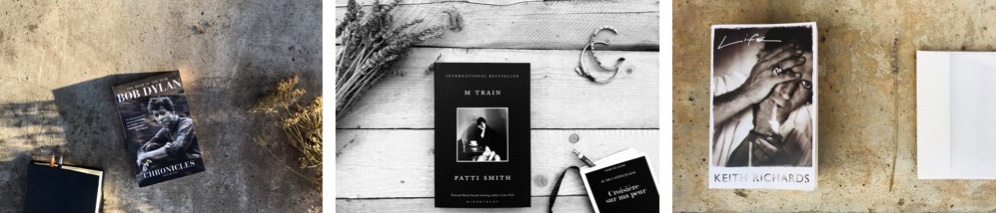
More stories: Chronicles: Volume One / M Train / It’s Only Rock ‘n’ Roll But I Like It

Posted by classiq in Books, Culture | | Comments Off on Face It