Darkness Under the Limelight: Tyrone Power in “Nightmare Alley”

Tyrone Power and Joan Blondell in “Nightmare Alley”, 1947. Twentieth Century Fox

 
There is something sordid about the atmosphere of a small-time, small-town carnival. Comedians trapped in tragic roles. The performers may be under the limelight, but it is the dim light of a would-be only in hope, because they are always on the way towards something bigger but are often left bitter beyond any hope of achieving it. But they also seem to know more about fame and success than those who have achieved it: the ephemerality of it all.

“Stan Carlisle fascinated me. He was such an unmitigated heel. Here was a chance to create a character different from any I had ever played before.” Tyrone Power was the one who wanted to make Nightmare Alley, based on the 1946 book by William Lindsay Gresham, and he acquired the rights to the novel. He wanted to subvert his matinee-idol image and he sank his teeth into it, with merciless force. It is the story of the rise and fall of a man from small-time carnival operator to spiritualist conman, from putting on a sideshow for the working class to showing off in an upper act for the rich, revealing the dark recesses of his own nature in the process. It is an unvarnished portrayal of moral degradation and self-destruction, a largely pessimistic vision of the American dream, “where to become successful you must prey on the weaknesses of others,” writes Paul Duncan in Film Noir: 100 All-Time Favorites. “As Carlisle rises from hick to ace charlatan and crashes to become a “geek”, a creature that gets tearing the heads off live chickens in a bran-pit, we see a frightening glimpse of life without money or hope in a society that lives by both,” Charles Higham and Joel Greenberg observed in their 1968 essay Noir Cinema, republished in the book Film Noir Compendium.
 

Tyrone Power and Helen Walker in “Nightmare Alley”, 1947. Twentieth Century Fox

 
There is always a woman by Stanton’s side on his way up – in the book, there was no one by his side on his downward spiral, no good girl “redeemer”, the other female image that appears in noir films, and I will pretend the ending of Edmund Goulding’s film didn’t detach itself from the uncompromising force of Gresham’s novel, which would have been possible in the absence of the Hays Code but highly improbable because of filmmakers’ ardent dependence on the studios. First it’s Zeena, a worldly and hefty sideshow fortune teller who reveals to Stan the word codes for the mentalist act. There is a human “every woman” quality to her, with something good and something bad in her, earnest yet capable of duplicitous behaviour. Then it’s the young and warm-hearted Molly (Colleen Fray), the good girl, who becomes his partner in the entertaining act as well as in life. And then it’s dr. Lilith Ritter, a psychiatrist willing to betray her patients’ darkest secrets to become Stan’s accomplice. Dr. Lilith is his match. Played with ice-cold perfection by Helen Walker, “huge-eyed, sly as a cat, Dr. Ritter’s gestures suggest a soulless ambition; the web of hair, the smoothly disciplined face are unforgettable,” wrote Charles Higham and Joel Greenberg.

Nowhere is Dr. Ritter’s sexual allure and superior psychological insight (the two most covert and elusive weapons of the femme fatale) more obvious than in their meeting in her office, him standing up, her siting down, him in a striped suit, white shirt and black tie, her in a suit jacket and white buttoned-down shirt, with its sleeve cuffs peeking from under the jacket sleeves, and neckertie pinned with a brooch. Bonnie Cashin was the costume designer. She had begun her career in New York in the 1930s, as a designer at the Roxy Theater, while also designing clothes for a sports manufacturer. In 1943, she was invited to work at the Twentieth Century Fox, and one of her early assignments was Laura (1944), starring Gene Tierney. Her clothes for the character of Laura contrasted the over-dressing of the America of the 1940s, something Cashin wanted to avoid so that the clothes in the film wouldn’t look too dated, too soon. She had her mind set on the modern woman.

At first, you could swear Dr. Ritter is wearing a tuxedo. She is not, it’s a skirt she is wearing with her jacket, but somehow, surprisingly, this makes her look even more striking and empowering, its somber shade the epitome of formality. That particular scene is lit in a way that casts shadows on the wall resembling prison bars. The world of film noir is usually a world where love is replaced by obsessions and fatal desires. This time, it is replaced by a hopeless addiction to hell-bent success and the one woman who can mitigate it better and faster than anyone else. Her treachery seems better disguised when Stanton pays her a visit by surprise and she is wearing her hair loose and loose she wears her pussy-cat bow, too, of her lounging gown. When they meet again on the pier, for the last time, she is again buttoned-up in her trench coat, forever crystallising the image of the unabashedly unruly femme fatale.
 

Tyrone Power and Joan Blondell in “Nightmare Alley”, 1947. Twentieth Century Fox

 
That sense of Stanton feeling trapped, in his own doomed destiny, was felt earlier in the film, too, during his carnival days, when he was plotting with Zeena. As they are shown observing the crowd from the back stage, there is a spotlight on the two of them and everything else around them remains in the dark. He is making plans, but the look in his eye is not overshadowed just by the camera play with light. It is however the dramatic lighting that makes his striped jacket, the costume for his act, look like a jail jacket.

Those days he was usually wearing a simple white t-shirt, and often just his tank top. It was before the plain t-shirt was transformed from underwear item into a symbol of rebellion and youth and deemed acceptable on screen to expose more of a male’s body when Marlon Brando wore his as an outer garment in A Streetcar Named Desire, freeing the fifties from buttoned-up mentalities and clothes. Stanton attracts the eyes of Zeena and Molly, but the t-shirt doesn’t necessarily imply that it is meant to be indicative of a certain hyper-masculine physique or virility. His t-shirt is no more than a humble piece of undershirt and he is wearing one because it’s a cheap garment, he doesn’t have anything else to wear when it’s too hot or when he needs to take his jacket off so that he can use his arms freely as he performs the carnival chores.
 

Tyrone Power, Helen Walker in “Nightmare Alley”, 1947. Twentieth Century Fox

 
When he finds success, he is wearing a suit. And it must be a bespoke suit, because that’s the height of men’s style, and Stan’s suit is the apogee of his evolution. In its dark portrait of the American dream, the film charts the rise and fall of the man who climbs the ladder of social mobility, the transition point being most poignantly marked by the acquisition of a different kind of wardrobe. From the nondescript tank top and t-shirt clothing to the impeccable suit, his continuing rise is finally complete with the dinner suit, when he reaches the height of his powers. But if the tuxedo, despite its being the most elegant and expensive item in a man’s wardrobe, also has a pre-defined role here, as it represents his entertaining costume, the bespoke striped suit, completed with the most refined details, like a white pocket square and a white carnation, makes a much more individual statement. His new-found power is put on display, just like the erosion of his conscience and downfall will be displayed through his wrinkled, worn-off, humble clothes and his plebeian flat cap when he sinks to his lowest low.

I am curious to see how free a reign will Guillermo del Toro have with his adaptation of Gresham’s novel, set to be released at the end of this year.
 

Tyrone Power in “Nightmare Alley”, 1947. Twentieth Century Fox


MORE STORIES

The style of Jacques Deray’s “La piscine”

A sight to behold: Katharine Hepburn in “The Philadelphia Story”

80s style rocks in neo-noir: Rachel Ward in “Against All Odds”

Posted by classiq in Film, Film costume | | Comments Off on Darkness Under the Limelight: Tyrone Power in “Nightmare Alley”

‘80s Style Rocks in Neo-Noir: Rachel Ward in “Against All Odds”

Rachel Ward in “Against All Odds”, 1984. Columbia Pictures

 
LA at dawn. Silhouettes of high-rises, bungalows and lines of palm trees merge together into a glowing mist. The urban jungle created through light and shadow, new dreams that are always rising up, old dreams that have turned to concrete. That’s the opening image from Michael Doster’s book Doster 80s/90s. And, for some reason, I associated it with the film Against All Odds once I had watched it.

Taylor Hackford’s 1984 neo-noir had as inspiration one of the greatest films noir of all time, Out of the Past, 1947, “a film so dark and fatalistic that even the scenes in sunny California and heatstroken Acapulco look like overexposed nightmares”, wrote the Süddeutsche Zeitung. Robert Mitchum and Kirk Douglas had a climactic rapport every time they were on screen. Douglas’s character, a gangster by the name of Whit Sterling, hired Mitchum’s Jeff Bailey to find his runaway lover and bring her home at any cost. Jane Greer was the girl. Even before meeting her, her image had already, inexplicably, been set up for Bailey, part of his past and present. Kathie Moffat had the appeal and darkness, the beauty and brutality of the authentic femme fatale. Few others, if any, have achieved this. No foolish flirtations, no sentimentality, a chilling composure. She just went after what she wanted, remaining unperturbed as she tells Mitchum: “You’re no good for anybody else. You’re no good and neither am I.”

We meet Jane Greer again in Against All Odds. This time, she is Mrs. Wyler, the mother of the missing girl, Jessie (Rachel Ward). Mrs. Wyler is into real estate and has a plan of destroying a canyon and building houses for the rich. The boyfriend, the bad guy (James Woods as Jake Wise), is a gambler who hires a football player (for a team owned by the same Mrs. Wyler), Terry Brogan (Jeff Bridges), who has just been let go because of a shoulder injury, to track her down and bring her back to him.

But Against All Odds can not simply be written off as a remake, because it is clearly aware of the film it pays homage to and is firmly grounded in the times and style of the ‘80s. And it has that something that makes ‘80s movies special: it was made because that’s where the director’s interest lay, because that’s the kind of film he wanted to make, according to his interview with Bobbie Wygant, disregarding his previous films’ recipes for success, the studios’ expectations and what the audiences thought. Brogan does find Jessie – in Mexico, just as Mitchum had found Jane Greer in that Mexican café, all dressed in white, fooling him into appearing to be his dream come to life, not the messenger of his downfall that she really was – and the love triangle, the cause of all tension and suspicion and foul betrayal, ensues. Because Jessie Wyler is no dream come true for Terry Brogan either. And that’s good, because much of the film’s attraction lies in her scheming character. The most interesting movie characters are never black or white, are they?
 

Rachel Ward in “Against All Odds”, 1984. Columbia Pictures

 
In the same interview with Bobbie Wygant, Taylor Hackford said that Rachel Ward was the actress he wanted to work with on this film from the very beginning. “Had I done the film in the ‘40s, there would have been maybe 10 actresses that I could have chosen from,” he said. “There are not a lot of actresses today that would fit that bill. I wasn’t interested in just beauty, but intelligence and presence and substance.” But it was only when they met in person that he sensed that there was something in her that he hadn’t seen on screen from her before and that was exciting for him and wanted to put that out there. And the Jessie Wyler character has that kind of a mystery, you can’t quite figure her out, none of the other characters can, the least of whom Terry Brogan.

Jessie Wyler’s light clothes are the perfect disguise. Carefree, airy and sensuous, they are the perfect island-like life attire. The essence of unabridged style, white and khaki dresses (instead of the loud colours that were quintessential for the 1980s) in the most beautiful linens and crepes, extremely sensuous in their simplicity, carrying something from the Calvin Klein aesthetic and essence, that of reducing an item “until it is finally at its essence,” as Zack Carr, the creative director at Calvin Klein for three decades, told Donna Karan during one of her first days working at CK. Rachel Ward is sensuous and sexy wearing them, and so should a good noir femme fatale be. Her passionate appeal is so obvious that Brogan’s falling for her and downfall are inevitable. Because her white clothes from Mexico, starting with the white blouse she is wearing when Terry first sees her, represent the most insistent anachronism in the iconography of the femme fatale, another Out of the Past Mexico café moment, another perfect example of inverse symbolism.
 

Rachel Ward in “Against All Odds”, 1984. Columbia Pictures

 
And then Jessie Wyler is back in LA and the eighties style is felt more profoundly. The jacket with strong shoulders over a graphic t-shirt and loose-fit trousers – they could be jeans – turned up at the hem. Again I thought of Doster’s 80s fashion photography. “Allure. The look of the eighties needed that, to wear those clothes,” Doster said. “Fashion was fun in the eighties. There was no marketing pressure. People enjoyed life.”

There is not enough praise that can be sung to the broad-shoulder blazer and to how it encapsulated the entire feel of the eighties and ‘80s fashion: attitude. The “coat hanger” look that was invented by Hollywood costume designer Adrian, a silhouette that has intermittently returned to fashion, but never as feverishly as in the 1980s. Michael Kaplan, the costume designer for the film, was also responsible for the costumes in Blade Runner (in collaboration with Charles Knode), where Sean Young’s sharp costumes, a mashup of retro and futurism, were largely influenced by the tailored suits that Adrian designed in the late 1930s and early 1940s.

“How can dressing be simplified so that I can get on with my own life?”, Jessie seems to say as she defies her mother playing dress-down in the garment symbol of power dressing at her mother’s formal party. A form of rebellion against her mother, but also underlining the femme fatale’s duplicity. Towards the end of the film, when the twists of the plot are finally untied and there is that last confrontation between Brogan and the villains, Jessie appears standing among the latter. The line between characters and between her conflicting sides becomes even more blurry.

What is then to make of her final outfit, wearing a green polka-dot dress under the glistening LA sun? That’s probably the most intriguing use of detail that questions her characterization. Brogan’s look in the eye is certainly telling us, and maybe trying to tell himself, too, that he hasn’t even grasped the complexity of the one he is looking at.
 

James Woods, Dorian Harewood, Rachel Ward and Richard Widmark in “Against All Odds”, 1984. Columbia Pictures


MORE STORIES

Lizabeth Scott: She had what it took for film noir

Power dressing and sunglasses after dark in Taipei Story

Very, very natural and herself: Katharine Hepburn in Bringing Up Baby

Posted by classiq in Film, Film costume | | Comments Off on ‘80s Style Rocks in Neo-Noir: Rachel Ward in “Against All Odds”

May Newsletter: On ‘80s Cinema and Art Not Activism


I have taken a seat back as recently released films have continued to make their way to small and smaller screens. Will we be talking about any of them ten years from now? Will there be any one of them still standing out in a decade’s time? I started to have all these conflicting feelings as I have realised that message starts to be more important than medium and I don’t think I like it. I don’t believe activism should take over art. And I think that’s what is happening in Hollywood and I think they are doing it too late, too loud, and for all the wrong reasons.

We go to different movies for different reasons and I do believe that films are important for shaping attitudes, but political propriety is a very different thing from freedom of expression and artistic excellence and I hate all the ideological compliance seeping into cinema in the 2020s. I find that movies have stopped being incredibly moving without being manipulative. How many films released throughout the period of one year can be called masterpieces by the same publication? How many “masterpieces” and “stunning” films can one take? Seeing that sort of quote on a film’s poster is the surest way to make me stay away from it. They instantly turn a poster into an advertisement, which instantly turns a film into mass entertainment.

It’s a pity that cinema has had just one John Cassavetes. “I think most of us look forward to an opportunity for working as amateurs – in the sense that ‘professional’ means you have to do a job and ‘amateur’ means you like to do it.” What movies would we be watching today if more filmmakers were in it for the joy of making films?

I have been watching and re-watching ‘80s movies, something that has just happened, without any particular reason. I have avoided Hollywood “star” directors, the kind that are nowadays favoured by a media infatuated with commercial success and by the notion of cinema as a merely populist entertainment machinery. The ‘80s were a decade that challenged film aesthetics, when filmmakers were keen to put their own ideas out there, to play with image, and reality and fiction, or, even more importantly, with just saying what they wanted to say in whatever complex or simple way they wanted to. Anything went. And they felt completely free in doing it. Cinema, and life, seemed to be about exploring, finding ways of expressing oneself, sticking to what they wanted to say, to the impressions they wanted to express in a picture. Filmmakers seemed less preoccupied with what the audience’s reaction was going to be and thought in terms of how the film should look. They didn’t try so much to force something that’s different into being the same. A film may aim to demolish preconceived notions, and by all means should mould cultures and tastes, but should not be made around preconceived notions and theoretical expectations of what the audience will do and think. It’s impossible to tell a story with ideas like that.

“It’s astonishing how decades so recent can seem centuries away,” wrote film commentator Jürgen Müller in a compendium about the cinema of the 1980s. “Weren’t the 80s thoroughly anti-classical – and less secure than the 70s in matters of taste? And don’t the 80s now seem naïve and colorful compared to the cool, elegant decade the 90s tried so hard to be?” What I like so much about the movies of the ‘80s is that you, as a viewer, trust the director to be a free thinker and you go into watching a film with an open mind. Comparing the 1980s with the current times, it’s their “self-liberation from the stranglehold of ideologies”, as Müller aptly narrows it down, that seems the hardest to believe ever to have been possible and what is to be infinitely appreciated.

“Theirs is not a culture of progress, but one of artistic survival,” writes Mark Boyle in his book, The Way Home: Tales from a life without technology (I am coming back to this book further on in the newsletter), about the natural world. Can we hope for movies made in the same vein?


Viewing

I often like to explore a film from a certain perspective, like soundtracking or costume, which I recently did for Taipei Story (1985) in Power Dressing and Sunglasses after Dark. It’s amazing how, at the end of the film, you realise how the entire movie actually plays out in a single shot, the opening scene.

I have rewatched The Mosquito Coast (1986) as research for an interview. Paul Theroux’s book, on which Peter Weir’s film was based, is at its 40th anniversary this year. “If I adapt a book, it’s to appropriate something that I would have liked to write,” screenwriter Paul Schrader said in an interview for Libération. “I need this even when I work for others. In the screenplay for The Mosquito Coast, a good film based on a good book, I recognised myself in the main character.” Harrison Ford played the main character, Allie Fox, but it was River Phoenix, in the role of Allie’s son, Charlie, who threw in a truly remarkable performance. It’s his relationship with the lead, his every move and look, even more than his words, that unlocks the main character. It’s the supporting role par excellence. “I knew he was gone, and in a worried guilty way – I was thirteen years old – I felt responsible for him,” says Charlie early on in the book. River carries that feeling along on the screen in such a beautifully adapted film (Peter Weir is a director who just knows to set up an atmosphere in his films) after a great book.

The Scottish caper Restless Natives (1985), about two highwaymen who are taking a shot at a better life and accidentally become local folk heroes, is totally original and such a great comedy, speaking volumes about the time period it was created in with an elated and quirky sense of humour and unapologetically taking pleasure in the anarchy, and an excellent soundtrack, by Big Country, to back it up.
 
 
Reading

“Life’s biggest prize is to have the day before you as yours alone to do with as you wish.” That’s the kind of line that makes me love this book, both the writing and what it represents. Mark Boyle said no to technology of any kind several years ago and decided that “instead of spending my life making a living, I wanted to make living my life”. He no longer wanted to measure his success in terms of “other people staring at a screen a little longer, “liking” you, sharing your work on the websites of shadowy Silicon Valley billionaires”, so started to live a life away from “bright lights to encourage 24/7 ambitions”, a different kind of life in rural Ireland, a life that would not “distract me from myself”. It’s a beautiful book not just because there is something poetic in that way of life, but because there is something poetic in the writing, too. But it’s very much real and life-affirming, too. It’s got meaning, and memory, and texture. That can only come from an intimate sense of self and of your surroundings and a deep connection with nature that is fundamental to your existence. “The pencil has changed how I think, slowed me down, and made my words human again.”

We first watched the film and then found out there is a My Neighbor Totoro book, too (published after the film). I don’t particularly understand the concept of writing a book inspired by a film, but we decided to go for the book because we loved the film so much. It works. With added dimensions to the original animations, it has captured my son’s imagination in different ways than the film.

My interview with photographer Bill Phelps. As life was turning constantly during this past year, when at times there seemed to be no belief in hope, but only in the present, one of the things that constantly kept me looking, hoping to see beyond what I saw was my on-going conversation with photographer Bill Phelps. Affection runs through all of his work, sprung from his desire to express himself, to give everything he can give, to let it go and be part of life, art and heart his greatest companions, and resulting in such a deep and profound experience for everyone being part of, witnessing or viewing it. We both feel we have become friends, which makes our conversation that much more special.
 
 
Listening

Sophy Roberts recently talked to Paul Theroux as part of her The Art of Travel stories. It’s a good conversation. And they go deep into the meaning of travel, the kind of travel that is so different than the kind that is partly responsible for the situation we are in right now, and they both say that they have a problem with the “I” in travel writing and in the travel book, because travel really is about showing you, the travel writer, how small you are, and that you should remain humble because you are among real people with better stories than you. But the beautiful thing about listening to Sophy and Paul – they both are explorers at heart – is that the urge is not to book a ticket and fly to far-flung places so that you may feel you can add a meaning to the word “somewhere”; the desire is to just go out and look. Somewhere can be everywhere.

India Hicks talks to Naomi Watts. I am not the biggest fan of actors on Instagram or social media (as I have written before), but Naomi Watts is a very special breed. And her David Lynch impersonation is priceless.

The playlist.


Making

Audrey Wagelmans’ LA PETITE. Real life sensibility turned into fine jewellery.
 
Exploring

Mark Boyle (of The Way Home) owns a hostel where he lives. Visitors can stay there for up to three nights for free (although some of them have stayed longer) and the only condition is that they don’t bother the others. I am glad that I can not link to it, because that’s the idea. “There’s got to be somewhere, after all, that isn’t on the Internet.” There is no website, no way to make reservations by email or phone, no way of finding the location on Google maps. The ones who truly want to get there have to make it on their own, usually by looking, by knocking on doors and asking for directions. Simple is never easy. That’s the art of travel.
 
The regulars: The interviews, newsletters and podcasts I turn to every week and/or every month because they are that good. Craig Mod’s all three newsletters: Roden, Ridgeline, and Huh. Wes Del Val’s book-ish interviews. Soundtracking, with Edith Bowman. Here’s the Thing, with Alec Baldwin. Alicia Kennedy’s newsletter. Monocle magazine, in print.


”It’s all too easy to destroy the present
while exploring the past or the future.”

Mark Boyle, The Way Home


Posted by classiq in Books, Culture, Film, Newsletter | 1 Comment

Power Dressing and Sunglasses after Dark in “Taipei Story”

Tsai Chin in “Taipei Story”, 1985. Evergreen Film Company

 
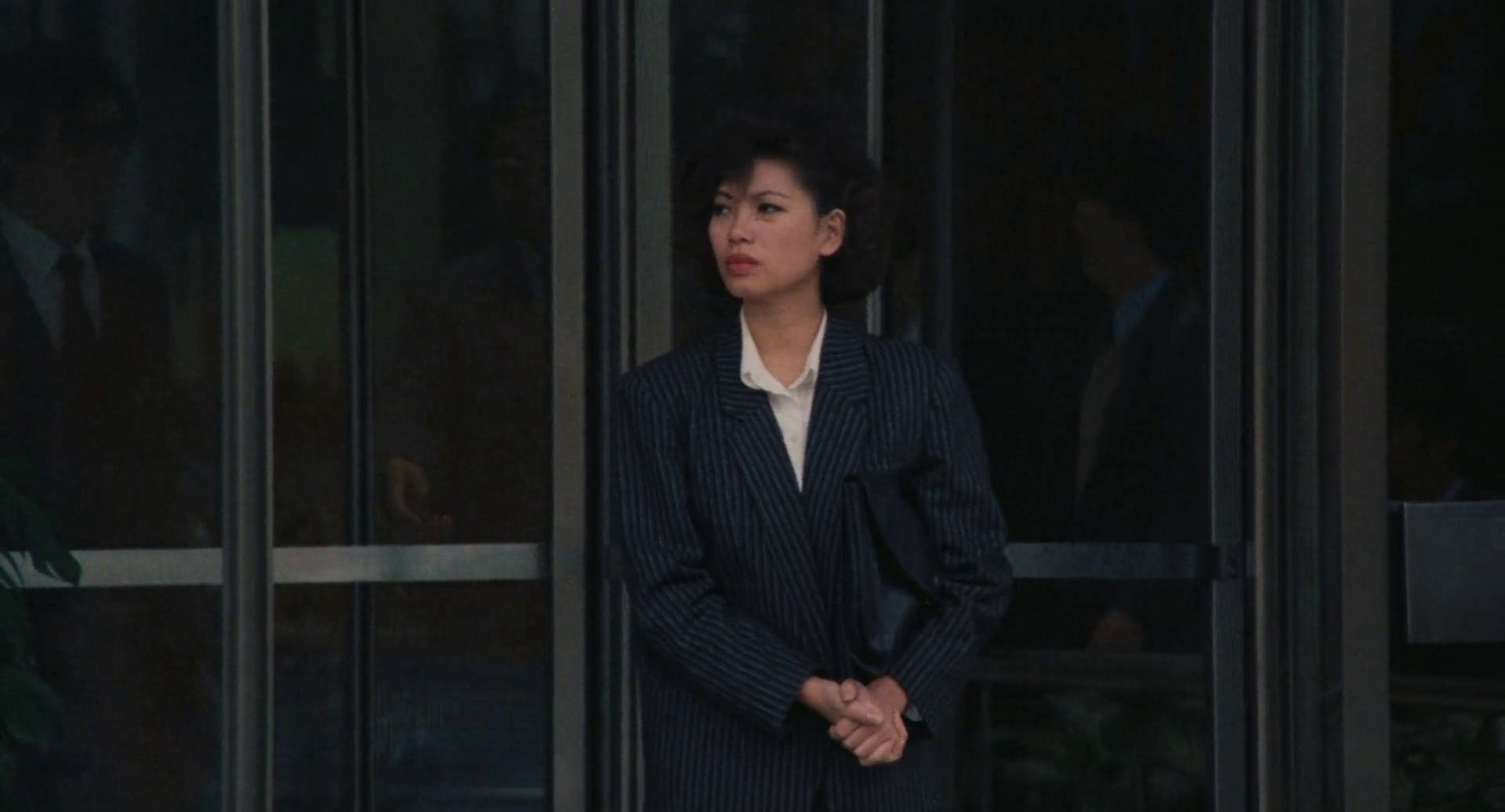
A silhouette in white seen from behind. Wide-legged white trousers and a white shoulder-padded blazer. Low white kitten heels clattering on the tiles of an empty apartment overlooking a similar tall building of flats. From behind oversized sunglasses she sizes up the apartment and begins to list the electronic appliances that could fit in a corner of a room, all the ambitions and comforts of modern life, a life she seems to have been long settling in. She is not alone. He is casually dressed and, as he is mimicking a baseball player with his swinging arms, does not seem to share her enthusiasm and ideas of a dream-life. That’s the opening scene from Taipei Story, a film that captures a city and a couple with contradicting world views, a city and a couple caught between past and future, between tradition and modernity, between troubled historical identity and Western newness. A broken city, a broken relationship.
 

Tsai Chin in “Taipei Story”, 1985. Evergreen Film Company


Chin (Chin Tsai) is an upwardly young professional working for a Taiwanese property-development firm. Her job will afford her to live in this new apartment, having just moved out of her parents’ house and from under the influence of her domineering father. Chin wants financial independence and success. But the present and future can not easily be cut from the past. Her boyfriend, Lung, played by Taiwanese filmmaker Hou Hsiao-hsien in a rare on-screen performance, is one person in her present who is stuck in the past, a washed-up baseball player owning a small textile business, hanging on to his glory days (his favourite past-time is watching taped American baseball games), on old friends and family ties. He is not interested in her aspirations, which are reflected not just in her apartment, but also in her friends, in her rebellious young sister (kids are a dominant force in adopting a new look with incredible verve and a marketing man’s dream in the newly westernised culture) and in her clothes. In a rare moment when their worlds converge, he awkwardly collects her colleagues’ business cards which they hand him over when they all meet for a drink, all of them still in their suits and ties; he has clearly made an effort to swap his polo t-shirts and baseball jacket for an unbuttoned shirt and blazer.

She is all about change, the modern woman who can assert herself, in pursuit of an image and a life that convey Western values and money. She is the new woman who does not seek to please, who defines her personality and an unyielding authoritativeness with her unsmiling face and power dressing. Even her exercising on the living room carpet in sweatshirt and sweatpants is somehow the personification of the American image of the 1980s working woman who works out before going to the office. But as it often happens when a style transfers to another culture, there are certain subtleties that make the new version more interesting than the original. Suits in two pieces, baggy blazers, pressed collars, comfortable-fitting woolen sweaters (one such sweater worn over a white shirt, sleeves rolled up, a matching straight-cut, knee-length woolen skirt, black hosiery and flat, laced-up shoes, looks incredibly modern, more 2000s than 1980s) and shielding sunglasses – she has an entire selection to choose from every day. They are more symbolic than useful, as the smog is more present than the sun in Taipei.
 

Tsai Chin in “Taipei Story”, 1985. Evergreen Film Company

 
Edward Yang’s view on the rapid westernisation of Taiwan is not very optimistic. The call of life abroad is ever present even as the country, mirrored in a Taipei cladded in flashing signs, almighty brand logos and baseball fields where children play the game, and enveloped in American music blasting from smoke-filled bars, hurtles towards economic growth.

Both Lung and Chin are thinking of going to America. It seems odd that they even have plans for a future together, as they spend more time apart than with one another. He’s had a taste of America when he went to visit his sister and her husband who has asked him to go into business with him. But the prospect of working under his brother-in-law, or the recounting of an episode where his brother-in-law shot and killed a black man who was trespassing and was then acquitted on account of self-defense, reveal the mirage rather than the attainability of the American dream and freedom. But it is very clear that globalisation is there to stay and that American power has brought change that can not be undone.

Chin’s way, ladder-climbing in the corporate world, sadly seems to be the only way. The specificity of her clothing makes the film very prescient. She is wearing her white trouser suit once again in the closing scene, as she is making career plans with her former boss who is setting up a new business in town. Peering from behind her sunglasses from another towering construction, this time a glass office building, her over-conscious image remains the most palpable promise in a globalised post-modernity laden with promises that life may not want to keep.
 

Tsai Chin in “Taipei Story”, 1985. Evergreen Film Company


MORE STORIES

The birth of the androgynous look: Greta Garbo in “The Single Standard”

More grunge than power dressing: Kim Basinger in “Nine 1/2 Weeks”

The Armani aesthetic and film costume appropriation: Sam Shepard in “Voyager”


Posted by classiq in Film, Film costume | | Comments Off on Power Dressing and Sunglasses after Dark in “Taipei Story”

Art Will Set You Free: In Conversation with Photographer Bill Phelps

Tracy Perrizo photographed by Bill Phelps


As life was turning constantly during this past year, when at times there seemed to be no belief in hope, but only in the present, one of the things that constantly kept me looking, hoping to see beyond what I saw was my on-going conversation with photographer Bill Phelps. From the very beginning, we both agreed to keep our conversations in writing, in mutual appreciation of the time we would afford each other to truly carve out time and space for a little more communication, for letting our thoughts form, for coping with everything that was going on in life. Bill’s creative process came up in our interview, but it was his openness and honesty about his feelings, about navigating life, about his New York City bar that stood as Café Moto for more than a decade before it had to close last year, about homeschooling his daughter, about a day’s perspective that started from sitting by a burning fire, that made me fully understand that his creativity came from and was reborn from his perception of everything in life.

His photography is like that. It has no hurried departure, nor a preconceived destination. It’s more like a wondrous path in which spontaneity, intimacy and a truthful eye are at play time and again. It’s about discovery, letting something unfold, full of the unexpected, but always looking for what’s genuine and real, and relating to people, to the human part of people. I remember how moved beyond words I was when Bill wrote to me one day, telling me how emotional a recent shooting had been, the first one since lockdown, when he was able to be among people again, sharing with them the excitement of feeling alive and creating. Creativity is his basis of self-expression. Affection runs through all of his work, sprung from his desire to express himself, to give everything he can give, to let it go and be part of life, art and heart his greatest companions, and resulting in such a deep and profound experience for everyone being part of, witnessing or viewing it.
 

Photograph by Bill Phelps

 
For as long as possible, he hung on to analog photography, which I believe has enabled him to shape his stories, like a maker. He is a storyteller. The most important thing is to tell a story – through light and shadow, through a personality, a gaze, a mindset – that genuinely talks about life, and being, and that he can share with people through his pictures. He doesn’t just capture something or someone, it’s more like a connection between him and his subject and the space around them. He captures what makes sense to him, just a moment of pure sincerity (even when he is shooting a landscape), just an evanescent moment of life.

His photos of musicians, actors, artists, performers, people and places display the diversity of his work. His latest creative project, started in the course of last year, is a food and culture magazine (Meal magazine) with really no pictures of food started by a local man, “an opportunity to stretch some new muscles and work on the project as a whole”, he tells me, art directing and illustrating it almost entirely with his own photographs. As an artist, he feels he must try different things. He is not after perfection, but awareness, truthfulness and emotion.

He lights up when he talks about his daughter, revealing a special bond that can once again be traced to his photography. His portraits of women go beyond physical beauty and his perception of women nurtures not only our own perception of his models and muses, but them as well, leading to the most powerful thing, to feeling something, to an inner truth and the beauty of life itself.
 

Jazz singer Lizz Wright. Photograph by Bill Phelps


If you could be anywhere in the world right now preparing to shoot, where would you want to be?

As the days continue to shape us, in these ever so surreal times, I find I want to make pictures more and more a part of the fiber of my life. Not just creative inspiration rising to the top, but a very real part of my well being. I would be on the North West coast of France, with my daughter, absorbing the new. I would be shooting for myself, for a book, something personal.

Your words remind me of what another photographer told me some years ago, saying that the lightness of not having to be creating something important reminded him of the joy he discovered when he first picked up a camera. Does that relate to you?

By important I think you might mean for an assignment? For someone else?

Yes, I believe that’s what he meant.

I have always felt whatever I was doing was important in the idea that it will no matter what be a part of my communication, whether it personal or commissioned. This conviction is not always easy to maintain. It is often we are hired to be a vehicle for someone else’s very literal idea, often overlooking the nuance the photographer can bring, from the more personal side. This is an age old struggle no doubt. I will never forget what it felt like when I made my first pictures in high school, the thrill, I saw my whole life flash before my eyes. A powerful part of the excitement was in what I imagined I could bring to an audience, whether personal or professional.
 

Marie-Yan Morvan photographed by Bill Phelps


Eve Rydberg photographed by Bill Phelps


Was that the moment you knew you wanted to be a photographer, in high school?

I think I had a sensitivity to the idea of “gathering” images since I was very young. Not very different from now, I am always collecting memories. I grew up painting and drawing, but it was when I found the camera in high school that I knew this would be my path. It was true magic, all of it.

What does it take to go there, to want to tell a story through your photographs?

Storytelling is at the heart. I feel my work is always trying to communicate. The implied narrative is always running through me, the sensory, the lyrical. This can come through character creation, setting, mood, but also through design. I often feel like a designer with a camera. I take great satisfaction in experiencing design, architecture, furniture, graphic design, typography. I find it very powerful, informative, exciting.

Do you always carry a camera with you?

I have not always carried a camera with me, but do so now. I spent many years shooting large format as my main tool. I traveled extensively with a mountain of equipment. I came to digital quite late, it has taken me years to feel comfortable with it. The large format view camera was made by hand, rosewood, nickel plated brass, ground glass. As I admire the technology of the new cameras, something I never thought I would see in my lifetime, but I am not remotely romanced by them.

Do you shoot only digitally now?

I shoot digitally now with the occasional polaroid luxury when the film is available. I miss the 8×10 format more than anything.

Photograph by Bill Phelps


Do you search for a photograph? Is simply being observant and taking in the world around you enough for taking a good photo?

Awareness is key, to life, to creative process, everything. Shadow and light, the weather, movement, even scent, can be a part of the process, they can all influence each other. When they are woven together they can tell a unique story I might not have thought of, but they are all tools to be honed. It can be somewhat symphonic, each element a part of the bigger narrative. Design is a conscious sensitivity for me. A naturally flowing experience of shooting in the street may very well lead to a meditation on a still life to be created later, a contribution to the narrative.

The photographer is much more a creator than he is a witness, right?

I think it again comes to awareness. I am constantly aware of what is inherent in the day to day, exceptionally aware of beauty, composition, design, balance, symmetry. It is all a part of my well being, my meditation, a vision, a plan for how I want to live. So, I think they work together. In the case of a journalist who takes it upon themselves to deliver the truth of a real life situation the approach might be different. In the case of the creator, there is also truth.
 

Calabria. Photographs by Bill Phelps


Calabria. Photograph by Bill Phelps


I find that your style of photography, the way you use the smoke that snakes from the bustling Tokyo streets as a way to manipulate the saturation of light, or your striking, abstract black and white photography, or the way you shoot colours that complement each other, or shooting through shadow a street scene in Calabria and showing just the face of a woman walking and concealing half of the scene, creates mystery and evokes a story, it leaves you with the desire to discover more. That’s not usual in photography because not all photographers are storytellers. Is this something you have been perfecting or has it come naturally to you from the beginning?

I love to get lost in spaces in-between, caught in light and shadow, or darkness, or in a space of shallow focus for example. I was immediately attracted to the focus field inherent to the 8 x 10 camera, different from anything else in my personal experience. It has such a otherworldly quality to it. I tended not to use its capabilities of manipulating focus, tilt, shift, swing, the movement of the standards. It already has a special poetry when used as is. It offers a unique meditative space as well. Pause, clarity, patience, privacy under the dark cloth, hidden in plain sight, are all a part of living with this tool. I suppose the “suspended space” I feel so strongly about has influenced the use of other elements, such as those you have mentioned. The story is often in the undefined, or in the blackness of the dark.

The set of pictures from Calabria is a good example. Not only of the approach, but also the
unique offerings of my client to engage in a conversation about narrative beforehand. My editor at Conde Nast Traveler brought some unusual and exciting references to the table, it’s always a gift to have this kind of communication. She threw both Homer’s Odyssey, as well as Alexander Rodchenko at me in our preproduction meetings. She talked about how Calabria, particularly Tropea, had a “built in” dichotomy similar to Naples. The shiny life of the beach front, contrasting the somewhat seedy backstreets. Tropea sits on the strait of Messina, the same waters Odysseus wandered in Homer’s tale. All of this came together in the thought of trying to illustrate this dichotomy visually, and with a kind of mythological twist. In Greek mythology the world is divided into three parts, the overworld, the underworld, and the heavens. I loved the idea. After giving it some careful thought, I realized there would be a challenge in the final edit, fearing it might be out of my hands, and possibly threatening the original idea. I decided to take it one step further, and try to capture the idea of these worlds in single frames. The woman in the triangle of light against the wall, the man walking on the edge of shadow along the beach, the dwelling on the cliff inverted in the prism of water, Mount Aetna releasing its power, the young girl at dusk – as though she’s trying to get home before the doors to her world are locked for the day. The whole experience was a truly special one for me, and I thank both Linda Denahan and Yolanda Edwards at Conde Nast.
 

Woman in Calabria. Photograph by Bill Phelps


I always sense that there is so much depth and history and meaning behind your photographs, as you have demonstrated above. Do you ever feel the need to add words to your photographs?

I have never been one to title my pictures, only when pushed by a gallery to do so, I think the work should speak for itself. I would like to at some point mix text and pictures in a storytelling way. I am however curious to hear what the work inspires in other people. I do find it a personal responsibility to find a way to communicate, to speak about my work, as we are doing here. I find great satisfaction in conversation, I feel it to be a lost art in itself.

Your portraits capture beauty in so many forms and go beyond physical beauty. Do you try to get to know someone a little before you do a portrait? How close do you have to get, physically, emotionally, mentally, in order to be able to tell a story through your portraits?

It is always a luxury to have a connection to the subject. Chance, spontaneity, and luck can all be helpful elements. On one assignment in Mexico City, I was moving through the streets as an afternoon storm was building. There was a pressure in the air, and a kinetic energy among the people. There seemed to be so much electricity in the air, and I was feeling it all. The light was shifting, the wind was shifting, it was all very cinematic, nothing was planned. I came upon an outdoor art installation, a garden of vertical metal poles, white in color against a black wall. I noticed a woman through the forest of metal. I could feel something, and wanted to make a photo. I approached her and simply asked. She was immediately open to it, and I could tell she was no stranger to a camera, though I was not sure what she did in her life. There was a sense of urgency, the rain was starting, and the wind was blowing harder. We simply aligned, and made a strong connection in a fraction of a second. I can feel that day, the moment, in the photo, in her eyes.
 

Woman in Mexico City. Photograph by Bill Phelps


It is incredible the power a photograph has to transport you back in time to a precise moment. But do you ever feel that an ever changing interpretation of a memory of a moment is more favorable, in the long run, than that of a photographic image?

Yes, I do. I feel a photographic image can have a similar trigger effect, as does scent for example, or music. For me, inspiration can come from a memory just as powerfully as it can come from having another sensory experience. As photographers, making memories is kind of built into our craft, but we are also storytellers. Sometimes without preconception we can find ourselves in worlds of surrealism, or magical realism. This is part of the experience as a member of the audience as well as the creator. When a work of art offers me options or ways of thinking, or even living, it is alive, and forever changing.

Do people usually respond well to the camera, as the woman in Mexico City did?

For the most part, yes. I have had wonderful experiences with people who are strangers to me. I find that taking my time, integrating myself with their environment when I have the luxury to do so, creating a curiosity, can often be an invitation. If they sense you are safe, and are involved in a creative process, they sometimes want to be a part of it. I can feel when there is a connection.
 

John Malkovich photographed by Bill Phelps


Does your process differ when you are photographing actors? How much directing is involved, how much do you have to work to get them into a body attitude and language?

This is always a tricky space. Again, I can feel when there is a connection, everyone is different. It is much easier to work with actors one on one, rather than in a group, especially if they are high profile. There is often an unspoken tribal energy among them. This can work for and against me. Sometimes it creates an exciting atmosphere, when other times it only takes one person to bring the morale down for the whole room. There is an incredible amount of ego involved, and it is not always positive. Again, everyone is different. I have found my best experiences to be without anyone else around, no publicists, stylists, personal assistants. When I first shot Bradley Cooper, I shot him in my own cafe bar, which I had designed and built myself. He arrived by subway with a backpack, alone. I used my own clothes, my own motorbike as a prop, shooting in my own bar, it was a rare and wonderful experience, we got great shots. This is not always the case. Usually it’s ten minutes, and six hands on the artist at any given time. It also can have something to do with why you are making the pictures in the first place, who you are shooting for. I have had photo editors show great trust in me, this is often a key element. Most of my experiences have been with men, I am eager to work with more women, it’s quite different and suits me well.
 

Bradley Cooper photographed by Bill Phelps


You say this was your first time when you photographed Bradley Cooper. Are there people you have photographed many times over the years? Is your process different when you shoot someone you know well?

There have been periods in my life when I have felt the power of a muse. There have been a very small handful of women mainly, who have been truly inspirational to me in this way. Where they are a part of the concept from the beginning. They appear to me as I am thinking about the picture I want to craft. Sometimes I am surprised by someone, the unexpected happens with someone I don’t know. A picture is made and their spirit rushes to the front to introduce itself.

An example of someone I have worked with on several occasions is the musical artist DESSA. I have shot three albums for her, and there is definitely trust, an inspiration, an electricity between us.
 

DESSA photographed by Bill Phelps


Is that why you say you would like to work more with women, because of those inspirational times you have experienced? How is it different working with women?

My experiences collaborating with women are something unto themselves, very different form working with men. It is a more “spiritual” experience. I think one of the most powerful things about working with, or living with for that matter, that spiritual energy is that everything seems possible. I find women are connected to the world, the universe, in a way that is truly special and incredibly powerful.

I perceive your photography as a microcosm of human experiences. And that the woman has a special place there, as you remarked, it just makes perfect sense. In photography, as in life, the eyes are not enough, you have to feel, to free yourself, to go with intuition, to hold your breath. A way of understanding, living, and expressing it visually. That’s how I see your photography.
 

Bill Phelps and his daughter, Hazel. Photograph by Bill Phelps


Do you often find yourself turning your camera to your daughter, eager to capture moments, or do you keep your most precious shared experiences just to yourself?

I am always wanting to photograph her, she is stubborn like I am, and can be very convincing, so it’s not always smooth. The older she gets, the more sensitive it is. I’m always hoping for a bridge, a comfort level to be found, I’m so inspired by her.

Does Hazel share any of your enthusiasm when it comes to photography?

She does, she loves it, along with many other forms of artistic expression, she is innately sensitive to the power it holds. She often surprises me with her storytelling through image.

Maybe it’s just me, but I feel that at the moment women have monopolized the discussion about their daughters, about being parents of daughters, and I have to admit I have a little problem with that, as someone who has always had a great relationship with my father, grandfather, brother and husband, have always been admired and treated admirably and equally, protected and given total freedom, and I, in turn, admired back. And because I am a mother of a boy, I would really want to hear the point of view of a father in regard to his daughter.

I grew up with two very strong women. With fire and strength comes a conviction, but can also come with feeling conflicted. My mother always showed us both, my sister and I, that “art will set you free” and she is right. She raised us alone, I have never met my father. I do believe that my sister (also an artist) and myself are two of the most intense people I know. It has never been easy for either of us, in many ways – especially with each other. I believe I had a good window into what the possible options could be for me, as an adult, through my mother. She was direct, caring, honest, kind, but most of all trusting. I feel there is no greater bond you can create with your child than trust. My mother trusted me in ways I can hardly believe now that I am a parent, but I am unbelievably grateful. As selfish as it sounds, I always wanted a daughter, it was easy for me to imagine a lifetime with a girl. I believe I have a great deal to give to a boy also, but the idea of a friendship with a daughter has always been truly, deeply inspiring. There is a depth I can see in her very naturally, and I stare into her eyes often seeking her wisdom, I simply don’t find this as naturally with men.

How has fatherhood changed you as an artist?

Having children is unquestionably a powerful creative process in itself. I have wanted children for as long as I can remember. I can say it has made me a better person in that it has given me a new sense of purpose. It has given permission, and in many cases urgency, to use everything I have inside of me. I no longer have the option to push aside uncomfortable or inconvenient distractions or discomforts when the safety and nourishment of a child depends on moving through them, rather than around them. In this, I am forced to live in the present, to use every bit of my imagination, my sensitivity, my courage, to get to the next moment.

In my life as a working photographer, I spent a great deal of energy, most of it wasted, imagining the next job or accomplishment. I knew deep down that what I really wanted was to slow down and simply listen to myself. I’m more closer to that now than I have ever been. I dream in shapes and shadows, messages, truths, stories, light. We are much too concerned with our audience, especially now, in this age of desensitization, and the ever powerful platforms of social media. I find now that I am letting my own truths rise to the surface in a more fluid way. My relationship to them has always been there, but the conversation is different now. I will continue to hear my mother’s words that “art will set you free” and speak it truthfully to Hazel along the way.

I hope your next journey will take you to the North-West coast of France, with Hazel, in wander and tranquility.


Website: billphelps.com | Instagram: @billphelpsstudio


MORE STORIES

La enfermedad del domingo: In conversation with costume designer Clara Bilbao

Today everything exists to end in a photograph

On and off set with unit still photographer Merie Weismiller Wallace

Posted by classiq in Interviews, Photography | | Comments Off on Art Will Set You Free: In Conversation with Photographer Bill Phelps