The First Good Film of the Year I’ve Seen So Far

Sunday Illness 2018 
There is something about contemporary Spanish films that fascinates me. I am thinking about three movies in particular. First, there was Pedro Almodóvar’s 2011 La piel que habito (The Skin I Live In), one of the best films of the last decade, my favourite Almodóvar film and the director’s most polished, deepest and most unsettling work. Then, there was Contratiempo (2016), of which I wrote about here. The last one I’ve watched and the first good film of the year I’ve seen so far is La enfermedad del domingo (Sunday’s Illness), written and directed by Rámon Salazar. There are a few elements that are present in all these films and the reason of my affinity: a dark thread, beautiful, dense photography, with a monochromatic, austere composition, in pace with the narrative, the juxtaposition of majestic landscapes and elaborate interiors, an undercurrent of suspense.

I don’t believe in half measures and I believe you can tell if a film is good from the very beginning. We first see Anabel (Susi Sánchez, who also starred in La piel que habito) walking the halls of her palatial home impeccably dressed for the evening and wearing towering heels. She stumbles briefly. I shrieked. A subtle but distinct foreshadow of her imperfect perfect life, a preordained sense of future events. From then on, I did not know when almost two hours, the duration of the film, had passed.
 
Sunday's Illness 2018

Sunday's Illness 2018

La enfermedad del domingo 2018 
Anabel abandoned her daughter Chiara (Bárbara Lennie, who played in both La piel que habito and Contratiempo) when the girl was 8 years old. Thirty-five years on, Chiara finds her mother and she has just one unusual request: to spend ten days together in a remote house in the mountains. The two protagonists deliver extraordinary, full-bodied performances, contained on the surface, simmering with tormented emotions beneath (which, at one time, they unleash through dance, Anabel on the sound of Dream a Little Dream of Mine, and Chiara on the beat of Nena’s 99 Luftballons).

This film is a haunting examination of an enstranged mother-daughter relationship that avoids melodrama platitude, a beautifully crafted, thrilling chamber piece in which silence speaks as much as or even more than words, a powerful psychological and visual story (cinematography by Ricardo de Garcia, costumes by Clara Bilbao, production design by Sylvia Steinbrecht) that takes you to an eerie state of mind fueled by the picturesque countryside, that seems to be permanently wrapped in a blue glow, and by the painterly, dimly-lit interiors of the mountain cabin.

I think these images will give you an idea of the atmosphere in the film and hope they will make you curious.
 
photos: movie stills | Institut Català de les Empreses Culturals, Instituto de la Cinematografía y de las Artes Audiovisuales, Zeta Cinema

Posted by classiq in Film | | 2 Comments

Sounds of Summer

Summer playlist 
What are your plans for the summer? No, don’t answer that. I don’t like that question. So many times what you plan is an entirely different thing from what you get to accomplish. That’s not necessarily bad. It can be a reminder of sorts to take each day as it comes, especially so in the summer. Of course this doesn’t mean you don’t have to make plans, quite the contrary, just keep them to yourself and live the summer the way you want it. And maybe you can tell others later about it. Or you can do it through songs. This is something I do like to talk about.

This is not a proper summer playlist, because I am not into lyrically exuberant and unchallenging soundtracks, the kind that summer may seem to call for at first glance. These are rather the kind of vibes that hold certain summer memories or that anticipate the days ahead, concerts that have marked past summers, songs that always play in the car during a road trip, a favourite summer movie soundtrack that makes me rewatch the entire film in my head, a song (Nena’s 99 Luftballons) that will remind me of the first good film I have watched this summer (more about that later this week), or a music video that simply captures the feeling of Summer, like The Stones’ Ride ‘Em On Down. Roll down those car windows and enjoy the ride!


Dreams – The Cranberries / Are You Gonna Be My Girl – Jet / So Far Away – Dire Straits / Iris – The Goo Goo Dolls /
Ride ‘Em On Down – The Rolling Stones / Mysterious Ways – U2 / Heroes – David Bowie / Mrs. Robinson – Simon & Garfunkle /
Waitin’ on A Sunny Day – Bruce Springsteen / Barcelona – Giulia y los Tellarini / That Look You Give That Guy – Eels /
The Last Day of Summer – The Cure / The girl from Ipanema – Frank Sinatra / Because the Night – Patti Smith /
99 Luftballons – Nena / Oh, Pretty Woman – Roy Orbison / Peter Sarstedt – Where Do You Go to (My Lovely)


photo: Classiq
 
Classiq Journal playlist

Related content: Summer Playlist / Listen to All This Jazz / Summer Soundtrack
 

Posted by classiq in Playlists, Sounds & Tracks | | Comments Off on Sounds of Summer

Editorial: A Star Is Born

Editorial - A Star Is Born - Joan Crawford by Clarence Sinclair Bull 

The Editorial: thoughts, short stories
or essays about the world of cinema


Adrian (Gilbert Adrian by his full name) created some of the most glamorous gowns in films and he was a master at designing a costume to help the actress feel the role she was playing. His wit and craftsmanship were unparalleled, his designs reflecting no influence other than his own originality. He remains an inspiration for so many designers of today. Adrian’s use of black and white was dramatic and exquisite, but he was an excellent colorist, too, designing in rich and vivid palettes. He also knew that some colours, such as dark purple, would come across better than black in black-and-white films. And there was one other aspect that he kept in mind. Although the audience wouldn’t see these colours, the actresses did, and Adrian knew how to exploit colour for its psychological effect. He knew that there had to be a synergy of costume, character and individual star in a movie.

Many actresses preferred certain colours for their clothes. Jeanette MacDonald liked white, Jean Harlow favoured black, white, navy blue and maize, Greta Garbo seemed happier when her costumes were made in shades of olive, burgundy or purple. Garbo’s legend began at the same time as Adrian’s when he designed his first costumes for her in A Woman of Affairs (1928). As for Joan Crawford, the other actress his name is often associated with, and whom he also dressed in many films, she favoured blue, especially the blue-green “Adrian blue”. Just like Garbo, Joan Crawford had the kind of androgynous beauty that sparked his creativity. He liked to dress Crawford in classic lines that set off her strong features, like the broad-shoulder look, his invention and one of his signature styles, which she also adopted off-screen. Joan Crawford learned early on the importance of the star-making machinery, of which costume design was a key element. “I never go outside unless I look like Joan Crawford the movie star. If you want to see the girl next door, go next door”, she reportedly said.

photo: Clarence Sinclair Bull | portrait of Joan Crawford, 1933

Posted by classiq in Editorial, Film | | Comments Off on Editorial: A Star Is Born

M Train

M Train by Patti Smith 
I loved Patti Smith’s Just Kids, but I loved M Train even more. She is such a wonderful writer. She takes us places, many times to Greenwich Village, for many cups of coffee at Café ‘Ino, but also to Berlin, Reykjavík, Tangier, Mexico City or Tokyo (the leitmotif of the café recurring everywhere). She talks about a favourite book (like Haruki Murakami’s The Wind-Up Bird Chronicle), and then another (like Peter Bowles’ The Sheltering Sky), and another, and another, and about writers and artists, so we are treated to a beautiful literary incursion. We even discover how she met Katharine Hepburn when working as a clerk at Scribner’s Bookstore, where she used to gather books for Katharine. “She wore the late Spencer Tracy’s leather cap, held in place by a green silk headscarf. I stood back and watched as she turned the pages, pondering aloud whether Spencer would have liked it.” We watch one too many detective series. She praises Akira Kurosawa and about Ran (his adaptation after King Lear) she says that it is an epic that might have caused Shakespeare to shudder (I agree). And we feel her grief, still, so many years (twenty) after losing her husband. She’s nostalgic, but has a “natural optimism” in her as well, as she herself writes.

She somehow reminds me of the characters in Yasujirō Ozu’s films. There is something so nobly quiet about her. It seems that hardly anything is allowed to interfere with her interior life and art … and coffee, and this lack of artifice, her pared-down way of being is what draws you into her story, into understanding the soothing nature of life, despite whatever may come its way.

I usually keep a notebook and pen within arm’s reach when I read a book so that I can write down quotes and different references and I did just that with M Train for a few chapters, then decided to read it uninterrupted. I didn’t want to interrupt that beautiful, natural flow of the narration, floating between present and past. I came back after I finished it to take notes. This book has simply become one of my current favourites.
 

“I believe in movement. I believe in that lighthearted balloon, the world. I believe in midnight and the hour of noon. But what else do I believe in? Sometimes everything. Sometimes nothing. It fluctuates like light flitting over a pond. I believe in life, which one day each of us shall lose. When we are young we think we won’t, that we are different.”

 
photo: Classiq
 
Classiq Journal

Related content: Just Kids / Chronicles, Volume One / Life Lessons from Akira Kurosawa
 

Posted by classiq in Books | | Comments Off on M Train

A different Bond girl: Carey Lowell in “Licence to Kill”

Bond girl style-Carey Lowell as Pam Bouvier in Licence to Kill 
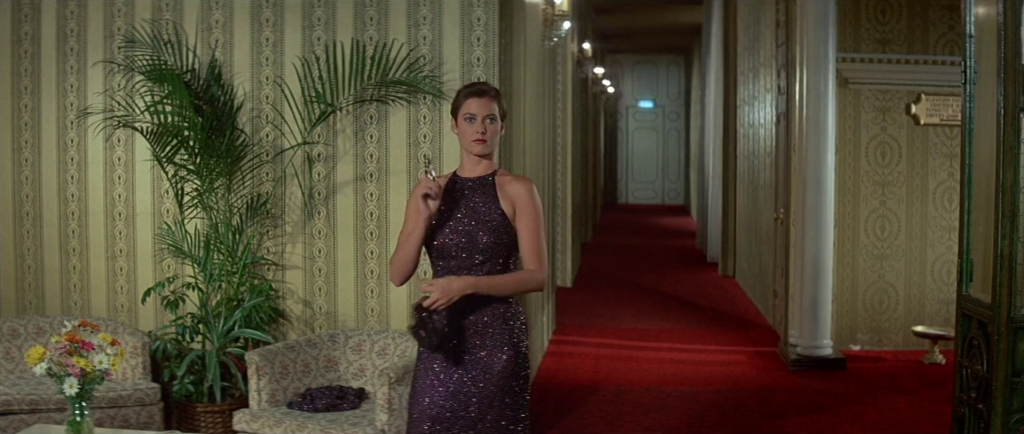
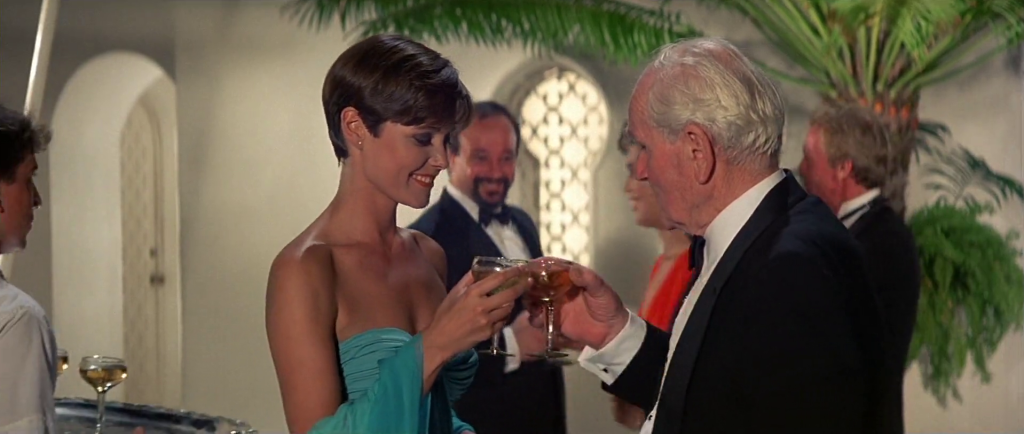
Like The Spy Who Loved Me (1977) before it and Casino Royale (2006) after it, Licence to Kill (1989) introduced us to one of the best and one of my favourite Bond girls, Carey Lowell. She saves Bond’s back the first time they properly meet, wears her hair cut short and a Berretta up her not one, but two heart-stopping evening dresses and downs a vodka martini in one go, so wouldn’t you agree?
 
Bond Girl style - Carey Lowell in Licence To Kill

Carey Lowell as Pam Bouvier in Licence to Kill

Bond girl Pam Bouvier-Carey Lowell in Licence to Kill
 
The first Bond film based not on an Ian Fleming novel or story title, but on a frequently used phrase within the novels, Licence to Kill is one of the best movies of the franchise, less fun and far-fetched, darker, grittier, using more reverberations and echos of Fleming’s novels, allowing James Bond to function as a human being with fragile emotions (and dress accordingly to what is happening to him). It is a disruption in the narrative tradition of the series, in the vein of In Her Majesty’s Secret Service (1969) and Casino Royale.

“I wanted to make the movies much more realistic and believable”, said Timothy Dalton, who took over the James Bond reins only for two films, The Living Daylights (1987) having been the first one. “Over 25 years these films and this character had gone off down lots of different avenues. There was a whole period where they became rather fantastical and gimmicky. The humour had become too exaggerated, too tongue-in-cheek. When you go back to the books, you’re dealing with a real man, not a superman; a man beset with moral confusions, apathies and uncertainties, one who is often very frightened, nervous and tense.” He takes it personal when his friends get hurt and he goes after the bad guys because he wants to avenge his friends. That’s why we want him to succeed, not because this is supposed to happen in a Bond film. And that’s what makes Licence to Kill a credible and substantial Bond movie.

Screenwriter Michael G. Wilson says they modeled Dalton’s Bond on the hero of Kurosawa’s film Yojimbo, “where the samurai comes to town and, without overtly attacking the villain, does the seed of distrust, then watches as the villain brings himself down.”

Everybody’s goal at the time was to change Bond’s image, to make it more realistic. They indeed brought more humanity to 007, but Timothy Dalton also made a tougher, darker, more serious, and, in my opinion, a damn good Bond. As Fleming insisted, James Bond was “a skilled professional: ruthless and sardonic in his work; gentle, witty, and stylish off duty.” They toughened up the image of Bond from the style point of view as well, getting away from the gentlemanly spy. They changed Bond’s tuxedo look by opening the collar, and even taking the jacket off so Dalton was in his shirtsleeves. His other looks have often been considered far from good for the cinematic Bond. But, in concept only, many were actually pretty accurate for the literary Bond, from whom Dalton drew inspiration, recalling Fleming and his literary creation. It is interesting how both Timothy Dalton and Robert Davi referenced the book Casino Royale as inspiration for the film and for their characters, 17 years before it was finally turned into a Bond film, a new type of Bond film, with a story anchored in reality, and with a Bond who would once again be darker, sharper and edgier, but also more human than the earlier Bonds, except for Timothy Dalton.

Dalton’s partner on screen, Carey Lowell, said of the new Bond: “You usually see Bond as a cool-headed secret agent. Sean Connery always came out unscathed and sort of dashing, and Roger Moore was untouchable in his white suits. Here Bond is not as clean and pretty. He looked like hell. It was not anything a Bond audience had seen before.”
 
Bond Girl style-Carey Lowell in Licence To Kill

Bond girl style-Carey Lowell in Licence To Kill

Bond girl style-Carey Lowell in Licence To Kill 

Another element that moved the Bond tradition further, reinterpreting key features in the films, was the Pam Bouvier part, which effectively dehistoricised the Bond girl character. We see a shift from the Bond girl type of Ursula Andress in Dr No (1962) and other rather purely decorative women 007 is usually associated with. It had also happened with Barbara Bach in “The Spy Who Loved Me” and Eva Green would follow in “Casino Royale”. Carey Lowell’s Pam Bouvier is capable, confident, and competitive with Bond, an edgier, feisty, self-sufficient and credible modern-day Bond girl.

“I portrayed Pam as gritty and tough. When she meets Bond at the bar, she’s wearing a black leather vest and pants, and carrying a sawn-off shotgun. She’s flinging men over her shoulder and smashing bottles on their heads. Quite different from other Bond girls,” said Lowell of her character, a former army pilot and CIA agent. After the leather vest, Lycra leggings and leather calf-high boots from the bar, Pam appears in trousers again, beige and wide-legged this time and paired with a white shirt. When Bond pays her off for flying him to Isthmus, he throws in some extra cash telling her to buy herself “some decent clothes”.

She reemerges with a short hair-cut, a navy and white power-suit-like dress and later on in a black rhinestone-clad gown. Robert Davi, who plays the villain Franz Sanchez, recounts how the idea for the side-slit, backless dress Carey wears at the casino came from the dress that Talisa Soto, Sanchez’s lover and the other subject of Bond’s attention, wore to her audition (director John Glen brought Davi in to consult him in casting the role of Lupe). “In one scene she wore a long evening dress, then ripped off the bottom and it became a short little dress.” Pam looks gorgeous in her dress, but its practicality (it is cleverly designed as beaded rip away gown) also shows that she’s a resourceful ally for Bond.

It is however another halter-neck black dress that I find more beautiful (see the top image in this article), providing another perfect match for Bond’s tuxedo. And my second favourite Pam Bouvier costume in the film is the under-the-knee-long greige dress with a deep v-neck, which Pam is wearing in a few action scenes. Both sophisticated, practical and lean in its modern simplicity. But don’t you love it how time and again she goes back to the trouser look? She does it again with another ensemble of wide-legged pants and white shirt. She’s still a tomboy, and even when she trades in her combat uniform for a sparkly gown, she keeps the attitude and makes sure that everyone is aware of it by having her hair cut short.
 
Bond girl style-Carey Lowell in Licence To Kill

Bond girl style-Carey Lowell as Pam Bouvier in Licence to Kill

Pam surprises Bond with her new look after he tells her to buy herself “some decent clothes”.

Bond girl style-Carey Lowell in Licence To Kill

Bond girl style-Carey Lowell in Licence to Kill 
sources: The book The James Bond Archives / Revisioning 007: James Bond and Casino Royale by Christoph Lindbergh / Carey Lowell interview, Cinefantastique magazine, 1989 / interviews with John Glen, Michael Wilson, Timothy Dalton and Carey Lowell on the special features in the film collection Celebrating Five Decades of Bond

photos: movie stills | United Artists
 

Bond Girl style 
Related articles: Eva Green in Casino Royale / Barbara Bach in The Spy Who Loved Me / Naomie Harris and Her Alt Bond Girl in Skyfall
 

Posted by classiq in Film, Film costume | | Comments Off on A different Bond girl: Carey Lowell in “Licence to Kill”