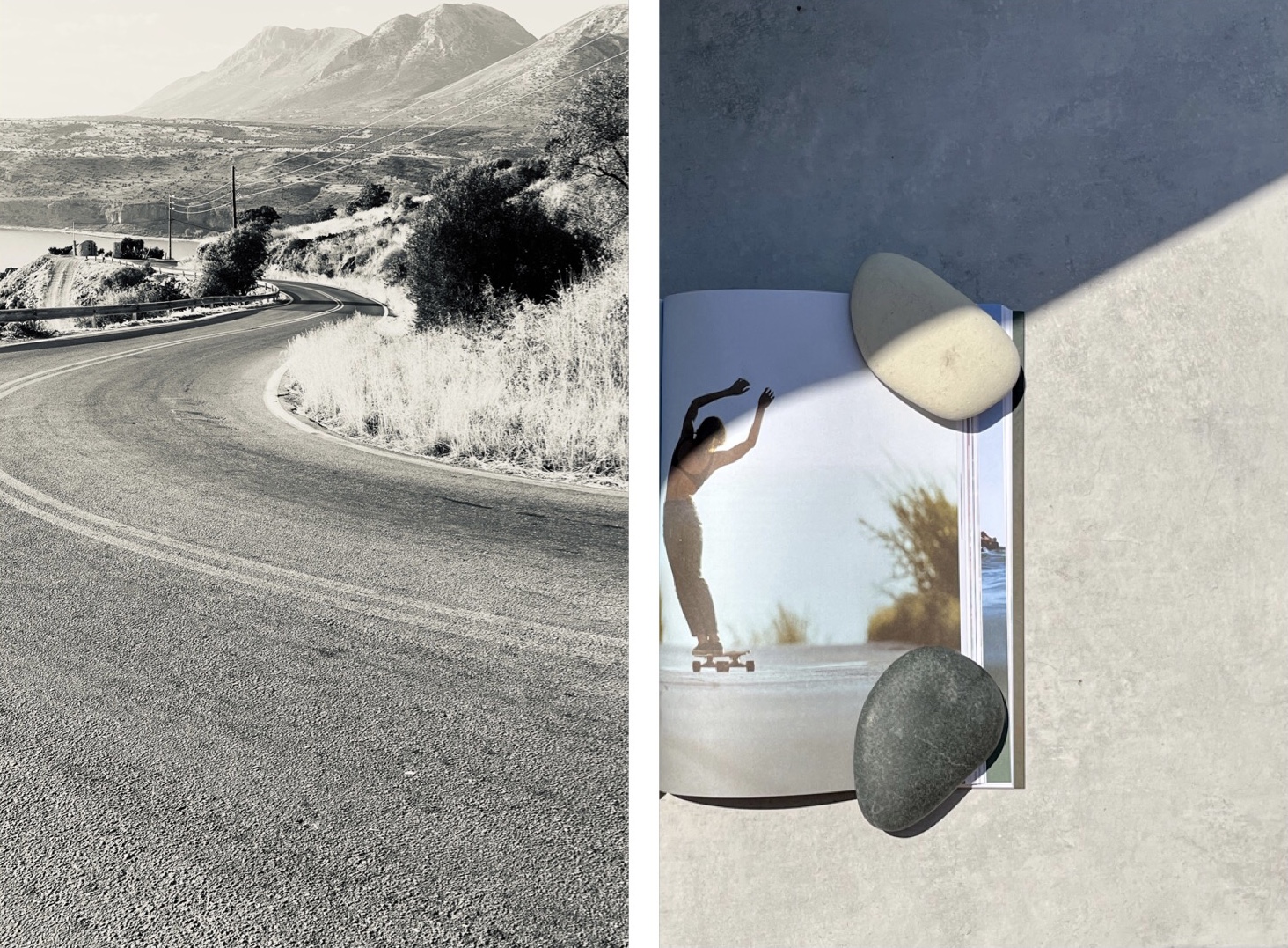
Photos: Classiq Journal (left), Daniel Espírito Santo for
“I Love the Seaside surf & travel guide to France, Spain and Portugal” (right)
“There are dreams one doesn’t dare to confess
even to oneself. Dreams to be nurtured and guarded
deep in a remote corner of the mind,
carefully keeping them from surfacing,
because their magnitude could spread and
consume anyone who consciously pursued them”
William’s Sanskrit Dream (Good Night Sea Stories)
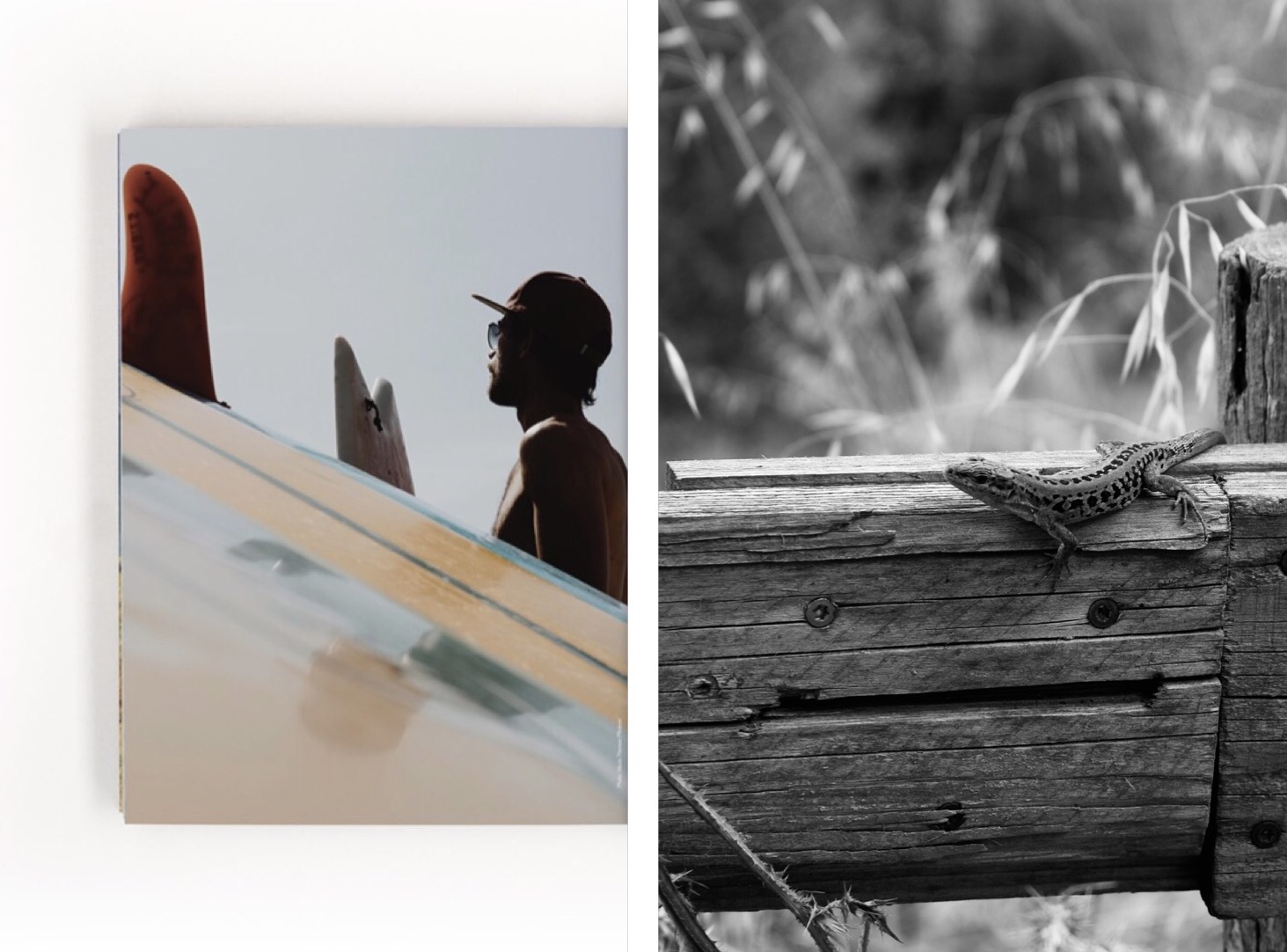
Photos: Marie-Therese Pfisterer for “I Love the Seaside surf & travel guide to Morrocco” (left), Classiq Journal (right)
Sunrise, 1927
F.W. Murnau
Murnau was one of the great natural visual artists in cinema. His Sunrise will never be old-fashioned. Made in the twilight of the silent era, it is deceptively simple, yet its own brilliance is inimitable, presenting a story of love in a way that makes specific use of the medium of film, while its sound effects pushed silent cinema one step closer to the talkie era. With Sunrise, Murnau showed filmmakers what they could do with this art form.
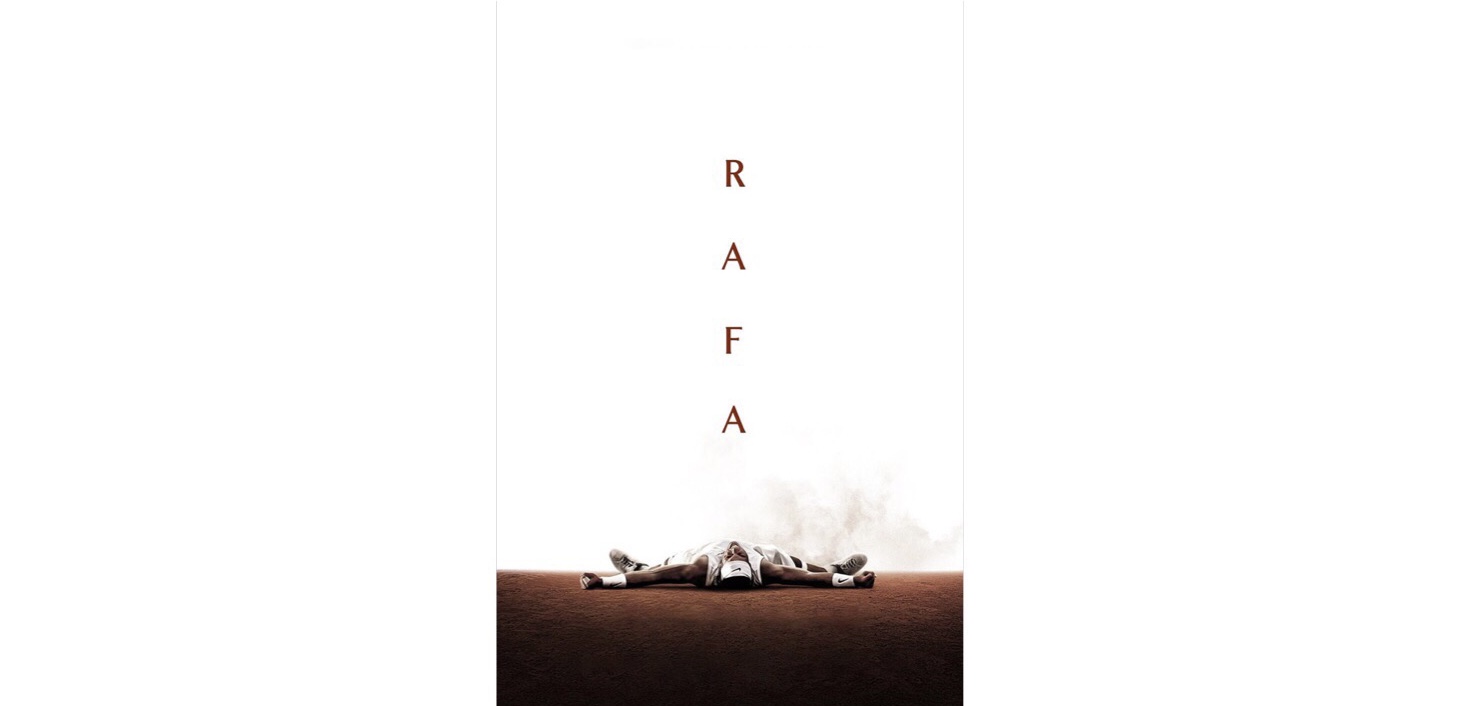
Rafa, 2026
Zach Heinzerling
I have said it before. Rafa Nadal will remain my favourite tennis player. My admiration for Nadal, however, goes beyond his extraordinary achievements on the tennis court, although I lived every match I saw him play (including most of the 116 Roland Garros matches). I admire his hard-work and determination, his resilience and mental strength, his fair play, his modesty, kindness, courtesy and shyness, his down-to-earthness, the respect he has for his family, for his roots, and for his fans. He’s a beautiful human being! And in the extraordinary and intimate four-part documentary series RAFA, he opens up in a way I wouldn’t have thought he ever would and we are granted access into his life and into what it took for him to become the greatest champion the world has seen. He’s always been his own toughest competitor.
Lolita, 1962
Stanley Kubrick
“How did they ever make a movie of Lolita?”, one of the posters for Stanley Kubrick’s Lolita proclaimed. Indeed. When Lolita was first published, some critics thought it too explicit in dealing with sexual matters. As Gene D. Phillips notes in the book The Stanley Kubrick Archives, Nabokov wrote to Graham Greene at the time, commenting on the controversy surrounding the book: “My poor Lolita is having a rough time. The pity is that, if I had made her a boy, philistines might not have flinched.” Still, the book found champions, too, and it was in fact Greene who stirred up serious interest in the book when he gave it a rave review in the London Times. Over the years, Nabokov’s novel has been recognized as the elegantly written, superb piece of fiction that it is. And, most of all, in Kubrick’s own words, “Nabokov was brilliant in withholding any indication of the author’s approval of the relationship”, because it is at the very ending of the book that Humbert’s genuine and selfless love he has for Lolita is revealed.
When Kubrick acquired the rights for the film, there was much speculation in the press as to how he would approach the controversial story. Nabokov’s novel “fairly begged to be committed to cinema”, remarks Gene D. Phillips, since he makes several references in this regard in the book. “If I have my way … the audience will start by being repelled by this ‘creep’ who seduces a not-so-innocent child, but, gradually, as they realize he really loves the girl, they’ll find things aren’t quite as simple as they seemed, and they won’t be so ready to pass immediate moral judgment. I consider that a moral theme,” said Kubrick in an interview with Eugene Archer in The New York Times. “Lolita is a tragedy… Furthermore, this is at heart a novel of redemption. It is about a lust that matures, under fire, to love,” asserted Nabokov.
When Nabokov finally saw Lolita at a private screening, he thought that it was a first rate film and admitted that Kubrick’s inventions were “appropriate and delightful”, that the killing of Quilty “is a masterpiece, and so is the death of Charlotte Haze”. But, ultimately, it is Peter Sellers who gives Lolita, the film, its vitality. Sellers’ Quilty has far greater presence on the screen than in the book – “It was apparent that just beneath the surface of the story was this strong secondary narrative thread possible,” Kubrick declared in an interview with Terry Southern, talking about his Quilty. This is exactly what helps achieve a narrative of mystery through the duration of the entire movie, and I can see why Kubrick regarded Hitchcock as one of the most influential filmmakers for him. Kubrick’s sardonic wit and dry humour, his penchant for combining farce and terror, vision and technique ensure that the film has its own story to tell.
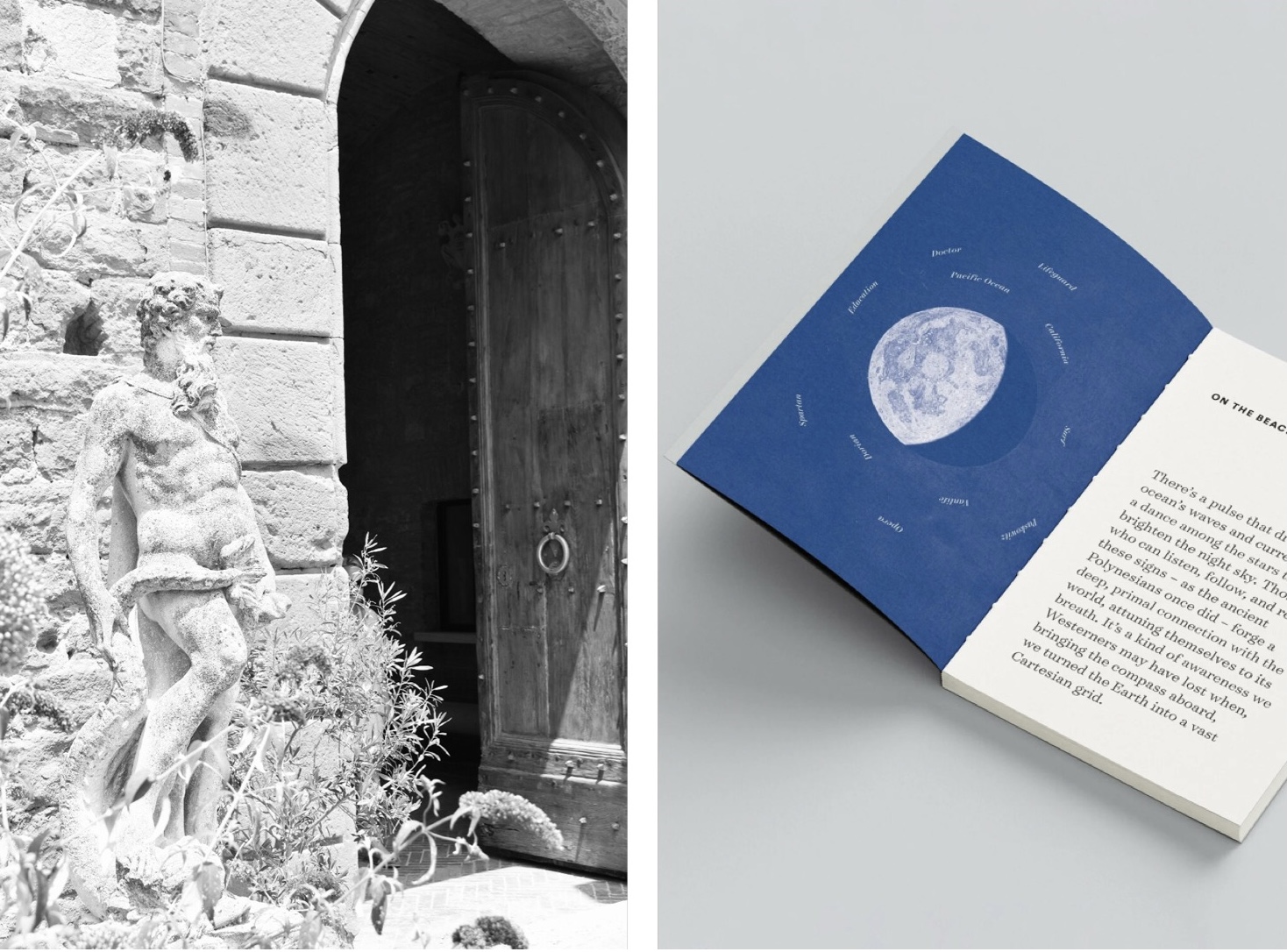
Photos: Classiq Journal (left), “Good Night Sea Stories” (right)
Reading
As a long-time reader of Sirene magazine, I am thrilled to carry their new book, Good Night Sea Stories in my shop.
Sirene is a community of free spirits. The ocean outside. The ocean inside. It’s about wilderness in all its majesty and about the human side of the ocean. It’s a bridge between people and the sea. And it’s storytelling, visual and written, at its best.
The book Good Night Sea Stories gathers eighteen short stories with the sea as a companion and friend. They talk of the joy of setting sail again on a boat you built yourself; of the submerged beauty of the Phoenician civilization along the Lebanese coast; and the mesmerizing discovery of the music of storms.
Eighteen glimpses into life at sea, including captains, swimmers, surfers, as well as artists, writers, and musicians.
This book is also a borderland, a space suspended between that liminal time when wakefulness is ending and sleep has yet to begin. It’s the magical time when stories to read become dreams.
The I Love the Seaside books are the most authentic, laidback and cool travel and surf guides, and so much more than that. They gather intel from across the coastlines of Europe, Chile and North Africa into beautiful books that are a world in themselves. Backdrop stories about the surf culture in the region, short interviews with interesting local people, knowledge about local food, culture, makers and menders, little gems found on site, true and tried over the years. Places that may not be picture-perfect or where they may not speak English, but where you will experience something real. And having it on paper offers you an enhanced sense of place, awaiting for notes to be penned on the side and revisited as time passes, its pages a little more creased after each time we open it.
And I am happy that three I Love the Seaside books (France, Spain & Portugal, Morrocco, and Chile) have found a home in my shop, too.
Listening
The soundtrack: North by Northwest
The podcast: The Rest is Entertainment episode with Steven Spielberg. The wander is still there.
The album: Fear Life for a Lifetime, Stone
Making
Argentinian clothing brand Dacuña was born from a simple yet profound idea: to create from feeling. To observe the landscape we inhabit, the nature that surrounds us, to revisit history, to touch the fabric.
“We believe in the art of handcrafting, in time, in textures, in the processes that teach us. We are driven by challenges, the unknown, what we don’t yet know how to do but want to learn. To create something meaningful, something that resonates within us, that takes us a little further, knowing that returning home is always the right place. That is the essence of Dacuña.”
Exploring
Il Cinema Ritrovato festival at a special 40th anniversary. “Year after year, Piazza Maggiore” (the main Bolognese venue for the festival) “confirms its reputation as one of the most beautiful cinemas in the world for cinephiles (a category without nationality). It is a space of both monumental grandeur and intimate charm, and a defining expression of the Italian Renaissance. Each evening of Il Cinema Ritrovato is unique, thanks to the magical union of masterpieces from the history of cinema, the unforgettable setting, the quality of the introductions, and an audience that carries the memory of this experience long afterwards – especially silent films accompanied by live musical performances. The festival runs June 20 – 28.
The regulars
The interviews, newsletters and podcasts I turn to every week and/or every month because they are that good. Soundtracking, with Edith Bowman. Ruthie’s Table 4 with Ruth Rogers. Fashion Neurosis, with Bella Freud. My New Roots monthly newsletter. Craig Mod’s newsletters: Roden and Ridgeline. Racquet’s Rennae Stubbs tennis podcast. Gone to Timbuktu with Sophy Roberts. Sirene Journal, Racquet, Waves & Woods, and Legénde in print.
“With surfing, you have to surrender to
natural laws, a bit like in real life.”
Kaspar Hamminga, ILtS surf & travel guide to Morrocco