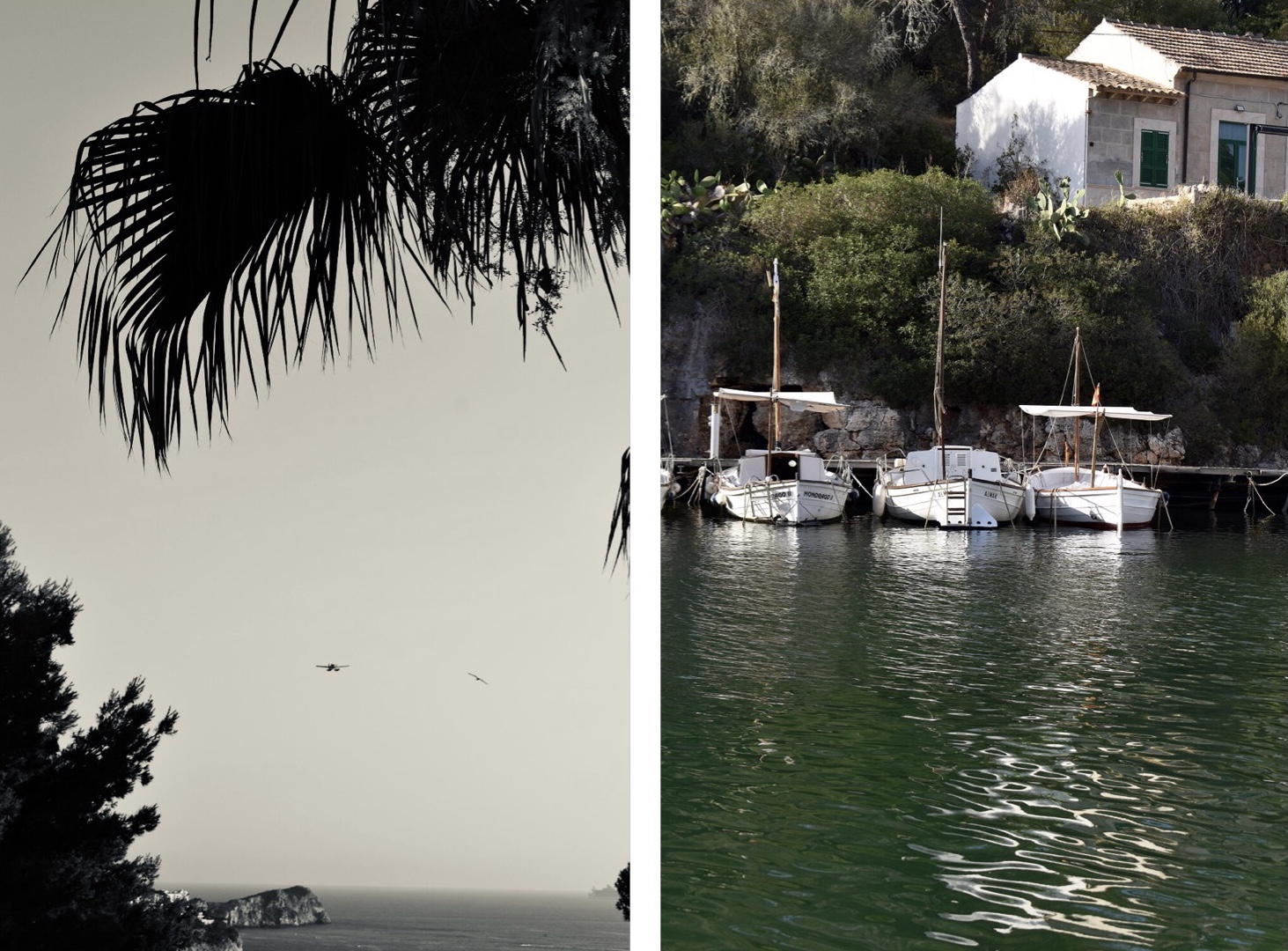
Photos: Classiq Journal
“There is nothing that says more about its creator
than the work itself.”
Akira Kurosawa (Something Like an Autobiography)

Viewing
Seven Samurai, 1954
Akira Kurosawa
This will always be the summer when my son watched Seven Samurai for the very first time. Every time I watch it, the stakes are risen that much higher. The words of the great and much regretted Tony Stella, from our interview are forever etched in my memory: “After seeing Seven Samurai at age six, there was no turning back – everything got measured by that yardstick.” Since Tony’s passing in May, there hasn’t been one single film that I have watched when I haven’t thought of Tony, so many of his artworks strengthening the bond with so many of my favourite movies, and his impact on film culture.
One-Eyed Jacks, 1961
Marlon Brando
The only film that Brando directed did not turn out the way Marlon intended. “I thought Marlon was a terrific director. I trusted his eyes,” Karl Malden, his co-star said. “He knew exactly how to frame a shot pictorially. He was always surprising us.” Paramount, the distributor, cut two crucial scenes in the film, “which took the guts out of the story,” Malden remembered. Photographer Sam Shaw, one of the few people to see the uncut version, called it “a masterpiece, a real romantic western”. Malden concurred: “If we’d made it the way Marlon wanted it to be made, like a Greek tragedy, it could have been a breakthrough western. It could have been a classic.” And yet, I liked the film, especially its brilliant setup. Who is the bad guy and who is the good guy in this story of two American bandits (Brando and Malden) robbing banks in Mexico? One of them, Rio (Marlon), is caught, while the other one, Dad (Malden) gets away with the help of Rio, takes the money, forgets about his friend and makes a decent life as a husband and father and sheriff of a small town across the border. Rio seeks revenge when they meet again, but you suddenly realise there is not that clear delineation between characters and it is that very thin line between villain and hero, right and wrong, that drives the film, even though Marlon lamented about the final version that “now the characters in the film are black and white, not grey and human as I planned them”.
It’s tempting to speculate how the film would have differed in Marlon’s intended version. The ending does indeed seem forced, the good and evil are not that interchangeable as Marlon had intended, but this is piece of filmmaking that has your attention from start to finish, not in small part because of its director’s eye for detail and preference for a backdrop, Monterey and the coast of the Pacific Ocean, quite unusual for a western. And without wanting to take away anything from all the other great performances in the film, there is also, without a shadow of a doubt, the unforgettable face and presence of Marlon Brando, which simply commands attention no matter what.
Cure, 1997
Kiyoshi Kurosawa
I don’t think I have ever seen anything like Kiyoshi Kurosawa’s unpredictable, terrifyingly thought-provoking film that combines thriller, psychological thriller and horror and yet defies characterisation. There have been few moments in films when I realistically feared what would happen to a character – it’s detective Takabe (Kōji Yakusho) whose descend into hell in pursue of a criminal in decaying Tokyo works in far worse ways than sending shivers down you spine… it disturbs your mind.
Charlotte’s Webb, 1973
Charles Nichols and Iwao Takamoto
Now that I have watched the film adapted from the classic children’s book by E.B. White about the special friendship between Wilbur the piglet and Charlotte the spider, I can not imagine it without Debbie Reynolds’s incredible voicing of Charlotte.
On Golden Pond, 1981
Mark Rydell
I watched it recently in the midst of summer and I easily became incredibly attached to it. I would like to return to it every summer. I have written more about it in a previous article, and in some way, I am glad I watched it before summer’s end, because this time of year is bittersweet enough as it is.

Reading
Coast Culture, the new magazine from Cesar Equipment, the rugged and refined Scandinavian brand grounded in nature and its gentle rhythm. “It’s almost like a hybrid of contrasting elements, and that reflects our brand aesthetic well. Our foundation lies in combining elements that normally haven’t been connected,” it’s how co-founder Andreas Åhrman defined the brand in our interview. Coast Culture magazine is a celebration of life by the sea.
The World of La Bagatelle. Bagatel is the home of designer Malene Malling, situated outside of Copenhagen, between the sea and the forest, encouraging a life that follows the seasons very closely, an inner life of books and thoughts as well as of lively dinner parties. This is a soulful book, a window into a family, a creative mind, a brand rooted in a rhythm filled with emotions.
Listening
The podcast: Talking Pictures, a movie memories podcast
The soundtrack: Seven Samurai
The album: Let It Bleed, The Rolling Stones
Making
La Bagatelle is a brand that succeeds the challenging balancing act of fitting in while standing out, and there is no other item in their collection that is better reflection of that core value than their most recent launch, the Jimmy Jeans Lot: 01. And the story behind it is nothing short of inspiring. Founder Malene Malling says: “I’m a big believer in going for your dreams. The world doesn’t owe you anything, however, if you’re lucky enough to be given a chance, you should grab it and run with it. I was given a chance with Jimmy Duus, the Art Director who started working with me on my magazines more than a decade ago. He was up for all my ideas and dreams when I started formulating what would one day turn into La Bagatelle. Without Jimmy, much, if not almost everything, would be different at La Bagatelle. He’s a man’s man and there isn’t much he can’t figure out. So when I very early on whispered that my dream was to one day do denim, he listened. And he kept reminding me of the dream, because like me, Jimmy loves denim. And whereas I know how I want them to look and feel, he knows how every little detail should be done to be done right. To put it short: he is a denim nerd if ever there was one. So when I now speak with some authority about denim, it is very much because I lean on his great knowledge. So credit where credit is due: the launch of La Bagatelle’s first pair of denims Lot: 01 were always meant to be called Jimmy Jeans.”
La Bagatelle reflects a love of easy elegance done with an artisan’s touch. Fashion that feels tactile, personal. But I keep returning to the jeans, that active participant to one’s work and life, that we are all so familiar with, but which Malene has made so fresh while still carrying a nostalgic sensibility of things well made and authentically appealing.
Exploring
This summer, Ingmar Bergman’s masterpiece Persona – his complex depiction of human identity, frailty, cruelty, social, class and power struggle, in which Alma (Bibi Andersson) is the nurse who is hired to take care of famous actress Elisabet (Liv Ullmann), after she has a breakdown during a performance and suddenly falls silent, and they are both secluded at Elisabet’s doctor’s island summer house, one remaining silent and closed, the other one voluble and opening up – has become the namesake for the newly launched Persona magazine (the first issue, out now, is dedicated to Bella Freud – the publication is a portrait of the most interesting, captivating women of our time, with each issue dedicated to one woman). The film also inspired the play Electra/Persona, with Cate Blanchett and Nina Hoss in the lead roles (their reuniting after Tár, where Cate Blanchett is the lead, but Nina Hoss is the first violin, makes me very enthusiastic), at the National Theater in London, for a strictly limited running time, from August 19 to October 10. Electra/Persona, directed by Benedict Andrews, in fact fuses Greek tragedy, namely Sophocles’ Elektra, with Bergman’s psychological Persona and the production features an original score by Tár composer Hildur Guðnadóttir.
On an end note
Just this: Close screens. Open minds.
The regulars
The interviews, newsletters and podcasts I turn to every week and/or every month because they are that good. Soundtracking, with Edith Bowman. Ruthie’s Table 4 with Ruth Rogers. Fashion Neurosis, with Bella Freud. Craig Mod’s newsletters: Roden and Ridgeline. Rennae Stubbs tennis podcast. Gone to Timbuktu with Sophy Roberts. Sirene Journal, Racquet, Waves & Woods, Legénde, and Monocle, all in print.
”Today I feel that in Persona – and later in Cries and Whispers –
I had gone as far as I could go. And that in these two instances,
when working in total freedom, I touched wordless secrets
that only the cinema can discover.”
Ingmar Bergman
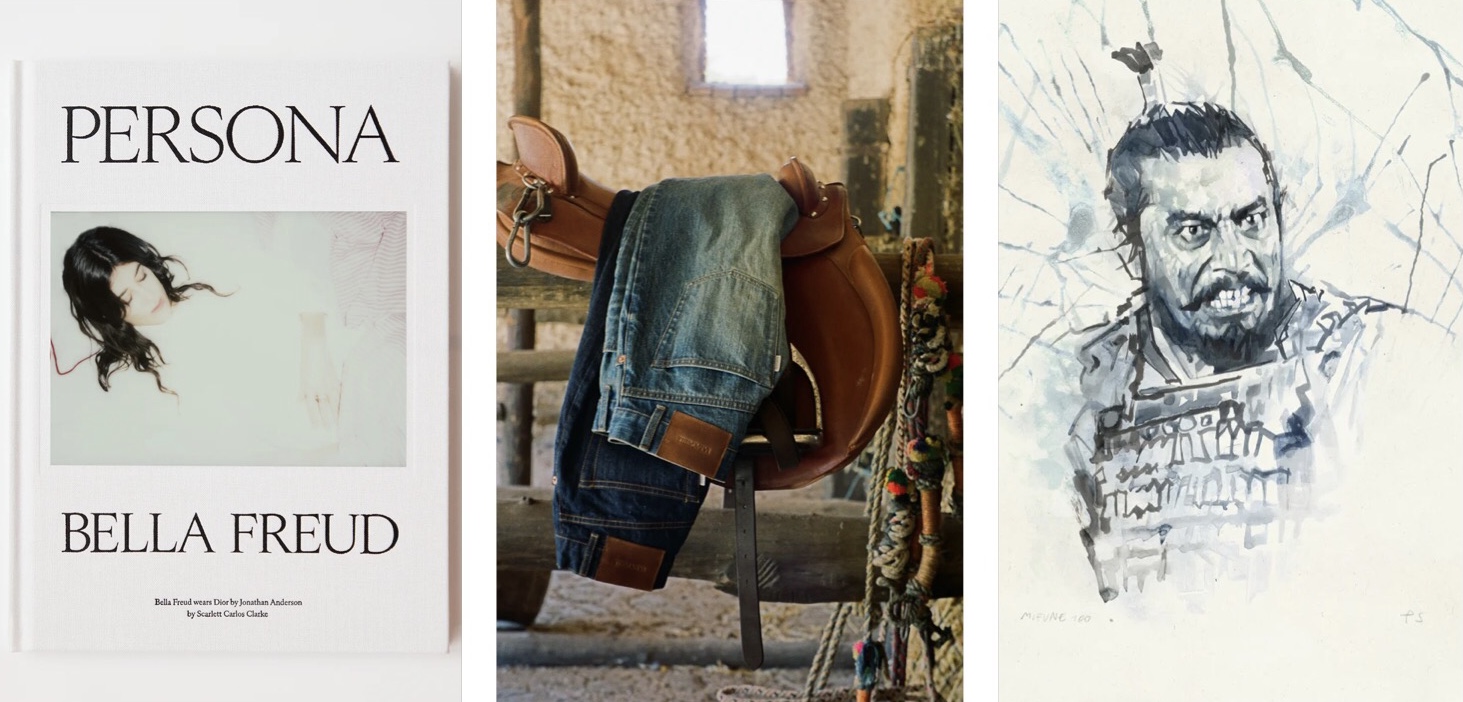
Persona Magazine no.1 / Jimmy Jeans Lot: 01 / Toshiro Mifune artwork by Tony Stella

