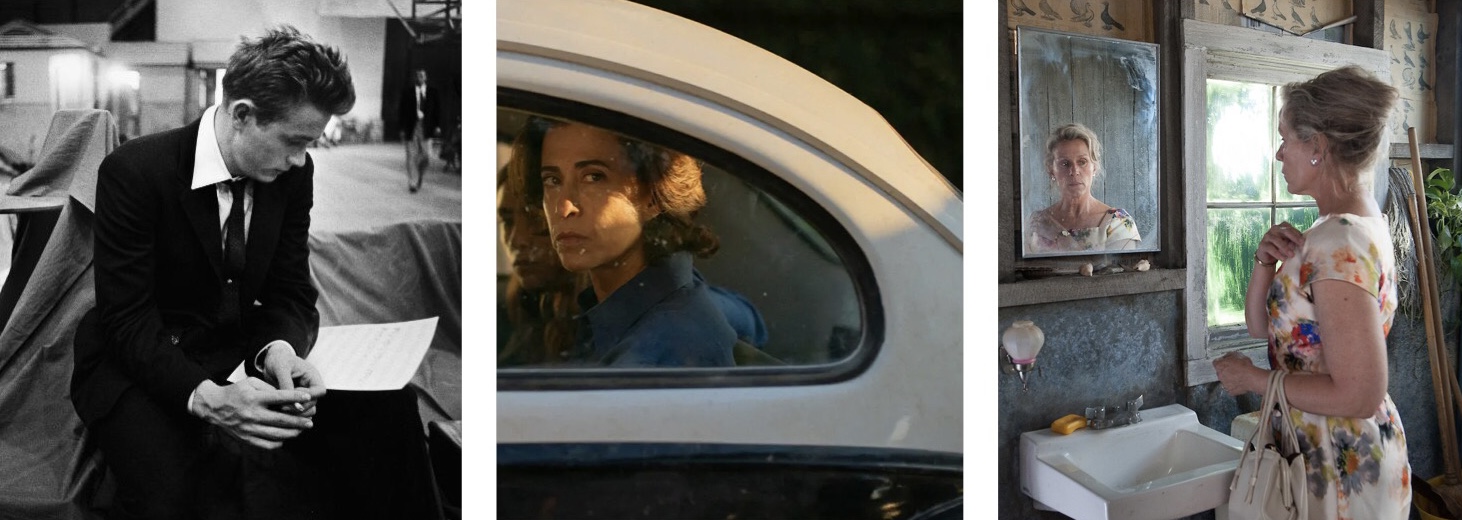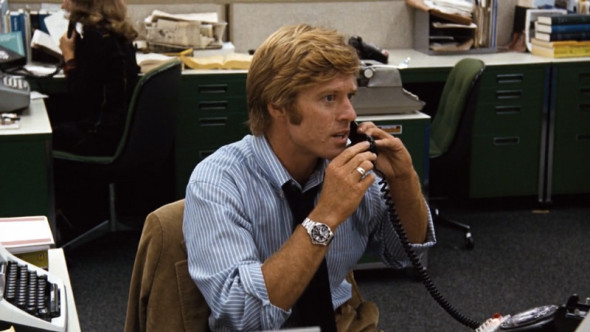
Photo: Robert Redford in “All the President’s Men”, 1976. Wildwood Enterprises
Robert Redford was promoting his politically-charged film The Candidate in 1972 when Bob Woodward and Carl Bernstein, the two investigative reporters from The Washington Post, broke out the Watergate story, followed by president Nixon’s downfall. But Redford didn’t want All the President’s Men, to be about Watergate or Nixon. “I wanted to focus on something I thought not many people knew about: How do journalists get the story?” This is one of the best political thrillers ever made, especially that we know the outcome in advance. And that is because what is indeed fascinating about the story is the journalistic part. “We took all the elements of their work — the typewriters, telephones, pens on paper, and kicked up the sound on all of them. Every scene where the typewriter is used, the noise is kicked into high gear so there’s a real bang. What does it sound like? It sounds like weapon.” This is a film that continues to fascinate, after repetitive views. It’s the perfect film. It is also, I might add, essential viewing today. What is a newspaper, what is the press? The mission is to get the story – but to get it right.
Robert Redford made it clear from the very beginning that he came into films because of the craft of acting, and then, by founding the Sundance Film Festival, that he stuck in the business because of the films themselves, which is why he wanted to open the path for independent film makers. “There was nothing at the end of the rainbow for me here. Hollywood was not a place I dreamed of getting to. I never could take seriously the obsession people have about being a celebrity or getting to Hollywood — I was born next door.” He inspired change in the American cinema, and made it happen. His cultural legacy is priceless.
Sydney Pollack, his frequent collaborator (they made 7 films together, including This Property Is Condemned, Jeremiah Johnson, Out of Africa, Three Days of the Condor), said in an interview at The American Film Institute (published in the book The Great Movie Filmmakers: The Next Generation, from the 1950s to Hollywood today), in 1983, that “there is something very American about him. He has a much darker inside than what one sees on the outside. He’s prototypically American in that sense. America has this glamorous exterior and a rather troubled, dark interior. Redford has that.” And here I like to make a parallel with Redford’s role in Butch Cassidy and the Sundance Kid. Unlike the reckless and daredevil Butch, the leader of the notorious Hole in the Wall Gang, an enthusiastic bank robber with a vision, Sundance is the golden boy with darkness within, quiet, ironic and cool, and the voice of reason. With the arrival of the 1960s and of films like Butch Cassidy and the Sundance Kid, American cinema left behind the sharp morality of Old Hollywood films, and especially classic Westerns, and dared to deal with people as individuals and their rebellion against society, and against the norm, and introduced more ambiguous characters and the outlaws as antiheroes: Paul Newman’s Butch Cassidy and Robert Redford’s Sundance the Kid robbed banks for fun and they won the audiences over with their charisma. The teaming of Paul Newman and Robert Redford was so magical that this kind of buddy chemistry has been attempted to replicate in vain ever since (the most recent pairing, that of Leonardo DiCaprio and Brad Pitt in Tarantino’s Once Upon a Time… in Hollywood, came closer than anything before).
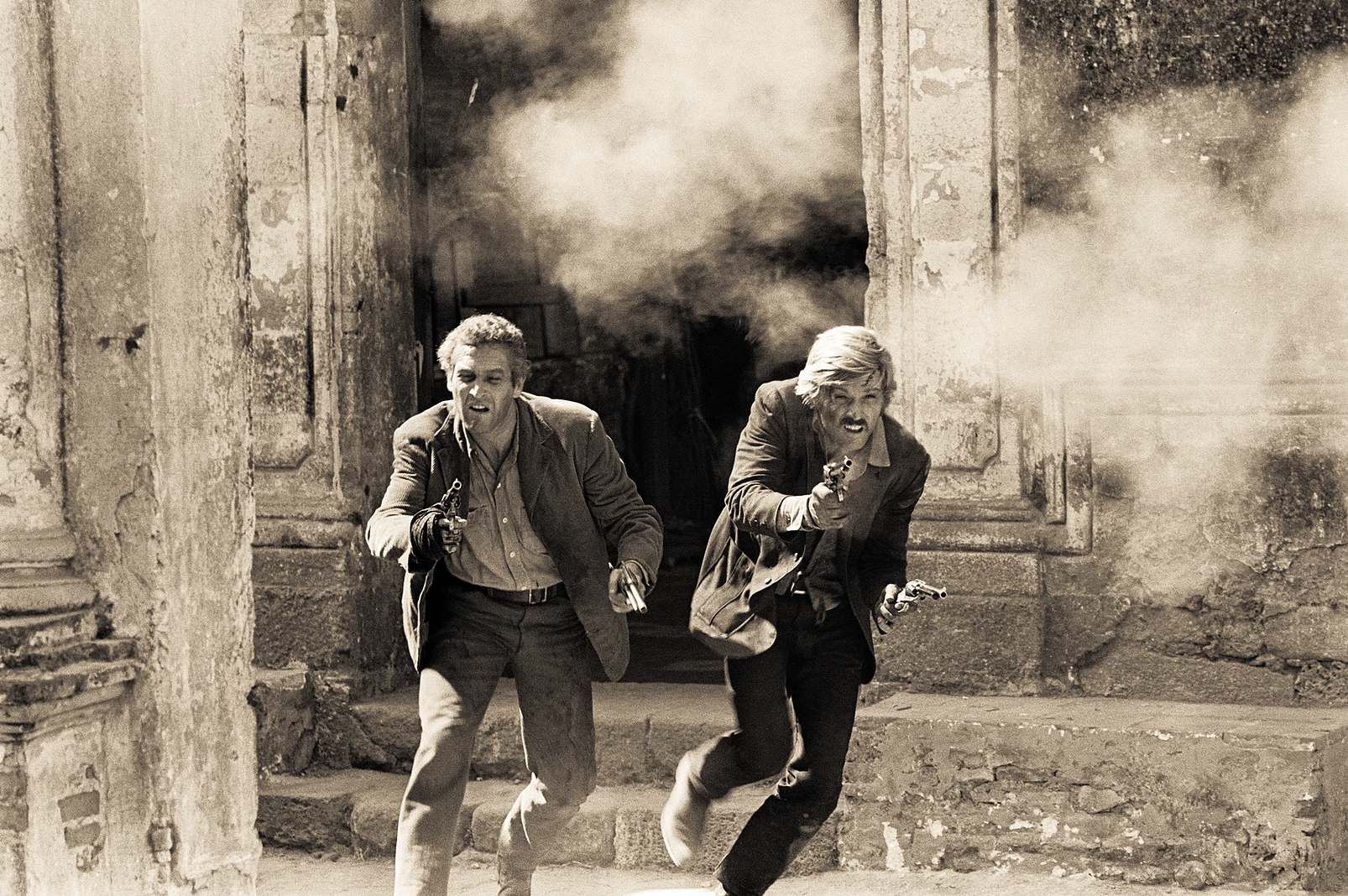
Photo: Robert Redford and Paul Newman in “Butch Cassidy and Sundance the Kid”, 1976.
Campanile Productions, George Roy Hill-Paul Monash Production, Newman-Foreman Company, Twentieth Century Fox
Bathed in cinematographer Conrad Hall’s sepia hues, George Roy Hill’s comically elegiac western offers more visual interest than the two handsome, well-defined, contrasting characters, and more narrative substance than the good humoured situations and damned-fool heroics of its characters. It has to do with the depiction of real bonding and real friendship. Because despite common belief, that doesn’t come off that easily on screen, or in real life. It also has to do, as Paul Newman was saying in a 1994 commentary on the film, with the way he and Redford gave each other space on screen, the way they gave each other the stage in turn. Paul Newman was the one who wanted Redford as his co-star (and George Roy Hill fought for him with the producers) and screenwriter William Goldman was recalling in an interview how everyone who hadn’t wanted Redford in the picture in the first place told Newman not to allow Redford to have so many close-ups. But Newman had no problem with that, because he always wanted to play opposite good actors, because only that way he could better himself. They both let each other have their moments, and that’s true friendship, and that’s chemistry, and that showed in the film. In a Fresh Air interview with Terry Gross, from 2013, Redford was telling her how he never forgot that it was thanks to Newman that he got the part and that they became great friends during filming, a friendship that carried on throughout their lives. Their adventure in the film does not end well, but it is an ending that carries their memory into romantic legend.
“He’s the kind of actor I like in the sense that he’s mysterious,” Sydney Pollack remarked in the same interview. “Actors often feel they have to do a little acting here and there. The fact is there are very few of them who have the confidence to trust the audience and just be. One of the things that’s most impressive in film acting is someone with enough confidence to do nothing, someone who as a human being is sufficiently interesting so that he’s behaving truthfully within a role, the audience will be satisfied and watch him. Redford has that quality. He creates a lot of interest by what he doesn’t do, by the way he withholds things. He creates a need on the part of the audience to move toward him to find out more. […] To my mind Redford is best in roles where the character is somewhat introverted, though still capable of a lot.” Everything with Redford came from instinct and the reality of doing. Redford, in turn, confessed that Sydney Pollack was “the one director that seems to read me best”. Their work together was intuitive.
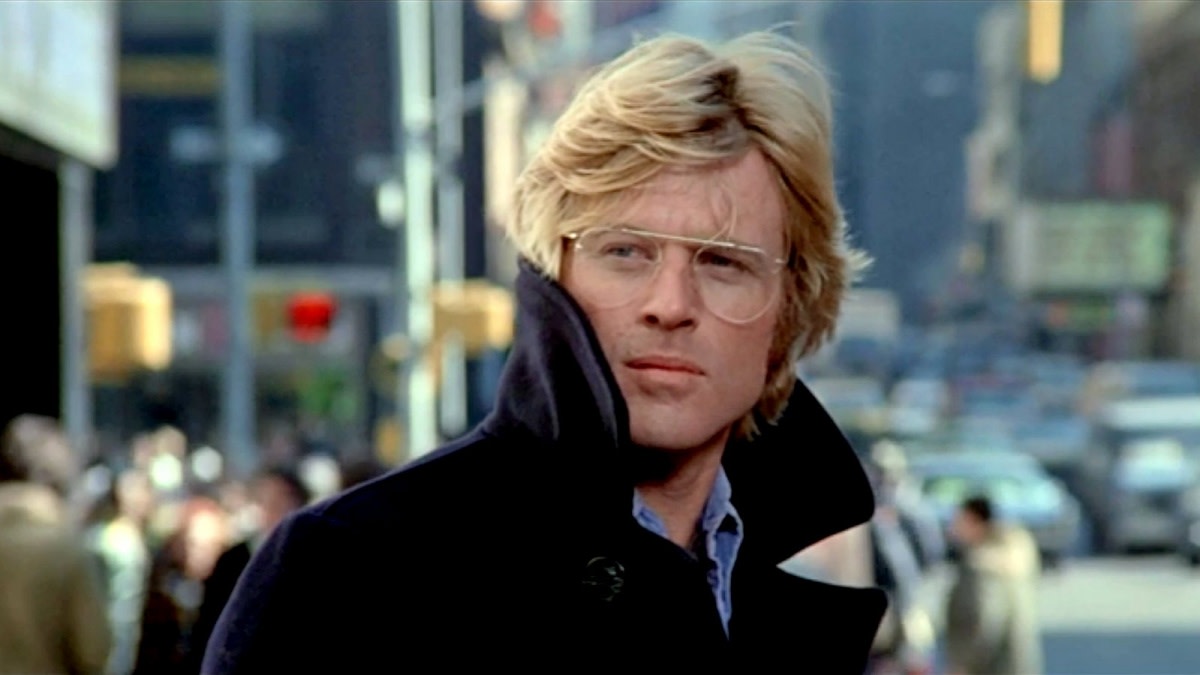
Photo: Robert Redford in “Three Days of the Condor”, 1975. Wildwood Enterprises, Dinonde Laurentiis Company
Dave Grusin’s musical score in Pollack’s Three Days of the Condor wouldn’t even have made sense in a dreamy snowy landscape, or cityscape for that matter. “He did an extraordinary score to that picture, kind of a jazz thriller score with a very bluesy love theme done on a saxophone, as I remember. He always got great players. That score was unique,” Sydney Pollack said about his frequent soundtrack collaborator. But it is the subtle bursts of holiday music that have this heightened effect of taunting Robert Redford’s character and throwing him deeper in this state of alienation and desolation when he finds himself not trusting anyone after his co-workers are shot and he is forced to take a hostage while constantly looking over his shoulder in order to stay alive. And look over his shoulder he does, from the start to the open-to-interpretation ending – is he, is each one of us, just an individual, just another face in the crowd? He certainly draws us, the audience, in, moving toward him to find out more.
Robert Redford plays CIA analyst on the run Joseph Turner in one of Sydney Pollack’s best political thrillers, set in 1974 New York. More than its star power, the film is a great thriller, which is what the director intended. The film has been, from the beginning, considered by critics to tap into the political sensibilities of the times and of a nation faltering from the Kennedy assassination, the Vietnam War and Watergate. And it did, but without knowing it.
“I think that the critics are falling into all kinds of traps with this movie,” Sydney Pollack commented in an interview with Patrick McGilligan in 1976, reproduced in the booklet issued by the Masters of Cinema along with the blu-Ray edition of the film. “Absolutely falling all over themselves. Half the critics are looking at it as a serious political piece of propaganda and criticising it on that level which, God knows, wasn’t intended, the film was three-quarters finished before any of these CIA revelations began to happen. We were doing a straight thriller. That’s what we wanted to do. And we were shocked that as much of what we imagined, if you will, was coming to pass. We were absolutely dumbfounded. The attempt was, first of all, to make it faithful to the genre of a thriller. And within that, to explore certain ideas of suspicion, trust, morality, if you will; but it was not intended in any way as a documentary, I suppose, but as a warning – using the CIA almost as a metaphor, and drawing certain conclusions from post-Watergate America.”
Robert Redford would go on and star in All the President’s Men the following year, but in Three Days of the Condor his Joe Turner reads books all day and introduces codes and plots into a computer. “I’m not a field agent, I just read books!” His preppy clothes are exactly what the character and his bookish job ask for, and his timeless American sensibility easily comes through, as Sydney Pollack pointed out, but it’s his ability to evade the perils he comes across and his subtle divulgence of his desolate state of mind as he is first to realise Faye Dunaway’s photographer character may have more in common with his alienation and desolation than she would care to admit or even realise, that decidedly makes his character plausible and drives us to look closer. “It’s winter,” it’s her simple answer to his precise questions about her images. But he knows better. And so do we, because Robert Redford has the confidence to trust the audience and just be.
MORE STORIES
Bob Willoughby, the photographer that was as great as the stars he shot:
In conversation with Christopher Willoughby
“Compositions and camera movement had to have a conceptual reason”:
In conversation with cinematographer Adrian Teijido
“I’m still learning, which keeps it fresh”:
In conversation with film still photographer JoJo Whilden