Suit & Tie

Goop Label November edition 
I was watching My Man Godfrey (1936) over the weekend for a new project that’s been in the works and, at my already third viewing of the film (and second over a period of two weeks), one of the things that still stroke me the most about it (besides it being one of the best screwball comedies of all time, naturally) was the incredible sense of style of those times. Sure, it helped that the leading roles were played by Carole Lombard and William Powell, who imbue their characters with natural style and class, but it’s more than that. Style was a way of life back then. Maybe it was not practical to wear a tie for breakfast or a gown for dinner at home, but it sure put a spring into your step. Dressing well was first and foremost self-respect. And there is, of course, the sheer lure of the glamour. A beautiful winter coat over a delicate silk dress looks too good to not appreciate it for pure aesthetic purpose.

So when I saw this little number above reinterpreted by goop Label, I thought it too perfect, too timeless, too modern not to share it here. The innate elegance and glamour of the past and the practicality and minimalism of the moment, all wrapped in one look.

I’ve gathered a few more looks from the label, new and old, that speak a little bit more to my pronounced utilitarian side. They are all just as good, and ageless, but maybe a tad easier to pull off. But even this forever-in-jeans girl can not resist the glamour of a suit & tie moment. Given the choice, I’d take the challenge of it.
 
Goop Label collection

Goop Label November issue

Goop Label collection

photos:.goop

Posted by classiq in Style | | Comments Off on Suit & Tie

Naomie Harris and Her Alt Bond Girl in Skyfall

Naomie Harris costumes Skyfall 
I am a hardcore James Bond fan. I can enjoy watching a Bond movie, even a bad one, for sheer entertainment. I am okay with certain Bond movie clichés and stereotypes. But I have to admit that, as a good film lover, whenever a great new Bond movie or just an element of surprise happens, I rejoice. It happened with Casino Royale, which went on to become my all-time favourite Bond film. It happened with Eva Green’s character, too, in the same Casino Royale, my number one Bond girl. And it happened again with Naomie Harris’ Moneypenny starting with Skyfall. Which brings me to all the Bond girls who have not served as mere eye candy – but, mind you, being a Bond fan, this is not to say that I disregard by any means the sexy and wild Bond girls that populate the 007 movies and their influence. But it is the ones who have played against type that have really made a lasting impression, distinguishing themselves through a lot more than skin and looks – although they had the looks, too, alright. They are in a league of their own, rather a real match for Bond instead of helpless side-kicks.

Buttoned-up, individualistic, substantial, a much less obvious and a bit more complicated, the alt Bond leading lady doesn’t give it all away, but she certainly gives 007 a simmering attraction point that doesn’t necessarily involve a round of martinis (shaken, not stirred). Eva Green’s Vesper Lynd in Casino Royale, Barbara Bach’s Anya in The Spy Who Loved Me, Carole Bouquet’s Melina in For Your Eyes Only, Diana Rigg’s Tracy, the one that Bond married, in On Her Majesty’s Secret Service, and, of course, the original woman in Bond’s life, Moneypenny, the proper and ever-loyal secretary to the secret agent’s boss, M. And I believe that it is Naomie Harris’ Moneypenny, unlike any other Bond girl before, who has proven than she can capture Bond’s attention (and hold it) regardless of any sexual politics.
 
Naomie Harris costumes Monneypenny Skyfall 
Naomie Harris breathes new life into Eve Moneypenny, turning the staid, secretarial attire of her character into the true undercover style star of the series. In Skyfall, Eve Moneypenny is a new recruit to the service, still learning the ropes of espionage. She is discovering who she is. And she discovers that she doesn’t really have the stomach for killing and being out in the field, so she makes a mature decision to go behind the desk. But she still “has a tough job, working in the secret service, so we dressed her up like that,” said costume designer Jany Temime, who won a CDGA award for her work on Skyfall.

The Amanda Wakeley gold dress she wears during the casino scene may be the most memorable of her costumes, but it’s the work outfits she sports at MI6 headquarters that are most memorable for her character. It’s especially the black leather-rimmed white blouse, mustard-yellow pencil skirt and black booties that stand out for me from the horde of grey-blue suits in the conventional office environment. Her costumes show a very strong sense of personal style, but also that she is yet learning to take risks. She gradually gains confidence, and, most importantly, she will gain the confidence of 007 – just judge by the warm colour palette of golds and oranges of her wardrobe. Eve’s self-assurance and natural grace make her more attractive than a typical Bond girl. Naomie said that when she was asked to play Moneypenny, she was told that they wanted to make a radical departure – they wanted her to be much more badass and tougher, more capable and much more of an equal to Bond. She radiates an unexpected kind of sex appeal and makes a lasting style statement that speaks to her personality… and makes you wonder, “What if?”.
 
Bond style

Related content: Style in Film: Eva Green in Casino Royale / Bond Style, from Connery to Craig / Barbara Bach as Bond Girl in The Spy Who Loved Me
 

Discover our movie stories shop – inspired by the fascinating world of cinema and by the never-fading beauty of the tangible


photos: movie stills, Skyfall | Eon Productions/Columbia Pictures

Posted by classiq in Film costume | | 3 Comments

My Favourite Films of the Year (So Far)

You Were Never Really Here Lynne Ramsay 
This autumn I have attended a couple of film festivals, which gave me the opportunity to watch some of the best films released this year. One of the festivals was The Independent American Film Festival, and the other one was Les Films de Cannes à Bucarest, which brings each fall a large selection of the films which premiere a few months earlier in Cannes. But even more than watching some great new movies, I loved the fact that I had the chance to meet/talk to/take part in Q&A’s with several amazing people in the film world, from Joaquin Phoenix, John C. Reilly and Ethan Hawke, to Lynne Ramsay, Laurent Cantet and Louis Garrel.

I got to see some of the big festival winners from this year, too. Ruben Östlund The Square, which won the Palme d’Or, failed to impress me, I’m afraid. The Swedish director’s 2014 Force Majeure, of which I was a big fan, was a far better film in my opinion – a much more subtle satire, a great character study and sometimes wickedly funny.

There was also a special screening of Guillermo del Toro’s The Shape of Water, the winner of the Golden Lion in Venice (the film will arrive in cinemas in December). As far as I’m concerned, it does not live up to the director’s Pan’s Labyrinth. There is startling beauty in del Toro’s latest film, too, and the fantasy story has that rare quality that reminds you of cinema as art (and Sally Hawkins undoubtedly makes the best female role I’ve seen this year), and I do believe it’s one of the best films of the year, but part of me wishes that the film, set in early-1960s Baltimore, remained entirely in the realm of fantasy and did not comment on the era’s Cold War paranoia and civil rights issues. Not because I don’t believe these topics should be addressed as often as possible in film, but because the celebration of love, and of individuality, and of the magic of cinema in del Toro’s motion picture is so ravishing and full of a myriad of artistic possibilities that it would have worked out so well without the realities of life (and not succumb in any way to big Hollywood studio cliches). We need to not give up dreaming. And I also wish that Guillermo del Toro could say about it what he said about Pan’s Labyrinth in Sight & Sound magazine eleven years ago: “Shooting Pan’s Labyrinth was very painful, but it also became a war about me not compromising. I gave back my entire salary in order to get the film made the way I wanted it.”

But let me finally name my favourites.
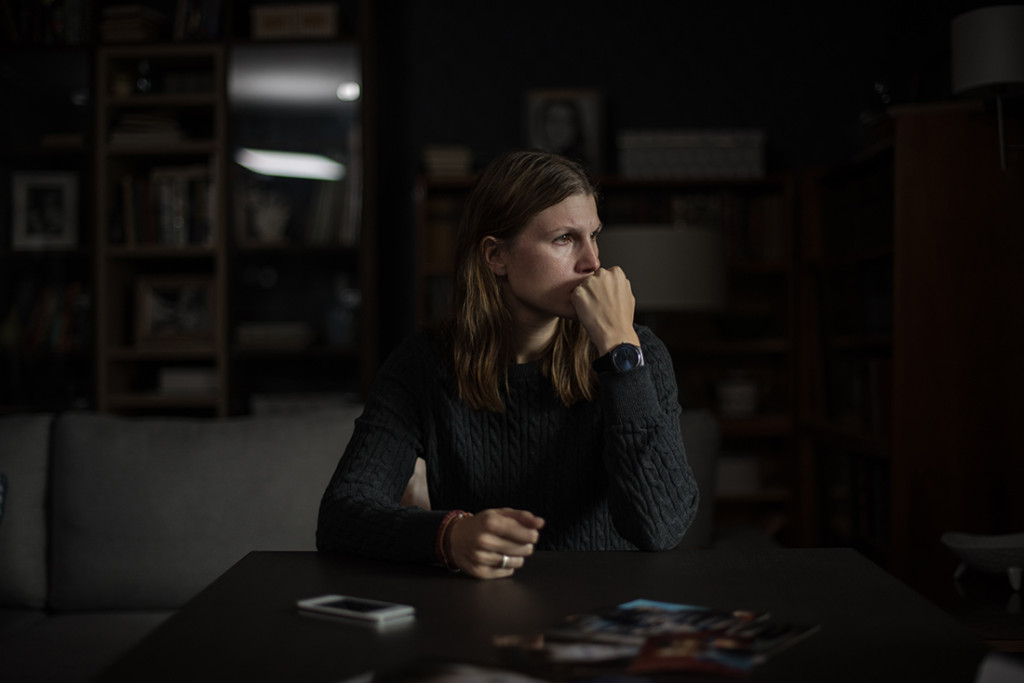
 
Loveless 2017 
Loveless

The best film of the year in my opinion and I don’t think I will change my mind on this one, regardless of what other movies I might see from now on. If I had to describe Andrei Zvyagintsev’s film in a few words, I would call it the tragedy of modern life. Yes, there is a tragedy occurring in the story, but the film also speaks volumes about the many social ills of our modern world, about the superficiality and nothingness of a world with an unending aspirational demand for status, money, and the social media prerogative of selfies and self-affirmation. Because this film is not just a pitiless critique on Russia, the way many American and Western reviewers have rushed to describe it; it is rather, sadly, the story of all of us, a loveless world that has lost sight of what is truly important, incapable of supporting human life, or a child’s love.
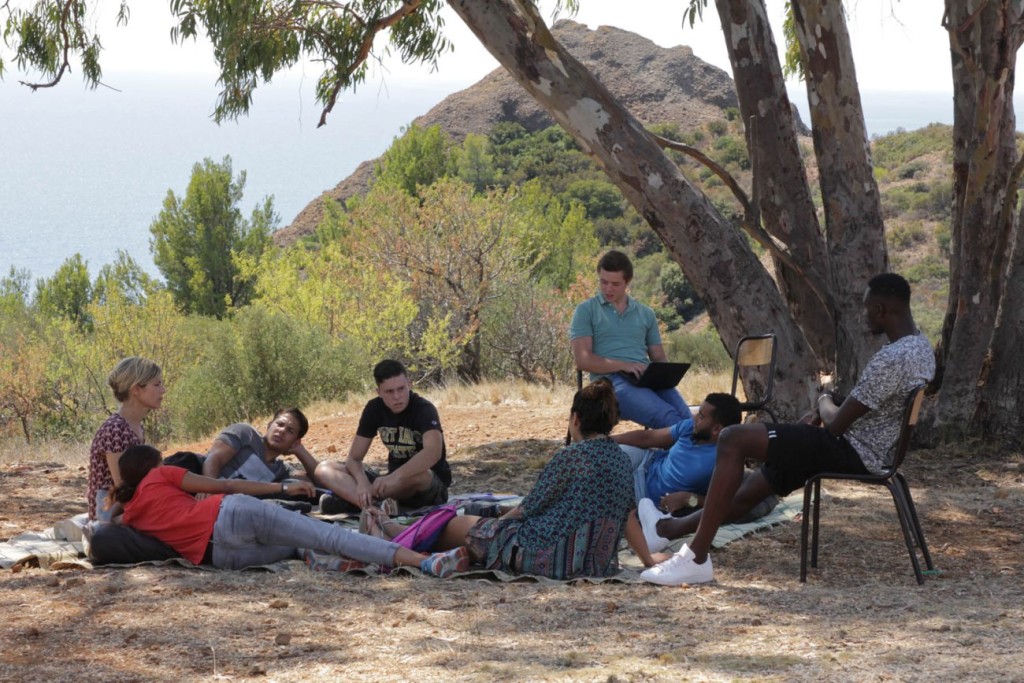
 
L'Atelier 2017 
L’Atelier

I liked Laurent Cantet’s L’Atelier even more than Entre les murs (The Class), the film that won the French director the Palme d’Or in 2008. It is a more complex film, I believe. Laurent Cantet told us in a Q&A that followed the film that he started to write the script after the Charlie Hebdo attacks, as he wanted to make a film about a new way of seeing the world, about the new violence that’s in the world, Internet technologies, and all that stuff that’s come into the way of the young people, and how we can address all that. Cantet also mentioned that he is very strict with his scripts, carefully choosing his words, but he did a workshop with the youngsters before starting to shoot (the cast was mostly formed of unprofessional actors and the casting took five months) and asked them to interpret in their own words their lines in the script, and some of their words eventually ended up in the movie. And that is exactly how good preparation allows for more freedom during filming, permitting a movie to be permanently rewritten. What a fascinating process!

L’Atelier is a very realistic film, not just because of the nonprofessional actors, but because it is a fairly accurate representation of today’s youth. “Many of them are feeling abandoned, left to their own devices, isolated within their own communities, and I wanted to listen to them and give them a space where they can express themselves. I think that we’re very responsible for the big generational rift that we have, and it’s urgent for us to get in there and give them a chance to show us who they are,” Laurent Cantet said in an interview, something he also explained in his discussion with us. The scariest thing about Antoine (one of the characters, superbly played by Matthieu Lucci) is not that he has a violent side, but that he’s also a nice boy, and you don’t necessarily see it coming. The optimistic tone of that very last scene however proves that words can be so much more powerful than weapons.
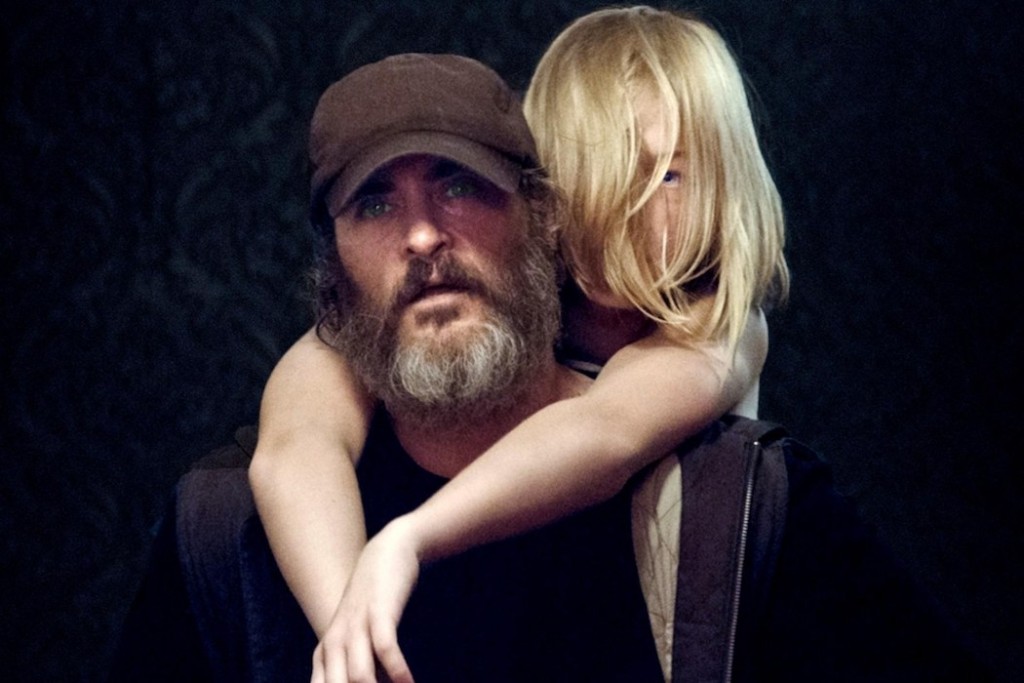
 
You Were Never Really Here 

You Were Never Really Here

Lynne Ramsay admiringly called Joaquin Phoenix “the beast” during the Q&A with us, the public, after the projection of her film You Were Never Really Here (which she also wrote, after a novella by the same name by Jonathan Ames). Joaquin deservedly won Best Actor in Cannes for his role. You don’t quite know until one point on whether his character is good or bad. You just don’t. His character just pulls you in with his tormented mind, arguably Joaquin’s best performance, an incredibly subtle and interiorised performance, leaving room for absolutely no predictibilities. I am just so glad that these two creative outsiders (Phoenix and Ramsay are both known for their no-bullshit attitudes when it comes to the Hollywood system and its promotional games) united to make this film together. Because not only did they break away from the system, but they broke the form of the crime genre, too.
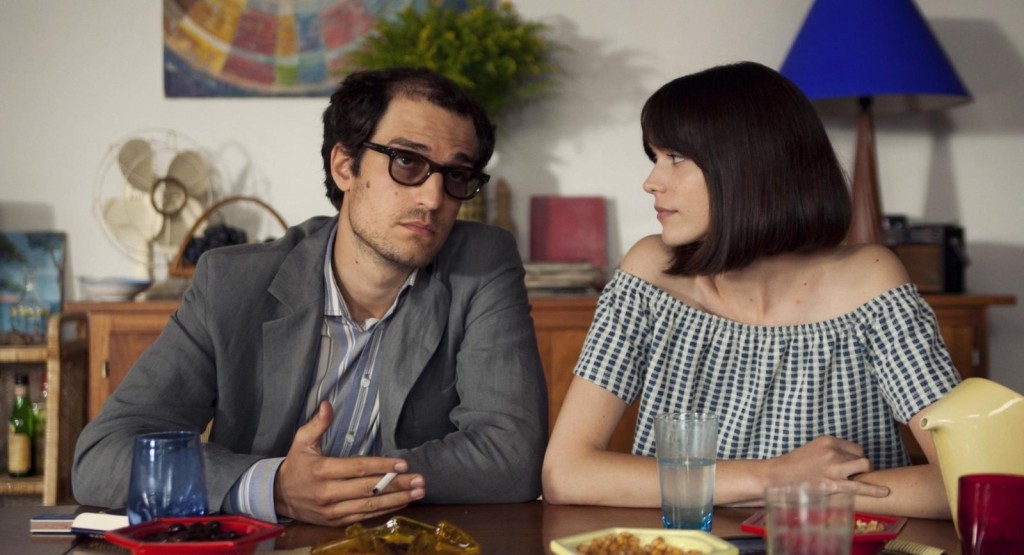
 
Le redoutable  
Le Redoutable

Adapted by Michel Hazanavicius from Anne Wiazemsky’s own memoirs, titled Un An Après (or One Year After), Le Redoutable tells the story of Anne’s life with Jean-Luc Godard (they were married for 12 years), with Louis Garrel (so very, very good in his role playing Godard) and Stacy Martin in the lead roles. Wiazemsky agreed on the film, but only on one condition: this story had to be told with humour. It’s exactly the humour that I loved the most about it. Brimming with pastiche, Le Redoutable elegantly employs some of Godard’s most famous filming style techniques (the use of primary colours to depict Godard’s apartment, the voiceovers, the breaking of the fourth wall, the back and forth camera tracking), in order to tell its own story with wit and humour. It is not a shining homage to Godard, but rather a sharp portrait that does not however fail to pay Godard credit where he’s due, and that’s where the film’s strength comes from.
 
Wind River 2017 
Wind River

Directed and written by Taylor Sheridan, the screenwriter of Sicario (by far my favourite American movie of 2015) and Hell or High Water (one of the best films of last year), Wind River won Un Certain Regard for direction this year at Cannes. With a neo-noir touch and superb cinematography (the film was shot on the backdrop of the hostile wintery beauty of Wyoming), Sheridan’s well-crafted crime drama tackles a story that many American films are afraid to: the fraying community of and the pain endured by the Native American people, so often ignored as an act of historical penance. Through his mastery of tension and mood, Sheridan is establishing a distinctive style that had a very solid base to begin with: an incredibly well written script. Wind River is uncompromising in showing an uncomfortable portrayal of the American society and wild west mentality, and it could very well be the most important American film of the year. And last but not least, Jeremy Renner is fantastic in his role.
 
Happy End 2017 
Happy End

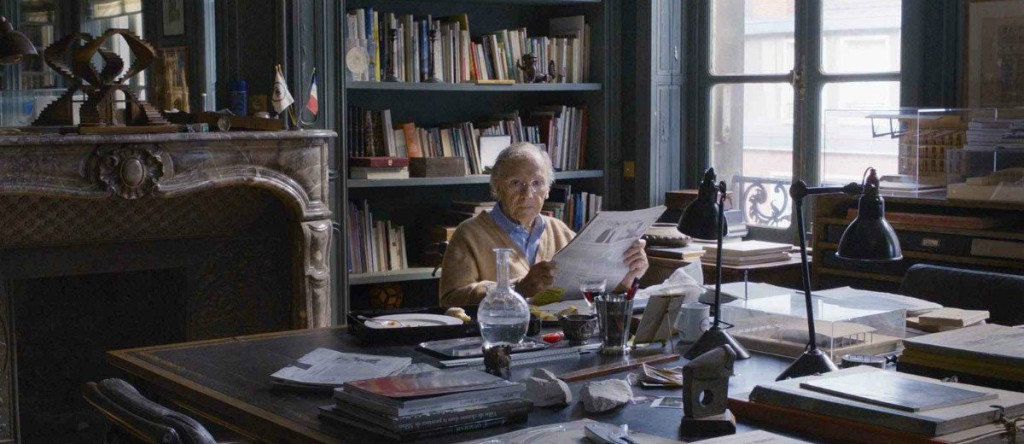
I went to see Michael Haneke’s Happy End for Isabelle Huppert and ended up enjoying pretty much everything about it, from the undercurrent of black comedy to the best two performances in the film, those of old-timer Jean-Louis Trintignant and teen Fantine Harduin as Eve, and, of course, that final cut and Isabelle’s astounded expression (one for the ages) – it’s still fresh in mind and it will be for a long time. It is an unforgiving and stark satire on the European burgeouise and, unsurprisingly, it reminded me of Luis Buñuel’s The Discreet Charm of the Burgeouise. Haneke’s Happy End is as bleak as it is funny. That title says it all. Because you wouldn’t expect to take those words ad literam from Haneke, would you? Even so, the surprise will be on you at the end.
 
photos: You Were Never Really Here (Film Four, Why Not Productions) / Loveless (Arte France Cinéma, Fetisoff Illusion, Les Films du Fleuve) / L’Atelier (Archipel 35, France 2 Cinéma, Canal+) / You Were Never Really Here (Film Four, Why Not Productions) / Le redoutable (Les Compagnons du Cinéma, La Classe Américaine, France 3 Cinéma) / Wind River (Acacia Filmed Entertainment, Film 44, Ingenious Medis) / Happy End (Les Films du Losange, X-Filme Creative Pool, Wega Filmh

Posted by classiq in Film | | Comments Off on My Favourite Films of the Year (So Far)

The Future Is Shaped by the Past: The Costumes of Blade Runner

Blade Runner costumes Rachael 
Less than a month since the release of Blade Runner 2049, and thirty-five years after the premiere of Blade Runner, I am still celebrating the original. Set in a dystopian 2019, Ridley Scott’s film envisioned a decaying Los Angeles, bleak and neon-lit, with overpopulated streets and striking, cutting-edge cityscapes of dark buildings soaring up into smog-covered skies and acid rain. It is a world in which technology is so ingrained – a haunting foresight of the world we are living in – that it is forcing the characters, and us viewers to ask ourselves, “What makes us human?”

The Los Angeles of the future has become an environmental disaster, a mutant hybrid. Everyone who can afford it has moved to one of the “off world colonies”. The Tyrell Corporation has designed humanoids called replicants to be used as slave labour on the foreign planets. The androids are virtually indistinguishable from real humans, but the law forbids them from setting foot on Earth. Yet some of these androids manage to slip through and it is the job of the “blade runners” to hunt them down. It is not called execution, it is called retirement. Based on Philip K. Dick’s novel Do Androids Dream of Electric Sheep? (1968), Blade Runner, both visually striking and philosophically charged, remains a landmark movie in the sci-fi genre, having reached cult status and influenced a generation of film-makers and designers alike.
 
Blade Runner costumes

Blade Runner Rachael costumes 
The costumes are just one of the many details that make Blade Runner so timeless, and much of the inspiration for the clothes came from film noir. The entire feel of the film is film noir. The movie was shot by cinematographer Jordan Cronenweth in high contrast, sparingly using colour and employing instead unusual camera angles and shafts of light, evoking the depth and style of black and white classic movies.

“After reading the script, we definitely felt that Blade Runner was of that film noir genre, and we looked back to the films of the 1940s for inspiration. Deckard (Harrison Ford’s character) was as much a Gumshoe as Sam Spade (Humphrey Bogart),” said Michael Kaplan, one of the costume designers (Charles Knode was the other one) in an interview. Scott himself saw Blade Runner as a film noir set 40 years in the future, complete with femmes fatales and detectives in trench coats. Harrison Ford’s trench is indeed a clear analogy to noir (in Blade Runner, too, the time of day is appropriately night and the rain is everlasting), but that unpredictable combination of shirt and tie plants his hardboiled detective on completely new territory.
 
Blade Runner trench Harrison Ford

Harrison Ford costumes Blade Runner 
Sean Young’s sharp costumes, a mashup of retro and futurism, were largely influenced by the tailored suits that Adrian designed in the late 1930s and early 1940s. The wide-shouldered look for women is the style innovation most often attributed to the Hollywood costume designer. “I liked the idea of combining different shades of suiting fabrics to create patterns – something Adrian did,” continues Kaplan. “In this case I used amazing vintage suiting woollens in shades of grey and beige, with metallic threads that I was lucky enough to find, which created a subtle luminous quality.” Adrian excelled in the use of black and white, but he was a master of colour, too, and often adopted the strong V-line of the military silhouette in his creations.

Adrian believed in “dressing the mind”, designing a costume to help the actress “feel” the period or the role she was playing. The padded shoulders, tapered waistline and pencil skirt would be the predominant silhouette for women from the mid-1930s through most of the 1940s, reemerging as the “power suit” for women in the 1970s and 1980s, and which, thanks also to Blade Runner, has continued to be regularly reinterpreted by fashion designers throughout the last decades. “I wanted to create a futuristic heroine who was believable in the future, but with her feet firmly planted in film noir past,” Kaplan further explained.
 
Blade Runner futuristic costumes

Blade Runner costumes Pris costumes 
The clothes in Blade Runner seem realistic, believable for the world that’s created, unlike in many other science fiction movies. The clothes were innovative and daring, but had familiar references, like the Old Hollywood glamour in Rachael’s case, or the early 1980s punk scene in the case of Daryl Hannah’s character, Pris. Hannah came up with the blacked-out “raccoon” eye make-up herself. One of the replicants, Pris is described as a “basic pleasure model” in her police file.
 
Sean Young costumes Blade RunnerSean Young as Rachael, wearing a fur coat. The different shades and fabrics, and the V-shapes of the pattern, two of Adrian’s signature elements.
 
Blade Runner costumescostumes in film Blade Runner 1982

Syd Mead art Sean Young Blade Runner
Conjured from a variety of haunting images, like Edward Hopper’s painting “Nighthawks”, the skyline of Hong Kong at night, the fiery industrial landscape of Tyneside and Teesside of Ridley Scott’s childhood, the French comic book Métal Hurlant, and Fritz Lang’s “Metropolis”, the street sets in “Blade Runner” were rendered on paper by neofuturistic artist Syd Mead and duplicated by creative team Laurence Paul and David L. Snyder almost exactly. Left image above: “Blade Runner” concept art by Syd Mead/Right image: Sean Young as replicant Rachael, in a brocade and fur coat designed by Michael Kaplan and Charles Knode
 
 
Ridley Scott saw Sean Young as a classic beauty, and Philip K. Dick, after looking at a photo of Sean Young, he called her the “super destructive cruel beautiful dark-haired woman that I eternally write about and now I’ve seen a photograph of her and I know that she exists and I will seek her out and presumably she will destroy me.”

From her very first scene, Rachael’s image and look are something you can not forget. Dressed in a black silk and snake skin two-piece suit with exaggerated angles, with her alabaster complexion, black smudged eyes and red lips (Marvin Westmore, who worked as the make up artist on the film said Sean Young’s lips were the best red lips he had ever worked on), she is one of the most distinctive characters to have ever been seen on the silver screen. Of a sensual yet fatalistic beauty, strong, mysterious, and utterly modern, she seems to belong simultaneously to the past and to the future – “she’s more human than human”. There are no science fiction clichés in 1982’s Blade Runner costumes. Thirty-five years on, the fashion still looks futuristic, while the sequel succumbs to stereotypes. I am afraid that, as in other artistic fields, in fashion, too, everything that could have been invented already has, even the future.
 
Film costumes Blade Runner 1982

Blade Runner costume Rachael 

Discover our movie stories shop – inspired by the fascinating world of cinema
and by the never-fading beauty of the tangible

 
photos: movie stills, except for images 8 (publicity still) and 11 (see capture below image) | The Ladd Company, The Shaw Brothers, Warner Bros.

Sources: interview with Michael Kaplan, Another Magazine / interview with Syd Mead, Vice magazine / Film Noir: 100 All-Time Favorites, edited by Paul Duncan and Jürgen Müller

Posted by classiq in Film, Film costume | | 2 Comments

The Abundance of Less

The Abundance of Less Andy Couturier
 
The abundance of less. How beautiful, how true, how striking. I am so glad that Andy Couturier changed the title of his book, which was first published in 2009 under the name A Different Kind of Luxury. That was a good title, too, because, yes, I believe living simply is the new luxury, that having time (to do what pleases you the most) is the real luxury, but it is the abundance of less that, in just four words, best captures the essence of this extraordinary book.

Andy Couturier, who spent four years studying sustainable living in rural Japan, tells the stories of ten men and women who left behind mainstream existences in urban Japan to create new lives deep in the countryside and rural mountains. He relates the ways they found to live simply and sustainably, in harmony with their environment, surrounded by the luxuries of nature, art, friends, delicious food, and most important, an abundance of time in which to enjoy it all. The ten people describe the profound personal transformations they underwent as they escaped the stress, consumerism, busyness, and dependence on technology of modern life to establish fulfilling lives as farmers and artists who rely on themselves for happiness and sustenance.
 

“Don’t imitate our life. Please learn from our life.
Build up your own new life.
Just be as much like yourself as you can be.”

Koichi Yamashita

 
The beauty of The Abundance of Less: Lessons in Simple Living from Rural Japan is not about showing us how to live a simple life. Firstly, it’s not that simple to live simply. One of my favourite quotes from the book is “It takes time to be poor”. This is so true. For example, it takes time to nurture your life through cultivating the land yourself. These people mostly eat what they grow themselves (and live on less than $4,000 a year). It takes months from cultivating the land, to harvesting it and finally being able to cook the food they’ve grown. Not everyone could do it, nor does everyone have to go all the way to find a more authentic kind of satisfaction. But you can make, in turn, the choice of not eating fruit or vegetables out of season, or from far away.

Secondly, you have to be true to yourself. Many of us may not fit into the wold we were given, but each one of us finds happiness in something different. “In the end you have to be honest to what really feels best to you,” says Wakako Oe, one of the interviewees in the book.
 
The abundance of less Andy Couturier 
So, the beauty of this book is that is has made me ask myself, “What changes can I make to lead a more fulfilled life?” The Abundance of Less is about showing us there is another way. About discovering true success by having a life that matters. It is about showing us that we can find beauty in the everyday, in the ordinary. That we don’t need all the things we buy. That we can shut out much or part of the unnecessary information we are fed every single day. That change and modernization are not always good. That we should preserve the good things of the past, not change everything just for the sake of change. That so many beautiful things in the world are disappearing and that we should at least take our time to stop and gaze at something magnificent when we see it. It is about showing us how simple life could really be… if we really wanted it to be. That making things with your own hands is enriching and enlivening.

But what probably has struck me the most is that it shows us that practicality and simple living do not by any means foreclose a rich life of the mind at all. The women and men in this book may grow their own food and live isolated, but they have reached a level of freedom and of freedom of the mind that many of us can not even comprehend or think possible in our modern world. Furthermore, they are all artists, teachers, writers, philosophers; intelligent, cultured, well-read people and who have, above all, reached an extraordinary level of understanding with the inner self. These are also people who have all travelled extensively and even lived abroad in their youth, and who could have lived a well-off life (by the standards of modern society) if they wanted to. But they have chosen to live this way from one point on. Because this is what makes them happy.

I would like to leave you with a few more of my favourite quotes from the book (there are so many), but, before that, I would like to take the liberty of forwarding Andy’s advice to his readers to take their time with reading this book (which took the author fifteen years to write). Consider this the first step towards a slower, more enjoyable, more meaningful way of living. As someone who admittedly often rushes to finish a book, and usually at night, eager to cram into the day one more meaningful thing (I do love books), but which usually feels more like a duty than something that relaxes me, brings me joy and lets my imagination run free, I can tell you it’s enlivening to read it slowly (it’s taken me a month to read it, carefully choosing the time of day or week to delve into its pages), to let it all sink in, to enjoy a good read and its many good lessons in finding your own path to living well.
 
The abundance of less Andy Couturier
 

“I’d like to get my life back to just the simple things:
a picture, a plate and a pot, a flute, some vegetables,
cooking a meal, reading a story.”
Koichi Yamashita


“The best art is rough, simple, and artless.
The idea is that nature itself is good.”
Akira Ito


“If you make too many things,
even if they are good things,
they become garbage.”
Gufu Watanabe

 
photos: 1-by me / 2,3-Andy Couturier, theabundanceofless.com

Posted by classiq in Beauty & Beautiful Living, Books | | 6 Comments