Photos: Classiq Journal
(unless otherwise stated)
I was recently taken aback when a filmmaker presented her conviction that we should reconsider what makes cinema, and that the idea of cinema could simply amount to the intimacy between viewer and film, regardless of the room a movie is watched in.
Her affirmation truly made me sad. It was like a hope I was clinging to was instantly cut off and I had nothing much to rely on anymore. Why has the world had to change so much in such a short time? Haven’t we all succumb too easily to change?
I have laid bare my thoughts about the importance of cinema more than once and I even gathered filmmakers and film festival directors to discuss on the subject at large. And yet, I am aware that there are some people who haven’t set foot in a movie theater for years, others who are more than fine with watching a film at home from now on, and yet others who want to go to the cinema for the popcorn and the special effects. My notion of cultural contentment is different than any of the above.
In her monumental book, The Art of Acting, Stella Adler wrote: “We live in a society where more than one thing is always happening. When you go to a movie you have popcorn in one hand, a coke in the other. You have no concentration. You’re modern by not concentrating, or by concentrating on something electric that’s doing it for you, that’s the problem with mechanization – the machines do the living now, not us. All we can do is watch. There’s nothing left to lift the spirit. So we go to psychologists.” That was decades ago.
A little fewer decades ago, Bertrand Tavernier talked about his experience with American cinemas while he was filming In the Electric Mist in Louisiana: “In the past, American directors watched French films, knew about French cinema. Not any more. They don’t even watch old American films, their own cinema. I don’t have anything in common with such people. You know, when you see a film in the cinema in the United States, the lights are never completely switched off. This is so that people can come and go to buy popcorn. You are continually disturbed by people eating next to you. The last film I saw in a cinema in the U.S., the man next to me was eating a Chinese meal. In France, I prefer to go to the cinema to watch movies. But there… in New Orleans there wasn’t a single foreign film. With the exception of a festival when one can see several different foreign films in a week, there is nothing. In a city where you have several universities, very few people care about seeing foreign films. I wanted to come back to France to finish the cutting because I couldn’t do it there. To see just American films… DVDs saved me in Louisiana. All that merde in the cinemas…”
Americans are lucky they have The Criterion Channel, Hulu, TCM, and even Netflix. They are content with what others pick for them (and damn fortunate that some know what they are doing) and they are used to have things made easy for them. Watching a film must be practical for them. Everything is commodified. And they reduce the whole world to their level. Europeans, and not just filmmakers or film connoisseurs, but average people, look foreign films out, they anxiously wait for films to be released in cinemas, they pack the theaters during festivals. In his book, The Art of Cinema, Jean Cocteau wrote: “Festivals help to shake off the laziness that encourages some people to despise the audience and others to think of cinemas as dark tunnels, to be gone through absent-mindedly. […] In any case, it is important that the festival is there, encouraging the runners to take part in the race. The more often exceptional films gain awards at festivals, the more producers and distributors will lose their fear of a public that they frequently misunderstand, which is only asking them to lead it forward.”
People must continue to see film as a cultural act, not just sheer entertainment. It’s a different way of seeing.
Children have a different way of seeing, too. Children are also great actors, because, as Stella Adler remarked, “they have the instinct to fight boredom”. In Mike Mills’ C’mon C’mon, Johnny (Joaquin Phoenix) is a radio journalist who travels the country interviewing children about their thoughts about the world and their future. He then has to take care of his nephew, nine-year-old Jesse (Woody Norman), when they are unexpectedly thrown together. Shot in black and white, the film is understated and emotional in just the right amount and it just makes you pay attention to this beautiful relationship and friendship forged between a child and an adult. A child truly makes us see the world with different eyes and demands us to be present and constantly reassess our relationship with the world and with everyone around us.
”But, while Charlie Chaplin has made the invisible visible to all,
he had kept a dark corner in himself that nothing can compromise.”
Jean Cocteau
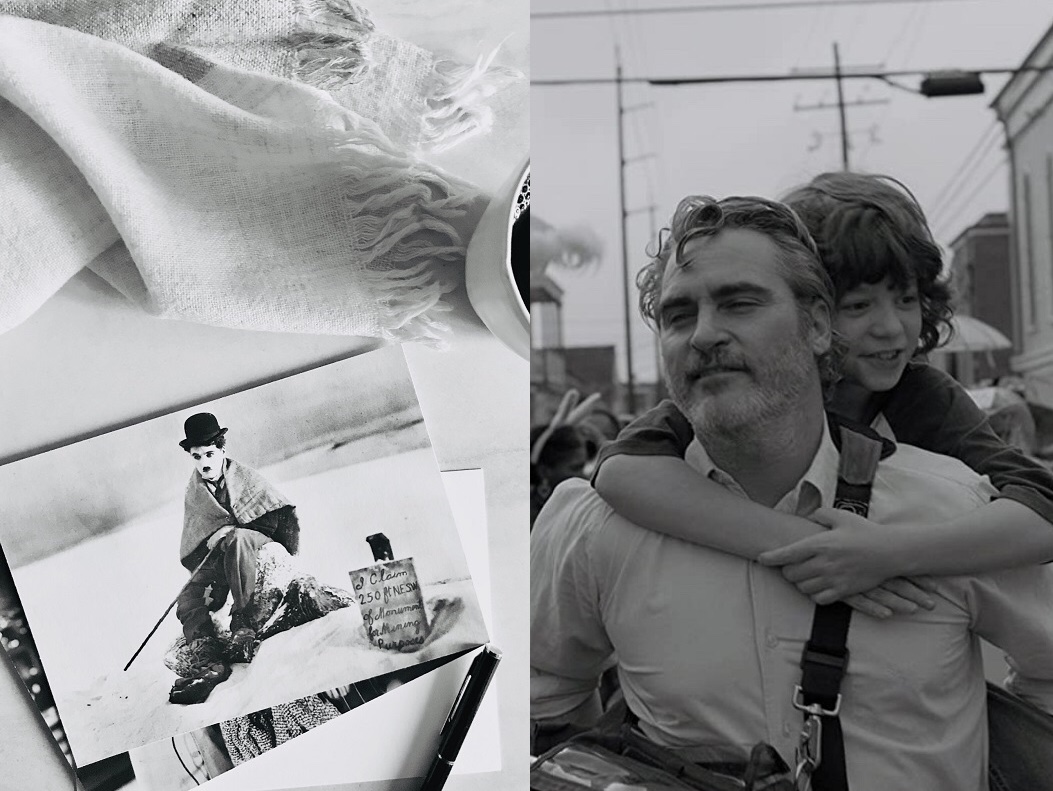
Left: Photographic prints available on shop.classiq.me
Right: “C’mon C’mon”, 2021. A24, Be Funny When You Can
Viewing
A Hero, 2021
Asghar Farhadi
Is there such thing as a selfless good deed? Rahim is in prison for a debt he could not pay. During a two-day leave, when he is handed a dubiously found bag filled with gold that could pay half his debt, he faces a dilemma: does he pay his creditor and avoid returning to prison or does he try to find the person who lost the bag? But things are not as black and white as you may think they are. A cautionary tale that navigates moral dilemmas and societal ethics that can easily and unexpectedly throw you off your train of thoughts of why and if we need heroes.
Tandem, 1987
Patrice Leconte
Whenever I watch a Jean Rochefort film, I remember how in just two short scenes he stole the show in Claude Chabrol’s Les innocents aux mains sales (Innocent with Dirty Hands, 1975), one of the finest supporting roles in cinema. In Patrice Leconte’s Tandem, his job is to put on a show. As Michel, a host of a radio broadcast, he has to travel throughout France with his assistant and driver, Rivetot (Gérard Jugnot), trying to gather a crowd that gets increasingly thin for his increasingly outdated show. It’s one of the great road movies, and one of the great road movies that nobody talks about, and on Riccardo Cocciante’s recurring song Il mio rifugio, the film, the story and the road become unforgettable. Michel is a man with a great past, of great presence and grand gestures, but the strength of the film comes from the simplest, most quiet moments. Can he learn to live in the present?
Mad City, 1997
Costa Gavras
A person on the edge (John Travolta), threatening to harm others or himself. A newsman (Dustin Hoffman) who may be on the verge of having the story of his career right in front of him. Does he save the person or make the news? Where does one draw the line? When do you stop being the professional and ask yourself why you are doing the story?
The Thin Man, 1934
W.S. Van Dyke
I have recently rewatched The Thin Man and After the Thin Man as research for an article about the films’ costumes and, once again, they hit just the right notes. The Thin Man is the kind of film you get lost in. Because it’s a class act. “Its fresh dialogue, witty situations, and tricky turns of fate perfectly captured the martini era.” But it’s not the plot, a fine concoction of screwball comedy and detective story, that gets your upper interest, but the characters, Nick and Nora Charles, played by two actors who weren’t just acting, but were in perfect harmony on screen.
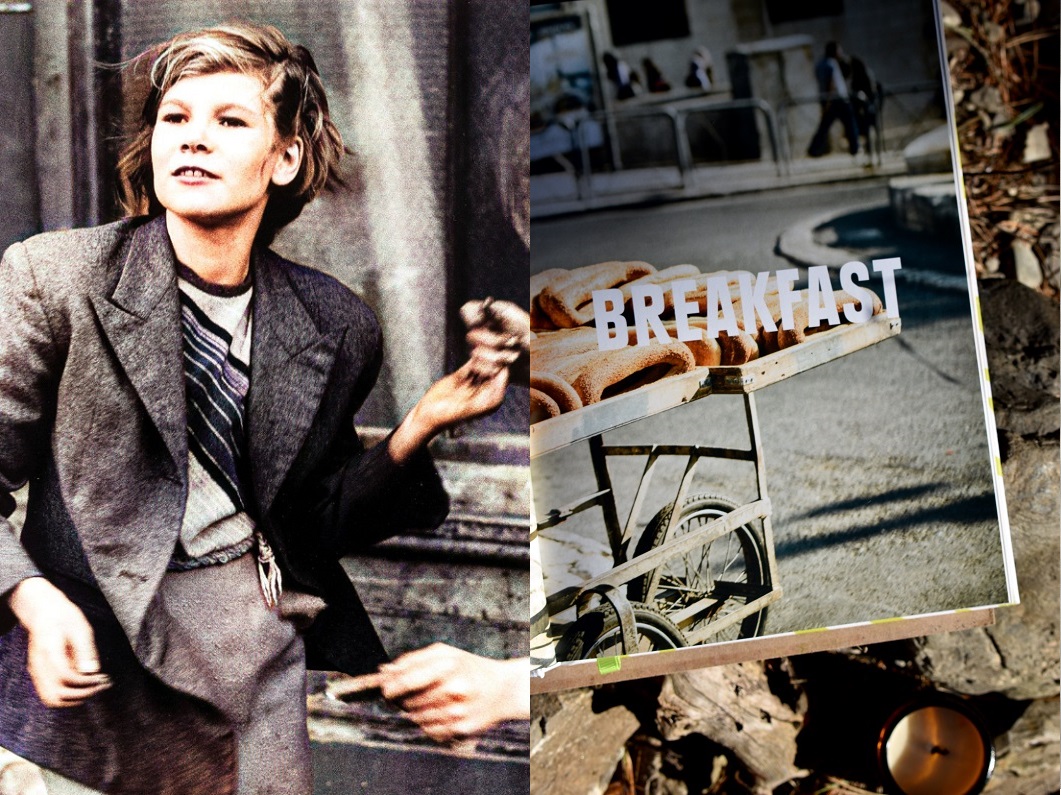
Left: Photograph by Roger Mayne, “Girl Jiving”, Southam Street, London, 1957
Right: Photo from the book “Falastin”, by Sami Tamimi and Tara Wigley. Classiq Journal
Reading
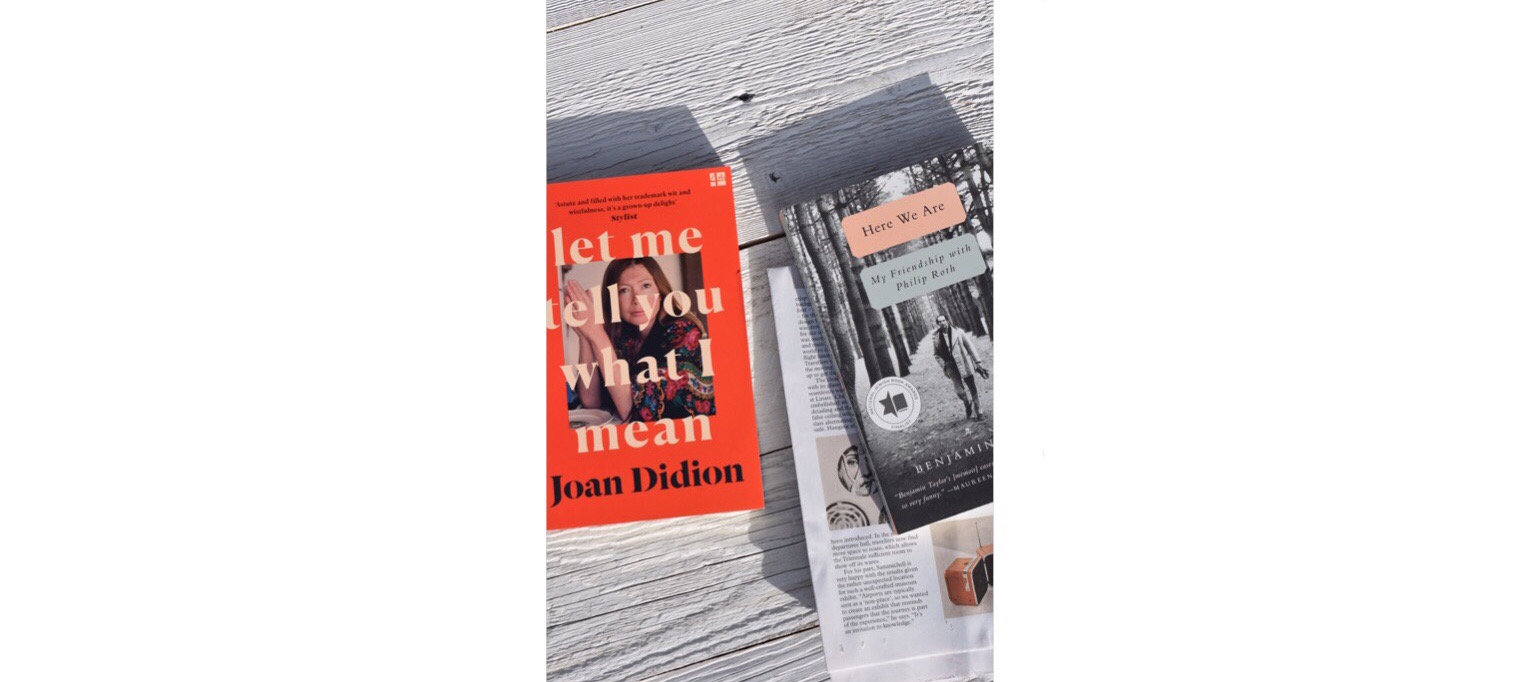
Let Me Tell You what I Mean
Joan Didion
Twelve pieces of non-fiction – a visit to San Simeon, Tony Richardson, Ernest Hemingway, Martha Stewart are among the subject’s of the essays – never before collected, an introduction to Didion’s enigmatic yet incisive, relevant and prescient writing (her analysis of Hemingway’s first paragraph from A Farewell to Arms is simply artful). I love her instinct for details, her slicing ability to capture the times, past and present, and, most of all, that kind of a Joan Didion sharp-eye phrase that articulates so many possibilities.
Falastin
Sami Tamimi and Tara Wigley
Cookbooks are not only my comfort read, but they are transportative, more so than a travel book. I never buy a cookbook filled just with recipes. The stories and the photos (not just of the food, but of the places, people and culture surrounding the food) are just as, or even more important. “These are not our stories. They’re not even always our views. They are, however, stories we’ve been moved to tell from people that we’ve met.” Battir, how a small village made a big difference of the map, or The Tent of Nations, one family’s story of peaceful resistance, or Fishing in Gaza, the catch-22 of the sea, or A tale of two restaurateurs, the politics (or not) of food, are just a few of the incredible stories in Falastin: A Cookbook (with photos by Jenny Zarins). But, first and foremost, this is a story of a formidable food nation, with the recipes at hand to prove it.
Remembering Monica Vitti, who passed away last week at the age of 90. “Monica Vitti is Claudia, who seems to be the only one who doesn’t exactly fit into her upper-class group of friends, but mingles with them nonetheless, her costumes reflecting exactly her problematical belonging to a certain social class. When Monica Vitti, with her carina-bruta beauty, reserved sensuality, icy cool gaze and mysterious presence, saunters on screen in Antonioni’s L’Avventura, it’s difficult to take your eyes off of her.”
He is the greatest tennis champion, and my very favourite, but not just because he has won the most Grand Slam titles. Because every single match he seems to be playing just for improving himself. I have said it and I will say it again. My admiration for Rafael Nadal goes beyond his incredible achievements on the tennis court. I admire his hard-work and determination, his resilience and mental strength, his fair play, his modesty, kindness, courtesy and shyness, his down-to-earthness, the respect he has for his family, for his roots and for his fans. There are many different things that make a champion and there is hardly anyone like Nadal in any sport. Rafael Nadal: The ‘tough love’ that shaped a 21-time Grand Slam champion.
In celebration of the Winter Olympics: A Sporting Life: In search of its lost elegance.
Listening
The Lady in the Balcony: Lockdown Sessions
Eric Clapton
What a superb performance! Just Eric Clapton and three of his musicians covering songs from his solo years from Derek and Dominos onwards. Minimalistic, bluesy, intimate setting, acoustically recorded. Less is definitely more.
Making
Simple Stories. Clothes for a slower pace of life. Simple, beautiful and lasting, that take time, mindfulness and love to create, and require care and love to last.
Exploring
While 80% of the world’s population can’t even see the stars of the night sky, New Zealand is about to become the first dark sky nation. “To me, the dark skies are humankind’s last true natural wilderness. Potentially, they won’t be with us in years to come. It worries me – there’s so much to lose in the world’s obsession with space tourism and so many reasons to preserve what’s here,” says astronomy guide Becky Bateman about saving the night sky.
The street photography of Roger Mayne, especially his post-war photographs of London neighbourhoods. “My approach is visual rather than storytelling – I am a documentary rather than a journalistic photographer,” he told The New Yorker in 2012. “I have always had the habit of looking and seeing.” He captured life as it happened. His style was casual, non-intrusive. His prints are not staged or stylised or perfectly framed, but they are perfect for some reason. And he best captured that fleeting moment of children playing, carefree, always in action, always on the move. He was a natural.
The regulars: The interviews, newsletters and podcasts I turn to every week and/or every month because they are that good. Craig Mod’s all three newsletters: Roden, Ridgeline, and Huh. Wes Del Val’s book-ish interviews. Soundtracking, with Edith Bowman. Team Deakins, with Roger and James Deakins. Alicia Kennedy’s newsletter. The Adventure Podcast: Terra Incognita. Monocle and Sirene magazines, in print.