Photos: Classiq Journal
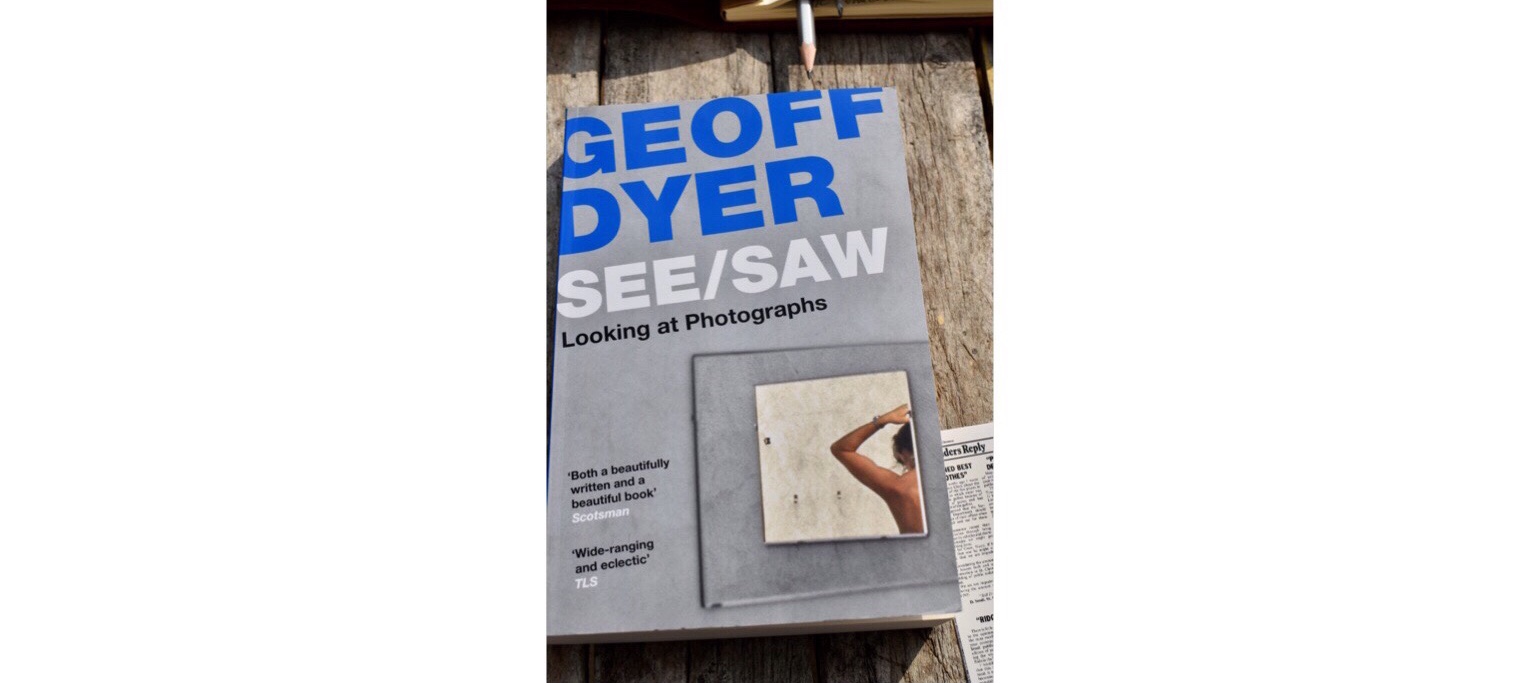
“Will anyone capture childhood as Helen Levitt did?
Or has that phase and possibility of social and photographic
history passed as surely as our own childhoods?”
Geoff Dyer, See/Saw: Looking at Photographs
Viewing
Deux hommes dans la ville, 1973
José Giovanni
José Giovanni was a novelist and scriptwriter before becoming a film-maker too. He contributed to the screenplays for some extraordinary films, such as Le Trou, Jacques Becker’s critical benchmark for the French policier, Jean-Pierre Meville’s Le deuxième souffle and Claude Sautet’s debut film Classe tous risque, each film having had much to bring to the genre, all adapted after his books. Giovanni knew the world he was portraying well. A former convict himself, who had been sent to the death penalty in 1948 before having his sentences commuted to life imprisonment and then further shorted to 20 years, Giovanni was finally pardoned after 11 years in prison, by ordin of the French president, René Coty. He owed the saving of his life to his father, who never ceased in his efforts to obtain the grace for his son. But Giovanni never forgot his past and he put it in writing and on film. Deux hommes dans la ville is one of his best films. It is haunted by defeat and betrayal. Giovanni doesn’t offer his characters redemption.
The film depicts a corrupt world where the supposedly good guys are much worse than the bad guys. The evil that remains unseen is much more harmful. Gino Stabliggi (Alain Delon) is a reformed criminal, recently released from prison, who is committed to going straight. A malicious police inspector however, Goitreau (Michel Bouquet), who got him jailed ten years earlier, keeps harassing him. Stabliggi has one man on his side, compassionate prison social worker Germain Cazeneuve (Jean Gabin), who believes Stabliggi is a reformed man and deserves another chance. The film is a harsh criticism at the French police and judicial systems and a moving and powerful appeal against capital punishment. Delon and Gabin on screen are a sight to behold. They have incredible chemistry. Delon, impetuous yet sympathetic in the face of a sealed fate. Gabin, with his incredible presence, is the personification of calm and reason in one of his finest late performances, but his faith in justice is eventually, late in his life, crushed. The final shot of Gabin walking along the tall, long, impenetrable wall of the prison couldn’t have been better used than to express the hopelessness of his efforts.
Comme un boomerang, 1976
José Giovanni
With Alain Delon again is the leading role, Giovanni has this time a father, Jacques Batkin (Delon), fight for his imprisoned son, Eddy (Louis Julien), who, under the influence of drugs, accidentally killed a cop. Jacques Batkin is a respectable industrialist, but when the past catches up with him – it turns out he is a reformed gangster – the prosecutor becomes much harsher and the death penalty starts to loom over Eddy, despite the extenuating circumstances that come up. It becomes clear that Eddy is about to be trialed not only for his own crime, but for those of his father, too, and that the public opinion often hovers over the judicial system and dictates the sentence. Jacques Batkin has no choice but to turn to his old associates to try to save his son. The ending is one of those endings that trigger all sorts of emotions.
La horse, 1970
Pierre Granier-Deferre
Somewhere near the Port of Le Havre, an elderly farmer Auguste Maroilleur (Jean Gabin) has a vast farm that he works on with his extended family. When he finds out his grandson is involved in drug trafficking, things get awry, especially that the boy has hidden the white powder – “la horse” is how heroine is called – on the farm. Such presence has Jean Gabin on screen that you have this undeniable feeling that nobody can escape him. When he enters the room, when he roams his land with the rifle always on his shoulder, even when he is interrogated by the police inspector, Auguste Maroilleur inspires authority and demands attention. He is a man who abides by his own law and there is not much that the others can do. The film puts his faith in this one character and it works.
Thief, 1981
Michael Mann
Frank (James Caan) has been in prison from teenage-hood until his early thirties. He doesn’t know what real life is about. Now he is out. And he is trying to have the life he has missed out on and which he has given shape to in a collage made out of photos from magazines – a collage that happens to be one of the best props in film history. “That is my life. And nothing can stop me from making me have it.” Michael Mann recalled in an interview that he tried to imagine what it would be like to be in prison from the age of 18 to when you are 30, after having spent your formative years removed from society and culture. How does Frank design what his life ought to be? He approached it mechanically and modeled it somehow. And then he goes for it. But in doing so, in going all the way to achieve the kind of life he modeled for himself, he loses the one thing that used to make him indestructible: he starts to care. His family – wife and child and the home and life they have started to build together – becomes his weak point.
Thief was Michael Mann’s debut film, one of those truly great debuts in the history of cinema. From atmosphere to character, from the neon-lit Chicago at night and the electrical musical score to some beautiful heist scenes, Michael Mann commands the screen and our attention. Before Thief, Mann had done The Jericho Mile, in 1979, for television, filmed on location at Folsom Prison, which tells the story of Rain Murphy, a man convicted to prison for life and who has just one thing that keeps him going: he runs. The experience from Folsom, where prisoners would turn to books, becoming auto-didactics, in order to get some sort of perspective on life when they had none, helped the director gain insight into the character of James Caan.
James Caan is Frank. He is a thief, a safe robber. He knows how to work with those tools. Caan learned to do that for the film. Frank’s belief in himself is huge. He is so good at what he does that he is the only one he has to answer to, and what he does and who he is is defined by his own personal code of conduct. The character has this energy and authenticity which never leave him, right towards that great, unconventional ending. I always seem to talk about film endings, because I have a tremendous appreciation for an uncompromising ending. “Films didn’t end this way,” said Michael Mann, who had written a different ending in the script, which had Frank reunited with his wife, Jessie (Tuesday Weld). The director felt however that the ending had to remain authentic to the starting point and to the character. “He is back to that state of nothingness, he cares about nothing, it’s free liberation.” Thief is one of those great films that have achieved the ability to live on their own.
Reading
But Beautiful: A Book about Jazz remains my favourite book by Dyer (I love all his writing). It was the first of his books that I read and so different than all the other music books I have read so far. He writes beautifully in such a way that you can not tell where the reality ends and where the fiction begins. Because he takes real facts, and quotes, and photos (how uniquely he reads jazz photos), and, most importantly, the way he hears the music, and he composes his own images and dialogue of scenes from the lives of the jazz musicians he writes about. They appear not as they were, but as he saw them, as the author himself reveals. That’s the beauty of it. It takes imagination and ardor and improvisation and spontaneity to write like this. “Jazz was about making your own sound, finding a way to be different from everybody else.” Dyer applies the same principle to his creative non-fiction.
See/Saw: Looking at Photographs, which I am reading at the moment, is different and maybe the reason why it hasn’t captured my interest to the full is that I am not into art criticism. Geoff Dyer reflects on photographs differently, depending on their signature styles, which only demonstrates his ability of looking at, understanding and writing about a photograph, and some of his essays I found fascinating, like the ones on Helen Levitt’s streets and Vivian Maier. It’s probably because I simply love the photography of Helen Levitt and Vivian Maier. Here is how beautifully he dives into Levitt’s street children photography: “Of all Levitt’s marvelous pictures, the one of the kids, the bike and the mirror is by far the busiest and most complex. I refer to it like that because there’s a nice rhythmic similarity to The Lion, the Witch and the Wardrobe, the first of the Narnia novels by C.S. Lewis, in which children pass into another world through a wardrobe.” His words simply add something new to the photograph, but not just an analysis – I don’t exactly believe that a photograph should be explained – but something much more important, a personal meaning to it.
It’s just like with films. If I don’t like a film, I don’t see any reason of going further into it. But when I do, that’s why and when I am willing to attach my own interpretation and my own feelings to it. And then I would love to have someone with Geoff Dyer’s writing skill and looking ability to muse on it.
Listening
The soundtrack: Until the End of the World, because this is how much I loved the film.
Making
Hats. Agave Road Hats. This is a brand with a beautiful story behind and a beautiful narrative into the present. It was created by JonCha, composer, play director, actor and writer, a full-fledged creative but who however missed working with his hands. After road tripping in America, from Austin to L.A., and digging out old western hats from every shop along the way, he was inspired to create his own. So a little while after returning to Europe, he moved from Sweden to the South of France with his family and set up his own business in his backyard. He started to make hats, with the Mediterranean nature to inspire their name – Agave Road Hats. JonCha says he likes to imagine his hats “on the head of a beloved barefooted great grandchild or in a small town shop in a hundred years so they can inspire someone else like the old ones I found and inspired me to become a hat maker”. Seeing his family wear these hats, it’s obvious that they are part of their life, accompanying them in writing their story. This kind of making fashion I like and understand.
Exploring
After recently watching an episode from Ben Fogle’s New Lives in the Wild (about the only tv I watch), I was completely transformed by Rhona Mitra’s story and the wild and free sanctuary she has made for herself, and the paradise of unconditional love and support she created for horses with The Last Ark Orphanage, in the Uruguayan pampas. Rhona is a beautiful and wild soul and I truly feel she is one of those special people who have the rare gift to inspire change in others and be the voice for the voiceless, both humans and animals. The kind of role model, or hero if you like, we should be for our children or should guide them towards.
“Going to the mountains is going home.”
John Muir
A great companion to the story above is the book Forest Bathing: The Rejuvenating Practice of Shinrin Yoku, where Hector Garcia and Francesc Miralles remind us of the strong connection between man and nature, offering us an excellent introduction into shinrin-yoku, the Japanese art of forest bathing, this green therapy that has proven a key element for us humans’ health. This book (which also includes one of the most inspiring quotes for me, John Muir’s words written above) reads not just like a call to nature, but like a return home, just like Rhona Mitra’s story.
On an end note
It’s the most wonderful time of the year… Clay season! Which means that besides the sport itself, I will be diving into everything surrounding clay court tennis, from art to Racquet’s on court coverage.
The regulars: The interviews, newsletters and podcasts I turn to every week and/or every month because they are that good. Craig Mod’s newsletters: Roden and Ridgeline. Soundtracking, with Edith Bowman. Alicia Kennedy’s newsletter. Gone to Timbuktu, Sophy Robert’s podcast on the art of travel. Sirene and Racquet magazines, in print.