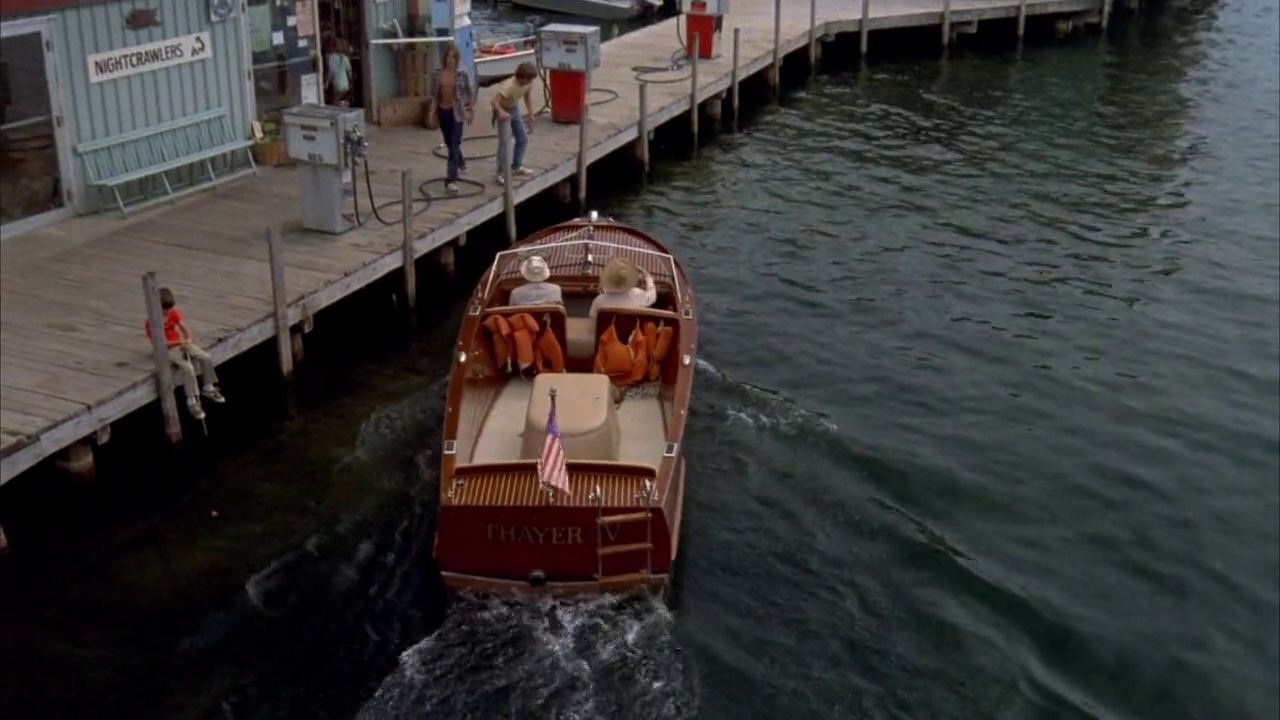
“On Golden Pond”, 1982. Universal Pictures
On a stormy night, Ethel Thayer drives into the town near where she and her husband, Norman, have a summer lakeside house, gets hold of Charlie, the mailman and his boat (“Oh, Charlie, thank God you’re here! Come on, we’re going for a ride!”) and sets off to look for her husband who has gone fishing and should have returned for hours. She is worried, but rather extremely intrepid than panicky. We already know that Norman and Billy, a young boy who is under their care for the summer, have had a boat accident, because Norman was “crazy enough” (Ethel’s words) to go into the Purgatory Cove, a rocky spot that “eats boats”, and their boat, Thayer IV, had indeed hit a rock, sending him off board. Billy rescued him and they managed to save themselves by clinging onto a rock. Ethel makes Charlie to go right into the Purgatory Cove, gets on up on the deck to point the way, eventually finds her husband and Billy and does not hesitate to plunge into the pond herself, under Charlie’s stunned look, to see if they’re okay. Resilient, resourceful, vivacious, unstoppable. This is Katharine Hepburn’s Ethel Thayer, 74 years of age, in the film On Golden Pond.
When Hepburn had gone to Wilmington, Delaware, to see the play that was later adapted into the film (both written by Ernest Thompson), she remarked: “It was played by two people about fifty, and they were very busy being old and slightly feeble.” That was not her cup of tea. During filming, she swam every day, morning and night. She found it funny. As a child, she used to be dumped into a cold tub every morning. At the time she wrote her book, Me: Stories of my Life, where she made the remark above about the fifty-something actors being very busy looking old, she was 86, and she still swam – winter, summer. At Fenwick, her family’s summer house, she would go across the snowy lawn, her feet freezing, and she would go in. Dip. Swim a stroke – one stroke – and rush out. “What a tremendous opportunity it is just to be alive,” Hepburn wrote. She lived by that motto and in On Golden Pond she shows herself in a new light.
“One more dance with her public was what Kate wanted,” William J. Mann reveals in Kate: The Woman who Was Katharine Hepburn. “And not just in yet another television movie or even a Broadway play. The last act of Katharine Hepburn’s life would take her back to the big screen, setting into motion her final, most glorious transfiguration. Pundits said it was impossible for a seventy-four-year-old actress to star in a successful major motion picture, but Kate proved them wrong. The film was On Golden Pond.”
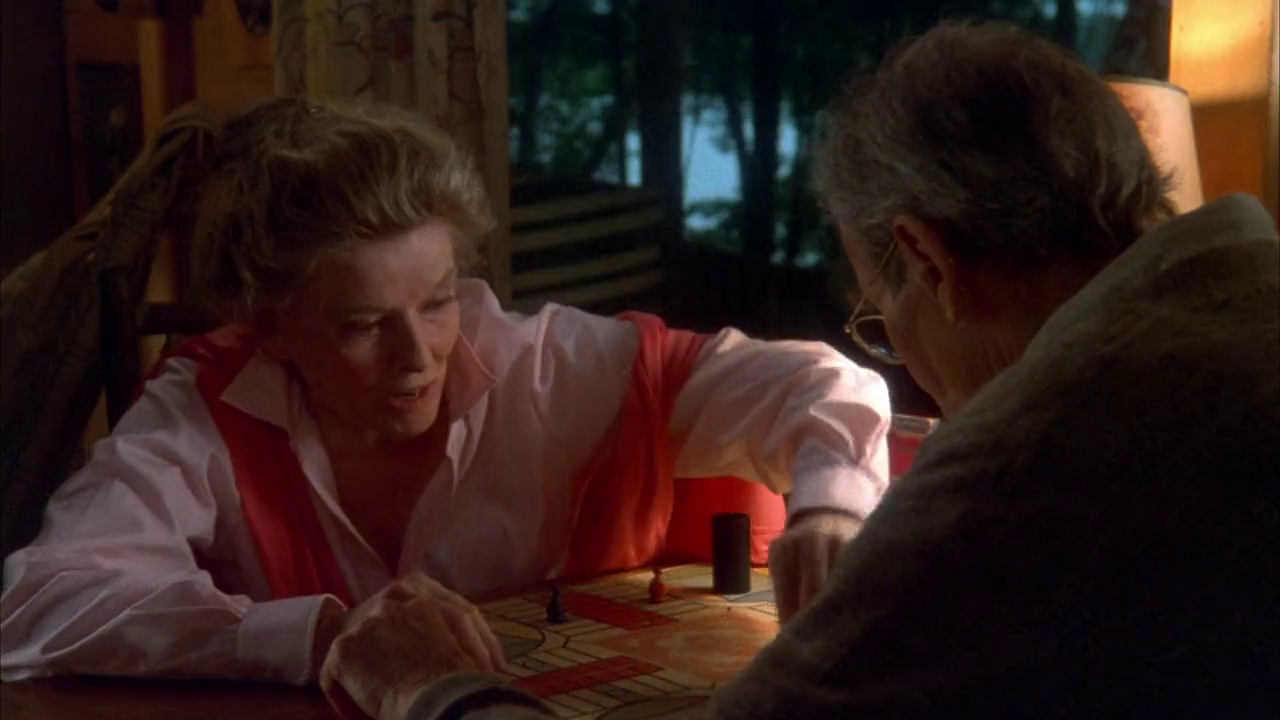
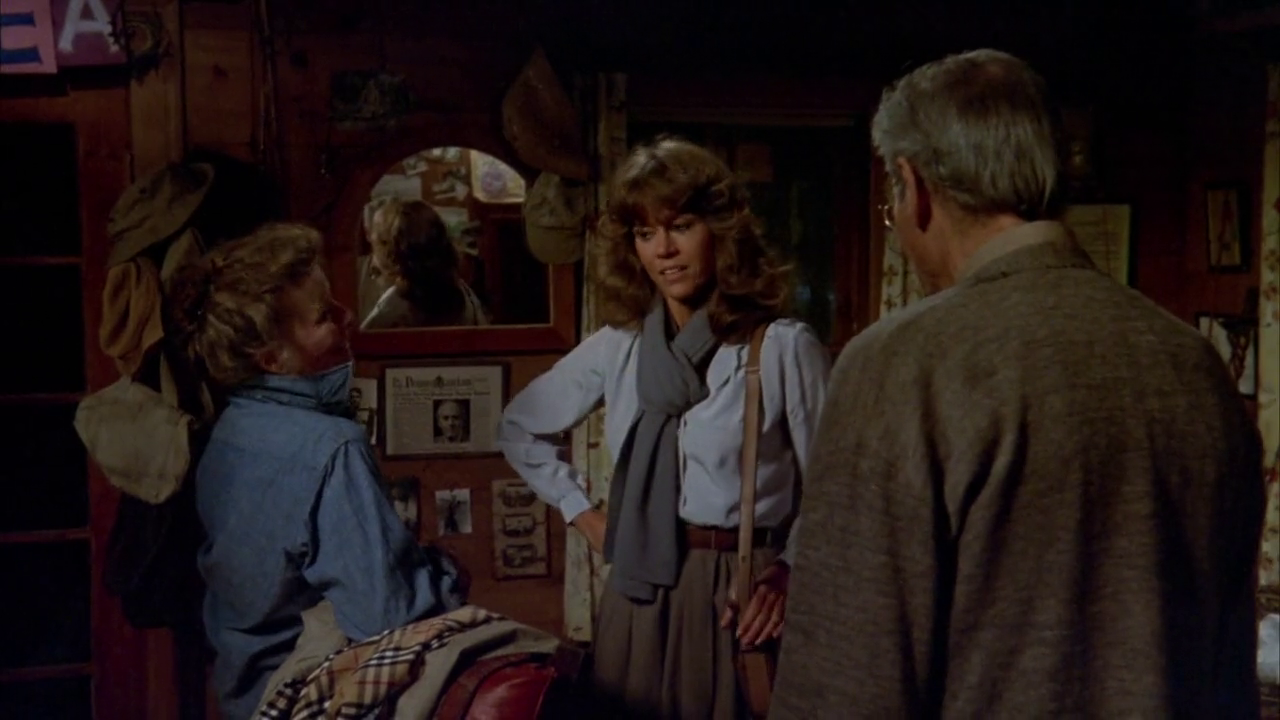
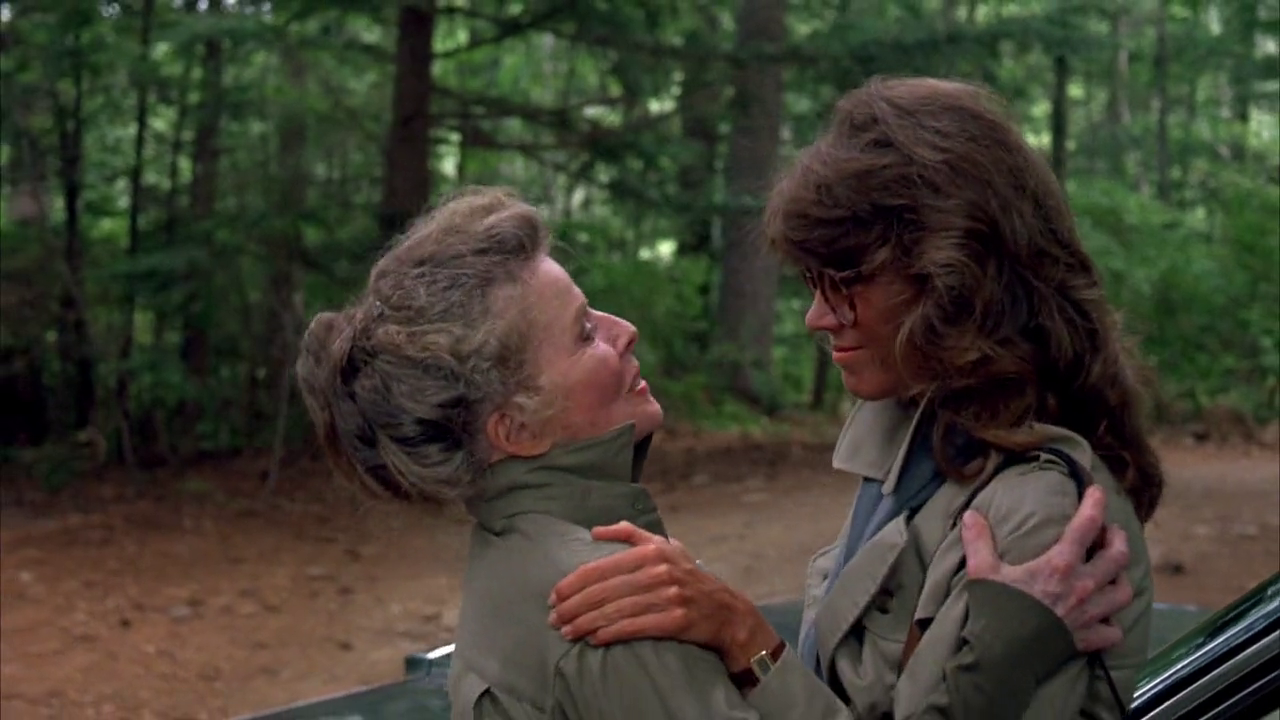
Katharine Hepburn, Henry Fonda and Jane Fonda in “On Golden Pond”, 1981. Universal Pictures
The story about an aging couple who return to their summer lakeside cottage, brought together not only Henry and Jane Fonda on screen for the first time, but Katharine Hepburn and Henry Fonda, too. Ethel and Norman Thayer are visited by their estranged daughter Chelsea (Jane), her fiancé, Bill (Dabney Coleman), and his teenager son, Billy (Doug McKeon). The film explores the difficult relationship between father and daughter, a rift that the mother is continually trying to mediate – “Jane and Hank were busy working out a rather complicated father-daughter relationship, and this was to be the solution. An ambitious father and an ambitious daughter find their solution with an ambitious friend. We all had a good time,”disclosed Hepburn. The film is also about the challenges facing a long-married couple – in their old age, is how grumpy Norman calls them, while, Ethel, vitality impersonated, considers them to be at the far edge of middle age (Fonda’s character celebrates his 80th birthday in the film, although the actor was only 76, but very frail, and Hepburn was 74, as previously mentioned). “Hank and I were the right age, so we weren’t busy acting old,” Katharine mused. “It comes upon one unexpectedly. Suddenly you lose your spring. Your spring in the sense of elasticity. Now – old – you don’t spring up from a chair. You get up. It is a very different act. Henry had lost a little more spring than I had when we were doing the picture and we slid very easily into our relationship. He was wonderful to play with – very true – very natural.”
A very good study of a relationship of a husband and wife who just really liked each other, On Golden Pond is a reflection on family and life, and on a life spent together – we see it in their looks, their silences, their built-in trust, their hands, their wrinkles etched in a life lived side by side. It’s about entering a new stage in life – Norman pondering on his passage through this world, of everything he lived and fought for, desired, achieved and maybe lost, Ethel/Katharine holding her head high, no matter what, fueled by some kind of renewed sense of optimism. I believe it paints an authentic picture of family life and the dynamics of intergenerational relationships. Not perfect, not easy, but humbly waiting to be mended at every turn. The location of the movie was Squam Lake in New Hampshire, and a rustic cabin that is a character in itself. It speaks of a layered family history, it truly feels lived in (how I long for those movies of decades past that are so remote from the much too often displayed pristine aesthetic of today’s set designs), and we see it in every character, how it has marked everyone’s life, in a different way, along those summers spent there while making a home of it, just like the nesting loons on the lake. There are photos plastered all over the walls, that speak of a whole life in frames, little snippets, moments, memories, and once again that reminds me of Katharine’s memoir, of its meandering rhythm that so well evokes life’s course. Because that’s life, especially when you recall it, I imagine, from the far end of it, made up of strings of short stories, not a long, seamless narrative, the way so many autobiographies tend to go. Not Hepburn’s, and I love her even more for that.
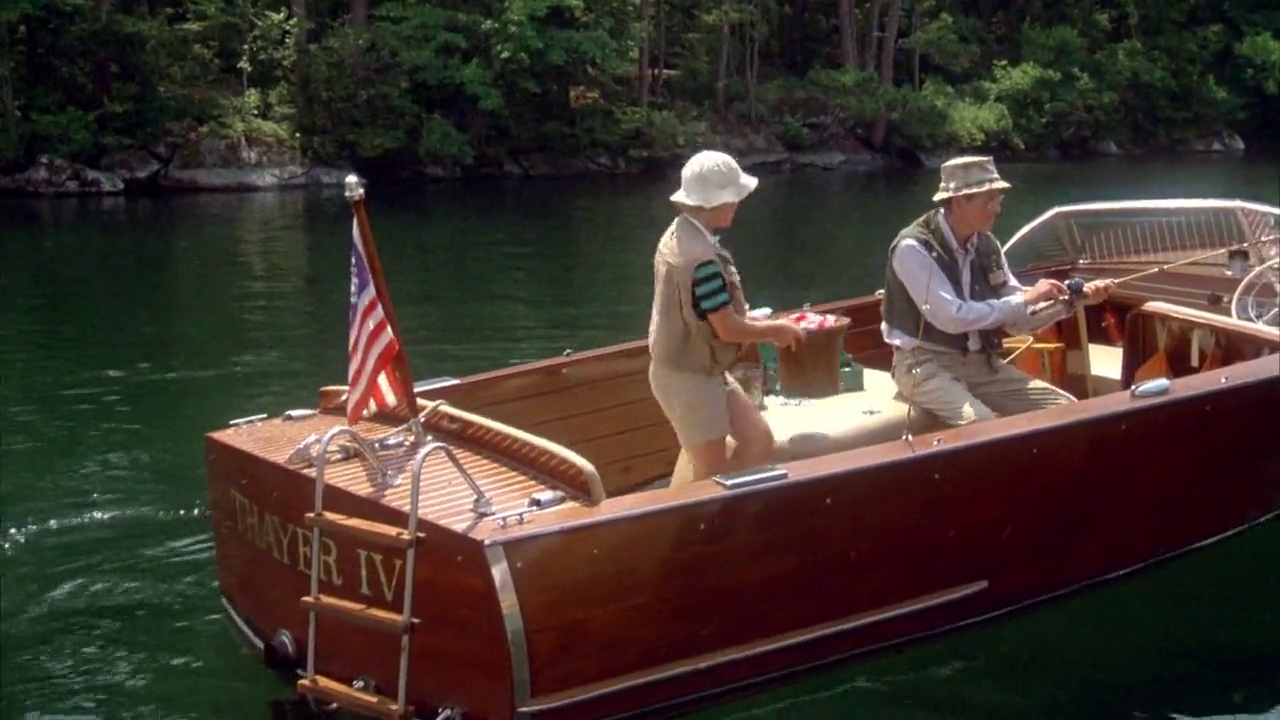
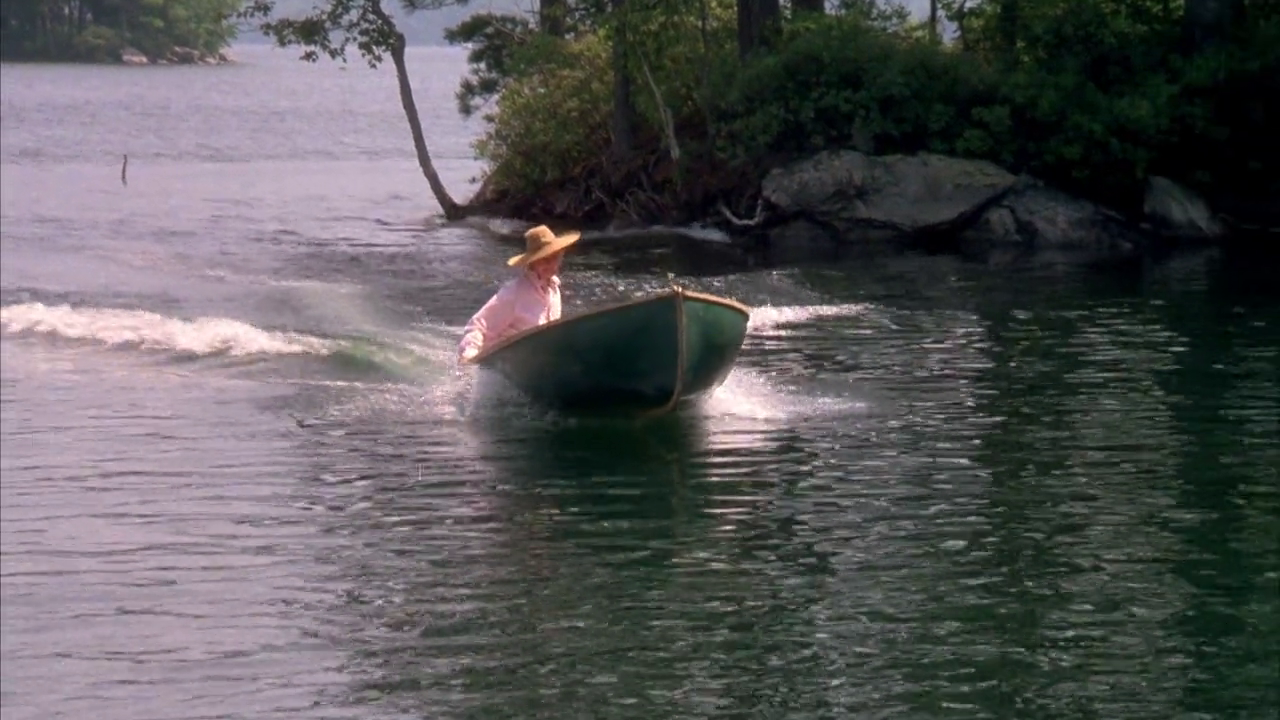
Katharine Hepburn, Henry Fonda and Doug McKeon in “On Golden Pond”, 1981. Universal Pictures
Henry Fonda and Katharine Hepburn each had their own house to stay in by the lake during filming and the actress fondly remembered how she would often see Fonda take his evening stroll. He liked to sit and fish or paint. She liked to walk through the woods alone. They were both oddies in their own way. “We are quite similar. He doesn’t waste time. No small talk. And I hate to have idiotic conversations.” She gave him a fishing hat that had belonged to Spencer Tracy, and which Fonda wears in the film. At the end of the picture, Fonda returned the gesture by giving Hepburn a painting he did of three hats, Spencer’s in the middle.
I tremendously admire Henry (you just can’t figure Norman out, you don’t know what he’s going to say, and that is sometimes unnerving, sometimes hilarious) and Jane Fonda (how bravely she slips into this role) separately and it was also very special to watch them together on screen, but I can not help rooting for Katharine. Supportive, tough, wisely measured, joyful. She is the driving force. She is ageless. Even with her tremors, which she already suffered from, she is full of energy and life. In her wide-legged jeans, white trousers or khaki pants, sneakers, turtleneck tops underneath oversized shirts (always with the collar turned up and sleeves rolled up), she looks absolutely beautiful. The way Katharine dressed, the way she lived, the way she carried herself was a language in itself. It was a profound beauty in the way she just was. She was a natural, the ultimate eccentric, the first true original, the fearless, uncompromising, unconventional star that did everything her way.
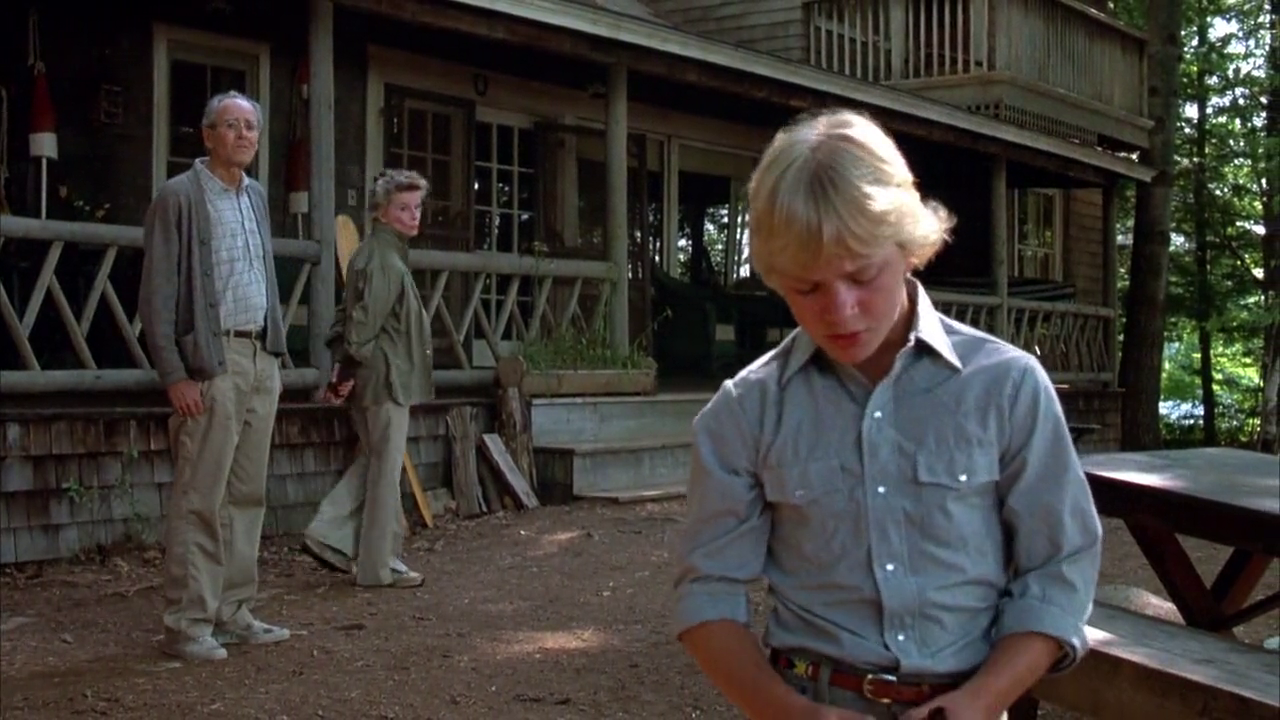
Henry Fonda, Katharine Hepburn and Doug McKeon in “On Golden Pond”, 1981. Universal Pictures
MORE STORIES
In Marrakech, with Hitchcock and his most free-willed heroine
Me: Stories of My Life, by Katharine Hepburn
Very, very natural and herself: Katharine Hepburn in “Bringing Up Baby”