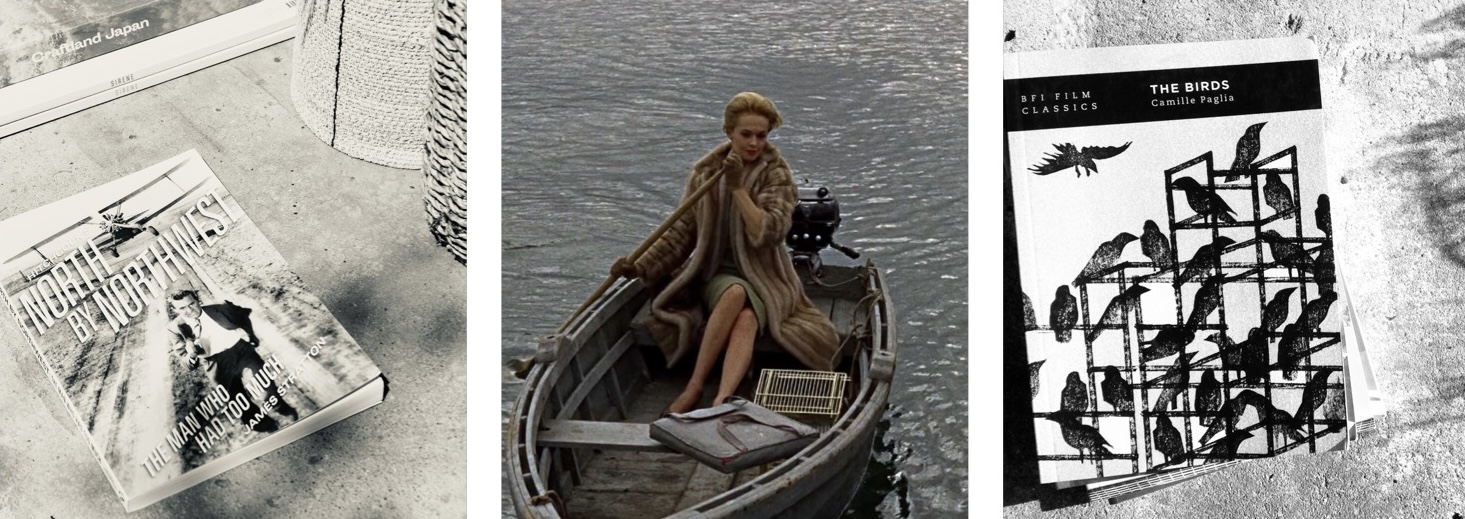
Why would anyone consider that Hitchcock did the same type of film over and over again? This idea has always puzzled me, because you only have to listen all the different scores that Bernard Herrmann composed for Hitchcock’s films and you know how different each one is from the other. North by Northwest is one of those films I would watch (and have watched) over and over again. From that first sound of Bernard Herrmann’s music, my interest doesn’t waver and I wait with anticipation every next scene as if I didn’t know what is about to happen. And I don’t know how, but it seems to get better every time. Time takes on a different dimension, the rest of the world falls away, and you feel the story in your bones from the get-go. Because that’s Herrmann’s music for a Hitchcock main title sequence does – it encapsulates what the whole film is about and then guides you through.
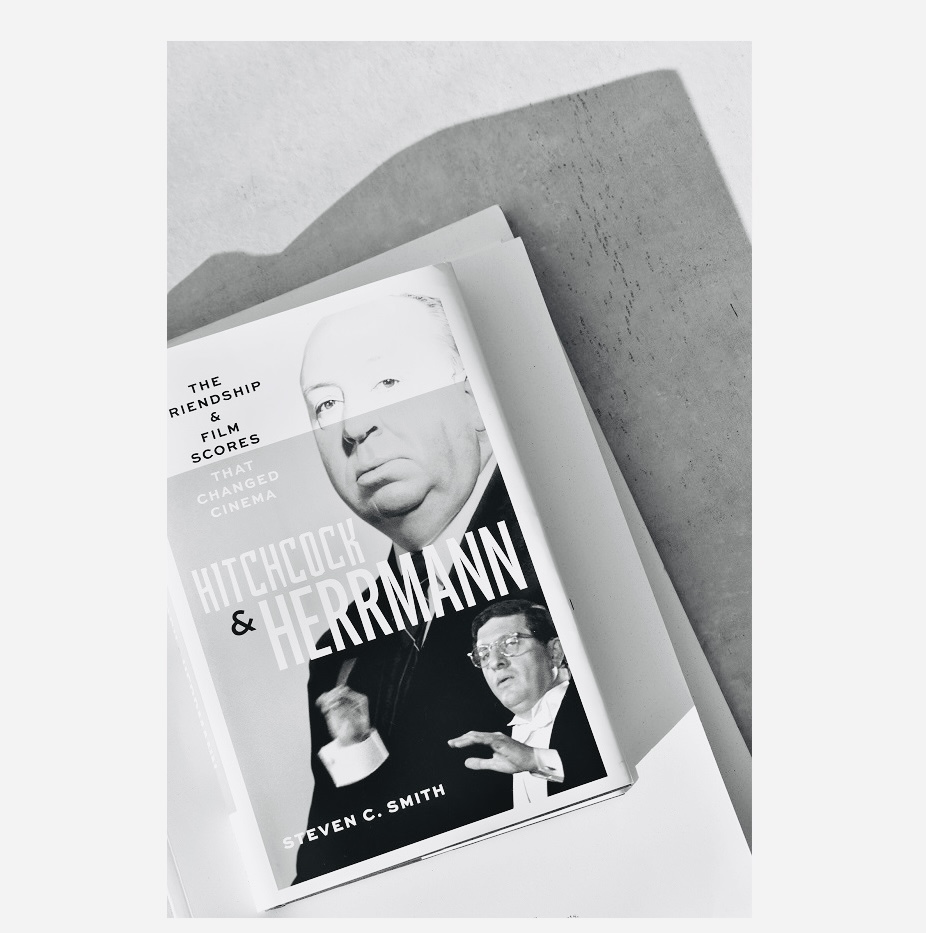
The Trouble with Harry was the first film Alfred Hitchcock and Bernard Herrmann worked together on, and “from that point on, Herrmann gave Hitchcock a musical identity in all of the films they made together,” Hitchcock historian and filmmaker Laurent Bouzereau relates in the book Hitchcock & Herrmann: The Friendship and Film Scores that Changed Cinema. Exciting, without being didactic, the book does an amazing job at making us understand how music and film are a unified piece of storytelling. And that what Herrmann did for Hitchcock’s films was that he created a language that will run throughout the movies (The Trouble With Harry, The Man Who Knew Too Much, Vertigo, North by Northwest, Psycho, The Birds, Marnie). As author Steven C. Smith rightfully states, “whatever music can do in a film is something mystical. The camera can only do so much. The actors can only do so much. The director can only do so much. But the music can tell you what people are thinking and feeling.”
Bernard Herrmann passed on the chance to write fresh music for the Albert Hall climax for Hitch’s own remake of The Man Who Knew Too Much, because he knew what the film needed, and had no objection to including a song, Che será, será (Whatever Will Be Will Be), something he was always against, because he understood the dramatic purpose of the song. In Vertigo, his score created “a mood of spectral mystery and emotional obsession”. In North by Northwest, “the forerunner of all James Bond films,” in the composer’s own words, the music leaps up and down just as the main character does, his next move as unexpected to us, the audience, as it is to him, but Herrmann knew again when to be silent: “While spotting the picture – determining where music stops and starts – Hitch and Benny agreed that the crop duster attack on Thornhill would be unscored. ‘If you’re a painter, it doesn’t mean that you can’t use black,’ Herrmann later said. ‘And that is a sound: black. Every good artist uses black at times.’” In Psycho, Herrmann said he “was able to complement the black and white photography of the film with a black and white sound,” resulting in “pure ice water”.
I regularly listen to Herrmann’s Hitchcock scores, in rotation with the likes of some of my favourite rock musicians. His music feels alive, it has a way of finding a place in the present, that’s how timeless it is. This is another essential quality of the book – it taps into that spark that defines the far reaching influence of a Herrmann-Hitchcock soundtrack.
Read instead… in print is about a good book about cinema or filmmakers. No discursive, pretentious analyses, no verbose scrutiny. Because the idea is to invite you to read the book, not read about it here. But instead of using social media, I use my journal. Back to basics. Take it as a wish to break free of over-reliance on social media (even if it’s just for posting a photo of a good book) for presenting my work, cultural finds and interests. These are things to be enjoyed as stand-alone pieces in a more substantial and meaningful way than showing them in the black hole of Instagram thronged with an audience with a short attention span. This is also a look through my voluminous collection of books about film that I use as research in my adamant decision to rely less and less on the online and more on more on print materials.
MORE STORIES
Read instead…in print #36: North by Northwest: The Man Who Had Too Much
The Birds, the ultimate Hitchcockian heroine and the grandfather figure
Read instead…in print #4: The Birds, by Camille Paglia