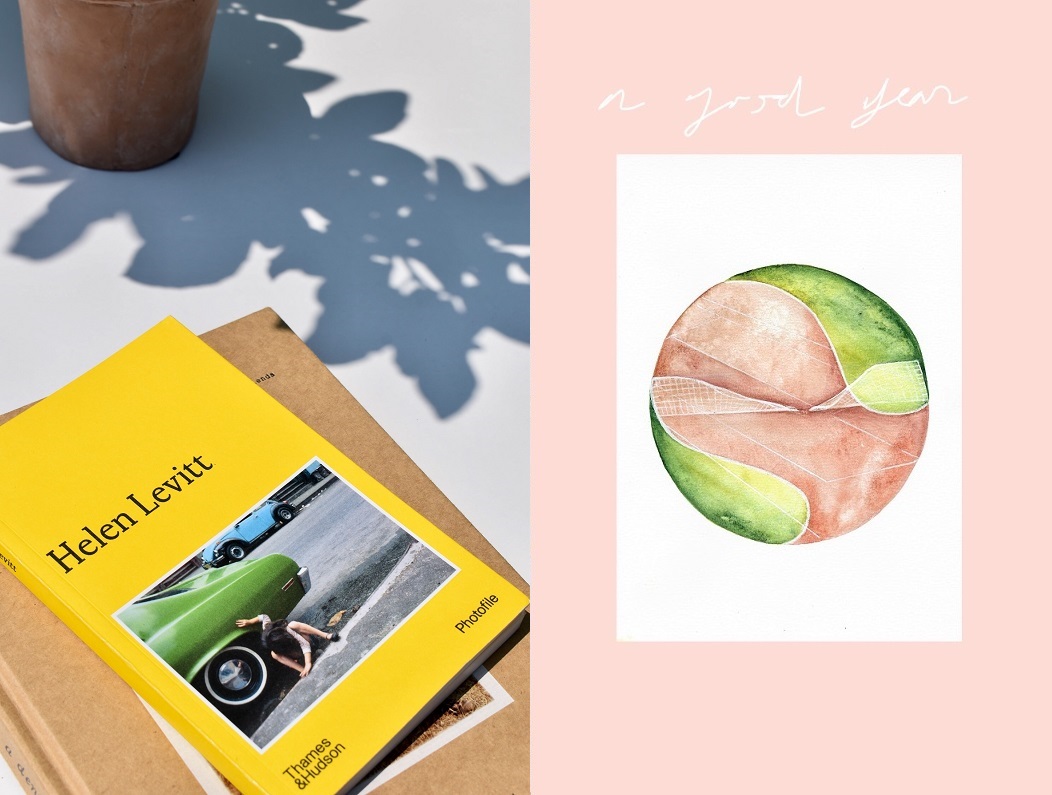
Right: “A Good Year” fine art tennis print after a watercolour illustration,
available in the shop and part of a larger “Classiq Journal x Realign” collaboration, set to launch soon
“What really matters is what you like,
not what you are like…
Books, records, films – these things matter.
Call me shallow but it’s the fuckin’ truth.”
Rob, High Fidelity
Viewing
High Fidelity, 2000
Stephen Frears
The best film about music, without really being about music and without being a documentary. The amazing soundtrack, the musical remarks sprinkled throughout the film, the conversations around music that seem depicted from your own conversations about music with your friends, the fictional record store everyone fell for in the glorious days of analogue music and the kind of record store we still lust for having in real life somewhere in the town we live in, characters that feel real, John Cusack’s apartment decorated with vinyls and not much else (any home having books, vinyls and DVD’s as key design elements is a home I want to visit), the sense of community formed around music, Jack Black in a role written with him in mind, and Bruce Springsteen in a cameo part. This film is a love letter to good music. High Fidelity is about a record store owner, Rob (John Cusack, who also co-wrote the film) who is trying to find out why he is unlucky in relationships, recording his romantic past on the soundtrack of music. And the wonderful thing about music is that it can be highly personal, but music can be very universal, too. There are so many great scenes here, but one that stood out for me is the one in the shop when Rob claims he can sell five EP copies of the Beta Band just by playing “Dry the Rain” to the customers in the shop. And he drops the needle to record and the people start reacting to it. I’m that kind of customer. I would buy an album on the spot when I hear something I like.
“Hey, I’m not the smartest guy in the world, but I’m certainly not the dumbest. I mean, I’ve read books like The Unbearable Lightness of Being and Love in the Time of Cholera, and I think I’ve understood them. They’re about girls, right? Just kidding. But I have to say my all-time favorite book is Johnny Cash’s autobiography Cash by Johnny Cash.” – Rob
Good Morning, Vietnam, 1987
Barry Levinson
Is there any actor who can go from comedy to drama in mere seconds like Robin Williams? From rapid-fire wisecracking jokes to sinking into a harrow sadness. He is Adrian Cronauer, a U.S. Armed Forces Radio Service DJ, who broadcasts his manic humour and Motown music from his base in Saigon to the troops fighting the Vietnam war. There have been a few good films about Vietnam, but Good Morning, Vietnam is one of the even fewer American movies set during the Vietnam war that portrays the Vietnamese as real people. One of them is Cronauer’s friend, a young boy, Tuan, and some of the most dramatic moments in the film arise from their friendship. Robin Williams’s energetic outbursts are a show stealer, without a doubt, but there is a balance between drama and comedy that Levinson also reached here that is the real accomplishment here and which gets to you in a more profound way than the usual war movie.
Platoon, 1986
Oliver Stone
One of those few good films about Vietnam. “Seeing Platoon get through the system makes the soul feel good.” – Brian De Palma
The Big Combo, 1955
Joseph H. Lewis
“Silhouetted figures standing in a rigid position become abstracted Modern Man and Woman. The backlighting of heavy smoke and an ominously circling light visible in the background further abstracts the environment into a modern netherworld.” Janey Place and Lowell Peterson, writing for Film Noir Reader, found the perfect words for the image above from The Big Combo. It’s one of those famous film noir atmospheric images, burned into collective memory. Even before watching the film, I knew that image, without feeling the need to place it in one film noir. It could be from any film noir, representing the archetypes of noir man and noir woman. But in The Big Combo that moment arrives at the end of the film. “By now, the viewer knows who these people are and what they feel but not how their relationship will be resolved,” writes Film Noir: 100 All-Time Favourites. “In classical usage, fog enshrouds the passageways between worlds. Clearly Lowell and Diamond are poised on the brink of something new. The fog separates them from the physical reality of the world outside the hangar. Highlights kick off the edge of the doorway and reinforce this sense of movement towards open space. […] But, as the figures disappear into the fog, as they begin transition, nothing is certain.” I like this uncertain ending, that stays closer to the film noir spirit that many other that succumb to melodrama. But more than the atmospheric cinematography, by John Alton, the film gives us interesting characters that fortunately compensate the frail performance of lead man Cornel Wilde), such as Richard Conte in what is probably my favourite role of his as not just a hard boiled gangster but criminal mastermind Brown. But it is a young Lee Van Cleef, before his spaghetti western stardom, who is truly the stand-out as a steely, ruthless hitman. He had such a unique presence on screen, the memory of his presence still there even when the film cuts to another frame – Sergio Leone made a whole film come down to the faces of his protagonists, Van Cleef among them, in the ending scene of The Good, the Bad and the Ugly, with its quickening cuts from face to face intensified by Ennio Morricone’s musical score. He became one of those endearing bad guys impossible to forget and who give movies life, from noir to western, from The Big Combo and Kansas City Confidential to For a Few Dollars More and The Good, the Bad and the Ugly.
Sergio Leone: The Italian Who Invented America, 2022
Francesco Zippel
And speaking of Sergio Leone’s westerns and characters, here is a filmmaker who brought authenticity back into the western. Leone brought cynicism and irony, craziness, boldness and machismo to the clichés of Western cinema, letting a picaresque spirit intrude on dramatic events, where no true hero is represented by a single character. In Leone’s unique vision, historical reality and the realistic settings give us the conviction of fantasy. He made movies that belonged to cinema. It’s a joy to see and hear Leone talk about his movies in Francesco Zippel’s documentary Sergio Leone: The Italian Who Invented America. And it’s incredible to see so many great directors, from Clint Eastwood, Martin Scorsese and Steven Spielberg, to Quentin Tarantino, Damien Chazelle, Giuseppe Tornatore and Darren Aronofsky talk about his films and the way he has influenced each and every one of them, all such different filmmakers.
Reading
Cash, by Johnny Cash, because it’s been sitting around waiting for me to read it for far too long, and because Rob said so.
Recently I picked up French Film Directors: Mathieu Kassovitz, by Will Higbee, in a bookshop. And so I got reacquainted with La Haine. No other French film has had such a significant impact since La Haine was released 27 years ago at the Cannes Film Festival, when it took the film world by storm with its explosive look at the racial and cultural volatility in modern-day France. The book, that covers the first decade of Mathieu Kassovitz’s filmography, contextualises the director as a ‘popular’ filmmaker and analyses his films in relation to key shifts that have taken place in French popular culture over the 1990s and 2000s. Kassovitz’s early years as a movie fan, and apprenticeship in the French film industry, controversial socio-political issues (such as racism, exclusion and violence) affecting contemporary France, the current state of the French cinema and its ambivalent relationship with Hollywood are among many other things brought into discussion. Film books are simply not just about films. The book also catapulted me into this rabbit hole that lead, among others, to an interview with Mathieu Kassovitz for Sight & Sound, where Kassovitz talks about the powerful legacy of the film, what he stole from the great directors and why Spielberg should turn down the music in his films. Here is what Kassovitz’s interviewer, Kareem Aftab says about the film: “It’s a movie that sets fire to the comfortable middle-class outings of much French cinema, turning the gaze beyond the Périphérique ring road to the Parisian banlieues, where the bright colours of white socialite Paris are scorched to a black-and-white concrete jungle that is home to a mix of black, Arab and Jewish communities.”
My latest interviews: with Øyvind Torseter, artist, illustrator and recipient of the Bologna Ragazzi Award and with painter and designer Flora Roberts.
Listening
The soundtrack: High Fidelity
The podcast: Alicia Kennedy’s From the Kitchen Podcast. In this first edition, she talks to Abi Balingit, author of Mayumu: Filipino American Desserts Remixed. As photographer Sophie Denux further down in my newsletter states, cookbooks (and films) inspire her more than travel writing, and this conversation proves it.
The album: Achtung Baby, U2
Making
A new collection of prints, part of an exclusive “Classiq Journal x Realign” collaboration, set to launch soon, just in time for summer. The first one, titled A Good Year, is already available in the shop. The inspiration? Three things I am passionate about converging: tennis and its clay season, summertime and cinema – here is the story behind it.
Exploring
Tunis, through the lens of Sophie Denux – her Agfa film shots are magnificent. I would love to see these photographs take the shape of a book. Last summer, Sophie released the book La Famille Marseille cookbook, co-authored by Stéphanie Giribone, jewellery maker and restaurateur, following their first collaboration together, La Famille Marrakech. The photographer named it an atypical little work led by her and Stéphanie’s own choices. For a deeper look into Sophie’s visual talents and creativity, you can read my interview with the photographer, where we talk about the places she keeps returning to, about preferring films and cookbooks as travel inspiration instead of travel writing and the “stolen” moments she seeks to captures on camera.
The regulars: The interviews, newsletters and podcasts I turn to every week and/or every month because they are that good. Craig Mod’s newsletters: Roden and Ridgeline. Soundtracking, with Edith Bowman. Alicia Kennedy’s newsletter. Gone to Timbuktu, Sophy Robert’s podcast on the art of travel. Wachstumsversuche, with Sarah Schill. Sirene and Racquet magazines, in print.
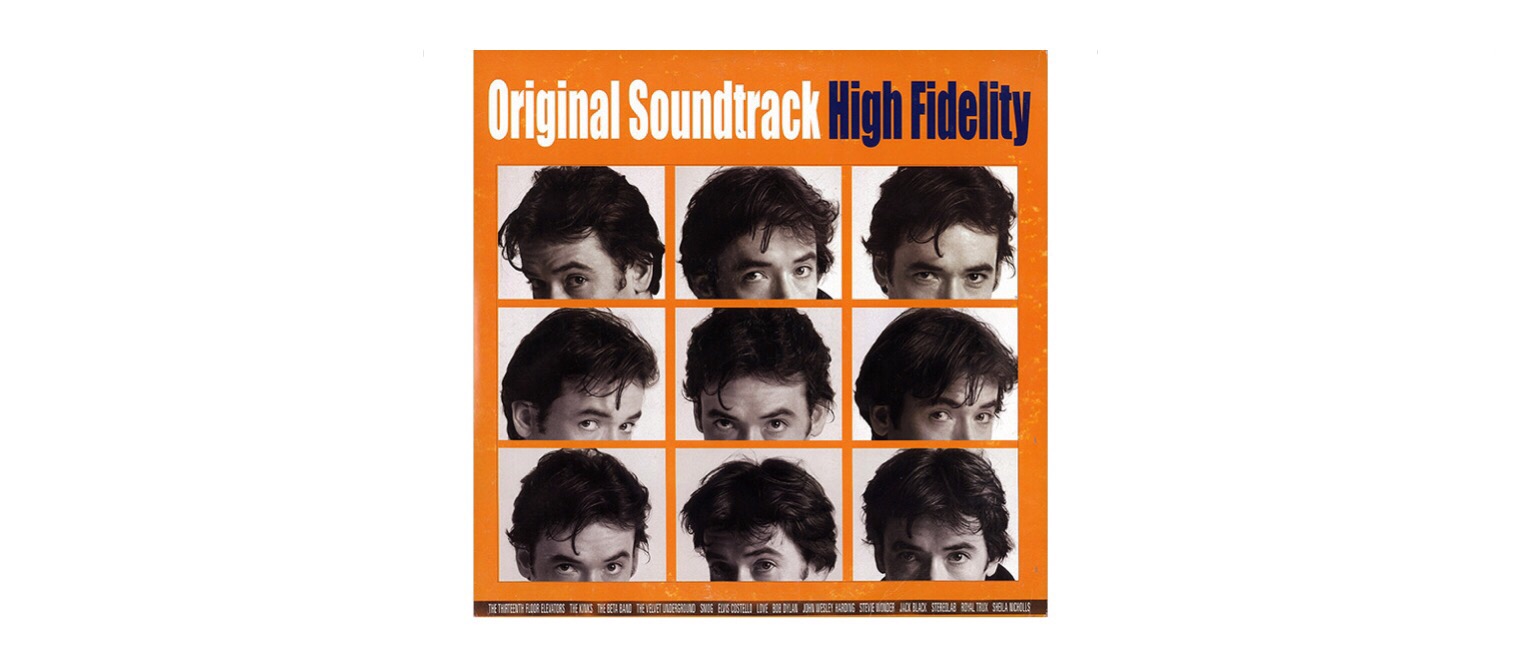
Dick: I guess it looks as if you’re reorganizing your records. What is this though? Chronological?
Rob: No…
Dick: Not alphabetical…
Rob: Nope…
Dick: What?
Rob: Autobiographical.
Dick: No fucking way.
(High Fidelity)

