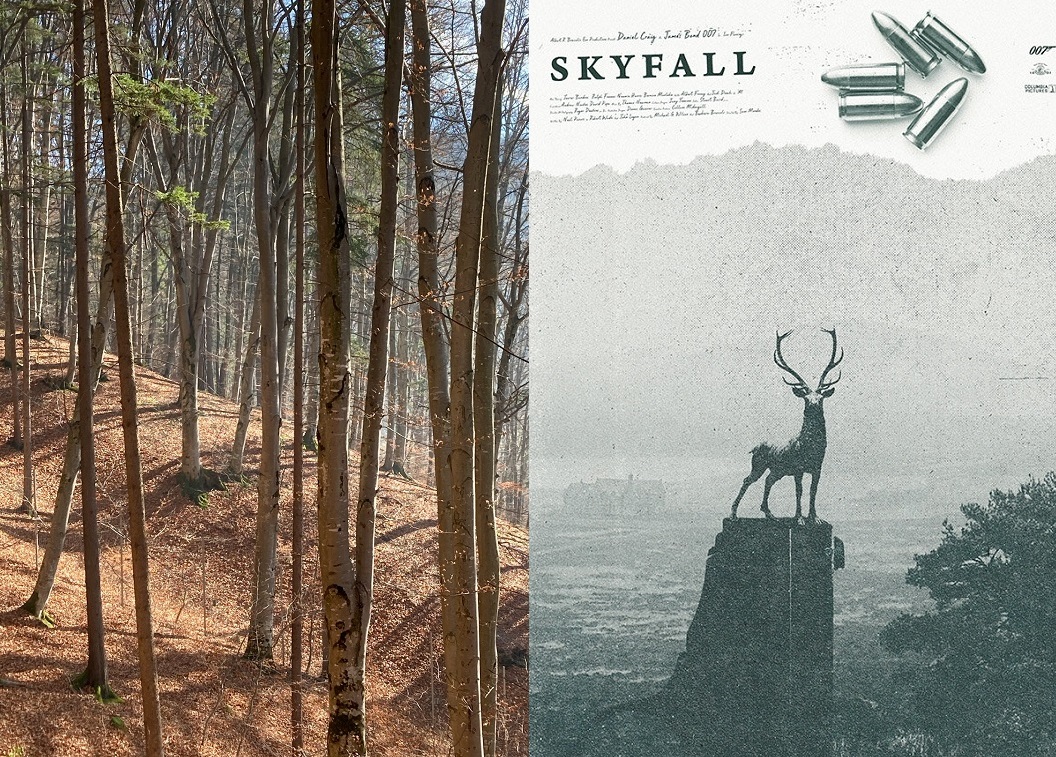
Right: “Skyfall” film poster designed by Matt Needle, part of the Classiq Journal personal collection
Photos: Classiq Journal, unless otherwise stated
No Time to Die takes James Bond back to Venice with Madeleine. He is back where his story with Vesper Lynd ended. It makes sense. The last Daniel Craig Bond is probably also the last Bond as we’ve known him and loved him. One can not talk about No Time to Die without talking about the Daniel Craig films as a whole. Without giving anything away for those who have not yet seen the film, certain plot elements in the movie already prepare us for the revisionist changes we might expect to see from now on in the character. Casino Royale marked a new beginning as well. With a story anchored in reality, and with a Bond who would be darker, sharper and edgier – “Daniel to me is like Gary Cooper or William Holden,” would say Sam Mendes, director of Skyfall and Spectre. “An actor from an era when men were men, there’s a sense of reality about him. He feels like he gets his hands dirty.” – but also more humane and vulnerable than the earlier Bonds. It’s James Bond before becoming 007, the definitive James Bond story. The Bond girl was different, too, with her own past and her own present agenda, a character so strong, so enigmatic, complex and tragic that her presence would be felt in all other Daniel Craig movies. She is the one he falls in love with and loses. The one who places the biggest mark on him for the rest of his life. In Casino Royale, The Monty Norman James Bond theme appears only in the final act. That’s the first time we see the James Bond we’ve known from the other films.
After watching No Time to Die, I rewatched Skyfall and I have realised it may be the best Bond film, and, hmm, my favourite, getting ahead Casino Royale for the first time. There is this realistic feeling to it that makes it so good and so different. And there is grittiness to it that makes it fascinating to watch, especially this time of year, especially for those who have an ambivalent attitude towards the end of the year. For many, “winter is a time of darkness and introspection, of intense loneliness and alienation” Sting remarked in regard to his winter-themed album, If on a Winter’s Night.
Skyfall is indeed the darkest Bond film. It’s again a personal story, which goes back deep into the character’s past to confront his demons, and I love how Matt Needle’s poster design taps rights into that. I love everything about this film, really, from its title – “I think Skyfall is a great title for the movie,” said screenwriter John Logan. “It’s arresting, mysterious, sounds wonderful aloud, and would be a lovely reveal for the audience when you pan up and see the word carved into the gates at the end of the Scotland sequence.” – to the gritty London – “London is a character in the story,” said Ben Whishaw who plays Q. “It is rarely represented on film in a way that captures the glamour, the mystery, the danger, and the madness of it.” – and the majestic Scottish Highlands so beautifully rendered through the richness of Roger Deakins’ photography who made this the most visually beautiful Bond film, and this incredibly dark, haunted by memories, James Bond who nonetheless shows his weakness in the end through his complex relationship with Judi Dench’s M.
It’s just great, strong storytelling. It’s a proper movie. And of course Sam Mendes and Roger Deakins had a crucial role in that. “Even as a teenager, I really wasn’t a big fan of Bond movies,” Deakins told Entertainment Weekly before No Time to Die premiered this fall. “But there’s something about Skyfall that’s very different, and I found Sam’s take on it really interesting. It’s much more a kind of film noir, I think, and it has much more discussion of a character who’s facing his own mortality, in a way. It kind of encouraged me to do silhouettes and have people come in and out of darkness.” And if Roger Deakins says it, film noir meets James Bond, I mean, it can’t get any better than that.
The latest – although I want to say the last – Bond film is emotional and I doubt anything that will come from now on will harken back to the classic routes and play on nostalgia, whilst also being modern, fresh and contemporary the way the Craig films did. Because as much as I have enjoyed the evolution of the character in all its facets, even if every time I have written about a Daniel Craig Bond film, my readers would write back never shunning to point out that Sean Connery remains the only true James Bond, my unwavering opinion remained, I am afraid change for the sake of change in this character simply does not work for me. I am being sentimental, but come on, it’s the end of an era.
Viewing
The Power of the Dog (2021)
It’s all about that ending. A film that takes a little longer to comprehend and works on subtlety so finely is hard to come by nowadays. And everything else, from cinematography to music (by Jonny Greenwood, whose score for Lynne Ramsay’s You Were Never Really Here still haunts me, the way Joaquin Phoenix’s character just pulls you in with his tormented mind, an incredibly subtle and interiorised performance, leaving room for absolutely no predictabilities) and incredible acting are beautifully tuned in this elusive, thought provoking western filled with tension, set in 1920s Montana but filmed in New Zealand.
Bergman Island (2021)
I love the unrushed pace of Mia Hansen-Løve’s latest film. I watched it right after I read Linn Ullmann’s book, Unquiet, a wondrous journey into her relationship with her father, Ingmar Bergman, and into love, and loss, and longing, and belonging, and because of that, the film felt all the more special. Melancholic yet interspersed with subtle humour, it slowly reveals a depth and strength you can’t quite grasp from the beginning in this story of a filmmaker, Vicky Krieps, struggling towards the idea for a new film.
Interiors (1978)
It’s different. The most Bergman-esque Woody Allen film. Match Point is different, too. They are my favourite Woody Allen films, along with Crimes and Misdemeanors.
Babette’s Feast (1987)
Based based on Karen Blixen’s story by the same name, this is another one of the Danish author’s books which was beautifully served by the moving picture. It is the tale of Babette, a Parisian chef (Stéphane Audran) displaced by the 1830s Communard uprising who comes to live in a frugal Christian community on Denmark’s Jutland coast. She works as a maid and cook to two elderly and she also cooks for the elderly in the village, all of whom are unaware of her culinary past. Babette, who hovers a subtle sensuality over this remote community and over the movie, bends to their ascetic life and diet for years, but when she wins the lottery, instead of returning to France, she takes the opportunity to treat the community to a lavish, multi-course French dinner. The feast is indeed one of my favourite parts of the entire movie, but what I enjoyed probably even more was the sly humour throughout the entire film, the nuanced notion underneath that these people, for whom food is a mere necessity, are clearly missing out on something.
Reading
“At present, we seem to be suffering from a widespread failure of literary imagination. We have become worse at imagining the experiences of other people, less inclined to credit these experiences as being as valid and real as our own.” George Saunders has just started a newsletter, Story Club with George Saunders, a decision he made after the response he received from his readers after the release of his book, A Swim in the Pond in the Rain. “These were really nice letters to get – by far the most passionate (grateful, engaged, urgent) response to my work I’d ever received, and they spoke to the existence of a community of people who love the short story, people who don’t see stories as separate from their real life, but essential to it.” Whether they come from books or films, I believe that stories are part of our lives, not separate worlds we escape to and shut down as soon as we finish reading a book or watching a film.
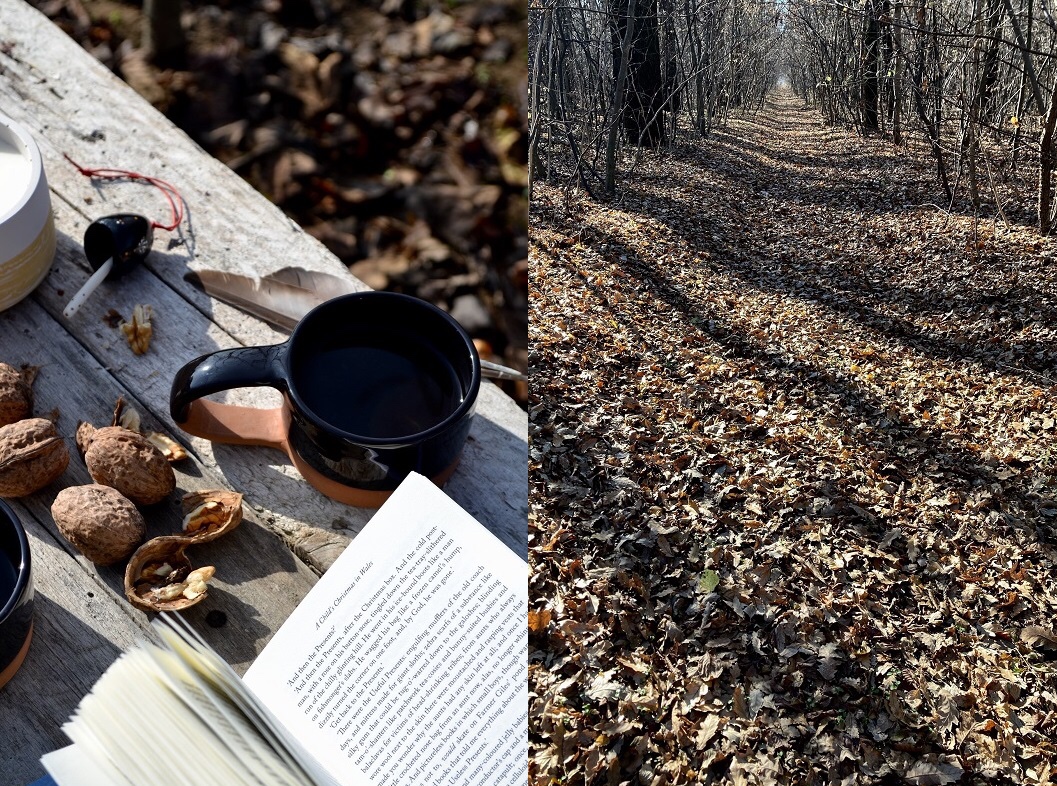
A Cold Christmas Walk in the Country (included in The Penguin Book of Christmas Stories), by Laurie Lee. A story that truly feels like Christmas. It makes you realise how simple things can be. Laurie Lee’s beautiful descriptive writing fuels the imagination and a longing for a Christmas in the country, but, most importantly, has a reminiscent power – of a joyous childhood play in the stillness of a winter day.
I recently found this new edition of Moominland Midwinter in a bookshop and couldn’t resist it. The tone is more introspective than in Tove Jansson’s previous books in the series, a perfect evocation of winter, one in which children find wonder and thrills, and adults, new meaning. That’s the brilliance of it.

Left: “Casino Royale” film poster designed by Matt Needle, part of the Classiq Journal personal collection
Right: The Grand Canal in Venice in the fog, photo by David C. Phillips, full-size print available on shop.classiq.me
Listening
Tattoo, Rory Gallagher. And Sting’s If on a Winter’s Night.
I have been diving into the archive of cinematographer Roger Deakins’ podcast, Team Deakins, and it’s glorious. And, of course, I dug out the Sam Mendes interview.
Making
A wooden story, especially the children’s collection, inspired by the love of nature and by the beautiful shapes and textures of wood. Lemnivor is “a little universe crafted in an atelier where we play with ideas and tell stories carved in wood.”
Exploring
Photographer Sophie Denux was telling me in our recent interview that she finds great inspiration in cookbooks, more so than in travel books. I love cookbooks, too, for the same reason, especially those which come with side stories. Grand Dishes is about time-perfect dishes and stories from grandmothers of the world. It’s really about simple food, but each one comes with a wealth of flavours, traditions and memories that transforms each recipe into a rich experience for the reader.
The regulars: The interviews, newsletters and podcasts I turn to every week and/or every month because they are that good. Craig Mod’s all three newsletters: Roden, Ridgeline, and Huh. Wes Del Val’s book-ish interviews. Soundtracking, with Edith Bowman. Team Deakins, with Roger and James Deakins. Alicia Kennedy’s newsletter. Sophy Robert’s The Art of Travel. Monocle and Sirene magazines, in print.
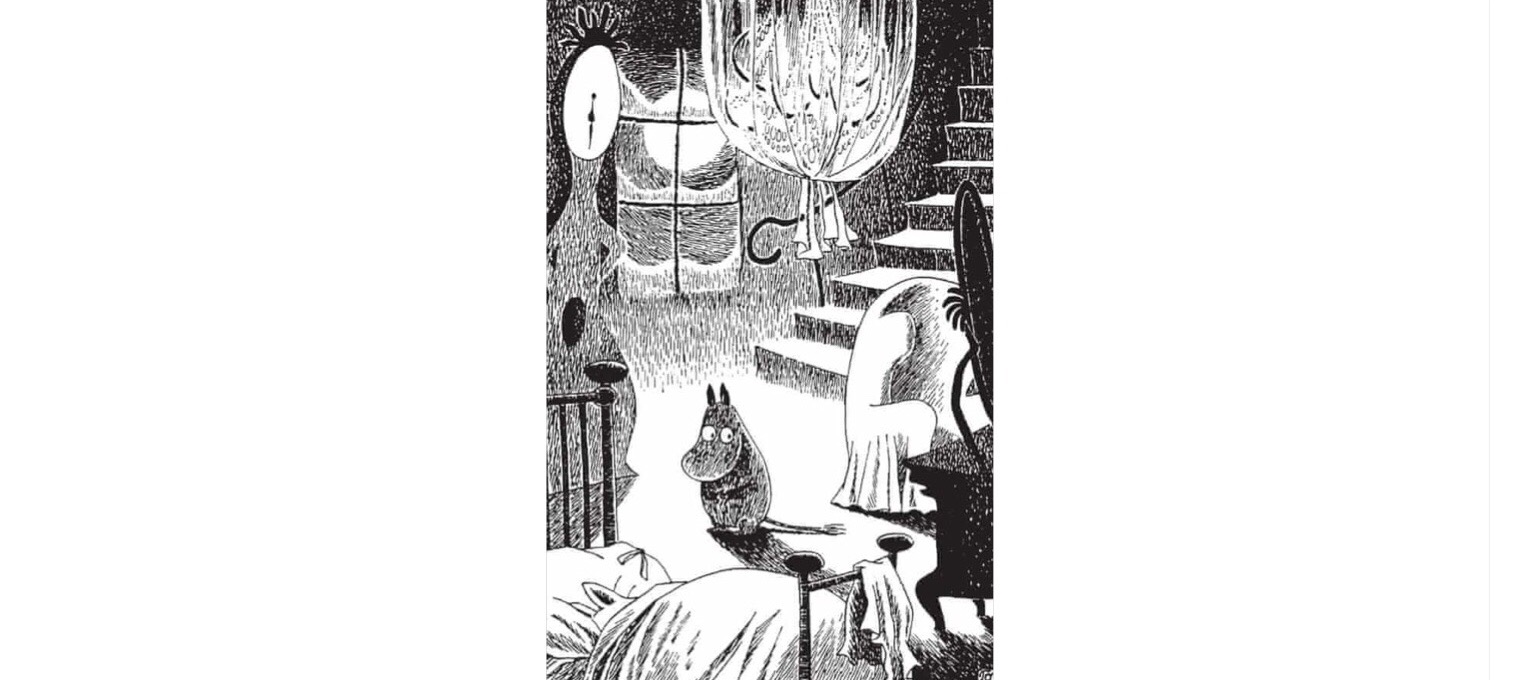
“The picture that so haunted me shows that very moment:
Moomintroll, his eyes wide and frightened, staring at his sleeping
mother. The dread of being a child awake in the depths of the night,
with everything that should be a source of comfort rendered unfamiliar
and menacing, has never been more brilliantly evoked.”
Tom Holland, My favourite book as a kid…Moominland Midwinter
The Guardian

