
Photos: Classiq Journal
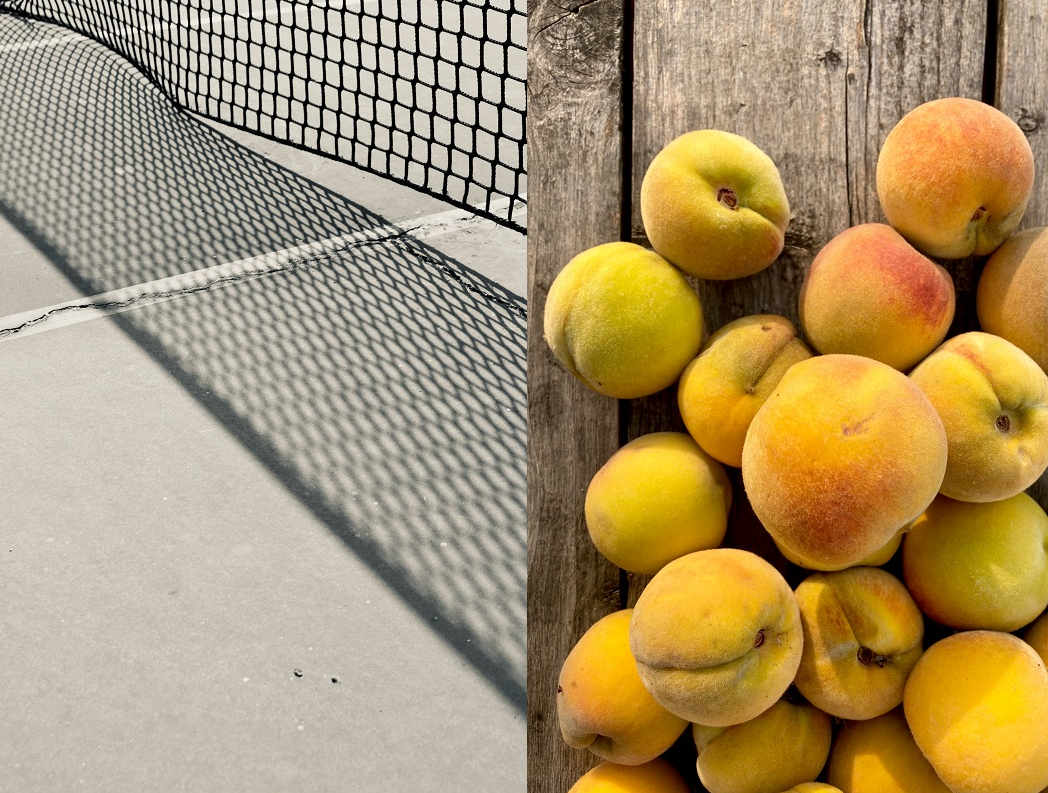
I first watched A Good Year when it first came out, 15 years ago. Then I forgot everything about it. And then one day this summer I found the dvd in our family country house and watched it again. And watching it became a deeply personal experience for me. First, because Ridley Scott took me back to my childhood. Not to the actual place of my childhood, but to something much deeper than that. To the atmosphere and everything I felt spending my summers in the countryside. To the total freedom and tranquility. To the sound of nature and of summer mornings. To the breeze felt through the always open windows. To the smell of vineyards and wooden wine barrels. To sipping our home-made wine with adults’ approval. To leisurely enjoying each and every one of those different shades of light that a long summer day offers you. To a tennis court that was far from perfect but that was perfect for us children. And to this: “It was the safest place in the world.” How could I not perceive all of that the first time I watched the film? (And I can’t help wondering why the film poster depicts the protagonists’ embrace when the film is memorable for so many other things.) Maybe because you live films differently at different stages of your life. Maybe because for the first time since childhood I am experiencing that kind of freedom again. Maybe because I finally get it, as Max does, that living a different kind of life can also be a choice, not a necessity – “Those summers saved my life.”

Image to the right: English poster for “Le choix des armes”, 1981, directed by Alain Corneau
Viewing
Le choix des armes (Choice of Arms), 1981
If I could choose a film for this fall, this would be it: the story, the setting, the cars, the horses, the weather, the costumes, the music. And the sound of the cars driving away on the farm’s gravel alleys, the sad sound of summer, even a part of life, closing in – somehow, for me, the arrival of autumn has always resembled the beginning of a new year much more than the first of January.
Serge (Pierre Forget) escapes from prison with Mickey (Gérard Depardieu), an irritable young thug who doesn’t hesitate to kill two cops in their escape. After escaping an ambush, the two men take refuge with an old friend of Serge’s, Noël Durieux (Yves Montand). A former gangster, he has retired and now leads a bourgeois life breeding horses on a farm, along with his wife, Nicole (Catherine Deneuve), with whom he shares a deep love and bond – in so few words, in just a few frames and telling looks, the director subtly and artfully builds this connection. Alain Corneau is called a pillar of the French policier film (according to Jean Ollé-Laprune, in Le cinéma policier français), a great cinephile, as curious as a scholar, and while Série noire may be his most appreciated film, I find that there is something special, a distinctive cinematic language, about Le choix des armes. Because of the incredible cast (I have written about Montand and Deneuve in Le sauvage, but this is their most beautiful film and pairing), because of the sublime depiction of the generational and class cross, both social (the harmonious and peaceful country burgeouise life and the Parisian suburb slums in a sinister dilapidation) and personal (Montand is part of a gentlemen’s world of mobsters and thugs, living and dying by a certain code of honour, never betraying their own, and dressing the part, echoing Jean-Pierre Melville’s cinematic universe and characters, while Depardieu is a petty killer, a mad dog with no honour, no law, not even his own, to abide by, the crime product of a rotten society), making the film a sublime study of behaviour in a modern social environment. And because it has one of the best musical scores, Phillipe Sarde’s, whose lyrical double bass amplifies the tragic conflict between these two different worlds.
Alice Doesn’t Live Here Anymore, 1974
I love how different this film is from Martin Scorsese’s other films. The story of a woman, Alice (Ellen Burstyn), who takes the road and her life in her own hands. This is one of those great American road movies of the 1970s, bringing together elements such as the great outdoors, rock ‘n’ roll and characters who thrive in a new found freedom, and I am surprised why it is not considered as such. Everything happens so naturally and realistically on screen, in the story and between the actors, and Scorsese’s strong feel for characters is best felt both in Alice and in the depiction of the two contrasting male individualities, played by Harvey Keitel and Kris Kristoffersen.
The Report, 1977
This was Abbas Kiarostami’s first film. His films emerged from the simplest of things, from the smallest of moments. He didn’t make up extraordinary stories and extraordinary worlds in his movies, but he looked for ordinary lives in exceptional moments, which also happens in The Report, where a tax collector is accused of taking bribe and he also has to deal with problems at home. In the simplicity of the people and in the simplicity of the dialogue, there is a deep understanding of life that would permeate all Kiarostami’s films.
The Truffle Hunters, 2021
Deep in the forests of Piedmont, Italy, a handful of men, seventy or eighty years old, hunt for the rare and expensive white Alba truffle. Desired by the wealthiest patrons in the world, the truffle remains a pungent but rarified mystery. To date, it has resisted all of modern science’s efforts at cultivation. And to find it, the only souls on Earth who know how to dig it up are a tiny circle of canines and their silver-haired human companions – the Italian elders with walking sticks and devilish senses of humor, who only scour for the truffle at night so as not to leave any clues for others. They refuse to give in to the fortune hunters who try to convince them to tell them their secrets. Being out at night in search of truffles just for the joy of it, or the profound affection they have for their dogs, has the greatest worth to them. These people have learned to find something much more important than truffles, they have found the true worth of life.
The Year of Living Dangerously, 1982
As I have written recently in the journal, it’s the sense of place that singles this film out for me. Peter Weir makes you inhabit a different world, not only through settings, but through characters, too, characters built together with the actors, because he wanted them different than those in the novel the film is inspired from.
Reading
Craig Mod’s Kissa by Kissa, at its third edition, is coming out at the end of the month. Limited to 1,000 copies, hand-bound, book by book, by Mochizuki Bindery in Kagurazaka, Tokyo, with a cover illustration drawn by Luis Mendo and silkscreened into the cloth, it is a book “about walking 1,000+km of the countryside of Japan along the ancient Nakasendō highway, the culture of toast (toast!), and mid-twentieth century Japanese cafés called kissaten.” “You can think of it like a film. At a leisurely pace, Kissa by Kissa takes about ninety minutes to read. It’s designed to reward multiple readings and be a book you return to over time.”
I am a life-long admirer of French crime films and of French cinema in general, but recently I have found a new passion for French books about film. Le cinéma policier français is one such book. 100 films, 100 filmmakers. Each film is briefly narrated, analyzed and illustrated, and accompanied by shooting anecdotes or excerpts from dialogues, just enough to capture your interest and make you want to watch the film, not just read about it. What I appreciate the most is that between the classics and well established movies, you discover tempting rarities and great films that had somehow escaped me, as it happened with Alain Corneau’s Le choix des armes.
I am well aware that Hollywood star stories reveal as much as they hide. I must also add that I don’t like tell-all memoirs. I take biographies and autobiographies as a feature film loosely based on biographical facts, which affords the reader the freedom to enjoy the story and its protagonist without constantly questioning the accuracy of the facts. That being said, I do pick the memoirs I read, and after Christopher Willoughby fondly spoke in our conversation about how impressed his father, photographer Bob Willoughby, was with the friendship between Elizabeth Taylor and Montgomery Clift, the book Elizabeth and Monty: The Untold Story of Their Intimate Friendship, recently released, has caught my attention. Precisely because it could tell the story of a friendship.
The Master: The Long Run and Beautiful Game of Roger Federer, published in the US in August and coming out next year in Europe, might be the best book on Roger and I am looking forward to it.
Listening
The Big Picture magazine has its own podcast! A film is a sum of many moving parts, that move us in just as many ways. Founder Gabriel Solomons and editor Thomas Puhr, with whom I have had the pleasure to be collaborating for years on the magazine, invite us on “an episodic journey to deconstruct the inner workings of movies; the props, architecture, fashion, design – seeing how these unique filmic elements combine to cast their magical spell over us. A podcast for all of us who have fallen in love with film, and are curious to know why.” Gabriel and Tom are talking about Poltergeist on the first episode.
Exploring
The quarterly publication Sirene Journal, an Italian magazine that is available both in Italian and English. “The ocean outside. The ocean inside.” A magazine made and written by and for those truly passionate, in love with the sea and completely dedicated to a way of existing, that only matters to them and where they find the meaning of life. “Sirene is water, Sirene is paper”. The paper is made from algae, to make use of excess algae blooms from lagoons at risk. For every half kilo of fresh algae, a kilo of wood is saved.

The regulars: The interviews, newsletters and podcasts I turn to every week and/or every month because they are that good. Craig Mod’s all three newsletters: Roden, Ridgeline, and Huh. Wes Del Val’s book-ish interviews. Soundtracking, with Edith Bowman. Here’s the Thing, with Alec Baldwin. Alicia Kennedy’s newsletter. Sophy Robert’s The Art of Travel. Monocle and Sirene magazines, in print.
“The story of Soichi Sakamoto and his swimmers tastes like
an American dream, or a Japanese fable and carries the scent
of water as only happens in Hawaii. Enclosed in the pages of a
small children’s book, but worth reading by anybody for whom
swimming equals dreaming.”
Alberto Coretti, Sakamoto’s Three-Year Swim Club, Sirene no. 12


