“What’s important about Truffaut is that he has a quality
that surpasses any technical skill; he’s a poet.”
Jean Renoir
Le Cinéma-Pigalle, le Delta, le Champollion, le Palais-Rochechouart, le Roxy, le Cinéac-Italiens. These were François Truffaut’s neighbourhood cinemas, the ones he frequented when he skipped school. As for le Gaumont-Palace, it was “an atmospheric cinema”, a veritable monument dedicated to the 7th art. “If I threw myself into cinema, it’s probably because my life wasn’t satisfying for me in my early youth. I saw my first two hundred films clandestinely in the neighbourhood cinemas, by playing truant from school. The cinema was generally a refuge for me, but when that refuge was inhabited by Chaplin or Guitry, then I felt warm and protected.“ A solitary young man becomes a cinephile.
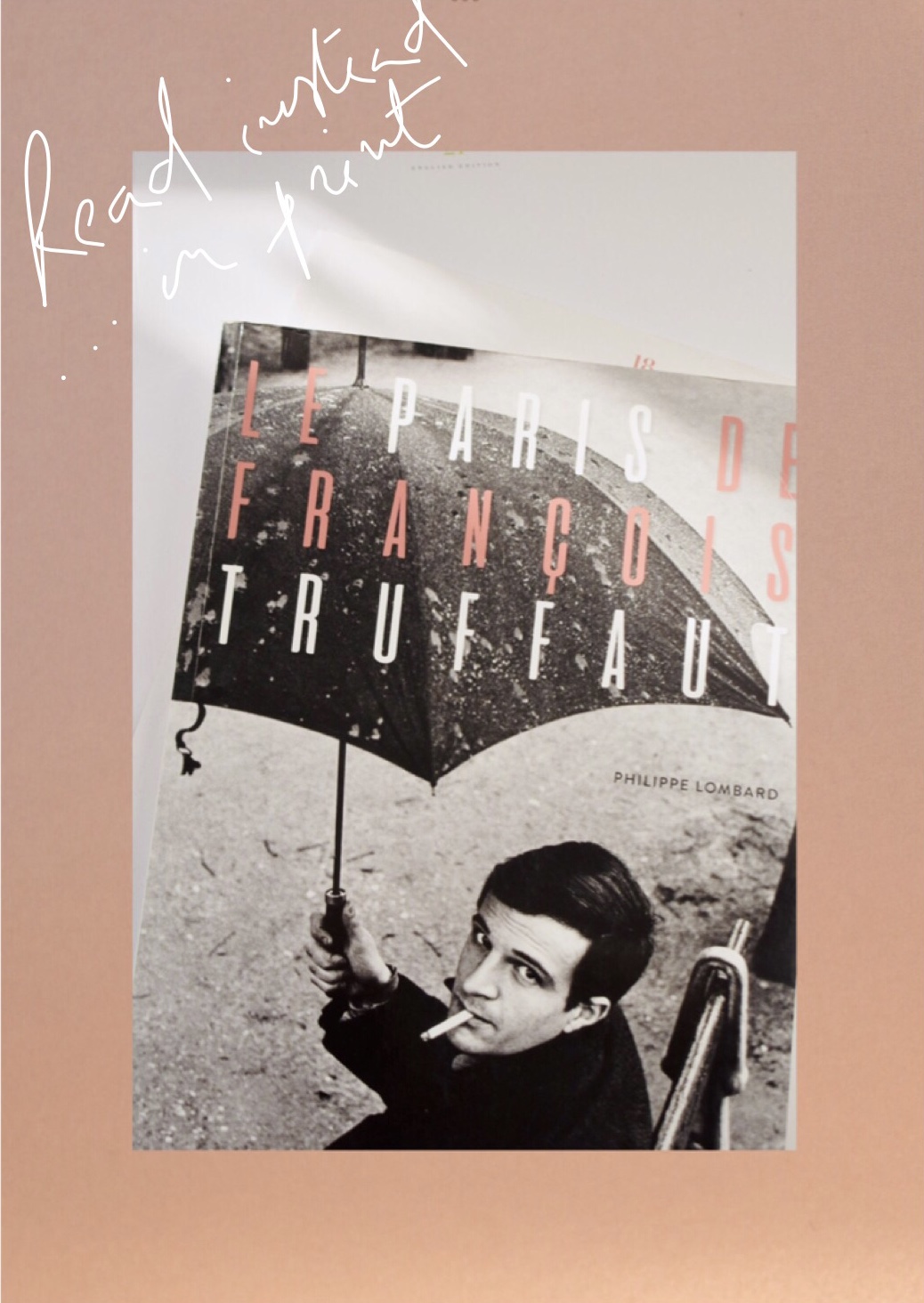
Le Paris de François Truffaut, by Philippe Lombard, is a book about the cinema of François Truffaut. But instead of the usual retrospective and beyond it being a beautiful cityscape, it unveils the essence of his films through the recurring elements uniquely his and his far-from-perfect yet unforgettable characters, starting with his cinematic alter ego (“Antoine Doinel is not what one would call an exemplary character; he is cunning, charming, and abuses it; he lies a lot and conceals even more; he demands more love than he himself has to offer. He is not man in general, he is a particular man.”). We quickly and deeply get a sense of how his native Paris shaped young Truffaut, starting with the cinemas and ciné-clubs. He frequented the Chambre Noire film club at the Sèvres-Pathé cinema, where he discovered the films of Jean Vigo in a single screening (because “the entire body of work didn’t reach two hundred minutes) and those of Jean Cocteau. On Tuesday evenings, he went to the Delta, which showed French films from the 1930s. Saturday mornings were dedicated to the Film Technicians’ film club, “mainly reserved for people in the industry,” at the Studio des Champs-Élysées; there, he and Chabrol saw Alfred Hitchcock’s The Rope. In the afternoon, he went to the La Revue du Cinéma film club.
“In order to defend auteur cinema, it was necessary to begin
by demolishing a number of clichés and stereotypes.
The demolisher was Truffaut.”
Claude Chabrol
And so began a life dedicated to cinema, first as a passionate writer and formidable film critic at Cahiers du Cinéma, and then as a filmmaker part of La Nouvelle Vague that swept over the French cinema in the 1960s. “It has often been said that the New Wave made Paris a character,” write N.T. Binh and Franck Garbarzin in Paris au cinéma. “That’s not quite right: Paris, from now on, is no longer a ‘functional’ backdrop; it has almost become a natural backdrop, by necessity. In fact, it is no longer simply a place where characters move about; it is a space that is part of the characters, that defines them and sometimes imprisons them. In these films of the 1960s, the word ‘Paris’ is very rarely mentioned, because it goes without saying: Paris is the navel of the universe, and this ‘navel-gazing’ is an integral part of the New Wave.”
Le Paris de François Truffaut has this incredible quality of making a viewer out of the reader, of making us grasp why no filmmaker cared more about films than Truffaut, why Paris is ingrained into the genesis of his films. The Paris of François Truffaut is the Right Bank (from Pigalle to the Champs-Élysées, Truffaut remained faithful to the Right Bank all his life), the Eiffel Tower (it can be a poster on the wall in L’Amour en fuite, or even a behind the scenes backdrop as captured by New Wave film still photographer Raymond Cauchetier during the shooting of Baisers volés), the familiar places and the everyday life of Parisians, the metro, the double-decker buses, the public telephone (“All our films have in common that they are extremely realistic.”). The Paris of François Truffaut is culture: the cabarets, the theaters, the museums, the film clubs, the artist studios, the cinemas – from Antoine Doinel in Les quatre cents coups, where he skips school and takes refuge in the neighborhood cinemas The Astor and Cinéac-Italiens, to Jules et Jim, where Jules, Jim, and Catherine meet at the Studio des Ursulines and prefer to leave the theater to talk rather than continue watching the Pathé-Journal and its images of Nazis burning books. The books. Truffaut’s passion for books and bookstores (“Reading is my greatest pleasure.”) is reflected in many of his films: books that his characters read, bookshops they visit, publishing houses, printing presses they work in, even the black market they sometimes have to retort to. The Paris of his youth, the Paris of the 1960s, the Paris under the Occupation, the Paris of the Belle Époque. Even when they are not set in Paris, Truffaut’s films (La Sirène du Mississippi, Une belle fille comme moi, or La Nuit américaine, where the entire story of takes place at the Victorine Studios in Nice, on an old American film set representing an imaginary Parisian square) make reference to it. Paris toujours. Truffaut toujours.
“If the film industry stopped, I’d be finished.
I wouldn’t be able to do anything, I wouldn’t know anything,
I’d be like a cripple.”
François Truffaut
MORE STORIES
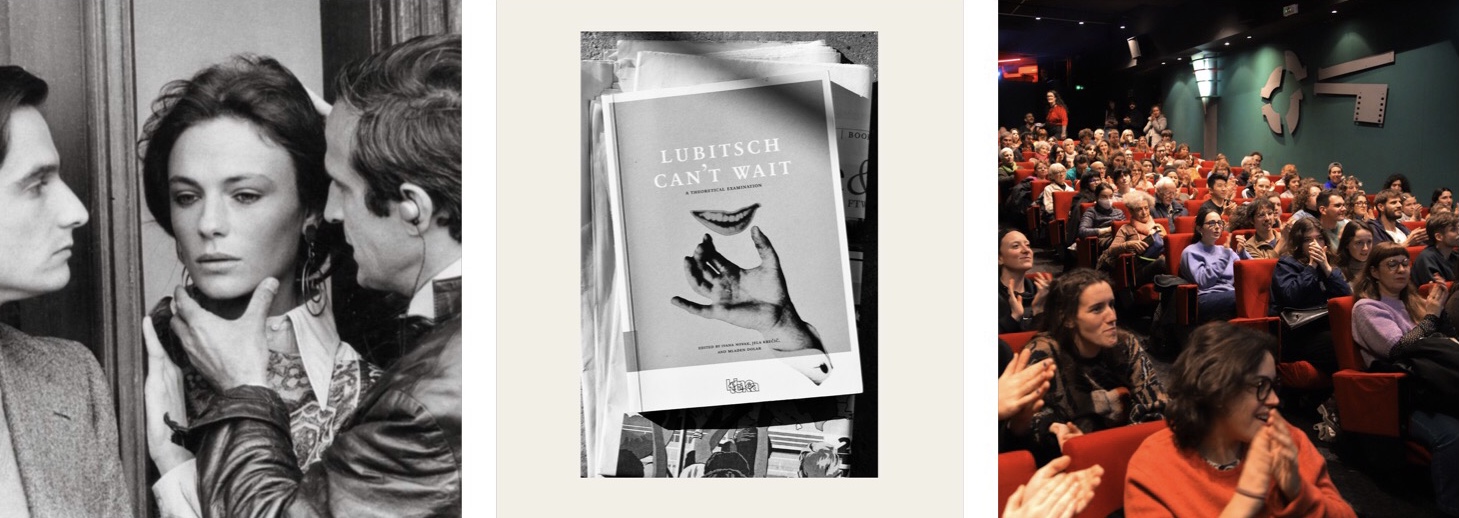
Read instead…in print #39: Lubitsch Can’t Wait
“We are taking culture into our own hands”:
In conversation with Cinéma La Clef