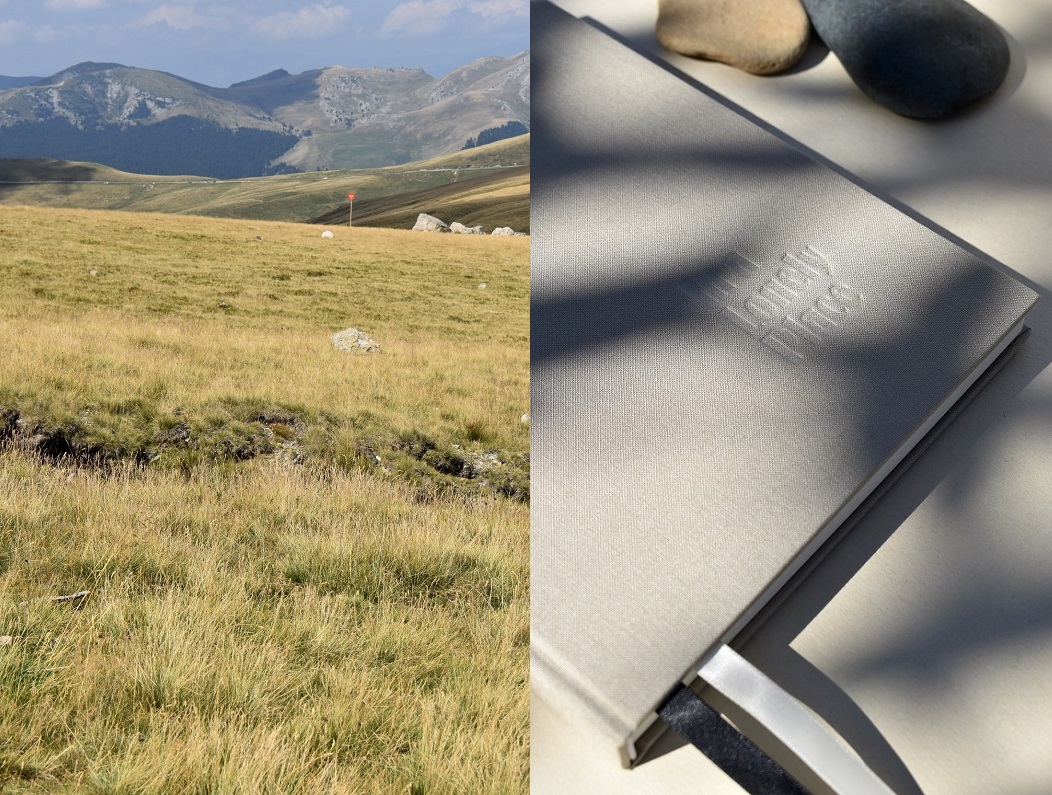
Left: Introducing our limited edition collection of hand-bound journals, “In a Lonely Place”, available in the shop
Photos: Classiq Journal
“What do you hang on the walls of your mind?
When I became a photographer I began, assiduously,
to collect favourite images which I filed away
in my imagination to bring out and examine
in moments of stress and moments of quiet.”
Eve Arnold, Eve Arnold: Lives Behind Photographs
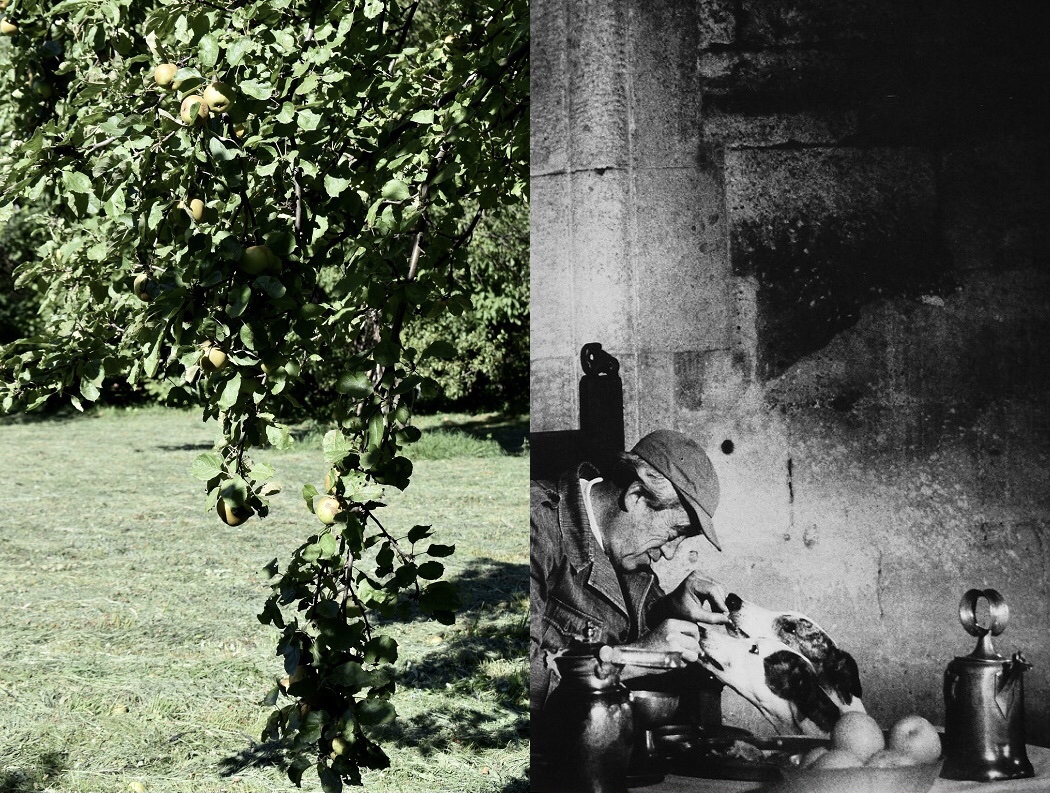
Right: John Huston photographed by Eve Arnold with his dogs at home in St. Clarens, Ireland, 1968
Viewing
Man in the Wilderness, 1971
Richard C. Sarafian
Think The Revenant, only better. I hadn’t even heard of it until my brother made me watch it this summer. A story of survival in the great wilderness of the American Northwest. Zach (Richard Harris), the scout of a group of fur trappers, is attacked by a bear and severely wounded. He is left for dead, but he survives and pursues his former companions through dangerous Indian territory. I like to revise the films I have watched through particular scenes and there are quite a few here, like the scene of the Indian woman giving birth, only indirectly suggested by the way nature is portrayed, the colours, the extraordinary music, the image of a father talking to his unborn baby and the mother’s look in her eyes – the power of this exchange, between mother, father and son, rests on the situation, visually, much more than on the words spoken. It’s a very shattering and powerful moment. And then there’s John Huston, larger than life in every scene he’s in.
Kompromat, 2023
Jérome Salle
The word “kompromat” refers to compromising information that is used to discredit someone, usually for political reasons. Cultures crash between the French and the Russians in Siberia and a French diplomat, Matthieu Roussel (Gilles Lellouche), is wrongly accused and jailed. Good thrillers don’t come too often anymore. But Kompromat, based on a true story of a man who had to escape from Siberia, is certainly one of them. I watched it during the summer at a favourite small cinema and, as always, I stayed right until the end of credits, taking the music, originally composed by Guillaume Roussel, all in right to the end.
The General, 1926
Buster Keaton
„A good comedy can be written on a postcard.” – Buster Keaton
The silence of the images in Buster Keaton’s brilliant comedies frees the comic imagination. I watched The General with my eight year old son and he loved it – he has watched two other silent films, The Kid and The Red Turtle, and I was glad to see how he embraced them, so much so that while watching The Red Turtle I remember that he remarked only towards the end that it was silent. And with Buster, more than with any other silent filmmaker, it couldn’t be more fascinating to watch a silent film, because the images will simply guide you. So I do believe that silent films can have an audience in the 21st century, it’s only up to us, as parents, what to watch with our children.
Les Ripoux, 1984
Claude Zidi
Inspector in the 18th arrondissement in Paris, René Boisrond leads a pleasant life, between bribes and horse racings. The arrival of a young colleague from the province, amicable and idealist, his new partner, disturbs his routine. A policier with one of the most unique characters played by a heavy of the French cinema, Philippe Noiret. A film that is a very skillful blend of comedy and action.
The Andromeda Strain, 1971
Robert Wise
A government satellite crashes outside a small town in New Mexico and kills every inhabitant of the town, except for a crying baby and an elderly man. The satellite and the two survivors are sent to Wildfire, a top secret underground laboratory equipped with a nuclear self-destruct mechanism to prevent the spread of infection in case of an outbreak. Realising that the satellite brought a lethal organism from another world, a team of government scientists race against the clock to understand the extraterrestrial virus – codenamed “Andromeda” – before it can wipe out human kind. Adapted from Michael Crichton’s novel and directed by Robert Wise, this biological thriller is more haunting than ever.
This summer I have also made it my mission to rewatch a few classics. Lawrence of Arabia, an epic of a film that left me with the same feeling as the first time I saw it many, many years ago: Omar Sharif was the one who impressed me the most with his performance. Mogambo, one of my absolute favourite adventure movies, and one that is somewhat underrated in my opinion. I have also rewatched North by Northwest and Vertigo. Give me Hitchcock any day. Brilliant! Loved them more than ever before if that is possible, and I have watched these countless times. Hitchcock’s films are the ones I love (and live, I might even say) best, yet they are the ones I find the most difficult to talk about. In a way, it makes sense. “Although Stewart isn’t aware of it yet, the viewers already know that Judy isn’t just a girl who looks like Madeline, but that she is Madeline! Everyone around me was against this change,” Hitchcock told Truffaut in their interviews. “They all felt that the revelation should be saved for the end of the picture. I put myself in the place of a child whose mother is telling him a story. When there’s a pause in her narration, the child always says, “What comes next, mommy?” Well, I felt the second part of the novel was written as if nothing came next, whereas in my formula, the little boy, knowing that Madeline and Judy are the same person, would then ask, “And Stewart doesn’t know it, does he? What will he do when he finds out about it?” Of course, Hitchcock is right.
About no other film have I ever felt so profoundly that it was made of two parts. And up until this viewing, I had always liked the first part best, as a movie in itself, maybe the best of them all. But this time something changed and I saw the film as a whole, with different eyes. “The scene in which James Stewart takes Judy to the dress shop to buy a suit just like the one Madeline wore, and the way in which he makes her try on shoes, are among the best. He’s like a maniac,” Truffaut remarked. No scene is too small in a Hitchcock film.
Reading
A question I always ask photographers in my interviews is: “What does it take to go there, to want to tell a story through your photographs?” In the book Lives Behind Photographs: Eve Arnold, part of the Magnum Legacy series that seeks to explore a photographer’s life between and around the photographs, Eve Arnold gives her answer to that: “What drove me and kept me going over the decades? What was the motive force? If I had to use a single word, it would be curiosity.” Eve Arnold is one of my favourite photographers, having photographed everyone, from Hollywood legends (like John Huston in the images above) and French fashion designers to Atlan dancers in Afghanistan and horse training for the militia in Inner Mongolia, China. Always with a personal passionate approach. The was she immersed the viewer in a person’s story and environment is absolute and disarming at the same time. You are curious and empathic in front of her photographs, she just makes you look, really look, and see.
As research: Nicolas Roeg’s The World Is Ever Changing and Escape Artist: The Life and Films of John Sturges, written by Glenn Lovell.
Listening
The soundtrack: The Hateful Eight. I watched and rewatched many classic westerns this summer (from The Searchers to The Magnificent Seven) and also wanted to revise Tarantino’s. Somehow music plays differently in western movies, contributing tremendously to the creation of iconic imagery and atmosphere. Ennio Morricone however, who finally accepted Tarantino’s proposal to work together on one of his films, did not consider The Hateful Eight a western, which he had promised himself he would not do anymore. The way he described it to Alessandro De Rosa when asked the question in their book-long interviews (Ennio Morricone: In His Own Words) was: “Rather, I see it as a historical adventure film, in a sense. The characters are described with such meticulousness and universality that the fact that they wear cowboy hats is nothing more than an alternative setting.”
About his collaboration with Tarantino, Ennio Morricone said: “Before The Hateful Eight, Tarantino had always compiled preexisting music. How could I write something that would sound new for him and yet keep with his idea of my music, which he knows so well and considers perfect? […]
Moreover, I was always concerned with the eclecticism of his musical choices, as he always juxtaposes such diverse array of pieces, following very subjective associations. On the other hand, there was so much of my music already among the tracks he had used in his films, that I might have expected to compose something akin to the stuff I had already done.”
Morricone was finally convinced by his admiration for Tarantino, his wish to cross generational boundaries, the well written screenplay and the fact that this was a new challenge at his age (he was in his eighties). “The main theme starts with two bassoons in unison, as I reprise it later in the film with a contrabassoon dubbed by the tuba. As you just said, I wanted to express a visceral, hidden, or buried core, something latent and yet bodily present.”
I have said it before and I will say it again: What I believe is extraordinary about Morricone’s film music in general is that he is an innovator, especially for the way his film music carves out its own path while still informing the plot, for the way it bonds with images and for the way it bonds with the audiences. In other words, I believe that his film music has made it possible for many people to appreciate a kind of music, a craft, a profession that requires patience, study, hard work, comprehension, and reflection, in a day when such qualities are less and less valued and when people are after easy success more and more often.
The album: Rattle That Lock, David Gilmour
Making
Introducing our limited edition collection of ”In a Lonely Place” hand-bound journals. Inspired by my favourite film noir. Imagined by my endless love for the printed word, writing on paper, and for the never-fading beauty of the tangible. Crafted by the wonderful and talented artists of Ink Tales.
For artists, dreamers and scribblers alike.
The notebooks come in linen-bound hardcover with premium book cloth and blind letterpress, in two elegant colours, and are exclusively available in the shop.
Exploring
VISITOR, the fourth exhibition of photographer Bill Phelps at Robin Rice Gallery. The opening reception will be held on Wednesday September 27th from 6pm to 8pm at 325 West 11th street, New York, NY 10014.
I am happy and deeply grateful that Bill asked me to write the presentation for the exhibition, and I am citing part of it here:
“Through light and shadow, a gaze, a mindset, Bill Phelps’ fourth solo show at the Robin Rice Gallery, VISITOR, inspires the imagination. About life, about being, eye and heart his greatest companions, in images that breathe in their own atmosphere. A moment of pure sincerity, a world of surrealism, or suspended reality. It’s like a wondrous path in which spontaneity, intimacy and a truthful eye are at play time and again. You feel time passing, memories forming or coming to the surface, capturing the moment and its eternity with your mind’s eye, but also in his. The VISITOR projects this otherworldly image of someone in search of something more, a deeper understanding of life, or maybe a youthful appreciation of it, or maybe both. The captured quiet of the muse seen through the suspended focus of the 8×10 view camera, the nuance, the in-between, the gaze. Every human being is a poet, a dancer, a VISITOR. Bill Phelps’ portraits, whether it’s someone he may know or not, are not frozen captures of stillness at a moment in time, but surrender to chance occurrences, always. He creates a curiosity, it can often be an invitation. No hurried departure, no preconceived destination, just a perpetual search.”
The exhibition runs through November 26, 2023.
The regulars: The interviews, newsletters and podcasts I turn to every week and/or every month because they are that good. Craig Mod’s newsletters: Roden and Ridgeline. Soundtracking, with Edith Bowman. Alicia Kennedy’s newsletter. Gone to Timbuktu, Sophy Robert’s podcast on the art of travel. Wachstumsversuche, with Sarah Schill. Sirene, Racquet, and Yolo Journal, all in print.
“I must look at China in her own perspective,
remembering her history, trying to understand her character
and being totally aware of her needs… I must try and not judge
by my Western eyes but must try and think in Chinese, look in
Chinese, while still retaining my own point of view.”
Eve Arnold, Eve Arnold: Lives Behind Photographs
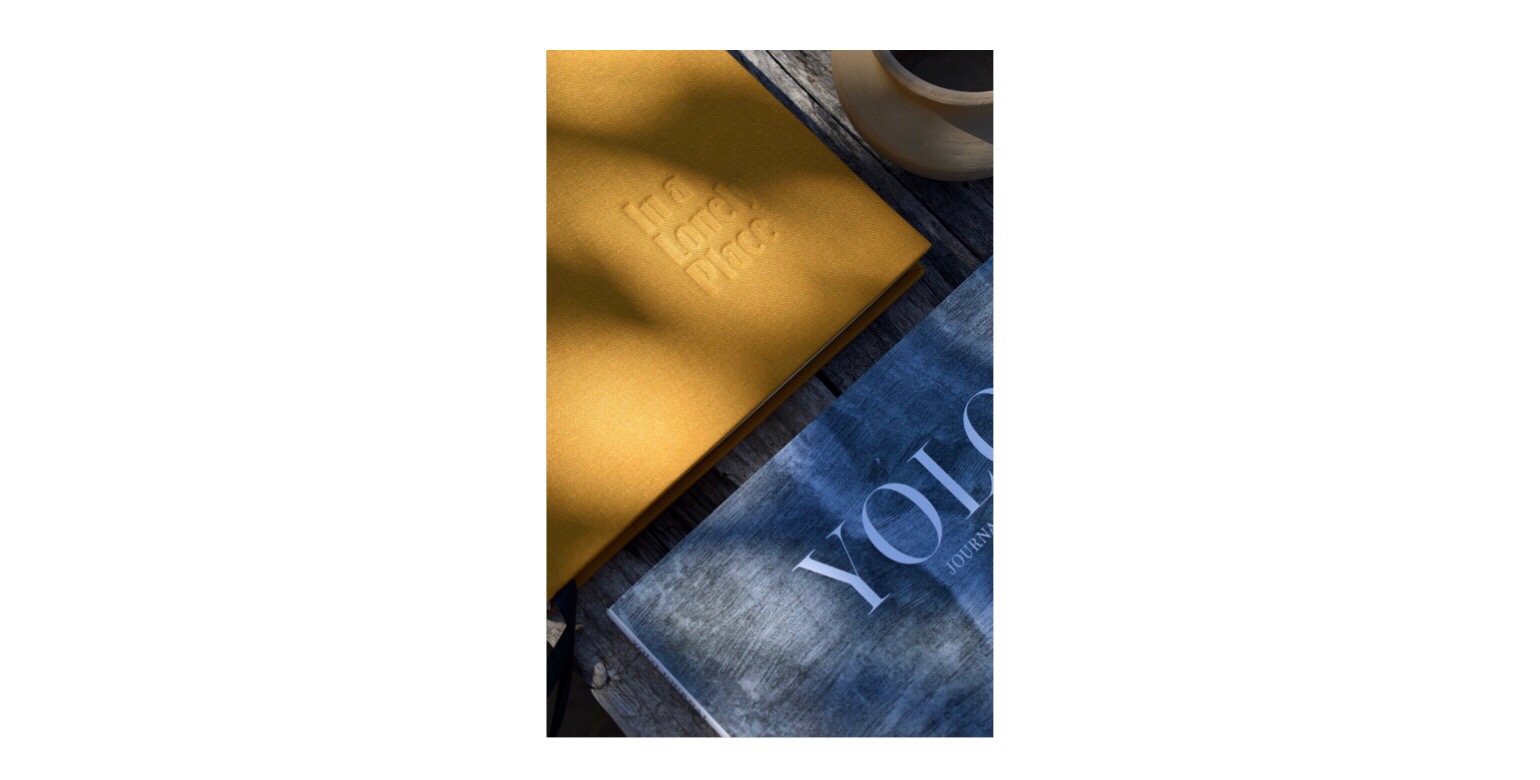
Our “In a Lonely Place” hand-bound journals collection available in the shop

