An Impromptu Style Talk with a Stranger

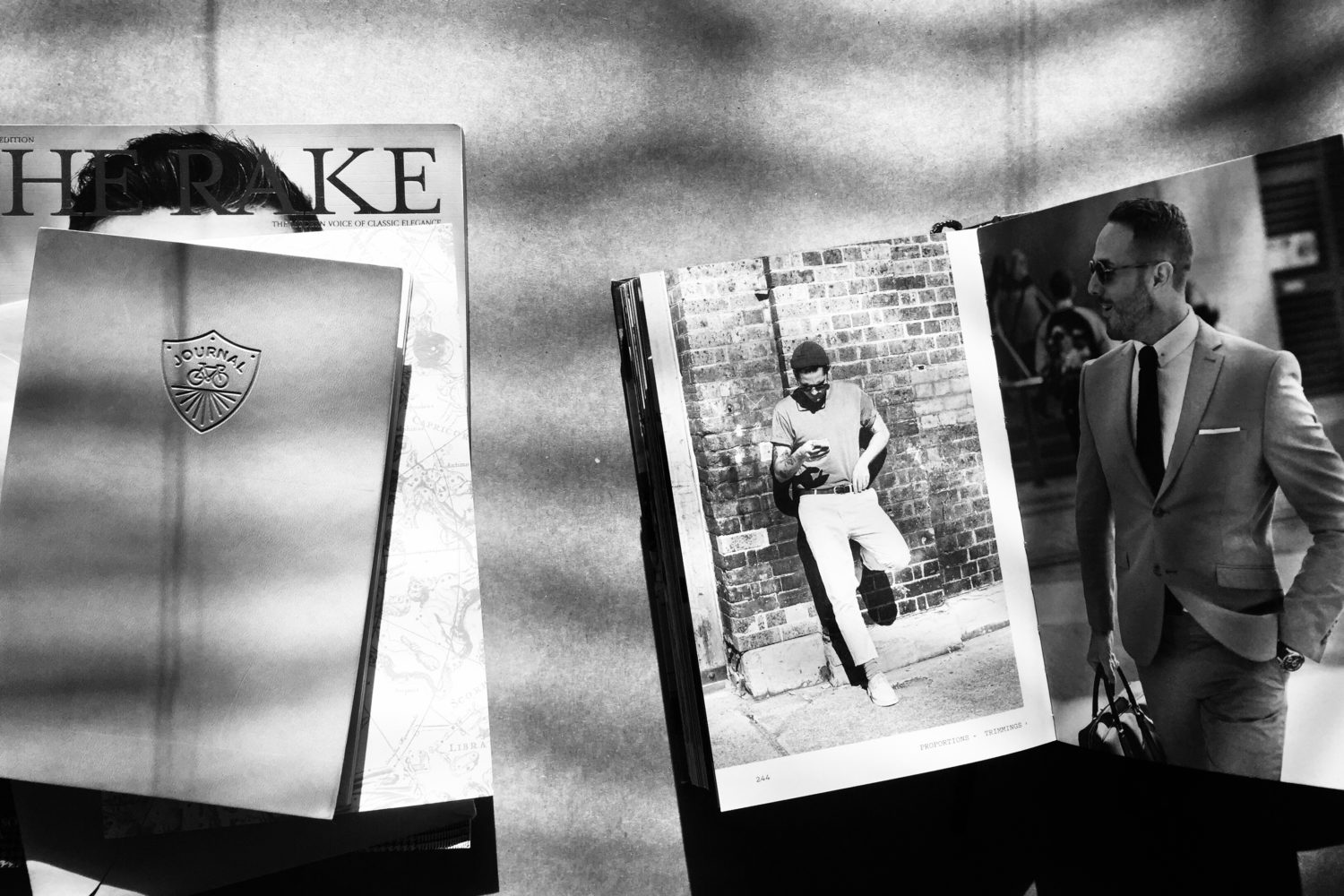
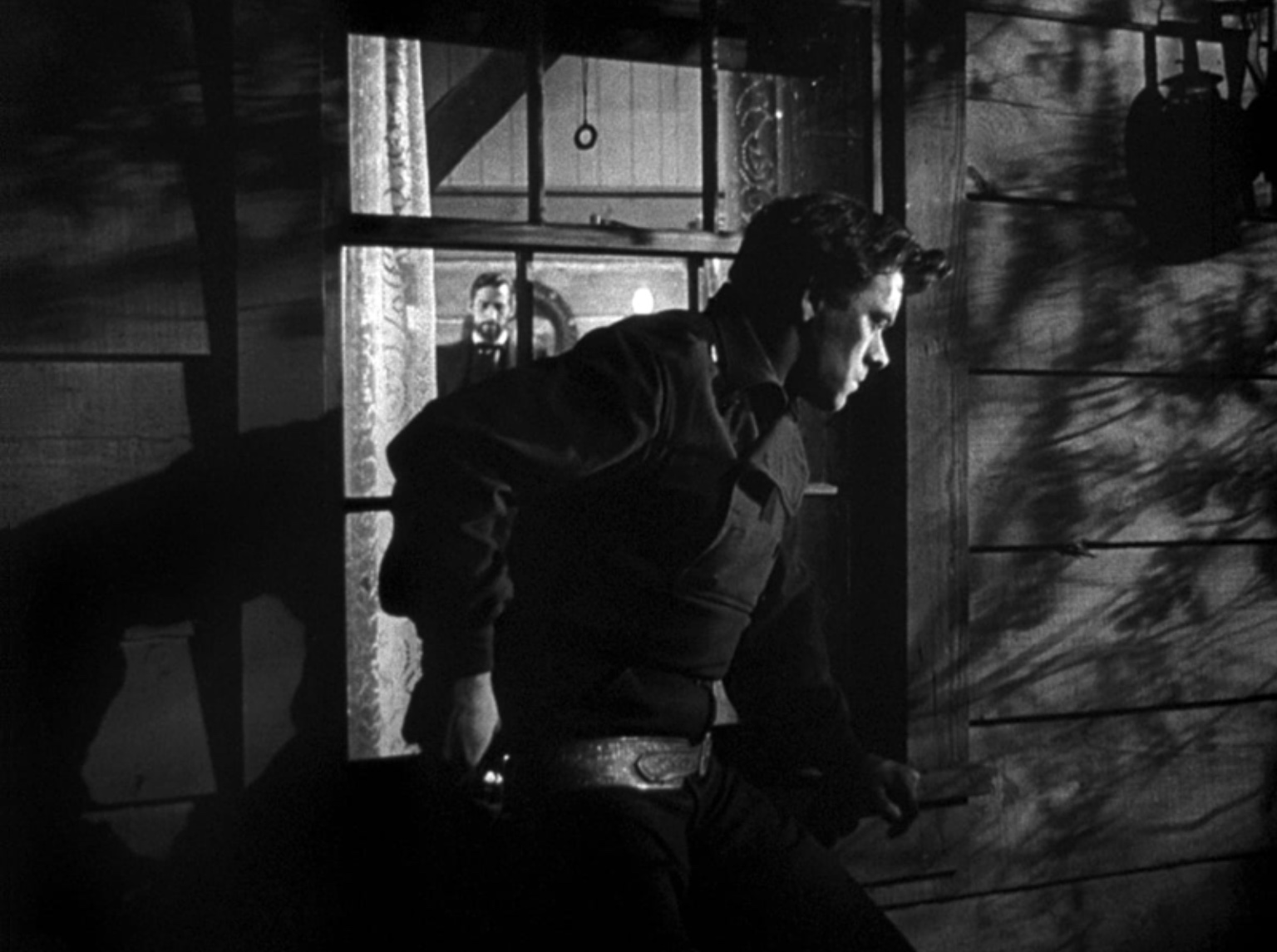
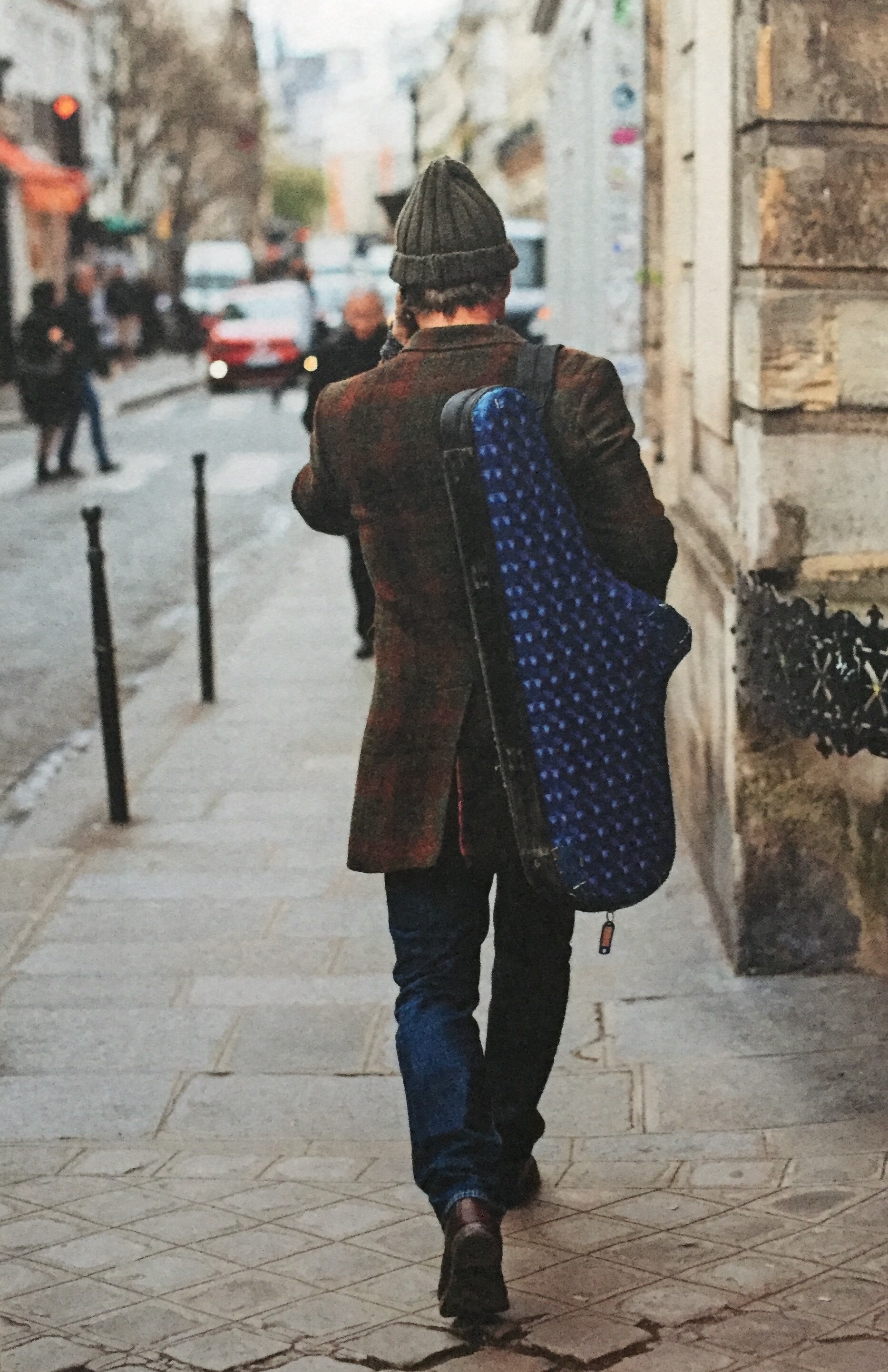
Photo from the book “Alone in the Crowd”, by Giuseppe Santamaria

 
When I bought Giuseppe Santamaria’s street style photography book Alone in a Crowd a little while ago in a bookstore, the shop assistants at the cashier desk, both guys, started to comment upon how cool a book it was. That’s all I needed to suggest an impromptu style talk with them. One of them agreed, as long as I didn’t photograph him, just the book, and that I mentioned Butch Cassidy and the Sundance Kid (see why below). I was right on board.


Street style

“I am sometimes influenced by it. I am a film student. I like to observe. I don’t look for style inspiration, but if I see something that I like, I may remember it and find a way to incorporate it into my own style. Even if my own style veers towards the classic, I appreciate individuality. So weird, quirky is good, too, as long as it represents yourself. Bear your own mark and be comfortable with yourself.”

Attention to look, not clothes

“I don’t pay much attention to my appearance, but I like quality and I do pay attention to what I put on out of respect for myself and for the others around me. Also, it has to be something I feel comfortable in. I work in a bookshop and I am also a film student. Comfort is everything. I don’t like to think about what I am wearing, I just want to do my thing. I like relaxed clothes, I am not at all partial to a close fit, which I know is the norm today. It’s not me at all. I like a straight cut, layers, stripes, all in good measure, keeping a balance.”

Take film as style inspiration

“Butch Cassidy and the Sundance Kid. Not to emulate, but to adapt it. It’s the characters as a whole really that call the attention. Three Days of the Condor, too. In fact, Paul Newman, Robert Redford, and Steve McQueen, too, in just about anything. They were cool, just a matter of being themselves. Dusty colours, jeans, leather, denim, I love a uniform. I like a hint of Americana. But I sometimes look up to Alain Delon, too, for the way he wore a suit, but right now I don’t see myself wearing a suit.”

The power of the uniform

“I love workhorses. I have a few well worn/well loved vintage pieces that I live in. And even when I do need a new garment, I hate wearing it new. I usually wear it around the house until that brand new look starts to fade out and then I am comfortable to wear it outside too. I don’t like to shop, I just do it consciously and sparingly, with an emphasis on quality. I prefer to mend what I already own. My uniform usually looks like this: Levi’s jeans, worn-out boots, Converse of course, vintage white or black t-shirts and maybe a denim shirt on top, biker jacket or windbreaker. Sometimes a leather waistcoat in the summer. A hat, too. And I’d choose an overcoat, maybe with a denim jacket underneath, over those bulky winter coats any day.”

Posted by classiq in Books, Interviews, Style | | Comments Off on An Impromptu Style Talk with a Stranger

A Third Face: Life (and Film) Lessons from Samuel Fuller


I love facts. I also love good stories. Movies based on facts, concocted with no small input of creativity, originality and imagination, are among those few things that give me the greatest joy. Samuel Fuller started out in the newspaper business, with no formal education in the field. He dropped out of high school because the journalism bug bit him early and knew right along that that’s what he wanted to do in life. After several formative years in New York City in the front line of reporting, he set out to see the rest of America, freelancing as a reporter during the Depression. He started to write novels, pulp fiction they were called, and get published. He finally arrived in Hollywood, where he wised up to a different kind of writing, writing scripts, first ghostwriting for more famous screenwriters who were in a creative rut but under contract with one big studio or the other, and then starting to write his own screen stories, yarns he called them.

Writing was his life, his life was his work. Be that as it may, when World War II hit, he put everything aside and enrolled in the army. He ended up in the infantry, the front line of war. He was offered the safer job of war reporter (his superiors having heard of his background) behind a desk. He refused. The only way he wanted to fight the war was to fight along with the other soldiers. The memories of war would haunt him for the rest of his life, and the only way to deal with the horrors of war was to talk about his experience in his stories, his scripts, his films. He hated to be called a director of war movies, but he knew he made them better than almost any other director, they came naturally to him, because he had battlefield experience.

His movies touched on much more diverse subjects, such as race, discrimination, social injustice, psychological thriller, western, with stories drawn from real lives, with characters human, many times deeply disturbed, flawed, ordinary people in extraordinary circumstances. He didn’t judge nor favour his characters, that’s not a writer’s job, he observed, recounted, described. He hardly cast stars in his movies, he didn’t want simplistic, make-believe tales and mystifying false heroes and idols, he wanted reality depicted in his stories, gripping, hard-hitting, truthful stories with believable characters without sugar coating.

He made his first film, I Shot Jesse James (1949), a western without it being a western, not in the John Wayne-western kind of way anyhow. It is a portrait of guilt and psychological torment, with the real violence happening in the criminal’s mind. Every time you see Bob Ford (John Ireland) walk after he shots his friend in the back and is acquitted, you see a man descending into his own hell, you see the psychological load he is carrying on his shoulders. Park Row (1952), named after the street in Manhattan where all the important newspapers in New York City were located, was a film Fuller produced himself with his own money because no studio would back him up, it was his tribute to his newspaper years, to the lives of those early reporters and editors who were the backbone of New York newspapers and to the birth of free journalism. White Dog (1982) was an uncompromising film that conveys a racial tolerance message through events that unfold in the eyes of a dog that was destroyed by a crippeled, twisted society when he was a puppy, having been trained to attack black people. This may as well be the most original, shocking, truth-grabbing movie on American racism ever made. It was misunderstood and withheld from release in America when it was made.

Sam Fuller was an original. Facts were the bedrock of his stories. He was after the truth, nice or ugly, just as in journalism, and gave it to you straight. But he put just as much imagination into his characters and action. Here are a few words to take away from his extraordinary autobiography, A Third Face: My Tale of Writing, Fighting and Filmmaking.
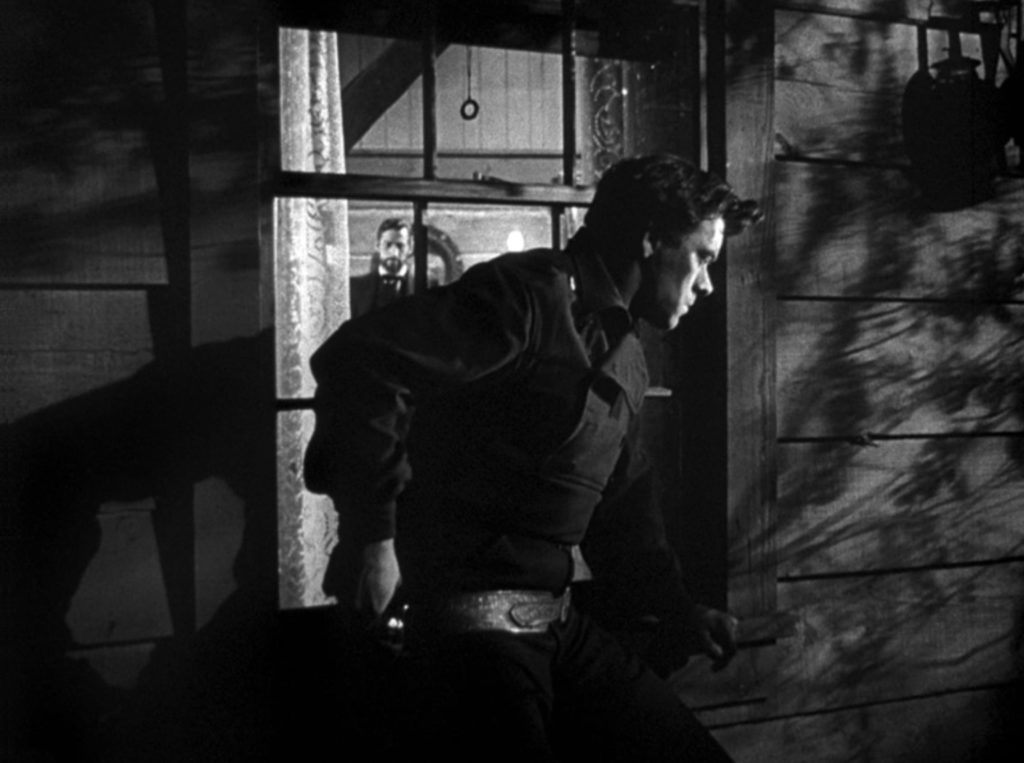
 

”I Shot Jesse James”, 1949 | Lippert Pictures


Life

 
“I understood for the first time the quicksand nature of fame, a seductive mistress I’d never court.”

“I relearned the difference between joy and pleasure. Pleasure was transient. Writing, listening to music, sharing, and real friendship gave me joy.”

“Many soldiers did go nuts. If you retained any sanity, you never thought about time the same way again, you were grateful for every moment of existence you were granted, and you didn’t want to waste another split second on bullshit.”

“You young people sitting around watching the goddamned television! Get off your asses and go see the world! Throw yourselves into different cultures! You will always be wealthy if you count your riches, as I do, in adventures, full of life-changing experiences.”


Work

 
“I’d like to inspire others to be hopeful and daring, to follow their dreams, no matter the odds.”

“To this day, I don’t give a good goddamn where I sleep or what I’m wearing as long as I’m involved with a project I love.”

“In those days, memory was in a person’s mind, not in his computer’s electronic chip.”

“I never did get my high school diploma, nor any other diploma for that matter. Over the years, I’ve had to educate myself, gulping down all the classics I got my hands on, hungry for great writers like Flaubert, Faulkner, Dickens, Twain, Hugo, Dostoyevsky, and Balzac. By reading them, I was in touch with great minds without the fluff of a classroom.”
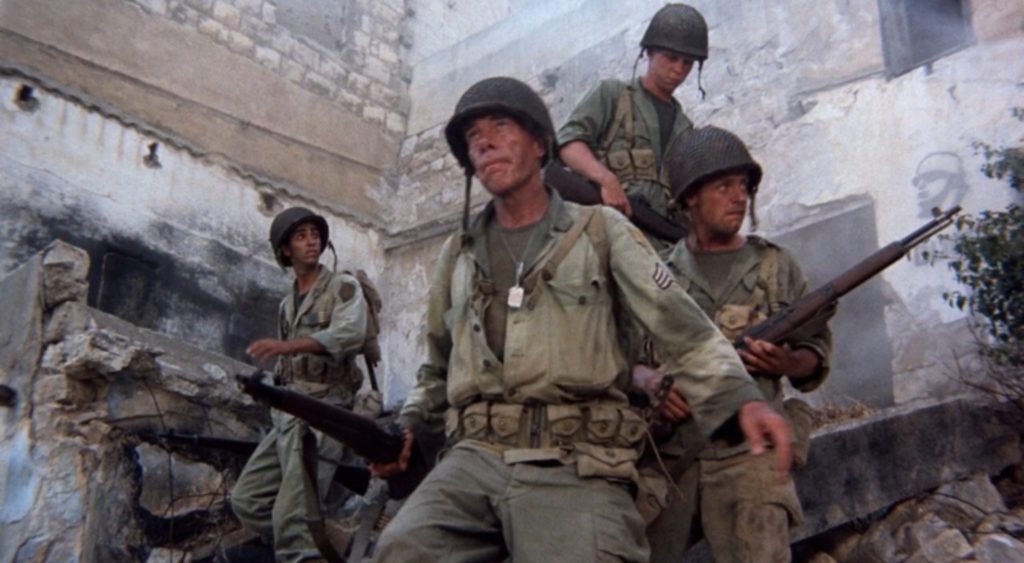
 

”The Big Red One”, 1980 | Lorimar Productions, Lorac Productions


Filmmaking

 
“Show the action, for Chrissakes, don’t describe it! It’s a motion picture you’re making, not a god-damned radio show.”

“It took many years and a helluva lot of trial and error to learn how to create a movie from a blank piece of paper.”

“Ever since my journalism days, images of real people in real-life situations had always had an intense effect on me. One moment’s emotion, frozen in time, was very inspiring. I’ve tried to construct my movies around those kinds of simple compositions that bring up complicated feelings. They speak in a way that people everywhere understand.”

“When I write a book or a script or make a movie, I’m only interested in one thing: a good story. If the story has conflict, there’s action. If there’s action, there’s emotion. That’s what I call a movie. See, 95 percent of all movies are made because people have to earn a living, and that’s okay. Only 5 percent are made because one passionate man or woman had an idea and nothing could stop him or her from getting it up on the screen.”

“All artists are anarchists, okay? We want to shake up the audiences to question what’s acceptable, to set off earth-quakes in the brain. Otherwise, why not look for a secure, regular-paying job as a teller in a bank?”

“No associate producers, co-producers, executive producers or any producers admitted herein.” (The sign he hung on the stage door of The Steel Helmet)

“See, music is an essential part of every picture I make, maybe as important as the story. Before photographs and movies, people were listening to music and getting strong emotional messages. When I write, I visualize what I want to happen on the screen and imagine the accompanying music. I can actually ‘see’ the action and dialogue better by adding music early on in the script.”
 

Posted by classiq in Books, Film | Comments Off on A Third Face: Life (and Film) Lessons from Samuel Fuller

8 1/2 on Federico Fellini’s Centenary

Marcello Mastroianni in “8 1/2”, 1963 | Cinerix, Francinez


There is no other film that has made me aware that one’s taste in cinema evolves as the years past by more than Federico Fellini’s 8 1/2. The first time I watched it, many many years ago, when I knew nothing about cinema and I wanted to watch as many films as possible in the shortest amount of time, I couldn’t finish it. The second time, some years later, I did make it to the end, but did not make much sense of it. I watched it again last week, anticipating today’s centenary of Fellini, and it was like I was watching it for the very first time, perfectly aware that I was viewing a masterpiece (a word I don’t use lightly) in cinema-making and artistic vision. And I know every time I will watch it again from now on, the more it will be revealed to me, the more absorbed in its revelations and mysteries I will be. Don’t all great films unlock new depths every time we watch them?

This intricate portrait of a famous film director, Guido Anselmi (Marcello Mastroianni), who is experiencing an acute crisis of confidence and creativity, draws largely on Fellini’s own experience that he encountered just as he was having a hard time to find an idea for his next film, notes Chris Wiegand in the book Federico Fellini: The Complete Films, the film that would become 8 1/2. Just like Mastroianni in the film, Fellini lost hold of the film even before starting shooting, and one day on the set he began writing a letter to his producer, Angelo Rizzoli, explaining his difficulty in directing the movie, while constantly being interrupted by the arrival of different cast members. When he finally could not take it anymore and got away for a breath of fresh air, he realised he had found the story idea: “I got straight to the heart of the film,” he told film critic Giovanni Grazzini. “I would narrate everything that had been happening to me. I would make a film telling the story of a director who no longer knows what film he wanted to make.” That’s 8 1/2.
 

Images above: Federico Fellini and his alter ego, Marcello Mastroianni on the set of “8 1/2”, 1963,
photographed by Gideon Bachmann


”Simply stated, I love to invent stories. From the caves to Titus Petronius
to the troubadours to Charles Perrault and Hans Christian Andersen, I
would like to be in this tradition with films that are neither fiction nor
non-fiction, but approximate autobiography, archetypal tales of
heightened life, told with some inspiration.”


From the astonishing opening sequence – Guido’s nightmare where he is trapped in a traffic jam, unable to get out of his car and eventually succeeding to rise out of the car and float away only to be pulled down from the sky by a rope by his crew members eager to tie him down by his contractual obligations – to the memories of his childhood (another autobiographical element of Fellini’s) and the recurrent appearance of a mysterious vision, Claudia Cardinale, this is the imaginary world behind the chaotic life of a director. But everything is so spectacularly filmed in crystal clear black and white, with the camera constantly moving, making great use of surrealist elements (this is a surrealist comic film, after all), in the true vein of Luis Buñuel, that you can always tell when the reality ends and the fantasy begins, even though it is done so seamlessly. Guido’s escape to the dream world is so obvious because he feels at ease there. And 8 1/2 is a free space for dream and memory. It is a celebration of images over ideas.

Talking about the evolution of his work, Fellini said that “as I progressed I acquired more faith in images and increasingly tried to do less with words while filming.” This is the medium of cinema and Fellini was the master of its art. It’s Fellini’s tribute to cinema, the film that marked the apotheosis of his talent, the one that defined “Felliniesque” for good, freed from any remaining commitment to neorealism (as good as I Vitelloni and La strada may be and as much a fan of them as I may be) and unapologetically embracing personal fantasy and pure cinematic creation. Because Federico Fellini was the ultimate dreamer and how fortunate for us that he reached the point in his career when he could give shape to his dreams in film: “The best part of the day is when I go to bed. I go to sleep and the fête begins.” He said that Ernst Bernhardt, the psychoanalyst, “made me grasp that our dream life is no less important than our waking life, especially for the artist.” Fellini’s cinema is not fact, but feel, not a real life depiction, but an invention of new life.

There had been made other films about film-making before, like The Bad and the Beautiful (1952), but Fellini’s opened the path towards a specific new type of cine-fiction, focused on a director’s creative dilemma, on an artist’s dreams and demons, which proved to be a direct influence on François Truffaut’s La nuit américaine (1973), Woody Allen’s Starsust Memories (1980) or Pedro Almodóvar’s Dolor y gloria (2019). There has probably been no other filmmaker more often identified with his work on a personal level than Fellini and there is probably no other film more a mirror to the profession of filmmaker than 8 1/2.
 

Marcello Mastroianni and Sandra Milo in “8 1/2”, 1963 | Cinerix, Francinez


Federico Fellini on the set of “8 1/2”, 1963, photographed by Gideon Bachmann

 
8 1/2 cemented Marcello Mastroianni’s reputation as Fellini’s alter ego. Apart from the role itself, of a director in a creative dilemma, he also dresses like Fellini. Black suit, black slim tie, hat and those legendary sunglasses, behind which he seeks the respite from all the media circus, all producers and actors and women that gravitate around him, all the creative decisions he must make – the same kind of respite he finds in his dreams world. No one has worn the black suit better on screen. Marcello Mastroianni remains the quintessential example of the sartorial Italian, the personification of proverbial Italian masculine style. And his look in 8 1/2 is to remind all mankind that the single-breasted black suit, fitted white shirt and thin plain tie are the canon of perennial style. More than ever before, we are in dire need of this reminder, of the staying power of classics, in a time when the caprices of fashion seem to get hold of an entire generation against personal identity and ineffable taste.
 

Posted by classiq in Film, Film costume | | Comments Off on 8 1/2 on Federico Fellini’s Centenary

Louder Than War

¡Oye Esteban!, Morrissey

 
I heard Morrissey’s new single, Bobby, Don’t You Think They Know?, in duet with Thelma Houston, on the radio in the car one morning this week. Always the controversial, never the predictable. And why not? He is uncompromising in his art and ethics and often misinterpreted by those who want everyone to think and speak alike. I remember Morrissey’s words from his autobiography, a book written with audacious skill and understated humour, sincere to the core, devastatingly articulate and completely authentic: “I didn’t want to live unseen, camouflaged within the crowd. I knew then that life could only ever be changed for the better because somebody somewhere had taken a risk – often with their own life.” So instead of reading what the press says about Morrissey maybe everyone should first read this book. For those interested, here is also a great interview Morrissey conducted with Joni Mitchell many years ago.

Later in the day I lay my eyes on the cover of the indie, alternative and post punk music magazine Louder Than War. Editors, one of my favourite bands, fronted the cover. It was a good day for music, I concluded, especially after I read the Louder Than War manifesto, of which I have taken the liberty to quote my favourite parts below.
 
Words are my weapons. The writing will be informative but also emotional. I want people who are immersed in culture and want to fire you up with their love of it.

Music is one of the last things we have left. No-one owns it. We can all make it. And we can all celebrate it. It is beyond the accountant’s grim fingers.

Fast forward to the future. We are always looking for the new noise, the next buzz, we have no borders, no boundaries.

Old, new, borrowed and blue. The future does not mean a fear of the past – we have a wonderful archive of classic features which we will exhibit; movers and shakers from any period always burn brightly.

Do you believe in the power of rock n roll? We still believe in the power of music and we still believe in the counter culture.

People once wanted to save the world now they are saving up to buy it. We are a break from that.

Here is a playlist with music that has something to say.
 
 
https://open.spotify.com/user/o2andp6xgqxi4ixeg4zmctj0z/playlist/4Z29d84SxelIrsx5fbMpyx?si=eHx_ZJZWQNuNqM9uMwTY2A


1. Bobby, Don’t You Think They Know?, Morrissey ft. Thelma Houston/ 2. Everything Now, Arcade Fire / 3. Marching Orders, Editors / 4. Lips Like Sugar, Echo & the Bunnymen / 5. Another One Goes By, The Walkmen / 6. I Won’t Be Long, Beck / 7. Mr. Brightside, The Killers / 8. Do I Wanna Know, Arctic Monkeys / 9. Riders on the Storm, The Doors / 10. Age of Consent, New Order / 11. Modern Love, David Bowie / 12. Monkeyland, The Chameleons / 13. Nothing Lasts Forever, Echo & the Bunnymen / 14. Love Will Tear Us Apart, Joy Division / 15. Heartbreaker, The Walkmen / 16. Drive, R.E.M. / 17. Show of Strength, Echo & the Bunnymen / 18. Ready to Start, Arcade Fire / 19. First of the Gang to Die, Morrissey / 20. All the Kings, Editors


Posted by classiq in Culture, Sounds & Tracks | | Comments Off on Louder Than War

Editorial: All the Comfort in the World, No Compassion

Yohannes Kuhnke and Lisa Loven Kongsli in ”Force Majeure”, 2014 | BLS Business Location Südtirol-Alto Adige, Beofilm


The Editorial: thoughts, short stories
or essays about the world of cinema


Back in 2014, one of my favourite films of the year was Ruben Östlund’s Force Majeure. I wrote about it at the time, after it premiered at Cannes, and I have watched it again recently, before they release the American remake, titled Downhill, with Julia Louis-Dreyfus and Will Ferrell in the lead roles. Because why should Hollywood come up with something original when they have a recipe for a successful film to replicate and reap the benefits domestically? Especially that it will be in English, so that the wide American public won’t even have to bother with the subtitles.

Will it however reach the sharp dry tone and multilayered story of Force Majeure? I doubt it. The American version will probably be one more obviously comedic, with appeal to the larger public, thus losing the subtlety of an incisive portrayal of a privileged modern-day family and lifestyle. The darkly comedic Swedish drama unfolds as a Swedish family travels to the French Alps for a five-day skiing holiday. During a lunch at the resort’s rooftop restaurant, an avalanche risks everyone’s lives and turns everything upside down, after Ebba (Lisa Loven Kongsli), the mother, desperately tries to protect the two children, while Tomas (Yohannes Kuhnke), the father, grabs his cell phone and runs for his life. It is a great satire, about a family shaken to its core, with a well written screenplay, beautiful cinematography capturing the alien nature, the alienation of the contemporary-world human, and the contrast between nature and man trying to control the force of nature. The film is a great character study, benefitting from great acting, especially of the two main actors (there is so much drama and emotion happening on the faces of Ebba and Tomas), and sometimes wickedly funny, without diminishing the permanent anxiety hovering over though, as if you are expecting another dramatic thing to happen any moment.

The film looks at human behaviour from the point of view of a family in crisis, but it questions in fact the self-centered interests of an entire Western society. In an interview for Film Comment at the time of the film’s release, the director said: “But this kind of lifestyle – I mean, just look at the electronic toothbrush. We’ve reached a level of comfort, and we’re allowing ourselves to let relationship problems be the main focus of our lives. I think that that kind of lifestyle is silly, and we have to look at those problems from a realistic perspective – this isn’t something that we should put all our strength into. Shouldn’t being at that socioeconomic level make us think: “How do we change other people’s situations? How do we fight for other people’s rights? How do we deal with extreme poverty in other parts of the world?” But Western society, and the whole culture that we are basing our society on, is telling us that we are allowed to put all our effort into relationship problems.”

Ruben Östlund’s words distill very well not only the idea of the film, but one of the greatest flaws of our society. Everyone has become so selfish, so absorbed with one’s own well-being – and we can extend that to one’s own family, one’s own business (“I don’t know how my friends are because all they talk about when we meet is how busy they are,” someone was saying and how frightfully right she is), even one’s Western world – that nobody cares about anybody and anything else anymore, let alone the world at large. Just because we are not policy makers doesn’t mean we are not individually accountable for anything but ourselves. We have reached a point where none of us can be just a teacher, or a photographer, or a writer, or a doctor, or a parent anymore. We have to care more about one another and about the world we live in, we have to finally take action against our decades-long carelessness and neglect towards the one next to us, towards the less fortunate, towards our surroundings. We take everything for granted (like those electronic toothbrushes in the film), we are all expecting grand gestures from others and do nothing in return. There is too much of everything and yet we produce more, we want more of everything, more comfort for our lives so that we can feel fulfilled, and that’s it, that’s where it stops, with personal welfare and professional accomplishments. We have forgotten to be human (human as in Force Majeure at the end when the people feel connected as they are all walking together on the road). We should start with being kinder to one another and to our world.

I don’t think the American sense of humour has all the nuances capable of capturing and transmitting this kind of message.
 

Posted by classiq in Editorial, Film | Comments Off on Editorial: All the Comfort in the World, No Compassion